
Suggested duration: 6 lessons
1.1.1 Meaning of Biology
Biology is the scientific study of living organisms and their interactions with one another and with their environment.
The word Biology is derived from two Greek words:
- Bios — meaning life.
- Logos — meaning study or knowledge.
Therefore, Biology literally means the study of life.
Biology involves the study of organisms such as bacteria, fungi, plants, animals and human beings. It also examines the structures, functions, growth, reproduction, classification and interactions of living things.
Examples of biological studies
A biologist may investigate how maize plants grow, how mosquitoes transmit diseases, how food is digested in the human body or how organisms adapt to their environments.
In Kenya, biological knowledge is applied in agriculture, healthcare, environmental conservation, fisheries, biotechnology and wildlife management.
1.1.2 Applications of Biology in Everyday Life
Biology is important because it helps people understand living organisms and apply scientific knowledge to improve their lives.
1. Medicine and healthcare
Biology provides knowledge about the human body, microorganisms and diseases.
It helps healthcare professionals to diagnose, prevent and treat diseases.
Examples:
- Understanding how malaria parasites affect the human body.
- Developing and administering vaccines.
- Studying how medicines affect body organs.
- Promoting proper nutrition and personal hygiene.
2. Agriculture
Biology helps farmers understand the growth, reproduction, nutrition and health of crops and livestock.
Examples:
- Selecting high-yielding maize varieties.
- Controlling crop pests and diseases.
- Improving dairy cattle breeds.
- Understanding soil microorganisms that support plant growth.
3. Environmental conservation
Biology provides knowledge about ecosystems, biodiversity and the effects of human activities on the environment.
Examples:
- Conserving indigenous forests.
- Protecting endangered wildlife.
- Restoring degraded ecosystems.
- Managing invasive species.
4. Food production and processing
Biological knowledge is used in the preparation, processing and preservation of food.
Examples:
- Using yeast in bread making.
- Using beneficial bacteria in yoghurt production.
- Preventing food contamination.
- Improving food storage methods.
5. Biotechnology
Biotechnology involves using living organisms, cells or biological processes to develop useful products and technologies.
Examples include tissue culture, production of insulin using genetically modified microorganisms and development of disease-resistant crop varieties.
6. Wildlife management
Biology helps in understanding animal behaviour, feeding relationships, reproduction and population dynamics.
This knowledge supports wildlife conservation and sustainable tourism in Kenya.
7. Forensic science
Biological techniques, including DNA analysis, may help identify individuals and provide evidence in criminal investigations.
8. Public health and sanitation
Biology helps communities understand how infectious diseases spread and how sanitation, clean water and waste management reduce health risks.
1.1.3 Fields of Study in Biology
Biology is a broad science divided into specialised fields.
|
Field |
Description |
|---|---|
|
Botany |
Study of plants |
|
Zoology |
Study of animals |
|
Taxonomy |
Identification, naming and classification of organisms |
|
Anatomy |
Study of the internal structures of organisms |
|
Physiology |
Study of how living organisms and their parts function |
|
Ecology |
Study of relationships between organisms and their environment |
|
Biochemistry |
Study of chemical substances and reactions in living organisms |
|
Biotechnology |
Application of biological systems to develop useful products |
|
Genetics |
Study of heredity and variation |
|
Parasitology |
Study of parasites and their relationships with hosts |
|
Microbiology |
Study of microorganisms |
|
Entomology |
Study of insects |
Relationship between fields of Biology
Different biological fields often work together.
For example, controlling a mosquito-borne disease may require entomologists to study mosquitoes, parasitologists to investigate disease-causing parasites, microbiologists to examine relevant microorganisms and ecologists to study environmental conditions affecting transmission.
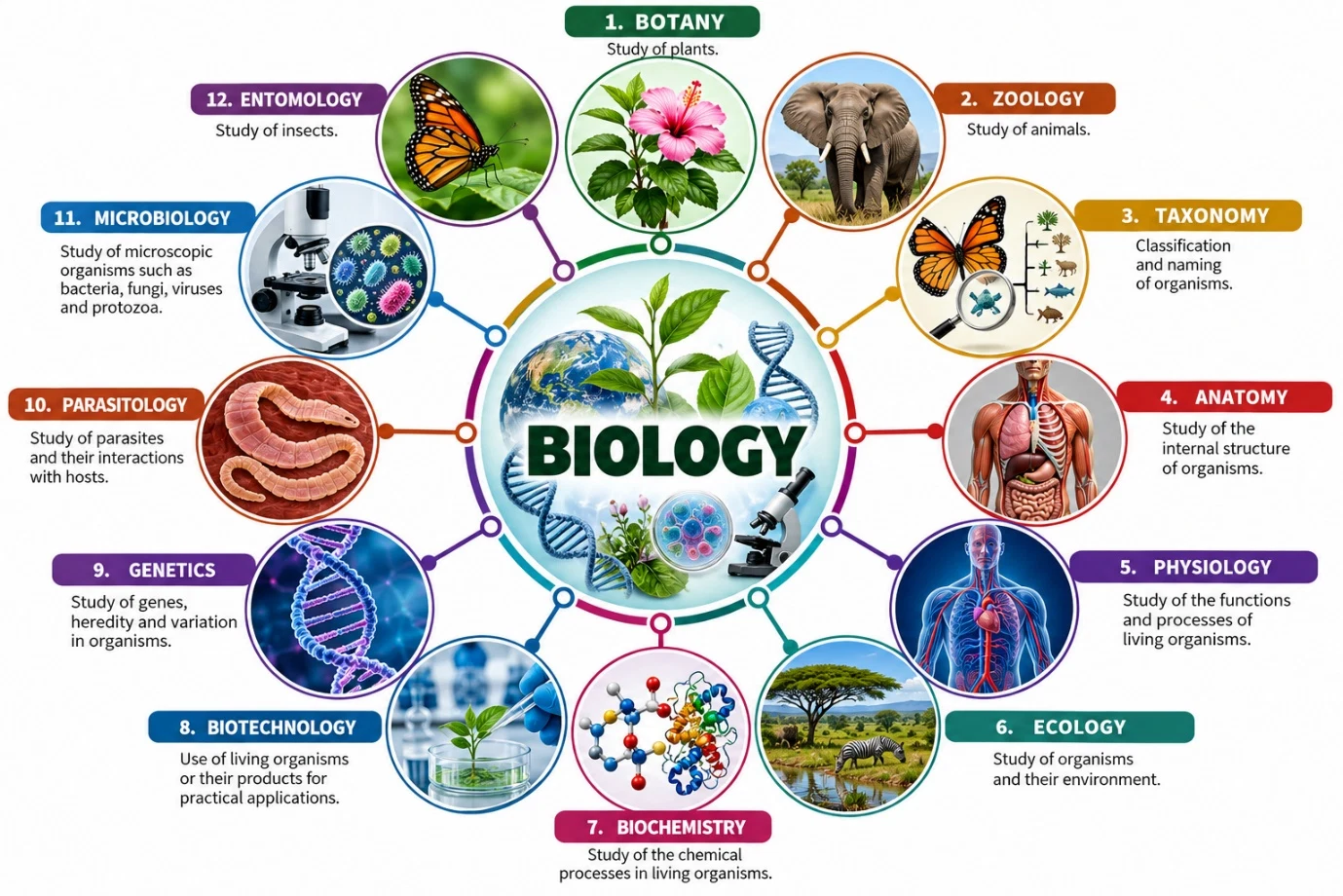
Figure 1: Major fields of study in Biology.
1.1.4 Careers Related to Biology
Studying Biology provides a foundation for careers in healthcare, agriculture, education, research and environmental management.
|
Field of Biology |
Related careers |
|---|---|
|
Botany |
Botanist, plant researcher, horticulturist |
|
Zoology |
Zoologist, wildlife researcher, wildlife conservation officer |
|
Taxonomy |
Taxonomist, biodiversity researcher |
|
Anatomy |
Anatomist, medical researcher |
|
Physiology |
Physiologist, biomedical researcher |
|
Ecology |
Ecologist, environmental scientist |
|
Biochemistry |
Biochemist, laboratory researcher |
|
Biotechnology |
Biotechnologist, tissue culture specialist |
|
Genetics |
Geneticist, genetic counsellor |
|
Parasitology |
Parasitologist, medical researcher |
|
Microbiology |
Microbiologist, laboratory technologist |
|
Entomology |
Entomologist, pest management specialist |
Some careers, such as medicine, nursing, veterinary medicine and laboratory science, draw knowledge from several biological fields.
1.1.5 Factors Influencing Career Choices
Choosing a career requires understanding personal interests, abilities, values and opportunities.
Appropriate factors to consider
1. Personal interests: A learner interested in animals may consider veterinary medicine or wildlife conservation.
2. Abilities and talents: A learner with strong observation and analytical skills may enjoy laboratory research.
3. Academic requirements: Different careers require particular qualifications and subject combinations.
4. Career opportunities: Learners should investigate employment opportunities and areas of professional growth.
5. Personal values: Some learners prefer careers involving community service, environmental protection or scientific innovation.
6. Training requirements: Learners should understand the duration, cost and qualifications needed for a career.
Factors that should not unfairly limit career choices
Learners should not be discouraged from pursuing suitable careers because of gender, cultural stereotypes, disability or assumptions about their background.
Career decisions should be based on individual potential, interests, qualifications and accessible opportunities.
1.1.6 Practical Activity: Making a Biology Career Wheel
Aim: To relate different fields of Biology to possible career opportunities.
Materials: Manila paper, cardboard, ruler, pencil, markers, scissors and glue.
Procedure
- Draw a large circle on cardboard.
- Divide the circle into twelve equal sections.
- Write one field of Biology in each section.
- Add at least two careers associated with each field.
- Include a small drawing or symbol representing each field.
- Display the career wheel in class.
- Explain how personal interests and abilities can influence career choices.
Expected outcome: Learners should identify different fields of Biology and relate them to career opportunities.
Safety precaution: Handle scissors carefully and reuse available materials to minimise waste.
1.1.7 Importance of Studying Biology
Studying Biology enables learners to understand their bodies, make informed health decisions, protect the environment and appreciate the diversity of living organisms.
It also develops scientific skills such as observation, experimentation, recording, analysis, communication and problem-solving.
Biology is therefore important both as a school subject and as a foundation for lifelong learning.
1.1.8 Revision Questions
- Define Biology.
- Explain five applications of Biology in everyday life.
- Differentiate between Anatomy and Physiology.
- State the field of Biology concerned with the study of insects.
- Explain how Biology contributes to food security in Kenya.
- Identify four careers related to Biology.
- Discuss five appropriate factors to consider when choosing a career.
- Explain why gender stereotypes should not determine career choices.
- Describe how Biology contributes to environmental conservation.
- Design a career wheel showing six fields of Biology and their related careers.