
1.2.1 Introduction to Biological Specimens
A biological specimen is a whole organism or part of an organism collected for scientific observation, identification, investigation or study.
Examples include leaves, flowers, seeds, insects, feathers and plant stems.
Biological specimens help learners understand the characteristics, structures, adaptations and diversity of living organisms.
Importance of collecting biological specimens
- Identification: Specimens enable learners to identify and distinguish different organisms.
- Classification: They provide observable features used to group organisms.
- Scientific research: Specimens can provide evidence for biological investigations.
- Education: Preserved specimens serve as teaching and learning resources.
- Biodiversity documentation: Collections can provide records of organisms found in particular environments.
- Comparative studies: Specimens enable scientists to compare the structures and characteristics of organisms.
- Conservation: Well-documented collections can contribute to knowledge about species distribution and changes over time.
1.2.2 Collection, Processing and Preservation
These three activities are related but have different meanings.
Specimen collection is the process of obtaining biological materials from their natural or other suitable environments for scientific study.
Specimen processing involves preparing collected materials for examination, identification, storage or preservation. Activities may include cleaning, sorting, drying, pressing, mounting and labelling.
Specimen preservation involves treating and storing specimens in ways that minimise deterioration and allow future examination.
Differences between the three processes
|
Process |
Main purpose |
Example |
|---|---|---|
|
Collection |
Obtaining the specimen |
Collecting a fallen leaf |
|
Processing |
Preparing the specimen |
Pressing and drying the leaf |
|
Preservation |
Preventing deterioration |
Mounting and storing the dried leaf in a herbarium |
1.2.3 Apparatus and Materials Used in Specimen Collection
Different specimens require different apparatus. The equipment selected should minimise damage to the specimen, the collector and the environment.
1. Pooter or aspirator
A pooter is an apparatus used to collect small insects by suction.
It commonly consists of a collecting container fitted with two tubes. One tube is directed towards the insect while the other is used to create suction. A protective filter prevents the insect or debris from entering the collector's mouth.
Uses: Collecting small insects such as ants and other suitable arthropods.
Safety: A mouth-operated pooter must have a suitable filter and should never be used to collect unknown, harmful or potentially contaminated organisms. A mechanical aspirator is preferable where available.
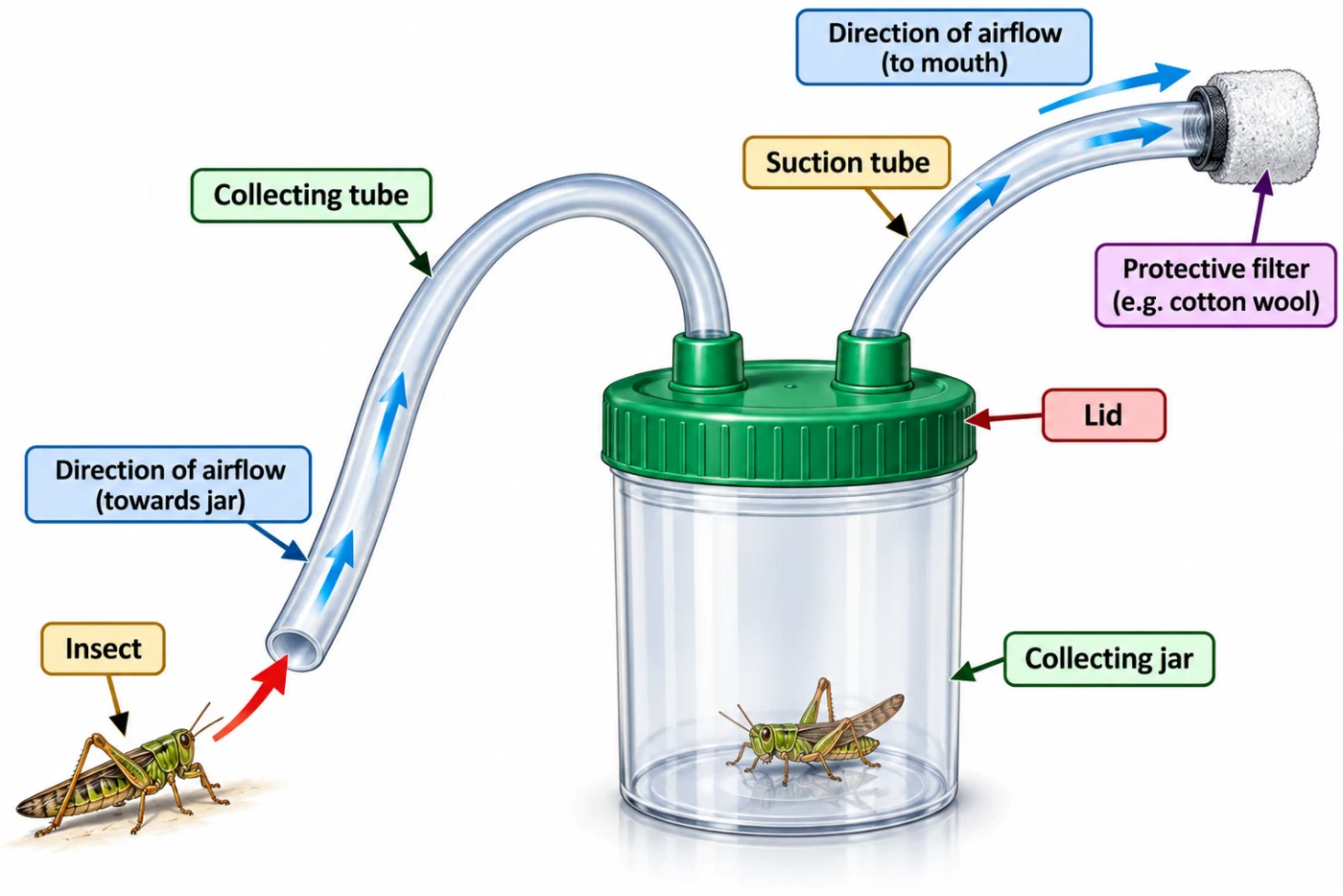
Figure 2: A pooter used for collecting small insects.
2. Sweep net
A sweep net consists of a strong fabric bag attached to a circular frame and handle.
It is used to collect insects from grasses, shrubs and other vegetation.
Method of use: The net is swept gently through suitable vegetation and the contents are examined carefully.
3. Aerial net
An aerial net is a lightweight net used to catch flying insects.
It usually has a fine, soft mesh that reduces damage to delicate wings.
4. Pitfall trap
A pitfall trap is a container placed in the ground with its opening approximately level with the soil surface.
It is used to sample small ground-moving animals such as beetles.
For school investigations, a dry trap should be checked frequently and captured organisms released promptly where appropriate.
5. Light trap
A light trap uses a light source to attract certain insects, especially those active at night.
The insects may be observed or collected using an appropriate container.
6. Tullgren funnel
A Tullgren funnel is an apparatus used to separate small organisms from leaf litter or soil samples.
It commonly consists of a funnel, mesh support, light or gentle heat source and collecting container.
As the upper layers of the sample become warmer and drier, some small organisms move downwards and may fall into the collecting container.
7. Forceps
Forceps are used to pick up small specimens carefully without touching them directly.
8. Hand lens
A hand lens is a magnifying instrument used to observe small external structures.
9. Secateurs
Secateurs are cutting tools used to collect suitable plant parts, such as small stems and twigs, with permission.
10. Collecting bags and envelopes
These are used to hold specimens temporarily during fieldwork.
Paper envelopes are particularly useful for dry plant materials and delicate specimens when appropriate.
11. Labels and permanent markers
Labels provide important information about collected specimens, including the name, collection date and locality.
12. Protective gloves
Gloves protect the collector when handling suitable specimens and potentially irritating materials.
They do not replace other safety precautions.
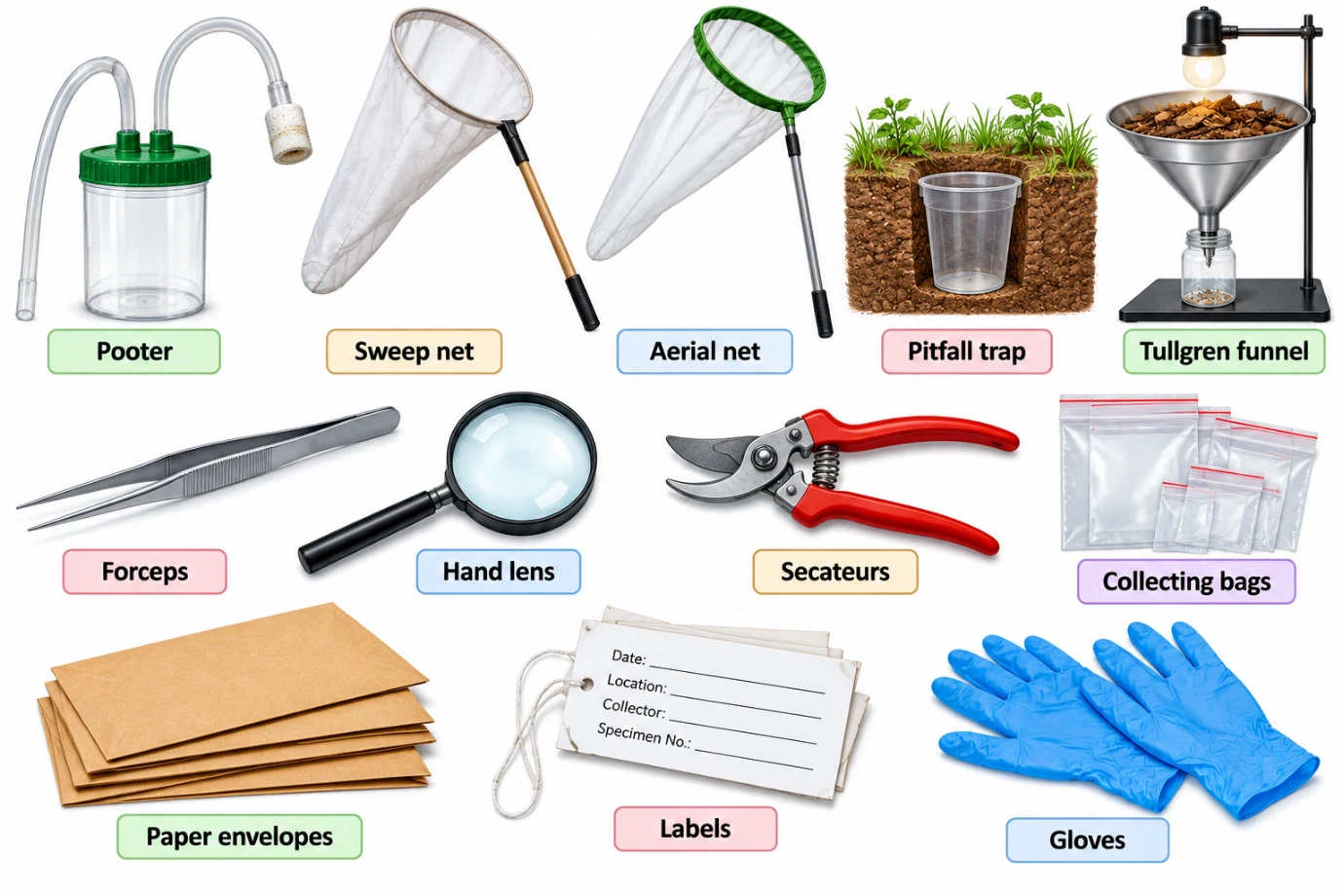
Figure 3: Apparatus and materials used in biological specimen collection.
1.2.4 Improvisation of Specimen Collection Apparatus
Improvisation is the process of making useful apparatus from locally available materials when conventional equipment is unavailable or expensive.
Improvisation encourages creativity, problem-solving, resourcefulness and responsible use of materials.
Examples
|
Conventional apparatus |
Possible improvised alternative |
|---|---|
|
Pitfall trap |
Clean plastic container placed in a shallow hole |
|
Collecting tray |
Clean reusable shallow container |
|
Plant press |
Cardboard, absorbent paper and flat wooden boards |
|
Specimen labels |
Recycled card or clean paper |
|
Collecting bags |
Clean reusable paper bags |
|
Hand-operated sorting tool |
Blunt-ended tweezers suitable for the specimen |
Improvised equipment must be safe, clean and appropriate for the intended investigation.
1.2.5 Collection of Plant Specimens
Plant specimens may include leaves, flowers, seeds, fruits, stems and other suitable plant parts.
Procedure for collecting plant specimens
- Select a suitable collection area with permission.
- Identify the plant or plant part to be studied.
- Observe its characteristics in its natural environment.
- Record the locality, date and relevant habitat information.
- Collect only the minimum material needed.
- Avoid uprooting plants unnecessarily.
- Place the material in a suitable collecting bag or envelope.
- Label the specimen immediately.
- Transport it carefully for processing.
Precautions
- Avoid collecting protected or endangered plants.
- Do not collect specimens from restricted areas without permission.
- Handle sharp tools carefully.
- Avoid unknown plants that may be poisonous or irritating.
- Minimise damage to vegetation and habitats.
1.2.6 Preparation of a Herbarium
A herbarium is an organised collection of preserved plant specimens, usually dried, pressed, mounted and labelled for reference or scientific study.
A herbarium may be kept in a school laboratory, museum, research institution or botanical organisation.
Materials required
Plant specimens, newspapers or absorbent paper, cardboard, flat boards, suitable fastening materials, mounting sheets, labels and storage folders.
Procedure
Step 1: Collection
Collect suitable plant specimens and record relevant field information.
Step 2: Pressing
Place the plant specimen between sheets of absorbent paper. Arrange the leaves and other structures so that important identifying features remain visible.
Step 3: Drying
Place the specimen in a plant press and allow it to dry thoroughly. Replace damp paper when necessary to reduce mould growth.
Step 4: Mounting
Carefully attach the dried specimen to a suitable herbarium sheet using appropriate mounting materials.
Step 5: Labelling
Prepare a label containing the required specimen information.
Step 6: Storage
Store the mounted specimen in a dry, protected place away from moisture, pests and direct damage.
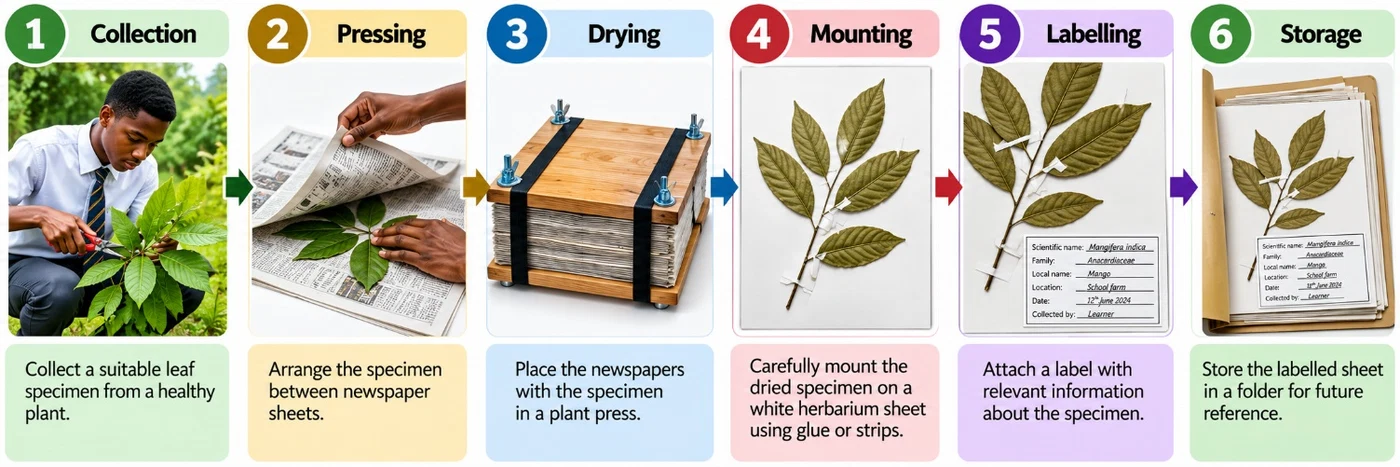
Figure 4:Main stages in the preparation of a herbarium specimen.
Example of a herbarium label
|
Information |
Example |
|---|---|
|
Common name |
Mango |
|
Scientific name |
Mangifera indica |
|
Locality |
School compound, Nairobi County |
|
Date collected |
15 March 2027 |
|
Collector |
Biology learner |
|
Habitat |
Cultivated school garden |
|
Specimen |
Leaf |
This is an illustrative record. Actual labels should contain information recorded during collection.
1.2.7 Collection of Small Animal Specimens
Small animal specimens may be studied to observe external features, adaptations, diversity and behaviour.
Collection methods
Sweep-net sampling: Used to sample suitable insects from vegetation.
Pitfall trapping: Used to sample small ground-moving organisms.
Aerial-net sampling: Used to catch suitable flying insects.
Pooter collection: Used to collect small, safe insects.
Leaf-litter extraction: A Tullgren funnel may be used to separate small organisms from leaf litter.
General procedure
- Select an appropriate habitat.
- Identify a suitable sampling method.
- Prepare the apparatus.
- Collect or observe specimens carefully.
- Record the collection details.
- Examine the specimens using a hand lens where necessary.
- Record their observable characteristics.
- Release live organisms safely where appropriate.
Ethical considerations
Learners should avoid unnecessary injury or killing of animals. Live observation, photography and temporary sampling should be preferred where these meet the learning objective.
Any preservation requiring the death of an organism should be undertaken only under appropriate institutional guidance and relevant regulations.
1.2.8 Processing and Preservation of Animal Specimens
Animal specimens may be preserved by different methods depending on their characteristics and the purpose of the collection.
Dry preservation
Dry preservation involves keeping suitable specimens in a dry condition to reduce deterioration.
Some insects may be mounted on suitable boards for reference.
Wet preservation
Wet preservation involves keeping suitable specimens in an approved preservative solution.
Ethanol is one example used in biological collections, but it is flammable and requires controlled handling, appropriate containers and teacher supervision.
Mounting
Mounting involves arranging and securing a specimen on a suitable support so that important features can be observed.
Labelling
Every preserved specimen should be accompanied by accurate identifying and collection information.
Comparison of preservation methods
|
Method |
Suitable examples |
Main consideration |
|---|---|---|
|
Pressing and drying |
Leaves, flowers and other suitable plant parts |
Prevent moisture and mould |
|
Dry mounting |
Suitable insect specimens |
Protect delicate structures |
|
Wet preservation |
Selected biological specimens |
Use approved preservative and secure containers |
|
Photography |
Living plants and animals |
Records appearance without physical collection |
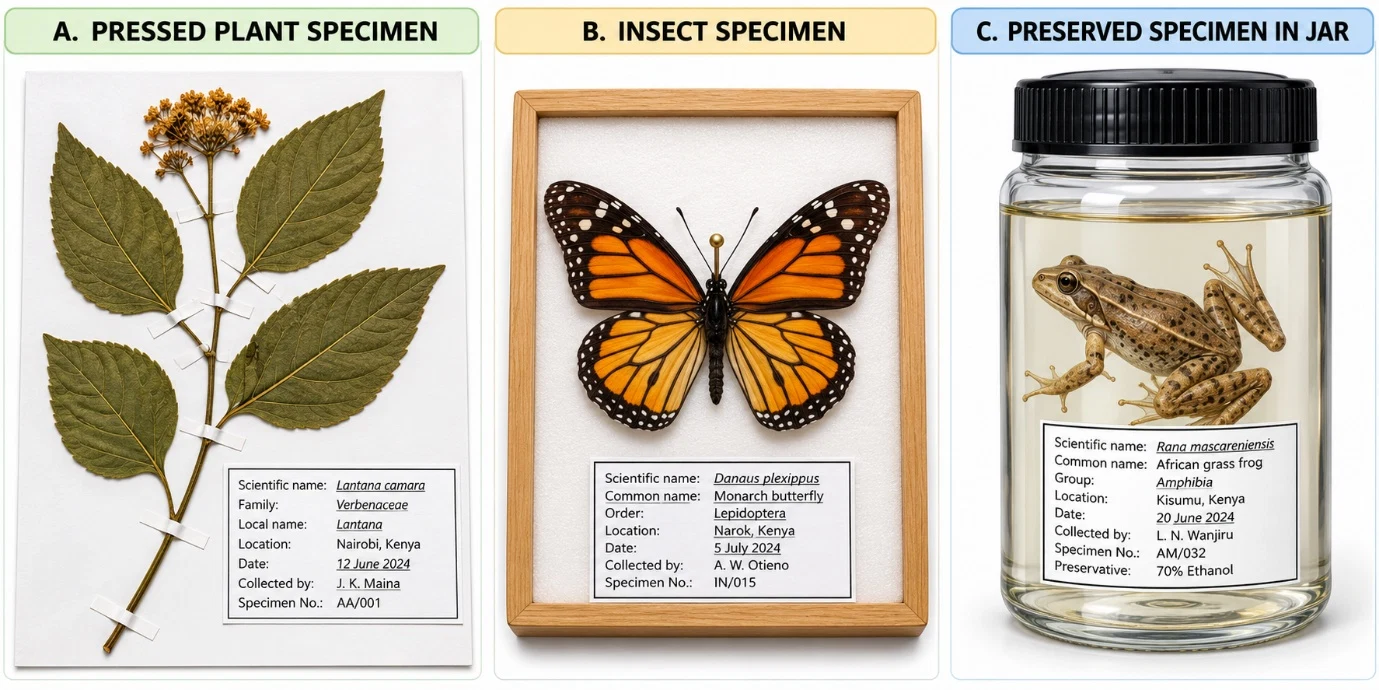
Figure 5: Examples of biological specimen preservation methods.
1.2.9 Importance of Proper Specimen Labelling
Proper labelling ensures that a specimen can be identified and its collection information traced.
A specimen label may include:
- Common or scientific name, where known.
- Collection date.
- Collection locality.
- Name of collector.
- Habitat.
- Relevant observations.
- Specimen identification number.
Incorrect or missing labels can reduce the scientific value of a specimen.
1.2.10 Care and Storage of Preserved Specimens
Preserved specimens should be stored carefully to maintain their condition.
Good storage practices include keeping specimens dry where appropriate, protecting them from pests, avoiding excessive handling, using secure containers and inspecting collections regularly.
Wet-preserved specimens require additional controls for chemical safety, leakage prevention and suitable storage conditions.
1.2.11 Practical Project: Establishing a School Biological Specimen Collection
Project title: Collection, Processing and Preservation of Biological Specimens.
Objective
To prepare a small, properly documented collection of suitable biological specimens using conventional or improvised apparatus.
Materials
Collecting bags, gloves, labels, newspapers, cardboard, mounting sheets, hand lens, writing materials and other suitable apparatus.
Procedure
- Plan the project and identify the specimens to be studied.
- Prepare a simple budget for the materials required.
- Obtain permission for specimen collection.
- Select suitable collection sites.
- Collect permitted plant specimens or record suitable animal specimens through photographs and observations.
- Process the specimens using appropriate methods.
- Preserve and label the collected materials.
- Prepare a portfolio showing the work completed.
- Present the collection and project findings to the class.
Suggested project budget
|
Item |
Estimated cost (KSh) |
|---|---|
|
Mounting sheets |
100 |
|
Labels and writing materials |
50 |
|
Cardboard |
80 |
|
Folders |
120 |
|
Miscellaneous materials |
50 |
|
Total |
400 |
The figures are illustrative for budgeting practice, not verified market prices.
Project portfolio
The portfolio should contain the project title, objectives, materials, budget, collection records, photographs or drawings, preservation methods, challenges, safety precautions, findings and conclusion.
1.2.12 Core Competencies, Values and Contemporary Issues
Core competencies: Critical thinking and problem-solving are developed through improvisation of apparatus. Self-efficacy is developed when learners successfully complete specimen collection and preservation activities.
Values: Unity is demonstrated through group work, while integrity is demonstrated through accurate recording and honest reporting of project findings.
Pertinent and Contemporary Issues: Environmental conservation is promoted through responsible collection, while safety and security are promoted through careful handling of equipment, specimens and preservation materials.
1.2.13 Revision Questions
- Define a biological specimen.
- Distinguish between specimen collection, processing and preservation.
- State six apparatus used for collecting biological specimens.
- Describe the structure and function of a pooter.
- Explain how a pitfall trap is used.
- Describe the function of a Tullgren funnel.
- Explain five precautions to observe when collecting plant specimens.
- Describe the procedure for preparing a herbarium.
- State six details that should appear on a specimen label.
- Differentiate between dry and wet preservation.
- Explain four reasons for preserving biological specimens.
- Describe how locally available materials can be used to improvise specimen collection apparatus.
- Explain the importance of environmental conservation during specimen collection.
- Outline the steps involved in preparing a biological specimen collection project.
- Explain how proper storage increases the usefulness of preserved specimens.