
1. Introduction
Gardening is the practice of growing crops in selected areas for food, decoration or other purposes.
In some homes and schools, land for gardening is limited.
This makes it necessary to use innovative methods of growing crops in small spaces.
One such method is constructing a framed suspended garden.
A framed suspended garden is a gardening structure supported by a frame and raised or suspended above the ground to provide space for growing crops.
It uses available vertical space to grow vegetables and other suitable plants.
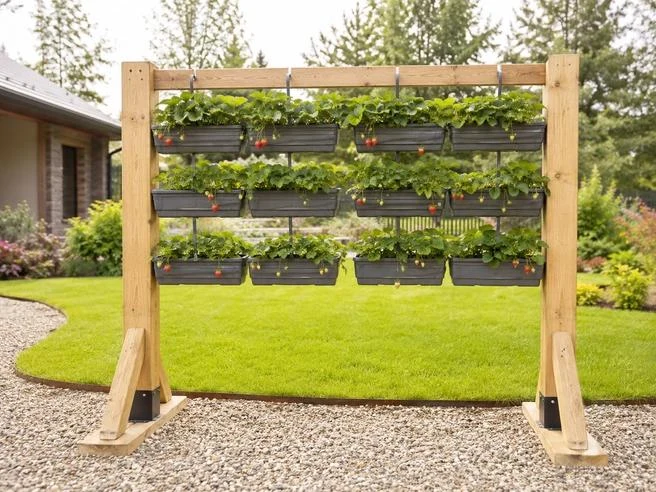
A framed suspended garden used for growing vegetables.
2. Features of a framed suspended garden
A framed suspended garden has several important features.
A. Supporting frame
The frame provides support for the garden and its growing containers.
It may be made from:
- Wooden planks.
- Metal bars.
- Wires.
- Strong poles.
B. Suspension materials
These are materials used to hold or suspend the garden.
Examples include:
- Strong ropes.
- Chains.
- Wires.
- Strong supporting poles.
C. Growing containers
These hold the soil or growing medium used for planting crops.
Examples include:
- Recycled plastic containers.
- Suitable tins.
- Planting boxes.
- Containers made from locally available materials.
D. Growing medium
This is the material in which crops are planted.
Examples include:
- Suitable garden soil.
- Compost.
- Well-decomposed manure mixed with soil.
E. Planting materials
These are seeds or seedlings used to establish crops.
Examples include:
- Spinach seedlings.
- Sukuma wiki seedlings.
- Lettuce.
- Coriander.
- Other suitable vegetables.
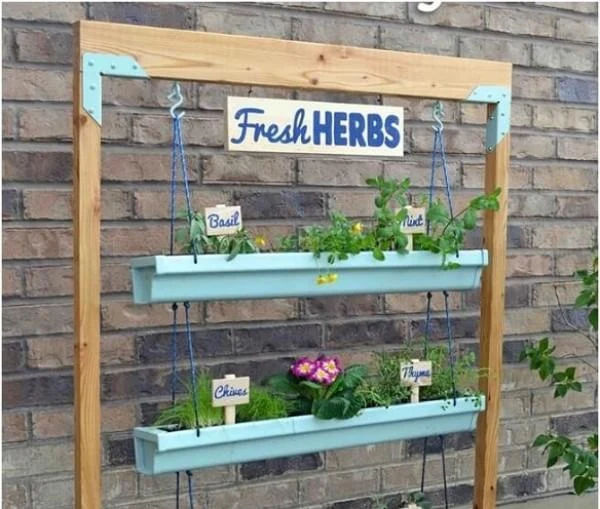
Main components of a framed suspended garden.
3. Importance of framed suspended gardens
A. Saving space
Suspended gardens use vertical space, allowing crops to grow above the ground.
This is useful in homes and schools with limited gardening areas.
B. Growing crops in small areas
They allow households to grow vegetables in places where conventional gardening may be difficult.
C. Reducing damage by some animals
Raising suitable planting containers can protect crops from certain ground-feeding animals.
However, the structure must be secure and designed to prevent access by pests.
D. Improving environmental cleanliness
Suspended gardens can make use of suitable recycled containers and materials.
E. Supporting food production
They allow households to produce vegetables for their own consumption.
F. Encouraging creativity and innovation
Learners develop skills in designing and constructing useful gardening structures.
G. Supporting income generation
Surplus vegetables may be sold to generate income.
H. Improving the appearance of the environment
Well-arranged suspended gardens can improve the appearance of homes and school compounds.
4. Materials used in constructing framed suspended gardens
The curriculum recommends locally available materials such as wires, wooden planks, metal bars and poles.
|
Material |
Function |
|---|---|
|
Wooden planks |
Constructing the supporting frame |
|
Metal bars |
Providing structural support |
|
Wires |
Joining or supporting components |
|
Strong poles |
Supporting the frame |
|
Ropes or chains |
Suspending containers |
|
Plastic containers |
Holding growing medium |
|
Soil |
Supporting plant growth |
|
Compost manure |
Improving soil fertility |
|
Seeds or seedlings |
Establishing crops |
|
Small stones |
Improving drainage in suitable containers |
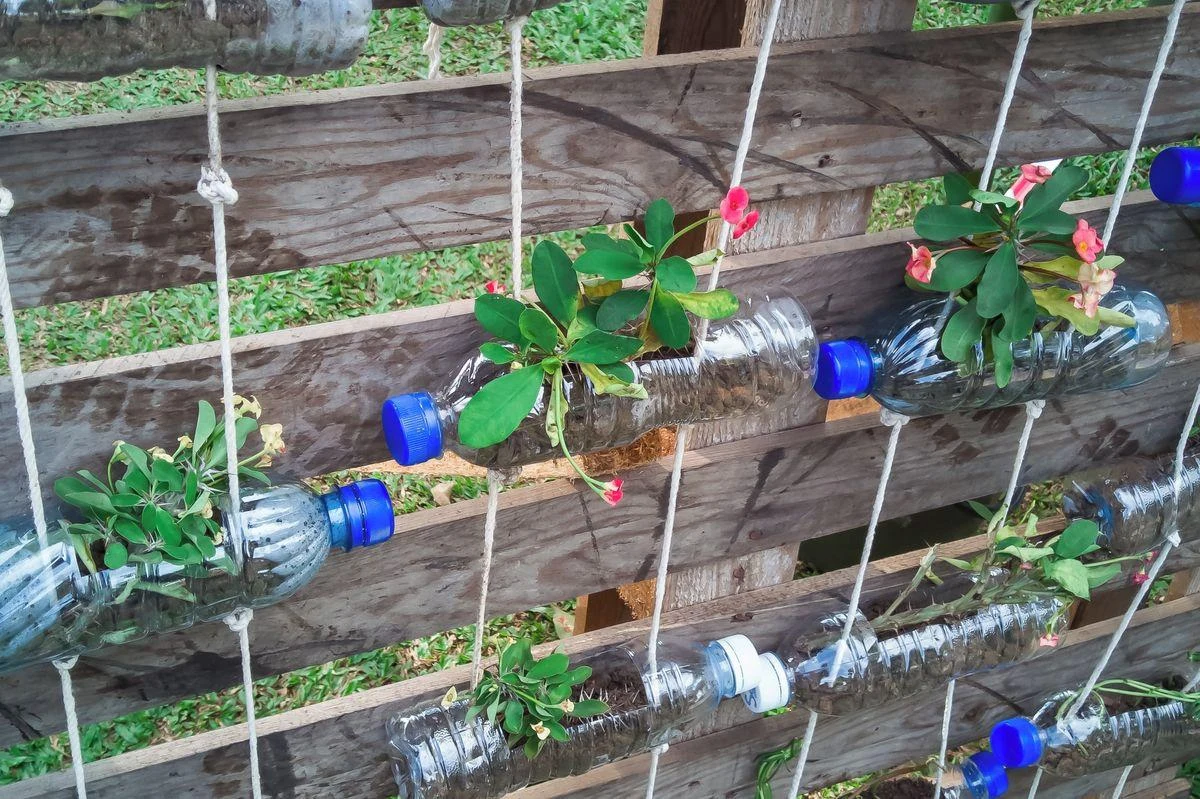
Locally available materials used to construct a suspended garden.
5. Tools used in constructing framed suspended gardens
|
Tool |
Use |
|---|---|
|
Hammer |
Driving nails into wood |
|
Saw |
Cutting wooden materials |
|
Pliers |
Bending and cutting suitable wire |
|
Measuring tape |
Measuring the frame |
|
Spade |
Preparing soil |
|
Jembe |
Preparing the planting medium |
|
Screwdriver |
Tightening suitable screws |
|
Watering can |
Watering established crops |
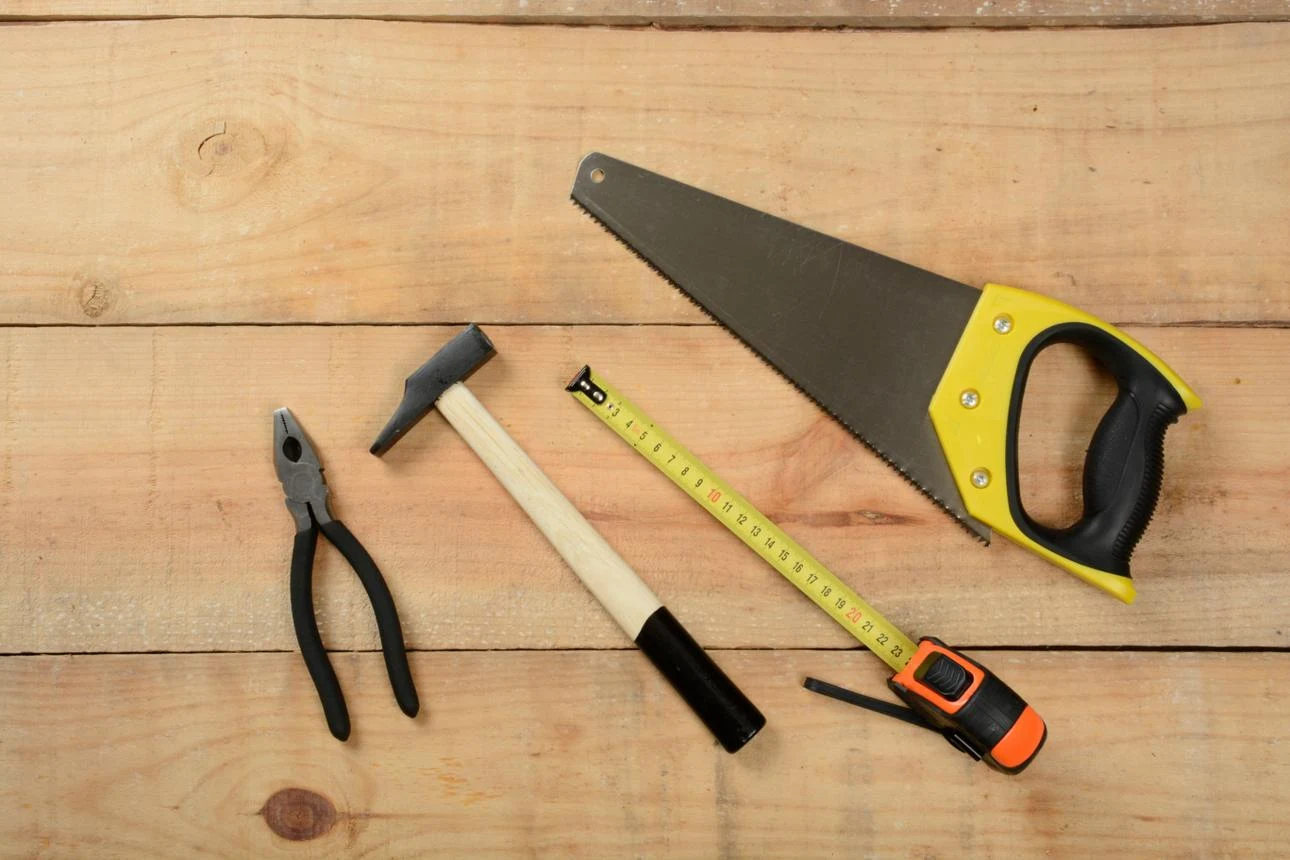
Tools used when constructing a framed suspended garden.
6. Types of framed suspended garden designs
A. Wooden framed suspended garden
This design uses wooden planks to construct a supporting structure.
Containers are attached to or suspended from the frame.
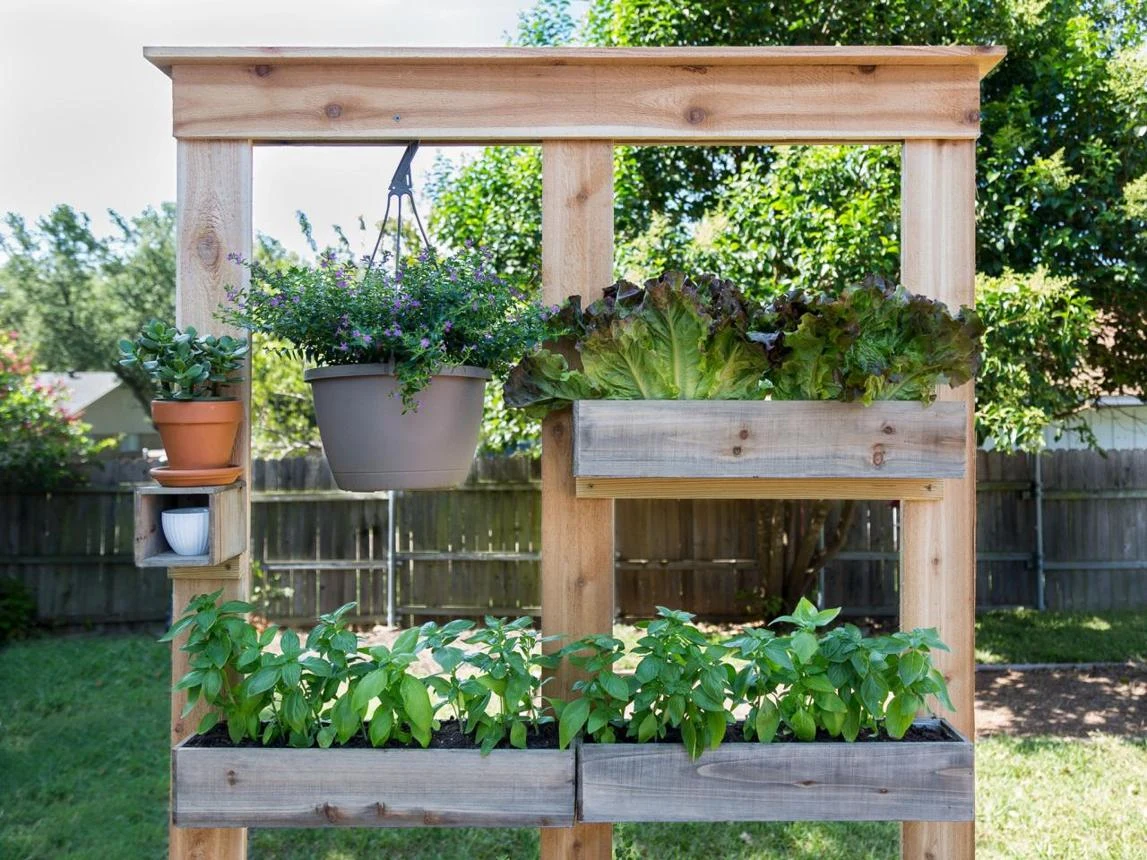
Wooden framed suspended garden.
B. Metal framed suspended garden
This design uses metal bars or wires to construct the supporting frame.
It can be strong and durable when properly constructed and protected from corrosion.
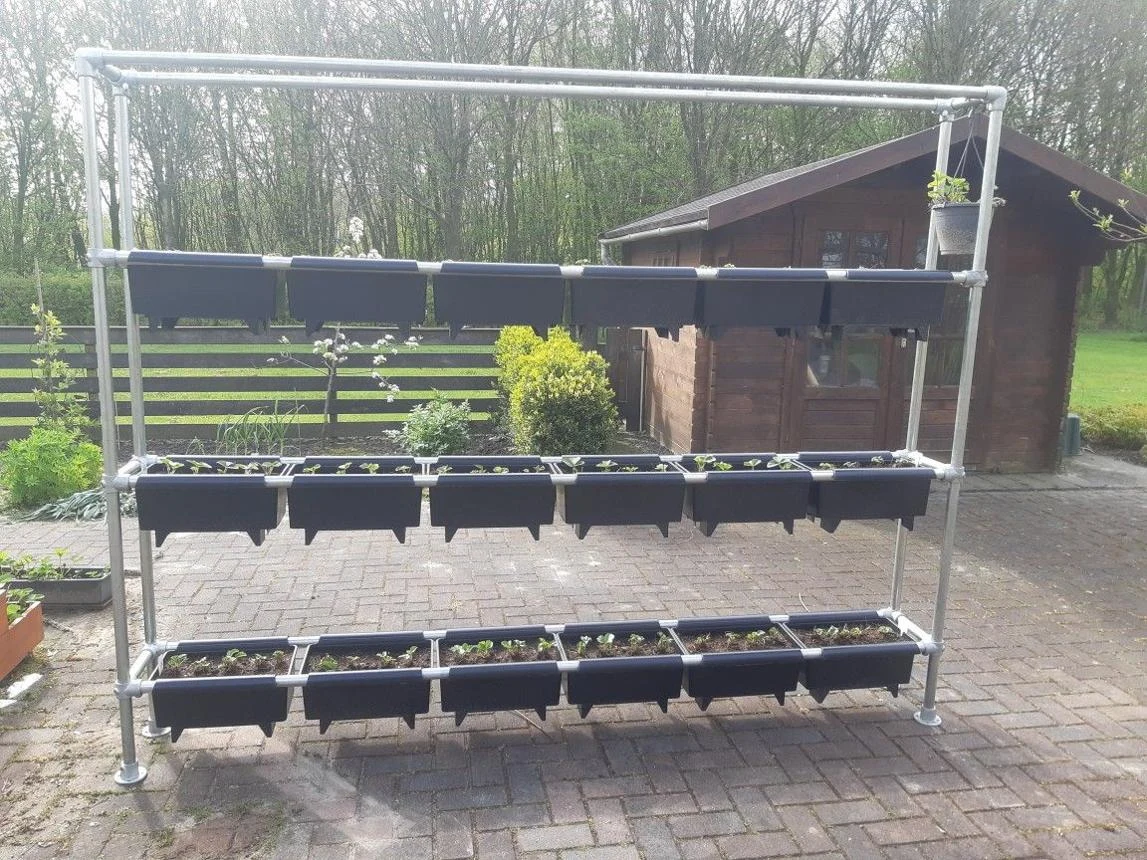
Metal framed suspended garden.
C. Recycled-container suspended garden
This design uses suitable recycled containers attached to a supporting frame.
Examples include:
- Plastic bottles.
- Recycled jerrycans.
- Suitable tins.
- Other clean containers.
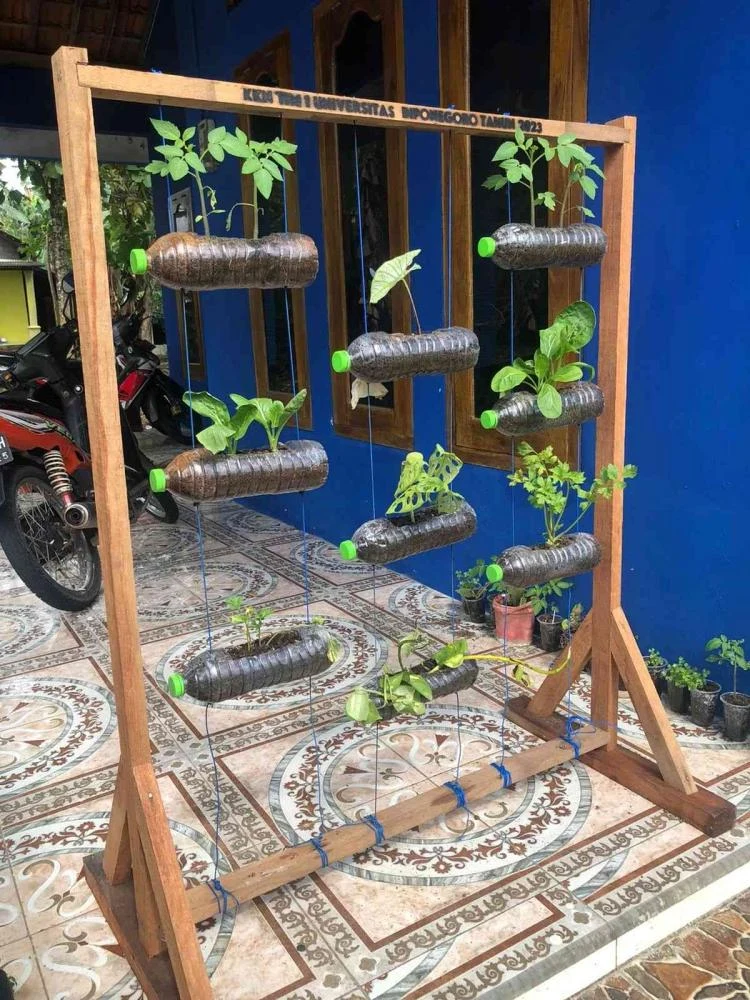
Suspended garden constructed using recycled containers.
7. Selecting suitable crops for a suspended garden
Not every crop is suitable for growing in suspended containers.
The selected crops should have growth requirements that can be supported by the containers and frame.
Examples include:
|
Crop |
Reason for suitability |
|---|---|
|
Spinach |
Can grow in suitable containers |
|
Sukuma wiki |
Produces edible leaves |
|
Lettuce |
Suitable for container growing |
|
Coriander |
Requires relatively little space |
|
Spring onions |
Can grow in suitable planting containers |
|
Small tomato varieties |
Can grow where containers and frames provide adequate support |
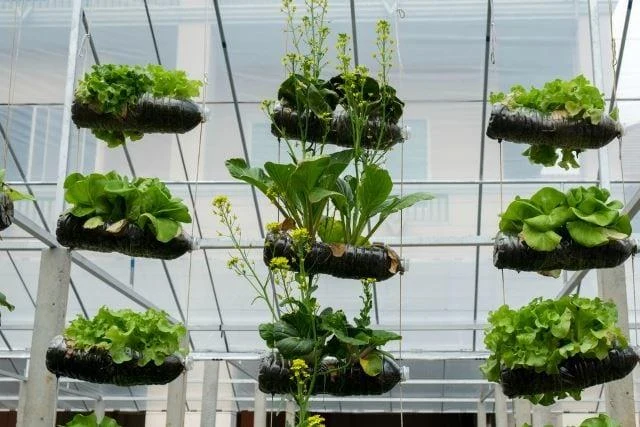
Vegetables that can be established in suitable suspended gardens.
8. Procedure for constructing a framed suspended garden
Step 1: Select a suitable location
Choose a location with sufficient sunlight, water access and enough space for the structure.
Ensure that the supporting surface can safely carry the expected load.
Step 2: Design the frame
Decide on the size and shape of the frame.
The design should accommodate the selected containers and crops.
Step 3: Collect the required materials
Obtain suitable wooden planks, metal bars, wires, poles and other materials.
Ensure that all materials are strong enough for their intended use.
Step 4: Measure the materials
Use a measuring tape to determine the required dimensions.
Mark the positions where the materials will be joined.
Step 5: Construct the supporting frame
Join the wooden or metal components using suitable methods.
Ensure that the frame is stable and properly supported.
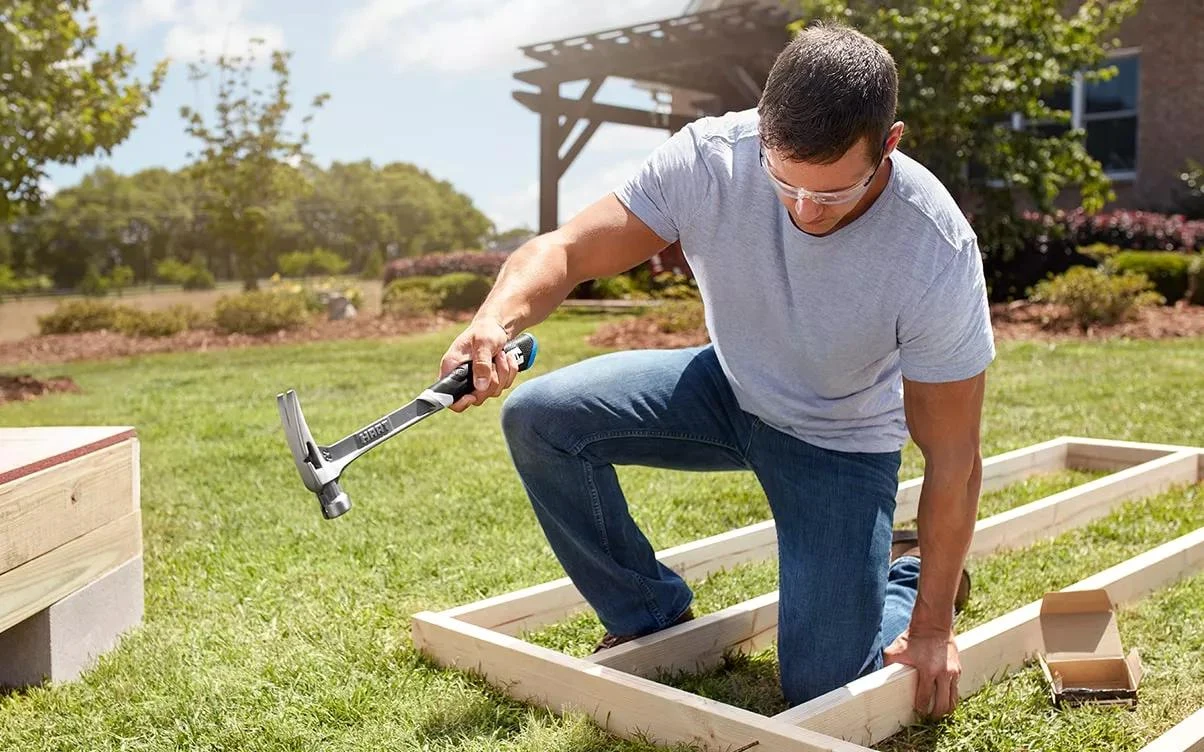
Constructing the supporting frame.
Step 6: Attach the suspension materials
Attach suitable ropes, wires or chains to the frame.
Ensure that the suspension points are secure.
Step 7: Prepare the planting containers
Clean the containers and make suitable drainage holes where necessary.
Drainage holes allow excess water to escape.
Step 8: Prepare the growing medium
Mix suitable soil with well-decomposed compost or manure.
Remove stones and unwanted materials.
Step 9: Fill the containers
Place the growing medium into the prepared containers.
Avoid filling them beyond their capacity.
Step 10: Establish the crops
Plant suitable seeds or seedlings in the containers.
Follow the recommended planting depth and spacing.
Step 11: Suspend the garden
Attach the filled containers securely to the frame.
Check the stability of the structure before use.
Step 12: Water the crops
Water the crops carefully to provide sufficient moisture without causing waterlogging.
Step 13: Maintain the garden
Continue watering, weeding, monitoring pests and replacing damaged plants where necessary.
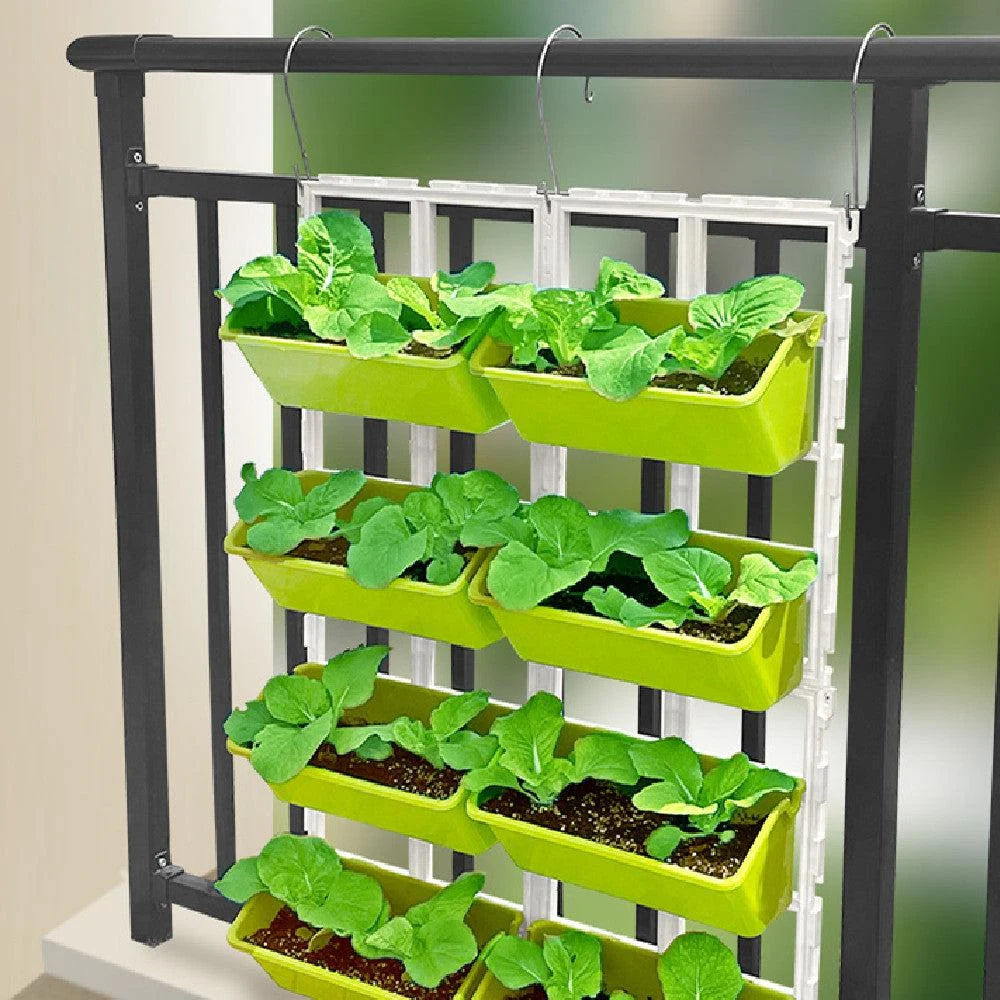
A completed framed suspended garden.
9. Caring for a framed suspended garden
- Water crops regularly according to their needs.
- Remove weeds from containers.
- Replace dead seedlings.
- Add suitable organic manure when necessary.
- Inspect the frame for damage.
- Check ropes and supporting wires.
- Remove damaged plant parts.
- Control pests and diseases appropriately.
- Ensure drainage holes remain open.
- Harvest crops at the appropriate stage.
10. Safety precautions when constructing suspended gardens
- Use strong materials.
- Ensure that the frame is properly supported.
- Check that ropes and wires are securely attached.
- Avoid hanging heavy containers over areas where people walk.
- Use tools carefully.
- Avoid sharp exposed wire ends.
- Ask an adult to assist with heavy materials.
- Do not overload the structure.
- Ensure that the structure cannot easily fall during strong winds.
11. Practical activity: Constructing a framed suspended garden
Activity: Establishing a vegetable garden using locally available materials
Materials:
- Wooden planks or metal bars.
- Suitable wires or ropes.
- Plastic containers.
- Soil.
- Compost manure.
- Vegetable seedlings.
- Watering can.
- Suitable construction tools.
Procedure:
- Identify a suitable location.
- Draw a simple design of the garden.
- Collect the required materials.
- Measure and prepare the frame components.
- Construct the supporting frame.
- Attach suitable suspension materials.
- Prepare planting containers.
- Mix soil with compost manure.
- Fill the containers.
- Plant selected vegetable seedlings.
- Suspend the containers securely.
- Water the crops.
- Monitor and maintain the garden.
12. Key inquiry question
How are framed suspended gardens constructed?
They are constructed by designing and assembling a supporting frame using locally available materials. Suitable containers are attached, filled with growing medium and planted with selected crops.
13. Revision questions and answers
Q1. What is a framed suspended garden?
It is a gardening structure supported by a frame and raised or suspended above the ground for growing crops.
Q2. Name four materials used in constructing a framed suspended garden.
Wooden planks, wires, metal bars and poles.
Q3. Give four crops that can be grown in suitable suspended gardens.
Spinach, lettuce, coriander and spring onions.
Q4. State five advantages of suspended gardens.
- Save space.
- Support food production.
- Encourage recycling.
- Promote creativity.
- Can reduce damage by some ground-feeding animals.
Q5. Why are drainage holes important in planting containers?
They allow excess water to escape and help prevent waterlogging.
Q6. State four steps involved in constructing a suspended garden.
- Selecting a location.
- Constructing the frame.
- Preparing containers.
- Establishing crops.
Q7. Why should the supporting frame be strong?
To carry the weight of the containers, growing medium, crops and water safely.
Q8. State four ways of maintaining a suspended garden.
Watering, weeding, checking the frame and controlling pests.