
Introduction
A sentence is a group of words arranged in a meaningful order to communicate a complete thought.
Sentences are important in communication because they enable people to express ideas, ask questions, give instructions and share information.
This sub-strand focuses on simple sentences.
A. Meaning of a simple sentence
A simple sentence is a sentence containing one independent clause.
It expresses a complete thought and has a subject and a predicate.
Examples:
- Mary sings.
- The driver stopped.
- Learners read books.
- The passengers boarded the bus.
- Our teacher explained the lesson.
B. Parts of a simple sentence
A simple sentence commonly contains two major parts:
1. Subject
The subject is the person, animal, place or thing that performs an action or is being described.
2. Predicate
The predicate tells us something about the subject. It normally contains a verb.
Example:
The driver stopped the vehicle.
- Subject: The driver.
- Predicate: Stopped the vehicle.
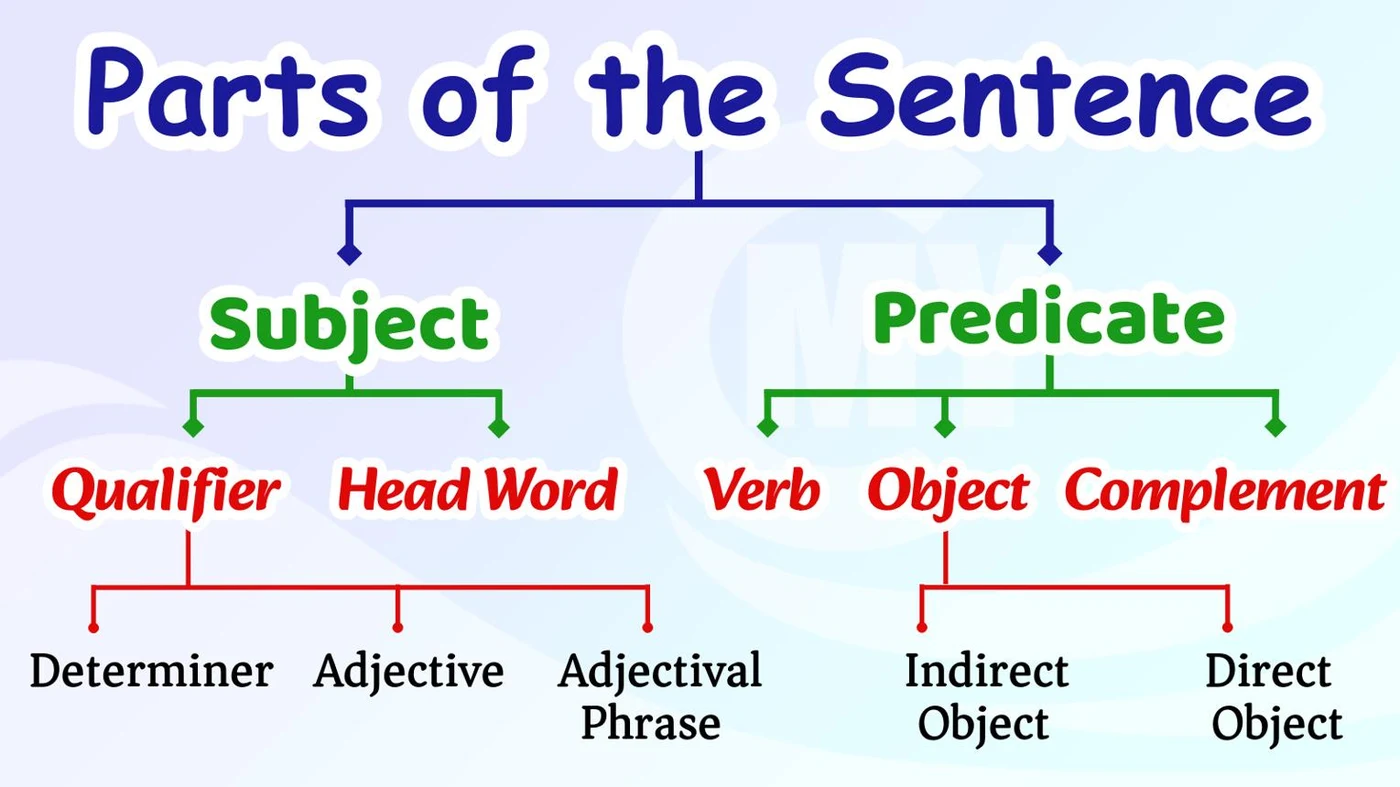
A simple sentence is built around a subject and a predicate.
C. The verb in a simple sentence
A verb expresses an action, occurrence or state.
Examples:
- Run.
- Walk.
- Sing.
- Travel.
- Drive.
- Read.
- Sleep.
- Think.
A simple sentence must have a main verb.
Examples:
- The passengers travelled.
- The driver stopped.
- The children played.
D. Types of simple sentences according to purpose
1. Declarative sentences
These make statements.
Examples:
- The bus is new.
- The road is wide.
- The passengers are waiting.
2. Interrogative sentences
These ask questions.
Examples:
- Where are you going?
- Who is driving the bus?
- Have you reached your destination?
3. Imperative sentences
These give instructions, commands or requests.
Examples:
- Wear your seat belt.
- Stop at the crossing.
- Please wait here.
4. Exclamatory sentences
These express strong feelings.
Examples:
- What a beautiful journey!
- How exciting the trip was!
- What a dangerous road!
E. Constructing simple sentences
To construct a simple sentence:
- Identify the subject.
- Select an appropriate verb.
- Add an object or other necessary information.
- Arrange the words correctly.
- Begin with a capital letter.
- End with appropriate punctuation.
Examples:
|
Subject |
Verb |
Additional information |
|---|---|---|
|
Mary |
Reads |
A book. |
|
The driver |
Drives |
Carefully. |
|
Learners |
Visit |
The museum. |
|
My father |
Repairs |
Vehicles. |
F. Simple sentences with objects
An object is a word or group of words that receives the action of a verb.
Example:
The driver washed the vehicle.
- Subject: The driver.
- Verb: Washed.
- Object: The vehicle.
More examples:
- Jane bought a ticket.
- The mechanic repaired the bus.
- The teacher marked the books.
- The passengers carried their luggage.
G. Simple sentences with adjectives and adverbs
Adjectives and adverbs can provide additional information.
Examples:
- The road is dangerous.
- The driver is careful.
- The bus moves slowly.
- The passengers arrived early.
H. Characteristics of simple sentences
- They communicate complete thoughts.
- They contain one independent clause.
- They have a subject and a predicate.
- They contain a main verb.
- They can contain additional descriptive information.
A simple sentence can also have a compound subject or compound predicate.
Example:
Mary and Jane travelled to Nairobi.
This remains a simple sentence because it has one independent clause.
I. Common errors in simple sentence construction
1. Sentence fragments
A sentence fragment is an incomplete group of words presented as a sentence.
Incorrect: Because the road was wet.
Correct: The driver slowed down because the road was wet.
2. Incorrect word order
Incorrect: To school Mary went.
Correct: Mary went to school.
3. Missing verbs
Incorrect: The passengers in the bus.
Correct: The passengers are in the bus.
4. Incorrect punctuation
Incorrect: Where are you going.
Correct: Where are you going?
J. Importance of simple sentences
- Communicate ideas clearly.
- Improve writing skills.
- Develop correct grammar.
- Help learners construct paragraphs.
- Improve spoken communication.
- Provide a foundation for more complex sentences.
Activities
- Read a passage about land travel.
- Identify simple sentences.
- Underline the subjects.
- Circle the verbs.
- Identify objects.
- Construct original simple sentences.
- Write a short dialogue using simple sentences.
Summary
A simple sentence contains one independent clause and communicates a complete thought. Learners should identify subjects and predicates and construct grammatically correct simple sentences.