
Introduction
Reading fluency is the ability to read accurately, at an appropriate speed and with expression.
A fluent reader recognises words correctly and reads smoothly while communicating the meaning of the text.
Reading fluency improves comprehension and makes reading enjoyable.
A. Three main components of reading fluency
1. Accuracy
Accuracy means reading words correctly.
A learner should:
- Pronounce words correctly.
- Avoid skipping words.
- Avoid unnecessary repetition.
- Recognise punctuation.
- Correct reading mistakes.
2. Appropriate speed
Speed refers to how quickly a learner reads.
A good reader should maintain a pace that allows the text to be understood.
Reading too quickly may result in mistakes, while reading too slowly may interrupt the flow of ideas.
3. Expression
Expression involves reading with appropriate emotion and intonation.
It includes:
- Voice variation.
- Correct pronunciation.
- Appropriate pauses.
- Emphasis.
- Facial expressions where appropriate.


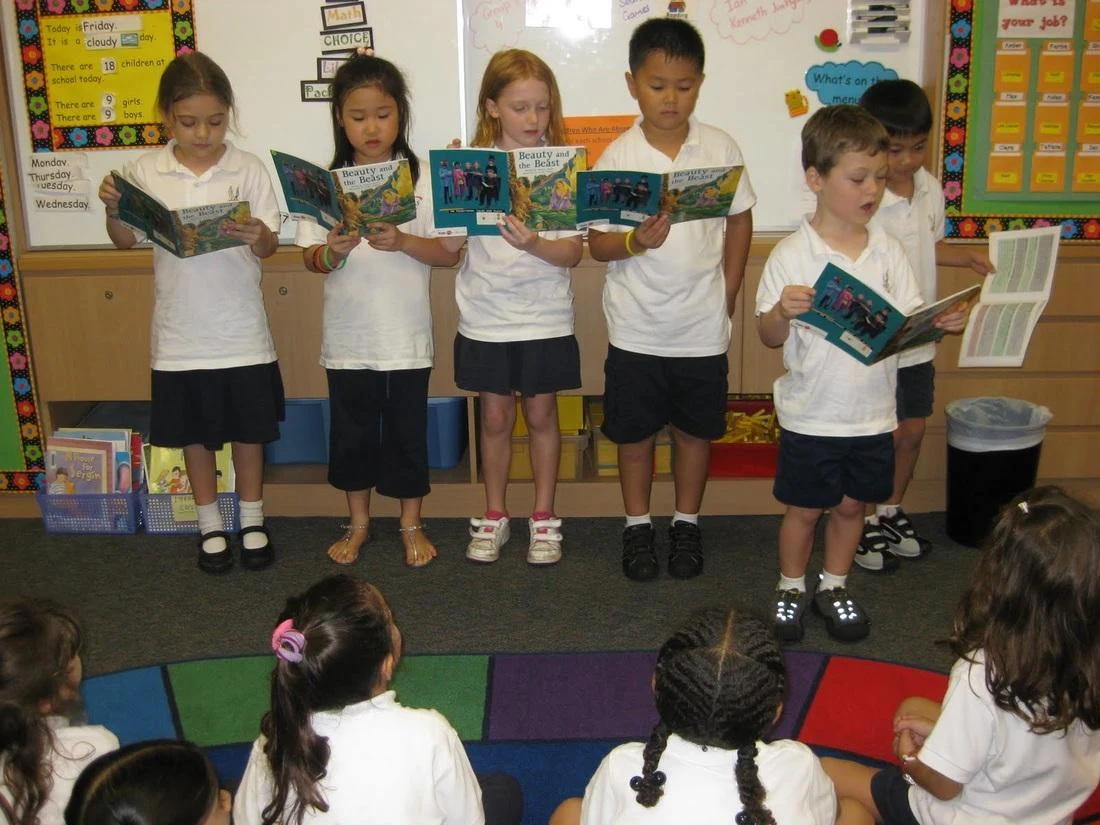
Learners practise reading aloud and independently, paying attention to accuracy, pace and expression.
B. Qualities of a good reader
- Reads accurately.
- Maintains an appropriate pace.
- Uses correct pronunciation.
- Observes punctuation.
- Uses suitable expression.
- Understands the text.
- Maintains concentration.
C. Techniques for improving reading fluency
1. Repeated reading
Reading the same passage several times to improve accuracy and speed.
2. Paired reading
Two learners read together, supporting one another.
3. Echo reading
A teacher or fluent reader reads a sentence, and the learner repeats it.
4. Choral reading
A group of learners reads a text aloud together.
5. Reader's theatre
Learners read assigned parts of a script or story aloud.
6. Timed reading
Learners read a passage within a given period to monitor progress.
D. Reading with appropriate expression
Punctuation helps guide expression.
|
Punctuation |
Reading behaviour |
|---|---|
|
Full stop |
Pause at the end of a sentence. |
|
Comma |
Make a short pause. |
|
Question mark |
Use appropriate questioning intonation. |
|
Exclamation mark |
Express the intended emotion. |
E. Evaluating reading fluency
A learner's reading can be assessed using:
- Accuracy.
- Speed.
- Expression.
- Pronunciation.
- Punctuation.
- Confidence.
- Understanding.
F. Importance of reading fluency
- Improves comprehension.
- Develops confidence.
- Improves pronunciation.
- Makes reading enjoyable.
- Develops vocabulary.
- Improves communication.
- Supports academic achievement.
Activities
- Watch clips of fluent readers.
- Observe the speed and expression of news presenters.
- Read poems and narratives aloud.
- Listen to classmates reading.
- Participate in reader's theatre.
- Conduct paired and echo reading.
- Practise choral reading.
- Conduct timed reading exercises.
Summary
Reading fluency involves accuracy, appropriate speed and expression. Learners should practise repeated reading, paired reading, echo reading, choral reading and reader's theatre.