
1.2.1 Meaning of a Laboratory
A laboratory is a special room or working area where scientific experiments, investigations and practical activities are carried out.
A school science laboratory contains apparatus, instruments, chemicals and other materials used for scientific learning.
Learners use the laboratory to:
- Carry out experiments.
- Observe scientific phenomena.
- Measure different quantities.
- Investigate materials.
- Test scientific ideas.
- Develop practical skills.
1.2.2 Meaning of Laboratory Safety
Laboratory safety refers to the rules, precautions and procedures followed to prevent accidents, injuries and damage when carrying out scientific activities.
Safety is important because laboratories contain substances, equipment and materials that may cause harm when handled carelessly.
1.2.3 Common Laboratory Hazards and Their Symbols
A laboratory hazard is anything that has the potential to cause injury, illness, damage or harm to people and the environment.
Hazard symbols are special signs placed on chemical containers and other materials to warn users about possible dangers.
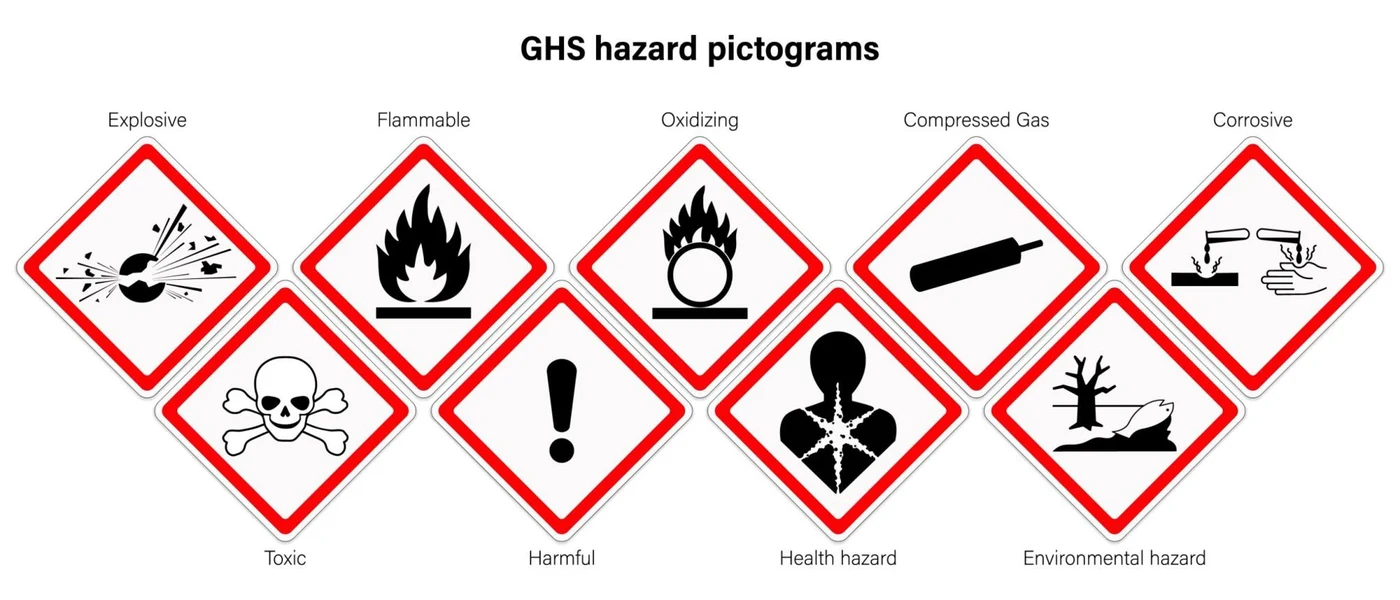
The following are common laboratory hazards.
1. Flammable Substances
A flammable substance is a material that catches fire easily when exposed to heat, sparks or flames.
Examples include:
- Petrol.
- Ethanol.
- Methylated spirit.
- Kerosene.
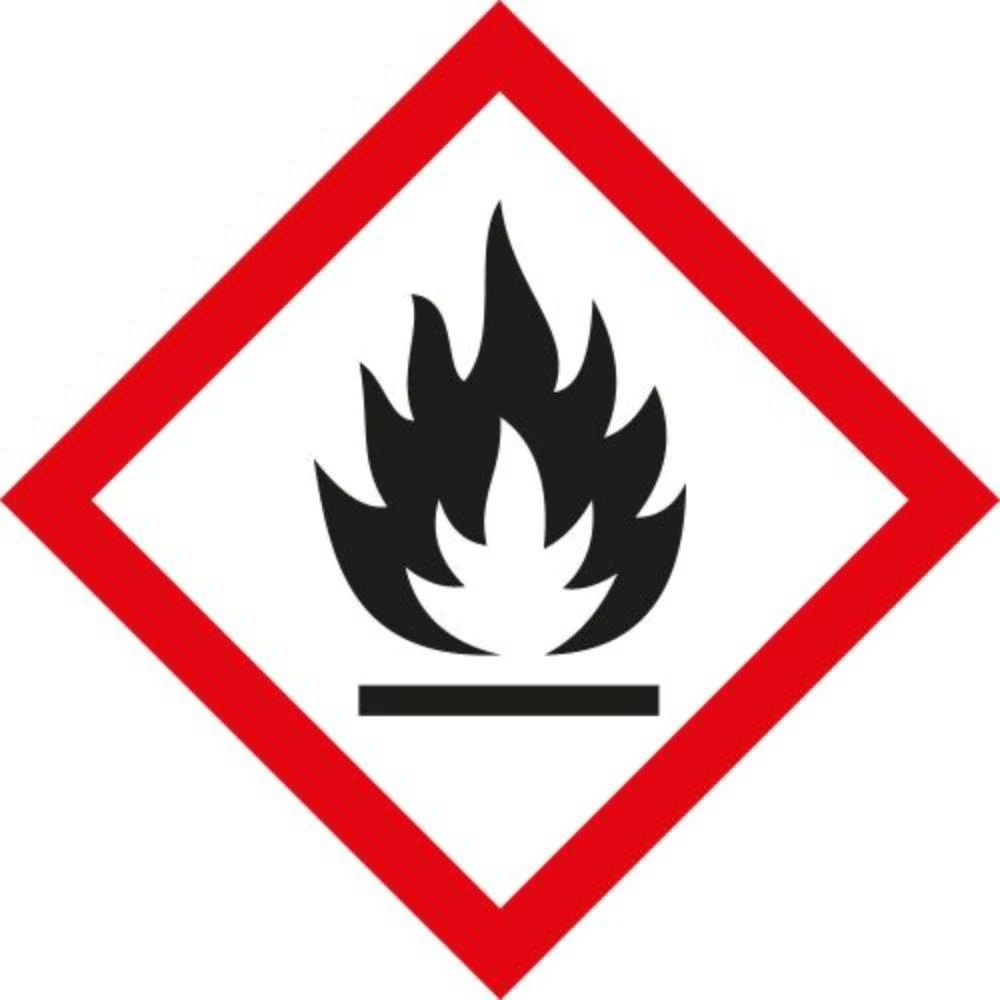
Hazard symbol: Flame
It warns that the substance can easily catch fire.
Precautions when handling flammable substances:
- Keep them away from naked flames.
- Store them in appropriate containers.
- Avoid smoking near them.
- Keep them away from sources of sparks.
- Use them only under proper supervision.
2. Corrosive Substances
Corrosive substances are materials that can destroy or damage living tissues and certain materials when they come into contact with them.
Examples include:
- Concentrated sulphuric acid.
- Concentrated hydrochloric acid.
- Strong sodium hydroxide solutions.
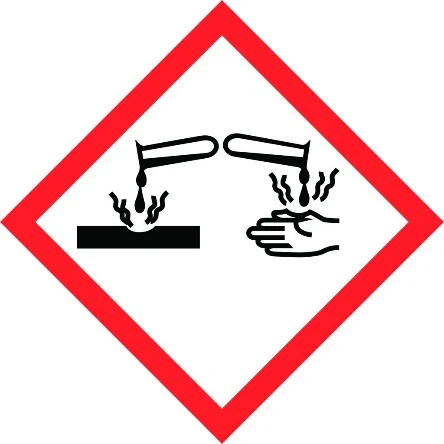
Hazard symbol: Corrosion
It warns that a substance can cause serious skin or eye damage and corrode metals.
Precautions:
- Wear protective gloves.
- Use safety goggles.
- Avoid direct contact with the substance.
- Handle chemicals carefully.
- Wash affected areas immediately with plenty of running water and seek assistance if exposed.
3. Toxic Substances
Toxic substances are materials that can cause poisoning or serious harm when swallowed, inhaled or absorbed through the skin.
Examples include certain pesticides, poisonous laboratory chemicals and some heavy-metal compounds.
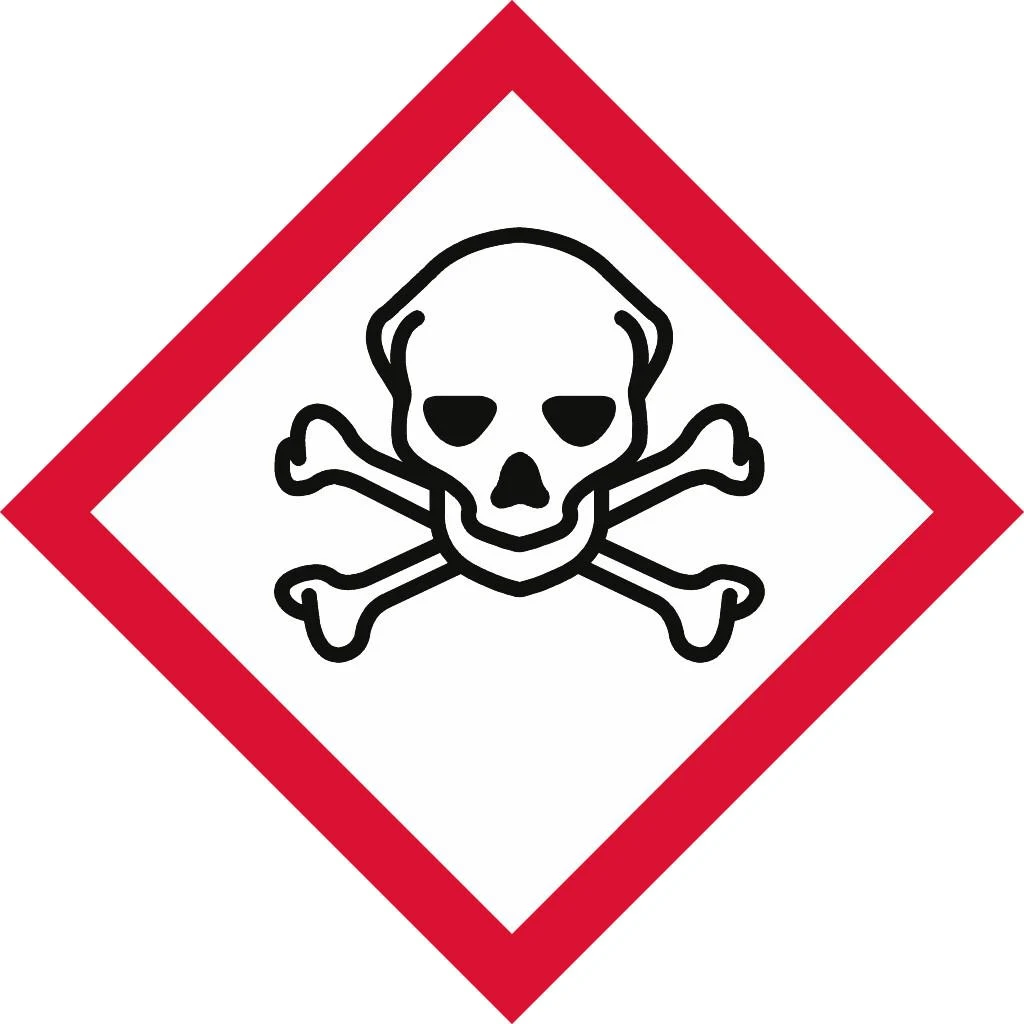
Hazard symbol: Skull and crossbones
It warns that a substance can cause poisoning and may be fatal.
Precautions:
- Never taste laboratory chemicals.
- Avoid inhaling chemical vapours.
- Wear appropriate protective equipment.
- Wash hands after laboratory activities.
- Keep toxic substances properly labelled and stored.
4. Carcinogenic Substances
Carcinogenic substances are materials that can cause cancer or increase the risk of developing cancer.
Some substances may cause harm after repeated or prolonged exposure.
Examples include certain laboratory chemicals and some industrial substances.
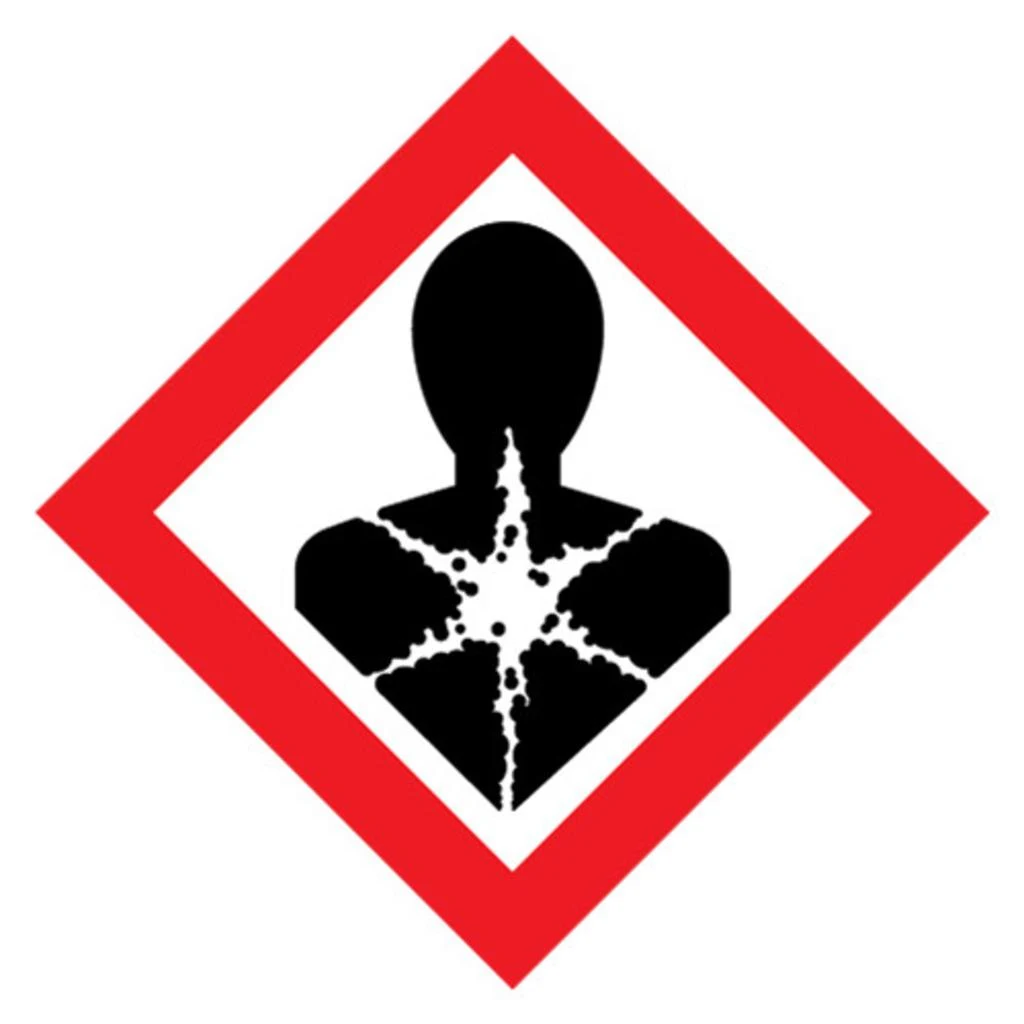
Hazard symbol: Health hazard
It warns about serious health effects, including cancer-causing hazards.
Precautions:
- Avoid unnecessary exposure.
- Use protective equipment.
- Follow laboratory instructions.
- Store chemicals correctly.
- Ensure proper ventilation where required.
5. Radioactive Substances
Radioactive substances are materials that emit radiation from unstable atomic nuclei.
Radiation can damage living cells and tissues.
Examples include certain radioactive materials used in medical research, industrial testing and scientific investigations.
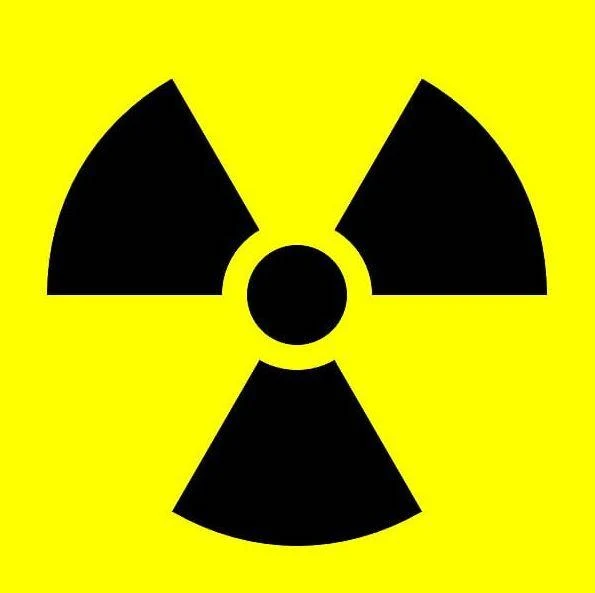
Hazard symbol: Radiation trefoil
It warns that radioactive materials or radiation may be present.
Precautions:
- Avoid unnecessary exposure.
- Keep away from radioactive sources.
- Follow instructions from trained personnel.
- Use suitable shielding and protective equipment.
- Never handle radioactive materials without authorisation.
1.2.4 Summary of Laboratory Hazard Symbols
|
Hazard |
Meaning |
Symbol identification |
|---|---|---|
|
Flammable |
Catches fire easily |
Flame |
|
Corrosive |
Damages skin, eyes or metals |
Liquid on hand and metal |
|
Toxic |
Causes poisoning |
Skull and crossbones |
|
Carcinogenic |
Can cause cancer |
Health hazard silhouette |
|
Radioactive |
Emits harmful radiation |
Radiation trefoil |
Important: Learners should always read chemical labels before handling substances.
1.2.5 Common Laboratory Accidents, Causes and First Aid
A laboratory accident is an unexpected event that causes injury or damage during scientific activities.
Accidents may occur because of carelessness, improper handling of apparatus, failure to follow instructions or lack of protective equipment.
The common laboratory accidents covered in this sub-strand include burns and scalds, cuts and ingestion of harmful substances.
A. Burns and Scalds
A burn is an injury caused by exposure to heat, hot objects, flames or certain chemicals.
A scald is an injury caused by hot liquids or steam.
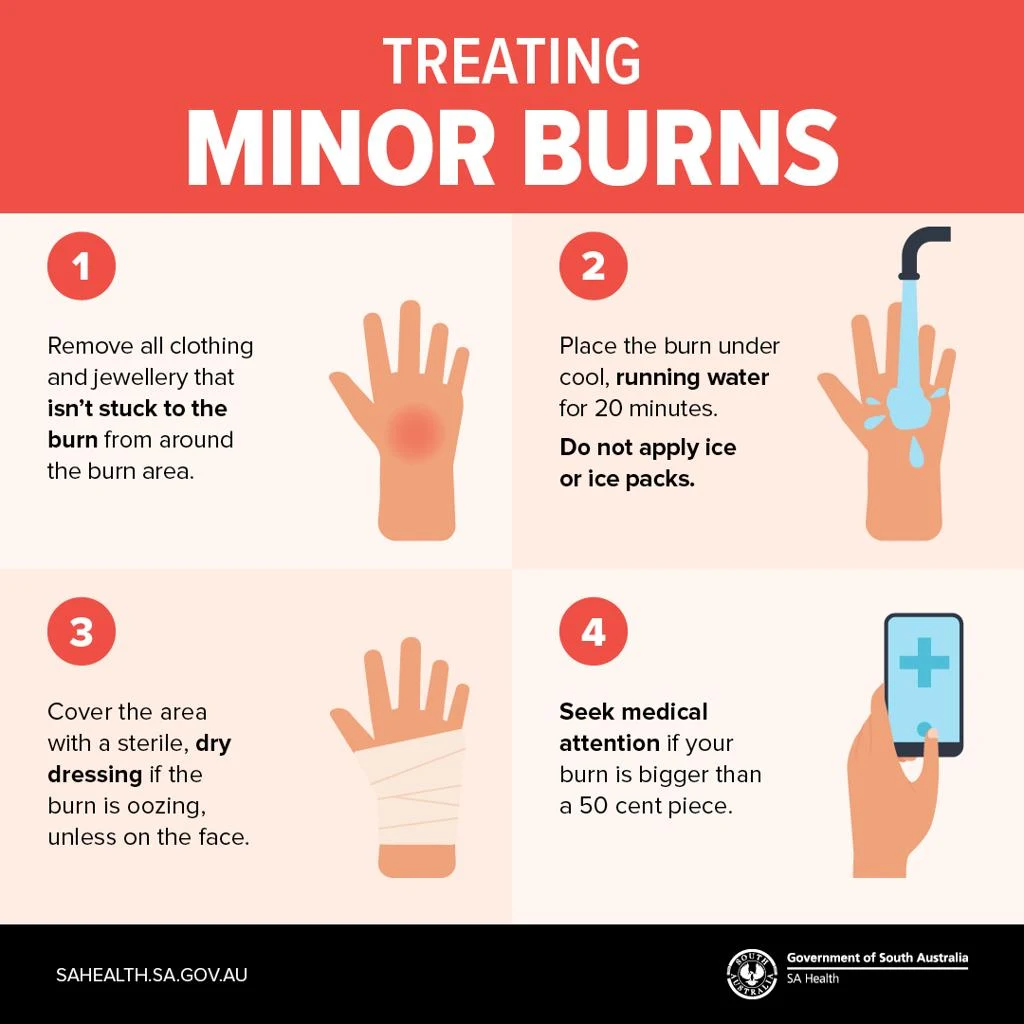
Causes of burns and scalds:
- Touching hot laboratory apparatus.
- Handling heated objects without tongs.
- Coming into contact with naked flames.
- Spilling boiling water.
- Handling hot liquids carelessly.
- Working too close to a heat source.
First aid for burns and scalds:
- Move the affected person away from the source of heat if it is safe.
- Cool the affected area under cool running water for about 20 minutes.
- Remove jewellery or loose clothing near the affected area, provided it is not stuck to the skin.
- Cover the injury loosely with a clean, non-fluffy dressing.
- Inform the teacher immediately.
- Seek medical attention for serious burns.
Never:
- Apply ice directly to the burn.
- Apply cooking oil, butter or toothpaste.
- Burst blisters.
- Pull off clothing stuck to the skin.
B. Cuts
A cut is an injury caused by a sharp object that breaks or damages the skin.
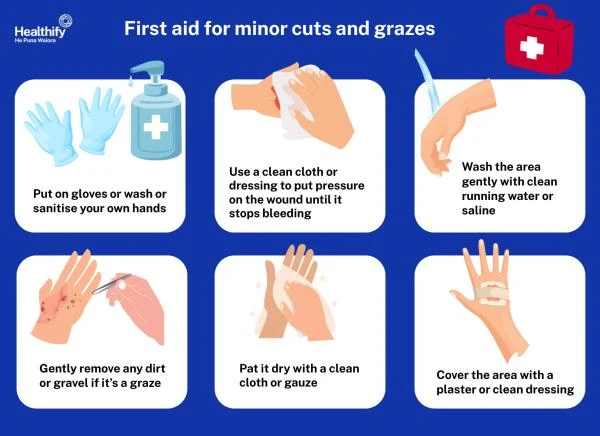
Causes of cuts in the laboratory:
- Breaking glass apparatus.
- Handling sharp instruments carelessly.
- Using damaged laboratory equipment.
- Picking up broken glass with bare hands.
- Mishandling sharp materials.
First aid for cuts:
- Inform the teacher immediately.
- If the cut is minor, wash it with clean running water.
- Apply gentle pressure using clean gauze or a clean dressing to control bleeding.
- Cover the wound with a clean dressing.
- Seek medical assistance if the wound is deep or bleeding heavily.
Precautions:
- Never pick up broken glass with bare hands.
- Dispose of broken glass in a designated container.
- Handle sharp apparatus carefully.
- Use protective gloves when necessary.
C. Ingestion of Harmful Substances
Ingestion occurs when a person accidentally swallows a harmful substance.
Examples include swallowing laboratory chemicals or contaminated materials.
Causes:
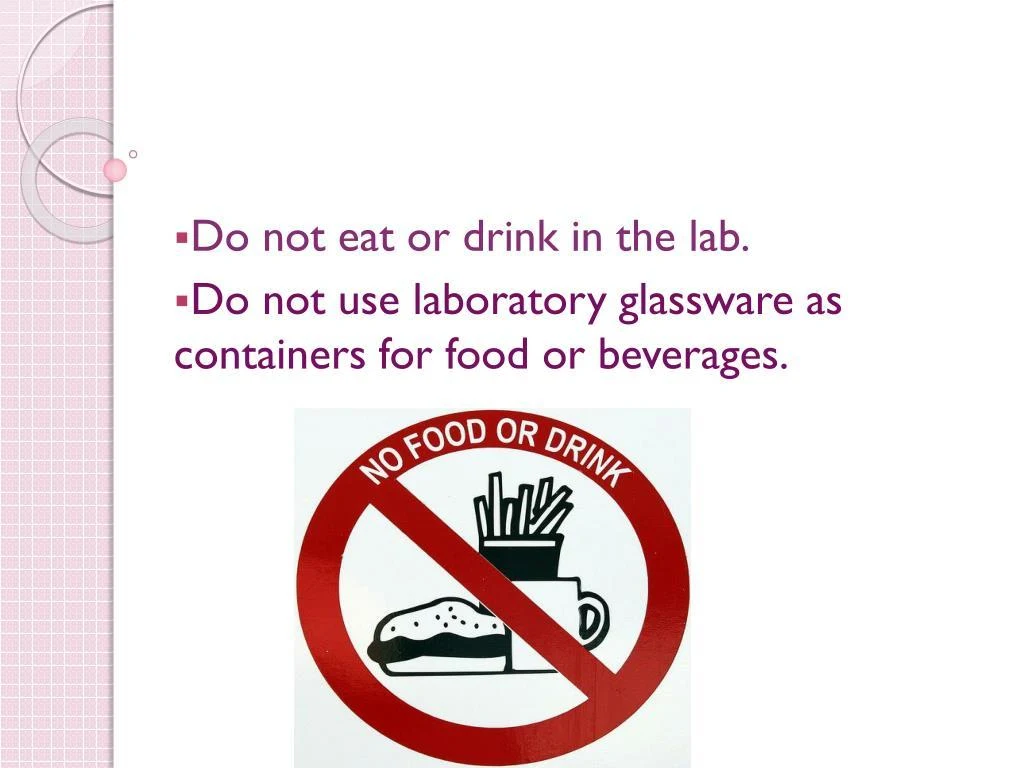
- Eating inside the laboratory.
- Drinking laboratory substances accidentally.
- Tasting chemicals to identify them.
- Using contaminated hands when eating.
- Confusing chemicals with food or drinks.
First aid measures:
- Inform the teacher immediately.
- Identify the substance swallowed and keep its container or label available.
- Seek urgent medical assistance.
- Follow instructions from qualified medical personnel.
- Do not induce vomiting unless specifically instructed by a medical professional.
- Do not give food, drinks or medicines unless directed by medical personnel.
Important: Never taste any laboratory chemical, even if it looks harmless.
1.2.6 General Laboratory Safety Measures
Learners should observe the following rules when working in a laboratory.
- Wear a laboratory coat when required.
- Wear closed shoes to protect the feet.
- Use safety goggles when handling substances that may splash.
- Follow the teacher's instructions.
- Do not eat or drink inside the laboratory.
- Never taste laboratory chemicals.
- Avoid running or playing in the laboratory.
- Tie long hair away from flames.
- Do not handle chemicals without permission.
- Keep the working area clean and organised.
- Never smell chemicals directly; use the wafting technique only when instructed.
- Handle glass apparatus carefully.
- Do not mix chemicals without instructions.
- Report all accidents and spills immediately.
- Wash hands after completing laboratory activities.
- Know the location of the first aid kit, fire safety equipment and emergency exits.
- Dispose of laboratory waste appropriately.
1.2.7 Importance of Laboratory Safety
Laboratory safety is important because it:
- Prevents accidents and injuries.
- Protects learners and teachers.
- Prevents damage to apparatus.
- Protects the environment.
- Promotes responsible behaviour.
- Creates a safe learning environment.
- Ensures scientific activities are carried out effectively.
Remember
Laboratory safety is everyone's responsibility. Every learner must follow safety rules, use equipment correctly and report dangerous situations immediately.