
3.1.1 Meaning of Iman
Iman is an Arabic word meaning faith or belief.
In Islam, Iman refers to firm belief in the fundamental teachings of the religion.
A Muslim demonstrates Iman through belief in Allah, His angels, His revealed books, His messengers, the Day of Judgement and divine destiny.
These are known as the six pillars of Iman.
3.1.2 The Six Pillars of Iman
The six pillars of Iman form the foundation of Islamic belief.
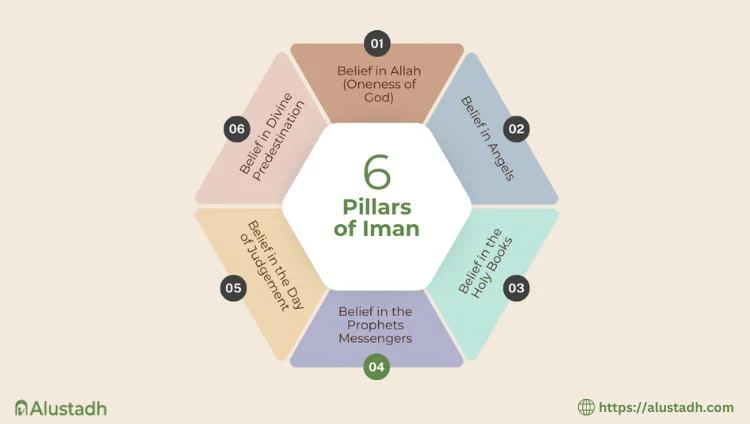
1. Belief in Allah
Muslims believe that Allah is the only true God, the Creator and Sustainer of everything.
He has no partner, equal or child.
Muslims worship Allah alone.
2. Belief in Angels
Muslims believe that Allah created angels from light.
Angels obey Allah and carry out the duties assigned to them.
Examples include:
- Jibril: Delivered revelations to the Prophets.
- Mikail: Associated with the provision of sustenance and natural processes by Allah's command.
- Israfil: Assigned to blow the trumpet at the appointed time.
- Malik: Guardian of Hell.
3. Belief in the Revealed Books
Muslims believe that Allah revealed scriptures to guide humanity.
These include:
- Tawrah given to Prophet Musa (A.S.).
- Zabur given to Prophet Dawud (A.S.).
- Injil given to Prophet Isa (A.S.).
- Qur'an revealed to Prophet Muhammad (S.A.W.).
4. Belief in the Messengers
Muslims believe that Allah sent Prophets and Messengers to guide humanity.
Examples include:
- Prophet Adam (A.S.).
- Prophet Nuh (A.S.).
- Prophet Ibrahim (A.S.).
- Prophet Musa (A.S.).
- Prophet Isa (A.S.).
- Prophet Muhammad (S.A.W.).
Muslims believe that Prophet Muhammad (S.A.W.) is the final Prophet.
5. Belief in the Day of Judgement
Muslims believe that there will be a Day of Judgement when all human beings will be raised and held accountable for their actions.
Those who believed and performed righteous deeds will receive Allah's reward, while those who rejected His guidance will face the consequences of their actions.
6. Belief in Qadar (Divine Destiny)
Qadar refers to the belief that everything happens according to Allah's knowledge and decree.
Muslims believe that Allah has complete knowledge of everything.
Belief in Qadar encourages Muslims to trust Allah while continuing to make responsible choices and efforts.
3.1.3 Meaning of Tawhid
Tawhid is an Arabic term meaning the oneness or unity of Allah.
In Islam, Tawhid refers to believing that Allah is One and has no partner, equal or rival.
It is the foundation of Islamic faith.
A Muslim must believe that Allah alone deserves worship and that He is the Creator and Sustainer of everything.

3.1.4 Importance of Tawhid in Islam
Tawhid is the foundation of the Islamic religion.
It distinguishes Islamic belief from beliefs that associate partners with Allah.
1. Establishes the Oneness of Allah
Tawhid teaches Muslims that Allah is One and has no partner.
Muslims should direct their worship to Allah alone.
2. Strengthens Iman
Belief in Tawhid strengthens a Muslim's faith.
It helps Muslims remain committed to Islamic teachings.
3. Promotes Sincere Worship
Tawhid teaches Muslims to worship Allah sincerely without associating partners with Him.
4. Encourages Trust in Allah
Muslims who believe in Tawhid understand that Allah is the ultimate source of help and protection.
They should rely on Him while making responsible efforts.
5. Promotes Humility
Belief in the greatness of Allah reminds Muslims that human beings are dependent on their Creator.
It discourages arrogance and pride.
6. Gives Life Purpose
Tawhid reminds Muslims that they were created to worship Allah and fulfil their responsibilities as His servants.
7. Promotes Accountability
Belief in Allah encourages Muslims to remember that their actions are known to Him.
They should therefore avoid wrongdoing.
8. Promotes Unity Among Muslims
Belief in one Allah provides a common foundation for the Muslim community.
It encourages unity in faith and worship.
9. Protects Muslims from Shirk
Understanding Tawhid helps Muslims avoid associating partners with Allah.
10. Provides Spiritual Peace
Belief in Allah gives Muslims hope and reassurance when facing challenges.
3.1.5 Types of Tawhid
Islamic scholars commonly explain Tawhid through three main categories.
These categories help Muslims understand different aspects of believing in the oneness of Allah.
A. Tawhid Ar-Rububiyyah (Oneness of Lordship)
This refers to believing that Allah alone is the Creator, Owner and Sustainer of the universe.
Muslims believe that:
- Allah created the heavens and the Earth.
- Allah provides sustenance.
- Allah controls all affairs.
- Allah gives life and causes death.
- Allah has power over everything.
Example:
A Muslim believes that rain, food, health and other blessings ultimately come from Allah.
B. Tawhid Al-Uluhiyyah (Oneness of Worship)
This refers to believing that Allah alone deserves worship.
A Muslim should direct acts of worship to Allah alone.
Examples include:
- Performing Swalah for Allah.
- Making Du'a to Allah.
- Fasting for the sake of Allah.
- Giving charity sincerely for Allah.
- Seeking Allah's forgiveness.

C. Tawhid Al-Asma wa Sifat (Oneness of Allah's Names and Attributes)
This refers to believing in the beautiful names and perfect attributes of Allah as taught in the Qur'an and authentic Sunnah.
Examples of Allah's names include:
|
Name of Allah |
Meaning |
|---|---|
|
Ar-Rahman |
The Most Merciful |
|
Ar-Rahim |
The Especially Merciful |
|
Al-Khaliq |
The Creator |
|
Al-Alim |
The All-Knowing |
|
As-Sami |
The All-Hearing |
|
Al-Basir |
The All-Seeing |
|
Al-Ghaffar |
The Most Forgiving |
|
Al-Hakim |
The Most Wise |
Muslims believe that Allah's attributes are perfect and unlike those of His creation.
3.1.6 Differences Between the Three Categories of Tawhid
|
Category |
Meaning |
Main teaching |
|---|---|---|
|
Tawhid Ar-Rububiyyah |
Oneness of Lordship |
Allah alone is the Creator and Sustainer |
|
Tawhid Al-Uluhiyyah |
Oneness of Worship |
Allah alone deserves worship |
|
Tawhid Al-Asma wa Sifat |
Oneness of Names and Attributes |
Allah has perfect names and attributes |
3.1.7 Ways of Demonstrating Belief in Tawhid
A Muslim should demonstrate belief in Tawhid through daily actions.
1. Worshipping Allah Alone
Muslims should direct their worship to Allah alone.
2. Performing Swalah
Muslims demonstrate their belief by performing the five obligatory daily prayers.
3. Making Du'a
Muslims should call upon Allah for guidance, help and forgiveness.
4. Reading the Qur'an
Reading and reflecting on the Qur'an helps Muslims understand Allah's guidance.
5. Trusting Allah
Muslims should place their trust in Allah during difficult situations.
6. Avoiding Shirk
Muslims should avoid associating partners with Allah.
7. Being Grateful
Muslims should appreciate the blessings received from Allah.
8. Obeying Allah's Commands
Belief in Tawhid should be demonstrated through obedience to Islamic teachings.
9. Avoiding Arrogance
Muslims should recognise that all human beings depend on Allah.
10. Encouraging Others to Worship Allah
Muslims should encourage one another to follow the teachings of Islam through good advice and example.
3.1.8 Qur'anic Evidence on Tawhid
Surah Al-Ikhlas (Qur'an 112:1–4)
This Surah clearly explains the oneness of Allah.
Its central teachings are:
- Allah is One.
- Allah is Eternal and Self-Sufficient.
- He neither begets nor is born.
- Nothing is comparable to Him.
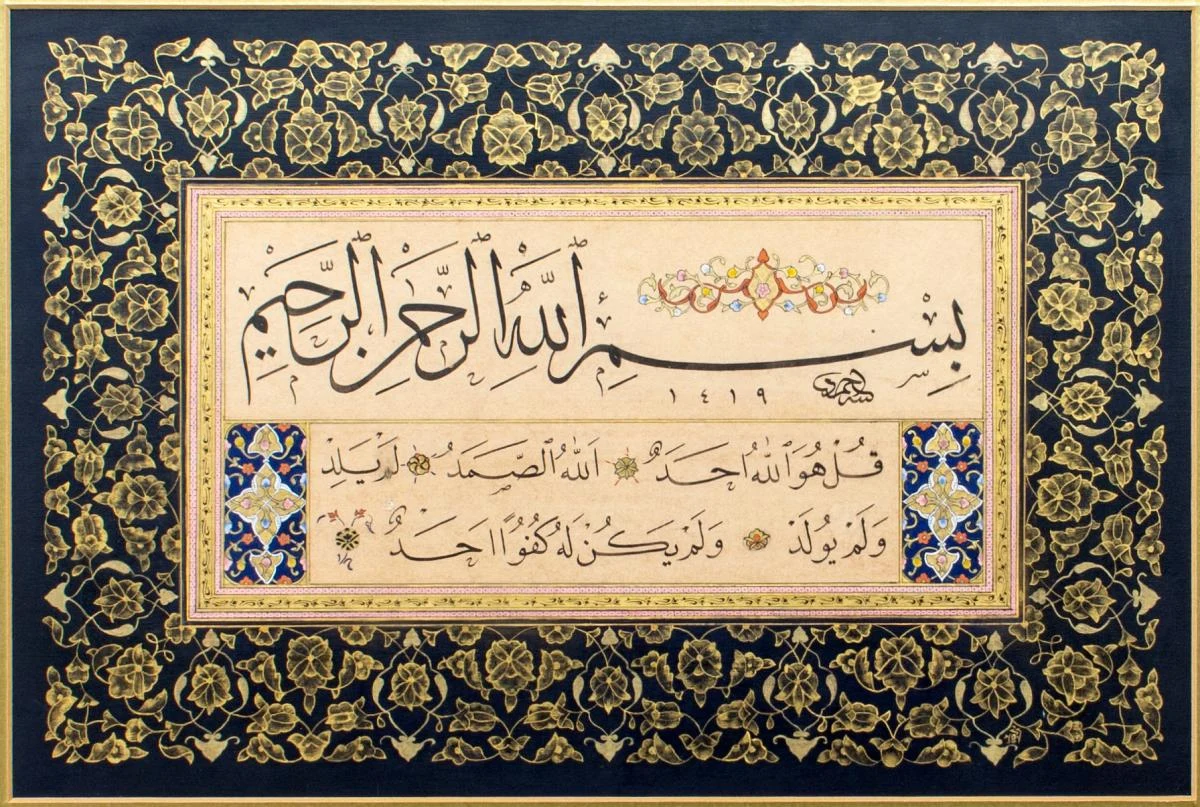
Surah Al-Ikhlas provides a clear foundation for understanding Tawhid.
Surah Al-Baqarah (2:163)
This verse teaches that the Muslims' God is One God, and that there is no deity worthy of worship except Him.
3.1.9 Importance of Tawhid in the Daily Life of a Muslim
- Helps Muslims maintain sincere worship.
- Encourages trust in Allah.
- Promotes good moral behaviour.
- Encourages obedience to Allah.
- Protects faith against shirk.
- Promotes humility.
- Encourages gratitude.
- Gives Muslims hope during challenges.
- Strengthens spiritual discipline.
- Provides a foundation for other Islamic beliefs.
3.1.10 Summary of Tawhid
Tawhid is the foundation of Islamic faith.
It teaches that Allah is One and that He alone deserves worship.
The three commonly studied categories of Tawhid are:
- Tawhid Ar-Rububiyyah.
- Tawhid Al-Uluhiyyah.
- Tawhid Al-Asma wa Sifat.
Key inquiry questions
- Why do Muslims believe in Tawhid?
- How is Tawhid manifested in a Muslim?