
Learning Outcomes:
By the end of the sub-strand, the learner should be able to:
- a) Explain the importance of safety in a work environment
- b) Identify causes of fire outbreaks in a work environment
- c) Describe injuries caused by fire in a work environment
- d) Apply firefighting techniques to stop fire in an environment
- e) Apply measures to secure electronic data in the work environment
- f) Value the importance of fire and data safety in a work environment
Definition of Terms
Safety
Safety refers to the condition of being protected from harm, danger, or risk. In a workplace context, it involves creating an environment that prevents accidents, injuries, and hazards, ensuring the well-being of employees, equipment, and the physical space. It encompasses the implementation of protocols, systems, and training to prevent harm and manage risks.
Hazard
A hazard is any source of potential harm, damage, or adverse effect to health, property, or the environment. It can include physical dangers like machinery, chemicals, or fire, or environmental hazards like weather conditions or noise.
Risk
Risk is the probability or likelihood of harm or injury occurring from exposure to a hazard. It considers the potential severity of the outcome as well as the likelihood of the hazard causing harm. Risk is typically assessed to prioritize safety efforts.
Accident
An accident is an unexpected and undesirable event that results in injury, damage, or loss. Accidents occur due to various causes, such as negligence, hazards, or unforeseen circumstances. In workplaces, accidents often involve falls, machinery malfunctions, or exposure to harmful substances.
Incident
An incident is a broader term than an accident and refers to any event that disrupts normal operations or has the potential to cause harm. It can include near misses or close calls, where no injury or damage occurs but there was a risk of it happening.
Injury
An injury is harm or damage to a person’s body, which can result from an accident, hazard, or risk. Injuries can range from minor cuts and bruises to more severe conditions like broken bones, burns, or long-term disabilities.
Workplace Safety
Workplace safety refers to the set of practices, policies, and procedures implemented in a workplace to minimize the risk of injury, accidents, or health issues among employees. It involves ensuring safe working conditions, providing safety training, and maintaining safety equipment.
Safety Measures
Safety measures are specific actions, tools, or policies put in place to protect individuals from harm or reduce risks. This can include protective equipment, signage, fire drills, safety training, or engineering controls designed to limit exposure to hazards.
Personal Protective Equipment (PPE)
Personal protective equipment is gear worn by workers to minimize exposure to hazards that can cause injury or illness. This includes items like gloves, helmets, eye protection, face shields, earplugs, safety shoes, and respirators.
Safety Protocols
Safety protocols are predefined procedures and guidelines that organizations create to manage risk and ensure the safety of their workers. They typically include steps to follow in case of an emergency, instructions for safe operation of equipment, and guidelines for handling hazardous materials.
Emergency Response
Emergency response refers to the actions taken immediately after an accident or incident to ensure safety, prevent further harm, and minimize damage. This can include evacuating workers, administering first aid, or contacting emergency services.
Ergonomics
Ergonomics is the study and design of work systems, tools, and tasks to fit the physical capabilities and limitations of workers. The goal is to reduce strain, repetitive motion injuries, and stress, ensuring comfort and efficiency in the workplace.
Fire Safety
Fire safety involves practices, equipment, and procedures to prevent, detect, control, and respond to fires. This includes fire extinguishers, alarms, sprinkler systems, fire drills, and evacuation plans.
Safety Training
Safety training involves educating employees about workplace hazards, proper safety protocols, the use of PPE, emergency procedures, and how to avoid risks. Regular training helps employees recognize potential hazards and respond correctly in dangerous situations.
Safety Audit
A safety audit is a systematic review of an organization’s safety practices, policies, and conditions to ensure compliance with legal and regulatory standards. It identifies potential hazards, assesses risk levels, and recommends improvements for enhancing workplace safety.
Health and Safety Regulations
These are the laws, rules, and standards established by government bodies or organizations to protect the health and safety of workers. These regulations may address everything from hazardous materials handling to emergency preparedness to workplace cleanliness.
Near Miss
A near miss is an event where a hazard almost leads to an accident or injury but is narrowly avoided. Even though no harm is done, it is an important signal that corrective actions should be taken to prevent future accidents.
Safety Culture
Safety culture is the shared commitment and attitudes towards safety within an organization. It reflects the values, behaviors, and beliefs that prioritize safety and promote safe practices among all employees and management.
Occupational Health
Occupational health refers to the health and well-being of workers in relation to their work environment. It focuses on preventing work-related illnesses, such as respiratory problems, musculoskeletal disorders, and stress-related conditions, through safe working practices and health monitoring.
a) Importance of Safety in a Work Environment
Workplace safety refers to the policies, procedures, and practices put in place to prevent accidents, injuries, and damage to property. The importance of maintaining a safe work environment includes:
- Reduces financial losses
Prevents the costs associated with repairing or replacing damaged equipment and property. When safety measures are in place, the likelihood of accidents decreases, which means there are fewer repairs or replacements to worry about. This helps businesses save money that would otherwise go toward fixing equipment, machinery, or property damaged by avoidable incidents. - Increases business reputation
A safe workplace not only protects employees but also attracts customers and satisfies workers, which can improve the company's reputation. Businesses that prioritize safety demonstrate to the public and their employees that they care about well-being and operational excellence. This can lead to more customers, repeat business, and a positive public image. - Reduces job losses
By preventing permanent injuries, a company can avoid forcing employees to leave their jobs due to disability or inability to work. When a workplace is safer, employees are less likely to suffer accidents that could end their careers or cause long-term health problems. This helps retain skilled workers and reduces turnover rates. - Lowers medical expenses
Fewer accidents mean reduced costs for medical treatment and compensation. When workplace accidents are minimized, companies spend less on workers' compensation claims, healthcare for injured employees, and insurance premiums. It also reduces the financial strain of hiring and training replacements for workers who have been injured on the job. - Protects property
Lower accident rates help preserve the physical assets of the business, such as buildings, equipment, and materials. Accidents like fires, spills, or damage to machinery can result in substantial losses for the company. A focus on safety reduces the risk of such incidents, thus protecting both the property and the company's long-term financial health. - Reduces injury cases
When risks are minimized, employees remain healthy and productive. With fewer injuries, there are fewer claims, less downtime, and a more efficient workforce. A safe work environment allows employees to focus on their tasks without fear of injury, which can lead to better performance and overall workplace satisfaction. - Improves productivity
Workers in safe environments are more focused and efficient because they are not worried about the possibility of injury. A safe work environment fosters an atmosphere of confidence, allowing employees to concentrate on their tasks without distractions caused by safety concerns. This leads to higher levels of productivity and better work output.
Key Inquiry Question: Why is safety important in a work environment?
b) Causes of Fire Outbreaks in a Work Environment
Understanding fire causes is essential for prevention. Common causes include:
- Faulty electrical equipment: Damaged extension cables, overloaded sockets, and malfunctioning appliances in kitchens, offices, workshops, or warehouses.
- Hot work activities: Welding, flame-cutting, and grinding operations that generate heat, sparks, or open flames.
- Improper storage of flammables: Storing flammable liquids, gases, or combustible materials like charcoal without proper safety measures.
- Human errors: Misusing electric cookers, failing to report faulty machinery, leaving cooking food unattended.
- Arson: Intentional setting of fires by employees or outsiders for malicious purposes.
- Combustible dust: Accumulation of fine particles from wood, grain, or chemicals that can ignite.
- Heating equipment: Malfunctioning space heaters, furnaces, or boilers placed too close to combustible materials.
- Poor housekeeping: Accumulation of clutter, waste, and debris that can fuel fires or block escape routes.
c) Injuries Caused by Fire in a Work Environment
Fire-related injuries occur when a person comes into contact with open flames, hot surfaces, or inhales toxic smoke. The main types of injuries include:
|
Injury Type |
Description |
|---|---|
|
Burns |
Fire raises skin and tissue temperature causing cell death. Burns are classified into: |
|
- First degree: Affects outer skin layer (redness, minor pain) | |
|
- Second degree: Affects deeper layers (blisters, severe pain) | |
|
- Third degree: Destroys all skin layers (charred, leathery appearance) | |
|
- Fourth degree: Extends to muscle and bone (life-threatening) | |
|
Smoke choking |
Victim suffers obstructed breathing, coughing, seizures, and may become unconscious due to oxygen deprivation |
|
Chemical poisoning |
Inhaling poisonous fumes such as carbon monoxide or hydrogen cyanide released during combustion |
|
Shock |
Victim develops abnormal heart rhythm, low blood pressure, and may lose consciousness due to severe injury |
|
Respiratory damage |
Hot gases can scorch nasal passages and lungs, causing permanent breathing problems |
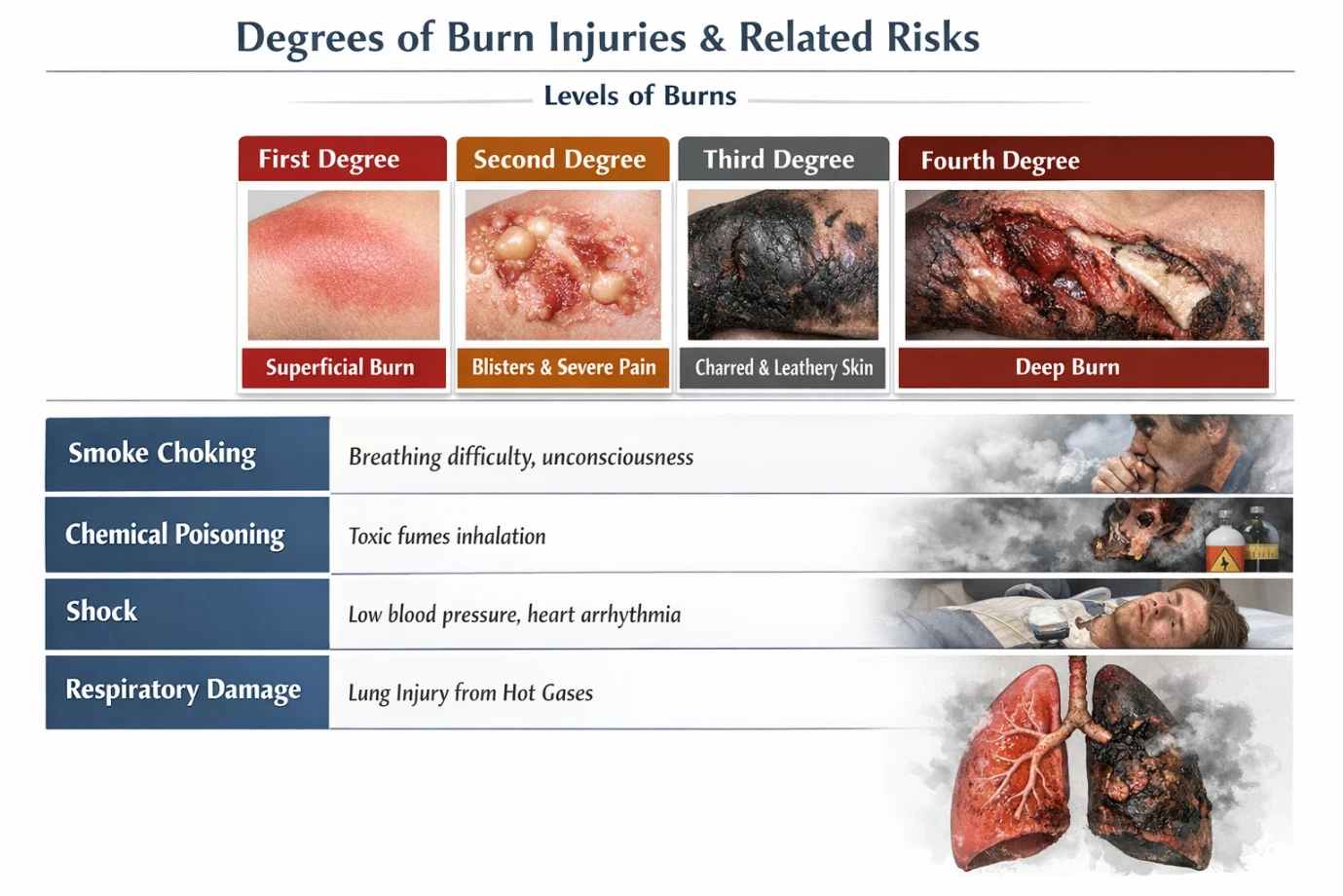
Figure 1: Chart showing degrees of burn injuries with visual examples
d) Firefighting Techniques to Stop Fire in an Environment
The Fire Triangle consists of three elements needed for fire: Heat, Fuel, and Oxygen. Removing any one element extinguishes the fire.
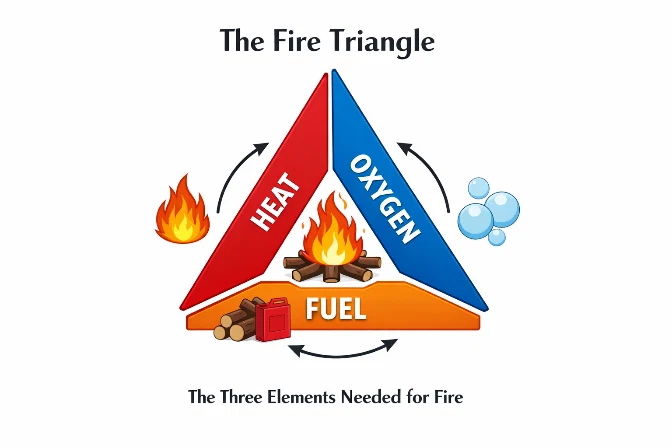
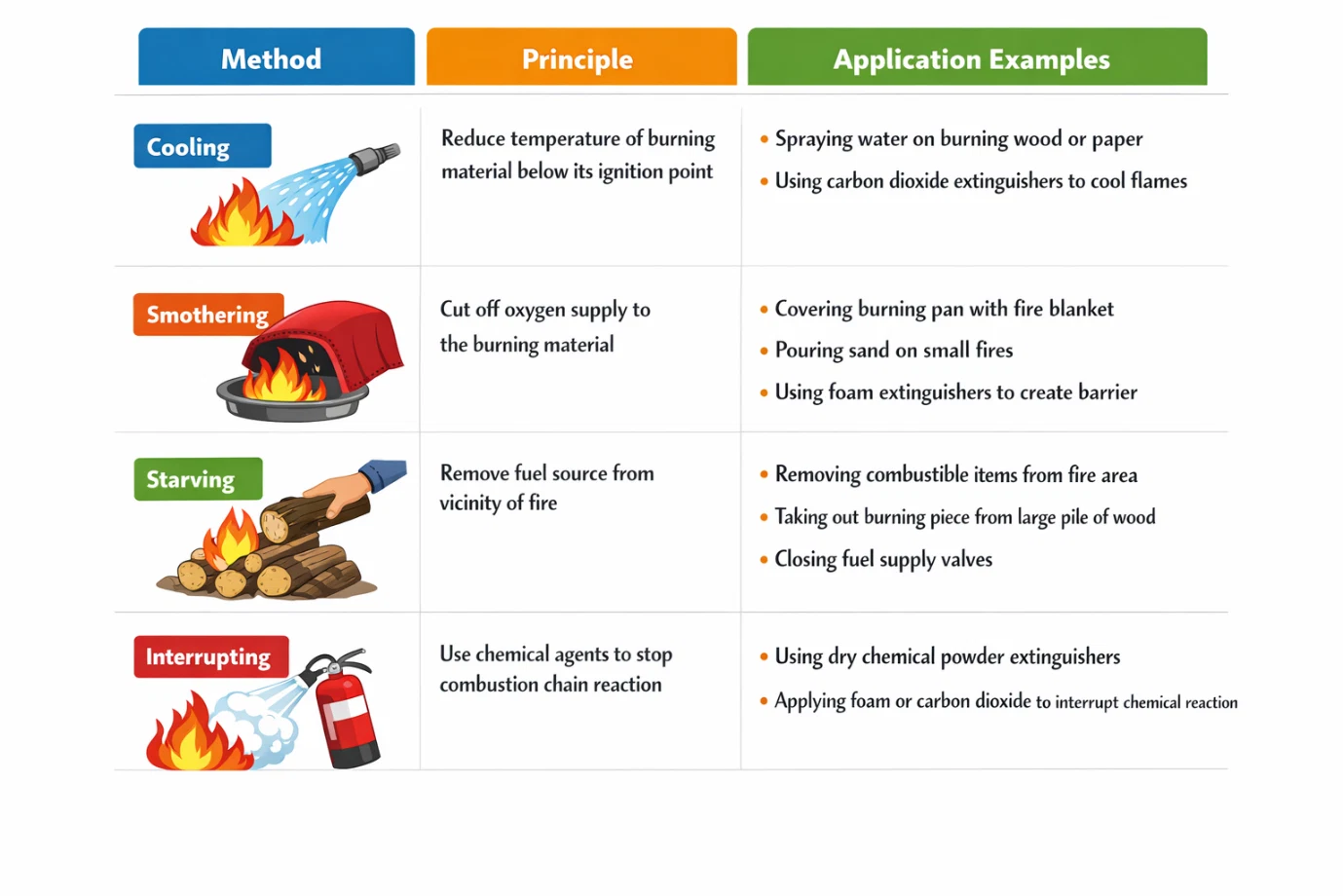
The four main firefighting methods are:
|
Method |
Principle |
Application Examples |
|---|---|---|
|
Cooling |
Reduce temperature of burning material below its ignition point |
• Spraying water on burning wood or paper |
|
Smothering |
Cut off oxygen supply to the burning material |
• Covering burning pan with fire blanket |
|
Starving |
Remove fuel source from vicinity of fire |
• Removing combustible items from fire area |
|
Interrupting |
Use chemical agents to stop combustion chain reaction |
• Using dry chemical powder extinguishers |
e) Measures to Secure Electronic Data in the Work Environment
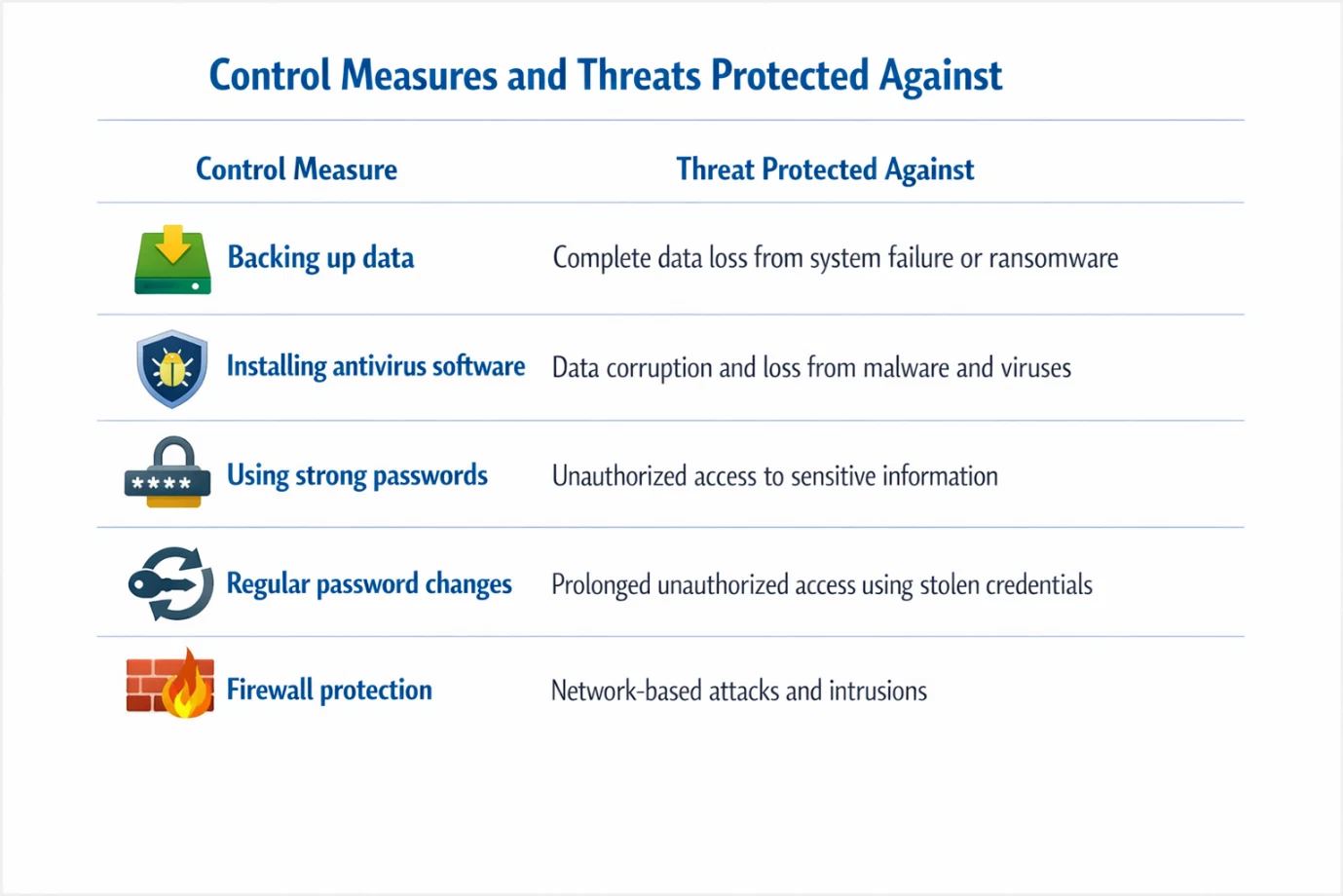
Data security involves protecting digital information from unauthorized access, corruption, or theft. Key measures include:
|
Control Measure |
How It Protects Data |
|---|---|
|
Installing antivirus software |
Detects and removes malicious programs (viruses, malware) that can corrupt or steal data |
|
Backing up data |
Creates copies of important files that can be restored if original data is lost, damaged, or encrypted by ransomware |
|
Using strong passwords |
Prevents unauthorized access by requiring complex combinations of letters, numbers, and symbols |
|
Regularly changing passwords |
Reduces risk of compromised credentials being used over long periods |
|
Limiting personal information shared online |
Reduces exposure to social engineering attacks and identity theft |
|
Using firewalls |
Blocks unauthorized network access to computer systems |
|
Encrypting sensitive data |
Converts data into coded form that can only be read with decryption key |
|
Implementing access controls |
Restricts data access to authorized personnel only |
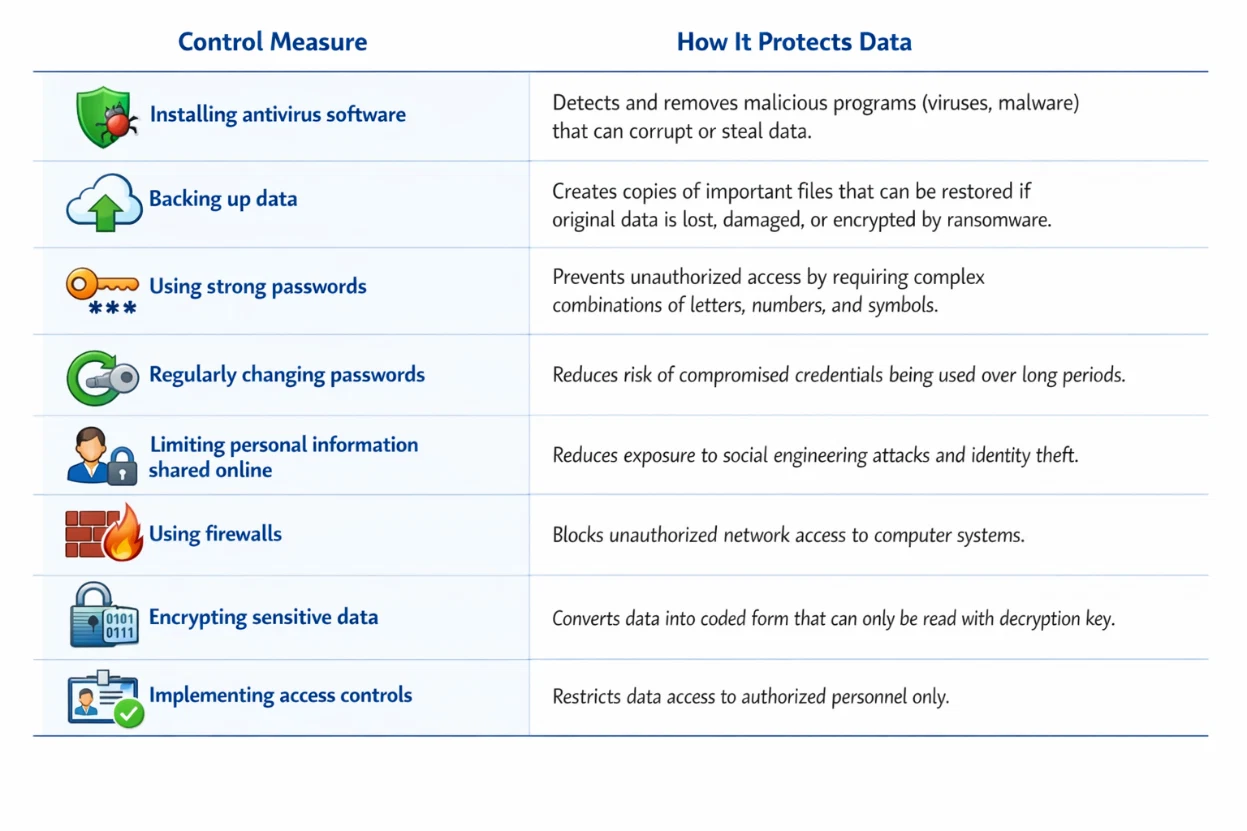
Comparison of Control Measures and Threats Addressed:
f) Valuing Fire and Data Safety in a Work Environment
The importance of observing fire and data safety practices cannot be overstated. Benefits include:
Fire Safety Importance:
- Safeguards employee lives and well-being through prevention education and evacuation training
- Keeps organizations free from hazards, reducing loss of warehouse materials and equipment
- Increases productivity as safe workplaces have lower absenteeism and higher employee retention
- Protects sentimental and irreplaceable items that cannot be easily replaced
- Ensures compliance with legal and insurance requirements
Data Safety Importance:
- Maintains confidentiality of business information and customer data
- Prevents financial losses from data breaches and cyber attacks
- Preserves business reputation and customer trust
- Ensures business continuity and operational resilience
- Complies with data protection regulations