
1.1.1 Meaning of Aviation Technology
Aviation refers to the activities involved in the design, construction, operation, maintenance and use of aircraft.
Technology refers to the application of scientific knowledge, skills, tools and techniques to solve practical problems.
Aviation Technology is the application of scientific and technological knowledge in designing, constructing, maintaining and operating aircraft and aviation-related systems.
Aviation technology covers several areas, including aircraft construction, aircraft maintenance, flight operations, air navigation, airport operations, aviation communication and aviation safety.
In Kenya, aviation technology supports passenger transport, cargo movement, tourism, emergency services, agriculture and national development.
Importance of Studying Aviation Technology
- Career development: It prepares learners for careers such as aircraft engineering, piloting, air traffic control and aircraft maintenance.
- Technological advancement: It promotes innovation in aircraft design, communication, navigation and safety.
- Economic development: Aviation creates employment and supports tourism, trade and international business.
- Improved transport: Aircraft enable people and goods to travel quickly over long distances.
- National security: Aviation technology supports surveillance, rescue operations and authorised defence activities.
- Emergency response: Aircraft are used during medical evacuations, disaster response and humanitarian operations.
- Scientific understanding: Learners develop knowledge of physics, mathematics, engineering and environmental science.
- Environmental awareness: Aviation studies encourage the development and use of technologies that reduce pollution and improve fuel efficiency.
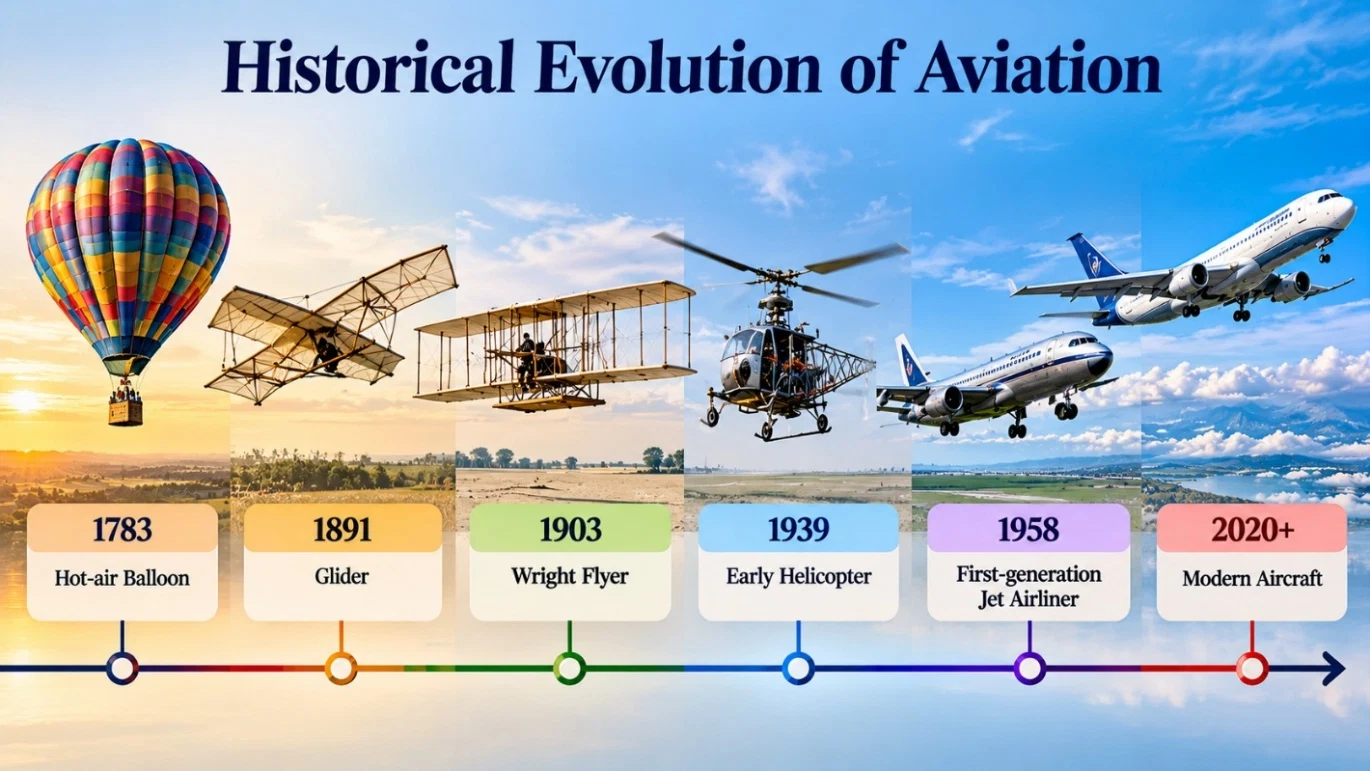
1.1.2 Historical Development of Aviation Technology
Human beings have been interested in flying for thousands of years.
Early attempts to achieve flight were inspired by observing birds and studying how objects move through air.
The development of aviation technology took place gradually through experiments, discoveries and technological improvements.
Major Historical Milestones
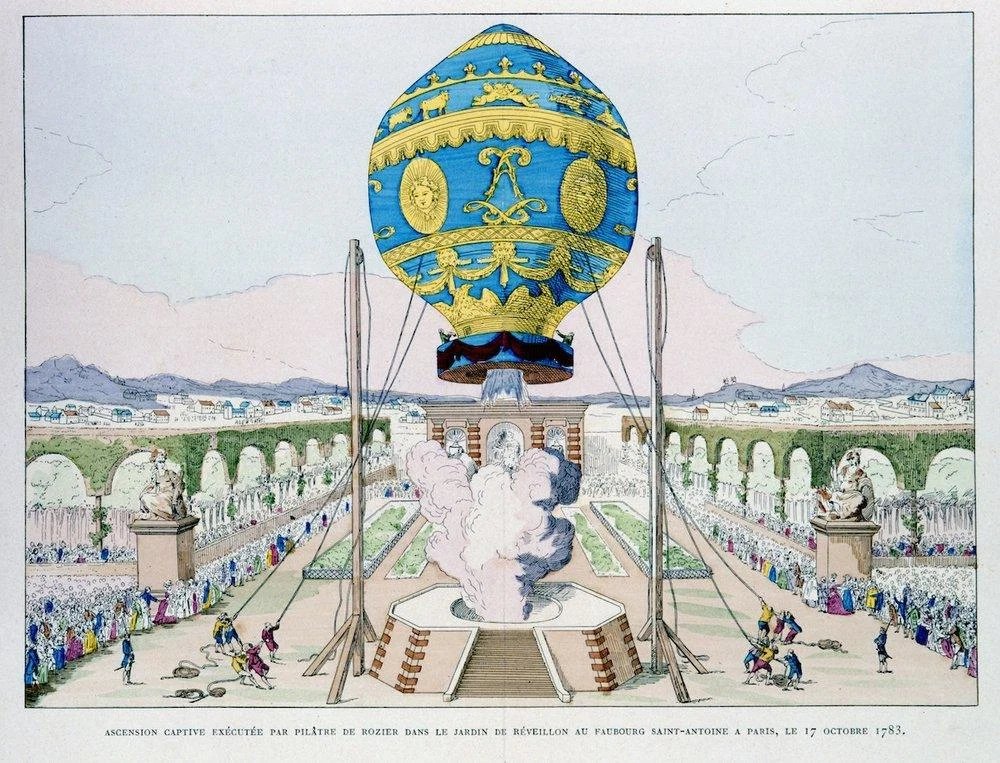 1783 — Hot-air balloon flight
The Montgolfier brothers developed hot-air balloons in France. These demonstrated that human flight was possible using an aircraft supported by buoyancy.
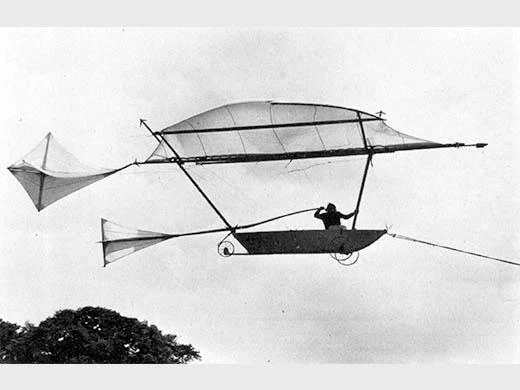
1800s — Development of gliders
Sir George Cayley developed important principles of aerodynamics and designed gliders that helped establish the foundations of modern fixed-wing aircraft.
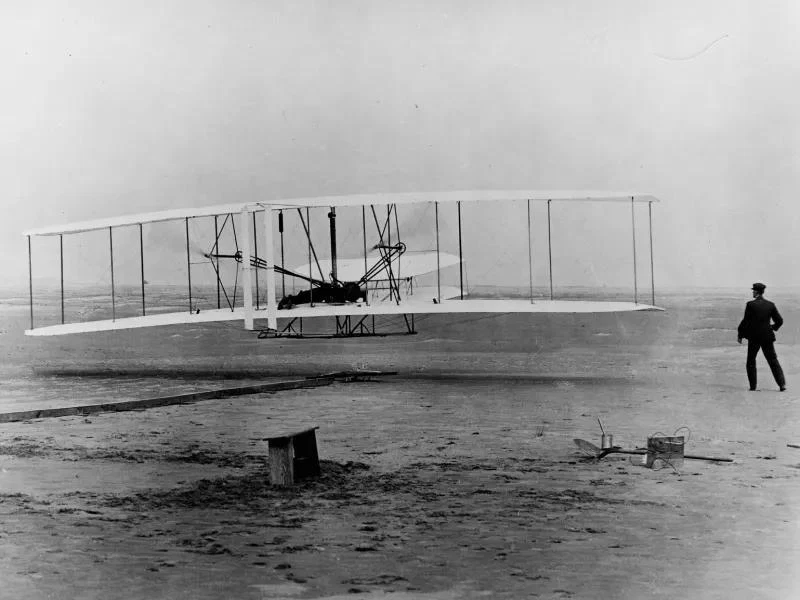 1903 — First successful powered controlled flight
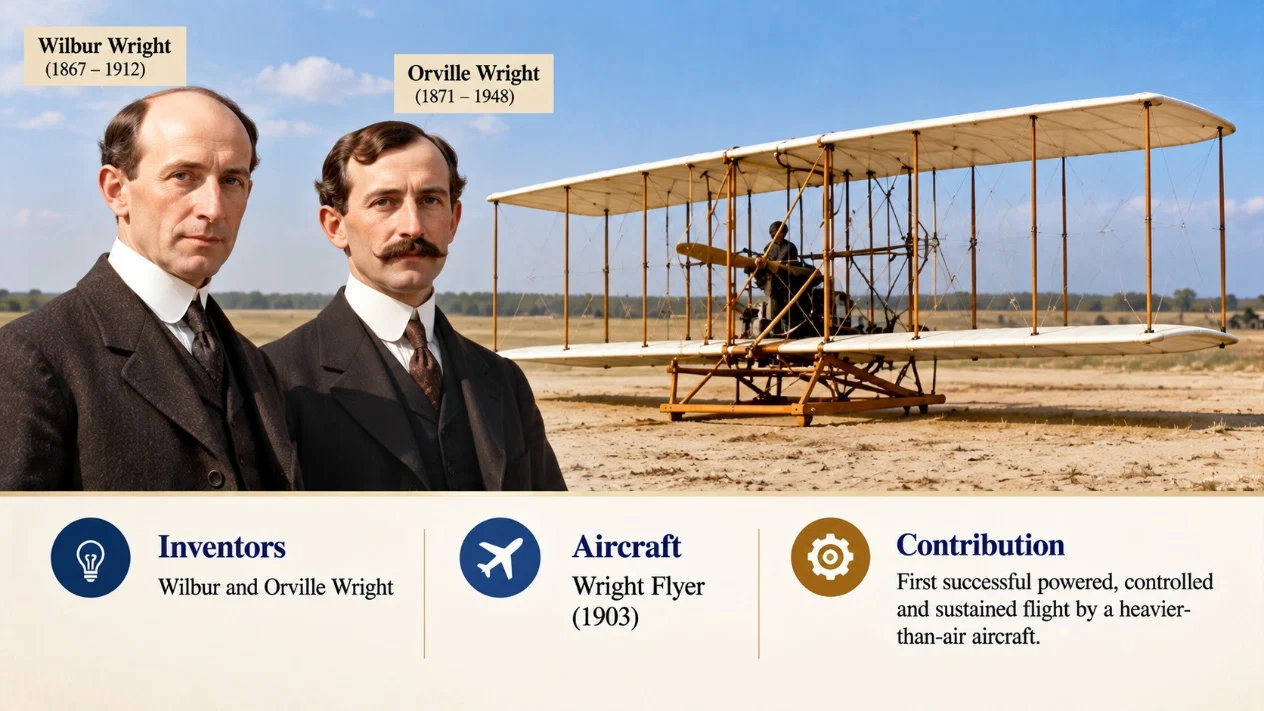
Orville and Wilbur Wright achieved sustained, controlled, powered flight using the Wright Flyer at Kitty Hawk, North Carolina, USA, on 17 December 1903.
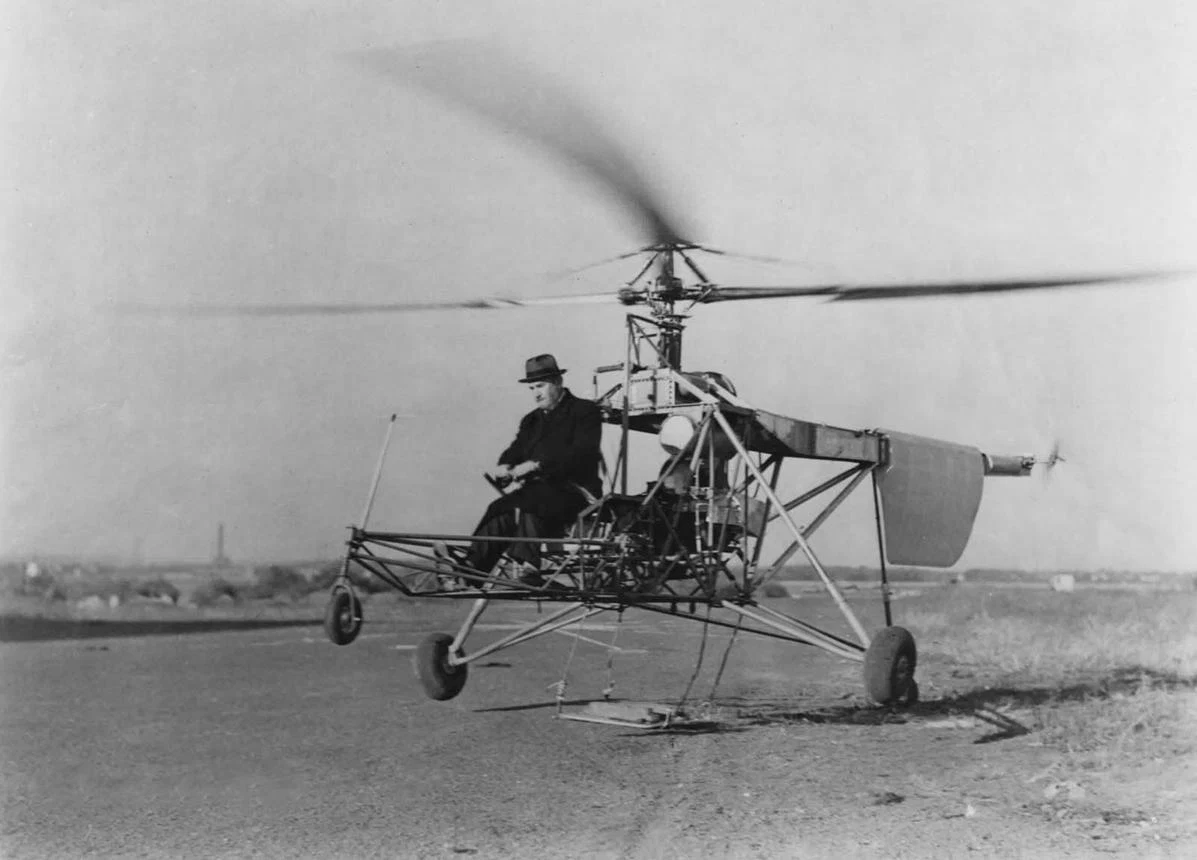 1939 — Development of the modern helicopter
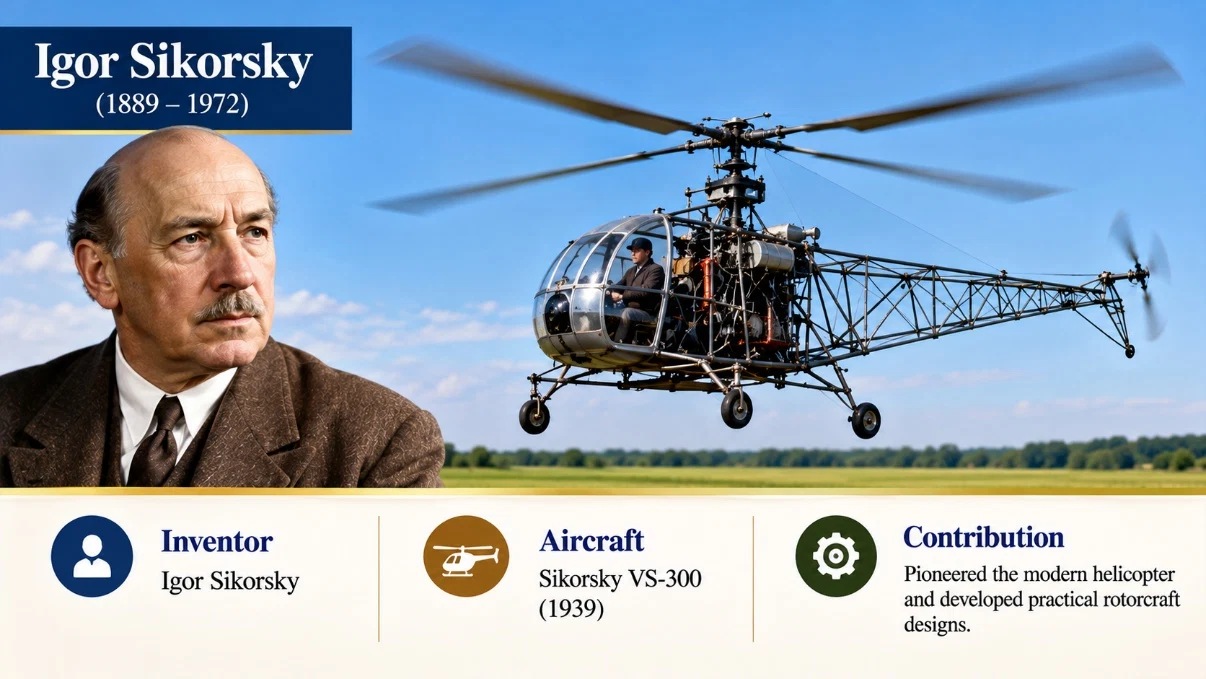
Igor Sikorsky's VS-300 helicopter helped establish a practical single-main-rotor helicopter configuration.
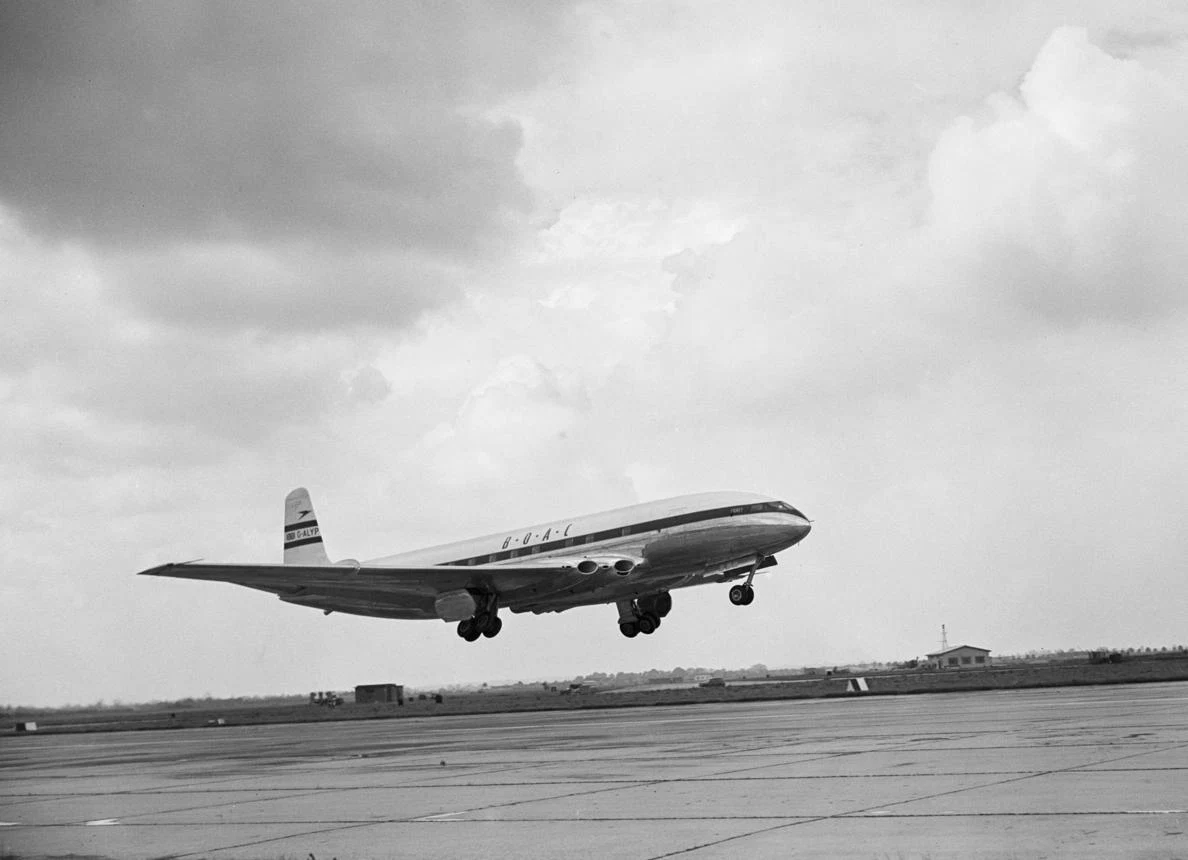 1952 — Commercial jet transport
The de Havilland Comet entered commercial service, marking an important development in passenger jet aviation.
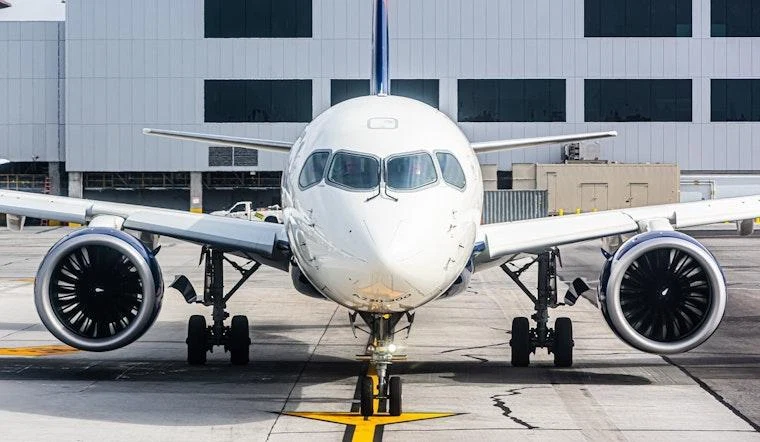 Modern aviation
1.1.3 Key Pioneers in the Development of Aircraft
A pioneer is a person who makes an important early contribution to the development of a particular field.
Several pioneers made important contributions to the development of aviation technology.
A. The Montgolfier Brothers
Joseph-Michel Montgolfier and Jacques-Étienne Montgolfier were French inventors who pioneered hot-air balloon flight.
Their experiments demonstrated that heated air could provide sufficient buoyancy to lift a balloon.
Contributions:
- Developed early practical hot-air balloons.
- Demonstrated the possibility of carrying people through the air.
- Helped establish the development of lighter-than-air aircraft.
- Encouraged further experiments in human flight.
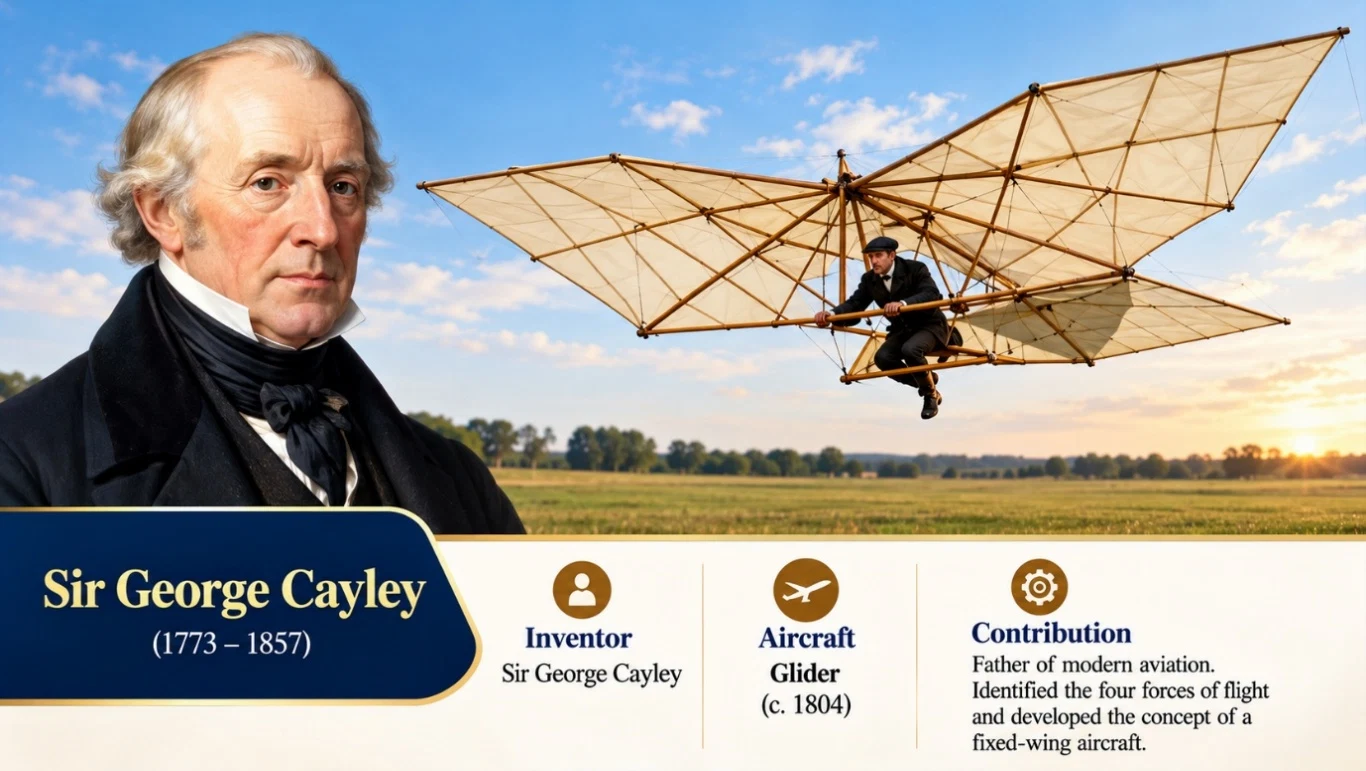
B. Sir George Cayley
Sir George Cayley was an English engineer and scientist often recognised as a founder of modern aeronautics.
He studied the scientific principles involved in heavier-than-air flight.
Contributions:
- Investigated the forces acting on flying objects.
- Developed glider designs.
- Distinguished the roles of lift, weight, thrust and drag.
- Promoted the use of fixed wings for producing lift.
- Helped establish scientific principles used in modern aircraft design.
C. The Wright Brothers
Orville Wright and Wilbur Wright were American aviation pioneers.
They developed and tested gliders before constructing a powered aircraft.
Contributions:
- Developed an effective three-axis aircraft control system.
- Designed and constructed the Wright Flyer.
- Achieved controlled, sustained powered flight in 1903.
- Contributed to the development of aircraft propellers and flight-control systems.
D. Igor Sikorsky
Igor Sikorsky was an aviation engineer known for his contributions to aircraft and helicopter development.
Contributions:
- Designed fixed-wing aircraft.
- Developed practical helicopter technology.
- Helped popularise the helicopter configuration using one main rotor and a tail rotor.
- Contributed to the development of rotary-wing aircraft.
1.1.4 Types of Aircraft
An aircraft is a machine capable of obtaining support in the atmosphere through the reactions of air, other than the reactions of air against the Earth's surface.
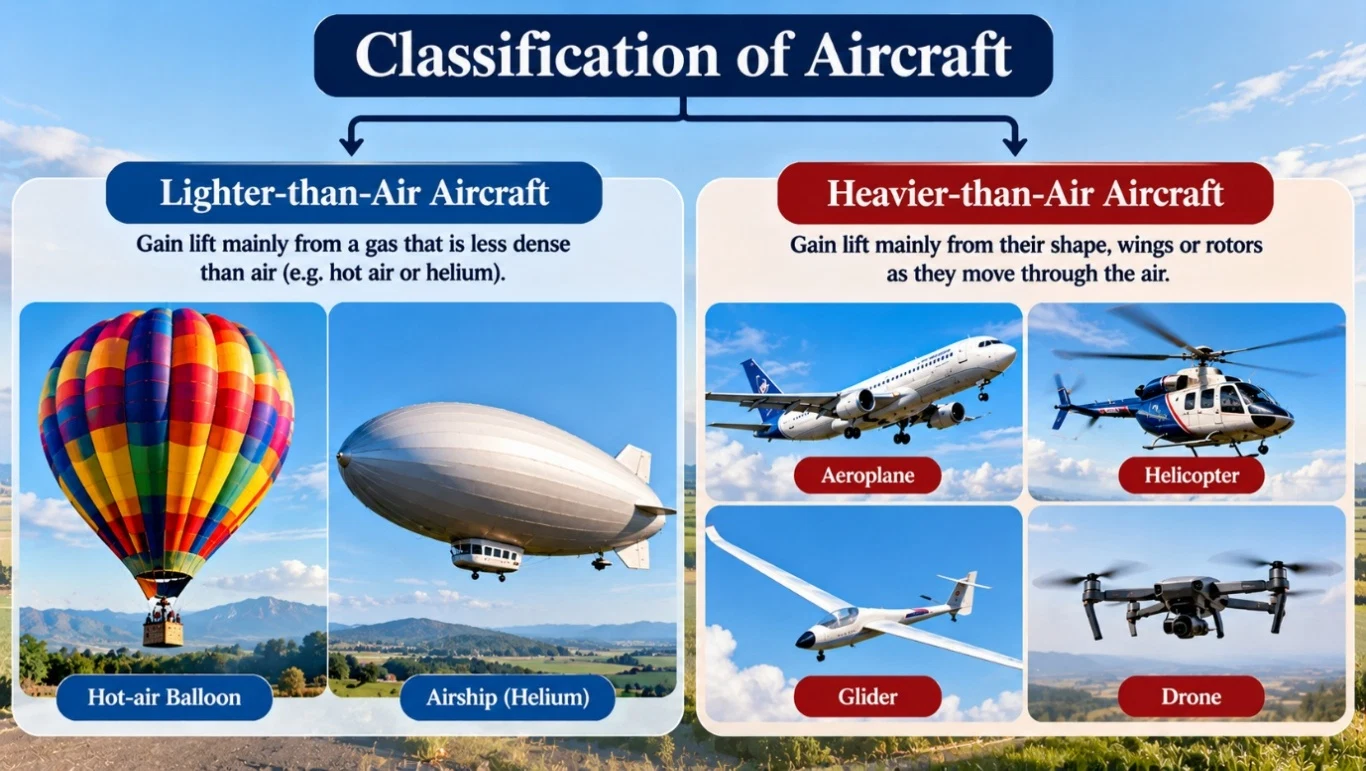
Aircraft may be classified according to how they remain airborne.
The two main categories are:
- Lighter-than-air aircraft.
- Heavier-than-air aircraft.
A. Lighter-than-Air Aircraft
Lighter-than-air aircraft are aircraft supported mainly by buoyancy because the gas contained in them is less dense than the surrounding air.
They are also known as aerostats.
Examples
 Hot-air balloon
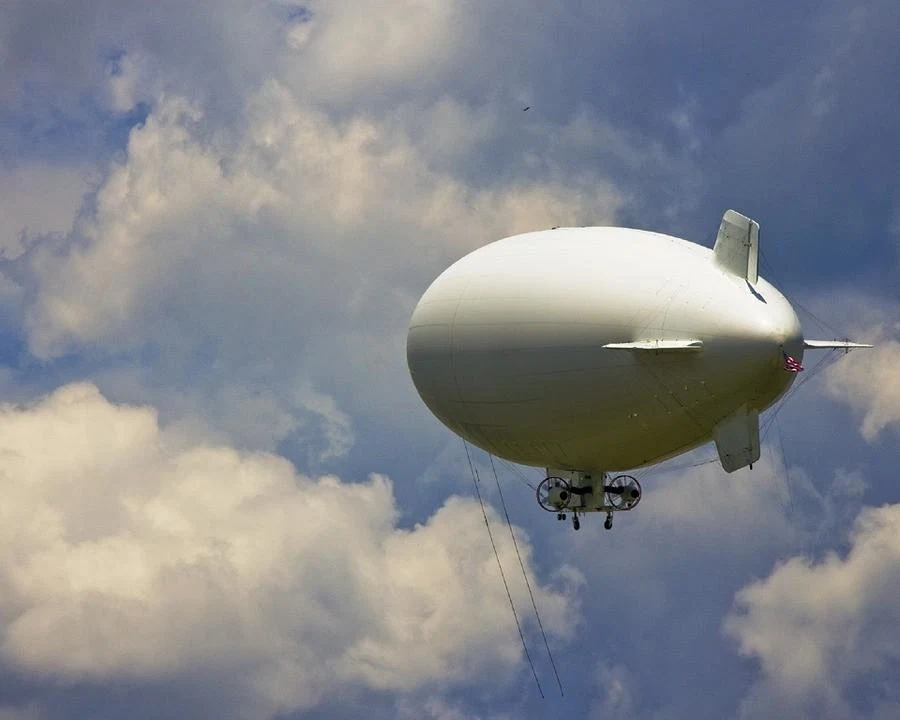 Airship
Characteristics of Lighter-than-Air Aircraft
- They depend mainly on buoyancy to remain airborne.
- They contain hot air or lifting gases such as helium.
- They can remain airborne without using wings to generate aerodynamic lift.
- They generally travel at relatively low speeds.
- Some can remain in the air for long periods.
- Their movement may be affected considerably by wind.
Uses
- Tourism and sightseeing.
- Advertising and publicity.
- Scientific research.
- Aerial observation.
- Weather monitoring.
- Recreational activities.
B. Heavier-than-Air Aircraft
Heavier-than-air aircraft are aircraft whose weight is greater than the weight of the air they displace and which obtain lift mainly through aerodynamic forces.
These aircraft require wings, rotors or other aerodynamic surfaces to generate lift.
Examples
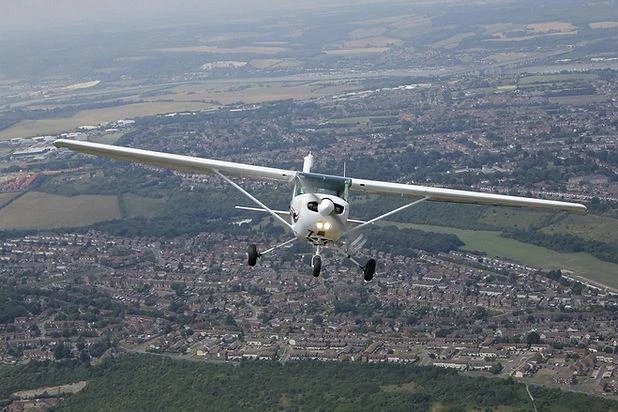 Aeroplane
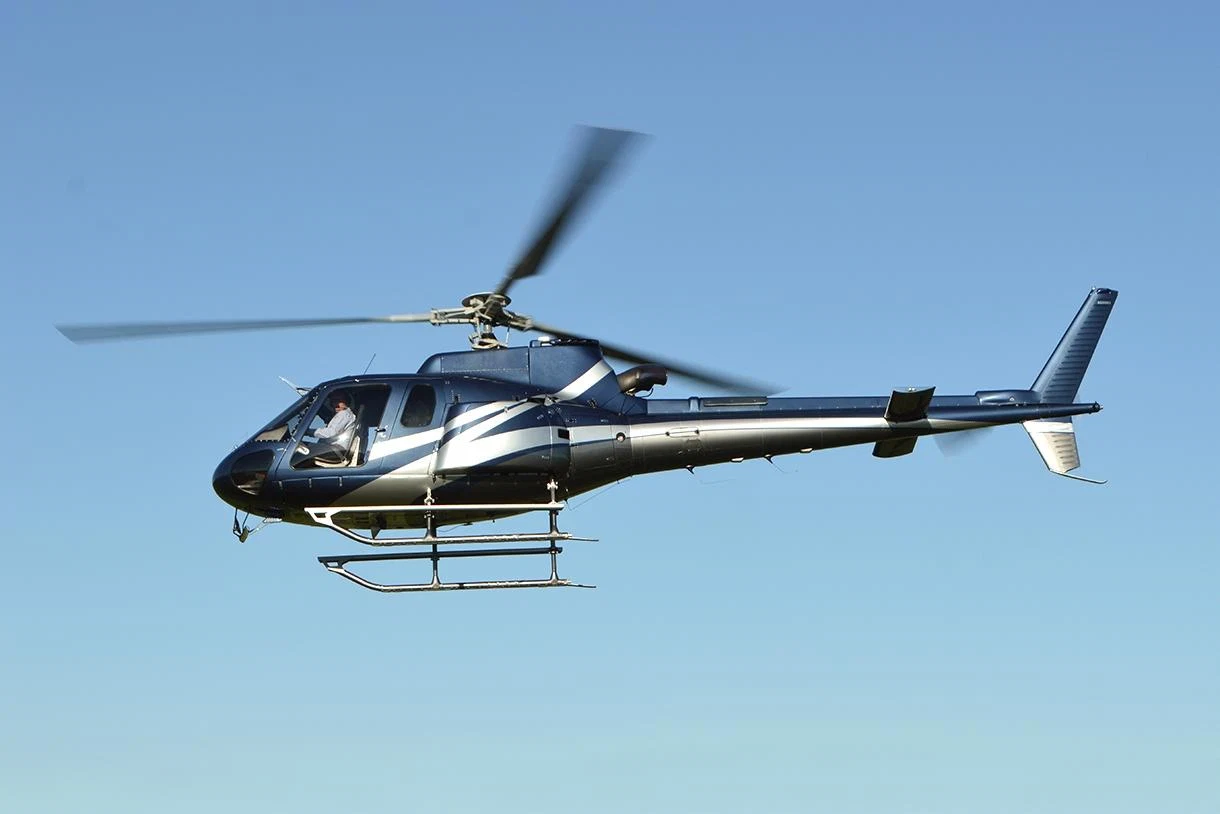 Helicopter
Glider
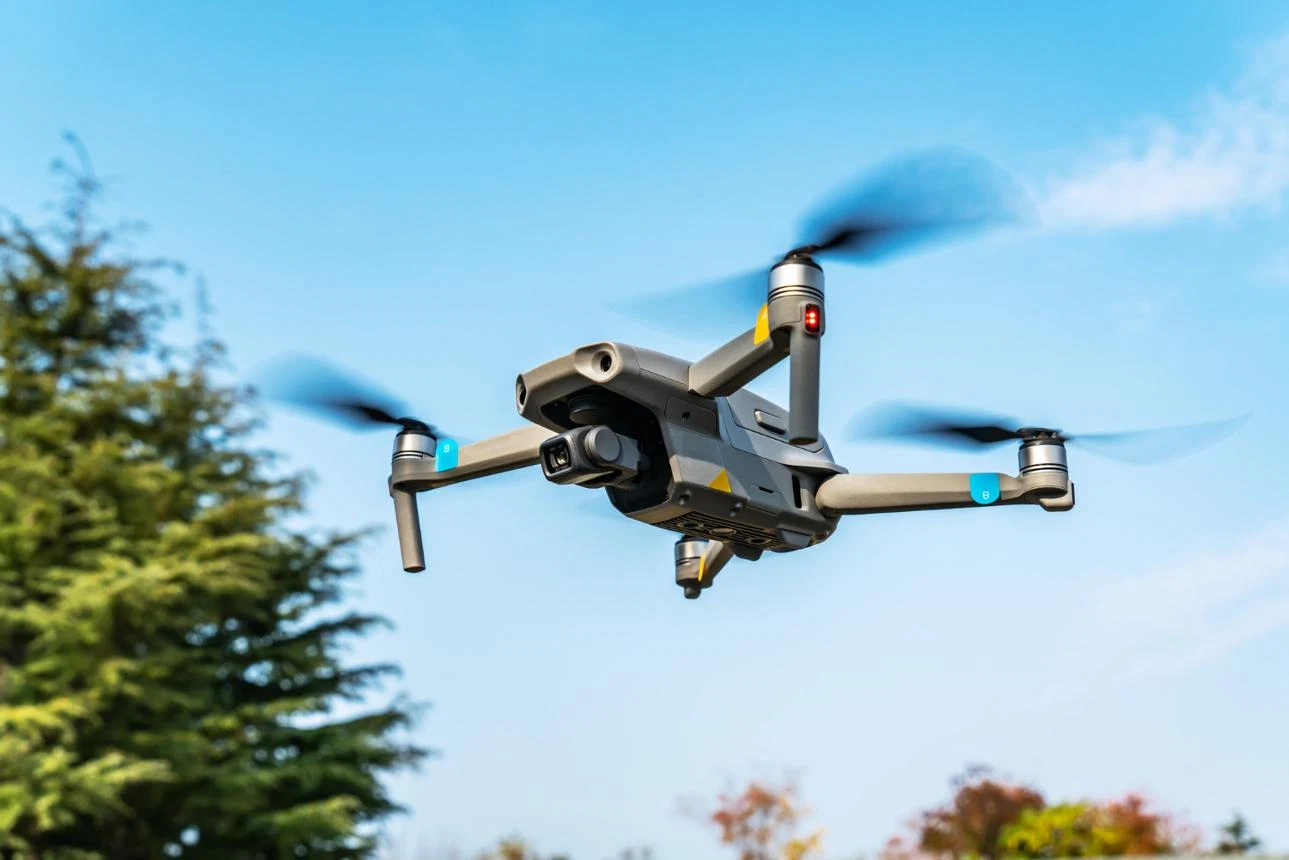 Drone
Characteristics of Heavier-than-Air Aircraft
- They depend on aerodynamic lift to remain airborne.
- Fixed-wing aircraft generally need forward motion through the air to generate sufficient lift.
- Rotary-wing aircraft use rotating blades to generate lift.
- They may be powered or unpowered.
- They are used for passenger transport, cargo transport, emergency response and other operations.
 1.1.5 Differences Between Lighter-than-Air and Heavier-than-Air Aircraft
|
Lighter-than-air aircraft |
Heavier-than-air aircraft |
|---|---|
|
Depend mainly on buoyancy |
Depend mainly on aerodynamic lift |
|
Contain hot air or a lifting gas |
Use wings, rotors or other lifting surfaces |
|
Examples include balloons and airships |
Examples include aeroplanes and helicopters |
|
Generally move at lower speeds |
Many can travel at higher speeds |
|
Often strongly affected by wind |
Also affected by wind, but generally have greater manoeuvring capability |
1.1.6 Classification of Aircraft According to Design
1. Fixed-Wing Aircraft
Fixed-wing aircraft have wings that remain substantially stationary relative to the main body during normal flight.
Examples include passenger aeroplanes, cargo aeroplanes and gliders.
2. Rotary-Wing Aircraft
Rotary-wing aircraft use rotating wings or blades to generate lift.
Examples include helicopters and autogyros.
3. Powered Aircraft
These aircraft use engines or motors to provide propulsion.
Examples include jet aeroplanes, helicopters and powered drones.
4. Unpowered Aircraft
These aircraft do not use onboard engines for propulsion during normal flight.
Examples include gliders, hang gliders and many hot-air balloons.
5. Manned Aircraft
These carry pilots or other crew members onboard.
Examples include passenger aeroplanes and crewed helicopters.
6. Unmanned Aircraft
These operate without an onboard pilot.
Examples include remotely piloted drones and certain autonomous aircraft.
1.1.7 Functions of Different Types of Aircraft
|
Type of aircraft |
Main functions |
|---|---|
|
Passenger aeroplane |
Transporting passengers |
|
Cargo aeroplane |
Transporting goods and equipment |
|
Helicopter |
Rescue, medical evacuation, transport and aerial observation |
|
Glider |
Training, sport and scientific research |
|
Hot-air balloon |
Tourism, recreation and observation |
|
Agricultural aircraft |
Aerial spraying and agricultural operations |
|
Drone |
Aerial photography, surveying, mapping and inspection |
|
Military aircraft |
Authorised defence, surveillance and transport |
1.1.8 Importance of Aviation Technology in Kenya
Kenya has an aviation industry serving both domestic and international transport.
Examples of aviation facilities include Jomo Kenyatta International Airport, Wilson Airport, Moi International Airport and Kisumu International Airport.
Contributions of Aviation to Kenya
- Promotes tourism by facilitating domestic and international travel.
- Supports international trade through the transport of high-value and time-sensitive cargo.
- Creates employment for pilots, engineers, airport workers and other professionals.
- Enables emergency medical evacuation.
- Supports agricultural activities such as aerial surveying and spraying.
- Improves connections between different regions.
- Facilitates humanitarian assistance during emergencies.
- Supports technological training and research.
1.1.9 Practical Activity: Construction of a Simple Paper Glider
Materials Required
- A sheet of A4 paper.
- A ruler.
- A pencil.
- Adhesive tape, if necessary.
Procedure
- Place the paper on a flat surface.
- Fold it into two equal halves lengthwise.
- Open the paper and fold the two upper corners towards the centre line.
- Fold the resulting edges again towards the centre.
- Fold the paper along the original centre line.
- Fold both sides downwards to form wings.
- Adjust the wings to make them symmetrical.
- Release the glider gently in a safe, open area.
- Observe its flight path.
- Adjust the wings and compare its performance.
Observations
A properly balanced paper glider may travel forward through the air before gradually descending.
Unequal wing folds may make the glider turn or lose stability.
Conclusion
The activity demonstrates that the shape, balance and arrangement of wings influence the flight of heavier-than-air aircraft.
Revision Exercise 1.1
- Define aviation technology.
- State six benefits of studying aviation technology.
- Identify four pioneers in aircraft development and explain their contributions.
- Explain the difference between lighter-than-air and heavier-than-air aircraft.
- Give four examples of heavier-than-air aircraft.
- Explain how a hot-air balloon remains airborne.
- State five functions of aircraft in modern society.
- Explain how aviation technology contributes to Kenya's economic development.
- Differentiate between fixed-wing and rotary-wing aircraft.
- Describe how you would construct a simple paper glider.