
1.3.1 Meaning of Airport Safety
An airport is a designated facility used for aircraft arrival, departure, ground movement and associated operations.
Airport safety refers to the practices, rules, procedures and systems designed to prevent accidents, injuries and damage within an airport environment.
Airport safety is important because airports contain moving aircraft, ground vehicles, passengers, workers, equipment, fuel and other potential hazards.
Importance of Airport Safety
- Protects passengers, employees and visitors.
- Prevents collisions between aircraft and ground vehicles.
- Reduces accidents during aircraft ground operations.
- Protects aircraft and airport infrastructure.
- Promotes safe passenger movement.
- Supports efficient airport operations.
- Reduces financial losses.
- Helps maintain public confidence in aviation.
- Supports emergency preparedness.
- Promotes compliance with aviation safety requirements.
1.3.2 Main Areas of an Airport
The Grade 10 curriculum identifies three main areas for studying airport safety:
- Landside.
- Airside.
- Terminal.
 A. Landside Area
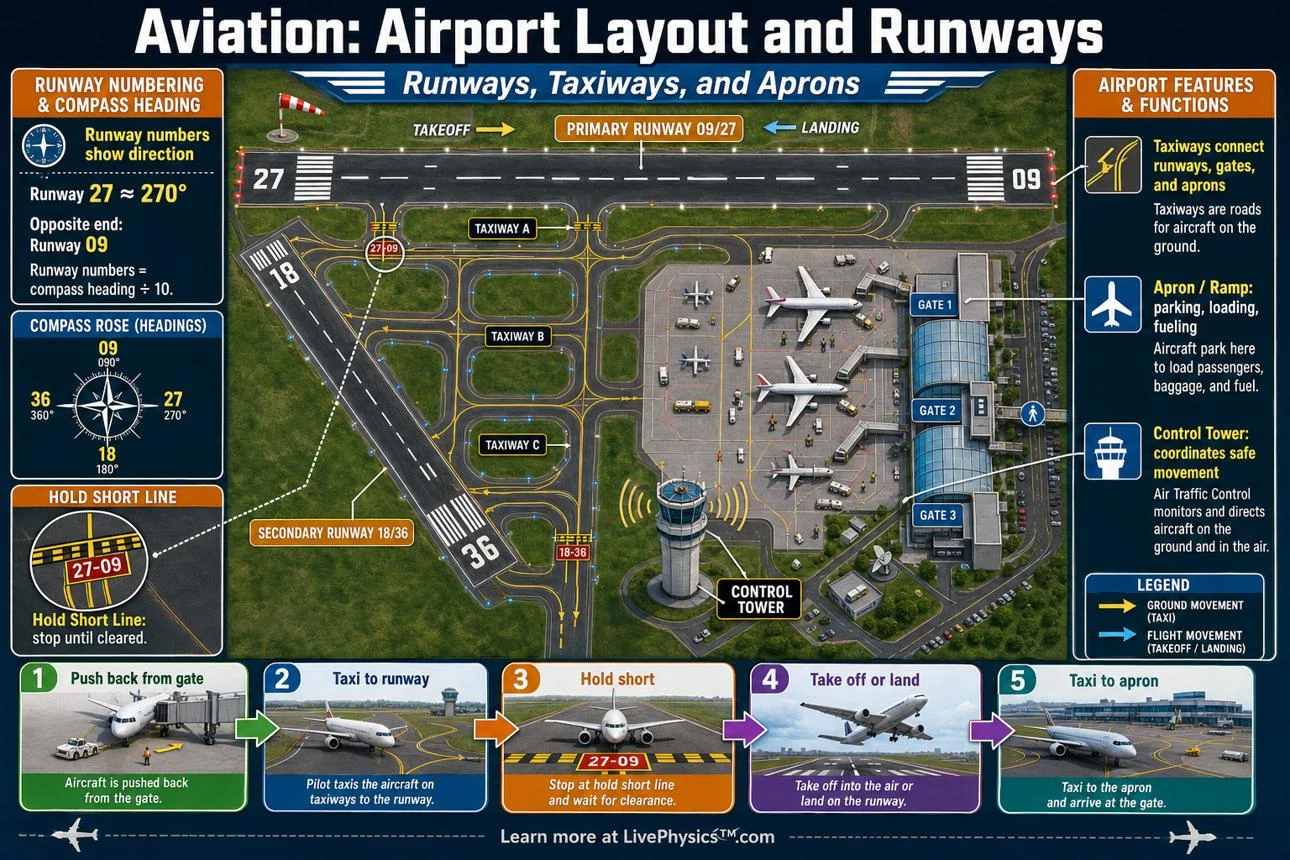
The landside is the part of an airport generally accessible to the public without entering restricted aircraft operational areas.
Examples of landside facilities include public access roads, car parks, passenger drop-off areas and public transport facilities.
Safety Measures in Landside Areas
- Observe road signs and speed limits.
- Use designated pedestrian walkways.
- Keep entrances and exits clear.
- Follow security screening and access instructions.
- Avoid leaving luggage unattended.
- Report suspicious objects or dangerous activities.
- Use authorised parking areas.
- Follow emergency evacuation instructions.
B. Airside Area
The airside includes restricted operational areas used for aircraft movement, parking, servicing and related activities.
Airside areas commonly include runways, taxiways, aircraft parking stands and certain service roads.
Access to the airside is controlled because of the hazards associated with aircraft and ground operations.
Safety Measures in Airside Areas
- Enter only with appropriate authorisation.
- Display required identification.
- Wear appropriate high-visibility clothing where required.
- Keep a safe distance from aircraft engines and propellers.
- Obey ground traffic rules.
- Follow instructions from authorised personnel.
- Avoid unauthorised photography or activities where restricted.
- Report fuel leaks and other hazards.
- Prevent foreign objects from being left on the ground.
- Follow aircraft movement and emergency instructions.
C. Terminal Area
An airport terminal is a building or group of buildings where passengers undergo processes associated with air travel.
Terminal facilities may include check-in counters, security screening areas, waiting lounges, boarding gates, baggage collection areas and information desks.
Safety Measures in Terminal Areas
- Follow passenger screening procedures.
- Keep emergency exits unobstructed.
- Use escalators and lifts carefully.
- Follow public-address announcements.
- Avoid overcrowding.
- Report unattended luggage.
- Follow instructions during boarding and disembarkation.
- Observe signs indicating restricted areas.
- Keep walkways clear.
- Follow the guidance of airport personnel.
1.3.3 Differences Between Airport Landside, Airside and Terminal Areas
|
Area |
Main purpose |
Typical users |
Main safety concerns |
|---|---|---|---|
|
Landside |
Public access and transport |
Passengers, visitors and drivers |
Road accidents, pedestrian safety |
|
Airside |
Aircraft operations |
Authorised aviation personnel |
Aircraft movement, engines, vehicles |
|
Terminal |
Passenger processing |
Passengers, staff and authorised visitors |
Crowd management, screening, evacuation |
1.3.4 Common Safety Signs in Airports
Safety signs communicate warnings, instructions, restrictions and useful information.
The curriculum groups common airport safety signs into three main categories:
- Mandatory signs.
- Prohibition signs.
- Information signs.
A. Mandatory Signs
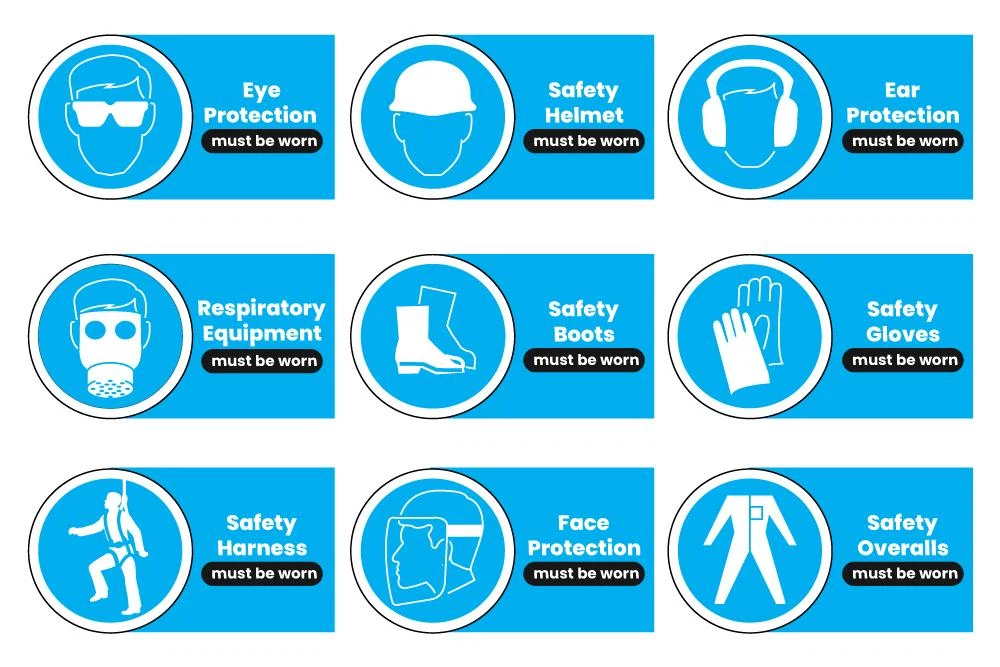
Mandatory signs indicate actions that people are required to perform.
Examples include:
- Wear hearing protection.
- Wear a safety helmet.
- Wear reflective clothing.
- Use a designated pedestrian route.
- Follow authorised entry procedures.
 B. Prohibition Signs
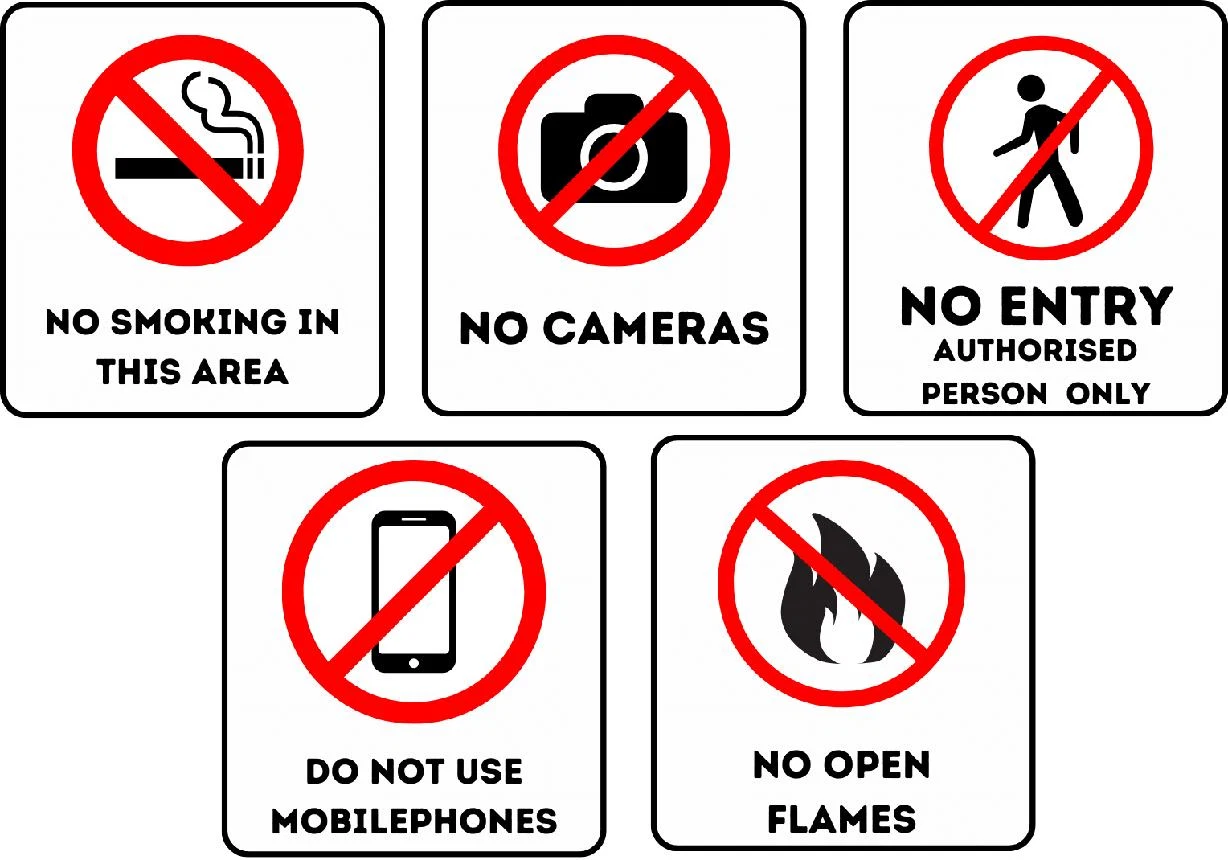
Prohibition signs indicate actions or behaviours that are not allowed.
Examples include:
- No smoking.
- No unauthorised entry.
- No photography in restricted areas.
- No pedestrian access.
- No open flames.
 C. Information Signs
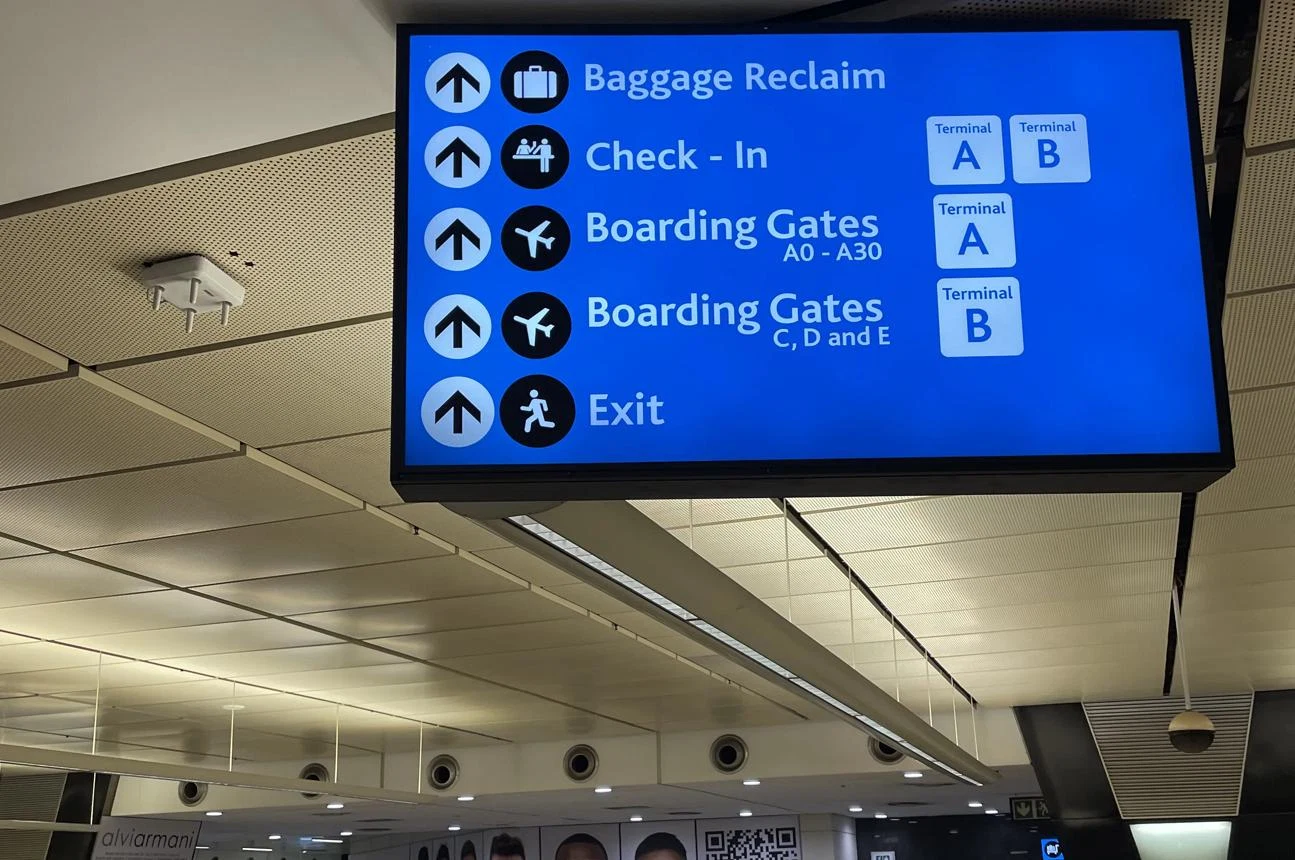
Information signs provide directions, identify facilities or communicate important instructions.
Examples include:
- Emergency exit.
- First aid station.
- Information desk.
- Baggage claim.
- Boarding gate.
- Fire assembly point.
 1.3.5 General Safety Rules for Movement in Airports
Safe movement is important because airports have many people, vehicles, aircraft and operational activities.
A. Rules for Passengers
- Arrive at the airport with sufficient time for the required procedures.
- Follow instructions given by airport personnel.
- Use designated entrances and exits.
- Present identification and travel documents where required.
- Comply with security screening procedures.
- Do not enter restricted areas without permission.
- Keep baggage within the permitted limits and follow dangerous-goods requirements.
- Follow boarding instructions.
- Avoid interfering with airport equipment.
- Report emergencies or suspicious activities.
B. Rules for Airport Employees
- Carry and display required access identification.
- Enter operational areas only when authorised.
- Follow designated routes.
- Wear the necessary PPE.
- Observe instructions issued by airside supervisors and other authorised personnel.
- Avoid distractions while performing safety-critical duties.
- Use ground equipment correctly.
- Report unsafe conditions.
- Follow emergency response procedures.
- Maintain professional communication.
C. Rules for Airport Drivers
- Obtain the required permission and training before operating vehicles in restricted airport areas.
- Observe designated speed limits.
- Follow airside road markings and signs.
- Give way to aircraft according to applicable airport procedures.
- Avoid driving near moving aircraft unless authorised.
- Maintain communication when required.
- Park vehicles only in authorised areas.
- Observe all instructions from airport operations personnel.
1.3.6 Common Hazards in Airports
|
Hazard |
Possible danger |
Prevention |
|---|---|---|
|
Moving aircraft |
Collisions and serious injuries |
Restricted access and movement control |
|
Jet blast |
Injury or damage caused by powerful exhaust |
Maintaining designated safety distances |
|
Propellers and rotors |
Serious impact injuries |
Keeping clear of operating aircraft |
|
Fuel spills |
Fire, slipping and pollution |
Immediate reporting and controlled clean-up |
|
Foreign Object Debris (FOD) |
Aircraft damage |
Inspection and removal of loose objects |
|
Moving ground vehicles |
Collisions |
Traffic control and designated routes |
|
Excessive noise |
Hearing damage |
Appropriate hearing protection |
|
Unattended baggage |
Security concerns |
Reporting to airport authorities |
|
Severe weather |
Disruption and accidents |
Weather monitoring and operational precautions |
|
Fire |
Injury and property damage |
Fire prevention and emergency response |
1.3.7 Foreign Object Debris (FOD)
Foreign Object Debris (FOD) refers to objects or materials in operational areas that can damage aircraft or cause injury.
Examples include loose stones, metal fragments, nuts, bolts, tools, plastic materials and pieces of packaging.
Dangers of FOD
- May be ingested into aircraft engines.
- Can damage aircraft tyres.
- May cause injury to airport workers.
- Can damage aircraft components.
- May cause flight delays or operational interruptions.
Prevention of FOD
- Conduct regular inspections.
- Keep tools and equipment properly stored.
- Remove loose materials from working areas.
- Use designated waste containers.
- Follow tool accountability procedures.
- Report FOD immediately.
1.3.8 Airport Safety Personnel and Their Roles
Airport safety involves different professionals working together to protect people, aircraft and infrastructure.
|
Personnel |
Responsibilities |
|---|---|
|
Airport safety officer |
Supports implementation and monitoring of airport safety procedures |
|
Airport security officer |
Controls access and performs assigned security duties |
|
Aircraft rescue and firefighting personnel |
Respond to aircraft-related emergencies and fires |
|
Air traffic controller |
Manages authorised aircraft movements and helps maintain safe traffic separation |
|
Aircraft maintenance technician |
Inspects and maintains aircraft systems |
|
Ground handling personnel |
Perform assigned aircraft servicing and ground support activities |
|
Airport operations officer |
Monitors and coordinates aspects of airport operations |
|
Aviation medical and emergency personnel |
Respond to medical emergencies |
1.3.9 Careers Related to Airport Safety
Learners interested in airport safety may pursue career pathways in:
- Airport safety management.
- Aviation security.
- Aircraft rescue and firefighting.
- Air traffic control.
- Aircraft engineering and maintenance.
- Airport operations management.
- Aviation occupational health and safety.
- Emergency response services.
- Ground handling operations.
- Aviation safety inspection.
1.3.10 Emergency Procedures at Airports
Airport emergencies may include fires, aircraft accidents, medical emergencies, dangerous-goods incidents and severe weather events.
General Emergency Response Procedure
- Identify the emergency or dangerous situation.
- Alert the relevant airport authority or emergency service.
- Provide accurate information about the location and nature of the incident.
- Follow instructions from authorised responders.
- Move away from danger when instructed.
- Use designated evacuation routes.
- Avoid interfering with rescue operations.
- Assist other people only when safe and appropriate.
- Proceed to the designated assembly area if evacuated.
- Do not return to a restricted area until authorised.
1.3.11 Importance of Safety Signs in Airports
- Warn people about hazards.
- Communicate mandatory instructions.
- Identify prohibited activities.
- Guide passengers and employees.
- Help prevent accidents.
- Support emergency evacuation.
- Improve movement and organisation.
- Promote awareness of restricted areas.
- Reduce confusion.
- Support consistent safety procedures.
1.3.12 Practical Activity: Airport Entry and Exit Safety Simulation
Objective: To demonstrate safe movement through the main airport areas.
Materials Required
- Cardboard.
- Paper.
- Marker pens.
- Chairs and tables.
- Mock identification cards.
- Sample safety signs.
Procedure
- Divide learners into groups.
- Assign roles such as passengers, security personnel and airport employees.
- Arrange the classroom into simulated landside, terminal and restricted airside areas.
- Prepare appropriate entry and exit signs.
- Allow learners to practise movement through the simulated airport areas.
- Demonstrate identification checks and basic security procedures.
- Explain the restrictions associated with airside entry.
- Observe whether learners follow the displayed signs.
- Discuss unsafe actions observed during the simulation.
- Suggest improvements to the simulated safety procedures.
Expected Learning Outcomes
Learners should be able to identify the main airport areas, explain safety requirements and demonstrate appropriate movement procedures.
1.3.13 Practical Activity: Designing Airport Safety Signs
Materials Required: Drawing paper, pencils, rulers, coloured pencils and reference charts.
Procedure
- Identify three common airport hazards.
- Choose an appropriate sign for each hazard.
- Draw the signs using suitable shapes and colours.
- Label each sign.
- Explain what each sign communicates.
- Display the drawings in the classroom.
- Compare the signs and discuss their effectiveness.
Revision Exercise 1.3
- Define airport safety.
- State eight reasons why safety is important at an airport.
- Identify the three main airport areas.
- Differentiate between landside and airside.
- Explain five safety measures observed in airport terminals.
- Identify three categories of airport safety signs.
- Give four examples of mandatory signs.
- Explain the purpose of prohibition signs.
- State ten rules observed when moving through an airport.
- Define Foreign Object Debris.
- Explain five dangers of FOD.
- Describe five ways of preventing FOD.
- Identify six careers related to airport safety.
- Explain the role of an airport safety officer.
- Outline general procedures followed during an airport emergency.