
1.2.1 Meaning of Safety in the Aviation Workplace
Safety refers to the condition of being protected from unacceptable risks of injury, damage or harm.
A workplace is an area where people perform occupational activities.
An aviation workplace is an environment where activities related to aircraft, aviation equipment and aviation operations take place.
Examples of aviation workplaces include:
- Aircraft maintenance workshops.
- Airport terminals.
- Aircraft hangars.
- Aviation training classrooms.
- Aircraft manufacturing facilities.
- Airport aprons.
- Aircraft maintenance areas.
- Aviation laboratories.
Aviation workplace safety involves following established procedures and using appropriate equipment to prevent accidents, injuries and damage during aviation-related activities.
1.2.2 Importance of Safety in the Aviation Workplace
- Protection of life: Safety precautions reduce the likelihood of injuries and fatalities.
- Prevention of accidents: Safe working procedures reduce hazards.
- Protection of equipment: Proper handling helps prevent damage to expensive aircraft components and tools.
- Improvement of productivity: A safe workplace allows employees to perform duties more effectively.
- Reduction of costs: Preventing accidents reduces repair expenses and losses.
- Legal compliance: Safety procedures help organisations meet applicable occupational and aviation requirements.
- Promotion of discipline: Workers develop responsibility and careful working habits.
- Environmental protection: Proper handling of fuel, chemicals and waste reduces pollution.
1.2.3 General Safety Rules in an Aviation Workplace
A. Classroom Safety Rules
- Follow instructions given by the teacher.
- Keep the classroom clean and organised.
- Avoid running and pushing other learners.
- Handle learning equipment carefully.
- Report damaged electrical equipment.
- Do not overload electrical sockets.
- Keep passages and exits unobstructed.
- Use classroom tools only for their intended purposes.
- Report accidents immediately.
- Observe emergency evacuation instructions.
B. Workshop Safety Rules
- Wear appropriate personal protective equipment.
- Inspect tools before use.
- Use the correct tool for each task.
- Do not operate machines without proper training and authorisation.
- Keep the working area clean and dry.
- Secure workpieces before cutting or drilling.
- Avoid loose clothing near moving machinery.
- Tie back long hair when working near rotating machines.
- Disconnect or isolate equipment before maintenance where required.
- Report defects and dangerous conditions promptly.
- Store sharp objects safely.
- Follow all relevant workshop safety instructions.
C. Environmental Safety Rules
- Dispose of waste materials appropriately.
- Store fuel and chemicals in suitable, labelled containers.
- Avoid unnecessary fuel spills.
- Use designated waste collection facilities.
- Reduce unnecessary noise and emissions.
- Keep drainage channels free from contaminants.
- Report environmental hazards.
- Support recycling and responsible use of resources.
1.2.4 Hazards in an Aviation Workplace
A hazard is anything with the potential to cause harm to people, property or the environment.
Risk refers to the combination of the likelihood of harm occurring and the severity of its consequences.
For example, an exposed electrical wire is a hazard, while the possibility of receiving an electric shock is a risk associated with that hazard.
Categories of Workplace Hazards
|
Hazard |
Examples |
Possible effects |
|---|---|---|
|
Physical |
Noise, heat, vibration, slippery floors |
Hearing problems, burns, falls |
|
Mechanical |
Rotating machinery, sharp tools, moving aircraft parts |
Cuts, crushing injuries |
|
Electrical |
Damaged cables, exposed conductors |
Electric shock, burns |
|
Chemical |
Aviation fuel, solvents, cleaning agents |
Irritation, poisoning, burns |
|
Fire |
Fuel leaks, ignition sources, electrical faults |
Burns, property damage |
|
Ergonomic |
Heavy lifting, poor posture, repetitive movement |
Back pain, muscle injuries |
|
Environmental |
Spills, fumes, improper waste disposal |
Pollution, health problems |
1.2.5 Personal Protective Equipment (PPE)
Personal Protective Equipment refers to clothing and devices worn to reduce exposure to workplace hazards.
PPE is important, but it does not replace proper training, hazard control and safe working procedures.

Safety helmet
Protects the head against certain impacts and falling objects.
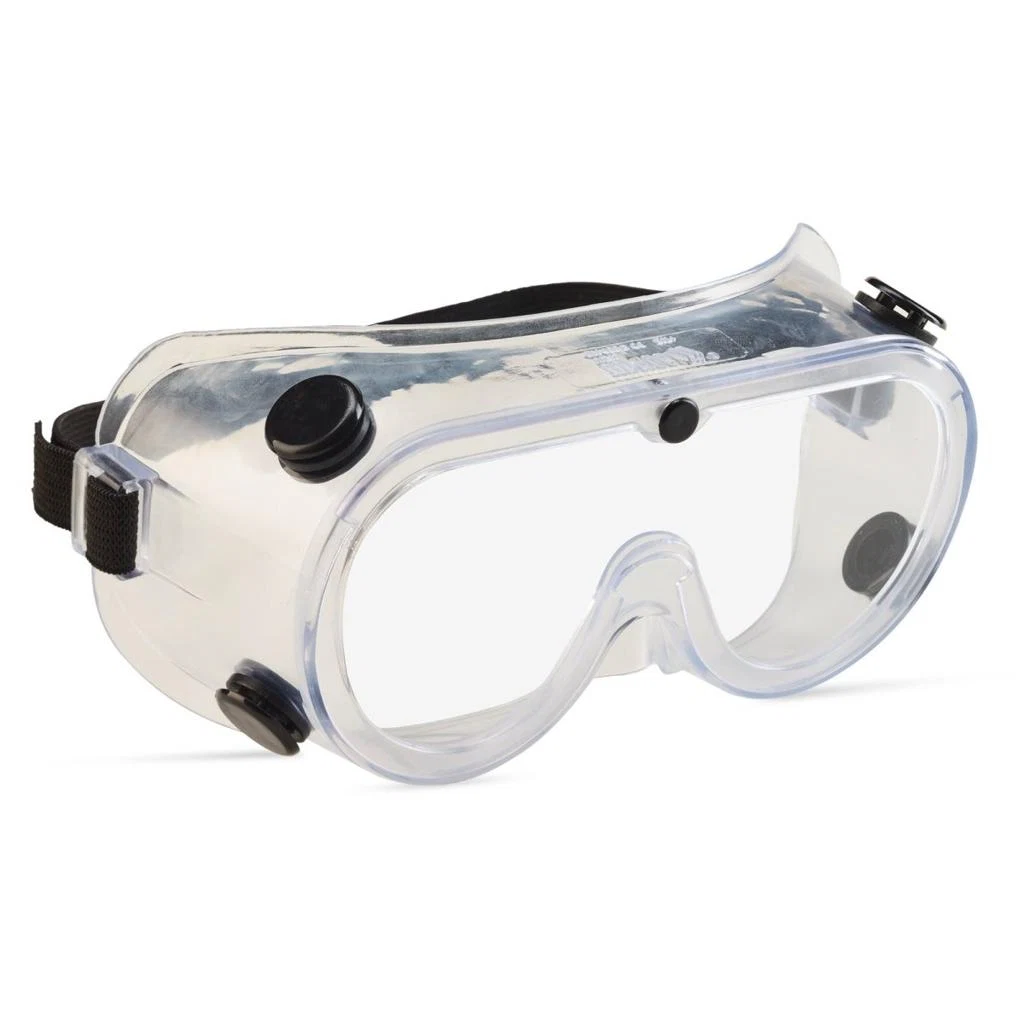
Safety goggles
Protect the eyes against particles, splashes and other hazards.

Protective gloves
Protect the hands against specific mechanical, chemical or thermal hazards.
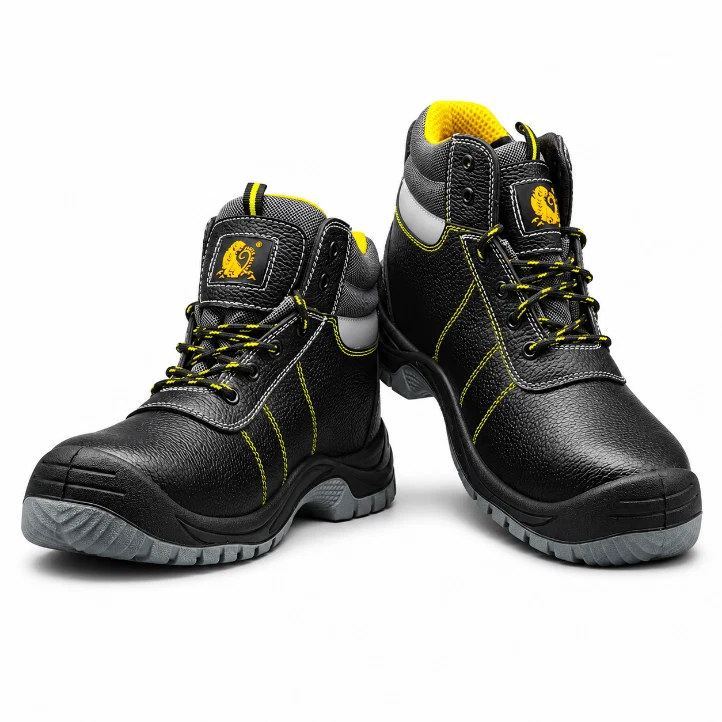
Safety boots
Protect feet from falling objects, impacts and certain other workplace hazards.

Hearing protection
Reduces exposure to excessive noise.

Reflective vest
Improves worker visibility in operational areas.
1.2.6 Common Injuries in Aviation Workplaces
Workplace injuries may result from unsafe actions, hazardous conditions, equipment failure or accidents.
A. Cuts
A cut is an injury that occurs when the skin is broken by a sharp object.
Common causes include sharp metal edges, cutting tools, broken glass and careless handling of equipment.
B. Burns
A burn is an injury to body tissues caused by heat, electricity, chemicals or radiation.
Burns may occur when a worker touches hot machinery, encounters flames or handles chemicals improperly.
C. Scalds
A scald is a burn caused by hot liquids or steam.
Examples include injuries caused by boiling water or hot fluids.
D. Fractures
A fracture is a break or crack in a bone.
Fractures may result from falls, collisions, falling objects and machinery accidents.
E. Electric Shock Injuries
An electric shock occurs when electrical current passes through the body.
It may cause burns, muscle contractions, loss of consciousness, breathing difficulties or cardiac arrest.
1.2.7 Classification of Workplace Injuries
|
Classification |
Description |
Examples |
|---|---|---|
|
Minor |
Injuries that generally cause limited harm |
Small cuts, minor bruises |
|
Serious |
Injuries requiring urgent medical attention or substantial treatment |
Major fractures, severe burns |
|
Fatal |
Injuries resulting in death |
Fatal electrocution, severe traumatic injury |
1.2.8 First Aid in the Aviation Workplace
First aid is the immediate assistance given to an injured or suddenly ill person before qualified medical assistance becomes available.
Objectives of First Aid
- Preserve life.
- Prevent the condition from worsening.
- Promote recovery.
- Reduce pain and distress.
- Support the injured person until professional help arrives.
General Principles of First Aid
- Ensure that the scene is safe before approaching.
- Assess the condition of the injured person.
- Call for emergency assistance when necessary.
- Provide assistance within your level of training.
- Avoid unnecessary movement of the injured person.
- Reassure the person and monitor their condition.
- Hand over relevant information to emergency responders.
1.2.9 Contents of a First Aid Kit
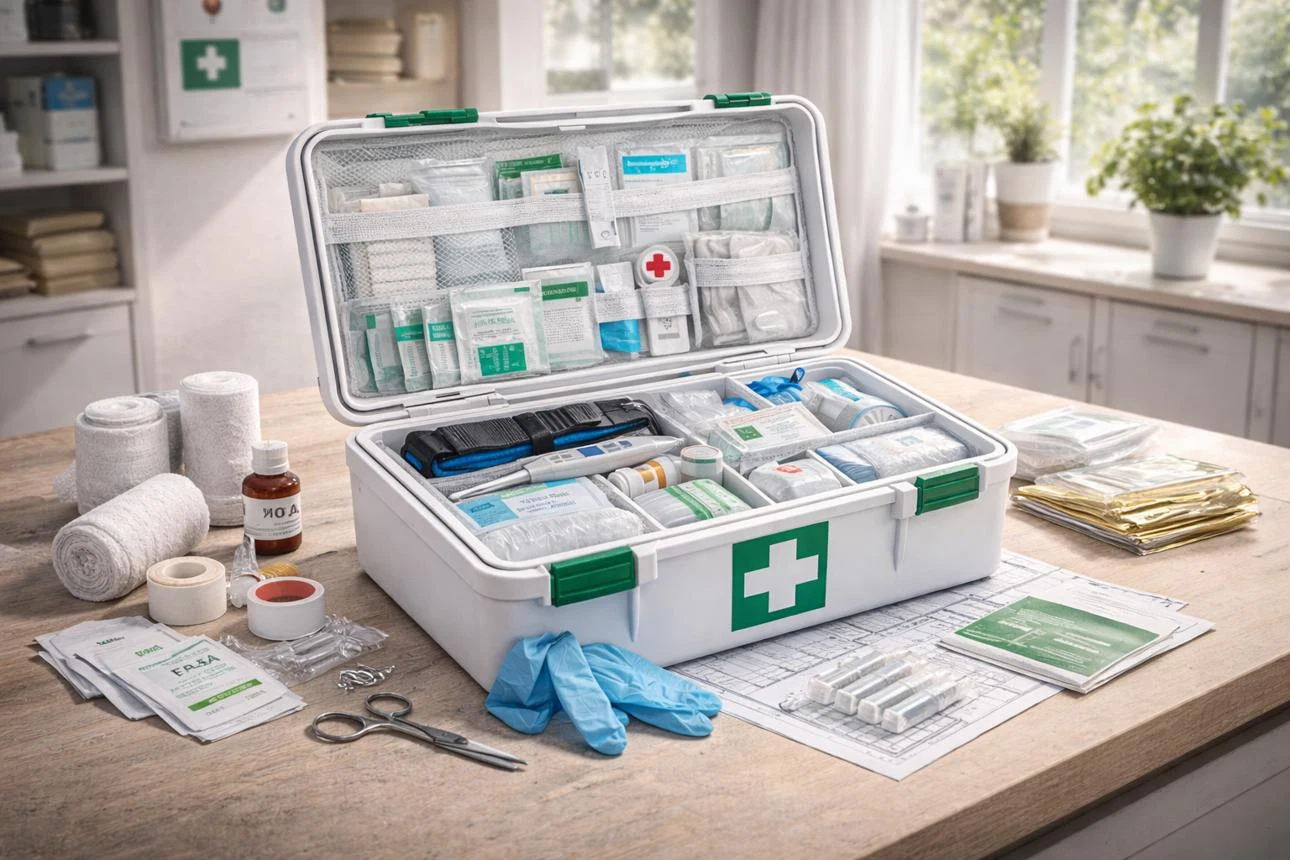
A first aid kit contains basic materials used to provide immediate care during an emergency.
|
Item |
Use |
|---|---|
|
Sterile gauze |
Covering wounds and absorbing blood |
|
Adhesive dressings |
Covering small cuts |
|
Roller bandages |
Securing dressings |
|
Triangular bandage |
Supporting an injured arm |
|
Disposable gloves |
Reducing exposure to blood and body fluids |
|
Sterile saline |
Irrigating wounds when appropriate |
|
Medical scissors |
Cutting bandages and dressings |
|
Adhesive tape |
Securing dressings |
|
CPR face shield |
Providing a barrier during rescue breaths |
|
Emergency blanket |
Helping reduce heat loss |
First aid supplies should be checked regularly and replaced when used or expired.
1.2.10 First Aid Procedures for Common Injuries
A. First Aid for Cuts
- Ensure that the area is safe.
- Wear disposable gloves where available.
- Apply firm, direct pressure using a clean dressing to control bleeding.
- For a minor cut, rinse with clean running water.
- Cover the wound with a sterile dressing.
- Seek medical assistance for deep wounds, uncontrolled bleeding or signs of serious injury.
B. First Aid for Burns and Scalds
- Remove the person from the source of injury if it is safe.
- Cool the affected area under cool running water for 20 minutes.
- Remove jewellery or loose clothing near the burn if it is not stuck to the skin.
- Cover the burn loosely with an appropriate sterile, non-stick dressing.
- Do not apply butter, toothpaste or other household substances.
- Do not burst blisters.
- Seek urgent medical help for serious burns, chemical burns, electrical burns or burns affecting sensitive body areas.
C. First Aid for Fractures
- Ensure that the scene is safe.
- Avoid unnecessary movement of the injured part.
- Support the affected limb in the position found.
- Do not attempt to straighten a deformed bone.
- Control any external bleeding with care.
- Call for professional medical assistance.
- Monitor the injured person while waiting for help.
D. First Aid for Electric Shock
- Do not touch the injured person while they are in contact with an electrical source.
- Disconnect the power supply if it is safe to do so.
- Keep away from high-voltage equipment and alert emergency responders.
- Once the electrical hazard is removed, assess the person's response and breathing.
- Call emergency services.
- Begin CPR and use an AED if needed and if you are trained or guided by emergency dispatch instructions.
- Arrange medical assessment, even when the person initially appears well.
1.2.11 Cardiopulmonary Resuscitation (CPR)
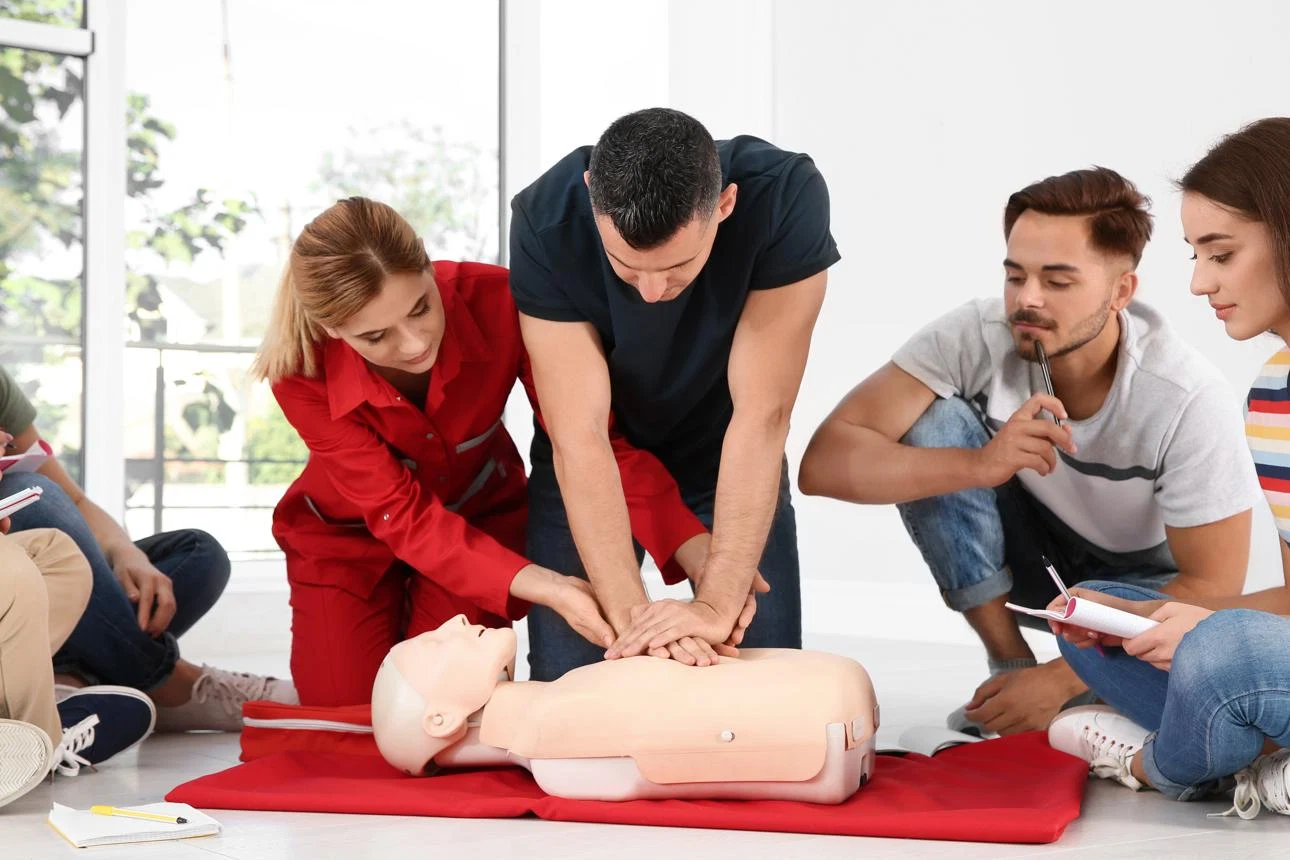
Cardiopulmonary Resuscitation (CPR) is an emergency procedure used when a person is unresponsive and is not breathing normally.
It helps maintain blood circulation until emergency medical assistance is available.
 Basic Adult CPR Procedure
- Check that the area is safe.
- Check whether the person responds.
- Call emergency services or direct someone else to call.
- Check for normal breathing.
- If the person is unresponsive and not breathing normally, begin chest compressions.
- Place the heel of one hand in the centre of the chest and the other hand on top.
- Perform compressions at a rate of 100–120 per minute and a depth of approximately 5–6 cm for an adult.
- If trained and willing to give rescue breaths, use a cycle of 30 compressions followed by 2 breaths.
- Use an automated external defibrillator (AED) as soon as one becomes available, following its spoken instructions.
- Continue until emergency responders take over, the person recovers or it becomes unsafe to continue.
Important: Learners should practise CPR on training mannequins under qualified supervision, not on healthy classmates.
1.2.12 Causes of Accidents in Aviation Workplaces
- Failure to follow safety instructions.
- Inadequate training.
- Improper use of tools and equipment.
- Poor equipment maintenance.
- Carelessness and distraction.
- Fatigue.
- Poor communication.
- Failure to wear appropriate PPE.
- Poor housekeeping.
- Defective electrical installations.
- Unsafe handling of fuels and chemicals.
- Inadequate supervision.
1.2.13 Prevention of Workplace Accidents
Accidents can be reduced through the following measures:
- Conducting safety training.
- Identifying and assessing hazards.
- Providing appropriate PPE.
- Inspecting and maintaining equipment.
- Providing suitable warning signs.
- Following emergency procedures.
- Keeping workshops tidy.
- Supervising practical activities.
- Reporting unsafe conditions.
- Promoting a positive workplace safety culture.
Practical Activity: First Aid Demonstration
Materials: First aid kit, training mannequin, bandages, gloves and clean dressings.
Procedure:
- Identify the contents of the first aid kit.
- Explain the purpose of each item.
- Demonstrate the correct use of a sterile dressing.
- Practise supporting an injured arm using a triangular bandage.
- Demonstrate CPR on a training mannequin under qualified supervision.
- Discuss how to report workplace emergencies.
- Record the lessons learned.
Revision Exercise 1.2
- Define workplace safety.
- Differentiate between a hazard and a risk.
- List ten safety rules observed in an aviation workshop.
- Identify five categories of workplace hazards.
- Explain the importance of PPE.
- State six common injuries in aviation workplaces.
- Classify injuries into minor, serious and fatal categories.
- Name ten items found in a first aid kit.
- Explain how first aid is given to a person with a minor cut.
- Describe the first aid procedure for an electric shock injury.
- State five objectives of first aid.
- Explain how accidents can be prevented in an aviation workshop.