
2.1.1 Meaning of Nutrition
Nutrition is the process by which living organisms obtain and utilise nutrients required for energy, growth, repair and maintenance.
Plants require nutrients to synthesise cellular materials, maintain metabolic activities and support reproduction.
2.1.2 Types of Nutrition in Plants
Plants exhibit autotrophic and several heterotrophic nutritional relationships.
A. Autotrophic Nutrition
Autotrophic nutrition is a mode of nutrition in which an organism manufactures organic food from inorganic substances using an energy source.
Most green plants are photoautotrophs. They use light energy to synthesise carbohydrates from carbon dioxide and water.
B. Heterotrophic Nutrition
Heterotrophic nutrition involves obtaining organic nutrients from other organisms or organic materials.
The curriculum identifies parasitic, saprophytic, symbiotic and insectivorous modes for study.
1. Parasitic Nutrition
A parasite obtains nutrients from a host organism.
Some parasitic plants obtain water, mineral nutrients and/or organic compounds from their hosts.
Examples: Dodder (Cuscuta) and mistletoes.
Adaptation: Specialised absorbing structures called haustoria connect the parasite to host tissues.
2. Saprophytic Nutrition
Saprophytic or saprotrophic nutrition involves obtaining nutrients from dead and decaying organic material.
Fungi are familiar examples of saprotrophic organisms.
Some non-photosynthetic plants obtain nutrients indirectly through associations with fungi that break down organic matter. This relationship is more precisely described as mycoheterotrophy.
3. Symbiotic Nutrition
Symbiosis is a close association between organisms of different species.
Some symbiotic relationships involve mutual nutritional benefits.
Example: Leguminous plants and nitrogen-fixing rhizobia.
The bacteria receive organic compounds and a suitable environment from the plant. The plant benefits from biologically fixed nitrogen.
4. Insectivorous Nutrition
Insectivorous plants trap and digest insects or other small animals to supplement their nutrient supply.
Examples include the Venus flytrap, pitcher plants and sundews.
Most insectivorous plants still carry out photosynthesis. Captured prey mainly provides mineral nutrients, especially nitrogen and phosphorus.
Comparison of Nutritional Modes
|
Mode |
Nutrient source |
Example |
|---|---|---|
|
Autotrophic |
Organic food synthesised from inorganic substances |
Maize |
|
Parasitic |
Host organism |
Dodder |
|
Saprotrophic |
Dead organic material |
Mushroom (fungus) |
|
Symbiotic |
Nutrients exchanged through close association |
Legume–rhizobium association |
|
Insectivorous |
Photosynthesis supplemented by captured prey |
Pitcher plant |
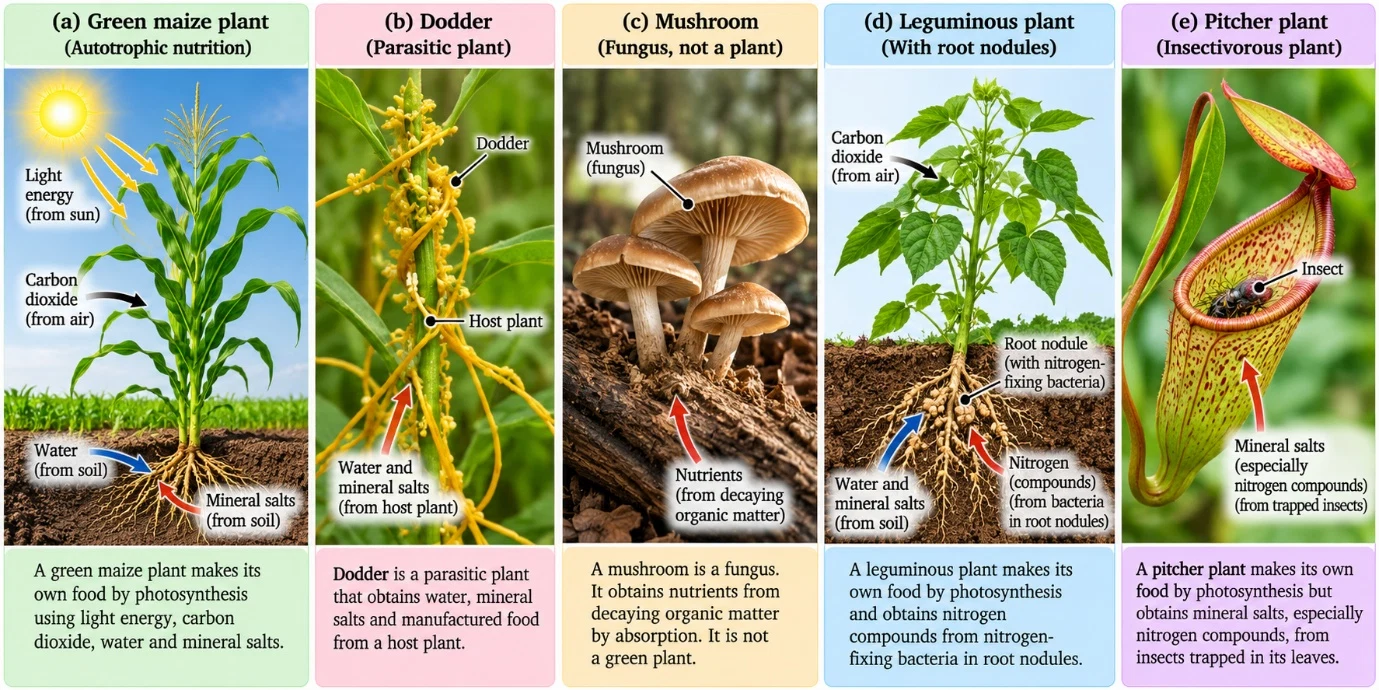
Figure 13: Examples of autotrophic and heterotrophic nutritional relationships.
2.1.3 Photosynthesis
Photosynthesis is the process by which photosynthetic organisms use light energy to synthesise organic substances from carbon dioxide and water.
In green plants, oxygen is released during oxygenic photosynthesis.
Overall Equation
This is a simplified net equation representing glucose production.
Requirements for Photosynthesis
- Light.
- Chlorophyll and associated photosynthetic pigments.
- Carbon dioxide.
- Water.
- Suitable enzymes and cellular conditions.
Importance of Photosynthesis
- Produces organic food.
- Stores light energy in chemical bonds.
- Releases oxygen.
- Supports most food chains.
- Removes carbon dioxide from the atmosphere.
- Provides plant biomass used for food, fuel, fibre and other products.
2.1.4 Structure of the Chloroplast
A chloroplast is a specialised organelle in which photosynthesis takes place.
It contains chlorophyll and other pigments that absorb light energy.
Main Parts
Outer membrane: Forms part of the chloroplast envelope.
Inner membrane: Regulates movement of substances between the cytoplasm and chloroplast interior.
Stroma: Fluid-filled region containing enzymes involved in carbon fixation, chloroplast DNA and ribosomes.
Thylakoids: Flattened membrane sacs containing photosynthetic pigments and components of the light reactions.
Grana: Stacks of thylakoids.
Stroma lamellae: Membrane connections between grana.
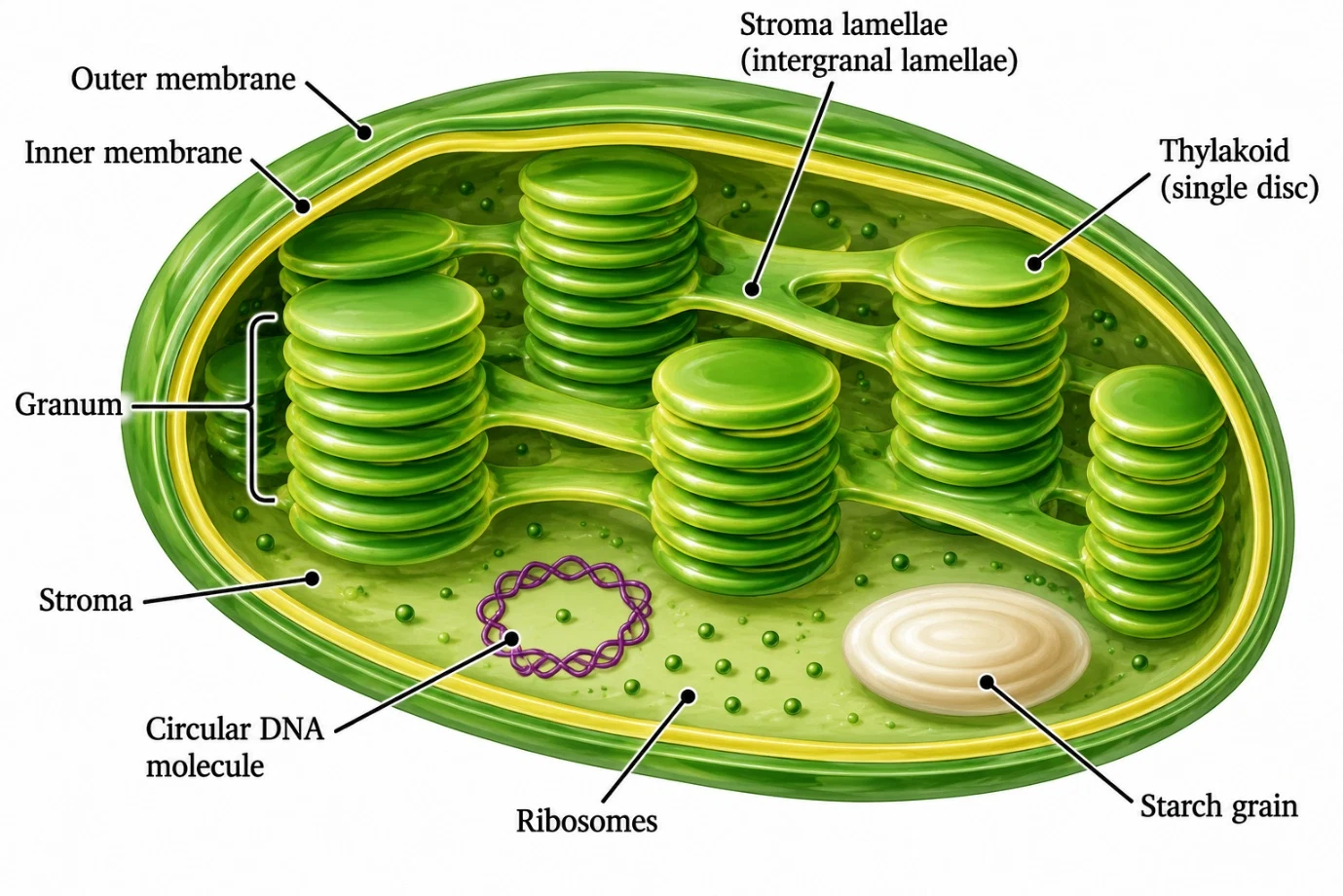
Figure 14: Internal structure of a chloroplast.
Relationship Between Structure and Function
|
Structure |
Adaptation or function |
|---|---|
|
Thylakoid membranes |
Hold pigments and electron transport components |
|
Grana |
Provide extensive membrane surface area |
|
Stroma |
Contains enzymes for carbon fixation |
|
Chloroplast envelope |
Separates the organelle from the cytoplasm |
|
Chloroplast DNA and ribosomes |
Support production of some chloroplast proteins |
2.1.5 Stages of Photosynthesis
Photosynthesis involves two major sets of reactions:
- Light-dependent reactions.
- Light-independent reactions, including the Calvin cycle.
A. Light-Dependent Reactions
These reactions occur mainly in the thylakoid membranes.
They require light energy.
Main Events
- Photosynthetic pigments absorb light energy.
- Electrons are excited in photosystems.
- Water is split, providing electrons and releasing oxygen.
- Electron transport establishes a proton gradient.
- ATP is synthesised.
- NADP⁺ is reduced to NADPH.
Photolysis of Water
Products
The major products are ATP, NADPH and oxygen.
ATP and NADPH are used in carbon-fixation reactions.
B. Light-Independent Reactions
These reactions occur in the chloroplast stroma.
They are commonly called the Calvin cycle.
Although they do not directly require light, they depend on ATP and NADPH produced by the light-dependent reactions.
Main Stages of the Calvin Cycle
1. Carbon fixation
Carbon dioxide combines with ribulose-1,5-bisphosphate (RuBP) through the action of the enzyme RuBisCO.
2. Reduction
The resulting compounds are converted into triose phosphates using ATP and NADPH.
3. Regeneration
Most triose phosphate molecules are used to regenerate RuBP, allowing the cycle to continue.
Some triose phosphate is used to synthesise sugars and other organic compounds.
Comparison
|
Feature |
Light-dependent reactions |
Calvin cycle |
|---|---|---|
|
Location |
Thylakoid membranes |
Stroma |
|
Directly requires light |
Yes |
No |
|
Uses water as electron source |
Yes |
No |
|
Uses carbon dioxide |
No direct fixation |
Yes |
|
Produces |
ATP, NADPH, oxygen |
Triose phosphate and regenerated RuBP |
|
Energy relationship |
Converts light energy into chemical energy |
Uses ATP and NADPH for carbon fixation |
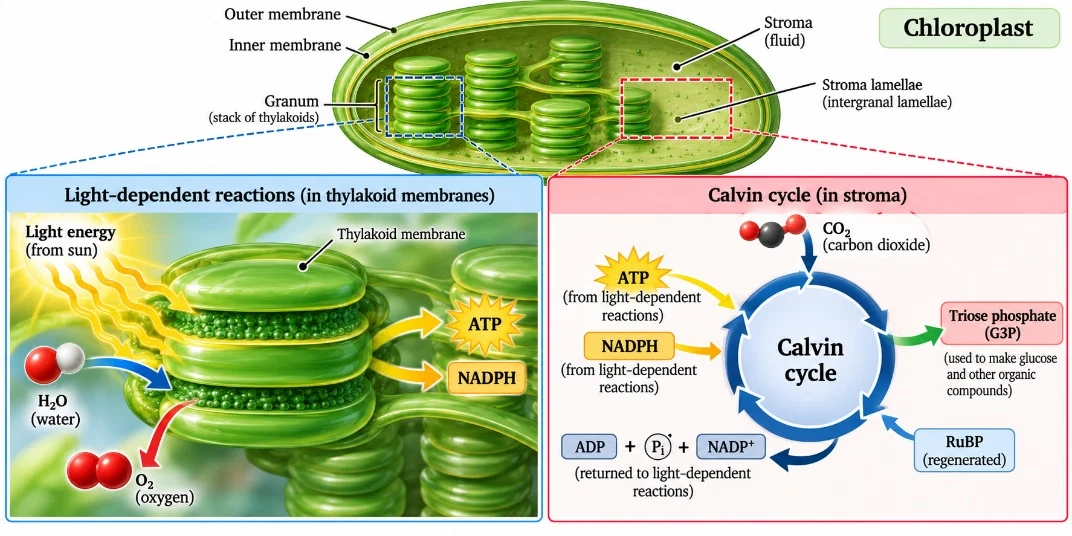
Figure 15: Relationship between the light-dependent reactions and the Calvin cycle.
2.1.6 Significance of Photosynthesis in Nature
Photosynthesis supports ecosystems by introducing chemical energy into food webs.
Plants use photosynthetic products to produce cellulose, starch, proteins, lipids and other substances.
Animals obtain much of their food directly or indirectly from photosynthetic organisms.
Photosynthesis also contributes to atmospheric oxygen and the global carbon cycle.
Practical Learning Activities
- Compare examples of autotrophic and heterotrophic nutrition.
- Construct a model of a chloroplast.
- Draw a labelled chloroplast diagram.
- Create a flow chart showing the light-dependent reactions.
- Illustrate the Calvin cycle.
- Explain how photosynthesis supports food production in Kenya.
Revision Questions
- Define autotrophic nutrition.
- Differentiate between parasitic and insectivorous nutrition.
- Explain the importance of symbiotic nutrition.
- State the raw materials required for photosynthesis.
- Describe the structure of a chloroplast.
- Explain the role of thylakoid membranes.
- Describe the main events of the light-dependent reactions.
- Explain the stages of the Calvin cycle.
- Compare the light-dependent and light-independent reactions.
- Explain five ways photosynthesis is important to living organisms.