
Suggested duration: 22 lessons
2.3.1 Meaning of Gaseous Exchange
Gaseous exchange is the movement of respiratory and photosynthetic gases between an organism and its environment.
In plants, gaseous exchange mainly involves oxygen and carbon dioxide.
During photosynthesis, plants generally absorb carbon dioxide and release oxygen.
During aerobic respiration, plant cells use oxygen and release carbon dioxide.
Both processes may occur in the same plant at the same time.
Importance of Gaseous Exchange
- Supplies carbon dioxide for photosynthesis.
- Supplies oxygen for aerobic respiration.
- Allows removal of carbon dioxide produced during respiration.
- Supports cellular metabolism.
- Contributes to atmospheric gas cycling.
2.3.2 Sites of Gaseous Exchange in Plants
The major structures associated with gaseous exchange include stomata, lenticels, cuticular surfaces and specialised structures in some aquatic or waterlogged-habitat plants.
A. Stomata
A stoma is a microscopic pore, usually in the epidermis of a leaf or young green stem, surrounded by guard cells.
Stomata regulate gaseous exchange and water-vapour loss.
Structure of a Stoma
Each stoma consists of a stomatal pore and two guard cells.
The guard cells change shape as their turgor changes, controlling the opening and closing of the pore.
Adaptations
- Guard cells can alter their turgidity.
- Uneven cell-wall thickening assists movement.
- The pore provides a pathway for gas diffusion.
- Stomatal distribution may reflect the plant's habitat and water availability.
B. Lenticels
Lenticels are regions of loosely arranged cells in the bark of many woody stems.
They permit diffusion of gases between internal tissues and the external atmosphere.
C. Cuticle
The cuticle is a waxy covering on the epidermis of many aerial plant parts.
It mainly limits water loss. Some gases can diffuse through it, but in most leaves stomata are the principal route of gaseous exchange.
D. Pneumatophores
Pneumatophores are specialised roots found in some plants growing in waterlogged soils, including certain mangroves.
They extend above the soil or water surface and facilitate gas exchange.
Gaseous Exchange in Aquatic Plants
Submerged plants may exchange dissolved gases directly through exposed surfaces.
Some aquatic plants have extensive internal air spaces called aerenchyma, which assist internal gas movement.
Floating leaves may have stomata concentrated on their upper surfaces.
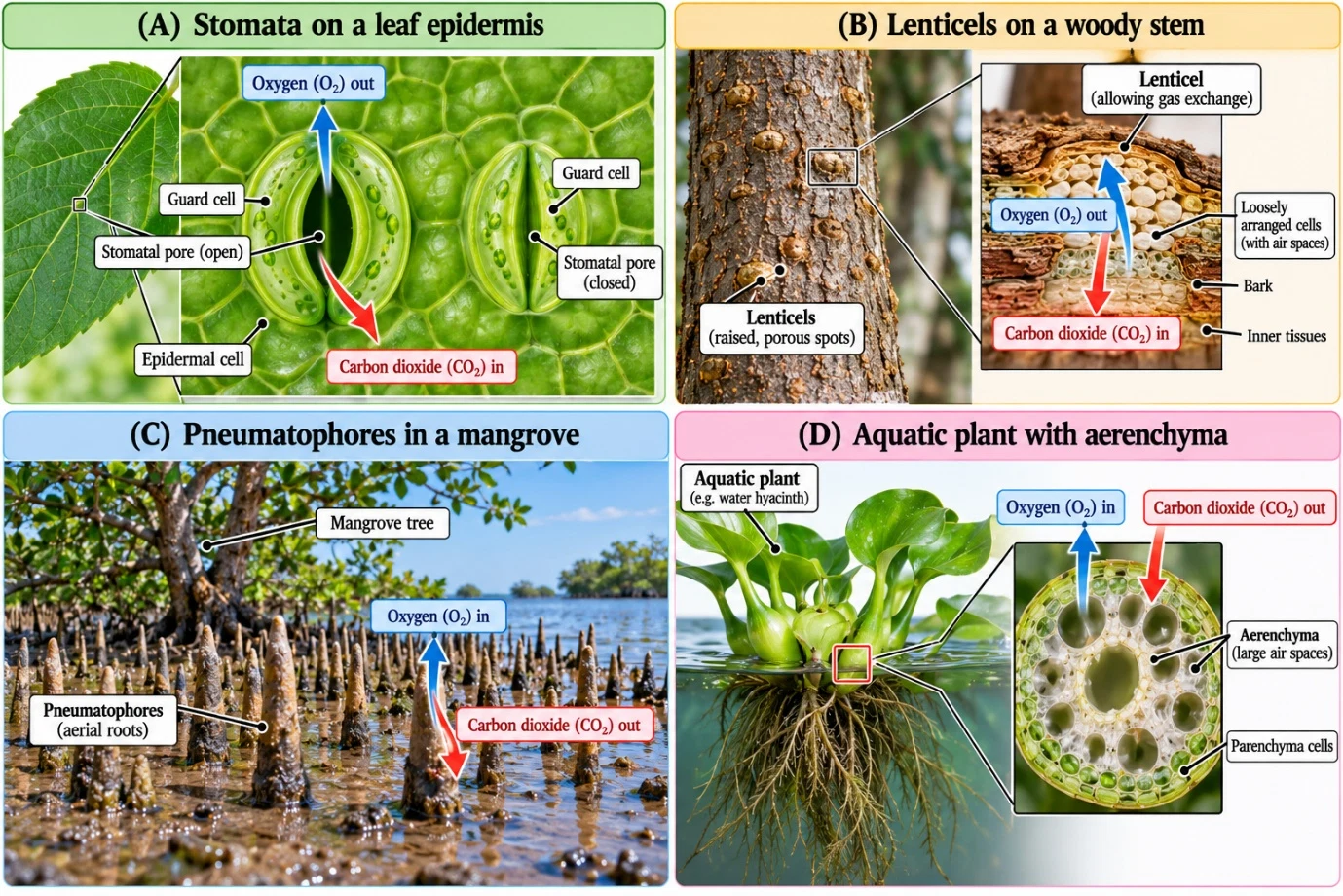
Figure 22: Structures associated with gaseous exchange in terrestrial and aquatic plants.
2.3.3 Structure of Guard Cells
Guard cells are specialised epidermal cells that regulate the stomatal aperture.
They contain chloroplasts and have cell walls with unequal mechanical properties.
In many dicotyledonous plants, guard cells are kidney-shaped.
In many grasses, guard cells are dumbbell-shaped.
Opening of Stomata
Stomata commonly open when guard cells accumulate osmotically active substances, including potassium ions and other solutes.
This lowers the water potential inside guard cells.
Water enters by osmosis, causing the guard cells to become turgid.
The mechanical properties of the cell walls cause the stomatal pore to widen.
Closing of Stomata
When guard cells lose solutes, their water potential increases.
Water moves out, turgor decreases and the stomatal pore narrows or closes.
Factors Affecting Stomatal Opening
- Light conditions.
- Internal carbon dioxide concentration.
- Water availability.
- Abscisic acid signalling.
- Temperature and other environmental conditions.
2.3.4 Theories Explaining Stomatal Movement
The curriculum includes the photosynthetic theory, starch–sugar theory and potassium-ion theory.
A. Photosynthetic Theory
This historical explanation links stomatal opening to photosynthesis in guard cells.
Photosynthesis may contribute to the metabolic conditions associated with stomatal movement, but it does not fully explain modern observations.
B. Starch–Sugar Theory
This historical model proposes that conversion between starch and soluble sugars changes the osmotic conditions inside guard cells.
An increase in soluble sugars could favour water entry and stomatal opening.
Although carbohydrate metabolism contributes to guard-cell function, this model alone is incomplete.
C. Potassium-Ion Theory
This model explains stomatal opening through changes in potassium-ion and associated solute concentrations.
When guard cells accumulate potassium ions and other osmotically active substances, water enters by osmosis.
Increased turgor opens the pore.
When ions and other solutes leave, water follows and the pore closes.
The modern understanding incorporates ion transport, organic solutes, signalling pathways and guard-cell mechanics.
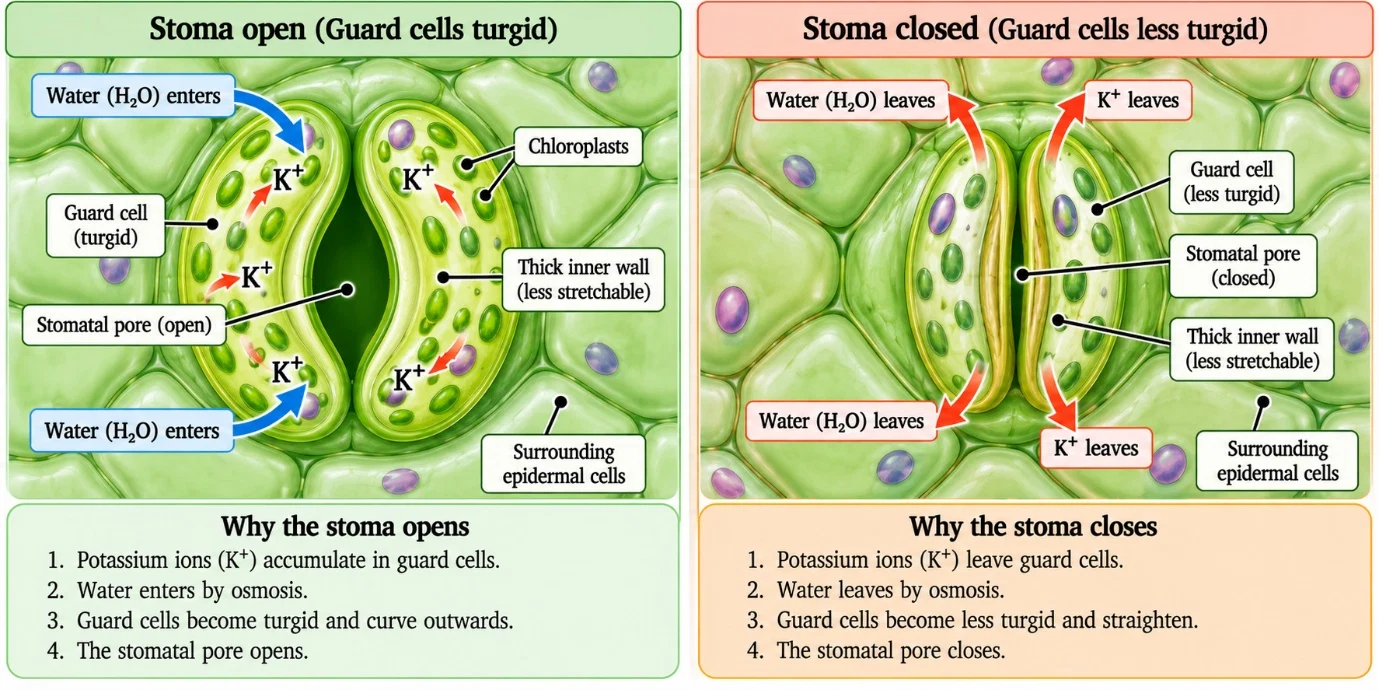
Figure 23: Opening and Closing of Stomata
2.3.5 Distribution of Stomata in Leaves
Stomatal distribution varies among plants and habitats.
In many terrestrial dicotyledonous plants, stomata are more numerous on the lower leaf surface.
In many grasses, stomata occur on both surfaces.
Floating aquatic leaves often have stomata mainly on the upper surface.
Submerged leaves may have few or no functional stomata.
Practical Activity: Comparing Stomatal Distribution
Aim: To compare stomatal distribution on the upper and lower surfaces of a leaf.
Materials: Fresh leaves, clear nail varnish or suitable impression material, transparent adhesive tape, microscope slides and a light microscope.
Procedure:
- Select a suitable leaf.
- Apply a thin layer of impression material to a small area of the upper surface.
- Allow it to dry.
- Carefully lift the impression using adhesive tape.
- Mount the impression on a microscope slide.
- Repeat using the lower surface.
- Observe both preparations at the same magnification.
- Count the stomata in several comparable fields of view.
- Calculate the mean count for each surface.
Example Results
|
Surface |
Mean stomata per microscope field |
|---|---|
|
Upper |
8 |
|
Lower |
26 |
These are illustrative results. Actual counts depend on the plant species and sampling conditions.
Conclusion
For this example, the lower leaf surface has a higher stomatal density.
Precautions
Use the same magnification and sampling area for both surfaces. Avoid damaged areas and repeat counts to improve reliability.
2.3.6 Meaning of Respiration
Respiration is the series of metabolic reactions through which cells release usable energy from organic substances.
Cells capture some of this energy in ATP, which supports cellular activities.
Respiration occurs continuously in living plant cells, including roots, stems and leaves.
Importance of Respiration
Respiration supplies ATP for:
- Active transport.
- Growth and cell division.
- Biosynthesis.
- Repair and maintenance.
- Movement of substances within cells.
- Other energy-requiring metabolic processes.
2.3.7 Types of Respiration
Two major types are studied:
- Aerobic respiration.
- Anaerobic respiration.
A. Aerobic Respiration
Aerobic respiration involves the breakdown of organic substances through pathways that use oxygen as the final electron acceptor.
The overall process releases energy that cells capture in ATP.
Simplified Equation
Main Stages
Glycolysis: Occurs in the cytoplasm and breaks glucose into pyruvate.
Link reaction and Krebs cycle: In eukaryotic cells, these occur in the mitochondria and produce reduced electron carriers and carbon dioxide.
Electron transport and oxidative phosphorylation: Occur at the inner mitochondrial membrane, producing most ATP generated during aerobic respiration.
B. Anaerobic Respiration and Fermentation
In school Biology, anaerobic energy release is commonly illustrated using fermentation.
Fermentation allows ATP production through glycolysis when oxygen is unavailable or insufficient, by regenerating molecules needed for glycolysis.
Alcoholic Fermentation
Yeast can convert sugars into ethanol and carbon dioxide.
Lactic Acid Fermentation
Some microorganisms convert glucose into lactate.
Comparison of Aerobic Respiration and Fermentation
|
Feature |
Aerobic respiration |
Fermentation |
|---|---|---|
|
Oxygen |
Required for the overall process |
Does not require oxygen |
|
Glucose breakdown |
Usually complete |
Incomplete |
|
ATP yield per glucose |
Much higher |
Usually 2 ATP |
|
Main products |
Carbon dioxide and water |
Ethanol and carbon dioxide, or lactate |
|
Main cellular location |
Cytoplasm and mitochondria |
Cytoplasm |
|
Common examples |
Most plant and animal cells |
Yeast and certain bacteria |
Some microorganisms also carry out true anaerobic respiration using electron acceptors other than oxygen. This is distinct from fermentation.
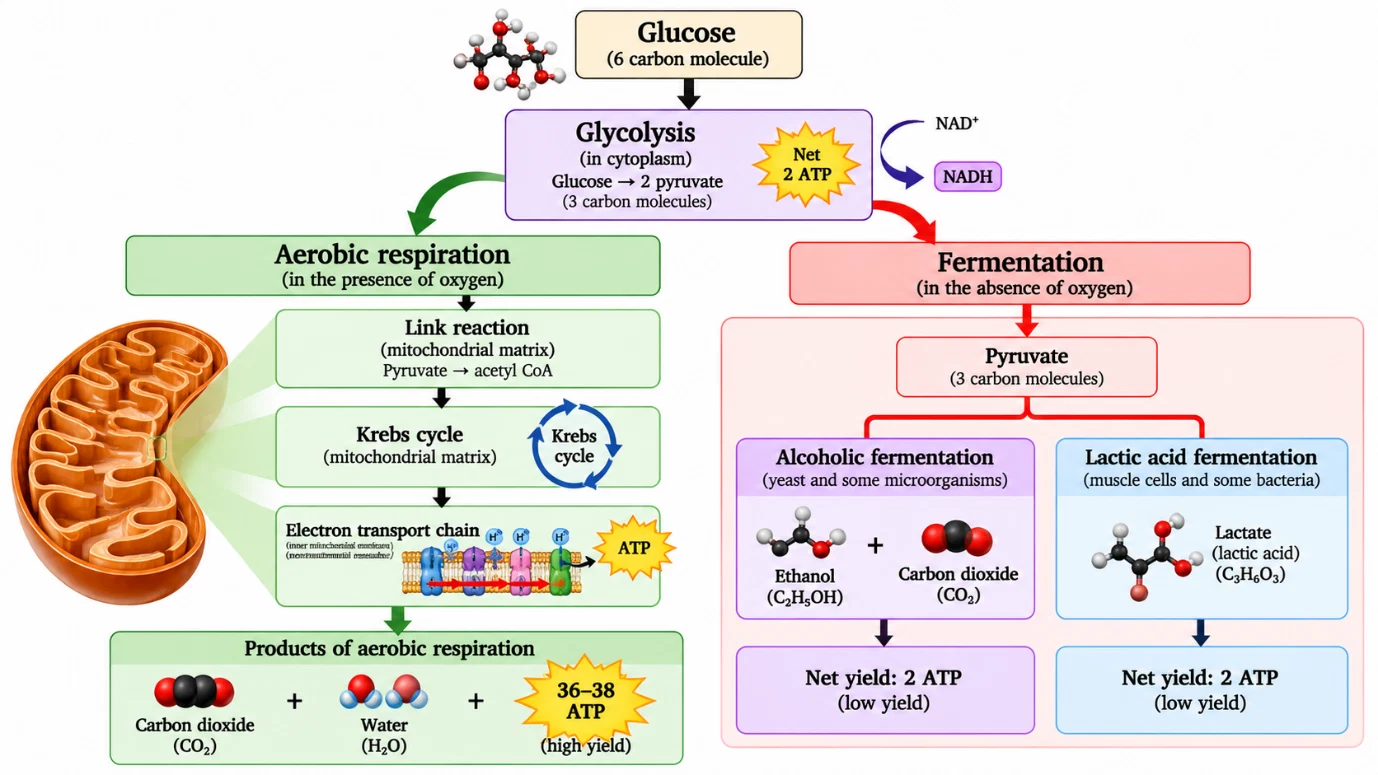
Figure 24: Comparison of aerobic respiration and fermentation pathways.
2.3.8 Experiments on Respiration
Experiment 1: Demonstrating Carbon Dioxide Production by Germinating Seeds
Aim: To demonstrate that germinating seeds release carbon dioxide.
Materials: Germinating seeds, suitable containers, carbon dioxide indicator or limewater, and control materials.
Procedure:
- Place germinating seeds in a suitable experimental container.
- Arrange the apparatus so that gas from the seeds can be tested with a carbon dioxide indicator.
- Prepare a control using a comparable quantity of non-germinating seeds.
- Keep other conditions as similar as possible.
- Observe and record the indicator changes.
Expected result: The experimental arrangement shows increased carbon dioxide associated with respiration.
Explanation: Germinating seeds respire actively and release carbon dioxide.
Experiment 2: Demonstrating Heat Production During Respiration
Aim: To investigate whether germinating seeds release heat.
Materials: Germinating seeds, suitable insulated containers, thermometers and non-germinating control seeds.
Procedure:
- Place germinating seeds in one insulated container.
- Place suitable non-germinating control seeds in another.
- Insert a thermometer into each container.
- Record the starting temperatures.
- Measure temperatures at regular intervals.
- Compare the changes.
Expected result: The temperature of the germinating-seed container may rise more than that of the control.
Conclusion: Respiration releases energy, some of which is transferred as heat.
Experiment 3: Investigating Yeast Fermentation
Aim: To demonstrate carbon dioxide production during fermentation.
Materials: Baker's yeast, sugar solution, warm water, conical flask, balloon or gas-delivery apparatus and suitable control materials.
Procedure:
- Prepare a sugar solution in a clean flask.
- Add baker's yeast.
- Fit a balloon loosely over the mouth of the flask.
- Place the apparatus in a warm, safe location.
- Prepare a control without yeast.
- Observe changes over time.
Expected observation: The balloon may inflate as carbon dioxide accumulates.
Explanation: Yeast metabolises sugars and may produce carbon dioxide through fermentation.
Safety: Do not seal a fermentation vessel rigidly, because gas pressure can build up. Do not consume the experimental mixture.
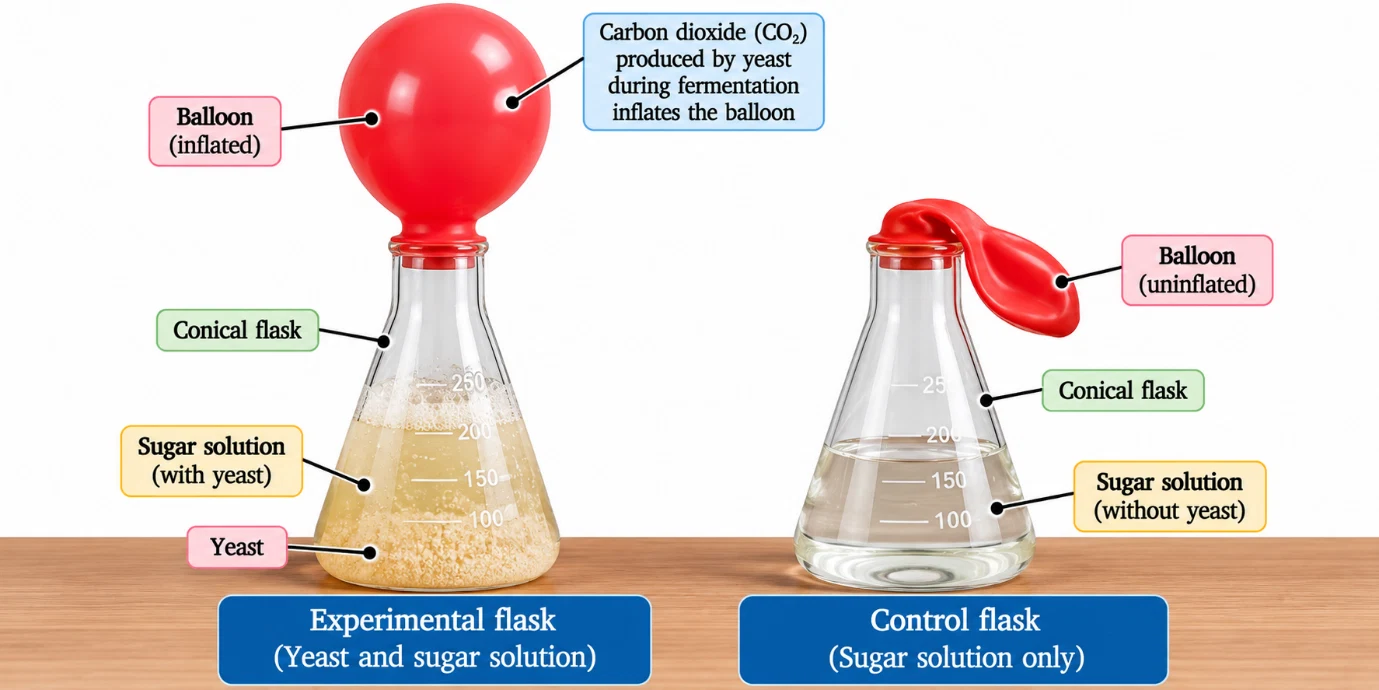
Figure 25: Demonstrating carbon dioxide production during yeast fermentation.
2.3.9 Economic Importance of Anaerobic Processes
Fermentation is important in food processing, agriculture, waste management and biotechnology.
1. Bread Making
Yeast produces carbon dioxide during fermentation.
The gas becomes trapped in dough, causing it to rise.
2. Yoghurt Production
Lactic acid bacteria convert lactose into lactic acid.
The resulting acidity contributes to the characteristic texture and flavour of yoghurt.
3. Silage Production
Silage is preserved animal feed produced through controlled fermentation of suitable plant materials.
Lactic acid bacteria help lower the pH, reducing spoilage under suitable anaerobic conditions.
4. Biogas Production
Anaerobic microbial digestion of organic waste can produce biogas containing methane and carbon dioxide.
Biogas may be used as an energy source.
5. Organic Waste Treatment
Anaerobic processes can help break down biodegradable wastes under controlled conditions.
6. Industrial Biotechnology
Microbial fermentation is used to manufacture various food ingredients, chemicals and biological products.
2.3.10 Practical Project: Preparing Silage
Project title: Demonstration of Silage Production Using Locally Available Materials.
Aim
To demonstrate how suitable plant material can be preserved through anaerobic fermentation.
Materials
Suitable chopped forage, a clean airtight container, weighing equipment, labels, recording materials and appropriate protective equipment.
General Procedure
- Select suitable forage that is free from visible mould and contamination.
- Chop it into manageable pieces.
- Assess its moisture condition under teacher guidance.
- Pack it tightly into a suitable container to minimise trapped air.
- Seal the container properly.
- Label it with the date and material used.
- Store it in an appropriate location.
- Observe the fermentation period recommended for the material and method.
- Record the results and prepare a project report.
Important Precautions
Silage production requires suitable moisture, compaction and airtight storage. Poorly prepared silage can develop harmful moulds or other contaminants.
Learners should not taste experimental silage or feed it to animals without competent assessment of its quality and safety.
Project Record
|
Activity |
Information to record |
|---|---|
|
Planning |
Objectives and selected materials |
|
Budgeting |
Cost of containers and materials |
|
Preparation |
Type and quantity of forage |
|
Packaging |
Compaction and sealing method |
|
Monitoring |
Dates and observations |
|
Evaluation |
Appearance, odour and evidence of spoilage |
|
Reporting |
Findings, challenges and recommendations |

Figure 26: General stages in preparing silage through anaerobic fermentation.
2.3.11 Relationship Between Photosynthesis and Respiration
Photosynthesis and respiration are related biological processes.
Photosynthesis stores energy in organic compounds, while respiration releases usable energy from organic compounds.
Comparison
|
Feature |
Photosynthesis |
Aerobic respiration |
|---|---|---|
|
Main function |
Synthesises organic substances |
Releases usable energy from organic substances |
|
Energy change |
Converts light energy into chemical energy |
Transfers chemical energy into ATP and heat |
|
Main location in plant cells |
Chloroplasts |
Cytoplasm and mitochondria |
|
Carbon dioxide |
Consumed during carbon fixation |
Produced during oxidation of organic compounds |
|
Oxygen |
Released during oxygenic photosynthesis |
Consumed |
|
Occurrence |
Requires suitable light conditions |
Continues when substrates and conditions permit |
Relationship in Green Plants
During the day, photosynthesis and respiration may occur simultaneously.
At night, photosynthesis generally stops because light-dependent reactions cannot proceed, but respiration continues.
The net movement of oxygen and carbon dioxide depends on the relative rates of the two processes.
2.3.13 End-of-Sub-strand Revision Questions
- Define gaseous exchange.
- Explain the importance of gaseous exchange in plants.
- Identify four structures associated with gaseous exchange.
- Describe the structure of a stoma.
- Explain the mechanism of stomatal opening.
- Describe the mechanism of stomatal closing.
- Compare the starch–sugar and potassium-ion theories.
- Explain how stomatal distribution varies among plants.
- Describe an experiment for comparing stomatal density.
- Define cellular respiration.
- Differentiate between aerobic respiration and fermentation.
- Write the simplified equation for aerobic respiration.
- Explain the role of mitochondria in aerobic respiration.
- Describe an experiment demonstrating carbon dioxide production during respiration.
- Explain how germinating seeds can demonstrate heat release.
- Describe an experiment demonstrating yeast fermentation.
- State five economic applications of fermentation.
- Explain how fermentation contributes to silage production.
- Compare photosynthesis and aerobic respiration.
- Explain the importance of responsible waste disposal during biological experiments.
END-OF-STRAND 2.0 ASSESSMENT
Section A: Short-Answer Questions
- Define photosynthesis.
- State four functions of the chloroplast.
- Distinguish between autotrophic and heterotrophic nutrition.
- Explain how xylem vessels are adapted for water transport.
- State the role of companion cells in phloem.
- Define transpiration.
- Explain the importance of root hairs.
- Identify three factors affecting transpiration.
- Define gaseous exchange.
- State two differences between aerobic respiration and fermentation.
Section B: Structured Questions
Question 1: Photosynthesis
a) Draw and label a chloroplast.
b) Explain the main stages of the light-dependent reactions.
c) Describe the Calvin cycle.
d) Explain three ways photosynthesis supports ecosystems.
Question 2: Transport
a) Draw labelled transverse sections of a dicot stem and monocot stem.
b) Explain the cohesion–tension mechanism.
c) Describe an experiment for demonstrating transpiration.
d) Explain the pressure-flow hypothesis.
Question 3: Gaseous Exchange and Respiration
a) Draw an open and a closed stoma.
b) Explain the role of potassium ions in stomatal movement.
c) Describe an experiment demonstrating fermentation in yeast.
d) Explain four economic applications of anaerobic processes.
Section C: Competency-Based Project
Project title: Investigating Plant Processes in the School Environment
Working in groups, learners should select a suitable plant and investigate at least two of the following: leaf adaptations, stomatal distribution, transpiration, root structure or transport tissues.
Each group should prepare a report containing the aim, materials, procedure, observations, results, conclusion, precautions and recommendations.
The report should include at least two properly labelled biological drawings.