
Suggested duration: 15 lessons
Specific Learning Outcomes
By the end of this sub-strand, the learner should be able to explore types of agriculture in the world, explain the importance of agriculture, analyse agricultural trends in Africa, examine challenges facing agriculture in Kenya, design strategies for improving productivity and appreciate agriculture's role in food security.
3.1.1 Meaning of Agriculture
Agriculture is the cultivation of crops and rearing of livestock for food, raw materials, income and other human needs.
Agriculture is an important economic activity in Kenya because it supports household livelihoods, provides employment, supplies raw materials to industries and contributes to national food security.
3.1.2 Types of Agriculture in the World
The KICD design identifies three broad types: subsistence agriculture, commercial agriculture and urban agriculture.
A. Subsistence Agriculture
Subsistence agriculture involves producing crops and livestock mainly to meet the needs of the farmer and household.
Characteristics:
- Production is mainly for household consumption.
- Farms are often relatively small.
- Family labour is commonly used.
- Simple tools may be used.
- Surplus produce may be sold.
- Production may depend heavily on rainfall.
Examples in Kenya: Small-scale mixed farming in parts of western Kenya and household food production in rural communities.
B. Commercial Agriculture
Commercial agriculture involves producing crops or livestock mainly for sale and profit.
Characteristics:
- Production is market-oriented.
- Farms may be small, medium or large.
- Improved technology and inputs are commonly used.
- Farmers may specialise in particular products.
- Produce may be sold locally or exported.
- Financial investment and management are important.
Examples in Kenya: Tea farming in Kericho, flower farming around Naivasha and large-scale wheat production in parts of Narok.
C. Urban Agriculture
Urban agriculture is the production of crops or livestock within towns and cities or their immediate surroundings.
It may involve kitchen gardens, rooftop gardens, container farming, vertical farming and hydroponics.
Importance:
- Improves access to fresh food.
- Supplements household income.
- Creates employment.
- Makes use of suitable limited spaces.
- Can reduce some food transport requirements.
- Supports practical learning and innovation.
3.1.3 Comparison of Types of Agriculture
|
Feature |
Subsistence |
Commercial |
Urban |
|---|---|---|---|
|
Main purpose |
Household needs |
Market sales and profit |
Food and income in urban settings |
|
Farm size |
Often small |
Varies widely |
Usually space-constrained |
|
Technology |
May be basic |
Often more advanced |
May include innovative systems |
|
Labour |
Frequently family-based |
Family or hired |
Household or hired |
|
Examples |
Mixed food-crop farming |
Tea, flowers, wheat |
Container gardens, hydroponics |
Suggested Figure 3.1: Types of Agriculture
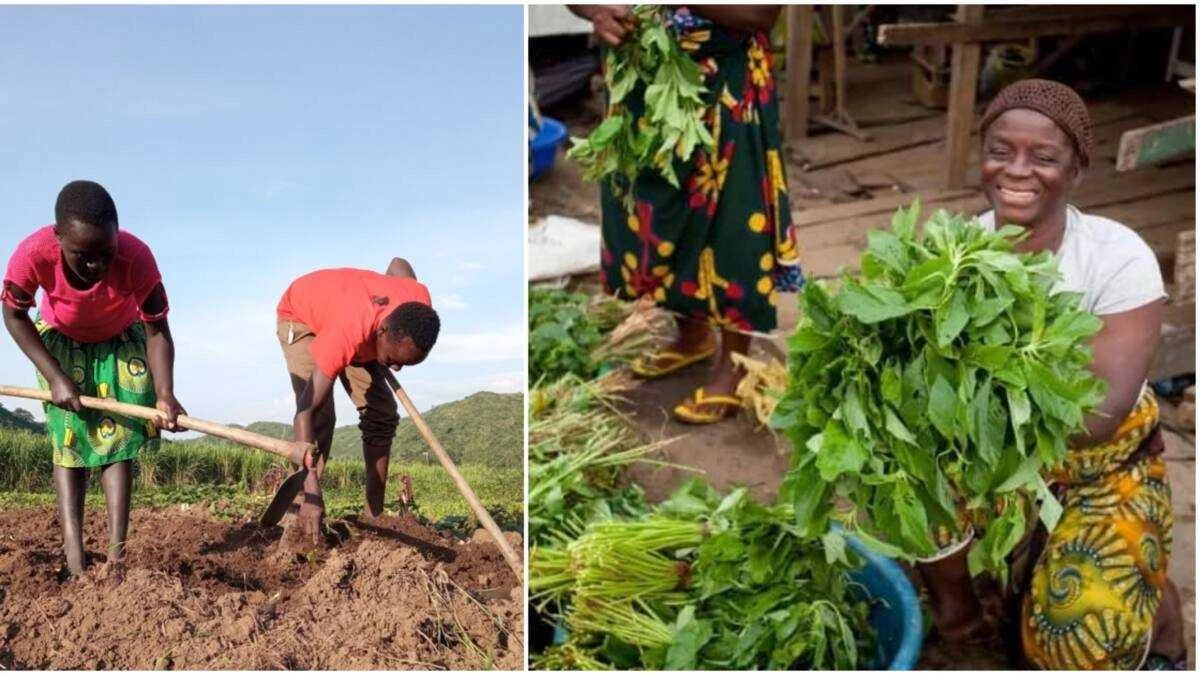
tuko.co.ke
Image type: Three-panel photorealistic educational illustration. Required labels: Subsistence Agriculture, Commercial Agriculture, Urban Agriculture. Placement: After the comparison table.
3.1.4 Importance of Agriculture in Society
Food production: Agriculture supplies cereals, vegetables, fruits, meat, milk and other foods.
Employment creation: It provides work for farmers, traders, transporters, agricultural officers and processing-industry workers.
Industrial raw materials: Cotton supplies textile industries, sugarcane supplies sugar factories and milk supplies dairy-processing plants.
Foreign exchange earnings: Agricultural exports help Kenya earn foreign currency.
Government revenue: Agricultural production and related business activities contribute to public revenue.
Rural development: Agriculture supports markets, transport services, storage facilities and local enterprises.
Food security: Sustainable agricultural production improves the availability of food.
3.1.5 Trends in Agriculture in Africa
Agriculture in Africa is changing because of population growth, technological development, changing markets and environmental challenges.
A. Increased Mechanisation
Some farmers are adopting tractors, planters, harvesters and other machines to improve efficiency.
B. Expansion of Irrigation
Irrigation is being developed to reduce dependence on rainfall and support production in areas with unreliable precipitation.
C. Adoption of Climate-Smart Agriculture
Climate-smart agriculture includes practices intended to improve productivity, strengthen resilience to climate change and reduce emissions where possible.
Examples include water conservation, agroforestry, soil-cover management and improved crop varieties.
D. Growth of Urban Agriculture
Urban farming is becoming an option for households and businesses seeking to produce food within limited spaces.
E. Increased Use of Digital Technology
Digital tools support weather information, market-price access, agricultural extension and farm management.
F. Development of Hydroponics
Hydroponics involves growing plants without soil using nutrient solutions, often with a supporting growing medium.
3.1.6 Hydroponics
Hydroponics is a method of cultivating plants in nutrient-rich water solutions instead of conventional soil.
Advantages:
- Can be practised where suitable agricultural soil is unavailable.
- May use less water than some conventional systems.
- Allows controlled nutrient supply.
- Can support production in limited spaces.
- May reduce certain soil-borne disease problems.
Limitations:
- High initial costs for some systems.
- Requires technical knowledge.
- Depends on careful water and nutrient management.
- Equipment failure may damage crops.
- Some systems require a reliable electricity supply.
Suggested Figure 3.2: Hydroponic Farming
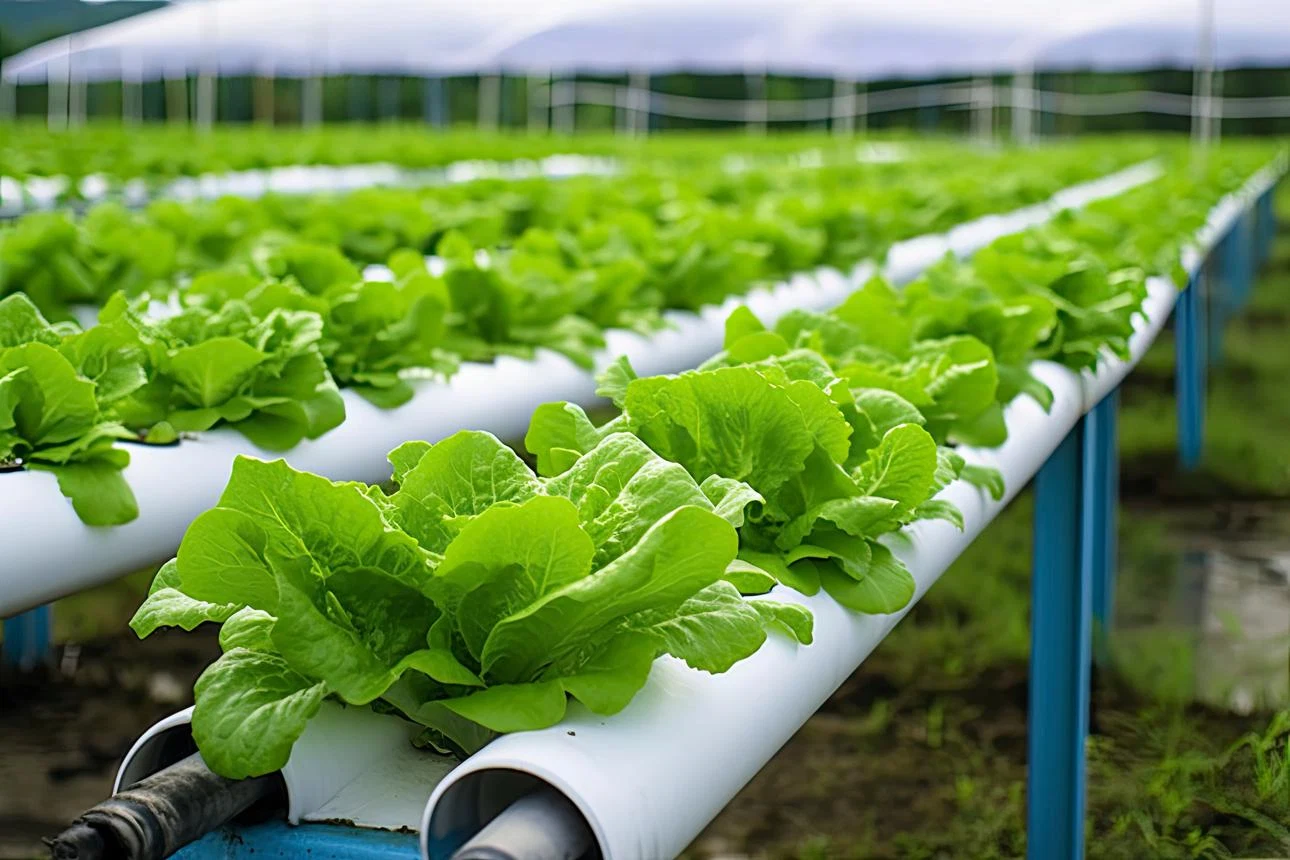
bluelab.com
Image type: Labelled hydroponic system illustration. Required labels: Nutrient Solution, Water Reservoir, Growing Channels, Plant Roots, Water Pump. Placement: After the explanation of hydroponics.
3.1.7 Challenges Facing Agriculture in Kenya
|
Challenge |
Explanation |
|---|---|
|
Unreliable rainfall |
Drought and irregular rainfall reduce yields |
|
Pests and diseases |
Damage crops and livestock |
|
High input costs |
Fertilisers, seeds, fuel and feeds may be expensive |
|
Land fragmentation |
Subdivision may reduce farm efficiency |
|
Soil degradation |
Erosion and nutrient depletion reduce productivity |
|
Inadequate storage |
Causes post-harvest losses |
|
Poor market access |
Limits farmers' ability to sell produce profitably |
|
Limited finance |
Restricts investment in equipment and improved inputs |
|
Climate change |
Alters growing conditions and increases some risks |
|
Inadequate infrastructure |
Raises transport and production costs |
3.1.8 Strategies for Enhancing Agricultural Productivity in Kenya
- Expand suitable irrigation: Improve water availability while avoiding unsustainable abstraction.
- Use improved crop varieties: Select varieties adapted to local conditions.
- Promote soil conservation: Use terracing, mulching, crop rotation and appropriate cover crops.
- Improve agricultural extension: Provide practical training and timely information.
- Strengthen pest management: Use integrated pest-management methods.
- Improve storage: Reduce post-harvest losses through suitable storage and handling.
- Support mechanisation: Encourage appropriate machinery and shared equipment services.
- Improve market access: Strengthen roads, market information and producer organisations.
- Support value addition: Process agricultural products to increase their market value.
- Promote agricultural research: Develop and test locally suitable farming methods.
3.1.9 Agriculture and Food Security
Food security exists when people have reliable physical, social and economic access to sufficient, safe and nutritious food that meets their dietary needs and preferences for an active, healthy life.
Its four commonly recognised dimensions are:
- Availability: Enough food is produced or supplied.
- Access: People can obtain the food they need.
- Utilisation: Food is safe, nutritious and properly used by the body.
- Stability: The other dimensions are maintained over time.
Agriculture contributes to food security, but production alone is not enough. Distribution, affordability, nutrition and stability also matter.
Practical Activity 3.1: Agricultural Productivity Investigation
Aim: To investigate ways of improving agricultural productivity in the local community.
Procedure:
- Identify a suitable farm or agricultural project.
- Prepare questions about crops, farming methods and production challenges.
- Conduct an interview with permission.
- Record the challenges identified.
- Suggest practical improvement strategies.
- Prepare a short report.
Revision Questions and Direct Answers
1. Define agriculture.
The cultivation of crops and rearing of livestock for food, income, raw materials and other needs.
2. Name three types of agriculture identified in the curriculum.
Subsistence agriculture, commercial agriculture and urban agriculture.
3. What is hydroponics?
Growing plants without soil using nutrient solutions.
4. State four challenges facing agriculture in Kenya.
Unreliable rainfall, high input costs, pests and diseases, and inadequate storage.
5. Give four strategies for improving agricultural productivity.
Irrigation, improved seeds, soil conservation and agricultural extension.
6. Explain the importance of agriculture to food security.
It contributes to the availability of food and provides income that helps households access food.