
Suggested duration: 20 lessons
Specific Learning Outcomes
By the end of this sub-strand, the learner should be able to examine types and sources of energy for domestic and industrial use, analyse renewable energy development in Kenya and selected countries, explain its socio-economic significance, manage and conserve energy in the community, and appreciate sustainable energy use.
3.3.1 Meaning of Energy
Energy is the capacity to do work or cause change.
Energy is essential for domestic activities, industrial production, agriculture, transport, communication and other economic activities.
3.3.2 Types of Energy
Common forms of energy include:
|
Form |
Description |
Example |
|---|---|---|
|
Heat energy |
Energy transferred because of temperature differences |
Cooking |
|
Electrical energy |
Energy associated with electric charges and circuits |
Lighting |
|
Chemical energy |
Energy associated with chemical substances and reactions |
Fuels and batteries |
|
Kinetic energy |
Energy of motion |
Moving vehicle |
|
Gravitational potential energy |
Energy associated with position in a gravitational field |
Water stored in a dam |
|
Light energy |
Energy carried by electromagnetic radiation |
Sunlight |
|
Nuclear energy |
Energy associated with atomic nuclei |
Nuclear power generation |
3.3.3 Sources of Energy
Energy sources can be classified into renewable and non-renewable sources.
A. Renewable Energy Sources
Renewable energy sources are naturally replenished over relatively short timescales.
Examples include solar, wind, hydroelectric, geothermal and sustainably managed biomass energy.
B. Non-Renewable Energy Sources
Non-renewable energy sources are finite resources that are not replenished at a rate comparable to human consumption.
Examples include coal, petroleum, natural gas and uranium used as nuclear fuel.
3.3.4 Comparison of Renewable and Non-Renewable Energy
|
Renewable energy |
Non-renewable energy |
|---|---|
|
Naturally replenished |
Relies on finite resources |
|
Often has low operational greenhouse-gas emissions |
Fossil-fuel combustion releases greenhouse gases |
|
Some sources depend on weather |
Many sources can be dispatched when fuel is available |
|
May require substantial initial investment |
Often involves ongoing fuel costs |
|
Examples: solar, wind, geothermal |
Examples: coal, petroleum, natural gas |
Renewable energy is not automatically free from environmental impacts. Its sustainability depends on location, design, materials, land use and management.
3.3.5 Domestic Uses of Energy
Energy is used in homes for cooking, lighting, heating, refrigeration, communication, water pumping and operating appliances.
3.3.6 Industrial Uses of Energy
Industries require energy for machinery, heating, cooling, processing raw materials, transportation, packaging and lighting.
3.3.7 Renewable Energy Development in Kenya
Kenya has developed several renewable energy technologies.
A. Geothermal Energy
Geothermal energy uses heat from within the Earth.
Geothermal electricity is generated using steam or other heat-transfer systems to drive turbines.
Kenya has geothermal developments associated with the Rift Valley, including Olkaria.
Advantages:
- Can provide reliable electricity.
- Has relatively low operational carbon emissions.
- Reduces dependence on imported fossil fuels.
- Supports industrial and domestic electricity demand.
Challenges:
- High exploration and drilling costs.
- Geological uncertainty.
- Potential emissions of geothermal gases.
- Environmental and land-use considerations.
B. Hydroelectric Power
Hydroelectric power is generated by using flowing or falling water to drive turbines connected to generators.
Kenya has hydroelectric facilities along several rivers, including developments in the Tana River basin.
Advantages: Renewable electricity generation, relatively low operational emissions and potential grid-support services.
Challenges: Drought, changes in river flow, sedimentation, ecosystem disturbance and high infrastructure costs.
C. Wind Energy
Wind energy uses moving air to turn turbine blades connected to generators.
The Lake Turkana Wind Power project is an important Kenyan example.
Advantages: No fuel combustion during operation, renewable resource and potential for large-scale electricity production.
Challenges: Variable wind speeds, grid requirements, land-use concerns and possible impacts on birds and bats.
D. Solar Energy
Solar energy is obtained from sunlight.
Solar photovoltaic panels convert sunlight directly into electricity, while solar thermal systems use solar energy for heating.
Uses in Kenya:
- Household lighting.
- Water pumping.
- Solar-powered refrigeration.
- Off-grid electricity supply.
- Institutional electricity systems.
- Solar water heating.
E. Biomass Energy
Biomass energy is obtained from organic materials such as wood, crop residues, animal waste and other biological materials.
Biogas can be produced when microorganisms break down organic matter under anaerobic conditions.
Biomass sustainability depends on responsible sourcing, efficient technology and pollution control.
Suggested Figure 3.5: Renewable Energy Sources in Kenya
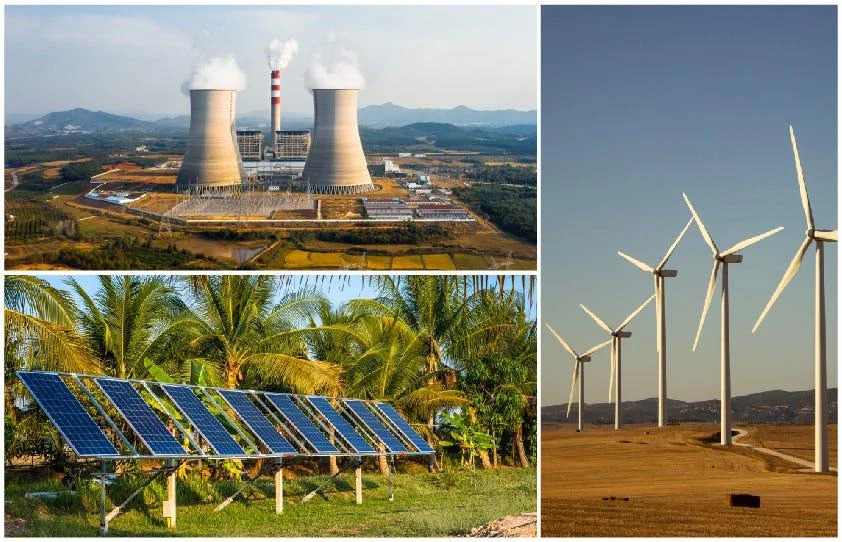
medium.com
Image type: Four-panel educational illustration. Required labels: Geothermal Energy, Hydroelectric Power, Wind Energy, Solar Energy. Placement: After renewable energy development in Kenya.
3.3.8 Renewable Energy Development in Selected Countries
The KICD curriculum specifies four international case studies.
A. Hydroelectric Power in Uganda
Uganda uses hydroelectric power as an important source of electricity.
Hydroelectric developments along the River Nile demonstrate how water resources can support electricity generation and economic activity.
Factors supporting development:
- Availability of suitable river systems.
- Potential for hydropower infrastructure.
- Demand for electricity.
- Government and private investment.
- Regional electricity markets.
Challenges:
- Environmental impacts.
- High construction costs.
- Changes in water availability.
- Resettlement and community concerns in some projects.
B. Geothermal Energy in Italy
Italy has a long history of geothermal electricity generation, particularly in the Larderello area of Tuscany.
Geothermal development is associated with suitable underground heat resources.
Importance:
- Electricity generation.
- Industrial development.
- Technical innovation.
- Employment.
- Diversification of energy supply.
C. Solar Energy in Vietnam
Vietnam has expanded solar energy development, including large-scale solar installations and rooftop systems.
Factors influencing development:
- Availability of solar radiation.
- Increasing electricity demand.
- Investment in solar technologies.
- Government policies and incentives.
- Development of electricity infrastructure.
Challenges: Grid congestion, variable output and the need for suitable energy-system planning.
D. Wind Energy in Spain
Spain is an important example of wind-energy development.
Its wind farms demonstrate the use of favourable wind conditions, technological investment and electricity-grid integration.
Importance:
- Renewable electricity production.
- Employment and industrial development.
- Reduced dependence on some fossil fuels.
- Energy diversification.
- Technological development.
3.3.9 Comparison of Selected Countries
|
Country |
Renewable energy focus |
Important factor |
|---|---|---|
|
Kenya |
Geothermal, hydro, wind and solar |
Diverse renewable resources |
|
Uganda |
Hydroelectric |
River systems and hydropower potential |
|
Italy |
Geothermal |
Suitable underground heat resources |
|
Vietnam |
Solar |
Solar resource and electricity demand |
|
Spain |
Wind |
Wind resources and technology investment |
Suggested Figure 3.6: International Renewable Energy Case Studies
Image type: Four-panel photorealistic illustration.
Image description: Show a hydroelectric dam in Uganda, geothermal power station in Italy, solar farm in Vietnam and wind farm in Spain.
Required labels: Uganda — Hydroelectric Power; Italy — Geothermal Energy; Vietnam — Solar Energy; Spain — Wind Energy.
Placement: After the international comparison table.
3.3.10 Significance of Renewable Energy to Socio-Economic Development
- Employment creation: Renewable energy projects create technical, construction and maintenance jobs.
- Industrial development: Reliable electricity supports manufacturing and processing.
- Improved living standards: Electricity supports lighting, communication and household services.
- Educational development: Schools can use electricity for digital learning and lighting.
- Healthcare improvement: Electricity supports medical equipment, refrigeration and service delivery.
- Environmental benefits: Many renewable technologies reduce dependence on fossil-fuel combustion.
- Rural development: Off-grid systems can improve access to electricity in remote areas.
- Energy security: Diversifying energy sources can reduce dependence on imported fuels.
- Agricultural productivity: Energy supports irrigation, storage and processing.
- Economic diversification: Renewable energy creates opportunities for new enterprises.
3.3.11 Energy Management
Energy management involves planning, monitoring and controlling energy use to reduce waste and improve efficiency.
Methods of Managing Energy
- Monitoring electricity consumption.
- Maintaining equipment.
- Using suitable efficient appliances.
- Improving building ventilation and insulation.
- Switching off unused equipment.
- Reducing unnecessary lighting.
- Selecting appropriate energy sources.
- Encouraging responsible energy behaviour.
3.3.12 Energy Conservation
Energy conservation involves reducing unnecessary energy consumption.
Examples include:
- Switching off lights when not required.
- Using energy-efficient lighting.
- Cooking with covered pots where suitable.
- Maintaining cooking equipment.
- Using daylight when possible.
- Avoiding unnecessary appliance operation.
- Improving building insulation and ventilation.
- Using efficient water-heating systems.
3.3.13 Energy-Saving Devices
Examples include:
- Improved cookstoves.
- Solar water heaters.
- LED lamps.
- Insulated cooking containers.
- Efficient electrical appliances.
- Smart energy-control systems.
3.3.14 Consumers' Rights Related to Energy
Consumers should have access to clear information about energy services, transparent billing, safe equipment, fair treatment and appropriate complaint-handling procedures, subject to applicable laws and service agreements.
Consumers also have responsibilities, including safe energy use, timely payment and avoiding illegal electrical connections.
Practical Activity 3.3: School Energy Conservation Project
Aim: To identify opportunities for reducing energy waste in the school.
Procedure:
- Identify areas where energy is used.
- Record common energy-consuming activities.
- Observe possible energy wastage.
- Suggest conservation measures.
- Design a suitable energy-saving device or poster.
- Present the findings.
- Evaluate whether the proposed measures are practical.
Revision Questions and Direct Answers
1. Define energy.
The capacity to do work or cause change.
2. Differentiate renewable and non-renewable energy sources.
Renewable sources are naturally replenished, while non-renewable sources rely on finite resources.
3. Name four renewable energy sources used in Kenya.
Geothermal, hydroelectric, wind and solar energy.
4. Identify the four international case studies in the curriculum.
Hydroelectric power in Uganda, geothermal energy in Italy, solar energy in Vietnam and wind energy in Spain.
5. State four benefits of renewable energy.
Employment creation, energy diversification, rural electrification and reduced fossil-fuel dependence.
6. Give four ways of conserving energy.
Switching off unused appliances, using LED lighting, improving insulation and maintaining equipment.