
Suggested duration: 20 lessons
Specific Learning Outcomes
By the end of this sub-strand, the learner should be able to explore types of industries, examine factors influencing their location and development, analyse industries in Kenya and selected countries, examine industrial challenges and solutions, model a cottage industry in school and appreciate the significance of industries.
3.4.1 Meaning of Industry
An industry is an economic activity involving the production, processing or provision of goods and services.
Industries may involve extraction of resources, manufacturing, construction or service delivery.
3.4.2 Meaning of Industrialisation
Industrialisation is the process through which an economy develops and expands industrial production, particularly manufacturing and related activities.
It often involves increased use of machinery, technology, specialised labour and production systems.
3.4.3 Types of Industries in the World
A. Primary Industries
Primary industries obtain raw materials directly from natural resources.
Examples include mining, fishing, forestry and some agricultural activities.
B. Secondary Industries
Secondary industries process raw materials into manufactured products.
Examples include textile manufacturing, food processing, cement production and vehicle assembly.
C. Tertiary Industries
Tertiary industries provide services.
Examples include transport, banking, tourism and retail trade.
D. Cottage Industries
Cottage industries are small-scale production activities commonly carried out by individuals, families or small groups, often using relatively simple equipment.
Examples include basket weaving, pottery, beadwork, tailoring and soap-making.
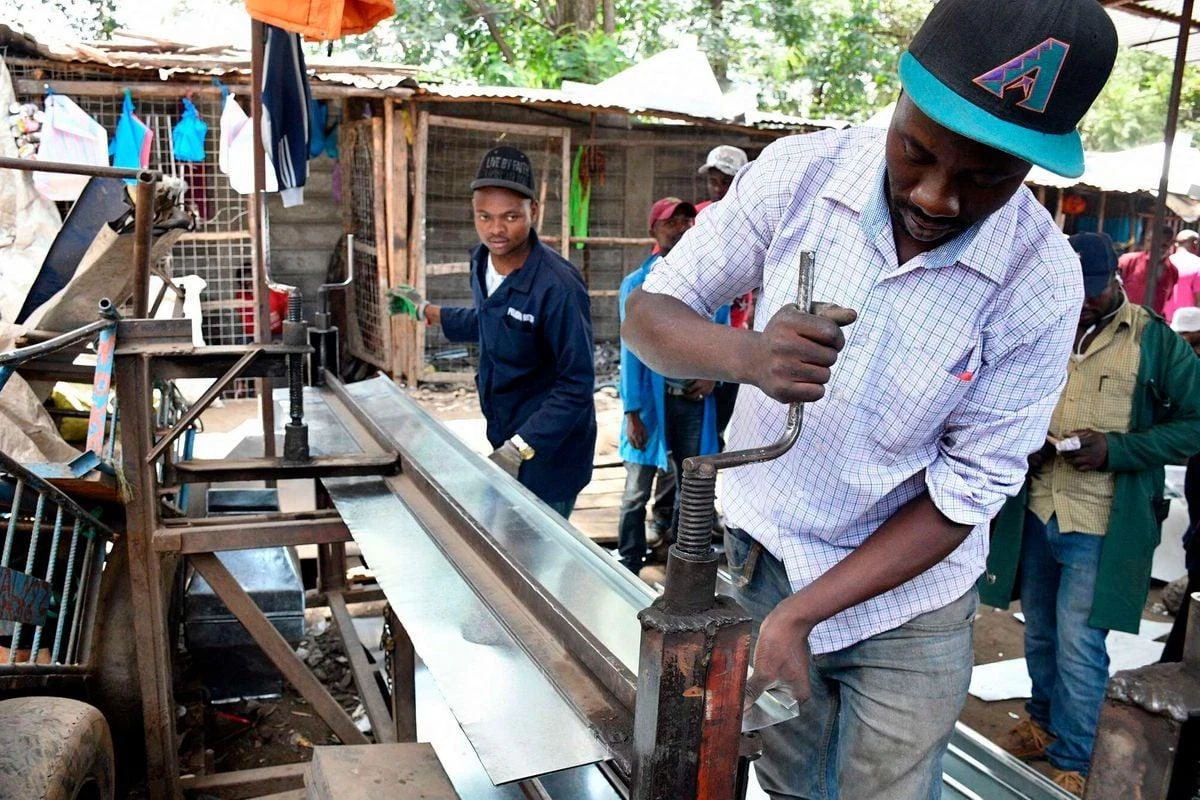
E. Jua Kali Industries
Jua Kali refers to Kenya's informal artisan and small-enterprise sector.
Activities include metal fabrication, carpentry, vehicle repair, furniture-making and various craft industries.
3.4.4 Comparison of Industrial Categories
|
Category |
Main activity |
Example |
|---|---|---|
|
Primary |
Obtaining natural resources |
Mining |
|
Secondary |
Processing and manufacturing |
Cement production |
|
Tertiary |
Providing services |
Transport |
|
Cottage |
Small-scale production |
Basket weaving |
|
Jua Kali |
Informal artisan production and services |
Metal fabrication |
Suggested Figure 3.7: Types of Industries
nation.africa
Image type: Three-panel illustration. Required labels: Jua Kali Industry, Cottage Industry, Modern Manufacturing Industry. Placement: After industrial classification.
3.4.5 Factors Influencing Location of Industries
A. Raw Materials
Industries using bulky or perishable raw materials may locate near their sources to reduce transport costs.
Example: Some sugar factories locate near sugarcane-growing areas.
B. Energy Supply
Industries requiring large amounts of energy may favour locations with reliable and affordable electricity or fuel.
C. Transport
Good roads, railways, ports and airports facilitate movement of raw materials and finished products.
D. Labour
Industries require workers with appropriate skills and experience.
E. Market
Some industries locate near major markets to reduce distribution costs and improve customer access.
F. Capital
Industries require funds for land, machinery, buildings, labour and operations.
G. Water Supply
Water is important in food processing, textiles, cooling and other industrial processes.
H. Government Policy
Taxation, infrastructure, licensing, zoning and investment incentives may influence industrial location.
I. Land Availability
Industries require suitable land for buildings, storage, transport access and future expansion.
J. Technology
Access to suitable machinery, communications and technical expertise can influence industrial development.
3.4.6 Development of Industries in Kenya
Kenya has various industries involved in processing agricultural products, manufacturing goods and providing industrial services.
Examples include:
Food processing: Dairy products, grain milling, sugar processing and edible oils.
Textiles and garments: Production of clothing, fabrics and related products.
Cement and construction materials: Production of cement, roofing materials and building products.
Chemical industries: Production of paints, detergents and other chemical products.
Metal fabrication: Manufacture of gates, furniture, tools and equipment.
Vehicle assembly and related activities: Assembly, repair and production of selected vehicle components.
3.4.7 Major Industrial Centres in Kenya
|
Centre |
Examples of industrial activities |
|---|---|
|
Nairobi |
Food processing, textiles, chemicals, metal fabrication |
|
Mombasa |
Port-related industries, food processing, manufacturing |
|
Thika |
Food processing, manufacturing and related activities |
|
Athi River |
Cement and other manufacturing activities |
|
Kisumu |
Food processing and light manufacturing |
|
Nakuru |
Food processing and various manufacturing activities |
|
Eldoret |
Agro-processing and other industrial activities |
These are illustrative activities, not an exhaustive or current directory of operating factories.
Suggested Figure 3.8: Distribution of Major Industries in Kenya
Image type: Educational outline map of Kenya.
Image description: Show Nairobi, Mombasa, Thika, Athi River, Kisumu, Nakuru and Eldoret. Use symbols to identify representative industrial activities and include a clear key.
Placement: After the table of industrial centres.
3.4.8 Case Study: Jua Kali Industries in Kenya
Jua Kali industries are an important part of Kenya's small-enterprise economy.
Characteristics
- Many operate on a small scale.
- They may use simple or locally adapted equipment.
- Some require relatively low starting capital.
- They provide employment and apprenticeship opportunities.
- Products may be made to customer specifications.
- Enterprises may operate in informal or designated workshops.
Importance
- Create employment.
- Develop practical skills.
- Encourage entrepreneurship.
- Produce affordable goods.
- Support local markets.
- Promote creativity and innovation.
- Preserve some traditional crafts.
Challenges
- Limited access to finance.
- Inadequate working space.
- High equipment costs.
- Inconsistent access to raw materials.
- Competition from mass-produced goods.
- Occupational health and safety risks.
- Limited access to some markets.
Possible Solutions
- Improve access to affordable finance.
- Provide suitable workshops and infrastructure.
- Strengthen technical training.
- Encourage product-quality improvement.
- Support market access and digital sales.
- Promote workplace safety.
- Support cooperative purchasing and production.
3.4.9 Case Study: Cottage Industries in India
India has a long history of cottage industries, including handloom weaving, pottery, embroidery and traditional craft production.
Characteristics
- Often family- or community-based.
- May use traditional skills.
- Can operate with relatively small investments.
- Frequently produce specialised or handmade products.
- May contribute to cultural preservation.
Importance
Cottage industries support employment, rural incomes, cultural heritage, entrepreneurship and local economic activity.
Challenges
Some cottage industries face competition from mass production, limited access to modern equipment, inconsistent raw-material supply and difficulties reaching larger markets.
3.4.10 Case Study: Car Manufacturing in Japan
Japan is internationally recognised for automobile manufacturing.
Major automobile manufacturers include Toyota, Honda, Nissan and other firms.
Factors Supporting Development
- Skilled labour.
- Advanced technology.
- Investment in research and development.
- Efficient manufacturing systems.
- Extensive supplier networks.
- Transport and port infrastructure.
- Domestic and international markets.
- Quality-control systems.
Importance
Automobile manufacturing supports employment, exports, technological development, supplier industries and related services.
3.4.11 Comparison of Industrial Case Studies
|
Country |
Industry studied |
Main characteristics |
|---|---|---|
|
Kenya |
Jua Kali industries, including cultural crafts |
Small enterprises, artisan skills, locally adapted production |
|
India |
Cottage industries |
Small-scale production, traditional skills, household and community enterprises |
|
Japan |
Automobile manufacturing |
Large-scale manufacturing, advanced technology, specialised labour |
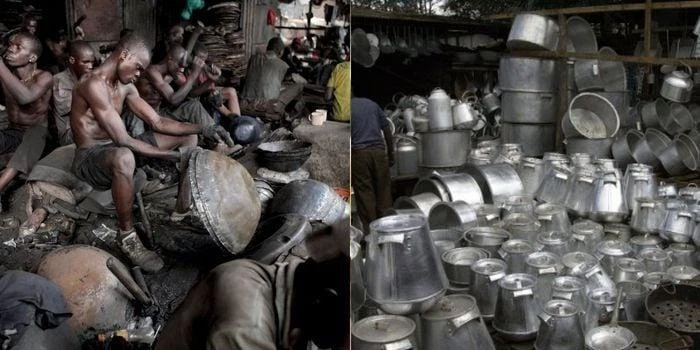
Suggested Figure 3.9: Industrial Development in Selected Countries
kenyans.co.ke
Image type: Three-panel photorealistic educational illustration. Required labels: Kenya — Jua Kali Industries; India — Cottage Industries; Japan — Automobile Manufacturing. Placement: After the case-study comparison.
3.4.12 Significance of Industries in Kenya
Industries contribute to:
- Employment creation.
- Value addition to raw materials.
- Export earnings.
- Government revenue.
- Infrastructure development.
- Technological advancement.
- Entrepreneurship.
- Skills development.
- Economic diversification.
- Production of goods for domestic use.
3.4.13 Challenges Facing Industries in Kenya
|
Challenge |
Explanation |
|---|---|
|
High energy costs |
Increase production expenses |
|
Inadequate capital |
Limit investment and expansion |
|
Competition |
May reduce demand for locally manufactured goods |
|
Inadequate infrastructure |
Raises transport and operating costs |
|
Limited technology |
May reduce efficiency and product quality |
|
Skills shortages |
Restrict some specialised activities |
|
Raw-material shortages |
Interrupt production |
|
Environmental requirements |
Require investment in responsible operations |
|
Market limitations |
May restrict business growth |
|
Regulatory complexity |
May increase compliance costs |
3.4.14 Possible Solutions to Industrial Challenges
- Improve energy reliability and efficiency.
- Expand suitable transport and industrial infrastructure.
- Support affordable business finance.
- Promote technical and vocational training.
- Encourage technological innovation.
- Improve market access.
- Support responsible investment.
- Strengthen local supplier networks.
- Encourage quality assurance.
- Simplify appropriate administrative procedures while maintaining safety and environmental standards.
3.4.15 Environmental Effects of Industrialisation
A. Air Pollution
Industrial processes may release dust, smoke and gaseous pollutants.
B. Water Pollution
Poorly treated industrial wastewater may contaminate rivers, lakes and groundwater.
C. Land Pollution
Improper disposal of industrial waste may damage soils and ecosystems.
D. Noise Pollution
Machinery, transport and industrial operations may produce excessive noise.
E. Informal Settlement Growth
Rapid industrial expansion may attract workers faster than housing and urban services can develop, contributing to overcrowding and informal settlements.
F. Greenhouse-Gas Emissions
Certain industrial activities release greenhouse gases that contribute to climate change.
3.4.16 Measures for Reducing Industrial Environmental Problems
- Install appropriate pollution-control equipment.
- Treat industrial wastewater before discharge.
- Encourage cleaner production technologies.
- Recycle and reuse suitable industrial materials.
- Improve industrial waste management.
- Conduct environmental impact assessments.
- Establish suitable industrial zoning.
- Promote safe working environments.
- Monitor industrial emissions.
- Support responsible urban planning.
Suggested Figure 3.10: Industrial Pollution and Control
Image type: Two-panel educational illustration.
Image description: The first panel shows an industrial area with smoke, untreated wastewater and unmanaged waste. The second shows pollution-control equipment, wastewater treatment, proper waste management and surrounding vegetation.
Required labels: Industrial Pollution, Air Emissions, Wastewater, Waste Management, Pollution Control, Environmental Protection.
Placement: After measures for reducing industrial environmental problems.
3.4.17 Consumer Concerns Related to Industrial Development
Consumers may be concerned about product safety, quality, fair prices, accurate labelling, environmental responsibility and access to reliable information.
Industries should follow applicable standards and consumer-protection requirements.
3.4.18 Modelling a Cottage Industry in School
The curriculum recommends establishing a model cottage industry as a practical learning activity.
Example Project: School-Based Basket Weaving Enterprise
Aim: To demonstrate how a small cottage industry can be established and managed.
Materials: Suitable weaving materials, basic tools, measuring equipment and record books.
Procedure:
- Identify a product that can be produced safely.
- Conduct a simple market survey.
- Prepare a budget.
- Identify suitable raw materials.
- Allocate responsibilities among group members.
- Produce sample products.
- Evaluate product quality.
- Calculate production costs.
- Suggest selling prices.
- Prepare a short project report.
Illustrative Production Budget
|
Item |
Cost (KSh) |
|---|---|
|
Raw materials |
1,200 |
|
Basic tools |
800 |
|
Packaging |
300 |
|
Other expenses |
200 |
|
Total cost |
2,500 |
Suppose the group produces 20 baskets and sells each for KSh 200.
This is a simplified project calculation. Actual profit would also depend on costs such as labour, transport, depreciation and unsold stock.
Practical Activity 3.4
Develop a written proposal for establishing a small cottage industry in your school.
Include the product, materials, estimated costs, production process, safety precautions, expected customers and environmental considerations.
Revision Questions and Direct Answers
1. Define industry.
An economic activity involving the production, processing or provision of goods and services.
2. What is industrialisation?
The development and expansion of industrial production within an economy.
3. Name three factors influencing industrial location.
Raw materials, transport and market availability.
4. What are Jua Kali industries?
Small-scale artisan and informal enterprises commonly found in Kenya.
5. Name the three industrial case studies in the curriculum.
Jua Kali industries in Kenya, cottage industries in India and automobile manufacturing in Japan.
6. State four challenges facing industries in Kenya.
High energy costs, inadequate capital, limited technology and competition.
7. Give three environmental effects of industrialisation.
Air pollution, water pollution and land pollution.
8. State three ways of reducing industrial pollution.
Wastewater treatment, emission control and proper waste management.
COMPREHENSIVE TOPICAL REVISION QUESTIONS
Topic 3.1: Agriculture
- Define agriculture and explain its importance to society.
- Differentiate subsistence, commercial and urban agriculture.
- Explain five trends in agriculture in Africa.
- Discuss the advantages and limitations of hydroponics.
- Examine six challenges facing agriculture in Kenya.
- Suggest six strategies for enhancing agricultural productivity.
- Explain the relationship between agriculture and food security.
Topic 3.2: Mining
- Differentiate a mineral and mining.
- Explain five factors influencing mineral occurrence and exploitation.
- Describe four methods of mineral extraction.
- Explain limestone mining in Kenya.
- Describe diamond mining in Botswana.
- Examine iron ore mining in Australia.
- Discuss the environmental effects of mining and possible solutions.
- Explain how statistical methods can be used to analyse mineral production.
Topic 3.3: Energy
- Differentiate renewable and non-renewable energy sources.
- Explain the development of geothermal energy in Kenya.
- Describe hydroelectric power development in Uganda.
- Examine geothermal energy development in Italy.
- Explain solar energy development in Vietnam.
- Discuss wind energy development in Spain.
- Explain the socio-economic importance of renewable energy.
- Suggest practical ways of conserving energy in a school.
Topic 3.4: Industry
- Define industry and industrialisation.
- Classify industries and give suitable examples.
- Explain six factors influencing industrial location.
- Discuss the development and importance of Jua Kali industries in Kenya.
- Describe the characteristics of cottage industries in India.
- Explain factors supporting automobile manufacturing in Japan.
- Examine the challenges facing industries in Kenya and possible solutions.
- Discuss the environmental effects of industrialisation.
- Prepare a proposal for establishing a school-based cottage industry.
ILLUSTRATION REGISTER — PART TWO
The final illustrations should each use a 16:9 aspect ratio, a white background, clear labels and appropriate geographical accuracy.
|
Figure |
Image title |
Placement |
|---|---|---|
|
3.1 |
Types of Agriculture |
After agricultural classification |
|
3.2 |
Hydroponic Farming |
After hydroponics |
|
3.3 |
Methods of Mineral Extraction |
After mining methods |
|
3.4 |
Mine Rehabilitation |
After environmental management |
|
3.5 |
Renewable Energy Sources in Kenya |
After Kenyan energy sources |
|
3.6 |
International Renewable Energy Case Studies |
After country comparison |
|
3.7 |
Types of Industries |
After industrial classification |
|
3.8 |
Distribution of Major Industries in Kenya |
After industrial centres |
|
3.9 |
Industrial Development in Selected Countries |
After country case studies |
|
3.10 |
Industrial Pollution and Control |
After environmental management |
Curriculum-based practical projects
The uploaded curriculum also recommends activities that can be used for school-based assessment.
|
Sub-strand |
Suggested project |
|---|---|
|
Agriculture |
Field investigation of strategies for increasing agricultural productivity |
|
Mining |
Awareness campaign on rehabilitation of mining sites |
|
Energy |
Local renewable-energy field study and development of an energy-saving device |
|
Industry |
Establishing a model cottage industry and investigating environmental effects |
Assessment may include oral questions, written tests, observation, projects, portfolios and checklists, depending on the activity.