
2.1.1 Meaning of Scriptures
Scriptures are writings or collections of teachings considered sacred or authoritative by members of a religious community.
They may contain:
- Hymns and prayers.
- Religious narratives.
- Philosophical discussions.
- Rules of conduct.
- Ethical teachings.
- Spiritual instructions.
- Teachings about life, death and liberation.
- Guidance for worship and religious observances.
Characteristics of Scriptures
Sacredness: Scriptures are treated with reverence because of their religious significance.
Authority: They guide religious beliefs and practices, although their authority differs among traditions.
Preservation: Scriptures are transmitted through recitation, manuscripts, printing and modern digital technologies.
Teaching: They help communicate religious values across generations.
Interpretation: Religious scholars and teachers explain scriptural meanings within their traditions.
Cultural influence: Scriptures may influence literature, art, music, festivals and community customs.
2.1.2 Importance of Scriptures in Society
Scriptures perform several important functions.
1. Preservation of Religious Knowledge
Sacred texts preserve teachings that might otherwise be forgotten.
For example, the Vedas have been transmitted through carefully maintained oral recitation traditions.
2. Moral Guidance
Scriptures provide ethical teachings that help believers make decisions about their behaviour.
For example, Jain scriptures emphasise non-violence and self-discipline.
3. Spiritual Development
Religious texts guide prayer, meditation, reflection and the pursuit of liberation.
4. Cultural Preservation
Scriptures influence religious songs, traditional stories, ceremonies and festivals.
5. Education
They encourage the study of languages, philosophy, history and religious traditions.
6. Community Identity
Shared scriptures help religious communities maintain a sense of continuity and belonging.
7. Peaceful Coexistence
Studying scriptures from different traditions can promote informed respect and reduce misconceptions.
2.1.3 SANATAN/VEDIC SCRIPTURES
Sanatan/Vedic religious literature developed over a long period and contains many different forms of sacred teaching.
The KICD curriculum identifies the Vedas, Shruti, Smriti, Upanishads, Puranas, Ramayana and Mahabharata.
A. The Vedas
The word Veda comes from a Sanskrit root associated with knowledge.
The Vedas are ancient collections of sacred hymns, ritual formulas and religious teachings.
In many Hindu traditions, they are regarded as apaurusheya, meaning not of human authorship.
Historically, the Vedic texts were composed and transmitted orally over many generations before being recorded in manuscripts.
The Four Vedas

1. Rigveda
The Rigveda is a collection of hymns addressed to various Vedic deities.
Its hymns express praise, prayer, wonder about nature and reflection on the universe.
Importance: It preserves early Vedic religious poetry and thought.
2. Samaveda
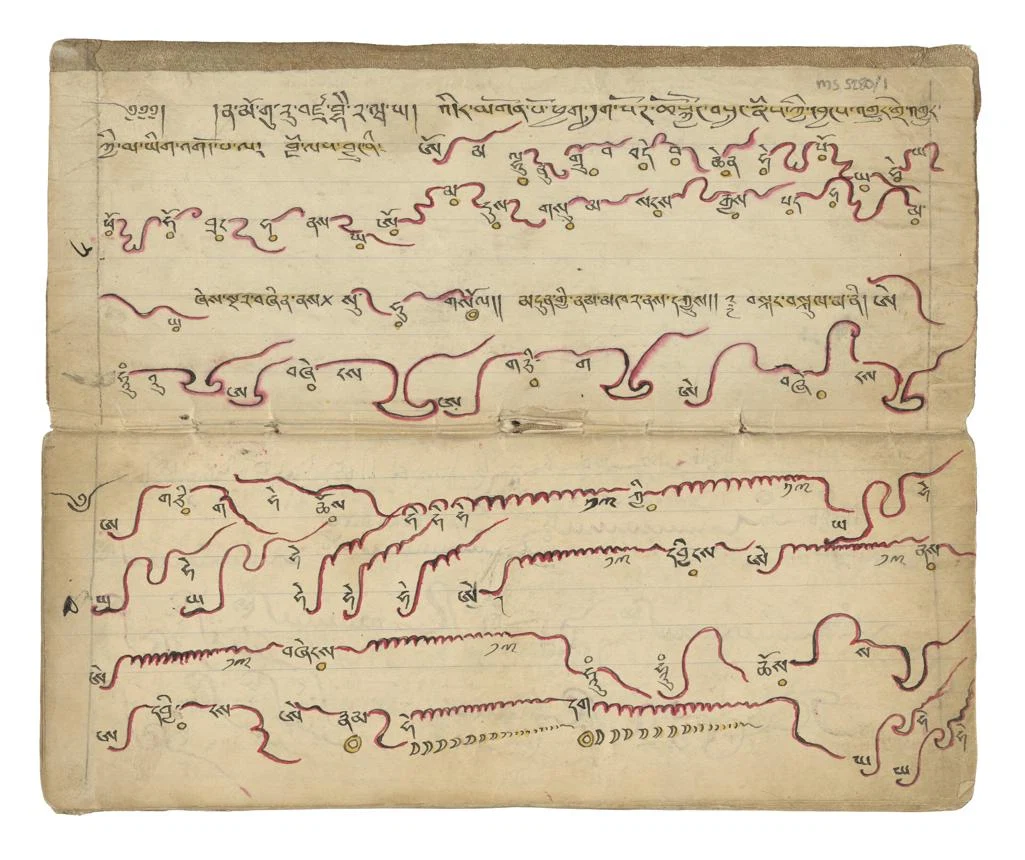
The Samaveda contains chants, many adapted from Rigvedic verses, arranged for musical recitation during rituals.
Importance: It demonstrates the close relationship between sacred words, melody and religious practice.
3. Yajurveda
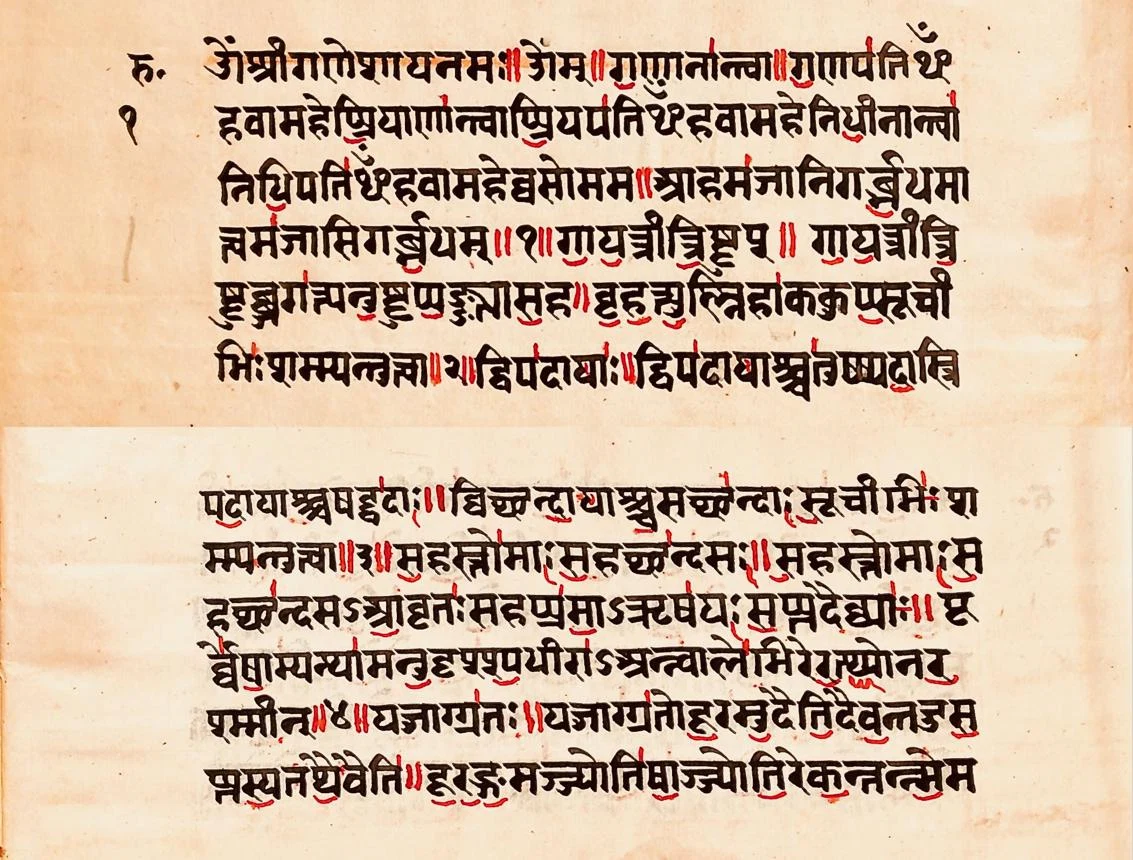
The Yajurveda contains ritual formulas and instructions associated with Vedic sacrificial ceremonies.
Importance: It provides guidance on the performance and meaning of traditional rituals.
4. Atharvaveda
The Atharvaveda contains hymns, prayers, ritual material and reflections concerning everyday concerns such as health, protection and family life.
Importance: It provides insight into the relationship between religious practice and daily life in ancient Vedic society.
Comparison of the Four Vedas
|
Veda |
Main emphasis |
Significance |
|---|---|---|
|
Rigveda |
Hymns and praises |
Religious poetry and early Vedic thought |
|
Samaveda |
Melodic chanting |
Sacred music and ritual recitation |
|
Yajurveda |
Ritual formulas |
Guidance for sacrificial ceremonies |
|
Atharvaveda |
Prayers and everyday concerns |
Religious practices connected with daily life |
Development and Preservation of the Vedas
The Vedas were preserved through specialised oral teaching methods.
Students learned sacred passages by listening to teachers, repeating them and practising precise pronunciation.
Different patterns of recitation helped maintain the accuracy of the words and sounds.
Later, manuscripts provided additional means of preservation.
Modern printed editions, recordings and digital archives have increased access to Vedic texts.
Lessons Learnt
- Knowledge should be preserved carefully.
- Teachers play an important role in transmitting culture.
- Accurate communication is important.
- Education supports continuity between generations.
B. Shruti
Shruti means "that which is heard."
It refers to sacred revelation traditionally received by ancient seers.
Shruti includes the Vedas and their associated textual layers, including the Upanishads.
Importance of Shruti
- Provides foundational teachings for many Hindu philosophical traditions.
- Preserves ancient religious knowledge.
- Guides spiritual reflection.
- Supports religious study and interpretation.
C. Smriti
Smriti means "that which is remembered."
It refers to a broad category of remembered religious tradition and literature.
Smriti texts include works concerning moral duties, social conduct, religious practice and traditional narratives.
Differences Between Shruti and Smriti
|
Shruti |
Smriti |
|---|---|
|
Means "that which is heard" |
Means "that which is remembered" |
|
Traditionally regarded as revealed |
Associated with remembered and transmitted tradition |
|
Includes Vedic literature |
Includes many later traditional texts |
|
Holds foundational authority in many Hindu schools |
Authority and interpretation vary across texts and traditions |
D. Upanishads
The Upanishads are philosophical texts associated with the Vedic tradition.
They explore questions about the self, ultimate reality, knowledge and liberation.
Major Concepts
Brahman: Ultimate reality in many Hindu philosophical systems.
Atman: The self, interpreted differently among philosophical schools.
Karma: Action and its ethical consequences.
Moksha: Liberation from the cycle of rebirth.
Jnana: Knowledge or spiritual understanding.
Importance of the Upanishads
The Upanishads encourage philosophical reflection rather than accepting every question without examination.
They influenced later Hindu schools of thought, including Advaita Vedanta.
Application to Learners
Learners can develop critical thinking by asking thoughtful questions, examining evidence and reflecting on the consequences of their decisions.
E. Puranas
Puranas are collections of traditional religious narratives and teachings.
They contain accounts concerning deities, cosmology, genealogies, sacred places and religious practices.
Examples
- Vishnu Purana.
- Shiva Purana.
- Bhagavata Purana.
- Markandeya Purana.
Importance
Puranas communicate religious teachings through stories that are often easier to remember than abstract philosophical discussions.
They have influenced religious festivals, devotional practices, art and literature.
F. Ramayana
The Ramayana is a major Sanskrit epic traditionally associated with Valmiki.
It narrates the story of Rama, Sita, Lakshmana, Hanuman and other characters.
Summary of the Narrative
Rama, a prince of Ayodhya, is sent into exile. Sita and Lakshmana accompany him.
During the exile, Sita is abducted by Ravana, the ruler of Lanka.
Rama receives help from Hanuman and allies in the effort to rescue Sita.
The narrative explores duty, loyalty, devotion, courage and moral responsibility.
Important Characters
|
Character |
Role |
Ethical theme |
|---|---|---|
|
Rama |
Central hero |
Duty and responsibility |
|
Sita |
Central heroine |
Courage and endurance |
|
Lakshmana |
Rama's brother |
Loyalty |
|
Hanuman |
Devoted ally of Rama |
Service and courage |
|
Ravana |
Ruler of Lanka |
Pride, power and their consequences |
Importance of the Ramayana
- Teaches moral responsibility.
- Encourages reflection on family relationships.
- Promotes discussion of leadership and duty.
- Preserves religious and literary traditions.
- Inspires festivals, drama, music and art.
G. Mahabharata
The Mahabharata is one of the longest epic narratives in world literature.
It is traditionally associated with Ved Vyas.
Its central narrative concerns conflict between the Pandavas and the Kauravas.
Main Themes
Dharma: The challenge of identifying and fulfilling one's duty.
Justice: The importance of fairness in human relationships.
Leadership: The responsibilities of those holding power.
Loyalty: The relationship between personal commitments and wider ethical obligations.
Consequences: The effects of pride, greed, anger and conflict.
Bhagavad Gita
The Bhagavad Gita forms part of the Mahabharata.
It presents a dialogue between Krishna and Arjuna before the Battle of Kurukshetra.
Arjuna struggles with the moral implications of participating in battle.
Krishna responds with teachings concerning duty, action, spiritual knowledge and devotion.
Importance of the Bhagavad Gita
- Encourages reflection on duty.
- Discusses selfless action.
- Explores spiritual knowledge.
- Emphasises disciplined living.
- Encourages thoughtful decision-making.
2.1.4 JAIN SCRIPTURES
Jainism places great importance on right faith, right knowledge and right conduct.
Its scriptures preserve teachings associated with the Tirthankaras and later religious teachers.
A. Agamas
The Agamas are collections of sacred Jain teachings.
The preservation and recognition of particular Agamas differ among Jain traditions.
Shvetambara communities preserve a canon of Agamic literature, while Digambara traditions generally hold that the original canonical teachings were lost and recognise other authoritative works.
Main Teachings
Ahimsa: Avoiding harm to living beings.
Satya: Truthfulness.
Asteya: Non-stealing.
Brahmacharya: Chastity and self-restraint.
Aparigraha: Non-possessiveness.
Importance of Agamas
- Guide ethical conduct.
- Support monastic discipline.
- Preserve Jain teachings.
- Encourage spiritual development.
- Promote non-violence.
B. Kalpasutra
The Kalpasutra is an important Jain text, particularly in Shvetambara tradition.
It includes religious biographies and teachings associated with monastic practice.
Contents
The Kalpasutra includes accounts associated with Tirthankaras, particularly Mahavira, as well as material relating to religious teachers and monastic rules.
Importance
- Preserves important religious biographies.
- Provides examples of disciplined spiritual living.
- Supports religious education.
- Plays a role in Paryushana observances.
- Encourages reflection on Jain values.
Lessons from Jain Scriptures
Learners can apply Jain ethical principles by avoiding cruelty, respecting property, speaking truthfully and practising moderation.
2.1.5 BUDDHIST SCRIPTURES
Buddhist scriptures preserve the teachings and disciplinary traditions associated with the Buddha and later Buddhist teachers.
Different Buddhist traditions recognise different canonical collections.
The KICD curriculum identifies the Tripitaka and Visuddhimagga.
A. Tripitaka
Tripitaka means "Three Baskets."
The Pali equivalent is Tipitaka.
1. Vinaya Pitaka
The Vinaya Pitaka contains rules and guidance for Buddhist monastic communities.
It addresses discipline, community responsibilities and the handling of disputes.
Importance: It supports orderly religious community life and ethical discipline.
2. Sutta Pitaka
The Sutta Pitaka contains discourses attributed to the Buddha and, in some cases, his disciples.
These teachings discuss suffering, ethical conduct, meditation, wisdom and liberation.
Importance: It provides a major source for understanding Buddhist teachings.
3. Abhidhamma Pitaka
The Abhidhamma Pitaka presents systematic analysis of mental states, experience and doctrinal categories.
Importance: It supports detailed philosophical and psychological analysis within Theravada Buddhism.
Comparison
|
Division |
Main content |
Purpose |
|---|---|---|
|
Vinaya Pitaka |
Monastic rules |
Religious discipline |
|
Sutta Pitaka |
Discourses |
Teaching and spiritual guidance |
|
Abhidhamma Pitaka |
Systematic doctrinal analysis |
Deeper understanding |
B. Visuddhimagga
Visuddhimagga means "Path of Purification."
It is a major Theravada Buddhist text associated with the scholar Buddhaghosa.
It presents a systematic account of spiritual practice.
Three Major Areas
Sila — Ethical Conduct: Developing moral discipline.
Samadhi — Concentration: Training and stabilising the mind.
Panna — Wisdom: Developing insight into the nature of experience.
Importance
The Visuddhimagga provides detailed guidance on meditation, ethical discipline and spiritual development.
2.1.6 SIKH SCRIPTURES
A. Sri Guru Granth Sahib Ji
The Sri Guru Granth Sahib Ji is the central sacred scripture and eternal Guru of Sikhism.
It contains hymns associated with Sikh Gurus and selected spiritual teachers from different religious backgrounds.
Development
Guru Arjan Dev Ji compiled the Adi Granth in 1604.
The Sikh scriptural tradition was subsequently developed and transmitted, and Guru Gobind Singh Ji affirmed the Guru Granth Sahib as the continuing Guru.
Main Teachings
- Belief in the One God.
- Truthful living.
- Equality.
- Honest work.
- Sharing.
- Selfless service.
- Humility.
- Spiritual remembrance.
Importance
The Sri Guru Granth Sahib Ji guides Sikh worship, spiritual reflection and ethical living.
It is treated with great reverence in gurdwaras.
B. Dasam Granth
The Dasam Granth is a collection of writings traditionally associated with Guru Gobind Singh Ji.
It contains different literary and religious compositions.
Questions about the authorship and authority of individual sections are debated within Sikh traditions and scholarship.
Religious Significance
The collection has influenced Sikh religious literature, history and certain devotional and ceremonial practices.
It does not have the same status as the Sri Guru Granth Sahib Ji, which is the eternal Guru.
2.1.7 Challenges Encountered During the Development of Scriptures
1. Oral Transmission
Many teachings were passed from teachers to students before widespread manuscript use.
Accurate memorisation required considerable time and discipline.
2. Language Differences
Scriptures were composed or transmitted in languages such as Sanskrit, Pali, Prakrit and other historical languages.
Translation into modern languages may create difficulties because some concepts do not have exact equivalents.
3. Manuscript Damage
Manuscripts can deteriorate because of moisture, insects, fire and poor storage.
4. Historical Conflict
Wars, political instability and destruction of institutions sometimes disrupted the preservation of religious texts.
5. Differences in Interpretation
Religious communities and scholars may interpret the same text differently.
6. Limited Access to Education
Historical social and economic barriers sometimes restricted access to scriptural study.
7. Changes in Technology
Printing and digitisation have improved access but introduced new concerns about accuracy, authenticity and unauthorised alterations.
2.1.8 Modern Methods of Preserving Scriptures
|
Method |
Contribution |
|---|---|
|
Printing |
Produces multiple copies |
|
Digitisation |
Makes texts accessible electronically |
|
Audio recording |
Preserves pronunciation and recitation |
|
Translation |
Makes teachings accessible across languages |
|
Libraries |
Provide organised storage and access |
|
Archival conservation |
Protects fragile manuscripts |
|
Religious education |
Transmits knowledge to younger generations |
2.1.9 Importance of Studying Scriptures from Four Faiths
Studying the scriptures can promote:
- Religious literacy.
- Mutual respect.
- Cultural understanding.
- Responsible citizenship.
- Peaceful coexistence.
- Appreciation of ethical values.
- Understanding of different religious beliefs.
Learning Activity
Create a chart showing the principal scriptures of the four faiths, their main contents, their development and their importance to believers.
Revision Questions — Sub-strand 2.1
- Define scriptures.
- State four characteristics of scriptures.
- Name the four Vedas.
- Differentiate Shruti and Smriti.
- Explain three teachings found in the Upanishads.
- Identify two major Sanatan epics.
- State four moral themes in the Ramayana.
- Explain the importance of the Bhagavad Gita.
- Define Jain Agamas.
- State three contents of the Kalpasutra.
- Name the three divisions of the Tripitaka.
- Explain the importance of the Visuddhimagga.
- Identify the central Sikh scripture.
- Explain the historical development of the Sri Guru Granth Sahib Ji.
- State five challenges encountered during the development of scriptures.
- Explain five ways scriptures can be preserved today.
Direct Answers
- Sacred writings or collections of religious teachings.
- Sacredness, authority, preservation and guidance.
- Rigveda, Samaveda, Yajurveda and Atharvaveda.
- Shruti refers to traditionally revealed texts; Smriti refers to remembered tradition.
- Brahman, Atman and Moksha.
- Ramayana and Mahabharata.
- Duty, loyalty, courage and responsibility.
- It discusses duty, action, knowledge and devotion.
- Collections of sacred Jain teachings.
- Religious biographies, accounts of Tirthankaras and monastic guidance.
- Vinaya, Sutta and Abhidhamma Pitakas.
- It explains ethical conduct, concentration and wisdom.
- Sri Guru Granth Sahib Ji.
- Guru Arjan compiled the Adi Granth in 1604; the Sikh scriptural tradition subsequently developed, and Guru Gobind Singh affirmed the Guru Granth Sahib as the continuing Guru.
- Oral transmission difficulties, translation, manuscript damage, conflict and differing interpretations.
- Printing, digitisation, recording, translation and archival conservation.