
Suggested lessons: 20
4.3.1 Meaning of Dance
Dance is the organised movement of the body, often accompanied by music, rhythm or other forms of sound.
Dance may communicate cultural identity, religious devotion, emotions, stories and community values.
The Grade 10 curriculum focuses on selected Indian and Kenyan folk and classical dances.
4.3.2 Types of Dance
Folk Dance
Folk dance is a traditional form of dance associated with a particular community, region or cultural occasion.
Its movements and music are commonly transmitted through community practice and teaching.
Folk dances are often performed during celebrations, festivals and social gatherings.
Classical Dance
Classical dance is a formalised dance tradition characterised by established techniques, movement patterns and expressive conventions.
In Indian classical dance, performers may use hand gestures, facial expressions, rhythm and body movement to communicate stories or spiritual themes.
4.3.3 Differences Between Folk and Classical Dance
|
Feature |
Folk dance |
Classical dance |
|---|---|---|
|
Origin |
Community traditions |
Formalised artistic traditions |
|
Training |
Often learned through community participation |
Often requires structured training |
|
Movement |
May vary by region and occasion |
Uses established techniques |
|
Performance |
Festivals and social celebrations |
Artistic, cultural and sometimes religious occasions |
|
Examples |
Garba, Dandiya, Bhangra, Gidda |
Kathak, Bharatanatyam |
The distinction is not absolute. Folk dances can be highly structured, and classical dance traditions also evolve over time.
4.3.4 Selected Indian Folk Dances
A. Garba

daibieunhandan.vn
Garba is a traditional dance associated particularly with Gujarat in India.
It is commonly performed during Navratri celebrations.
Dancers often move in circular formations while clapping and following rhythmic music.
Cultural importance
- Encourages community participation.
- Expresses celebration and devotion.
- Preserves Gujarati cultural heritage.
- Develops rhythm and coordination.
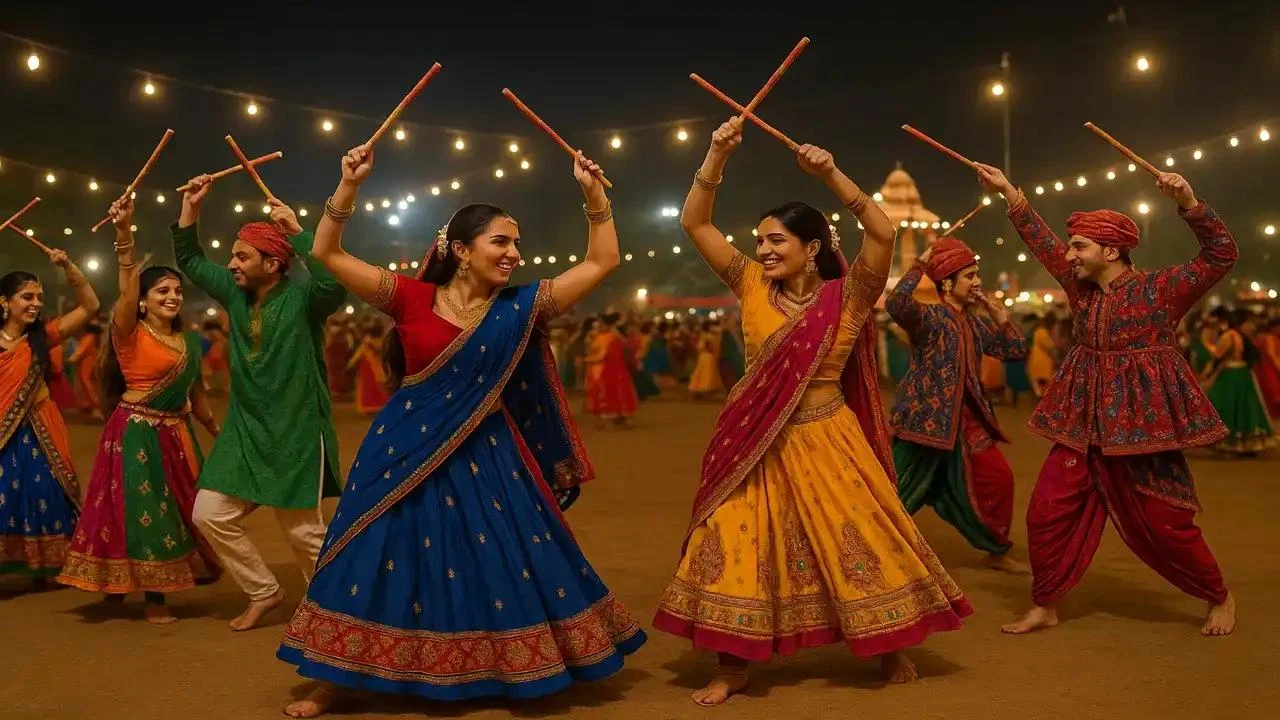
B. Dandiya Raas
danceanddance.com
Dandiya Raas is a traditional dance associated with Gujarat.
Participants use decorated sticks, often striking them rhythmically while performing coordinated movements.
It is commonly associated with Navratri celebrations.
Skills developed
- Hand-eye coordination.
- Timing.
- Cooperation.
- Spatial awareness.
- Rhythm.
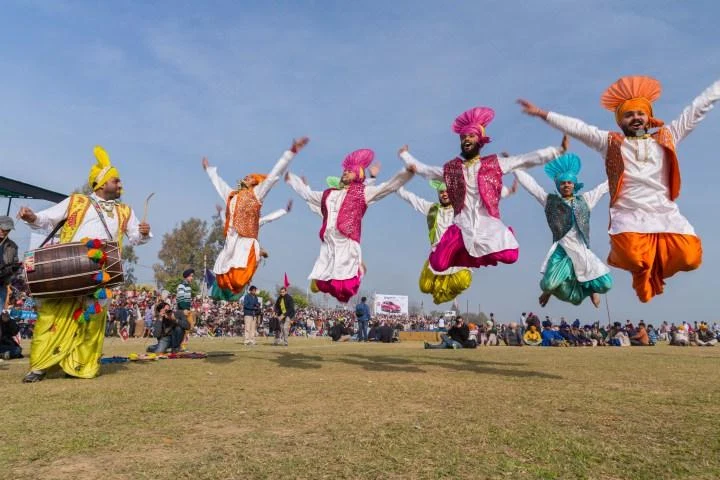
C. Bhangra
holidify.com
Bhangra is a lively Punjabi dance tradition historically associated with agricultural celebrations and harvest festivities.
It is characterised by energetic movements, rhythmic footwork and expressive arm gestures.
The dhol is an important instrument associated with Bhangra.
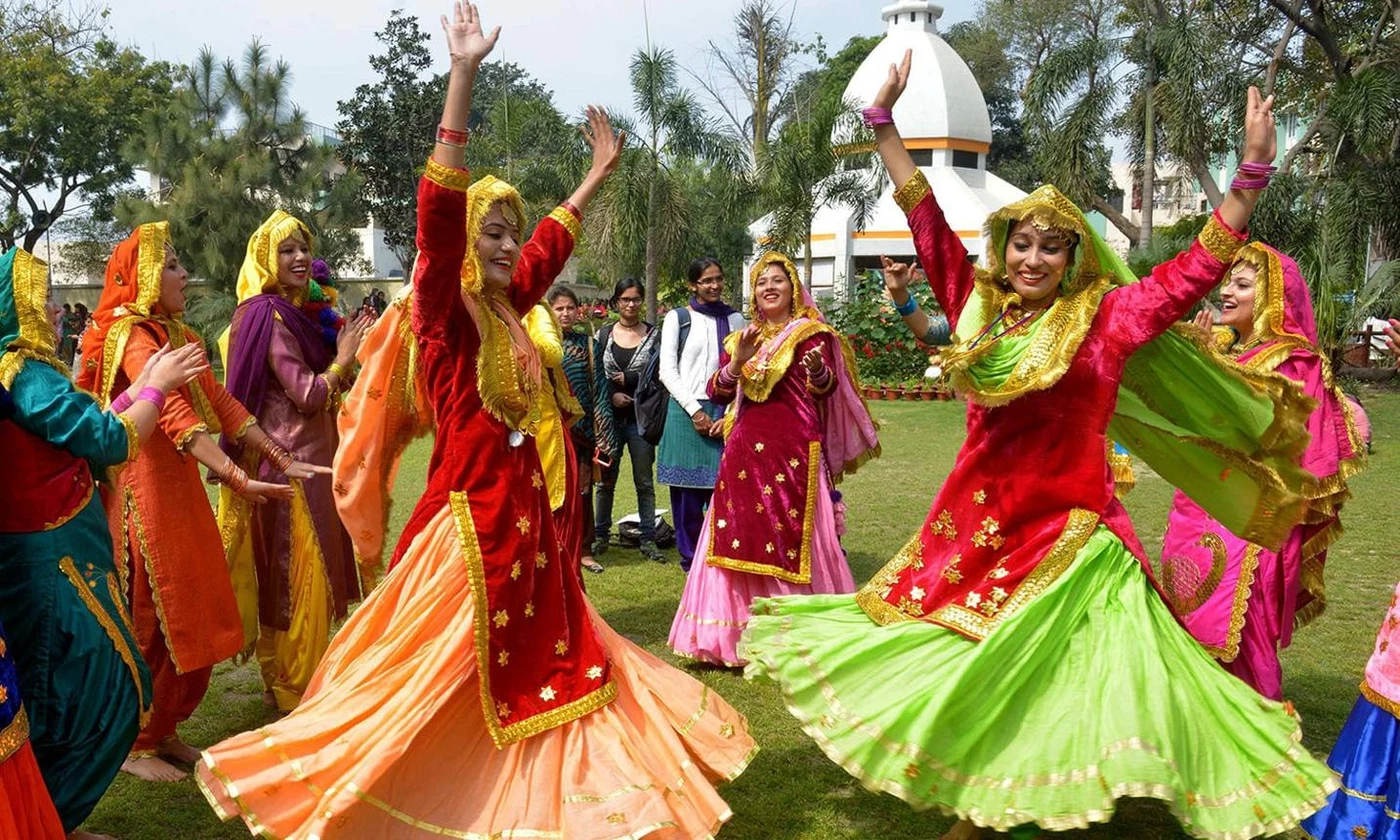
D. Gidda
dawn.com
Gidda is a Punjabi folk dance traditionally performed by women.
It often features clapping, expressive movements and short sung verses called boliyan.
Gidda provides opportunities for storytelling, humour, cultural expression and community celebration.
4.3.5 Selected Indian Classical Dances
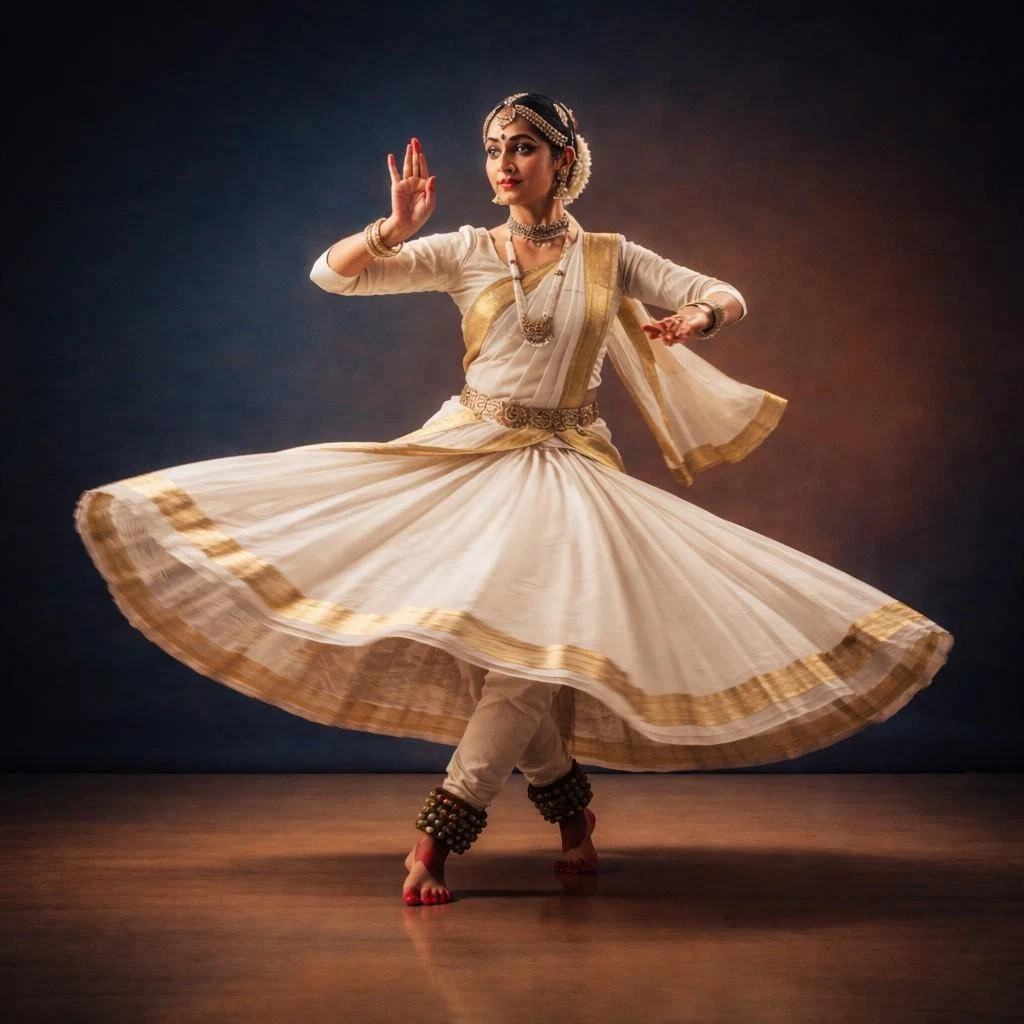
A. Kathak
lokpriya.com
Kathak is a major North Indian classical dance tradition.
It developed through storytelling and performance traditions and later evolved in both courtly and devotional settings.
Characteristics
- Rhythmic footwork.
- Spins or turns.
- Expressive gestures.
- Facial expression.
- Storytelling.
- Interaction with musical rhythm.
Common musical accompaniment
Tabla, harmonium, sarangi and other instruments may accompany Kathak performances.
B. Bharatanatyam
rawpixel.com
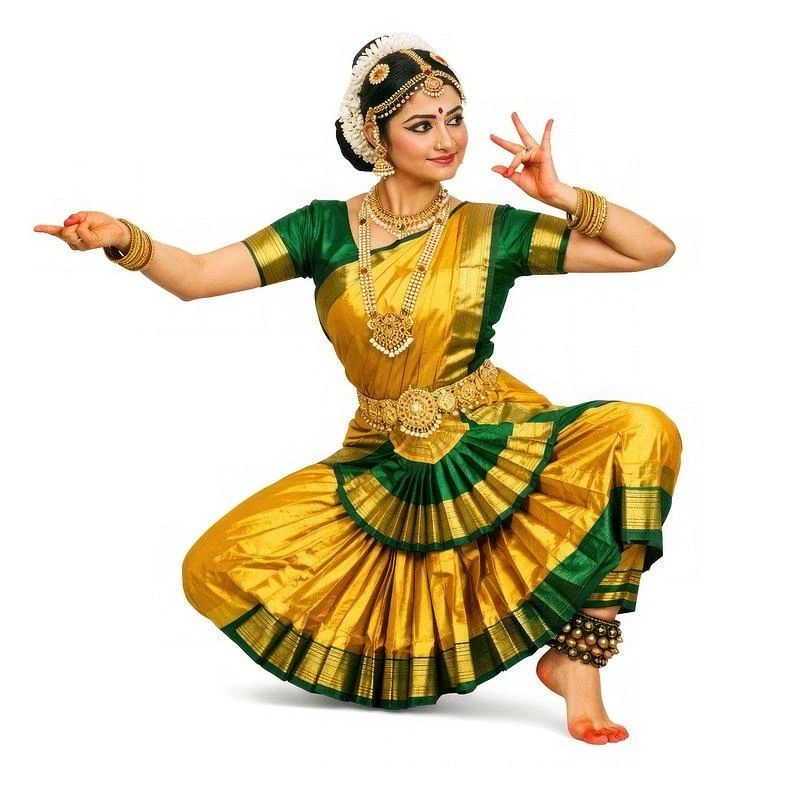
Bharatanatyam is a classical dance tradition associated with Tamil Nadu in South India.
It uses codified body positions, rhythmic footwork, hand gestures and expressive facial movements.
Characteristics
- Structured postures.
- Precise rhythmic movements.
- Hand gestures known as mudras.
- Facial expression.
- Narrative and devotional themes.
- Close coordination with music.
Bharatanatyam is performed in religious, cultural and theatrical settings.
4.3.6 Selected Kenyan Traditional Dances
The KICD design includes Naga, Isukuti and Dudu dance.
A. Naga Dance
The curriculum lists Naga among the dances for study but does not provide its community of origin, movement style or accompanying instruments.
Learners should research the particular dance intended by the curriculum using a knowledgeable cultural resource person before assigning it a specific Kenyan community or describing its performance characteristics.
B. Isukuti Dance
ich.unesco.org
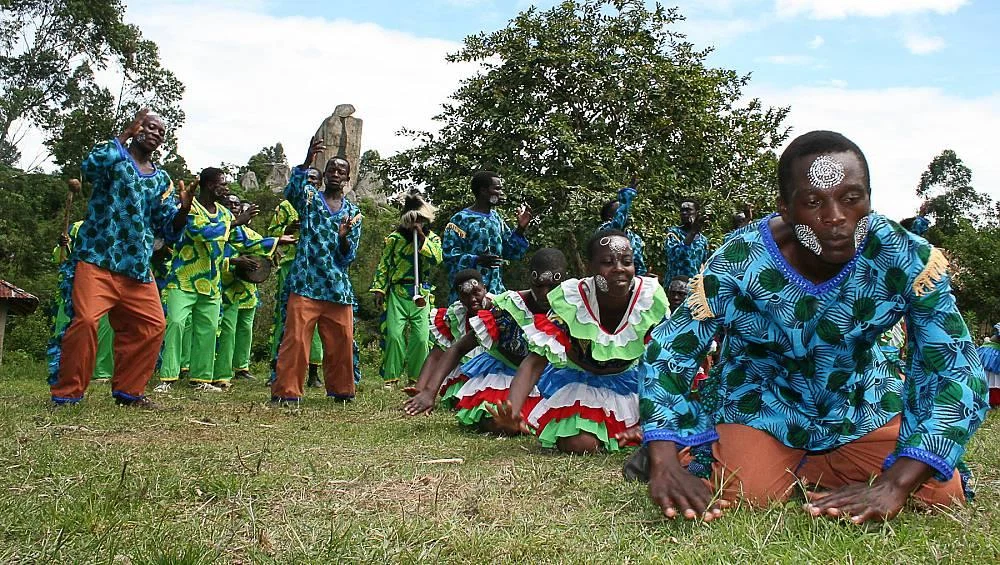
Isukuti is a traditional drumming and dance practice associated with communities in western Kenya, particularly among the Luhya.
It is known for energetic rhythms, coordinated movement and the use of drums.
Importance
- Preserves cultural identity.
- Brings communities together.
- Supports celebrations.
- Develops rhythm and coordination.
- Creates opportunities for cultural performance.
C. Dudu Dance
Dudu is included in the KICD curriculum as a selected dance. The supplied design does not explain its origin or performance features.
Learners should consult an appropriate cultural practitioner or reliable educational resource to identify the specific Dudu dance being studied and document its music, movements and cultural significance.
4.3.7 Comparison of Selected Dances
|
Dance |
Classification |
Cultural association |
Distinguishing feature |
|---|---|---|---|
|
Garba |
Folk |
Gujarat, India |
Circular group movement |
|
Dandiya Raas |
Folk |
Gujarat, India |
Rhythmic use of sticks |
|
Bhangra |
Folk |
Punjab |
Energetic movements and dhol rhythms |
|
Gidda |
Folk |
Punjab |
Clapping and sung verses |
|
Kathak |
Classical |
North India |
Footwork, spins and storytelling |
|
Bharatanatyam |
Classical |
Tamil Nadu, India |
Codified postures, gestures and expression |
|
Naga |
Listed for study |
Requires clarification from a cultural source |
To be established through research |
|
Isukuti |
Traditional dance |
Western Kenya |
Energetic drumming and movement |
|
Dudu |
Listed for study |
Requires clarification from a cultural source |
To be established through research |
4.3.8 Relationship Between Music and Dance
Music and dance are closely connected.
Music provides rhythm, melody and structure, while dance communicates these musical elements through movement.
A dancer must listen carefully to the music to maintain timing and coordinate movements with other performers.
Example: Bhangra and Dhol
The dhol produces energetic rhythmic patterns that help guide Bhangra movements.
Example: Kathak and Tabla
The tabla may provide complex rhythmic patterns that a Kathak dancer interprets through footwork.
Example: Bharatanatyam and Classical Music
Bharatanatyam performances commonly use Carnatic musical accompaniment, with rhythmic syllables and instruments supporting movement.
4.3.9 Importance of Dance in Religious and Cultural Life
Dance can contribute to:
Spiritual expression: Some dances communicate devotion and religious narratives.
Cultural preservation: Traditional movements and music are passed to younger generations.
Social unity: Group performances encourage cooperation and participation.
Physical development: Dance improves coordination, balance, endurance and flexibility.
Economic activity: Cultural performances can create opportunities for instructors, performers, costume makers and event organisers.
National identity: Cultural festivals allow Kenyan communities to share and appreciate different traditions.
4.3.10 Safety During Dance Practice
Learners should:
- Warm up before vigorous activity.
- Use a safe and sufficiently spacious performance area.
- Wear suitable clothing and footwear.
- Follow the instructor's guidance.
- Avoid movements beyond their ability.
- Stay hydrated.
- Respect other performers' personal space.
- Stop when experiencing pain or dizziness.
Suggested Illustration 4.3
Title: Indian Folk and Classical Dances
Image type: Six-panel educational illustration, 16:9, pure white background.
Description: Show Garba, Dandiya Raas, Bhangra, Gidda, Kathak and Bharatanatyam with culturally appropriate clothing, movement and instruments.
Required labels: Garba, Dandiya Raas, Bhangra, Gidda, Kathak, Bharatanatyam.
Placement: After the Indian dance descriptions.
Suggested Illustration 4.4
Title: Kenyan Traditional Dance — Isukuti
Image type: Educational cultural illustration, 16:9, pure white background.
Description: Show a respectful representation of an Isukuti drumming and dance performance, with traditional drums and coordinated dancers.
Required labels: Isukuti, Drums, Rhythm, Traditional Dance.
Placement: After the Isukuti section.
4.3.11 Practical Activity: Cultural Dance Presentation
Working in groups, select one dance from the curriculum.
Research its cultural origin, accompanying music, instruments, movements, costumes and occasions of performance.
Prepare a short presentation or teacher-supervised demonstration. Explain how the dance contributes to cultural preservation and social unity.
Revision Questions — 4.3
- Define dance.
- Differentiate folk and classical dance.
- Name four Indian folk dances.
- Identify two Indian classical dances.
- Where is Garba traditionally associated?
- What is the main distinguishing feature of Dandiya Raas?
- Which instrument is strongly associated with Bhangra?
- State three characteristics of Kathak.
- Explain the importance of hand gestures in Bharatanatyam.
- With which Kenyan region is Isukuti associated?
- State four benefits of dance.
- Give three safety measures during dance practice.
Direct Answers
- Dance is organised body movement, often accompanied by music or rhythm.
- Folk dance is rooted in community traditions, while classical dance generally follows formalised techniques.
- Garba, Dandiya Raas, Bhangra and Gidda.
- Kathak and Bharatanatyam.
- Gujarat in India.
- The rhythmic use of sticks.
- The dhol.
- Rhythmic footwork, spins and expressive storytelling.
- They help communicate meaning, emotion and narrative.
- Western Kenya, particularly among Luhya communities.
- Cultural preservation, social unity, physical coordination and artistic expression.
- Warm up, use a safe space and follow the instructor's guidance.