
1. Introduction to crop establishment
Crop establishment refers to the process of preparing a suitable planting site and planting selected materials to start growing crops.
It involves preparing the soil, selecting suitable planting materials and placing them in the ground under favourable conditions.
Successful crop establishment is important because it determines how well crops germinate, develop roots and grow.
Examples of planting materials include:
- Seeds.
- Tubers.
- Suckers.
- Stem cuttings.
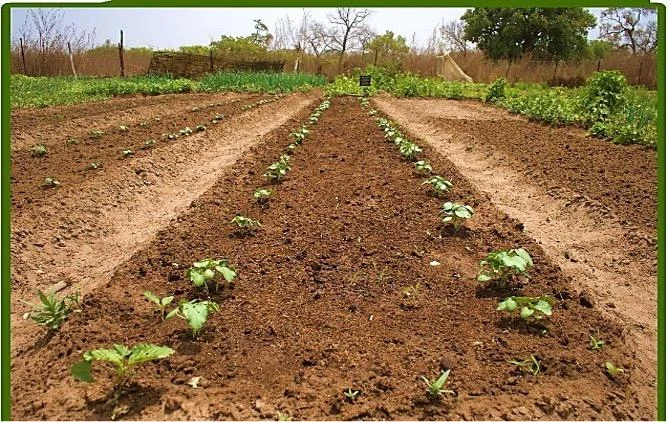
Prepared planting beds ready for crop establishment.
2. Meaning of tilth
Tilth refers to the physical condition of soil after it has been prepared for planting.
Good soil tilth allows:
- Easy movement of air in the soil.
- Proper movement of water.
- Easy root penetration.
- Good contact between seeds and soil.
- Healthy seed germination.
- Proper development of young plants.
The type of planting material determines the appropriate soil tilth required.
The KICD curriculum identifies three main types of tilth: fine, medium and coarse tilth.
3. Types of soil tilth
A. Fine tilth
Fine tilth refers to soil that has been broken into small, loose and crumbly particles.
It is suitable for planting small-sized seeds.
Examples of crops with small seeds include:
- Carrots.
- Onions.
- Amaranth.
- Lettuce.
- Cabbage.
Characteristics of fine tilth
- The soil particles are small.
- The soil is loose and well broken.
- It provides good contact between seeds and soil.
- It allows small seeds to germinate more easily.
- It makes it easier for delicate seedlings to emerge.
Importance of fine tilth
Fine tilth helps small seeds remain in contact with moist soil, supporting successful germination.
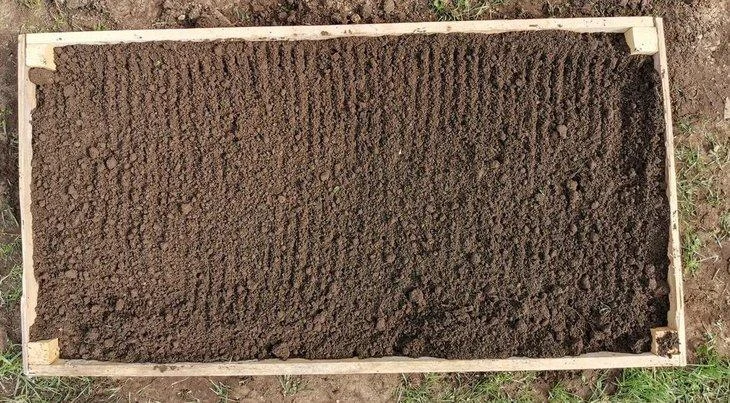
Fine tilth prepared for planting small-sized seeds.
B. Medium tilth
Medium tilth refers to soil that has been broken into moderately sized soil particles.
It is suitable for planting medium-sized seeds.
Examples include:
- Beans.
- Maize.
- Peas.
- Cowpeas.
- Groundnuts.
Characteristics of medium tilth
- The soil particles are moderately sized.
- The soil is neither too fine nor too coarse.
- It provides suitable conditions for medium-sized seeds.
- It allows roots to penetrate the soil.
- It supports proper movement of air and water.
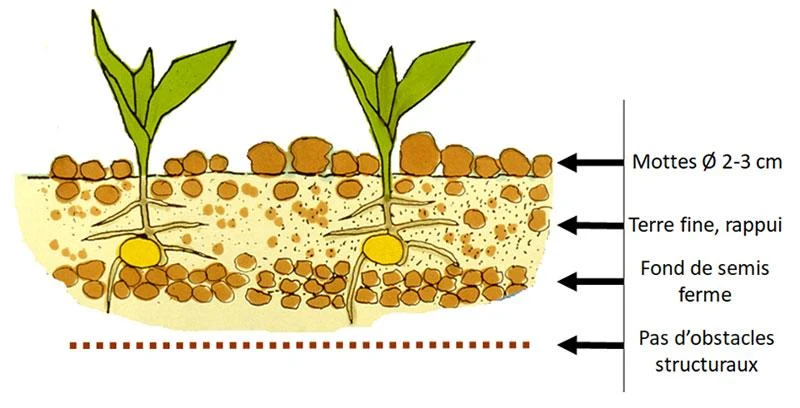
Medium tilth prepared for planting medium-sized seeds.
C. Coarse tilth
Coarse tilth refers to soil that contains relatively large soil clods and is not finely broken.
It is suitable for establishing large planting materials such as tubers, suckers and cuttings.
Examples include:
- Irish potato tubers.
- Sweet potato vines.
- Banana suckers.
- Sugarcane cuttings.
- Napier grass splits or planting materials.
Characteristics of coarse tilth
- It contains relatively large soil particles or clods.
- It is less finely prepared than fine tilth.
- It allows larger planting materials to be established.
- It can provide space for large planting materials.
- It should not contain hard, compacted clods that interfere with root growth.
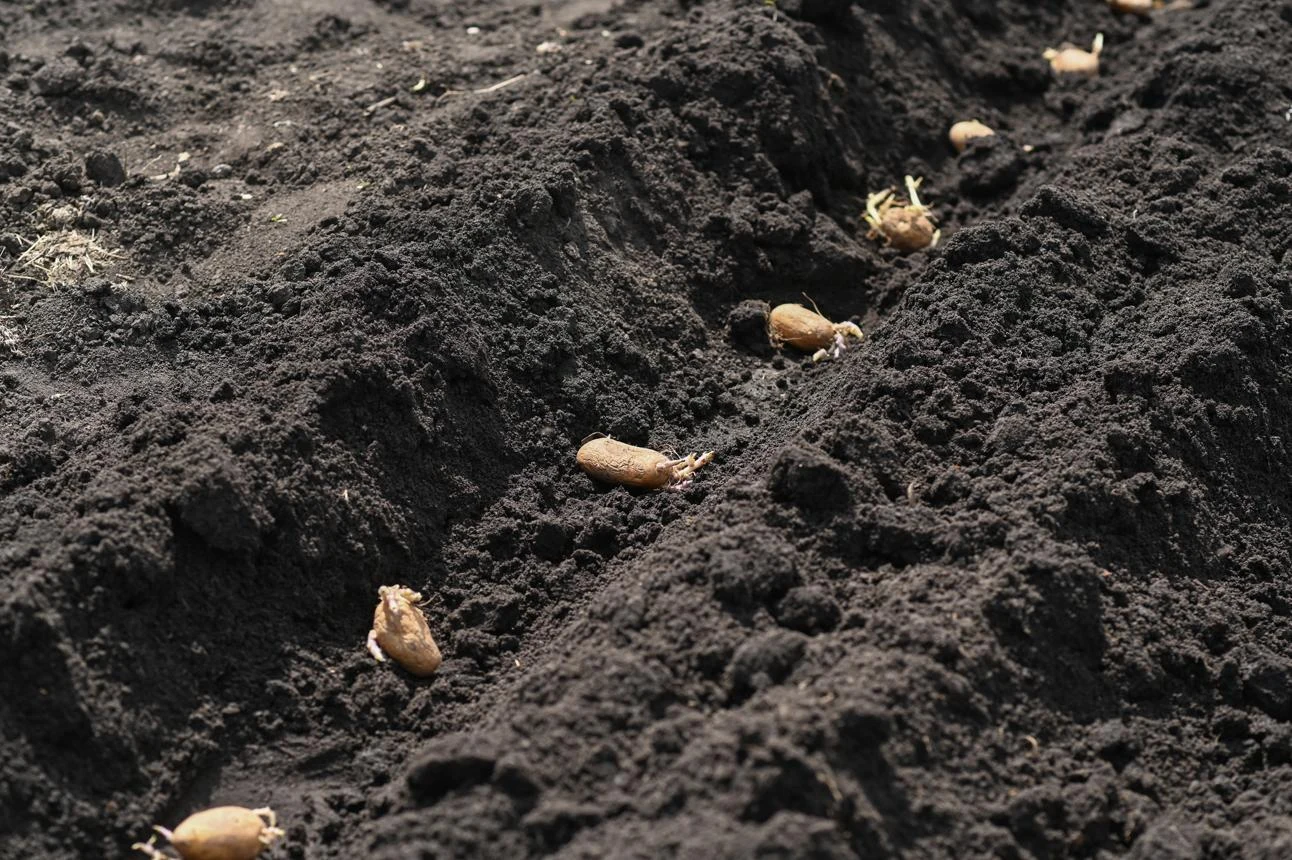
Coarse tilth suitable for establishing large planting materials.
4. Relationship between planting materials and soil tilth
|
Planting material |
Examples |
Appropriate tilth |
|---|---|---|
|
Small-sized seeds |
Carrots, onions |
Fine tilth |
|
Medium-sized seeds |
Beans, maize, peas |
Medium tilth |
|
Large planting materials |
Tubers, suckers, cuttings |
Coarse tilth |
Remember:
- Small seeds require fine tilth.
- Medium-sized seeds require medium tilth.
- Large planting materials require coarse tilth.
5. Preparing a suitable planting site
Land preparation involves making the soil suitable for establishing crops.
It is important because it creates favourable conditions for germination and plant growth.
Steps in preparing a planting site
Step 1: Clearing the land
Remove unwanted vegetation, rubbish, stones and other materials from the selected area.
This makes the land accessible for cultivation.
Step 2: Primary cultivation
Primary cultivation involves loosening and turning the soil using suitable tools.
Examples of tools include:
- Jembe.
- Forked hoe.
- Spade.
- Plough.
The purpose is to loosen the soil and make it easier to prepare the planting site.
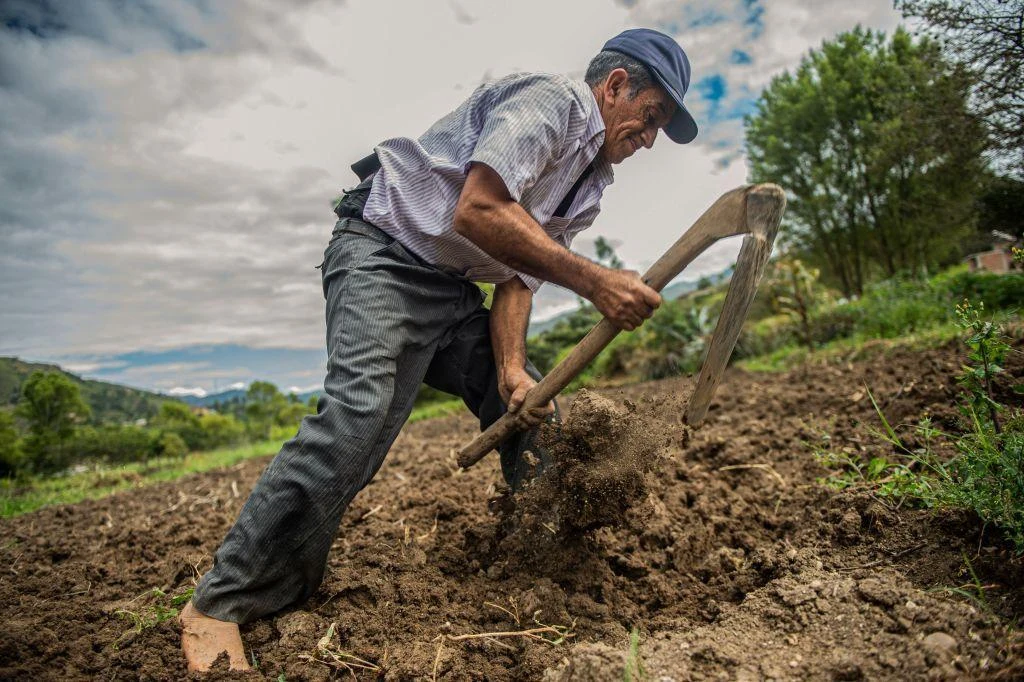
Primary cultivation using a hand hoe.
Step 3: Breaking soil clods
Break large soil clods to achieve the appropriate tilth.
The size of the soil particles should depend on the planting material.
For example, carrots require fine tilth, while banana suckers can be established in coarse tilth.
Step 4: Removing unwanted materials
Remove stones, roots and other unwanted materials that may interfere with crop establishment.
Step 5: Incorporating organic manure
Suitable, well-decomposed organic manure may be incorporated into the soil to improve fertility and soil structure.
Examples include:
- Compost manure.
- Well-rotted animal manure.
Step 6: Levelling the planting site
Level the soil where necessary to create a suitable planting surface.
Step 7: Making planting holes or furrows
Prepare planting holes, drills or furrows depending on the crop and planting material.
Step 8: Preparing the appropriate tilth
Ensure that the soil is properly prepared according to the size and nature of the planting material.
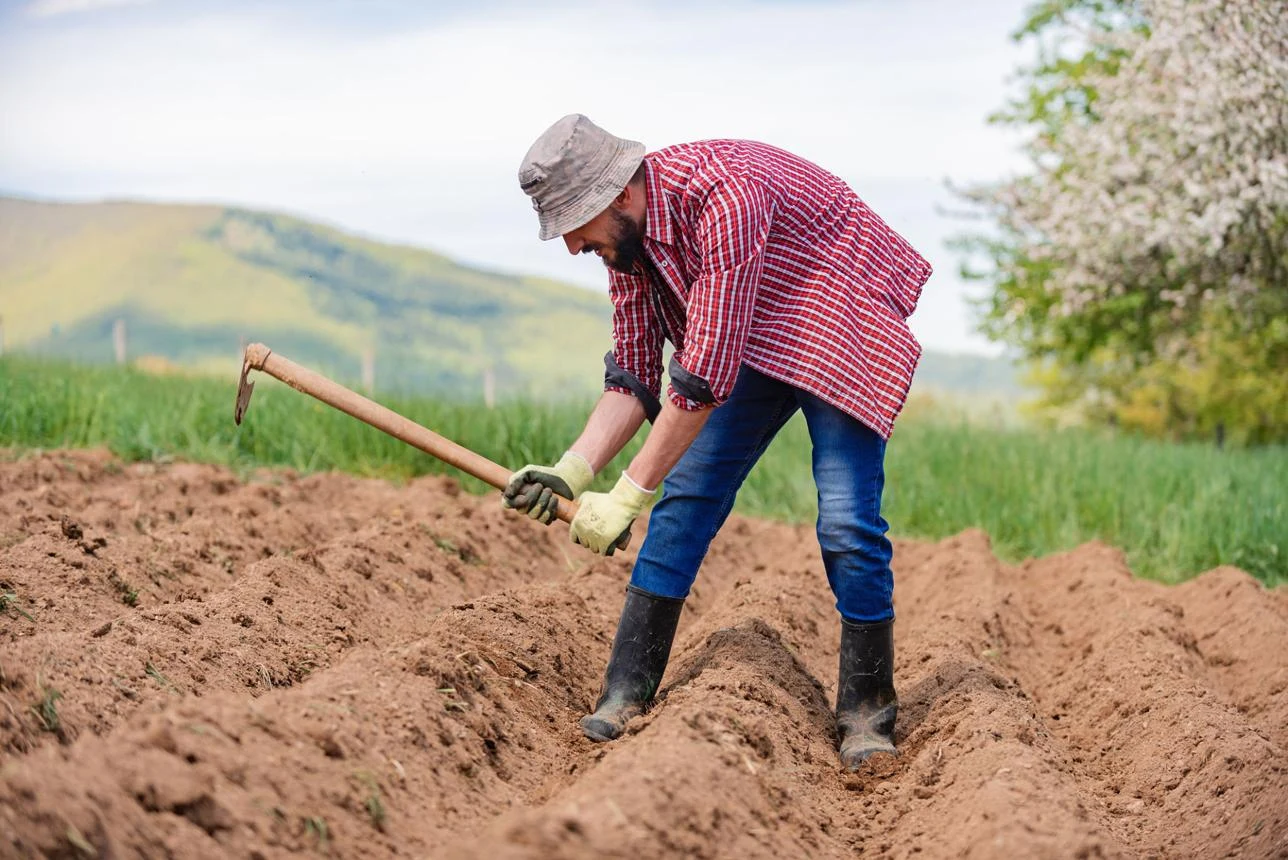
Preparing furrows and planting positions for crop establishment.
6. Planting different types of materials
A. Planting seeds
Seeds are reproductive structures that develop into new plants under favourable conditions.
Procedure
- Select healthy seeds.
- Prepare the planting site.
- Achieve the appropriate soil tilth.
- Make suitable planting holes or furrows.
- Place the seeds at the recommended spacing and depth.
- Cover the seeds with soil.
- Water where necessary.
- Monitor the field for germination.
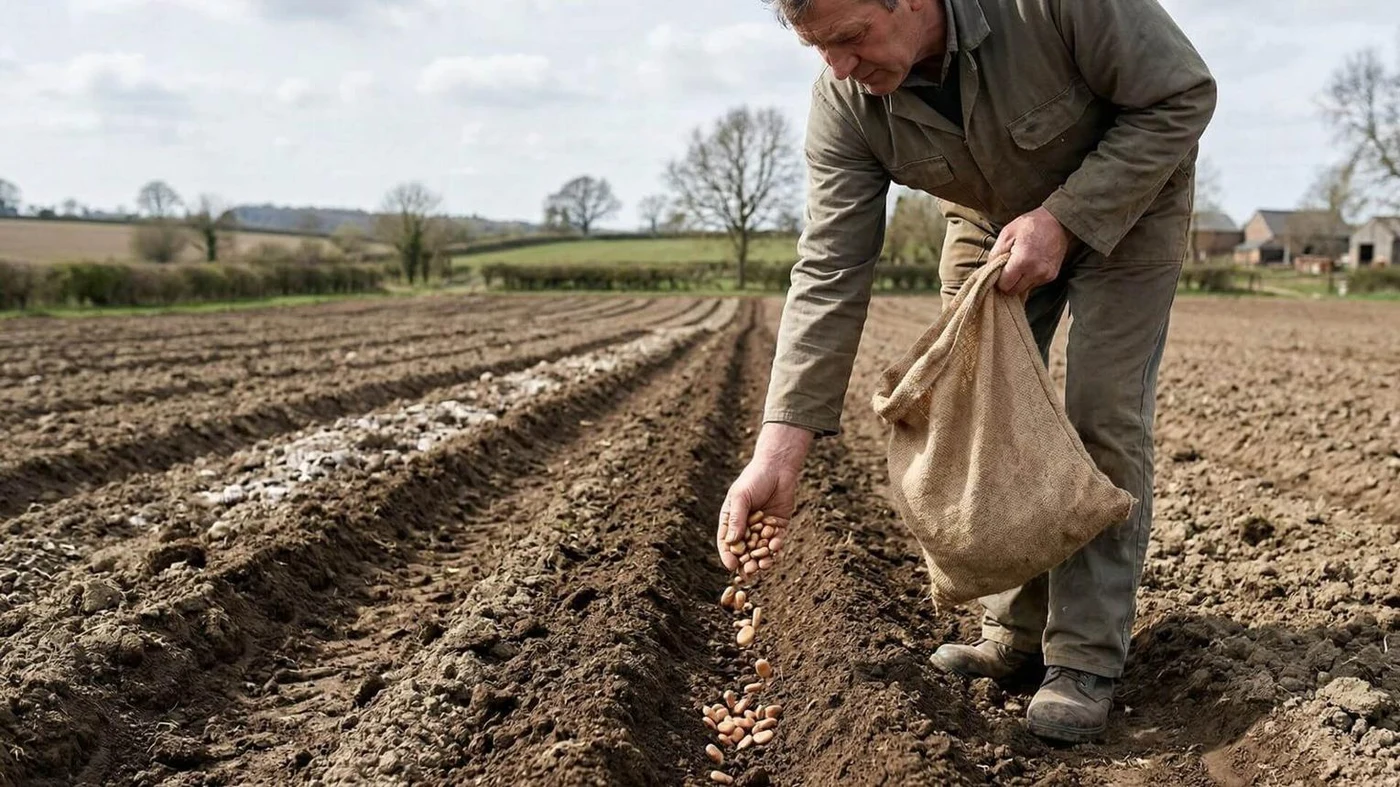
Planting seeds in a prepared field.
B. Planting tubers
A tuber is a swollen underground plant stem that stores food and can be used for vegetative propagation.
An example is an Irish potato tuber.
Procedure
- Select healthy and suitable potato tubers.
- Prepare the planting site.
- Achieve appropriate coarse tilth.
- Make suitable planting holes or furrows.
- Place the tubers in the planting positions.
- Cover them with soil.
- Maintain suitable soil moisture.
- Monitor the crop as it grows.
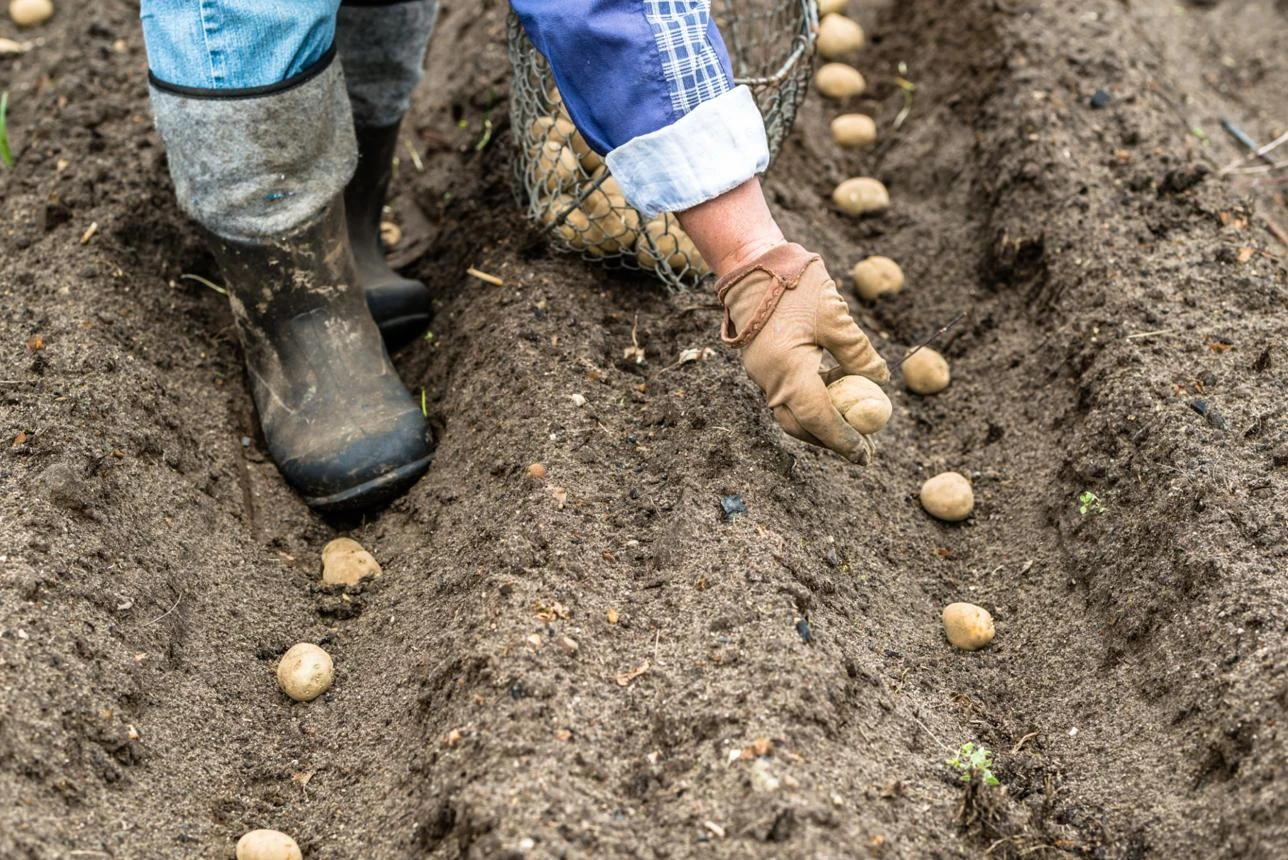
Establishing potatoes using tubers.
C. Planting suckers
A sucker is a young shoot that develops from the base of a parent plant.
Examples include:
- Banana suckers.
- Pineapple suckers.
Procedure
- Select healthy suckers.
- Prepare the planting site.
- Dig suitable planting holes.
- Place the sucker upright in the hole.
- Cover its roots with soil.
- Firm the soil gently.
- Water the sucker.
- Protect it from damage.
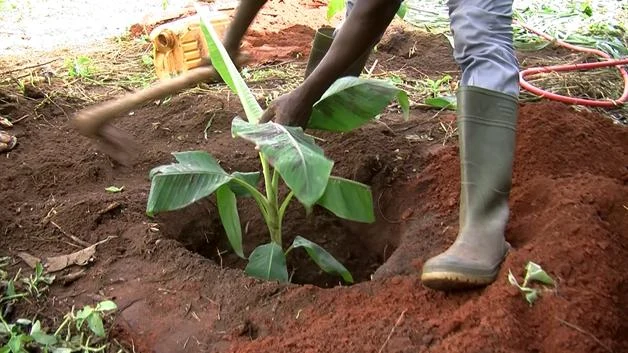
Establishing a banana crop using suckers.
D. Planting stem cuttings
A stem cutting is a portion of a plant stem used to produce a new plant.
Examples include:
- Sugarcane.
- Cassava.
- Napier grass.
Procedure
- Select healthy stems.
- Cut them into suitable planting sections.
- Prepare the planting site.
- Make suitable planting furrows or holes.
- Place the cuttings in the recommended position.
- Cover them with soil.
- Water where necessary.
- Monitor their establishment.
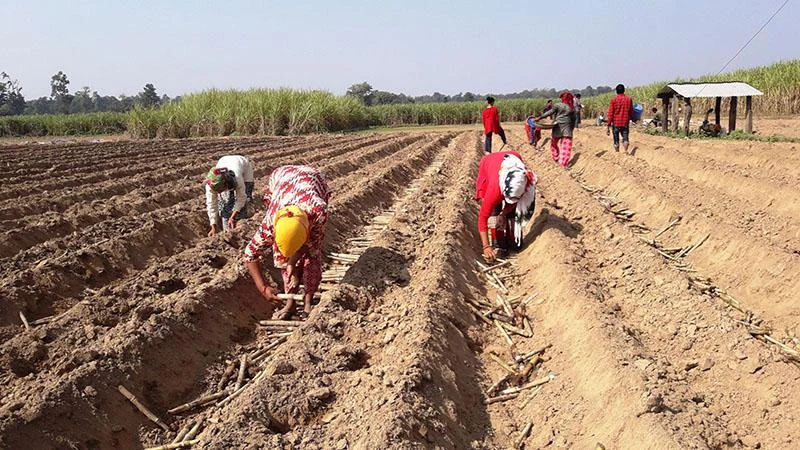
Planting sugarcane using stem cuttings.
7. Factors to consider when preparing a planting site
- Type of planting material.
- Soil type.
- Soil moisture.
- Land slope.
- Availability of water.
- Crop requirements.
- Presence of weeds and stones.
- Availability of suitable tools.
8. Importance of proper crop establishment
- It promotes successful germination.
- It supports healthy root development.
- It improves crop growth.
- It promotes uniform crop establishment.
- It makes subsequent crop management easier.
- It improves the chances of obtaining good yields.
- It helps reduce crop losses.
9. Practical activity: Preparing suitable soil tilth
Activity: Preparing different types of tilth
Materials:
- Small-sized seeds.
- Medium-sized seeds.
- Large planting materials.
- Jembe.
- Spade.
- Soil samples.
Procedure:
- Observe the different planting materials provided.
- Group the materials according to their sizes.
- Identify the appropriate tilth for each group.
- Prepare soil samples with different levels of tilth.
- Match each planting material with the appropriate tilth.
- Establish a selected crop using the prepared soil.
- Observe the crop during germination and growth.
10. Key inquiry question
How does planting material determine planting site preparation?
Planting materials differ in size and structure. Small seeds require fine tilth, medium seeds require medium tilth, while large planting materials such as tubers, suckers and cuttings require coarse tilth.
11. Revision questions and answers
Q1. What is crop establishment?
It is the process of preparing a planting site and planting selected materials to start growing crops.
Q2. Define soil tilth.
It is the physical condition of soil after preparation for planting.
Q3. Name three types of soil tilth.
Fine tilth, medium tilth and coarse tilth.
Q4. Which type of tilth is suitable for carrots?
Fine tilth.
Q5. Which type of tilth is suitable for maize?
Medium tilth.
Q6. Which type of tilth is suitable for banana suckers?
Coarse tilth.
Q7. Give four examples of planting materials.
Seeds, tubers, suckers and stem cuttings.
Q8. State four activities involved in preparing a planting site.
Clearing, primary cultivation, breaking soil clods and making planting holes.