
1. Introduction
Animals provide several products that are useful to people.
These products are used as food, medicine, raw materials and sources of income.
Examples of animal products include:
- Milk.
- Meat.
- Eggs.
- Honey.
- Wool.
- Hides and skins.
Animal products require proper handling and preparation before they can be consumed, stored or sold.
This sub-strand focuses on preparing two animal products:
- Eggs.
- Honey.
The curriculum emphasizes sorting, grading and packing eggs, as well as crushing, straining and packing honey.
PART A: PREPARING EGGS
2. Meaning of eggs
An egg is a reproductive structure produced by female birds and some other animals.
In poultry production, chicken eggs are commonly used as food.
Eggs are important because they contain:
- Proteins.
- Fats.
- Vitamins.
- Minerals.
- Water.
They are used to prepare different foods.
Examples include:
- Boiled eggs.
- Fried eggs.
- Scrambled eggs.
- Egg sandwiches.
- Cakes.
- Pancakes.
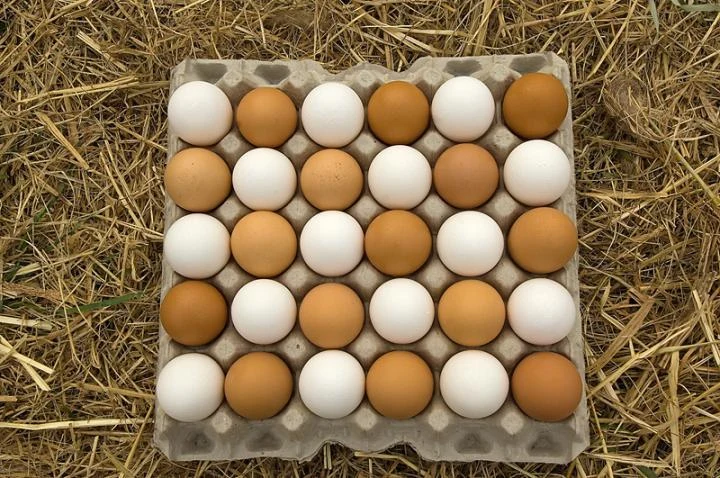
Fresh chicken eggs ready for sorting and preparation.
3. Parts of an egg
A chicken egg has several important parts.
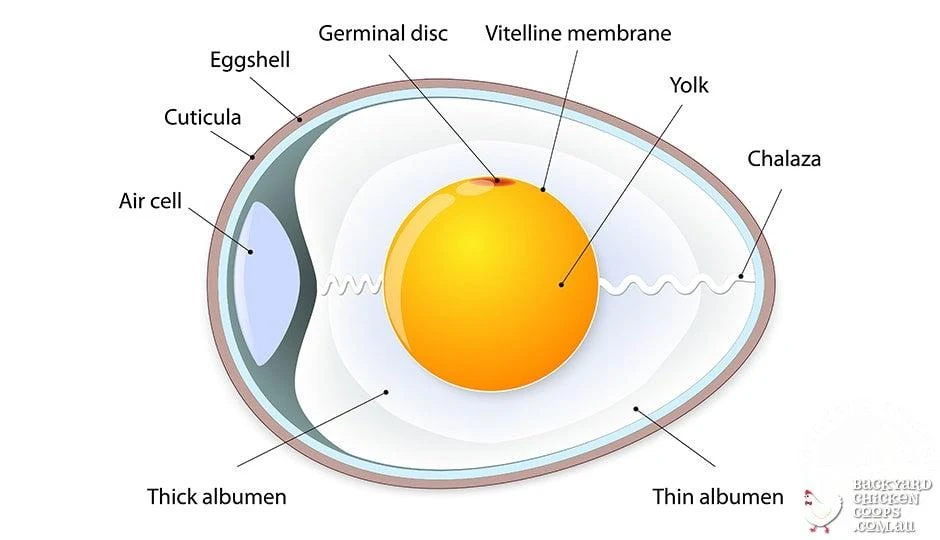
Internal structure of a chicken egg.
A. Eggshell
The eggshell is the hard outer covering of an egg.
Functions:
- Protects the internal contents.
- Prevents physical damage.
- Provides a protective barrier against contamination.
B. Egg white (albumen)
Albumen is the clear liquid surrounding the yolk.
Functions:
- Provides protein.
- Cushions the yolk.
- Supplies water to the developing embryo in a fertilized egg.
C. Egg yolk
The yolk is the yellow or orange central part of the egg.
It contains:
- Fats.
- Proteins.
- Vitamins.
- Minerals.
It provides nutrients for the developing embryo in a fertilized egg.
D. Air cell
The air cell is a small space found at the broad end of an egg.
It forms as the egg cools after being laid.
E. Chalaza
The chalaza consists of twisted strands of albumen that help hold the yolk in position.
4. Methods of preparing eggs for various purposes
The main methods covered in this section are:
- Sorting.
- Grading.
- Packing.
5. Sorting eggs
Sorting is the process of separating eggs according to their condition and quality.
It involves identifying eggs that are suitable for handling, storage and sale and separating those that are damaged or unsuitable.
Characteristics of eggs that should be separated
- Cracked eggs.
- Broken eggs.
- Leaking eggs.
- Eggs with damaged shells.
- Heavily contaminated eggs.
- Eggs showing signs of spoilage.
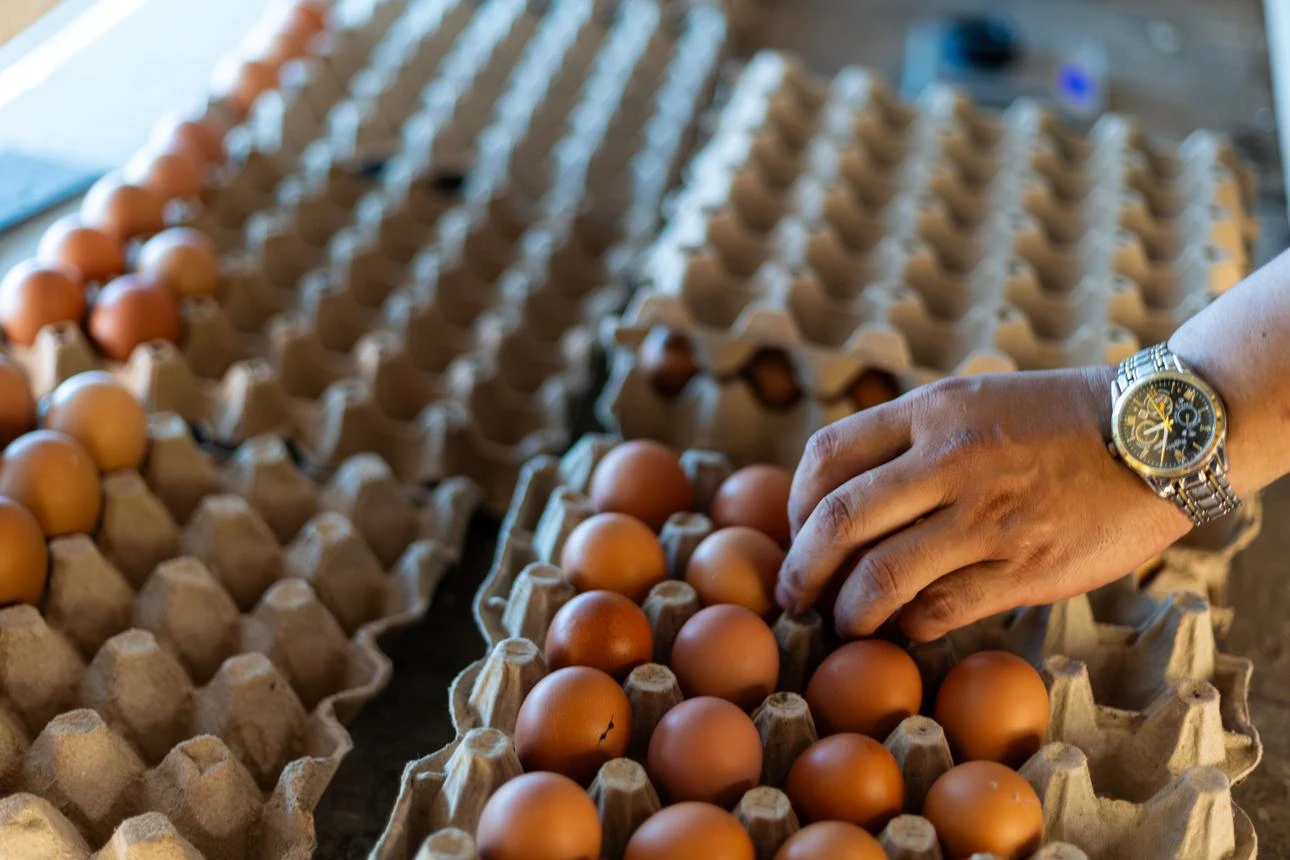
Sorting eggs according to their condition.
Procedure for sorting eggs
- Collect eggs carefully from the poultry house.
- Place them in a clean collection container.
- Inspect each egg for visible damage.
- Identify cracked or broken eggs.
- Separate eggs that are unsuitable.
- Keep suitable eggs in clean trays.
- Handle the eggs carefully to avoid breakage.
Importance of sorting eggs
- It removes damaged eggs.
- It improves product quality.
- It makes grading easier.
- It reduces the risk of contamination.
- It improves presentation.
- It helps protect consumers.
6. Grading eggs
Grading is the process of classifying eggs according to their size, weight and quality.
Eggs may be classified into different size categories.
Examples include:
- Small.
- Medium.
- Large.
- Extra-large.
The exact weight ranges depend on the applicable grading standards.
Egg quality can also be assessed by examining the shell and internal contents.
Methods of grading eggs
A. Grading by size
Eggs are weighed and grouped according to their weight.
B. Grading by shell condition
Eggs are inspected to identify cracked, rough or damaged shells.
C. Grading by internal quality
Eggs may be examined using a method called candling.
Meaning of candling
Candling is the process of examining the internal quality of an egg by shining a bright light through its shell.
The light helps reveal:
- Internal defects.
- Blood spots.
- Unusual contents.
- Air cell size.
- Some shell defects.
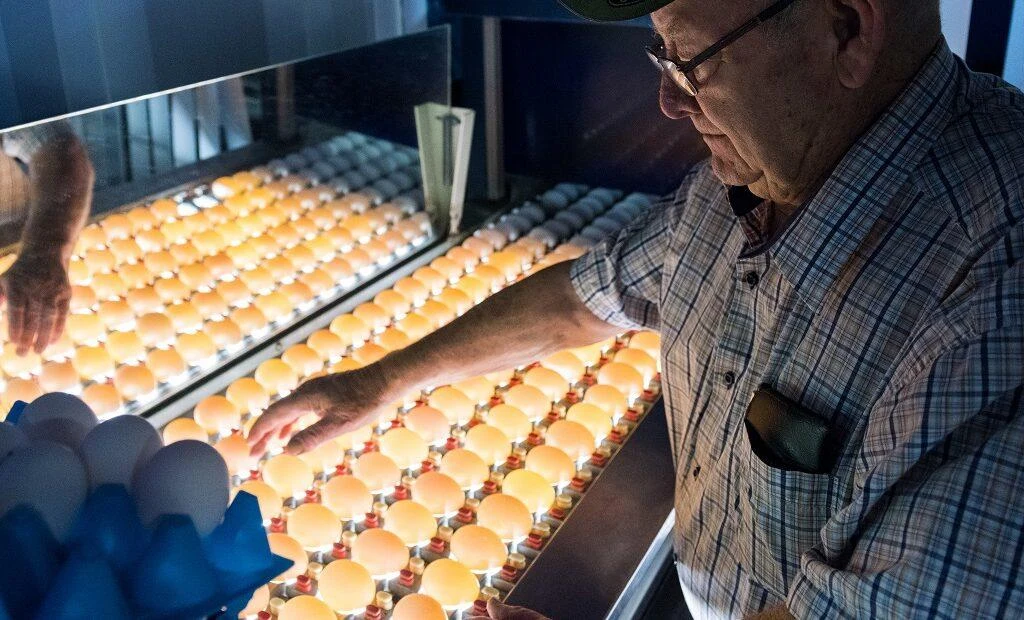
Candling eggs to examine their internal quality.
Procedure for grading eggs
- Sort the eggs according to their condition.
- Inspect the shells.
- Weigh the eggs where weighing equipment is available.
- Group eggs according to size.
- Use candling where appropriate.
- Remove unsuitable eggs.
- Place graded eggs in suitable trays.
Importance of grading eggs
- It ensures uniformity in egg sizes.
- It helps determine market value.
- It improves product presentation.
- It makes packaging easier.
- It helps buyers select their preferred sizes.
- It supports quality control.
7. Packing eggs
Packing is the process of placing eggs in suitable containers to protect them during storage, transportation and marketing.
Eggs are fragile and can easily break when mishandled.
Common egg packaging materials include:
- Egg trays.
- Cardboard cartons.
- Moulded pulp containers.
- Suitable reusable egg carriers.
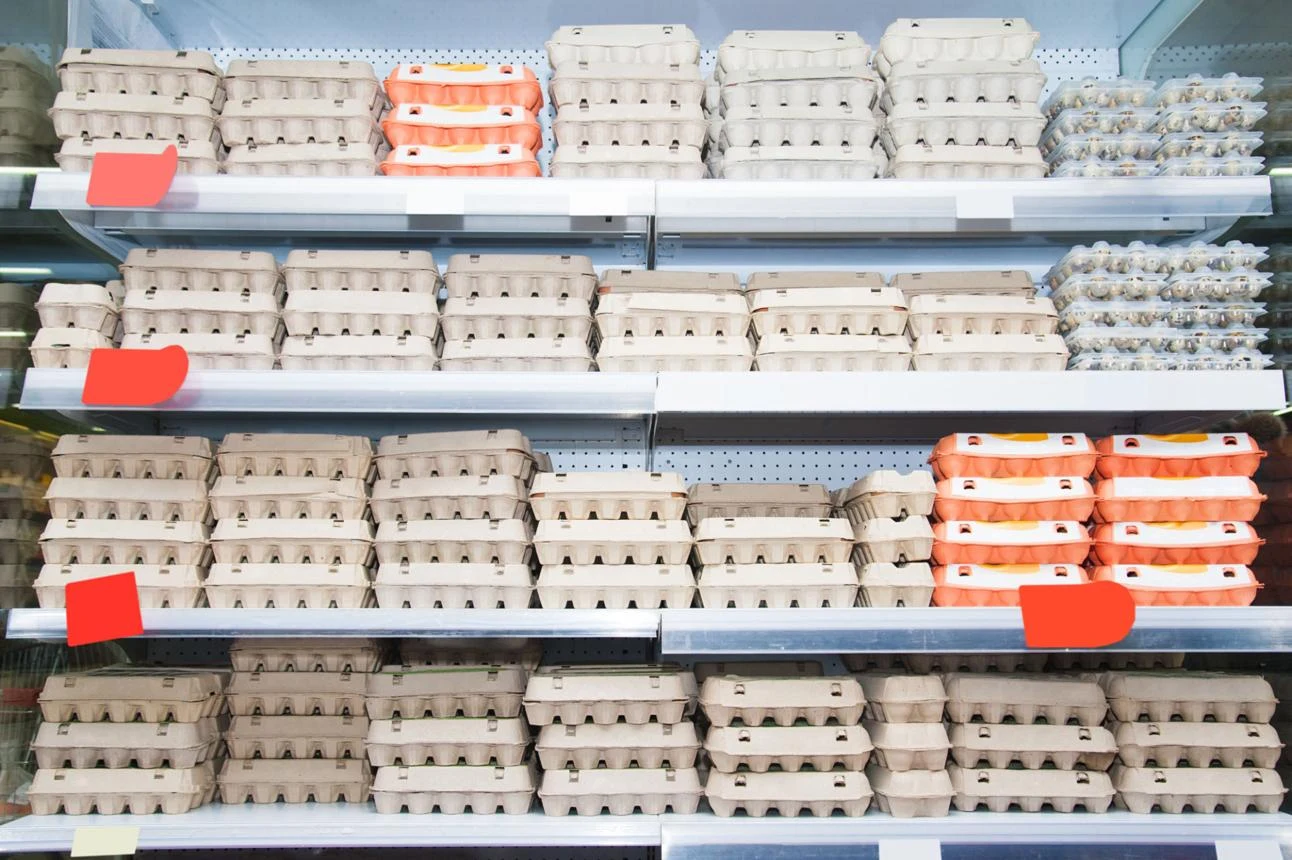
Eggs packed in protective egg trays.
Procedure for packing eggs
- Prepare clean and dry egg trays.
- Inspect the trays for damage.
- Arrange the eggs carefully.
- Place eggs with their pointed ends facing down where the packaging allows.
- Avoid overcrowding the trays.
- Ensure that the eggs are secure.
- Close the packaging where applicable.
- Label the packages where required.
- Store them under suitable conditions.
Importance of proper egg packing
- It prevents breakage.
- It protects eggs from dirt.
- It makes transportation easier.
- It improves product appearance.
- It facilitates storage.
- It makes handling easier.
8. Proper storage of eggs
Eggs should be stored under suitable conditions to maintain their quality and safety.
Important practices include:
- Store eggs in clean containers.
- Keep them away from strong smells.
- Protect them from direct sunlight.
- Avoid sudden temperature changes.
- Use appropriate refrigeration where available.
- Do not store cracked or leaking eggs with good eggs.
- Observe appropriate food safety guidance.
Important: Egg handling and washing should follow suitable food safety procedures. Do not casually soak eggs or use dirty water to clean them.
9. Differences between sorting, grading and packing
|
Sorting |
Grading |
Packing |
|---|---|---|
|
Separating eggs according to their condition. |
Classifying eggs according to size and quality. |
Placing eggs in suitable containers. |
|
Removes unsuitable eggs. |
Groups similar-quality eggs. |
Protects eggs during handling. |
|
Focuses on identifying damaged eggs. |
Focuses on classification. |
Focuses on protection and presentation. |
PART B: PREPARING HONEY
10. Meaning of honey
Honey is a natural sweet substance produced by honeybees from nectar collected from flowers and processed by the bees.
Bees store honey in wax structures called honeycombs.
Honey is an important animal product used for:
- Human consumption.
- Food preparation.
- Baking.
- Sweetening beverages.
- Commercial purposes.
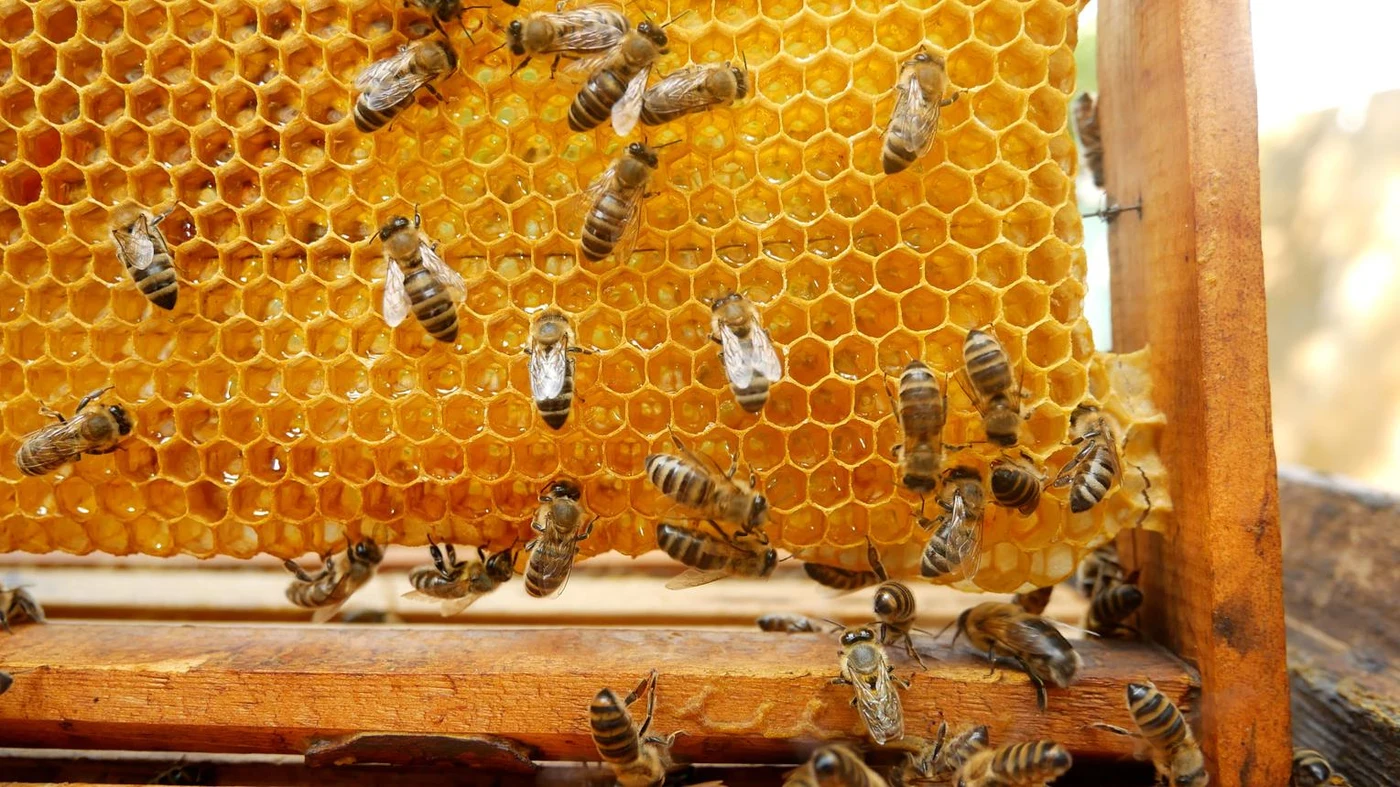
Honey stored in the honeycomb by honeybees.
11. Honey harvesting
Honey harvesting is the process of collecting mature honey from beehives.
It should be carried out carefully to avoid harming bees and contaminating the honey.
Honey is commonly collected from mature honeycombs.
Equipment used during honey harvesting
- Bee suit.
- Protective gloves.
- Bee smoker.
- Hive tool.
- Clean collection container.
- Suitable honey extraction equipment.
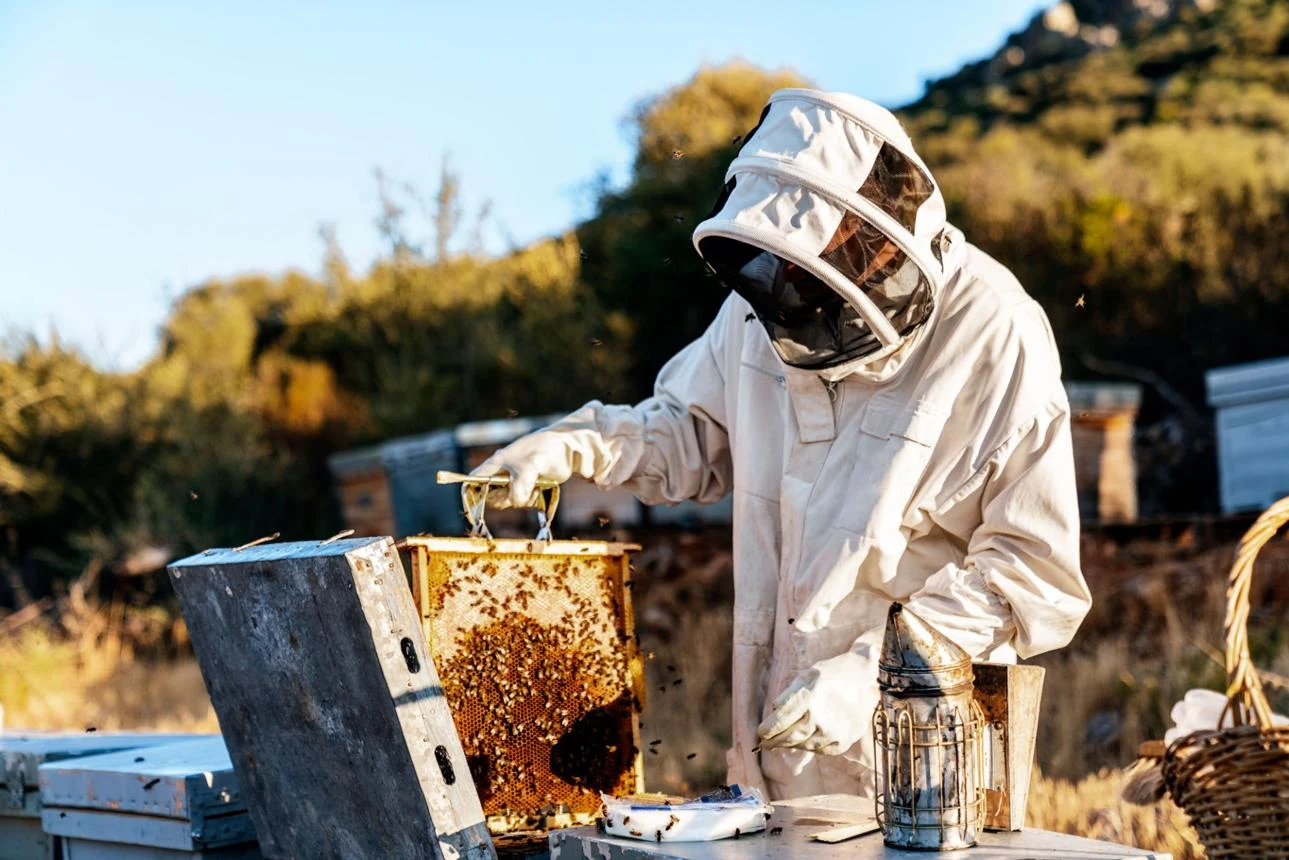
A beekeeper harvesting honey from a beehive.
Safety precautions during honey harvesting
- Wear appropriate protective clothing.
- Work under the guidance of an experienced beekeeper.
- Avoid disturbing bees unnecessarily.
- Use appropriate harvesting tools.
- Keep harvested honey away from dirt and insects.
- Avoid harvesting from unhealthy or contaminated colonies.
12. Methods of preparing honey
The KICD curriculum identifies crushing and straining as the method learners should study.
A. Crushing method
Crushing is the process of breaking honeycombs to release the honey stored inside them.
Honeycombs contain wax cells filled with honey.
Procedure
- Obtain mature honeycombs under proper supervision.
- Place the honeycombs in a clean container.
- Remove unwanted materials carefully.
- Break or crush the honeycombs using a suitable clean tool.
- Allow the honey to flow out.
- Transfer the crushed material to the straining stage.
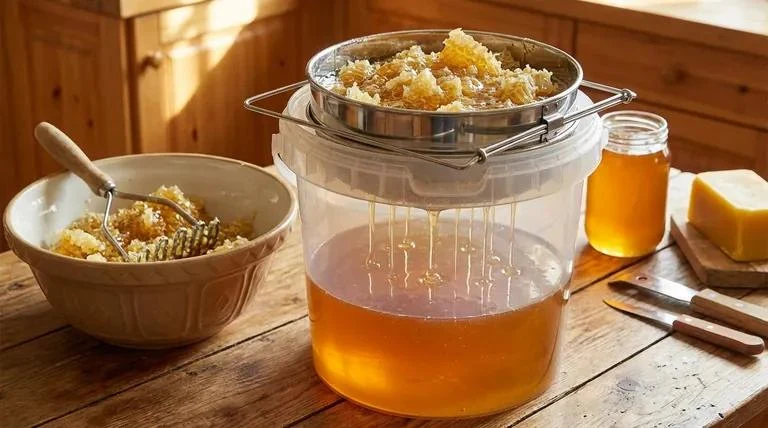
Crushing honeycombs to release stored honey.
B. Straining method
Straining is the process of passing crushed honeycombs through a suitable filter to separate liquid honey from wax particles and other unwanted materials.
Materials required include:
- Clean honeycomb.
- Straining cloth or suitable food-grade sieve.
- Clean collection bowl.
- Clean container.
- Spoon or suitable stirring tool.
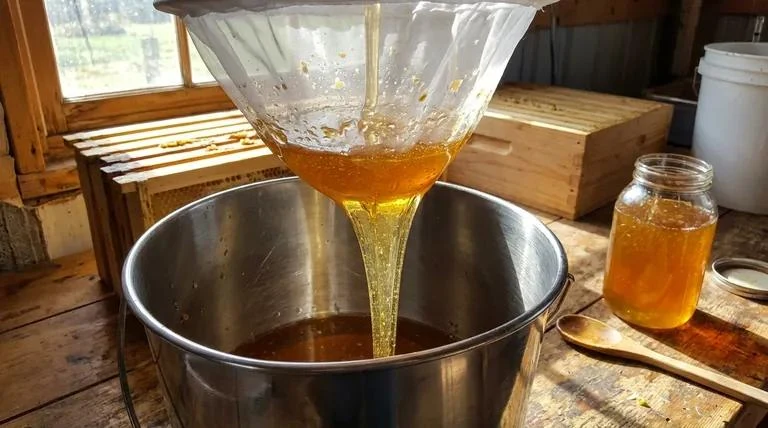
Straining honey to remove wax and other unwanted particles.
Procedure for straining honey
- Prepare a clean and dry collection container.
- Place a suitable straining cloth or sieve over the container.
- Put the crushed honeycomb onto the straining material.
- Allow the honey to pass through the strainer.
- Collect the honey in the container below.
- Remove the remaining wax and other unwanted materials.
- Strain again if necessary.
- Allow the honey to settle.
- Transfer the clean honey into suitable containers.
C. Packing honey
Packing is the process of placing processed honey into suitable containers for storage, transportation and sale.
Common packaging materials include:
- Glass jars.
- Food-grade plastic containers.
- Suitable food-grade bottles.
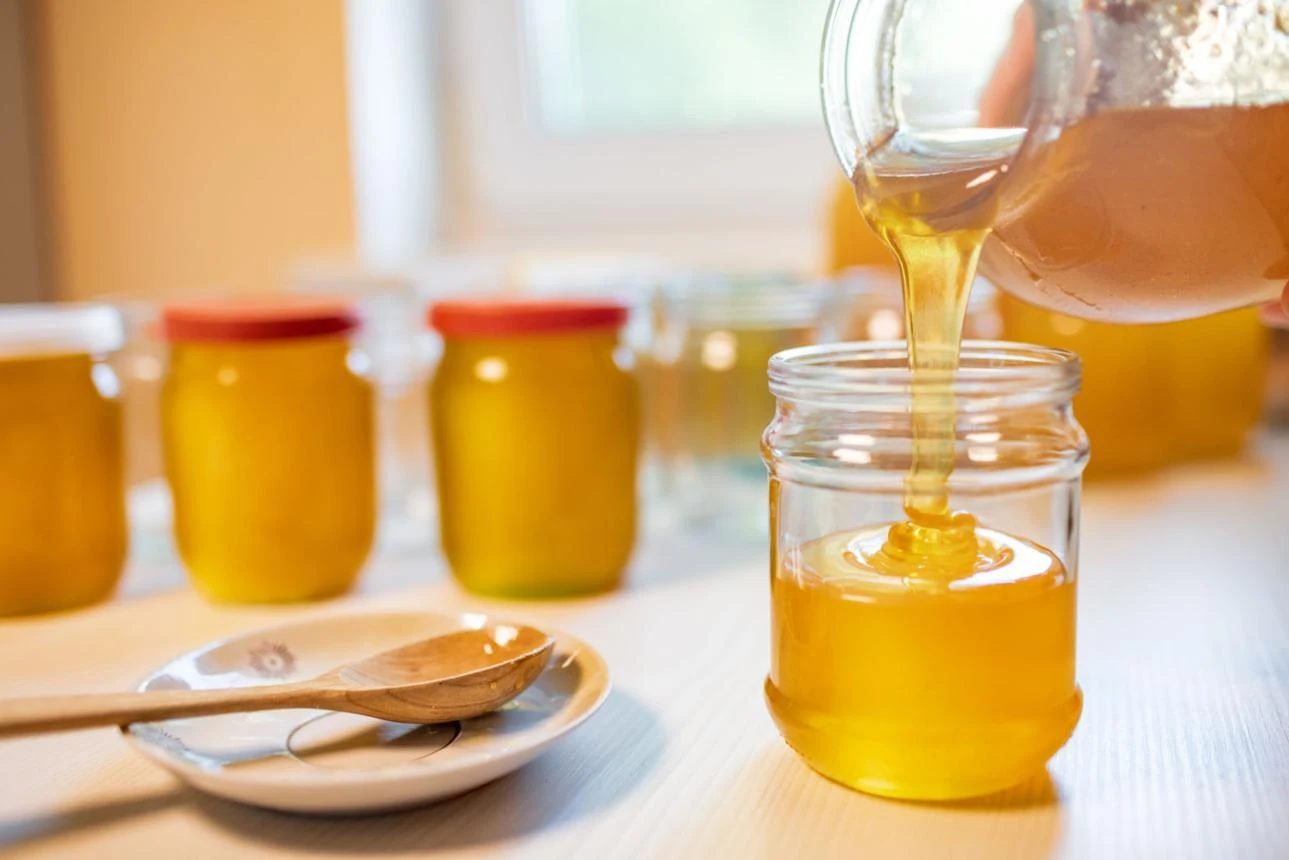
Processed honey packed in clean glass jars.
Procedure for packing honey
- Obtain clean and dry containers.
- Inspect the containers for cleanliness and damage.
- Pour the strained honey carefully into the containers.
- Avoid spilling honey around the container openings.
- Close the containers tightly.
- Label the containers where required.
- Store the honey in a clean, cool and dry place.
13. Equipment used in honey processing
|
Equipment |
Function |
|---|---|
|
Honeycomb |
Holds the honey produced by bees |
|
Knife or suitable comb tool |
Helps open or cut honeycomb |
|
Crushing container |
Holds honeycombs during crushing |
|
Honey press |
Extracts honey by pressing |
|
Straining cloth |
Separates honey from wax particles |
|
Sieve |
Removes unwanted solid materials |
|
Collection bowl |
Receives strained honey |
|
Storage jars |
Hold processed honey |
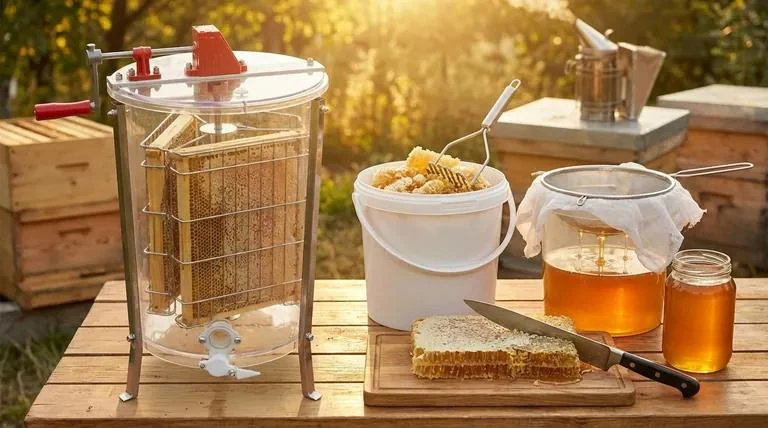
Equipment used during honey processing.
For additional labelled illustrations, use the African Organic Agriculture honey-processing equipment guide.
14. Importance of preparing honey properly
- It removes unwanted wax particles.
- It improves the appearance of honey.
- It promotes cleanliness.
- It makes honey easier to package.
- It improves product presentation.
- It facilitates storage and transportation.
- It supports the marketing of honey.
15. Precautions during honey processing
- Use clean and dry equipment.
- Avoid introducing water into honey.
- Protect honey from dust and insects.
- Avoid excessive heating.
- Use suitable food-grade containers.
- Keep the processing area clean.
- Ensure that the straining material is clean.
- Seal containers properly.
16. Comparison between preparing eggs and preparing honey
|
Preparing eggs |
Preparing honey |
|---|---|
|
Eggs are sorted. |
Honeycombs are collected and crushed. |
|
Eggs are graded according to size and quality. |
Honey is strained to remove unwanted particles. |
|
Eggs are packed in egg trays or cartons. |
Honey is packed in jars or suitable containers. |
|
Eggs require careful handling to prevent breakage. |
Honey requires clean equipment to prevent contamination. |
17. Practical activity: Preparing animal products
Activity A: Preparing eggs
Materials:
- Fresh eggs.
- Egg trays.
- Weighing scale where available.
- Clean collection containers.
Procedure:
- Collect the eggs carefully.
- Sort the eggs according to their condition.
- Grade them according to size where possible.
- Arrange the eggs in clean trays.
- Inspect the completed packaging.
Activity B: Preparing honey
Materials:
- Clean honeycomb samples.
- Suitable crushing container.
- Clean straining cloth.
- Collection bowl.
- Clean storage jars.
Procedure:
- Observe the honeycomb.
- Crush the honeycomb using suitable equipment.
- Place the crushed honeycomb on a clean strainer.
- Allow honey to pass through.
- Collect the strained honey.
- Transfer it into clean containers.
- Discuss the importance of proper honey preparation.
These activities should be conducted under appropriate supervision. Actual honey harvesting requires experienced beekeeping assistance.
18. Key inquiry question
How can we prepare animal products?
Animal products can be prepared through appropriate handling and processing methods. Eggs are sorted, graded and packed, while honey is extracted through crushing and straining before being packed in suitable containers.
19. Revision questions and answers
Q1. Name two animal products studied in this sub-strand.
Eggs and honey.
Q2. What is sorting?
Sorting is separating eggs according to their condition and quality.
Q3. Define grading.
Grading is classifying eggs according to size, weight and quality.
Q4. What is candling?
Candling is examining the internal quality of an egg using a bright light.
Q5. Why are eggs packed in egg trays?
To protect them from breakage and make handling and transportation easier.
Q6. What is honey?
Honey is a natural sweet substance produced by honeybees from nectar.
Q7. Define crushing in honey preparation.
It is breaking honeycombs to release the honey stored inside them.
Q8. What is straining?
It is passing crushed honey through a suitable filter to remove wax and unwanted particles.
Q9. Give four pieces of equipment used in honey processing.
A crushing container, honey press, straining cloth and collection bowl.
Q10. State four precautions when preparing honey.
- Use clean equipment.
- Avoid introducing water.
- Protect honey from insects.
- Use clean, food-grade containers.
|
Term |
Meaning |
|---|---|
|
Soil pollution |
Contamination of soil by harmful substances |
|
Soil pollutants |
Substances that contaminate soil |
|
Surface run-off |
Rainwater flowing over the ground |
|
Water retention ditch |
A channel constructed to collect surface run-off |
|
Water retention pit |
A depression constructed to collect water |
|
Food nutrient conservation |
Preventing unnecessary nutrient loss |
|
Fine tilth |
Finely broken soil suitable for small seeds |
|
Medium tilth |
Moderately broken soil suitable for medium seeds |
|
Coarse tilth |
Relatively coarse soil suitable for large planting materials |
|
Crop establishment |
Preparing a planting site and planting selected materials |
|
Gapping |
Replacing missing plants |
|
Thinning |
Removing excess seedlings |
|
Weeding |
Removing unwanted plants |
|
Earthing-up |
Drawing soil around plant bases |
|
Sorting |
Separating eggs according to their condition |
|
Grading |
Classifying eggs according to size and quality |
|
Candling |
Examining eggs using light |
|
Crushing |
Breaking honeycombs to release honey |
|
Straining |
Filtering honey to remove unwanted particles |
END-OF-NOTES ASSESSMENT QUESTIONS
- Explain five causes of soil pollution in gardening.
- Describe six ways of controlling soil pollution in the home environment.
- Explain how surface run-off can be conserved for gardening.
- Differentiate between water retention ditches and water retention pits.
- Describe the procedure for constructing a water retention pit.
- Explain five ways of conserving vitamins and minerals in vegetables.
- Describe how to steam vegetables while conserving nutrients.
- Explain six ways trees contribute to environmental conservation.
- Describe three methods of growing trees.
- Explain the importance of caring for planted seedlings.
- Differentiate between fine, medium and coarse tilth.
- Explain how planting materials determine the appropriate soil tilth.
- Describe four crop management practices.
- Differentiate between gapping and thinning.
- Explain the importance of physical weeding.
- Describe how earthing-up is carried out.
- Explain the procedures involved in sorting, grading and packing eggs.
- Describe the process of crushing and straining honey.
Learning area: Agriculture
Curriculum reference: KICD Grade 7 Agriculture Rationalised Curriculum Design, 2024.