
1. Introduction to laundry
Laundry refers to the process of washing, drying and finishing clothes and other washable household articles.
Clothes become dirty through regular use. They collect sweat, dust, oil, food stains and other substances.
Proper laundering removes dirt, reduces unpleasant smells and maintains personal hygiene.
Different fabrics require different washing methods.
This sub-strand focuses on laundering loose-coloured articles.
Loose-coloured articles are clothes or fabrics whose dyes may come out during washing and stain other materials.
Examples include:
- New brightly coloured cotton clothes.
- Some coloured shirts.
- Some coloured dresses.
- Brightly coloured skirts.
- Some coloured bed sheets.
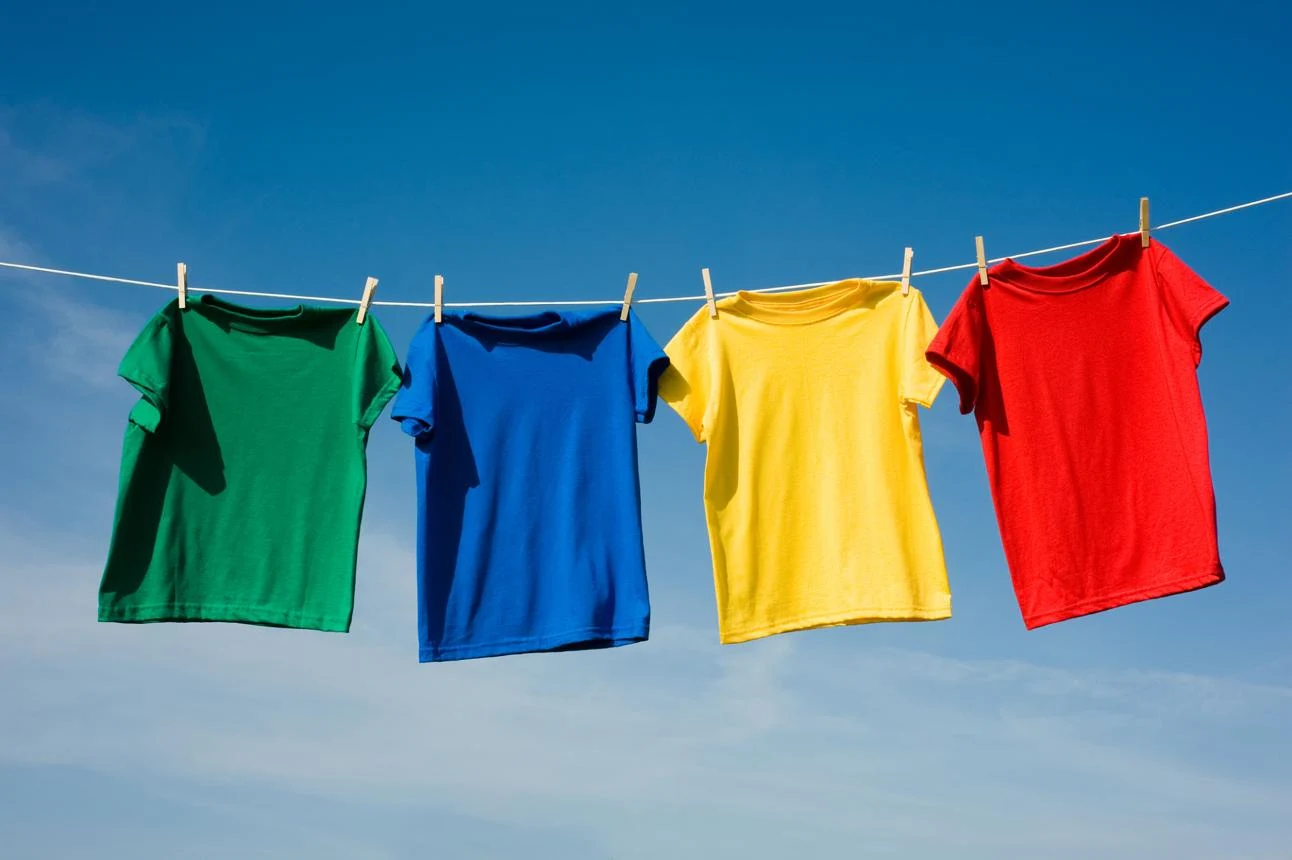
Examples of brightly coloured articles requiring careful laundering.
2. Meaning of laundering loose-coloured articles
Laundering loose-coloured articles is the process of washing and finishing coloured clothes using appropriate methods to prevent excessive colour loss and colour transfer.
These articles require special care because their colours may fade or run during washing.
3. Reasons for laundering loose-coloured articles carefully
- To prevent excessive loss of colour.
- To prevent colour transfer to other clothes.
- To maintain the original appearance of the fabric.
- To prevent damage to fabric fibres.
- To prolong the useful life of garments.
- To maintain personal hygiene.
- To preserve the attractiveness of clothing.
4. Materials and equipment used in laundering
Materials
- Water.
- Mild soap or detergent.
- Salt where recommended by the relevant fabric-care procedure.
- Clean rinsing water.
Equipment
- Washing basin.
- Washing line.
- Clothes pegs.
- Drying rack.
- Iron box.
- Ironing board.
- Clean towel where necessary.

Materials and equipment used when laundering clothes.
5. Stages involved in laundering loose-coloured articles
The main stages are:
- Sorting.
- Washing by kneading and squeezing.
- Rinsing.
- Drying.
- Finishing.
These stages are important because they help maintain the appearance and cleanliness of loose-coloured articles.
A. Sorting
Sorting is separating clothes according to their colour, fabric type and level of dirtiness before washing.
Loose-coloured articles should be separated from white and fast-coloured clothes.
Procedure for sorting
- Collect the clothes to be washed.
- Examine their colours.
- Identify loose-coloured articles.
- Separate them from white clothes.
- Separate them from fast-coloured clothes.
- Separate heavily soiled clothes where necessary.
- Check the care labels before washing.

Sorting clothes before laundering.
Importance of sorting
- Prevents colour transfer.
- Protects white clothes from staining.
- Helps select the correct washing method.
- Prevents damage to delicate fabrics.
- Makes laundry work easier.
B. Washing by kneading and squeezing
Kneading and squeezing is a gentle method of washing clothes by repeatedly pressing and squeezing the fabric in soapy water.
It avoids excessive rubbing and twisting, which may damage delicate or loose-coloured fabrics.
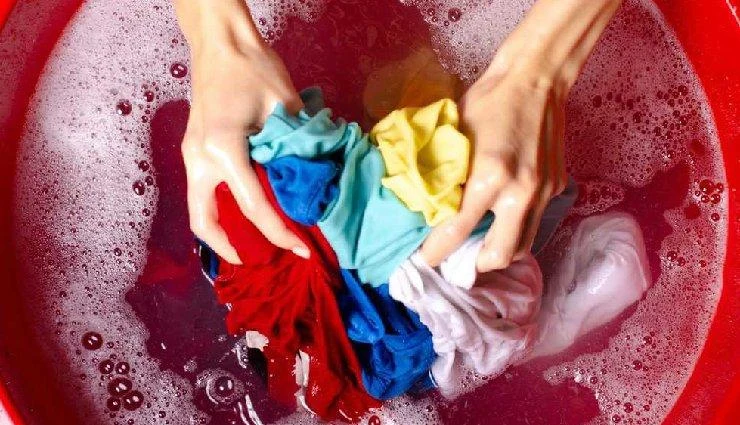
Washing clothes using the kneading and squeezing method.
Procedure
- Prepare a clean washing basin.
- Add a suitable amount of water.
- Dissolve mild soap or detergent in the water.
- Place the loose-coloured article in the washing water.
- Apply gentle pressure using both hands.
- Knead the fabric repeatedly.
- Squeeze the article gently to loosen dirt.
- Pay attention to stained areas.
- Continue until the article is clean.
- Remove the article from the washing water.
Important precautions
- Avoid excessive rubbing.
- Do not twist the fabric forcefully.
- Use mild detergent.
- Avoid unnecessary soaking.
- Use water at a suitable temperature.
- Wash loose-coloured articles separately.
C. Rinsing
Rinsing is removing soap, detergent and loosened dirt from clothes using clean water.
It ensures that no unnecessary soap remains in the fabric.
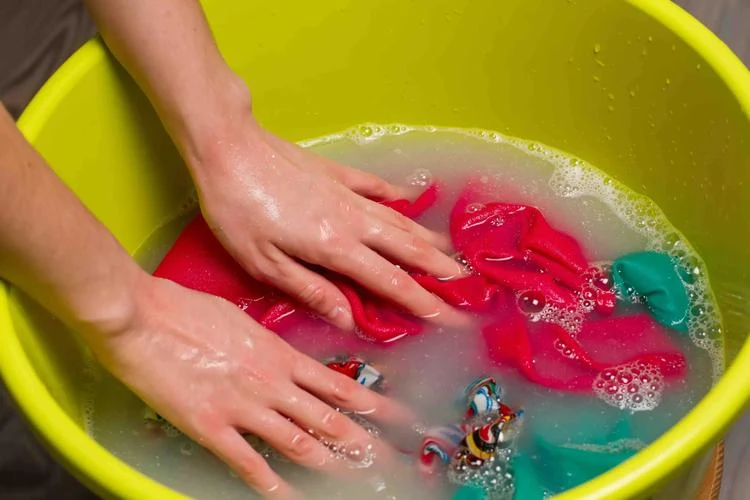
Rinsing washed clothes to remove soap and dirt.
Procedure
- Prepare clean rinsing water.
- Place the washed article in the water.
- Move the article gently through the water.
- Squeeze gently to remove soap.
- Replace the water if it becomes dirty.
- Repeat until the water is reasonably clear and the article is free from soap.
- Remove the article carefully.
Importance of rinsing
- Removes detergent.
- Removes loosened dirt.
- Prevents soap from remaining in the fabric.
- Helps maintain fabric cleanliness.
- Prepares the article for drying.
D. Drying
Drying is removing moisture from washed clothes until they become sufficiently dry for finishing and storage.
Loose-coloured articles should be dried carefully to prevent fading.
Procedure
- Remove the article from the rinsing water.
- Squeeze gently to remove excess water.
- Shake the article lightly to remove wrinkles.
- Turn the article inside out.
- Hang it on a clean drying line.
- Use suitable clothes pegs.
- Dry it in a well-ventilated shaded area.
- Ensure the article dries completely.
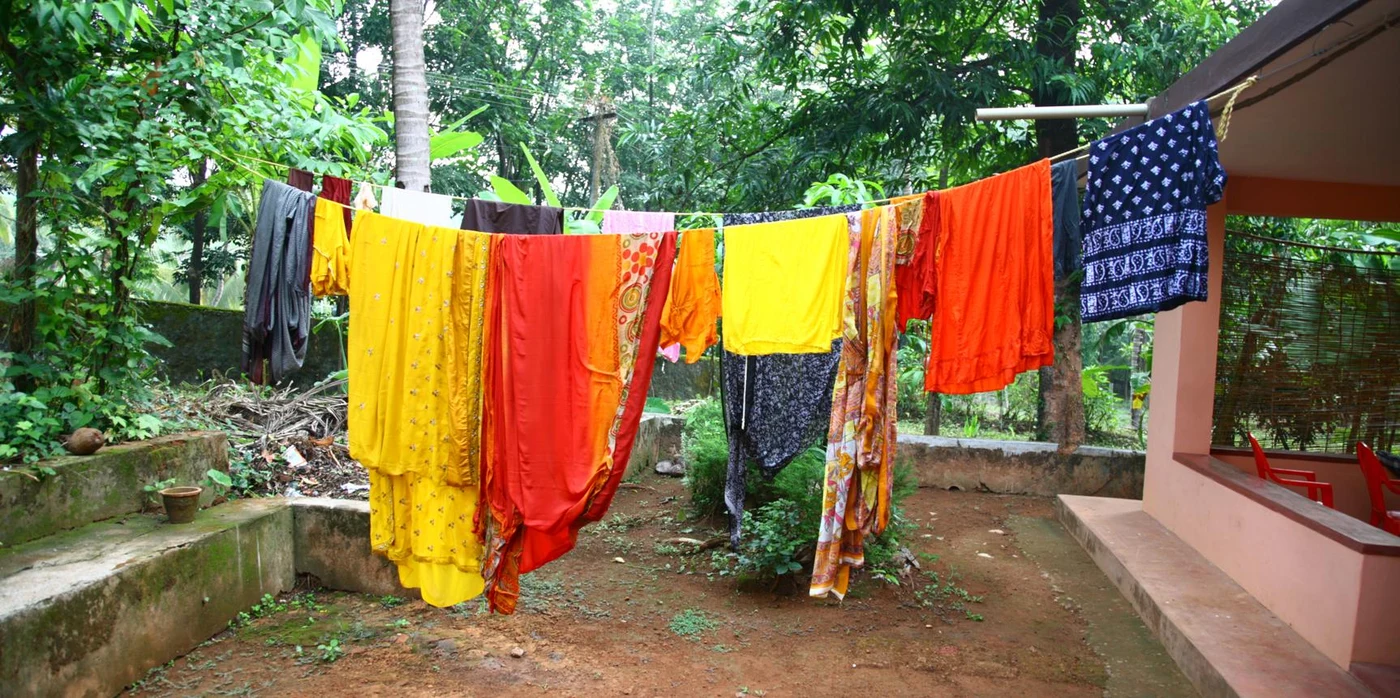
Drying loose-coloured clothes in a shaded area.
Importance of proper drying
- Prevents excessive fading.
- Maintains the appearance of clothes.
- Prevents unpleasant smells caused by dampness.
- Helps preserve fabric quality.
- Makes clothes ready for finishing.
Precautions during drying
- Avoid prolonged exposure to strong direct sunlight.
- Do not hang wet coloured articles where their colours may stain other clothes.
- Use clean drying lines.
- Allow enough space between garments.
- Avoid leaving clothes damp for long periods.
E. Finishing
Finishing refers to the final activities carried out to make washed clothes neat and ready for use or storage.
It may involve ironing, folding, hanging and arranging garments.

Ironing clothes during the finishing stage.
Procedure for finishing
- Check that the article is sufficiently dry.
- Inspect it for remaining stains or damage.
- Set the iron to a suitable temperature for the fabric.
- Turn the garment inside out where appropriate.
- Iron carefully if required.
- Allow the garment to cool.
- Fold or hang it neatly.
- Store it in a clean and dry place.
Importance of finishing
- Removes wrinkles.
- Improves the appearance of clothes.
- Makes clothes ready for wearing.
- Helps keep clothes organized.
- Promotes proper clothing care.
6. Summary of the laundry process
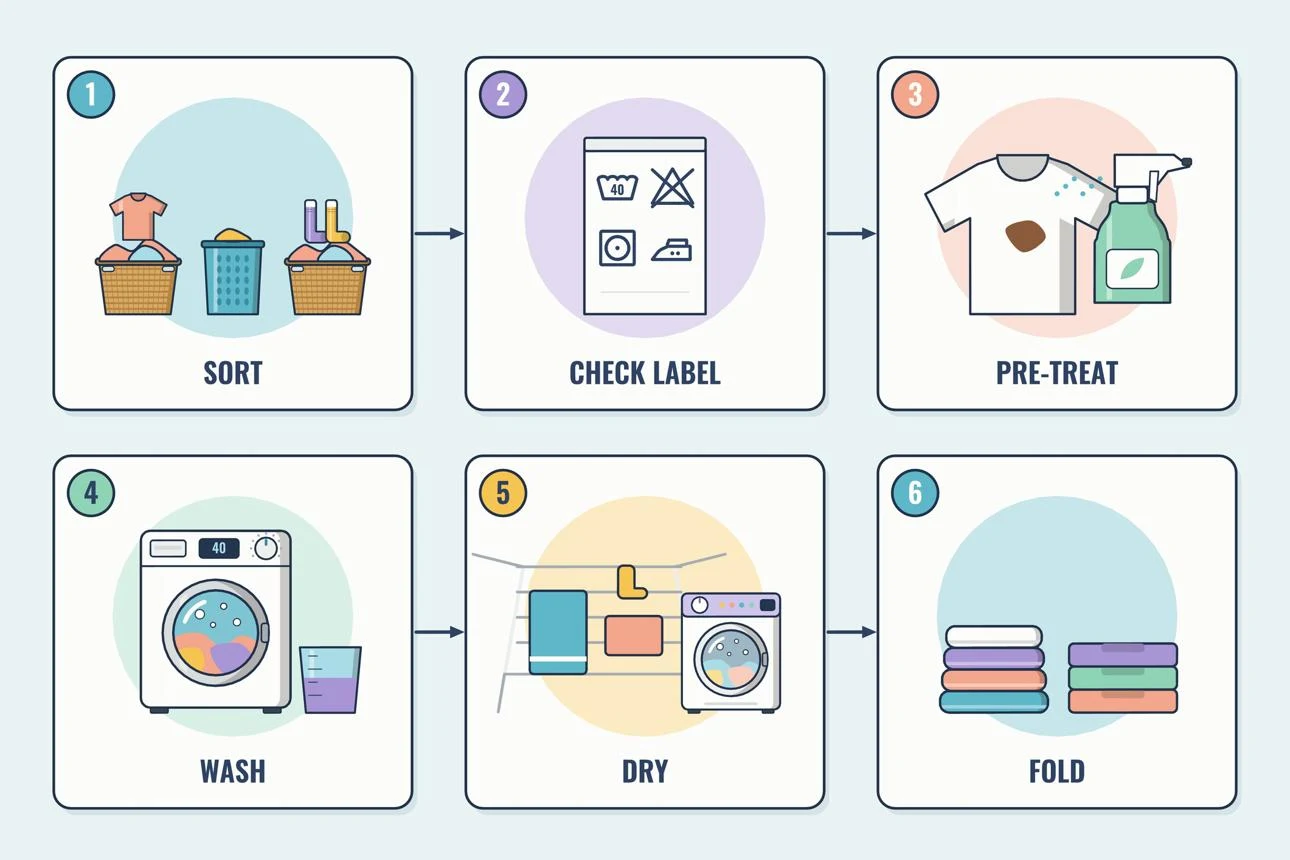
Stages involved in laundering loose-coloured articles.
|
Stage |
Main activity |
|---|---|
|
Sorting |
Separating clothes according to colour and fabric |
|
Washing |
Kneading and squeezing gently in soapy water |
|
Rinsing |
Removing soap and dirt using clean water |
|
Drying |
Removing moisture from the washed article |
|
Finishing |
Ironing, folding or hanging the article |
7. Common mistakes to avoid when laundering loose-coloured articles
- Washing loose-coloured articles together with white clothes.
- Using excessive detergent.
- Scrubbing the fabric too harshly.
- Using unsuitable water temperatures.
- Leaving clothes in water unnecessarily.
- Drying coloured garments for long periods in strong sunlight.
- Hanging wet clothes too close to other garments.
- Ironing at excessively high temperatures.
- Storing clothes before they are completely dry.
8. Practical activity: Laundering a loose-coloured article
Activity: Washing a loose-coloured garment
Materials:
- A loose-coloured garment.
- Washing basin.
- Mild detergent.
- Clean water.
- Clothesline.
- Clothes pegs.
- Iron box.
- Ironing board.
Procedure:
- Examine the garment.
- Identify whether it is loose-coloured.
- Separate it from other clothes.
- Prepare washing water with mild detergent.
- Wash by kneading and squeezing.
- Rinse using clean water.
- Squeeze gently to remove excess water.
- Turn the garment inside out.
- Hang it in a shaded, well-ventilated place.
- Allow it to dry completely.
- Iron at a suitable temperature if necessary.
- Fold or hang it neatly.
Safety precautions
- Handle hot water carefully.
- Use detergents according to instructions.
- Never mix cleaning chemicals.
- Keep irons away from water.
- Switch off the iron after use.
- Work under adult supervision when using electrical equipment.
9. Key inquiry question
How do you launder a loose-coloured article for hygienic purposes?
A loose-coloured article is laundered by sorting it separately, washing gently through kneading and squeezing, rinsing thoroughly, drying appropriately and finishing through ironing or folding.
10. Revision questions and answers
Q1. What is laundry?
Laundry is the process of washing, drying and finishing clothes and other washable household articles.
Q2. What are loose-coloured articles?
They are clothes or fabrics whose dyes may come out during washing and stain other materials.
Q3. State five stages of laundering loose-coloured articles.
- Sorting.
- Washing.
- Rinsing.
- Drying.
- Finishing.
Q4. What is kneading and squeezing?
It is a gentle washing method involving repeated pressing and squeezing of fabric in soapy water.
Q5. Why should loose-coloured clothes be sorted separately?
To prevent their colours from staining other garments.
Q6. State four precautions when washing loose-coloured articles.
- Use mild detergent.
- Avoid excessive rubbing.
- Avoid unnecessary soaking.
- Wash separately from white clothes.
Q7. Why should loose-coloured articles be dried in a shaded area?
To reduce colour fading caused by prolonged exposure to strong sunlight.
Q8. What is finishing in laundry?
It is the final stage involving activities such as ironing, folding and hanging clothes.
Q9. Why should clothes be completely dry before storage?
To prevent dampness, unpleasant smells and mould growth.
Q10. Name four items used when laundering clothes.
A basin, detergent, clothes pegs and an iron box.