
1. Introduction
The Bible is a collection of books written by different authors under the inspiration of God.
These books were written over many years and contain different messages about God's relationship with humanity.
The Bible is divided into two major sections:
- The Old Testament.
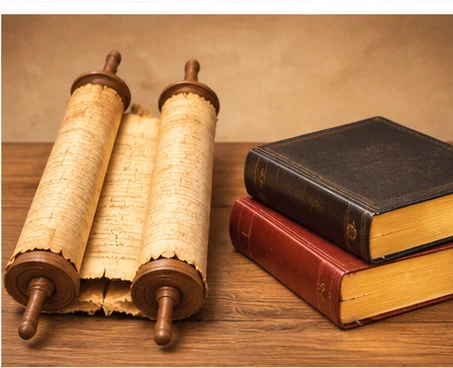
The Bible is a collection of sacred writings preserved in scrolls and books.
- The New Testament.
The two sections work together to communicate God's message and His plan for humanity.
2. Meaning of important terms
Old Testament: The first major division of the Bible, containing writings about God's relationship with His people before the ministry of Jesus Christ.
New Testament: The second major division of the Bible, containing writings about Jesus Christ, the early Church and Christian teachings.
Testament: A covenant or agreement.
Covenant: A solemn agreement or promise between God and human beings.
Gospel: The good news about Jesus Christ.
Epistle: A letter written to individuals or groups of believers.
Prophecy: A message communicated by God through a prophet.
3. The Old Testament
The Old Testament is the first division of the Bible.
In the commonly used Protestant Bible, it contains 39 books.
It records God's creation of the world, the history of Israel, laws, wisdom teachings and messages from prophets.
The Old Testament also contains promises about the coming of the Messiah.
4. Major categories of books in the Old Testament
The Old Testament is commonly divided into four major categories.
A. The Law (Pentateuch)
The Law consists of the first five books of the Bible.
They are also known as the Pentateuch.
The five books are:
- Genesis.
- Exodus.
- Leviticus.
- Numbers.
- Deuteronomy.
Genesis
Genesis describes creation, the early history of humanity and the lives of important biblical personalities such as Abraham, Isaac, Jacob and Joseph.
Important events include:
- Creation.
- The fall of humanity.
- Noah and the flood.
- The call of Abraham.
- The lives of Isaac and Jacob.
- Joseph's experiences in Egypt.
Exodus
Exodus describes the Israelites' suffering in Egypt and their deliverance under Moses.
It also explains the giving of the Ten Commandments.
Leviticus
Leviticus contains laws and instructions about worship, sacrifices, holiness and religious responsibilities.
Numbers
Numbers records the Israelites' journey through the wilderness and events that took place during their journey.
Deuteronomy
Deuteronomy contains Moses' final teachings and instructions to the Israelites before entering the Promised Land.
B. Historical books
These books describe the history of the Israelites and their relationship with God.
The twelve historical books are:
- Joshua.
- Judges.
- Ruth.
- 1 Samuel.
- 2 Samuel.
- 1 Kings.
- 2 Kings.
- 1 Chronicles.
- 2 Chronicles.
- Ezra.
- Nehemiah.
- Esther.
Main teachings found in the historical books
- The Israelites entered the Promised Land.
- God raised leaders to guide His people.
- Israel experienced periods of obedience and disobedience.
- The Israelites established a monarchy.
- Kings such as David and Solomon ruled Israel.
- The kingdom later experienced division.
- Some Israelites were taken into exile.
- Some Israelites eventually returned from exile.
C. Wisdom and poetic books
These books contain wisdom teachings, songs, prayers and reflections on human life.
The five books are:
- Job.
- Psalms.
- Proverbs.
- Ecclesiastes.
- Song of Solomon.
Job
Job discusses suffering, faithfulness and trust in God during difficult situations.
Psalms
Psalms contains songs, prayers, praises and expressions of faith.
Proverbs
Proverbs contains wise sayings that teach people how to live responsibly.
Ecclesiastes
Ecclesiastes reflects on human life, work, wisdom and the meaning of existence.
Song of Solomon
This book contains poetic expressions of love and affection.
D. Prophetic books
These books contain messages communicated by God through prophets.
The prophetic books are divided into major and minor prophets.
Major prophets
They are called major prophets because their books are generally longer.
They include:
- Isaiah.
- Jeremiah.
- Lamentations.
- Ezekiel.
- Daniel.
Minor prophets
They are called minor prophets because their books are generally shorter.
They include:
- Hosea.
- Joel.
- Amos.
- Obadiah.
- Jonah.
- Micah.
- Nahum.
- Habakkuk.
- Zephaniah.
- Haggai.
- Zechariah.
- Malachi.
Main teachings of the prophetic books
- Encouraging people to obey God.
- Warning against sin.
- Calling for justice and righteousness.
- Encouraging repentance.
- Promising restoration.
- Foretelling events related to the coming Messiah.
5. Summary of Old Testament divisions
|
Category |
Number of books |
|---|---|
|
Law |
5 |
|
Historical books |
12 |
|
Wisdom and poetry |
5 |
|
Prophetic books |
17 |
|
Total |
39 |
6. The New Testament
The New Testament is the second major division of the Bible.
It contains 27 books in the commonly used Protestant Bible.
It mainly explains the life and teachings of Jesus Christ, the growth of the early Church and instructions for Christian living.
7. Major categories of books in the New Testament
The New Testament can be grouped into four broad categories.
A. The Gospels
The Gospels are the first four books of the New Testament.
They describe the life, teachings, miracles, death and resurrection of Jesus Christ.
The four Gospels are:
- Matthew.
- Mark.
- Luke.
- John.
Matthew
Matthew presents Jesus as the promised Messiah and King.
It contains many teachings of Jesus, including the Sermon on the Mount.
Mark
Mark gives an account of the ministry, miracles, suffering and death of Jesus Christ.
Luke
Luke provides a detailed account of the life and ministry of Jesus, emphasising God's concern for all people.
John
John emphasises the identity of Jesus as the Son of God and encourages people to believe in Him.
B. Historical book
The historical book of the New Testament is:
- Acts of the Apostles.
Acts describes the growth of the early Church after the resurrection and ascension of Jesus Christ.
It records:
- The coming of the Holy Spirit at Pentecost.
- The preaching of Peter.
- The conversion of Saul.
- The missionary activities of Paul.
- The spread of Christianity to different regions.
C. Epistles or letters
Epistles are letters written to guide and encourage Christians.
They provide teachings about faith, worship, Christian behaviour and the organisation of the Church.
There are two main groups.
Pauline letters
These are letters traditionally attributed to the Apostle Paul.
They include:
- Romans.
- 1 Corinthians.
- 2 Corinthians.
- Galatians.
- Ephesians.
- Philippians.
- Colossians.
- 1 Thessalonians.
- 2 Thessalonians.
- 1 Timothy.
- 2 Timothy.
- Titus.
- Philemon.
General letters
These are letters addressed more broadly to Christian communities or believers.
They include:
- Hebrews.
- James.
- 1 Peter.
- 2 Peter.
- 1 John.
- 2 John.
- 3 John.
- Jude.
D. Prophetic book
The prophetic book of the New Testament is:
- Revelation.
Revelation contains visions and messages concerning God's final victory, judgement, hope and the establishment of a new heaven and new earth.
8. Summary of New Testament divisions
|
Category |
Books |
Number |
|---|---|---|
|
Gospels |
Matthew, Mark, Luke, John |
4 |
|
Historical |
Acts |
1 |
|
Epistles |
Pauline and general letters |
21 |
|
Prophetic |
Revelation |
1 |
|
Total |
27 |
9. Differences between the Old and New Testaments
|
Old Testament |
New Testament |
|---|---|
|
It is the first division of the Bible. |
It is the second division of the Bible. |
|
Contains 39 books in the Protestant arrangement. |
Contains 27 books in the Protestant arrangement. |
|
Mainly records God's relationship with His people before the coming of Jesus. |
Mainly records the life of Jesus and the early Church. |
|
Contains the Law, historical, wisdom and prophetic books. |
Contains the Gospels, historical book, letters and prophetic book. |
|
Written mainly in Hebrew, with some portions in Aramaic. |
Written in Greek. |
|
Contains prophecies about the coming Messiah. |
Records the life and ministry of Jesus Christ, whom Christians recognise as the Messiah. |
10. Importance of knowing the books of the Bible
- It helps Christians locate Bible passages quickly.
- It promotes effective Bible study.
- It helps learners understand the organisation of Scripture.
- It makes it easier to identify different biblical teachings.
- It helps Christians understand the relationship between the Old and New Testaments.
- It supports personal reflection and worship.
- It improves biblical knowledge.
- It helps learners follow Bible readings during church services.
11. Ways of learning the books of the Bible
- Reading the Bible regularly.
- Using flashcards.
- Arranging Bible books in their correct order.
- Singing songs about the books of the Bible.
- Using Bible bookmarks.
- Participating in Bible quizzes.
- Studying the different categories.
- Reading biblical passages during personal study.
12. Practical activities
Activity 1: Arranging Bible books
Use flashcards containing the names of Bible books.
Arrange the books in their correct order.
Activity 2: Categorising Bible books
Group the books of the Old Testament into their four major categories.
Repeat the exercise for the New Testament.
Activity 3: Designing a Bible bookmark
Prepare a bookmark showing the two major divisions of the Bible.
Activity 4: Bible reading
Use a Bible to identify selected books from both Testaments.
13. Summary
The Bible has two major divisions: the Old Testament and the New Testament.
The commonly used Protestant Bible contains 66 books, with 39 in the Old Testament and 27 in the New Testament.
The Old Testament contains the Law, historical, wisdom and prophetic books.
The New Testament contains the Gospels, historical book, letters and prophetic book.
Knowing the books of the Bible helps Christians understand and study Scripture effectively.
14. Revision questions and answers
Q1. Name the two major divisions of the Bible.
The Old Testament and the New Testament.
Q2. How many books are found in the commonly used Protestant Bible?
Sixty-six books.
Q3. How many books are found in the Old Testament?
Thirty-nine books.
Q4. How many books are found in the New Testament?
Twenty-seven books.
Q5. Name the five books of the Law.
Genesis, Exodus, Leviticus, Numbers and Deuteronomy.
Q6. Name the four Gospels.
Matthew, Mark, Luke and John.
Q7. Identify the five major prophets.
Isaiah, Jeremiah, Lamentations, Ezekiel and Daniel.
Q8. Give four examples of wisdom and poetic books.
Job, Psalms, Proverbs and Ecclesiastes.
Q9. What is an epistle?
An epistle is a letter written to individuals or groups of believers.
Q10. Name the prophetic book in the New Testament.
Revelation.
Q11. State four reasons why Christians should know the books of the Bible.
- To locate passages easily.
- To improve Bible study.
- To understand biblical teachings.
- To participate effectively in Bible reading.