
Introduction
Handwriting is the process of forming letters and words by hand.
Legible handwriting is handwriting that can be read and understood easily.
Neat handwriting is handwriting that is properly arranged, clean and consistent.
Good handwriting is important because it helps readers understand written information without difficulty.
A. Features of legible handwriting
1. Correct letter formation
Letters should be formed using the correct strokes and shapes.
2. Proper letter size
Letters should have appropriate and consistent sizes.
3. Correct spacing
There should be enough space between letters and words.
4. Proper alignment
Words should be written along the appropriate writing lines.
5. Clear joining of letters
Joined handwriting should be formed correctly without confusing letters.
6. Consistency
Letters should maintain a similar style and size throughout the writing.
B. Features of neat handwriting
- Clean pages.
- Consistent letter size.
- Proper spacing.
- Straight alignment.
- Clear letter formation.
- Appropriate margins.
- Minimal unnecessary corrections.
- Consistent writing style.
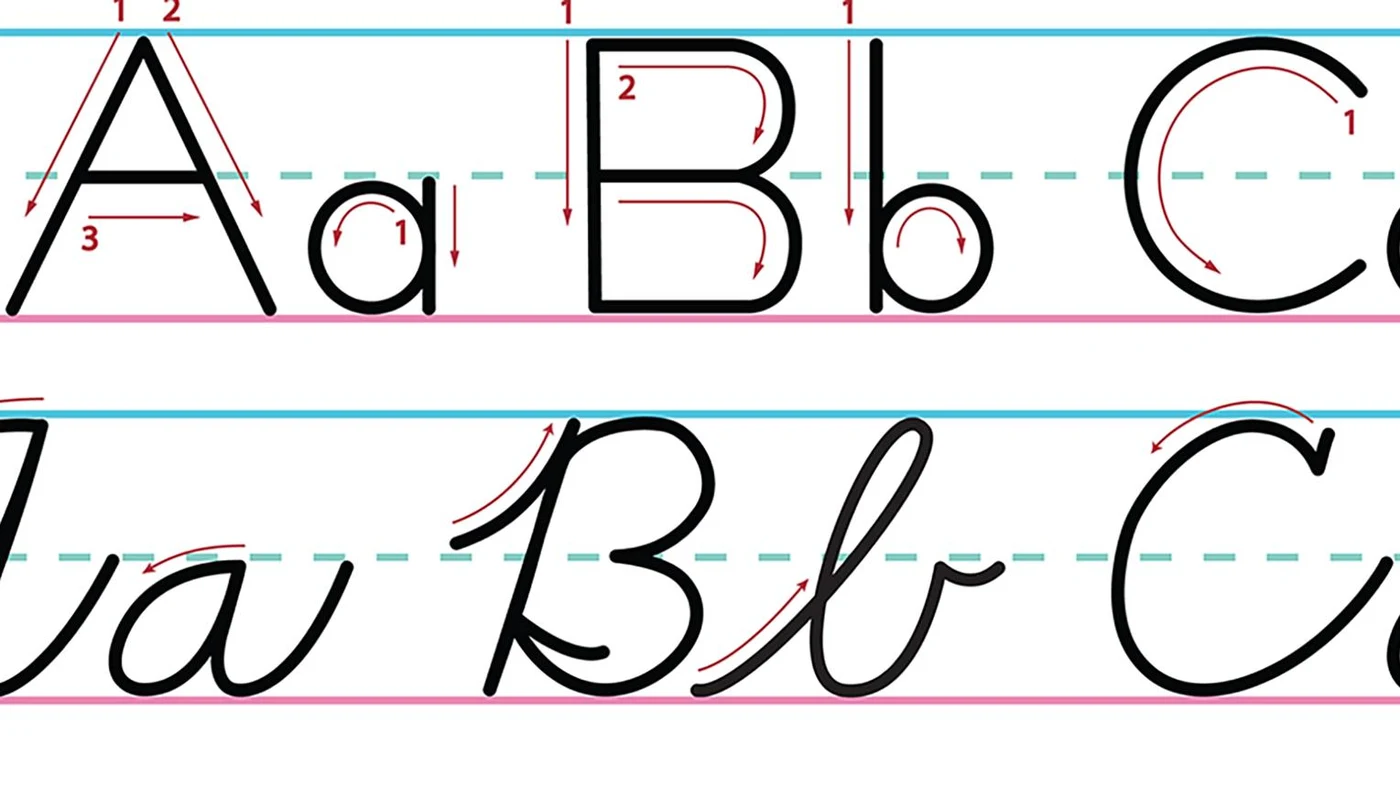
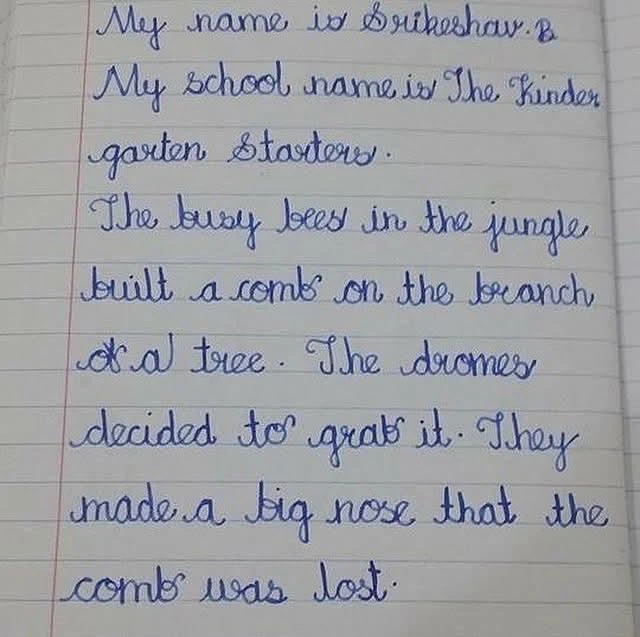
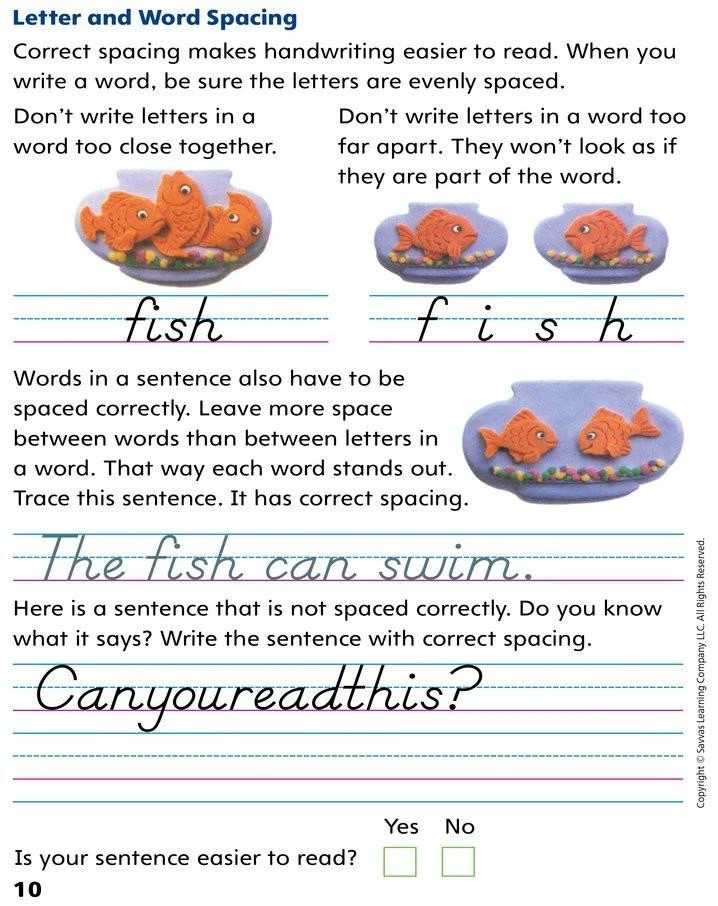
Examples of letter formation, joined handwriting and neat written presentation.
C. Correct formation of letters
English letters are divided into two main categories:
1. Uppercase letters
These are capital letters.
Examples:
A, B, C, D, E, F, G.
They are used:
- At the beginning of sentences.
- In proper nouns.
- In titles and headings.
- In abbreviations.
2. Lowercase letters
These are small letters.
Examples:
a, b, c, d, e, f, g.
They are used in ordinary writing, except where capitalisation is required.
D. Spacing in handwriting
Spacing helps make writing clear.
There should be:
- Appropriate spacing between letters.
- Clear spacing between words.
- Adequate spacing between lines.
- Consistent spacing between paragraphs.
Incorrect spacing can make words difficult to identify.
E. Common handwriting problems
|
Problem |
Explanation |
Correction |
|---|---|---|
|
Poor letter formation |
Letters are incorrectly shaped. |
Practise correct strokes. |
|
Uneven spacing |
Words are too close or too far apart. |
Maintain consistent spaces. |
|
Inconsistent size |
Some letters are excessively large or small. |
Practise uniform letter sizes. |
|
Poor alignment |
Words move above or below writing lines. |
Use ruled paper. |
|
Excessive overwriting |
Letters are repeatedly corrected. |
Write carefully and slowly. |
|
Illegible joining |
Letters are joined incorrectly. |
Practise correct joining patterns. |
F. Improving handwriting
Learners can improve their handwriting by:
- Holding the pen correctly.
- Sitting in an appropriate posture.
- Using suitable writing materials.
- Practising letter formation.
- Writing slowly and carefully.
- Observing proper spacing.
- Copying well-written texts.
- Reviewing their work.
- Correcting bad handwriting habits.
- Practising regularly.
G. Importance of legible and neat handwriting
- Makes written information easy to read.
- Improves communication.
- Helps teachers assess learners' work.
- Promotes good presentation.
- Reduces misunderstanding.
- Saves readers' time.
- Develops writing confidence.
Activities
- Listen to information about the importance of good handwriting.
- Study samples of legible and neat handwriting.
- Discuss letter formation, joining and spacing.
- Practise blind writing and speed writing.
- Identify and correct poor handwriting habits.
- Copy a paragraph about personal responsibility.
- Display written work for peer assessment.
Summary
Legible and neat handwriting requires correct letter formation, proper spacing, consistent letter sizes and good alignment. Learners should practise regularly to improve their handwriting.