
Introduction
An interview is a formal or informal conversation in which one person asks another person questions to obtain information or assess their suitability for a particular opportunity.
Interviews are commonly used when selecting learners for school placement, awarding scholarships and recruiting people for employment.
A. Reasons for conducting interviews
- To assess a person's abilities.
- To establish a person's interests.
- To obtain personal information.
- To assess communication skills.
- To determine suitability for school placement.
- To select candidates for scholarships.
- To understand a person's goals and ambitions.
B. Types of interviews
1. School placement interviews
These interviews help institutions determine whether a learner is suitable for admission or placement.
2. Scholarship interviews
These interviews help scholarship providers identify learners who qualify for financial support.
3. Employment interviews
These are conducted by employers to identify suitable candidates for jobs.
C. Preparing for an interview
Before attending an interview, a person should:
- Find out the purpose of the interview.
- Research the institution or organisation.
- Understand the opportunity being offered.
- Prepare answers to possible questions.
- Organise important documents.
- Dress appropriately.
- Arrive on time.
- Practise speaking confidently.
- Prepare relevant questions to ask.
D. Qualities of a good interviewee
An interviewee is the person being interviewed.
A good interviewee should demonstrate:
- Confidence.
- Honesty.
- Courtesy.
- Good listening skills.
- Clear pronunciation.
- Appropriate body language.
- Relevant answers.
- Respect for the interviewer.
- Good time management.
E. Common interview questions
|
Question |
What the interviewer wants to know |
|---|---|
|
Tell us about yourself. |
Personal background and interests. |
|
Why do you want to join this school? |
Motivation and interest. |
|
What are your strengths? |
Personal abilities. |
|
What is your greatest achievement? |
Past accomplishments. |
|
How do you handle challenges? |
Problem-solving skills. |
|
Why should you receive this scholarship? |
Suitability and financial or academic motivation. |
F. Answering interview questions
Answers should be:
- Clear.
- Relevant.
- Honest.
- Well organised.
- Brief but sufficiently detailed.
For example:
Question: Why would you like to receive this scholarship?
Answer: I would like to receive this scholarship because it would help me continue my education and achieve my academic goals. I am hardworking, responsible and committed to making good use of the opportunity.
G. Seeking clarification
Sometimes an interviewee may not understand a question.
Seeking clarification means politely asking the interviewer to explain or repeat something.
Useful expressions include:
- Could you kindly repeat the question?
- Would you please explain what you mean?
- Could you clarify that point?
- Do you mean that I should explain my academic achievements?
H. Body language during an interview
A person should:
- Sit upright.
- Maintain appropriate eye contact.
- Avoid unnecessary movements.
- Smile when appropriate.
- Listen attentively.
- Avoid interrupting the interviewer.
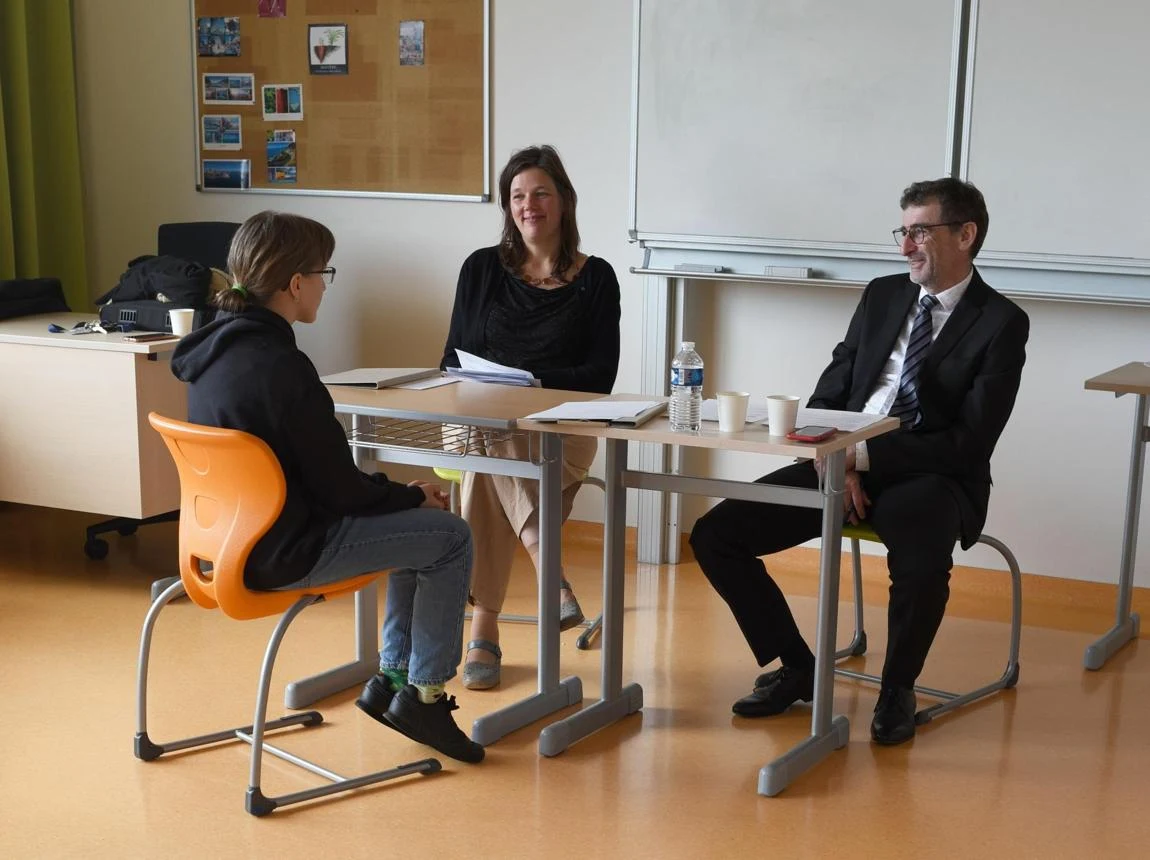

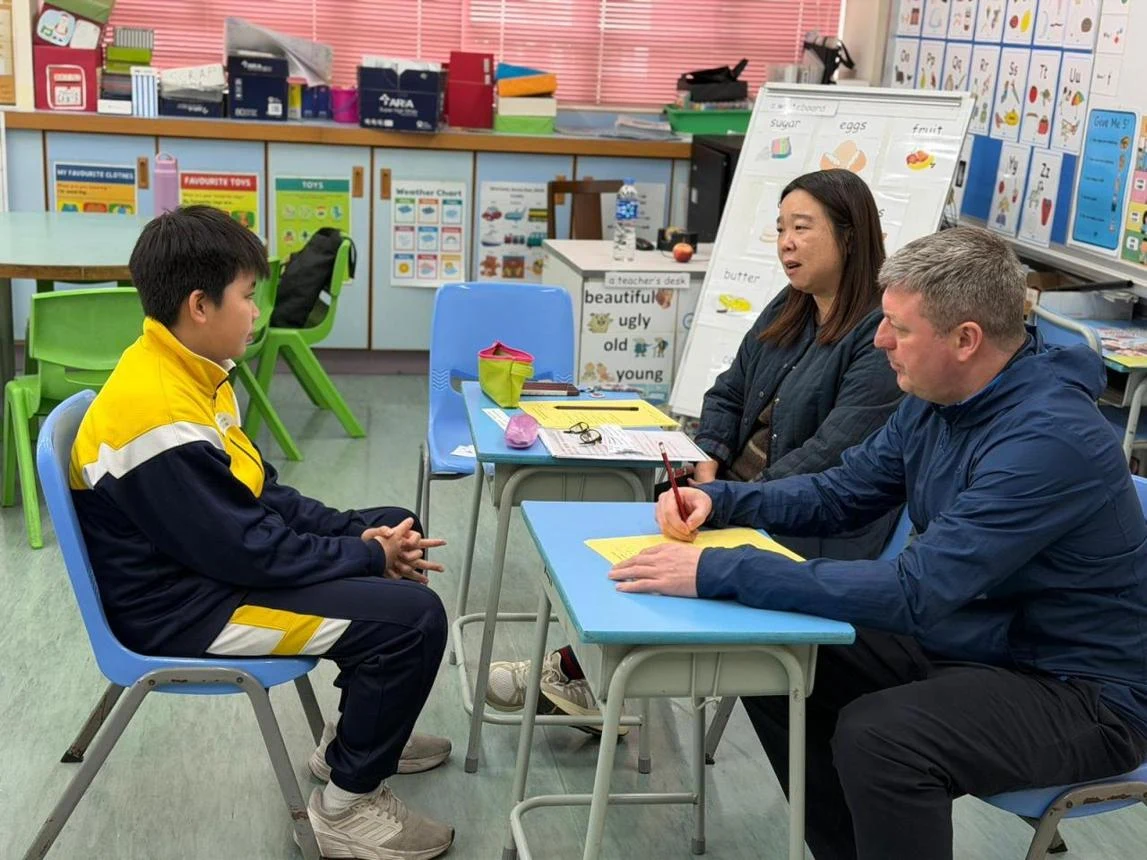
Interviewers and interviewees use questions, answers and attentive listening to exchange information.
I. Sample interview dialogue
Interviewer: Good morning. Please introduce yourself.
Interviewee: Good morning. My name is Brian. I am a Grade 7 learner who enjoys reading, mathematics and participating in school activities.
Interviewer: Why would you like to join our school?
Interviewee: I would like to join your school because it offers a good learning environment and opportunities for learners to develop their talents.
Interviewer: What are your strengths?
Interviewee: I am hardworking, disciplined and willing to learn new things.
Interviewer: How do you manage challenges?
Interviewee: I remain calm, identify the problem and seek guidance when necessary.
Interviewer: Thank you for attending the interview.
Interviewee: Thank you for giving me the opportunity.
J. Importance of interviews
- Help institutions select suitable candidates.
- Develop communication skills.
- Build confidence.
- Allow candidates to express their abilities.
- Help people access educational opportunities.
- Promote self-awareness.
- Develop preparation and presentation skills.
Activities
- Listen to recorded interviews.
- Identify common interview questions.
- Discuss reasons for school placement and scholarship interviews.
- Conduct mock interviews in pairs.
- Record and review the interviews.
- Practise asking for clarification.
Summary
Interviews are conversations used to obtain information and assess suitability for opportunities. Successful interviewees prepare adequately, listen carefully, answer confidently and demonstrate courtesy.