
1.3.1 Meaning of Laboratory Apparatus and Instruments
Laboratory apparatus are tools and equipment used when carrying out scientific experiments and investigations.
Laboratory instruments are devices used to observe, measure or determine different scientific quantities.
They help scientists and learners carry out experiments accurately, safely and efficiently.
Different apparatus and instruments are designed for different purposes.
1.3.2 Basic Skills in Science
Scientific skills are abilities that enable learners to carry out investigations, collect information, interpret observations and communicate findings.
The Grade 7 curriculum identifies seven basic scientific skills.
1. Manipulative Skills
Manipulative skills are abilities used to handle and operate laboratory apparatus and materials correctly.
Examples include:
- Using a measuring cylinder to measure liquids.
- Handling a microscope correctly.
- Lighting a Bunsen burner under supervision.
- Using tongs to hold hot objects.
- Arranging apparatus during an experiment.
Importance of manipulative skills:
- They promote safety.
- They improve accuracy.
- They prevent damage to apparatus.
- They help learners carry out experiments correctly.
2. Observation Skills
Observation is the process of collecting information about objects, substances or events using the senses or scientific instruments.
The five human senses are:
|
Sense |
Organ |
What it helps us observe |
|---|---|---|
|
Sight |
Eyes |
Colour, shape and size |
|
Hearing |
Ears |
Sound and noise |
|
Smell |
Nose |
Odours, using safe wafting where instructed |
|
Touch |
Skin |
Texture and temperature, when safe |
|
Taste |
Tongue |
Taste in safe, ordinary situations, never laboratory chemicals |
Examples of scientific observations:
- A leaf is green.
- A substance changes colour.
- Water boils when heated.
- A magnet attracts an iron nail.
- A bulb lights when a complete electrical circuit is connected.
Importance of observation:
- Helps identify changes.
- Provides information for investigations.
- Helps learners make predictions.
- Helps scientists understand natural phenomena.
3. Measurement Skills
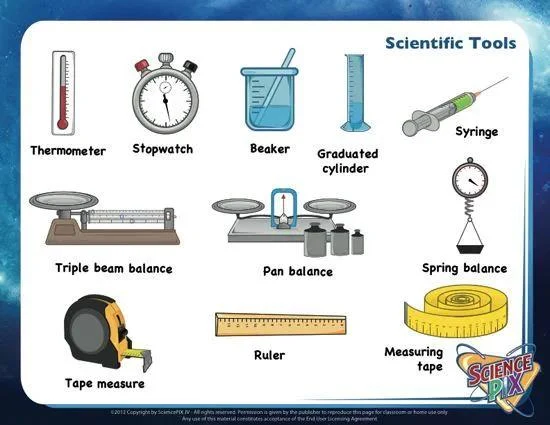
Measurement is the process of determining the size, amount or quantity of something using an appropriate instrument and unit.
Examples include:
- Measuring length using a metre rule.
- Measuring mass using a balance.
- Measuring temperature using a thermometer.
- Measuring time using a stopwatch.
- Measuring liquid volume using a measuring cylinder.
Importance of measurement:
- Provides accurate scientific information.
- Enables comparison of results.
- Helps scientists repeat experiments.
- Reduces guesswork.
4. Classification Skills
Classification is the process of grouping objects or materials according to their similarities and differences.
Examples:
- Grouping materials into magnetic and non-magnetic materials.
- Grouping substances into acids and bases.
- Grouping plants according to their characteristics.
- Grouping mixtures into homogeneous and heterogeneous mixtures.
Importance of classification:
- Makes information easier to organise.
- Helps identify similarities and differences.
- Makes scientific investigations easier.
- Helps learners understand different groups of materials.
5. Prediction Skills
Prediction is the ability to state what is likely to happen in an investigation based on previous observations or scientific knowledge.
Examples:
- Predicting that a magnet will attract an iron nail.
- Predicting that ice will melt when exposed to sufficient heat.
- Predicting that a bulb will light when a complete circuit is connected.
- Predicting that salt will dissolve in water.
Importance of prediction:
- Helps scientists plan investigations.
- Encourages critical thinking.
- Helps learners develop scientific reasoning.
- Provides ideas that can be tested through experiments.
6. Communication Skills
Communication is the process of sharing scientific information, observations and findings with other people.
Scientists communicate through:
- Written reports.
- Oral presentations.
- Drawings and diagrams.
- Tables.
- Charts and graphs.
- Scientific discussions.
Importance of communication:
- Enables sharing of scientific knowledge.
- Helps explain experimental findings.
- Encourages teamwork.
- Allows other scientists to understand and evaluate investigations.
7. Conclusion Skills
A conclusion is a statement that summarises what has been learnt from an investigation based on the observations and results obtained.
For example:
A learner places an iron nail near a magnet and observes that the nail is attracted.
Conclusion: Iron is a magnetic material.
A good scientific conclusion should:
- Be based on observations.
- Relate to the investigation.
- Be clear and understandable.
- Avoid unsupported statements.
1.3.3 Summary of Basic Scientific Skills
|
Scientific skill |
Meaning |
Example |
|---|---|---|
|
Manipulative |
Handling apparatus correctly |
Using a microscope |
|
Observation |
Collecting information using senses or instruments |
Observing colour changes |
|
Measurement |
Determining quantities |
Measuring temperature |
|
Classification |
Grouping materials |
Grouping magnetic materials |
|
Prediction |
Stating what may happen |
Predicting that ice will melt |
|
Communication |
Sharing scientific information |
Writing an experiment report |
|
Conclusion |
Summarising findings |
Stating what an experiment demonstrates |
1.3.4 Common Laboratory Apparatus and Their Functions
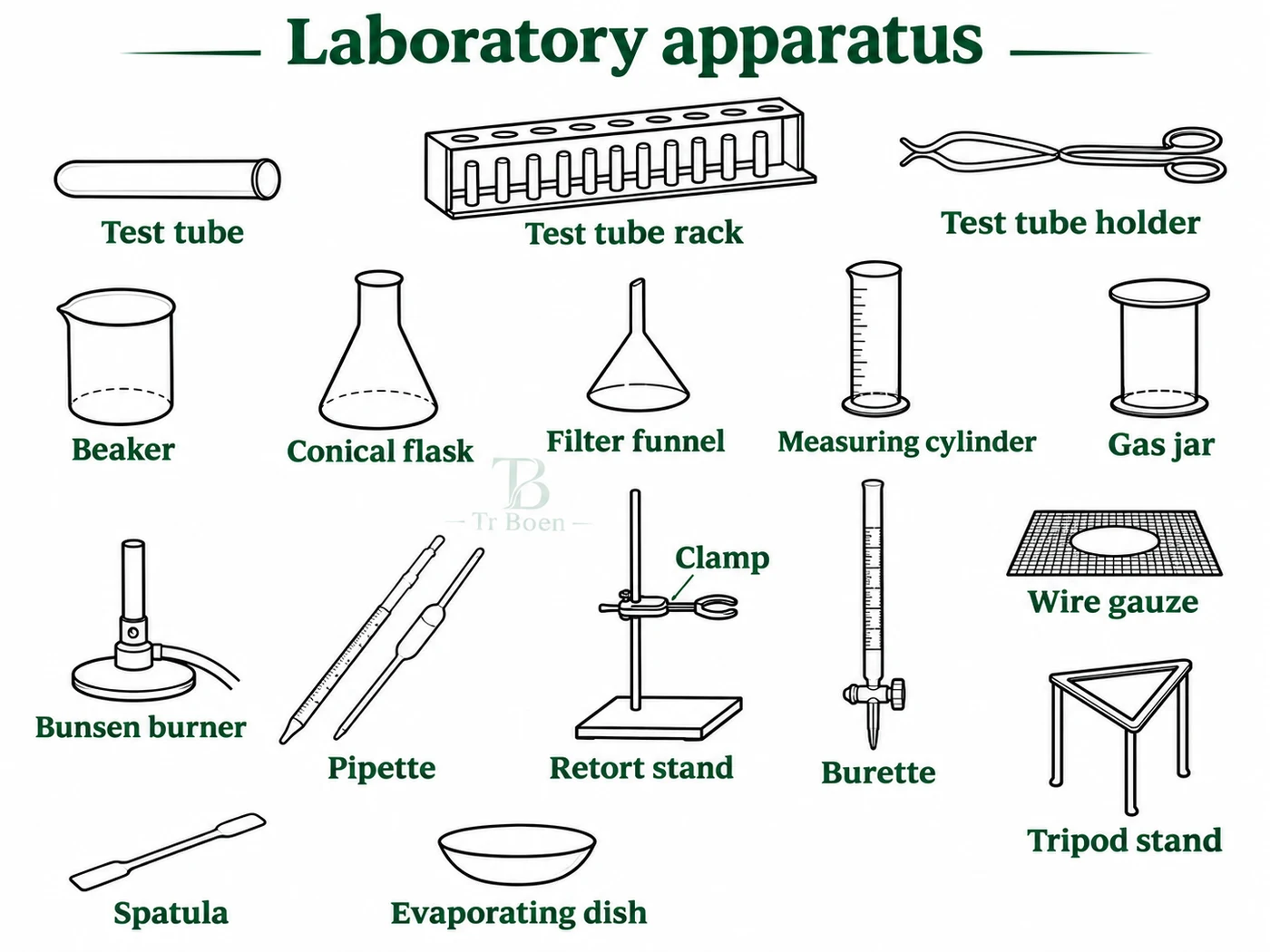
Laboratory apparatus are designed to perform different functions.
The following are examples of apparatus and instruments commonly used in a science laboratory.
A. Apparatus Used for Heating
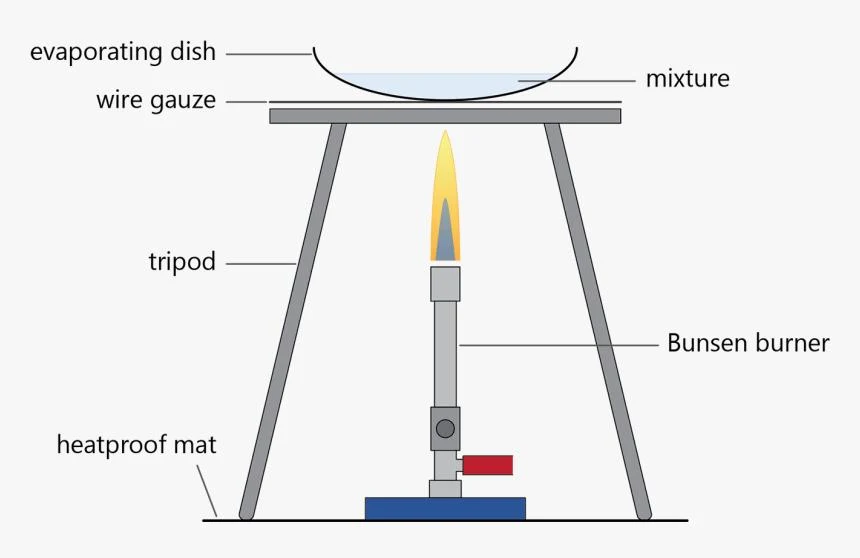
These apparatus are used when substances need to be heated during experiments.
|
Apparatus |
Function |
|---|---|
|
Bunsen burner |
Produces a flame for heating substances |
|
Tripod stand |
Supports apparatus during heating |
|
Wire gauze |
Supports containers and distributes heat |
|
Heatproof mat |
Protects laboratory surfaces from heat |
|
Crucible |
Holds substances that require strong heating |
|
Tongs |
Hold hot apparatus and materials |
B. Apparatus Used for Measuring Mass
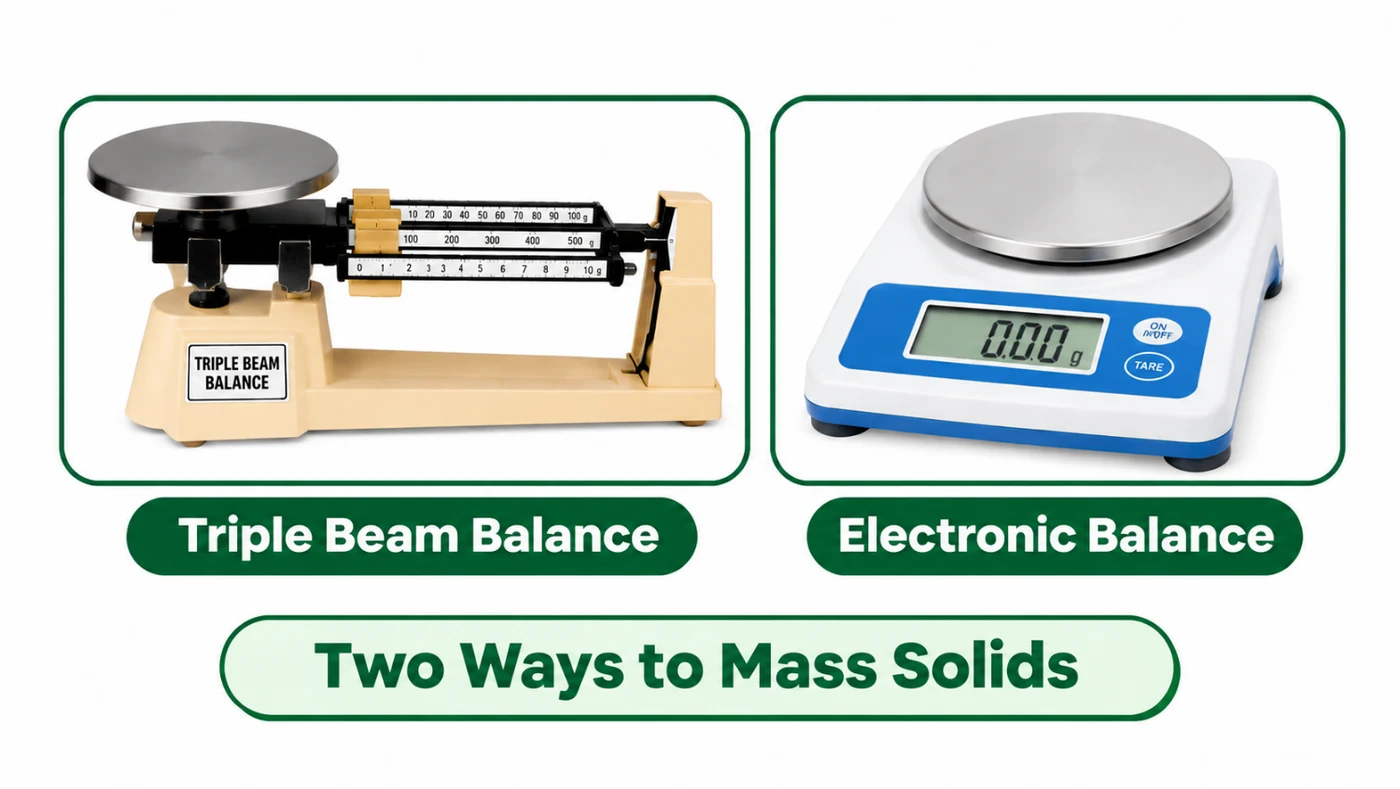
Mass is the amount of matter contained in an object.
Mass is measured using a balance.
Examples of balances include:
- Beam balance.
- Electronic balance.
Function
Measures the mass of substances and objects.
SI unit: Kilogram (kg).
C. Apparatus Used for Measuring Temperature
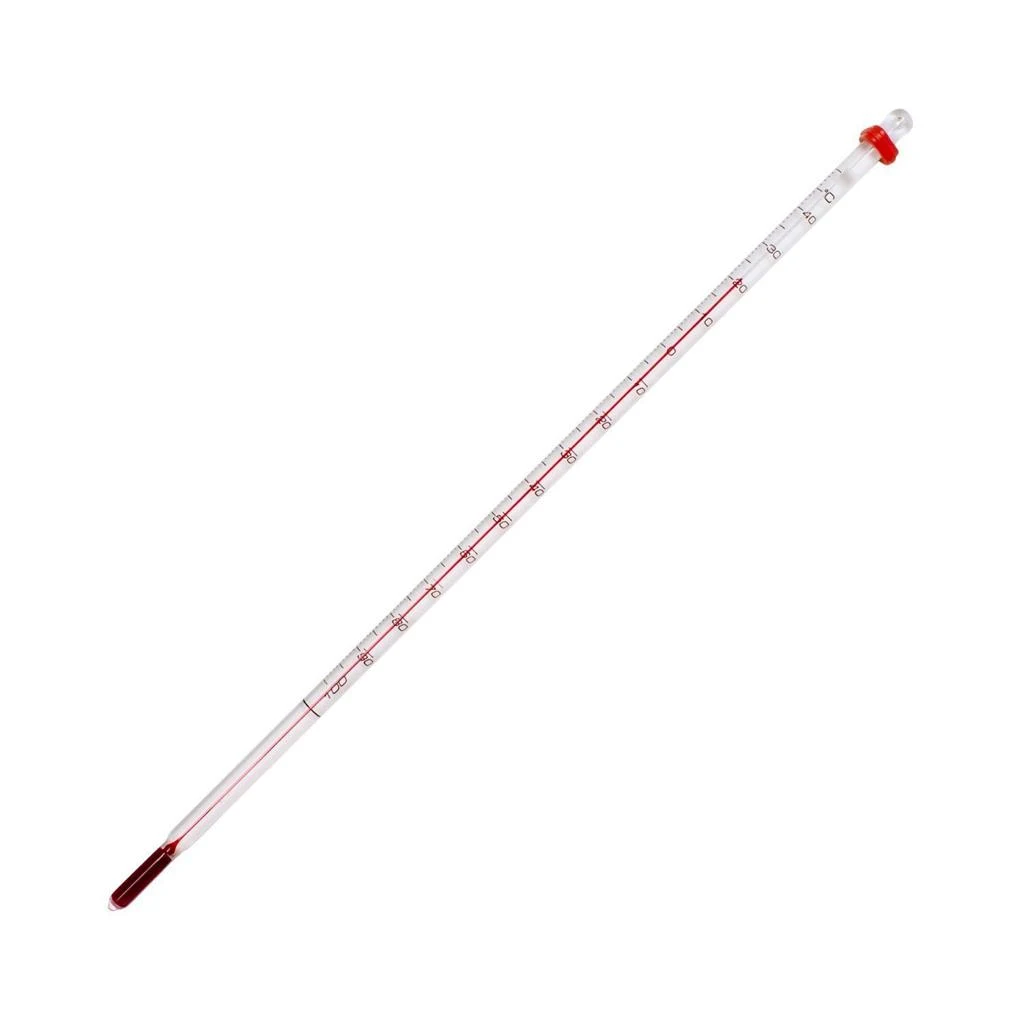
A thermometer is an instrument used to measure temperature.
Examples include:
- Laboratory thermometer.
- Digital thermometer.
Function
Measures how hot or cold a substance or object is.
Common reading unit: Degrees Celsius (°C).
SI unit: Kelvin (K).
D. Apparatus Used for Measuring Length
Length is the distance between two points.
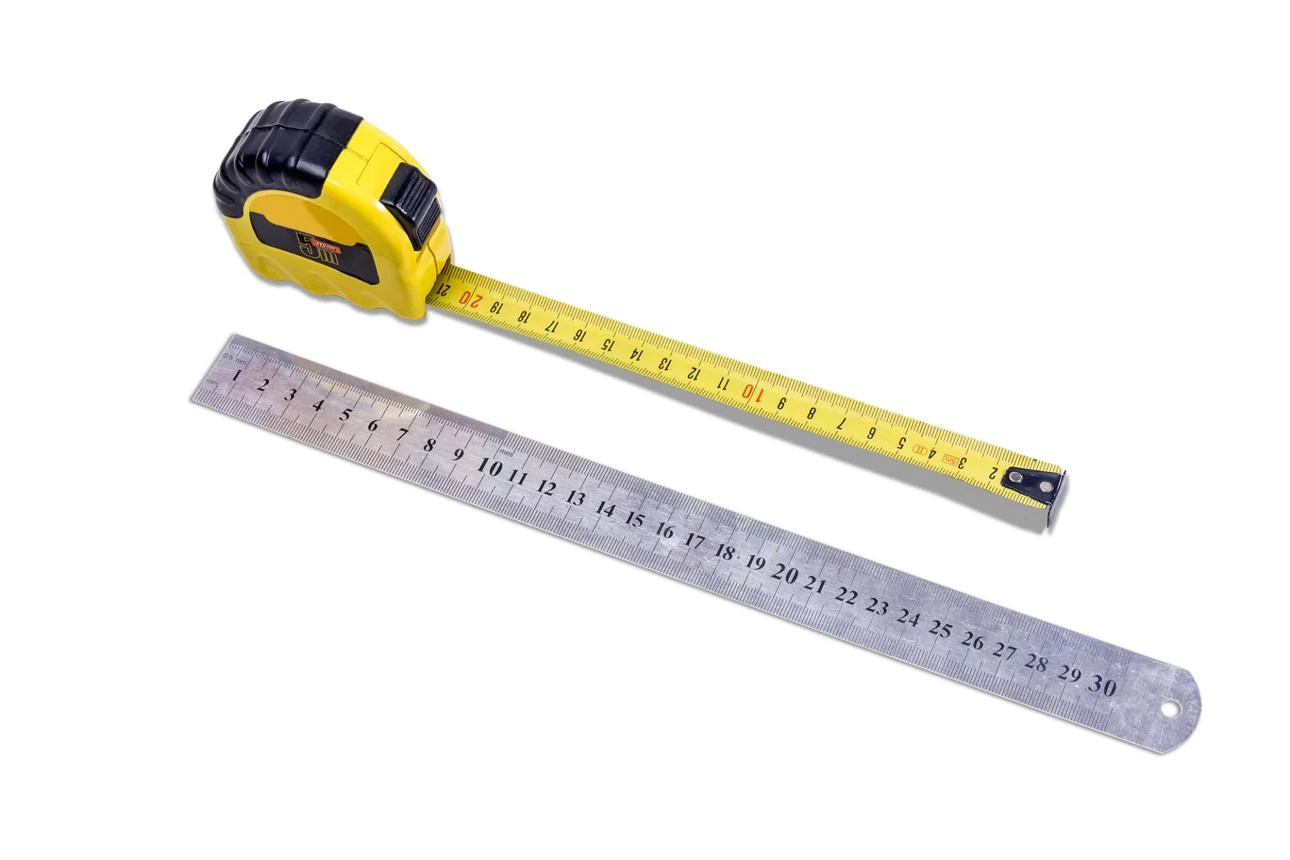
Common measuring instruments include:
- Metre rule.
- Ruler.
- Measuring tape.
Function
Measures the length, width or height of objects.
SI unit: Metre (m).
E. Apparatus Used for Measuring Volume
Volume is the amount of space occupied by a substance or object.
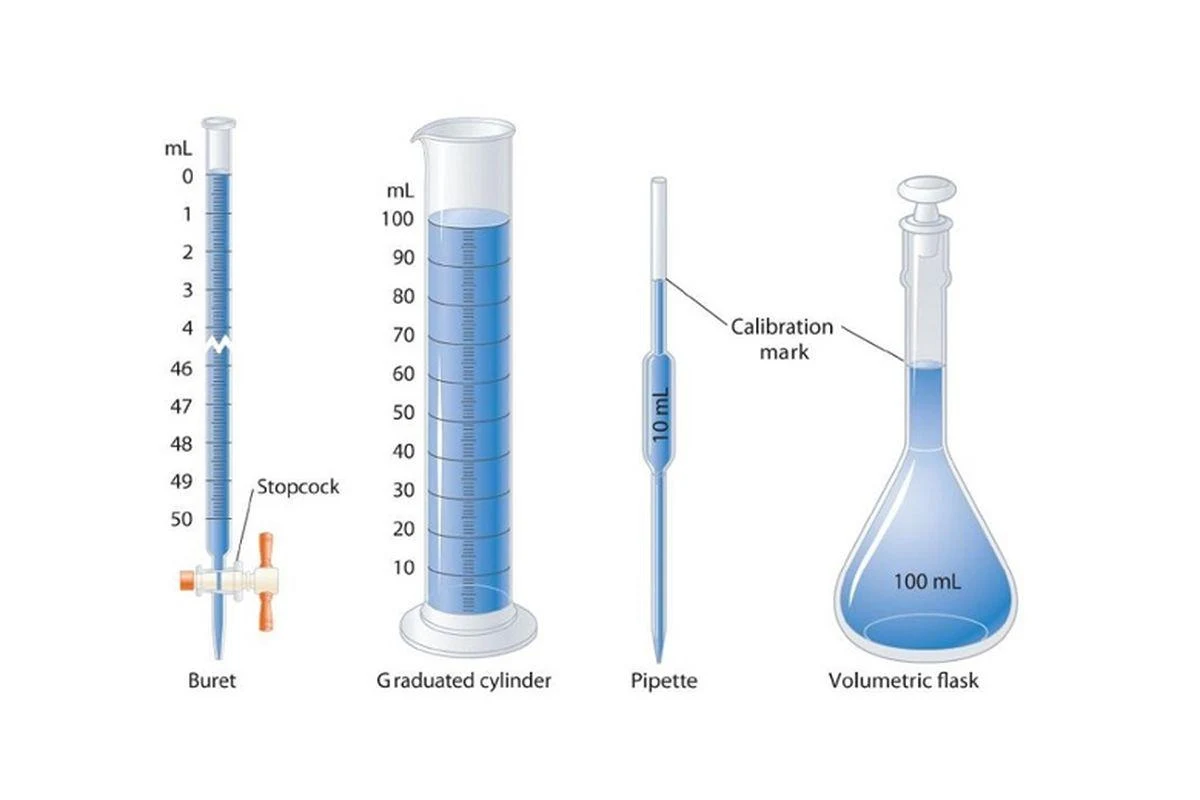
Common apparatus include:
- Measuring cylinder.
- Beaker.
- Pipette.
- Burette.
|
Apparatus |
Function |
|---|---|
|
Measuring cylinder |
Measures liquid volume |
|
Beaker |
Holds, mixes and roughly measures liquids |
|
Pipette |
Measures and transfers specific liquid volumes |
|
Burette |
Delivers measured liquid volumes accurately |
F. Apparatus Used for Measuring Weight
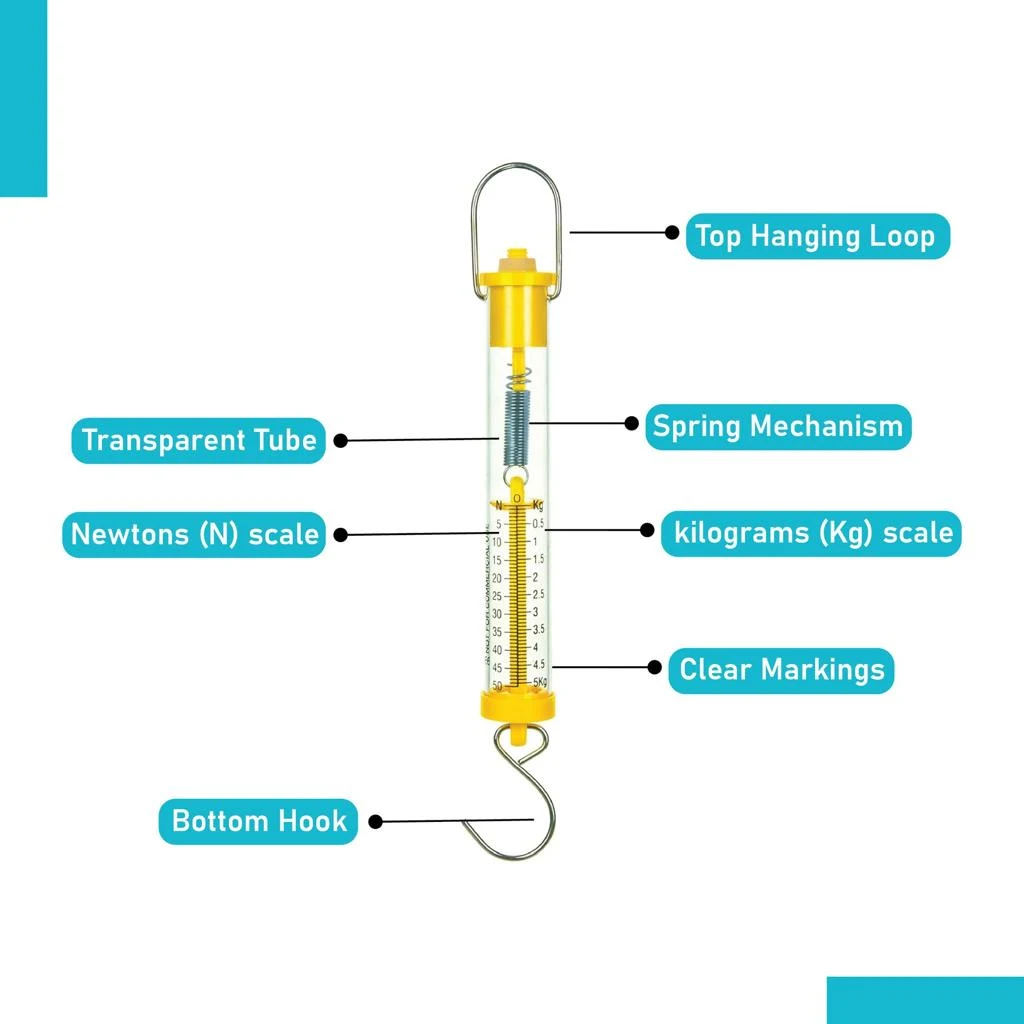
Weight is the force with which gravity pulls an object towards the Earth.
A spring balance is used to measure weight.
Function
Measures the weight or force acting on an object.
SI unit: Newton (N).
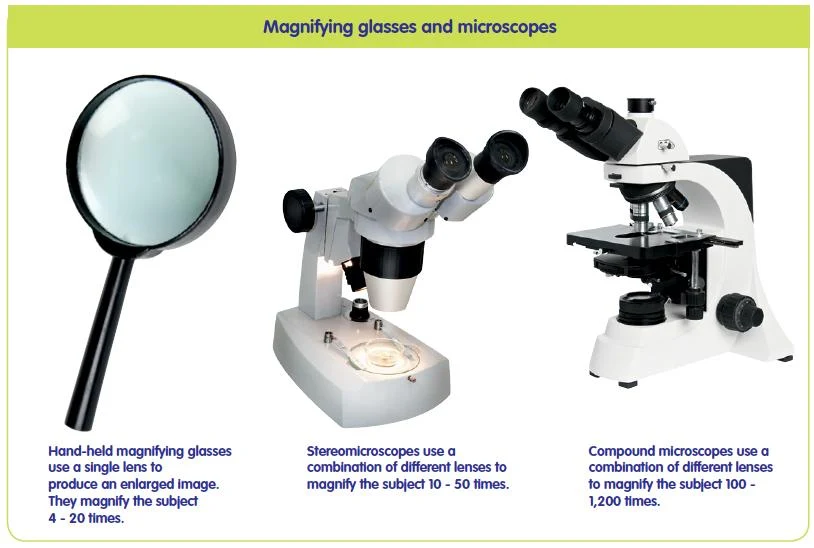
G. Apparatus Used for Magnification
Magnification is the process of making an object appear larger so that its details can be observed more clearly.
Examples include:
- Hand lens.
- Light microscope.
H. Apparatus Used for Measuring Time
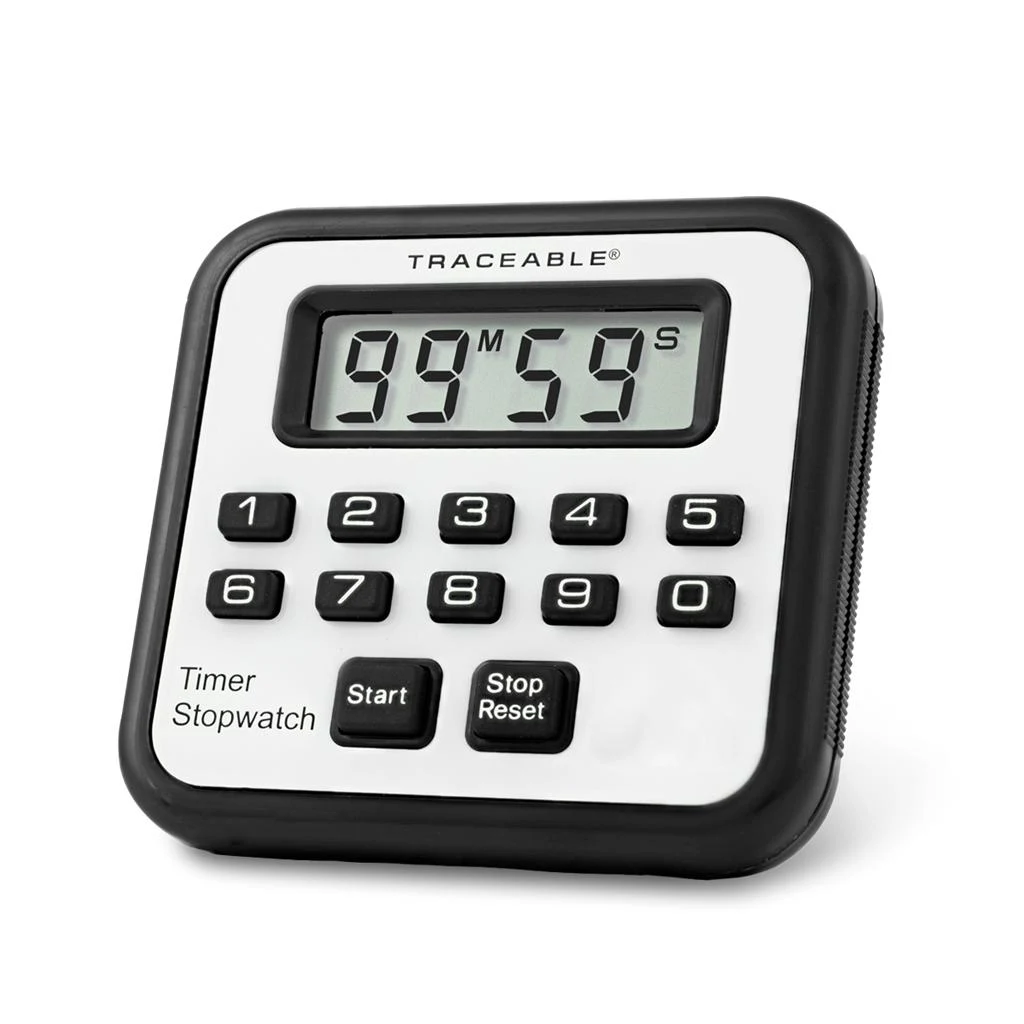
A stopwatch or clock is used to measure time.
Function
Measures the duration of an activity or event.
SI unit: Second (s).
1.3.5 The Light Microscope
A light microscope is an instrument that uses visible light and lenses to magnify small objects so that they can be observed clearly.
It is commonly used in science laboratories to observe objects that cannot be seen clearly with the naked eye.
Examples of materials that can be observed using a microscope include:
- Plant cells.
- Animal cells.
- Microorganisms.
- Thin sections of plant tissues.
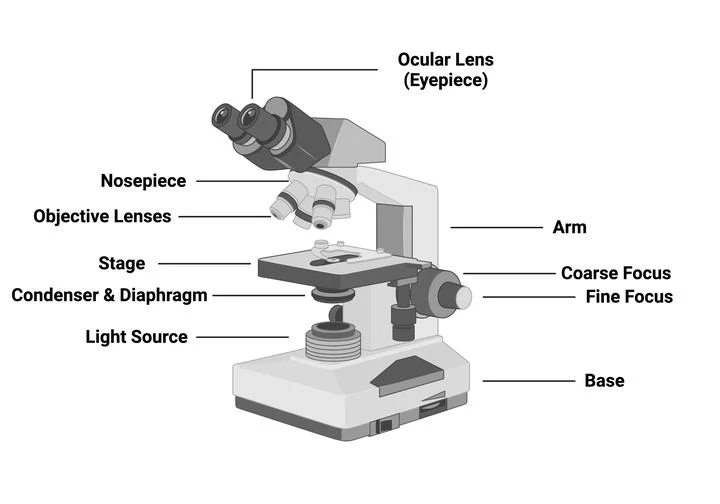
Parts of a Light Microscope and Their Functions
|
Part |
Function |
|---|---|
|
Eyepiece lens |
The lens through which the learner looks |
|
Body tube |
Holds the eyepiece and connects it to the objective lenses |
|
Revolving nosepiece |
Holds and rotates the objective lenses |
|
Objective lenses |
Magnify the specimen |
|
Stage |
Supports the specimen being observed |
|
Stage clips |
Hold the specimen slide in position |
|
Diaphragm |
Controls the amount of light passing through the specimen |
|
Mirror or illuminator |
Provides or directs light towards the specimen |
|
Arm |
Supports the upper parts and provides a grip when carrying the microscope |
|
Coarse adjustment knob |
Moves the body tube or stage to bring the specimen into general focus |
|
Fine adjustment knob |
Makes small adjustments to obtain a clearer image |
|
Base |
Supports the microscope and keeps it stable |
How to Use a Light Microscope
- Place the microscope on a flat and stable surface.
- Ensure that it is properly positioned.
- Adjust the mirror or switch on the light source.
- Place the prepared specimen slide on the stage.
- Secure the slide using the stage clips.
- Select the lowest-power objective lens.
- Look through the eyepiece.
- Use the coarse adjustment knob to bring the specimen into focus.
- Use the fine adjustment knob to obtain a clearer image.
- Adjust the light when necessary.
- Observe the specimen carefully.
Care and Maintenance of a Light Microscope
- Carry the microscope using both hands, supporting the arm and base.
- Place it on a flat and stable surface.
- Clean the lenses using appropriate lens-cleaning paper.
- Avoid touching the lenses with fingers.
- Do not force the adjustment knobs.
- Begin observations using the lowest-power objective lens.
- Keep the microscope away from water and unnecessary moisture.
- Return the microscope to its storage position after use.
- Cover it to protect it from dust.
- Report any damage to the teacher.
1.3.6 The Bunsen Burner
A Bunsen burner is a laboratory heating apparatus that produces a flame by burning gas mixed with air.
It is used to heat substances during scientific experiments.
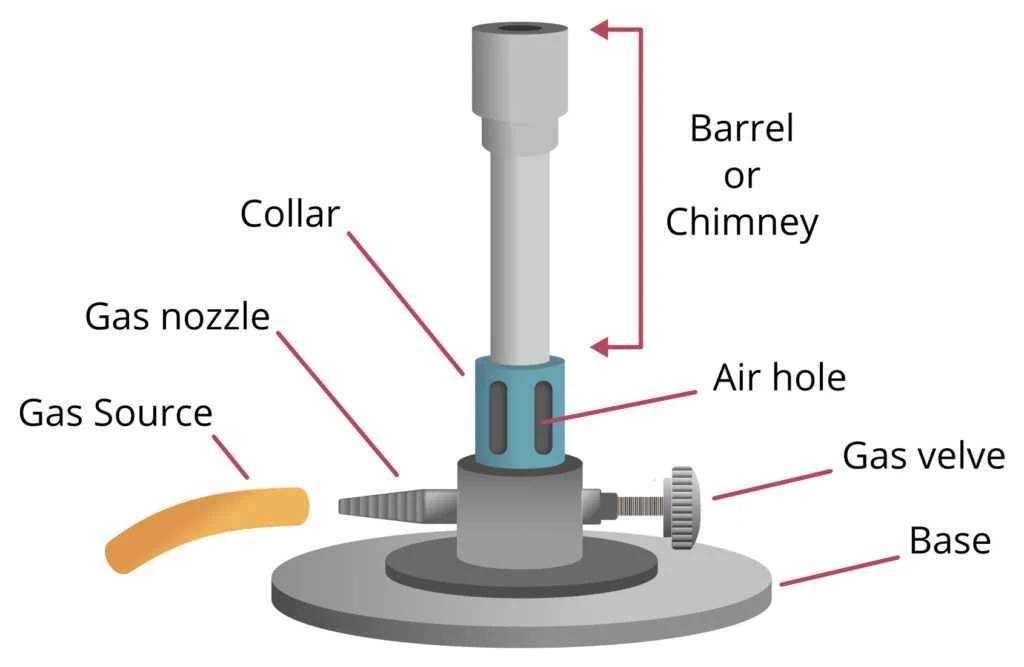
Parts of a Bunsen Burner and Their Functions
|
Part |
Function |
|---|---|
|
Base |
Supports the burner and keeps it stable |
|
Barrel or chimney |
Directs the gas and air mixture upwards |
|
Collar |
Controls the opening of the air hole |
|
Air hole |
Allows air to enter and mix with gas |
|
Gas inlet |
Connects the burner to the gas supply |
|
Gas jet |
Directs gas into the barrel |
Types of Bunsen Burner Flames
There are two commonly described flames produced by a Bunsen burner.
1. Yellow Luminous Flame
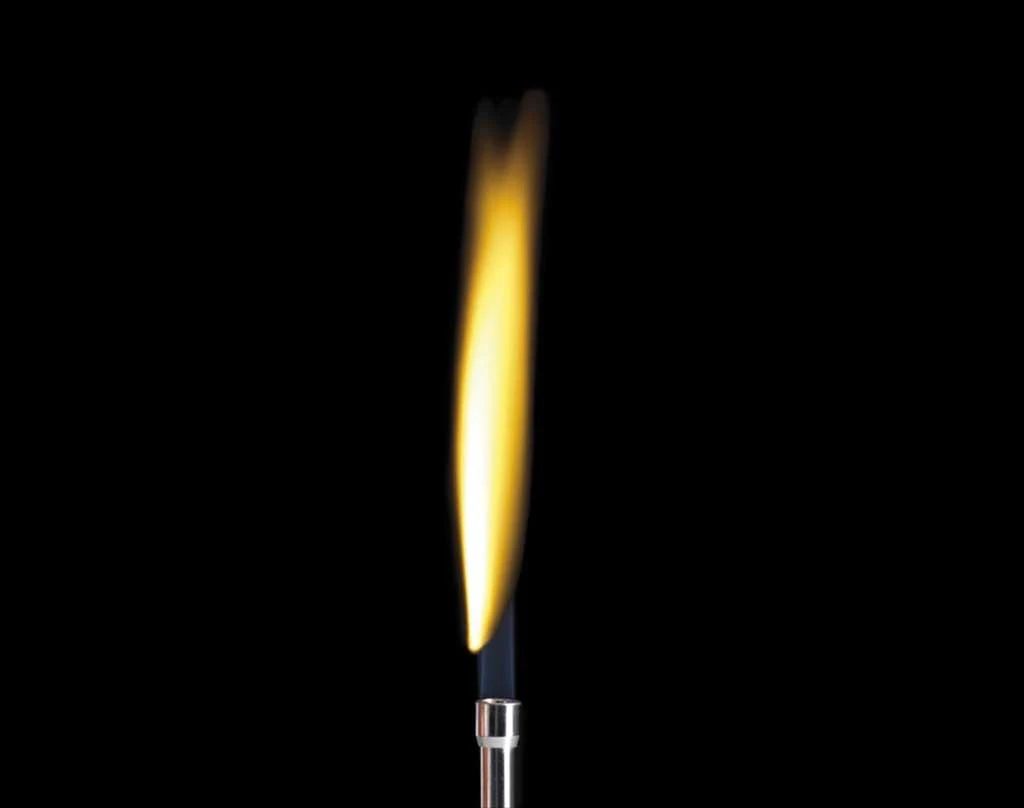
Characteristics:
- Yellow in colour.
- Produced when the air hole is closed or nearly closed.
- Less hot than the blue flame.
- Produces soot.
- Easily visible.
It is commonly called the safety flame because it is easily seen when the burner is not being used for heating.
2. Blue Non-Luminous Flame
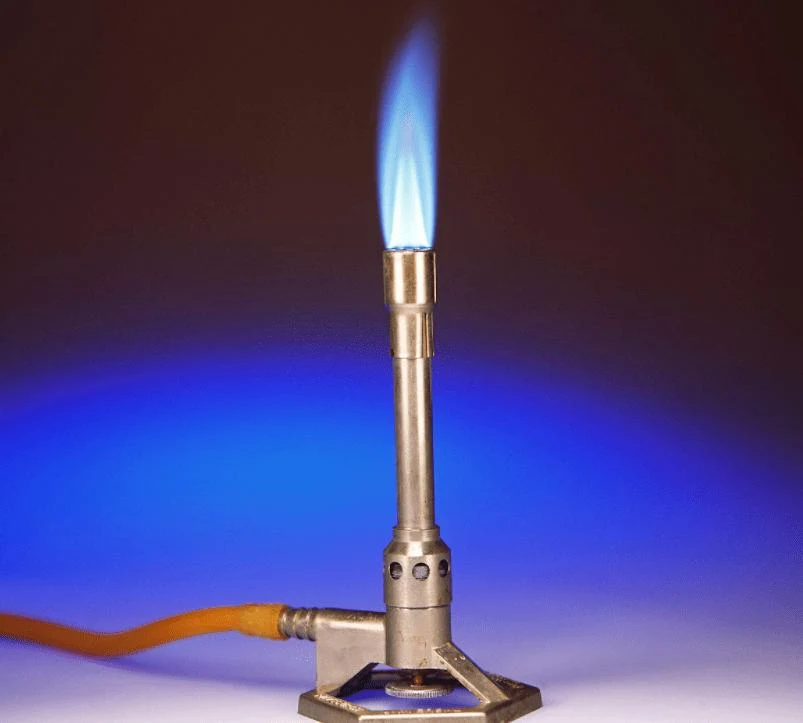
Characteristics:
- Blue in colour.
- Produced when sufficient air enters the burner.
- Hotter than the yellow flame.
- Produces little or no soot.
- Used for heating substances.
Important safety precautions when using a Bunsen burner
- Only light it under the teacher's supervision.
- Keep flammable substances away.
- Tie long hair.
- Never leave a burning burner unattended.
- Use appropriate tongs when handling hot apparatus.
- Turn off the gas supply after use.
1.3.7 International System of Units (SI)
The International System of Units (SI) is an internationally accepted system used for measuring and expressing scientific quantities.
It enables scientists and learners in different countries to use standard units when communicating scientific information.
For example, measuring the length of a table in metres gives a standard measurement that can be understood internationally.
Basic Physical Quantities and Their SI Units
There are seven basic physical quantities in the SI system.
|
Basic quantity |
SI unit |
Symbol |
|---|---|---|
|
Length |
Metre |
m |
|
Mass |
Kilogram |
kg |
|
Time |
Second |
s |
|
Electric current |
Ampere |
A |
|
Temperature |
Kelvin |
K |
|
Amount of substance |
Mole |
mol |
|
Luminous intensity |
Candela |
cd |
Explanation of the basic quantities
- Length: Measures the distance between two points.
- Mass: Measures the amount of matter in an object.
- Time: Measures the duration of an event.
- Electric current: Measures the flow of electric charge.
- Temperature: Measures how hot or cold an object or substance is.
- Amount of substance: Measures the quantity of elementary particles in a sample.
- Luminous intensity: Measures the strength of light emitted in a particular direction.
1.3.8 Derived Quantities and Their SI Units
Derived quantities are physical quantities obtained by combining two or more basic quantities mathematically.
The Grade 7 curriculum identifies area, volume, speed and density as examples of derived quantities.
A. Area
Area is the amount of surface covered by an object.
For a rectangle:
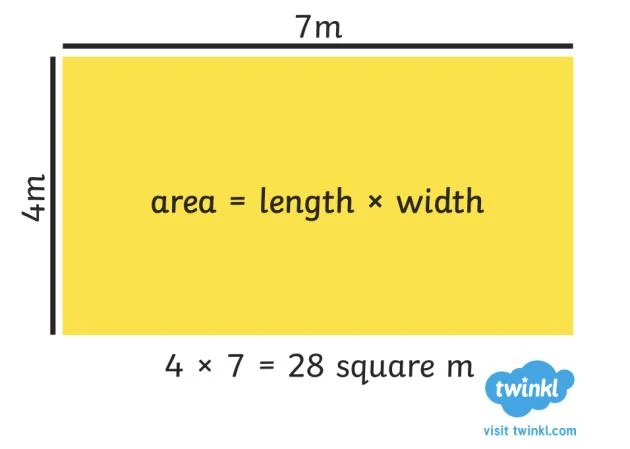
Example:
A rectangular table has a length of 4 metres and a width of 2 metres.
The SI unit of area is the square metre (m²).
B. Volume
Volume is the amount of space occupied by an object.
For a rectangular solid:
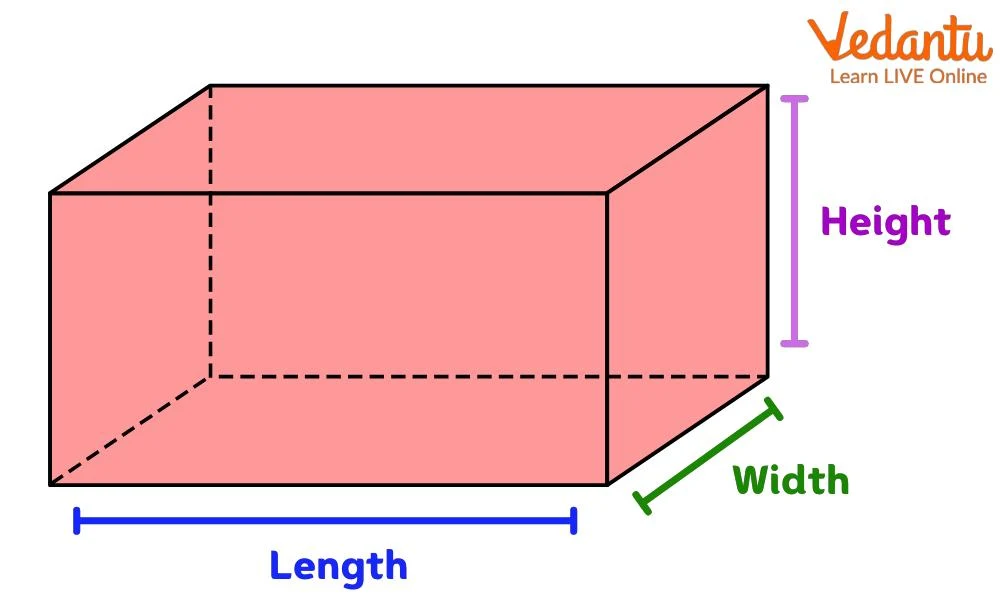
Example:
A box has the following dimensions:
- Length = 4 m
- Width = 2 m
- Height = 3 m
The SI unit of volume is the cubic metre (m³).
C. Speed
Speed is the distance travelled by an object per unit time.
Example:
A vehicle travels 100 metres in 20 seconds.
The SI unit of speed is metres per second (m/s).
D. Density
Density is the mass of a substance per unit volume.
Example:
An object has a mass of 20 kg and a volume of 4 m³.
The SI unit of density is kilograms per cubic metre (kg/m³).
1.3.9 Difference Between Mass and Weight
Mass and weight are related but they do not mean the same thing.
|
Mass |
Weight |
|---|---|
|
Amount of matter in an object |
Force of gravity acting on an object |
|
Measured using a balance |
Measured using a spring balance |
|
SI unit is kilogram (kg) |
SI unit is newton (N) |
|
Does not depend on gravitational strength |
Depends on gravitational strength |
1.3.10 Importance of Using SI Units
- Promotes uniformity in scientific measurements.
- Makes communication easier.
- Allows accurate comparison of measurements.
- Reduces confusion caused by different measurement systems.
- Helps scientists record and interpret results.
- Promotes accuracy in scientific investigations.
1.3.11 Consumer Protection When Handling Apparatus and Materials
Consumer protection involves measures that help people obtain safe, reliable and correctly described goods and services.
Scientific knowledge helps consumers understand the quantities, properties and safety information of materials and products they use.
Importance of labels on products
Product labels provide important information, including:
- Name of the product.
- Quantity or mass.
- Volume.
- Ingredients.
- Expiry date.
- Manufacturing date.
- Manufacturer's details.
- Safety instructions.
- Storage conditions.
- Warning signs.
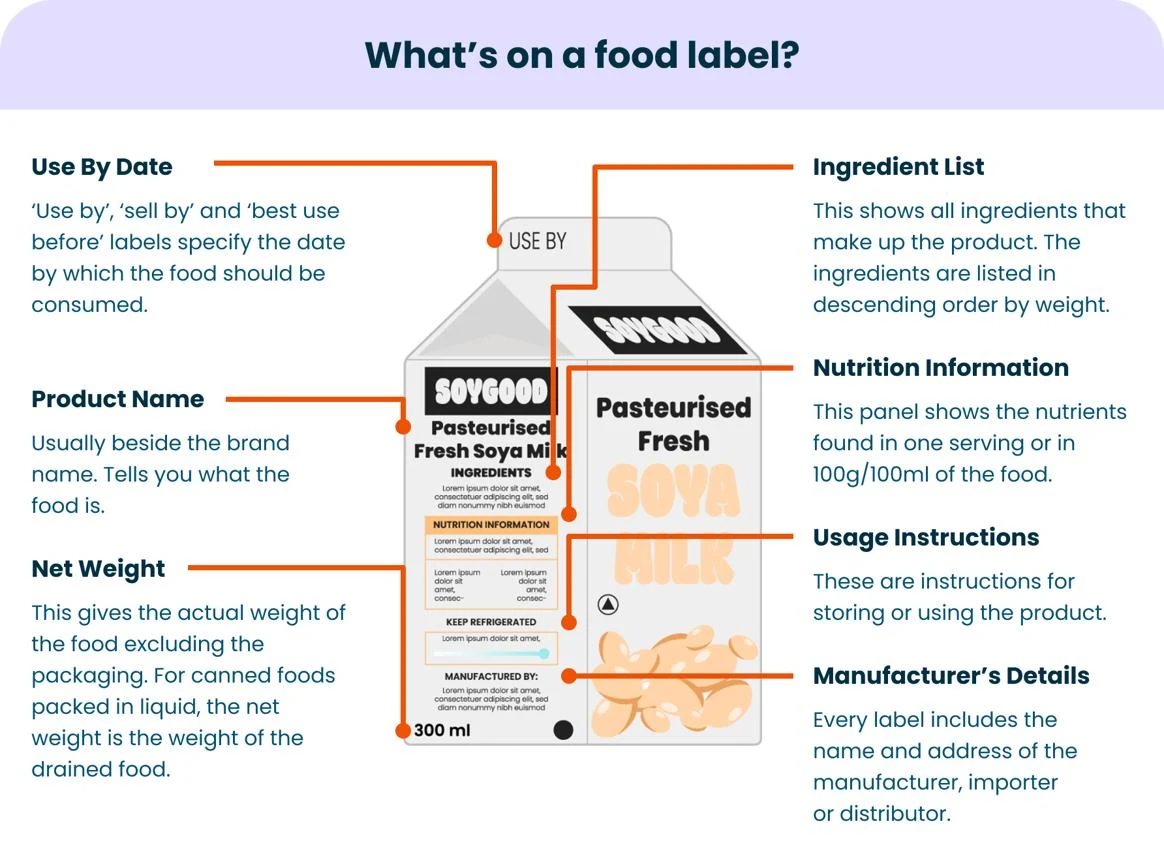
Why product labels are important
- Help consumers know the quantity of products purchased.
- Help consumers identify the ingredients.
- Help people avoid harmful substances.
- Provide instructions on proper use.
- Help consumers identify expired products.
- Promote safe handling and storage.
- Enable consumers to compare similar products.
Example:
When buying cooking oil, a consumer can check the label to determine whether the container holds 500 ml, 1 litre or 2 litres.
When purchasing chemicals, the consumer should read the safety instructions and warning symbols before using the product.
Summary of Strand 1.0
By the end of this strand, learners should understand:
- The meaning and importance of Integrated Science.
- The different components of Integrated Science.
- Common laboratory hazards and their symbols.
- Causes of laboratory accidents and appropriate first aid.
- Laboratory safety measures.
- Basic scientific skills.
- Laboratory apparatus and their functions.
- Parts and care of a light microscope.
- Parts of a Bunsen burner.
- Basic and derived SI quantities and units.
- The importance of product labels in consumer protection.
Curriculum alignment: KICD Grade 7 Integrated Science, Strand 1.0, sub-strands 1.1–1.3.