
2.1.1 Meaning of a Mixture
A mixture is a combination of two or more substances that are physically combined without forming a new chemical substance.
The substances in a mixture retain most of their individual properties and can be separated using appropriate physical methods.
Examples of mixtures include:
- Salt and water.
- Sugar and water.
- Air.
- Soil.
- Milk.
- Cooking oil and water.
- Brass.
2.1.2 Characteristics of Mixtures
Mixtures have the following characteristics:
- They contain two or more substances.
- Their components are physically combined.
- The substances retain their individual properties.
- Their components can be separated using physical methods.
- Their composition can vary.
- They may contain solids, liquids or gases.
- They may be homogeneous or heterogeneous.
2.1.3 Types of Mixtures
Mixtures are classified into two main groups:
- Homogeneous mixtures.
- Heterogeneous mixtures.
A. Homogeneous Mixtures
A homogeneous mixture is a mixture that has a uniform composition throughout.
This means that its components are evenly distributed and cannot easily be distinguished from one another.
Examples include:
- Salt dissolved in water.
- Sugar dissolved in water.
- Air.
- Vinegar.
- Brass.
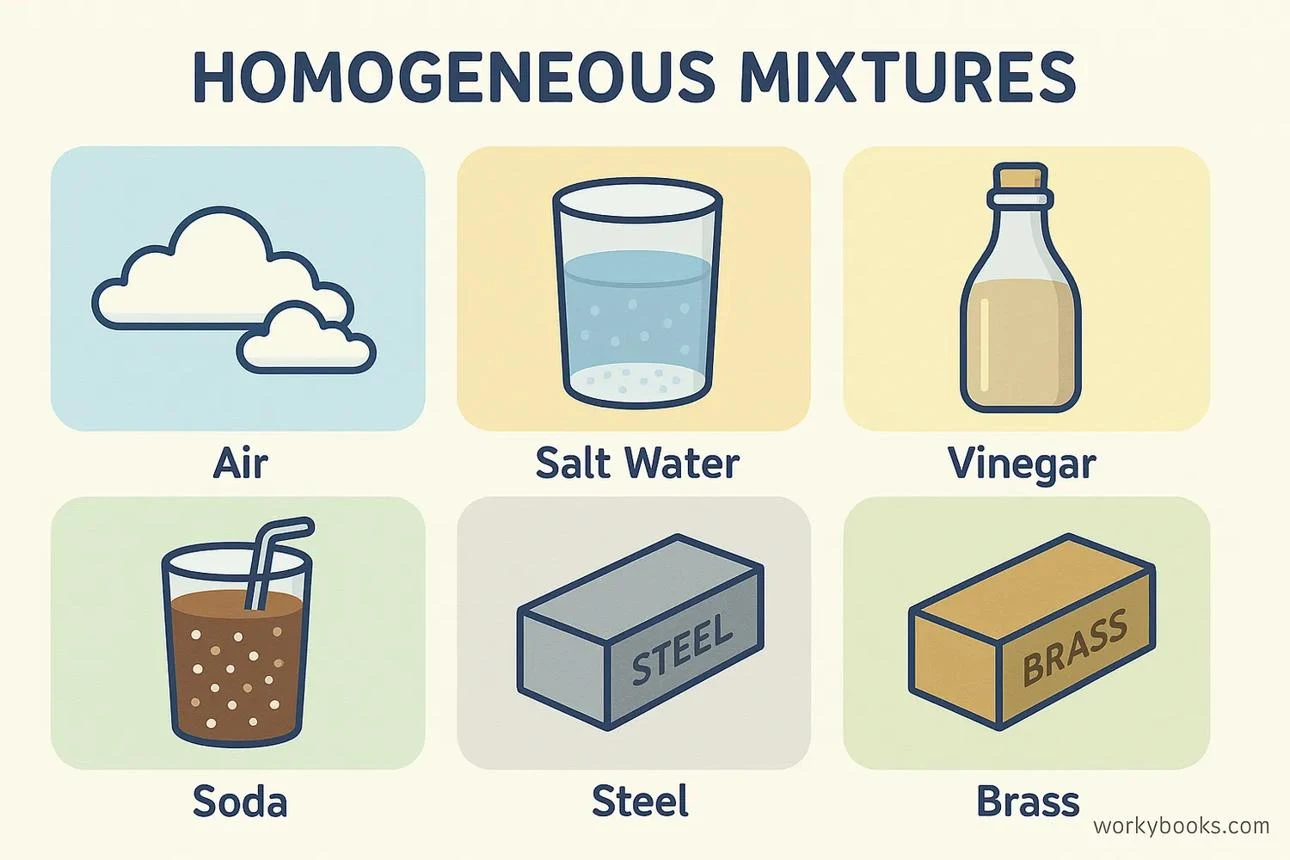
Characteristics of homogeneous mixtures
- They have a uniform composition.
- Their components are evenly distributed.
- They usually appear as a single phase.
- Their components cannot be easily distinguished by looking.
- They can be separated using appropriate physical methods.
B. Heterogeneous Mixtures
A heterogeneous mixture is a mixture that does not have a uniform composition throughout.
Its components may be seen as separate parts or layers.
Examples include:
- Sand and water.
- Oil and water.
- Soil.
- Rice mixed with beans.
- Stones mixed with sand.
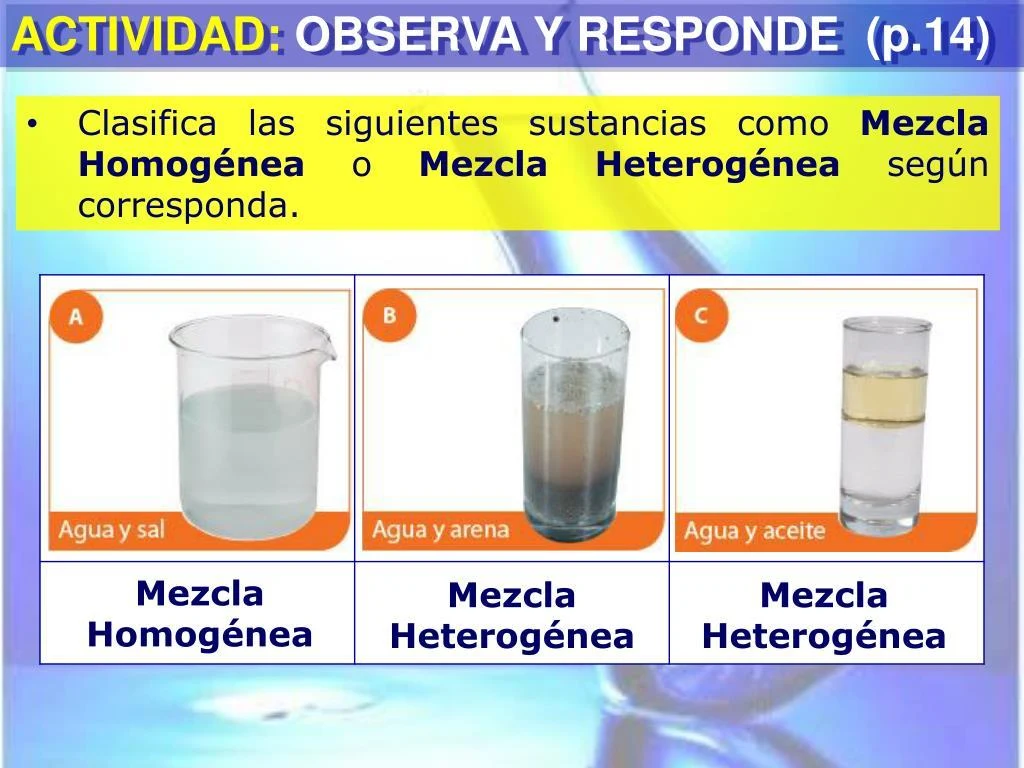
Characteristics of heterogeneous mixtures
- They have a non-uniform composition.
- Their components are not evenly distributed.
- Different components may be visible.
- They may contain two or more distinct phases.
2.1.4 Differences Between Homogeneous and Heterogeneous Mixtures
|
Homogeneous mixtures |
Heterogeneous mixtures |
|---|---|
|
Have uniform composition |
Have non-uniform composition |
|
Components are evenly distributed |
Components are not evenly distributed |
|
Usually appear as one phase |
May have different visible phases |
|
Components are not easily distinguished |
Components may be easily distinguished |
|
Example: salt solution |
Example: sand and water |
2.1.5 Types of Homogeneous Mixtures
The Grade 7 curriculum identifies four types of homogeneous mixtures based on the physical states of the substances combined.
1. Solid-Solid Mixtures
These are homogeneous mixtures formed when two or more solid substances are combined uniformly.
Examples include:
- Brass.
- Bronze.
- Steel.
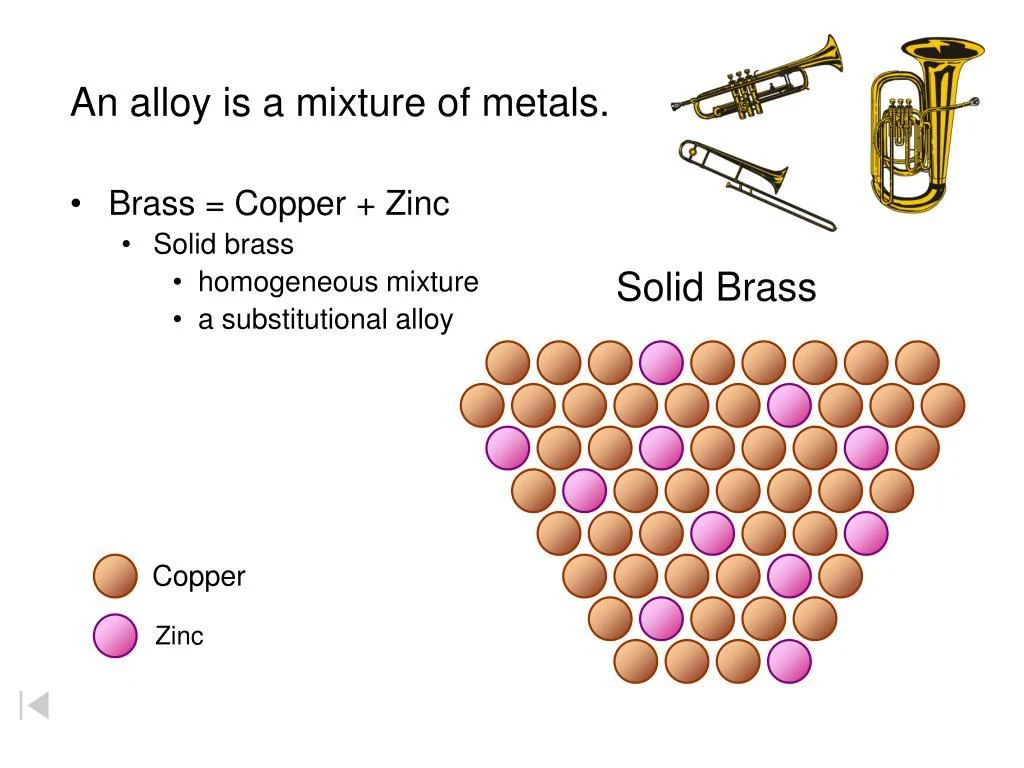
Brass
Brass is an alloy made mainly from copper and zinc.
It is used to manufacture:
- Musical instruments.
- Door handles.
- Decorative items.
- Screws and fittings.
2. Solid-Liquid Mixtures
These are homogeneous mixtures formed when a solid substance dissolves uniformly in a liquid.
Examples include:
- Salt dissolved in water.
- Sugar dissolved in water.
- Glucose dissolved in water.
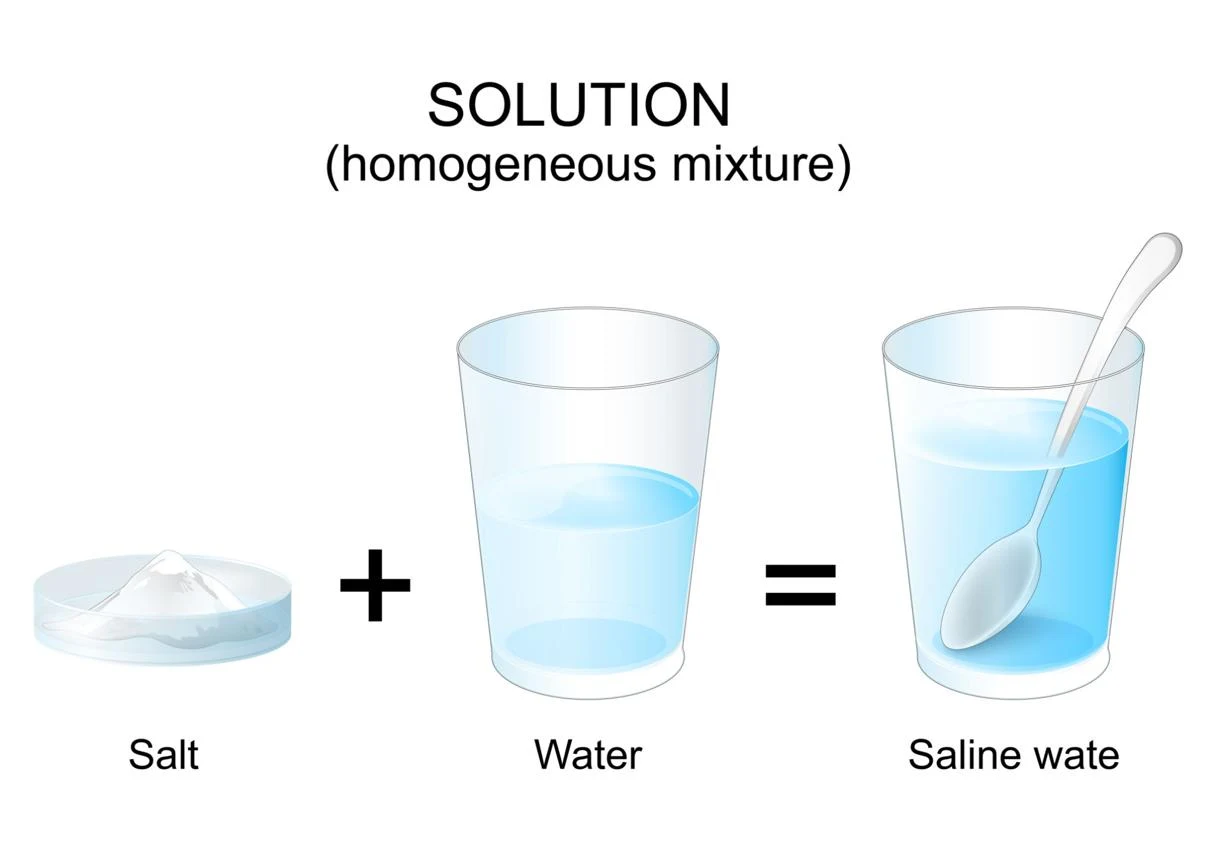
In salt water:
- Salt is the solid substance.
- Water is the liquid.
- The salt dissolves in the water to form a uniform solution.
3. Liquid-Liquid Mixtures
These are homogeneous mixtures formed when two liquids mix uniformly.
Examples include:
- Alcohol and water.
- Vinegar and water.
- Some liquid cleaning solutions.
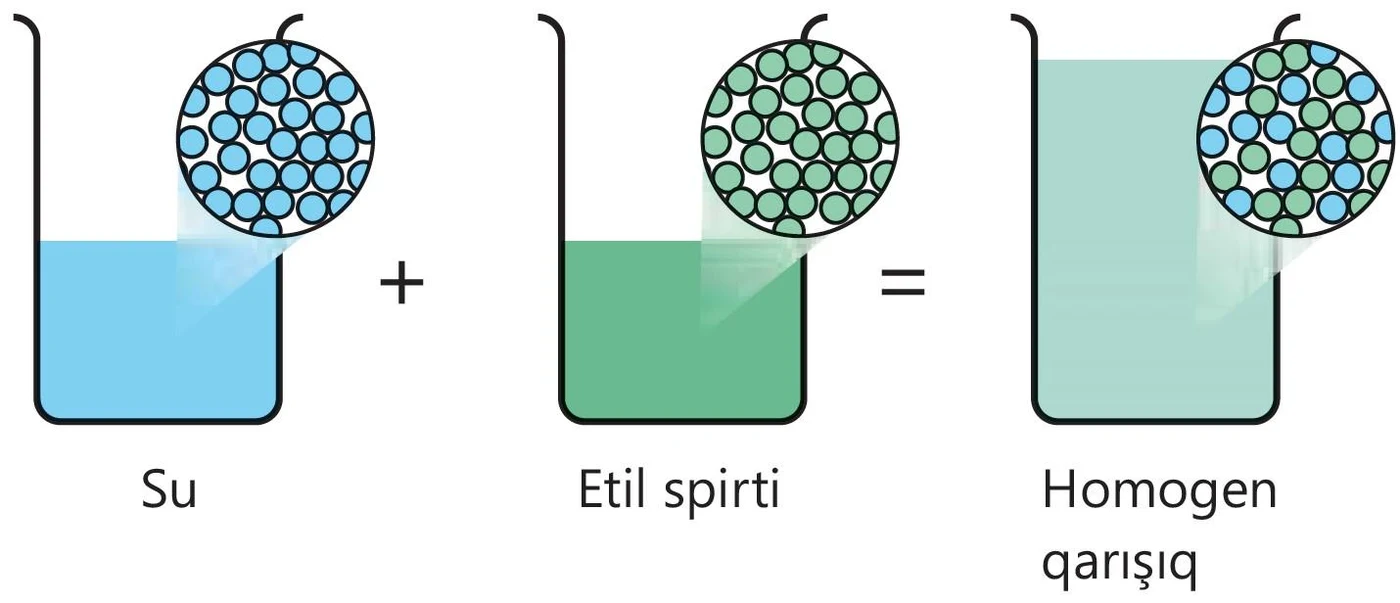
For a liquid-liquid mixture to be homogeneous, the liquids must mix uniformly.
4. Gas-Gas Mixtures
These are homogeneous mixtures formed when two or more gases mix uniformly.
The most common example is air.
Air contains different gases, including:
- Nitrogen.
- Oxygen.
- Argon.
- Carbon dioxide.
- Small quantities of other gases.
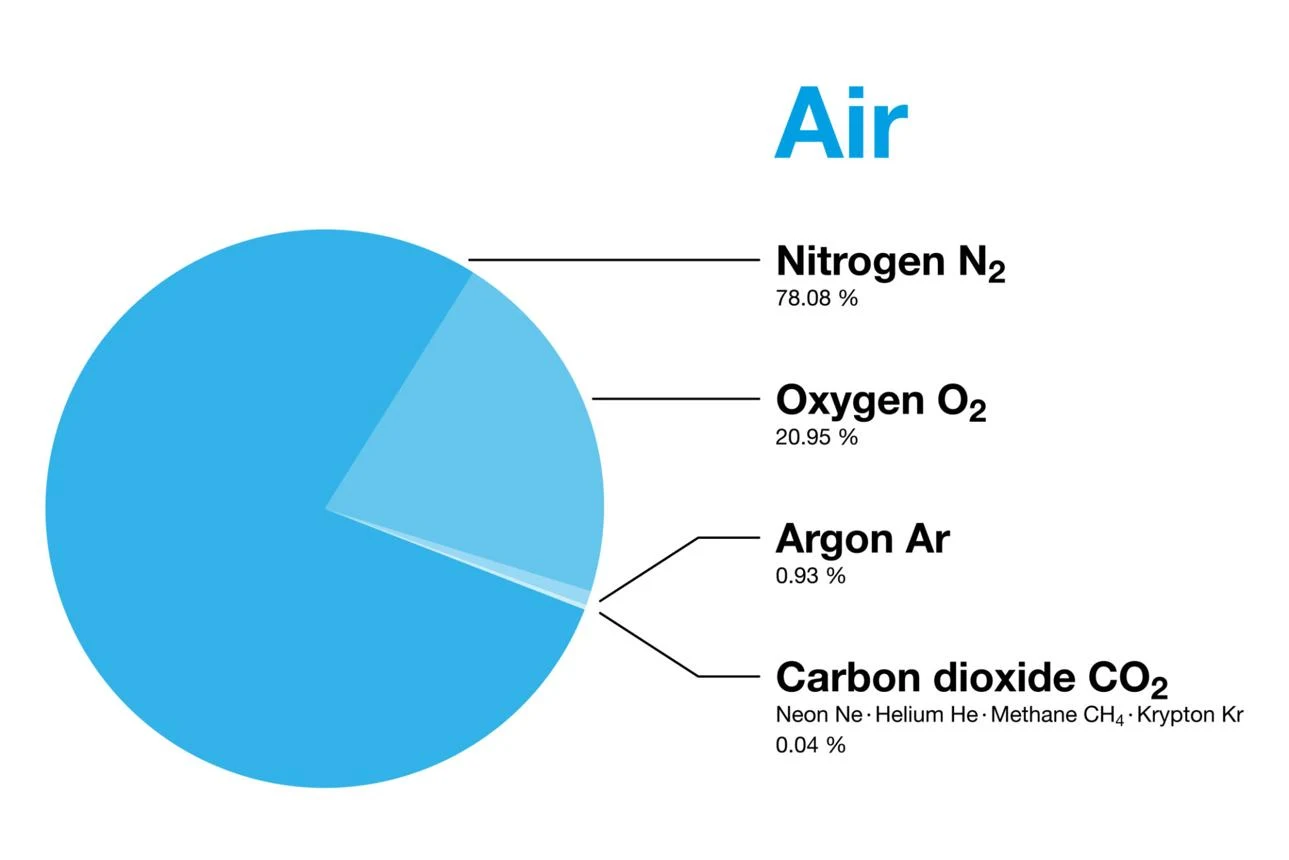
Air is a homogeneous mixture because its gases are evenly distributed under ordinary conditions.
2.1.6 Important Terms Used in Solutions
A solution is a homogeneous mixture formed when one substance dissolves in another.
There are three important terms used when studying solutions.
1. Solute
A solute is the substance that dissolves in another substance to form a solution.
Example:
When salt is added to water, salt is the solute.
2. Solvent
A solvent is the substance that dissolves another substance.
Example:
When salt is dissolved in water, water is the solvent.
3. Solution
A solution is the uniform mixture formed when a solute dissolves in a solvent.
Example:
Salt water is a solution.

Example of a salt solution
When salt is added to water and stirred:
- Salt is the solute.
- Water is the solvent.
- Salt water is the solution.
2.1.7 Methods of Separating Homogeneous Mixtures
Homogeneous mixtures can be separated using different physical methods.
The appropriate method depends on the properties of the substances in the mixture.
The methods covered in Grade 7 include:
- Evaporation.
- Crystallisation.
- Simple distillation.
- Fractional distillation.
- Sublimation.
- Solvent extraction.
- Chromatography.
1. Evaporation
Evaporation is a method of separating a dissolved solid from a liquid by heating the solution until the liquid changes into vapour.
The dissolved solid remains behind.
Example: Obtaining salt from seawater
Seawater contains dissolved salts.
When seawater is placed in shallow evaporation ponds and exposed to the sun, water gradually evaporates, leaving salt behind.
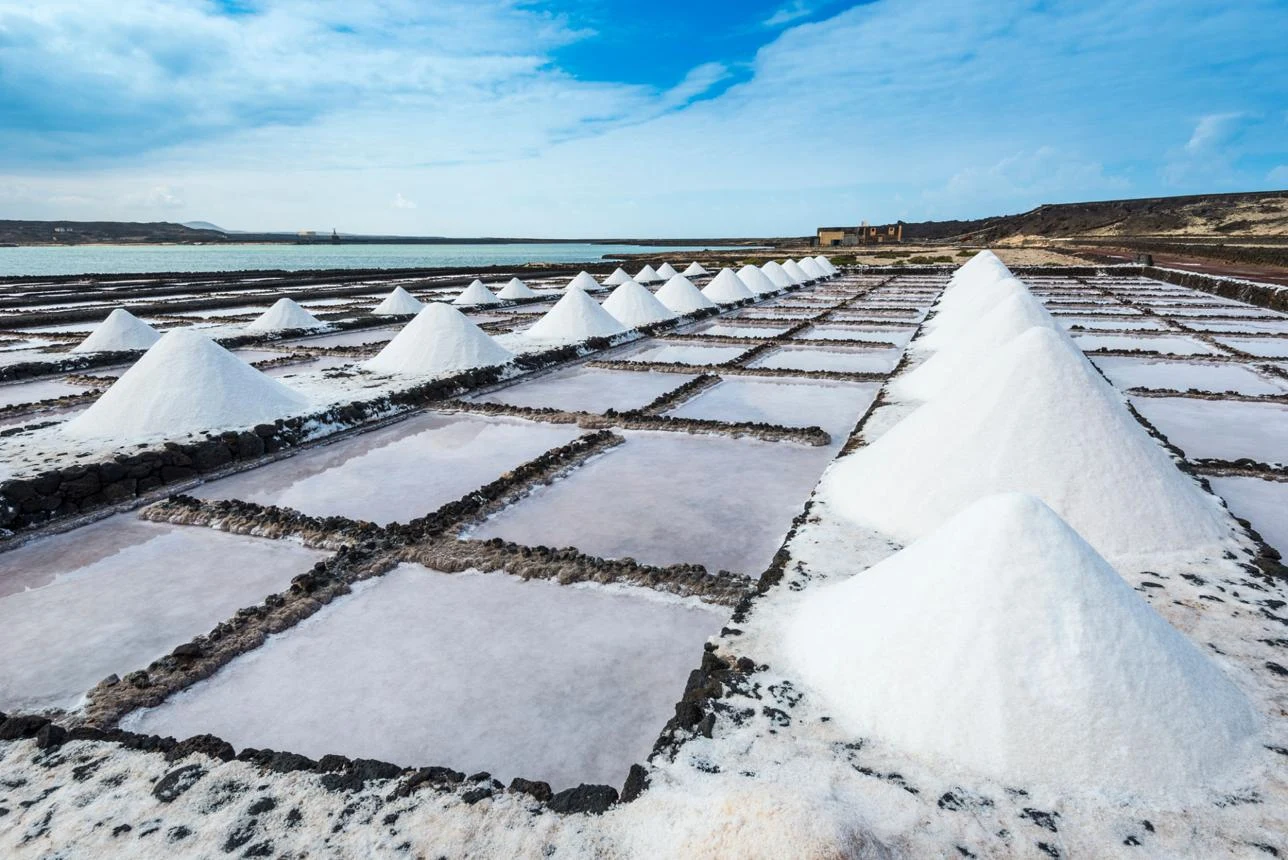
Steps involved in evaporation
- Pour the salt solution into an evaporating dish.
- Heat the solution carefully or allow it to evaporate naturally.
- The water changes into vapour.
- The dissolved salt remains in the dish.
- Collect the salt after the water has evaporated.
Applications of evaporation
- Obtaining salt from seawater.
- Concentrating solutions.
- Drying wet materials.
- Producing certain food products.
Advantages of evaporation
- Simple to carry out.
- Useful for recovering dissolved solids.
- Does not require complicated equipment.
Limitation
The solvent is usually lost as vapour and is not collected.
2. Crystallisation
Crystallisation is a method of separating and obtaining a dissolved solid in the form of crystals from a solution.
It involves preparing a concentrated solution and allowing crystals to form as the solution cools or loses some solvent.
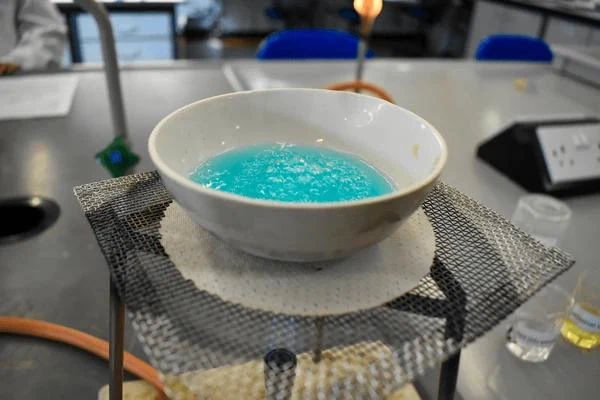
Steps involved in crystallisation
- Prepare a solution containing the dissolved substance.
- Heat the solution gently to make it more concentrated where appropriate.
- Allow the solution to cool.
- Crystals begin to form.
- Separate the crystals from the remaining liquid.
- Dry the crystals appropriately.
Applications of crystallisation
- Production of table salt.
- Manufacture of sugar crystals.
- Purification of some chemical substances.
- Production of crystals used in scientific and industrial processes.
Difference between evaporation and crystallisation
|
Evaporation |
Crystallisation |
|---|---|
|
Mainly removes the solvent |
Produces crystals of the dissolved substance |
|
Often involves heating until the solvent is removed |
Uses controlled concentration and cooling |
|
The solid remains as a residue |
The solid forms crystals |
3. Simple Distillation
Simple distillation is a method of separating a liquid from a solution by heating it until it evaporates and then cooling the vapour to form a liquid again.
It is commonly used to obtain pure water from salty water.
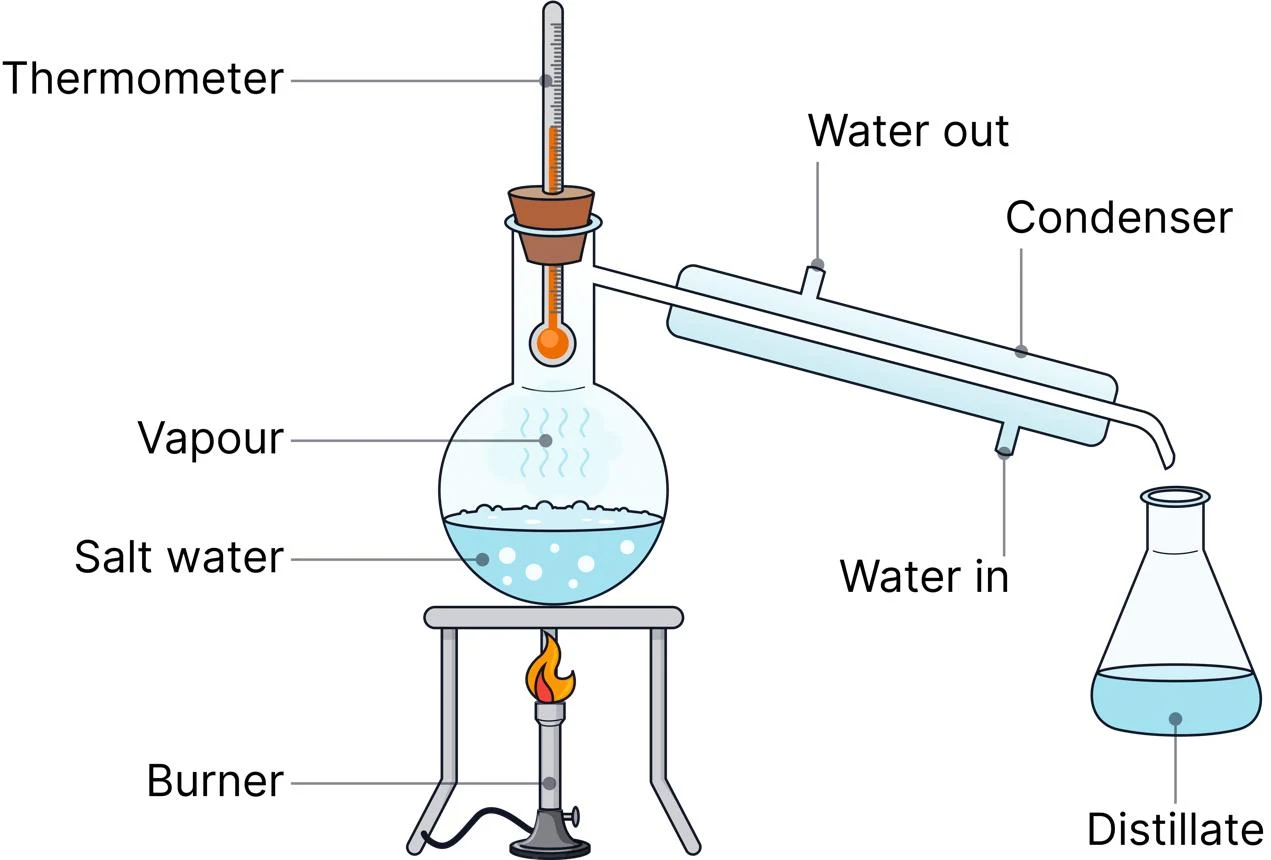
How simple distillation works
- A solution is placed in a distillation flask.
- The flask is heated.
- The liquid with the lower boiling point evaporates.
- The vapour passes through a condenser.
- The condenser cools the vapour.
- The vapour changes back into liquid.
- The purified liquid is collected in a receiving container.
Applications of simple distillation
- Producing distilled water.
- Purifying water in certain industrial processes.
- Recovering solvents from solutions.
Important: Simple distillation allows the liquid to be recovered, unlike ordinary evaporation.
4. Fractional Distillation
Fractional distillation is a method of separating two or more miscible liquids that have different but relatively close boiling points.
It uses a special apparatus called a fractionating column.
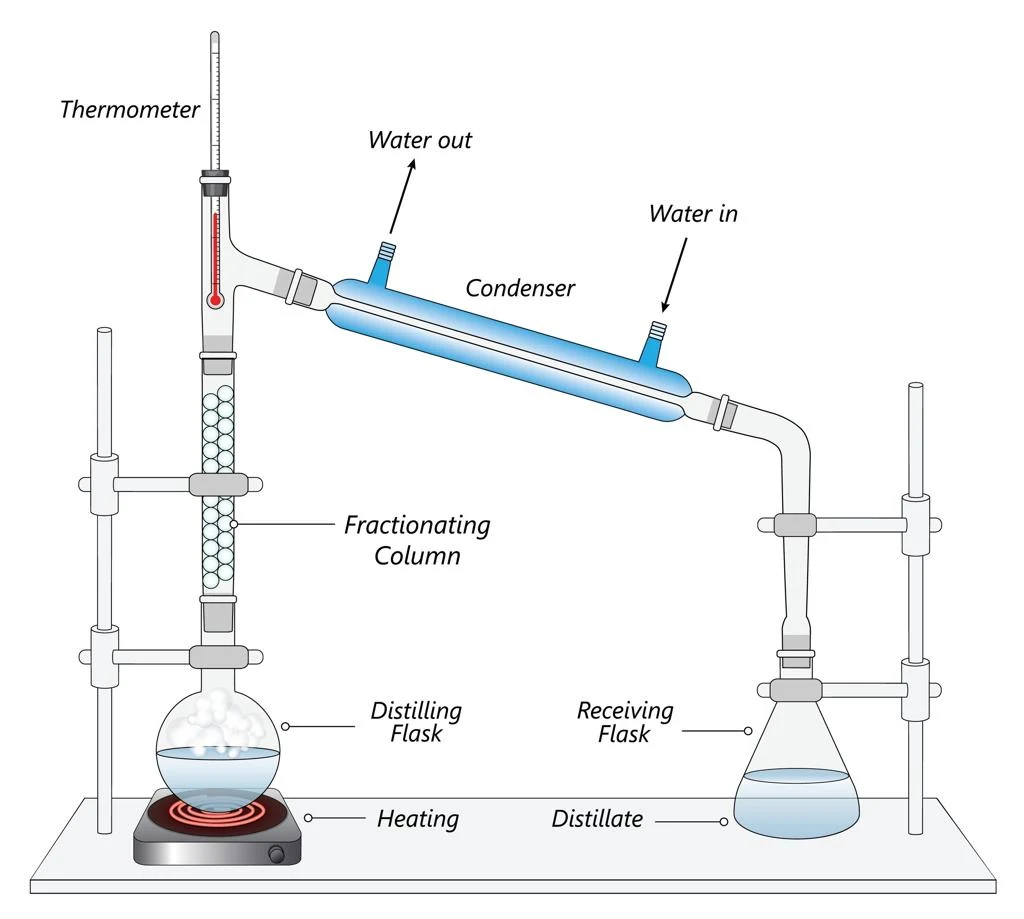
How fractional distillation works
- A mixture of liquids is placed in a distillation flask.
- The mixture is heated.
- The liquid with the lower boiling point vaporises more readily.
- Vapours pass through the fractionating column.
- The column allows repeated condensation and vaporisation.
- The vapour of the component with the lower boiling point moves towards the condenser.
- The vapour cools and changes back into liquid.
- The liquid is collected separately.
Applications of fractional distillation
- Separating components of crude oil in petroleum refineries.
- Separating mixtures of miscible liquids.
- Producing different industrial chemical products.
- Separating gases from liquefied air.
Difference between simple and fractional distillation
|
Simple distillation |
Fractional distillation |
|---|---|
|
Uses a simple distillation apparatus |
Uses a fractionating column |
|
Suitable for recovering a solvent from a solution or separating liquids with widely different boiling points |
Suitable for separating miscible liquids with relatively close boiling points |
|
Does not require a fractionating column |
Requires a fractionating column |
|
Example: obtaining water from salt solution |
Example: separating fractions of crude oil |
5. Sublimation
Sublimation is the process through which a solid changes directly into gas without first changing into a liquid.
It can be used to separate a sublimable solid from a non-sublimable solid.
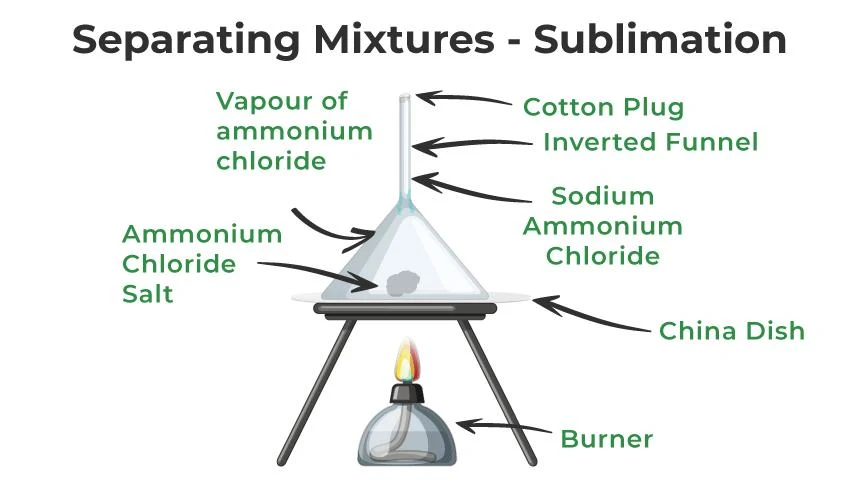
Examples of substances that undergo sublimation
- Ammonium chloride.
- Iodine.
- Some other solids with sublimation properties.
How sublimation is used to separate mixtures
- Place a mixture containing a sublimable solid and a non-sublimable solid in a suitable container.
- Heat the mixture carefully under teacher supervision.
- The sublimable solid changes directly into vapour.
- The vapour comes into contact with a cool surface.
- It changes back into solid crystals.
- Collect the deposited solid.
Application of sublimation
It is used to separate certain solids from mixtures and to purify substances that can sublime.
6. Solvent Extraction
Solvent extraction is a method of separating substances by using a suitable solvent that dissolves one component of a mixture more readily than the other components.
The selected solvent helps remove the desired substance from the mixture.
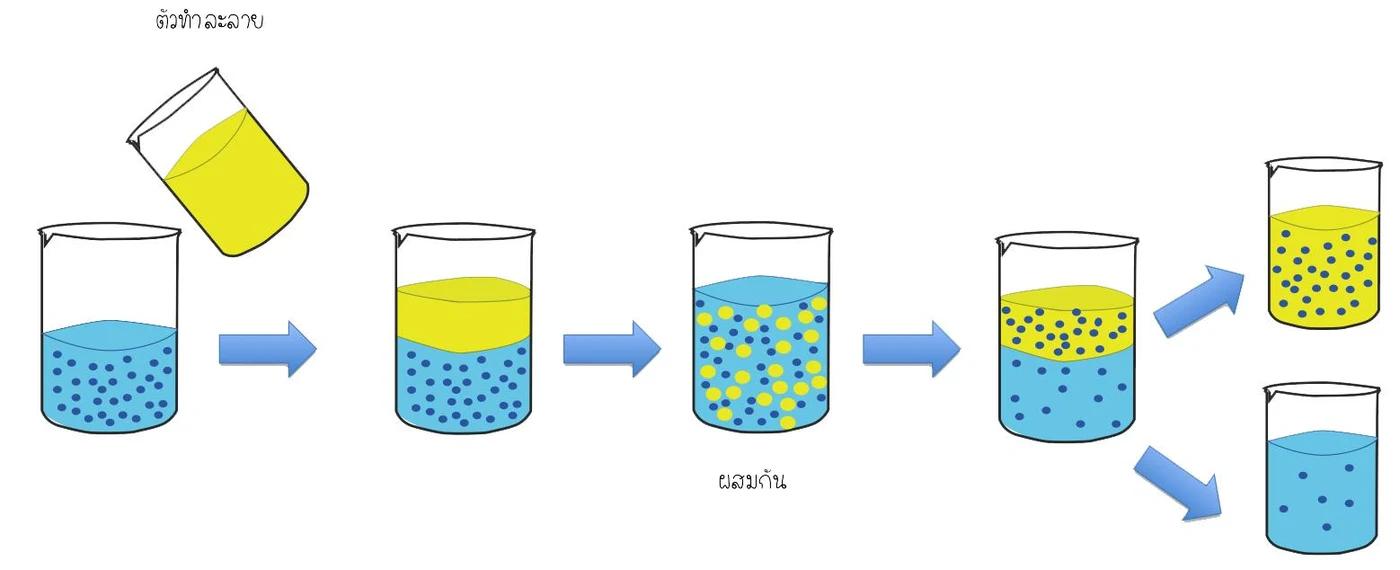
Example: Extracting salt from a mixture of salt and sand
- Place the salt and sand mixture in a container.
- Add water.
- Stir the mixture.
- Salt dissolves in water while sand remains undissolved.
- Separate the sand from the salt solution.
- Evaporate the water to obtain the salt.
Applications of solvent extraction
- Extracting flavours from food materials.
- Extracting oils from seeds.
- Obtaining useful substances from plants.
- Separating soluble components from insoluble materials.
7. Chromatography
Chromatography is a method of separating substances in a mixture based on the different rates at which they move through a medium.
It is commonly used to separate coloured substances such as dyes and pigments.
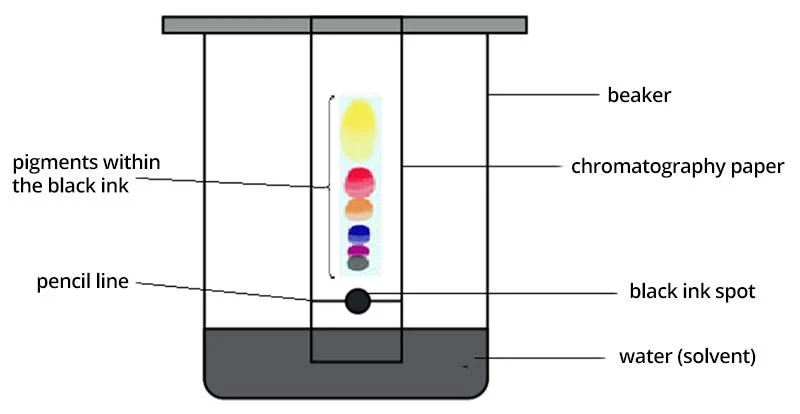
Example: Separating colours in black ink
Black ink may contain several different coloured dyes.
Chromatography can separate these colours.
Steps involved in paper chromatography
- Cut a strip of chromatography paper.
- Draw a pencil line near the bottom of the paper.
- Place a small spot of ink on the pencil line.
- Put a small amount of suitable solvent in a container.
- Suspend the paper in the container with its lower end in the solvent.
- Ensure the ink spot is above the solvent level.
- Allow the solvent to move up the paper.
- Observe the different colours separating.
- Remove the paper and allow it to dry.
Why do the colours separate?
Different substances in the ink move at different speeds because they have different properties, including their attraction to the paper and their solubility in the solvent.
Applications of chromatography
- Separating dyes in ink.
- Identifying substances in mixtures.
- Testing food colourings.
- Analysing plant pigments.
- Investigating substances in laboratories.
2.1.8 Summary of Methods of Separating Homogeneous Mixtures
|
Method |
Principle |
Example |
|---|---|---|
|
Evaporation |
Removes the solvent as vapour |
Obtaining salt from seawater |
|
Crystallisation |
Forms crystals from a concentrated solution |
Obtaining sugar crystals |
|
Simple distillation |
Evaporates and condenses a liquid |
Obtaining distilled water |
|
Fractional distillation |
Separates miscible liquids with different boiling points |
Separating crude oil fractions |
|
Sublimation |
Changes a solid directly into vapour |
Separating ammonium chloride from sand |
|
Solvent extraction |
Uses a solvent to dissolve a selected component |
Extracting salt from sand |
|
Chromatography |
Separates substances according to their movement through a medium |
Separating ink colours |
2.1.9 Applications of Separation of Mixtures in Daily Life
Separation methods are important in homes, industries, agriculture and scientific laboratories.
1. Food Processing
- Extracting useful substances from food materials.
- Producing sugar crystals.
- Separating ingredients during food processing.
- Producing salt from seawater.
2. Water Treatment
Separation methods help remove unwanted substances from water.
For example, water treatment processes use several physical methods to remove suspended materials and produce cleaner water.
3. Petroleum Industry
Fractional distillation is used to separate crude oil into different fractions.
These fractions are used to produce:
- Petrol.
- Diesel.
- Kerosene.
- Liquefied petroleum gas.
- Other petroleum products.
4. Pharmaceutical Industry
Separation methods are used to obtain and purify substances used in medicines.
5. Agriculture
Farmers and agricultural industries use separation methods to process agricultural products and obtain useful materials.
6. Textile Industry
Chromatography can be used to separate and analyse dyes used in fabrics.
2.1.10 Choosing a Suitable Method of Separation
The method used to separate a mixture depends on the physical properties of its components.
|
Property considered |
Suitable separation method |
|---|---|
|
Ability of a solvent to evaporate |
Evaporation |
|
Ability to form crystals |
Crystallisation |
|
Difference in boiling points |
Distillation |
|
Ability of a solid to sublime |
Sublimation |
|
Difference in solubility in a selected solvent |
Solvent extraction |
|
Difference in movement of dissolved substances |
Chromatography |
2.1.11 Basic Differences Between Elements, Compounds and Mixtures
The strand is titled Mixtures, Elements and Compounds. The supplied curriculum details focus on mixtures and separation methods, but learners should understand the following basic distinctions.
A. Element
An element is a pure substance made up of only one type of atom.
Examples include:
- Iron.
- Oxygen.
- Gold.
- Copper.
- Carbon.
B. Compound
A compound is a pure substance formed when two or more different elements chemically combine in fixed proportions.
Examples include:
- Water.
- Carbon dioxide.
- Sodium chloride.
C. Mixture
A mixture is formed when two or more substances are physically combined without chemically forming a new substance.
Examples include:
- Air.
- Salt water.
- Soil.
- Brass.
Comparison of Elements, Compounds and Mixtures
|
Element |
Compound |
Mixture |
|---|---|---|
|
Contains one type of element/atom |
Contains two or more elements chemically combined |
Contains two or more substances physically combined |
|
Cannot be broken down into simpler substances by ordinary chemical methods |
Can be separated into its elements by chemical methods |
Can be separated using physical methods |
|
Has its own characteristic properties |
Has properties different from its constituent elements |
Components retain their individual properties |
|
Example: iron |
Example: water |
Example: salt water |
Remember these important points
- A mixture is formed through physical combination.
- A compound is formed through chemical combination.
- A homogeneous mixture has a uniform composition.
- A heterogeneous mixture has a non-uniform composition.
- A solute dissolves in a solvent to form a solution.
- Different mixtures require different separation methods.
Curriculum alignment: KICD Grade 7 Integrated Science, Strand 2.0, sub-strand 2.1.