
3.1.1 Meaning of Reproduction
Reproduction is the biological process through which living organisms produce new individuals of their own kind.
It is an important characteristic of living things because it ensures the continuation of a species from one generation to another.
Human beings reproduce through sexual reproduction, which involves the joining of a male reproductive cell and a female reproductive cell.
The male reproductive cell is called a sperm cell, while the female reproductive cell is called an ovum or egg cell.
3.1.2 Meaning of the Human Reproductive System
The human reproductive system is a group of organs responsible for reproduction in human beings.
It consists of two main systems:
- Male reproductive system.
- Female reproductive system.
Each system has specialised organs that perform particular functions.
The male reproductive system produces sperm cells, while the female reproductive system produces ova and provides an environment in which a developing baby can grow.
3.1.3 The Male Reproductive System
The male reproductive system consists of reproductive organs that produce and transport sperm cells.
The Grade 7 curriculum identifies three main parts:
- Penis.
- Testis.
- Urethra.
Parts of the Male Reproductive System and Their Functions
1. Penis
The penis is an external male reproductive organ.
Functions:
- It transfers semen into the female reproductive tract during sexual reproduction.
- It contains the urethra through which urine leaves the body.
- It plays a role in human reproduction.
2. Testis
The testis is the male reproductive organ responsible for producing sperm cells.
There are two testes in the male reproductive system.
Functions:
- Produces sperm cells.
- Produces the male sex hormone called testosterone.
- Contributes to the development of male secondary sexual characteristics during adolescence.
The plural of testis is testes.
3. Urethra
The urethra is a tube that carries urine from the urinary bladder to the outside of the body.
In males, it also serves as a passage through which semen leaves the body.
Functions:
- Carries urine out of the body.
- Provides a passage for semen during ejaculation.
Important: Urine and semen do not normally pass through the urethra simultaneously.
Summary of Male Reproductive Parts
|
Part |
Function |
|---|---|
|
Penis |
Transfers semen and provides an exit for urine |
|
Testis |
Produces sperm cells and testosterone |
|
Urethra |
Carries urine and semen out of the male body |
3.1.4 The Female Reproductive System
The female reproductive system consists of organs responsible for producing egg cells and supporting the development of a baby during pregnancy.
The Grade 7 curriculum identifies the following main parts:
- Vagina.
- Cervix.
- Uterus.
- Oviduct.
- Ovaries.
Parts of the Female Reproductive System and Their Functions
1. Vagina
The vagina is a muscular tube connecting the cervix to the outside of the female body.
Functions:
- Receives sperm during sexual reproduction.
- Provides a passage through which menstrual blood leaves the body.
- Acts as the birth canal during childbirth.
2. Cervix
The cervix is the narrow lower part of the uterus that connects the uterus to the vagina.
Functions:
- Connects the uterus to the vagina.
- Allows menstrual blood to pass from the uterus into the vagina.
- Dilates during childbirth to allow the baby to pass through.
3. Uterus
The uterus is a hollow, muscular organ in which a developing baby grows during pregnancy.
Functions:
- Receives the fertilised egg during implantation.
- Provides an environment for the development of the embryo and foetus.
- Its muscular walls help in childbirth.
4. Oviduct
The oviduct is a tube that connects the region of each ovary to the uterus.
It is also commonly called the fallopian tube.
Functions:
- Transports the egg cell from the ovary towards the uterus.
- Provides the usual site where fertilisation takes place.
5. Ovaries
The ovaries are two small reproductive organs found in the female reproductive system.
Functions:
- Produce egg cells or ova.
- Produce female sex hormones, including oestrogen and progesterone.
- Help regulate the menstrual cycle and female reproductive development.
Summary of Female Reproductive Parts
|
Part |
Function |
|---|---|
|
Vagina |
Receives sperm and acts as the birth canal |
|
Cervix |
Connects the uterus to the vagina |
|
Uterus |
Provides an environment for the development of a baby |
|
Oviduct |
Transports the ovum and is the usual site of fertilisation |
|
Ovaries |
Produce ova and female sex hormones |
3.1.5 Basic Process of Human Reproduction
Human reproduction involves the joining of a male reproductive cell and a female reproductive cell.
The main stages are:
1. Production of Reproductive Cells
- The male reproductive system produces sperm cells in the testes.
- The female reproductive system produces egg cells in the ovaries.
2. Fertilisation
Fertilisation occurs when a sperm cell joins with an ovum.
It usually takes place in the oviduct.
3. Formation of a Zygote
When a sperm cell successfully joins with an ovum, a fertilised cell called a zygote is formed.
4. Development
The zygote begins dividing into more cells and develops into an embryo.
The developing embryo becomes attached to the lining of the uterus, where further development takes place.
5. Pregnancy and Birth
As development continues, the embryo becomes a foetus.
The foetus grows inside the uterus until the baby is ready to be born.
3.1.6 Meaning of Adolescence
Adolescence is the stage of human development between childhood and adulthood.
It is a period during which boys and girls experience physical, emotional, psychological and social changes.
During adolescence, the body develops towards reproductive maturity.
The changes experienced during this stage are mainly associated with puberty.
3.1.7 Meaning of Puberty
Puberty is the period during adolescence when the body undergoes physical and hormonal changes that lead to sexual maturity.
During puberty:
- The reproductive organs develop.
- Hormone production increases.
- Physical appearance changes.
- Emotional experiences may change.
- Boys and girls gradually develop adult characteristics.
The age at which puberty begins varies from one individual to another.
3.1.8 Physical Changes in Boys During Adolescence
Boys experience several physical changes as they grow through adolescence.
The common physical changes include:
1. Growth in Height
Boys experience an increase in height as their bones and bodies develop.
2. Broadening of Shoulders
The shoulders become broader, and the body develops more muscle.
3. Growth of Facial Hair
Hair begins to grow on the face, particularly around the upper lip and chin.
4. Growth of Pubic and Underarm Hair
Hair develops around the pubic region and under the armpits.
5. Deepening of the Voice
The voice becomes deeper as the voice box develops.
6. Development of Reproductive Organs
The penis and testes increase in size as the reproductive system matures.
7. Increased Sweating
Sweat production may increase, and body odour may become more noticeable.
8. Nocturnal Emissions
Some boys experience the release of semen during sleep. This is commonly called a wet dream.
It is a normal part of male development.
9. Development of Acne
Some boys develop pimples because of changes in hormone activity and oil production in the skin.
3.1.9 Physical Changes in Girls During Adolescence
Girls also experience several physical changes during adolescence.
Common changes include:
1. Growth in Height
Girls experience an increase in height as their bodies develop.
2. Development of Breasts
The breasts begin to develop and increase in size.
3. Widening of Hips
The hips become broader as the body develops towards adulthood.
4. Growth of Pubic and Underarm Hair
Hair begins to grow around the pubic region and under the armpits.
5. Beginning of Menstruation
Girls begin experiencing menstruation.
Menstruation is the monthly shedding of the lining of the uterus when pregnancy has not occurred.
The blood and tissue leave the body through the vagina.
6. Increased Sweating
Sweating may increase, making personal hygiene important.
7. Development of Acne
Some girls develop pimples because of hormonal changes.
8. Changes in Body Shape
The body gradually develops a more mature shape.
3.1.10 Emotional Changes During Adolescence
Apart from physical changes, adolescents may experience emotional changes.
Examples include:
- Becoming more aware of personal identity.
- Experiencing changes in mood.
- Developing stronger feelings and emotions.
- Becoming more concerned about appearance.
- Developing interest in relationships.
- Seeking more independence.
- Becoming more sensitive to criticism.
- Experiencing anxiety about physical development.
These changes are part of growing up. However, adolescents should learn healthy ways of managing their emotions.
3.1.11 Social Changes During Adolescence
Social changes affect how adolescents interact with family members, friends and other people.
Examples include:
- Developing new friendships.
- Becoming more interested in peer groups.
- Seeking greater independence from parents or guardians.
- Developing personal opinions.
- Becoming more responsible for personal decisions.
- Experiencing peer pressure.
- Developing greater interest in relationships.
3.1.12 Implications of Developmental Changes During Adolescence
Developmental changes have several implications for the lives of adolescents.
1. Increased Need for Personal Hygiene
Increased sweating and body odour mean that adolescents should pay more attention to cleanliness.
2. Need for Proper Nutrition
Rapid physical growth increases the importance of eating balanced meals.
3. Need for Emotional Support
Emotional changes may make adolescents need guidance, understanding and encouragement from parents, teachers and guardians.
4. Increased Responsibility
Adolescents gradually become more responsible for their personal hygiene, decisions and behaviour.
5. Need for Accurate Information
Adolescents need reliable information about puberty, menstruation, reproduction and personal health.
6. Influence of Peer Pressure
Some adolescents may be influenced by friends to engage in behaviours that are harmful to their health or education.
7. Development of Self-Esteem
Changes in physical appearance may affect how adolescents view themselves.
They should understand that people develop at different rates and that individual differences are normal.
3.1.13 Developmental Challenges During Adolescence and Their Management
Adolescents may face different challenges as their bodies and social lives change.
The following are common challenges and appropriate ways of managing them.
|
Developmental challenge |
Appropriate management |
|---|---|
|
Body odour |
Bathe regularly and wear clean clothes |
|
Acne |
Maintain skin hygiene and seek medical advice when necessary |
|
Menstrual discomfort |
Maintain menstrual hygiene and seek appropriate health support |
|
Mood changes |
Talk to trusted adults and practise healthy emotional management |
|
Peer pressure |
Develop confidence and make responsible decisions |
|
Low self-esteem |
Appreciate individual differences and focus on personal strengths |
|
Confusion about puberty |
Obtain accurate information from trusted sources |
|
Body image concerns |
Maintain a positive attitude towards normal body development |
|
Academic pressure |
Prepare a study timetable and manage time effectively |
|
Relationship challenges |
Maintain personal boundaries and seek guidance |
3.1.14 Personal Hygiene During Adolescence
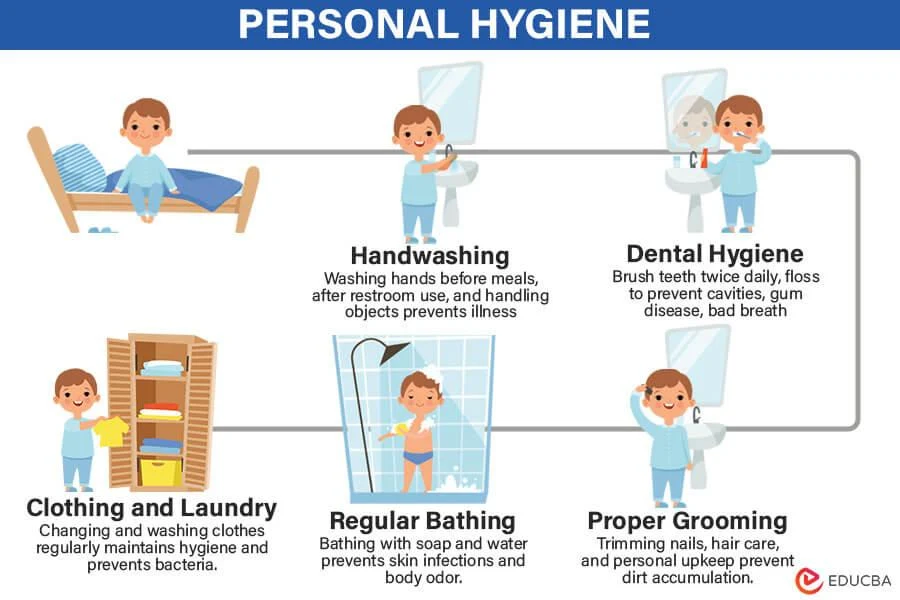
Personal hygiene refers to practices that individuals follow to keep their bodies clean and healthy.
Good personal hygiene is particularly important during adolescence because of increased sweating and other physical changes.
Good hygiene practices include:
- Bathing regularly.
- Washing the armpits and other body parts properly.
- Wearing clean clothes.
- Changing underwear daily.
- Brushing teeth at least twice daily.
- Washing hands regularly.
- Keeping fingernails short and clean.
- Washing hair regularly.
- Keeping the reproductive organs clean externally.
- Using clean menstrual products and changing them regularly during menstruation.
3.1.15 Menstrual Hygiene Management
Menstrual hygiene management refers to the practices used by girls and women to maintain cleanliness and comfort during menstruation.
Important practices include:
- Using clean sanitary pads or other appropriate menstrual products.
- Changing menstrual products regularly.
- Washing hands before and after changing menstrual products.
- Washing the external genital area with clean water.
- Disposing of used sanitary products appropriately.
- Keeping clean menstrual supplies available.
- Seeking help from a trusted adult or healthcare worker when necessary.
Importance of menstrual hygiene
- Promotes personal cleanliness.
- Reduces the risk of infection.
- Promotes comfort and confidence.
- Helps girls participate in school activities.
- Promotes good reproductive health.
3.1.16 Developing a Personal Plan for Managing Adolescence
Every adolescent should have a plan for managing the physical, emotional and social changes experienced during this stage.
A good plan may include:
|
Area |
Action to take |
|---|---|
|
Personal hygiene |
Bathe regularly and wear clean clothes |
|
Nutrition |
Eat balanced meals |
|
Physical health |
Participate in physical activities |
|
Emotional health |
Talk to trusted people when experiencing difficulties |
|
Education |
Seek accurate information about puberty |
|
Relationships |
Respect personal boundaries |
|
Peer pressure |
Make responsible decisions |
|
Personal safety |
Avoid harmful situations and seek help when necessary |
|
Schoolwork |
Develop a study timetable |
|
Health support |
Seek help from qualified health workers when needed |
3.1.17 Importance of Understanding the Human Reproductive System
- Helps learners understand human reproduction.
- Promotes responsible behaviour.
- Helps adolescents understand changes during puberty.
- Promotes personal hygiene.
- Encourages respect for the bodies of others.
- Helps prevent misinformation about reproduction.
- Promotes reproductive health awareness.
- Encourages adolescents to seek appropriate guidance and support.
Key inquiry questions
- What physical, social and emotional changes take place during adolescence?
- How can developmental changes be managed during adolescence?
Curriculum alignment: KICD Grade 7 Integrated Science, Strand 3.0, sub-strand 3.1.