
1.1.1 Meaning of Ulumul Qur'an
The term Ulumul Qur'an is an Arabic expression meaning the Sciences of the Qur'an.
It refers to the different areas of knowledge that help Muslims understand the Qur'an, its revelation, preservation, interpretation, teachings and importance.
The Qur'an is the holy book of Islam. Muslims believe that it is the word of Allah (S.W.T.) revealed to Prophet Muhammad (S.A.W.) through Angel Jibril (Gabriel).
The Qur'an is the primary source of guidance for Muslims in matters of faith, worship, morality and daily living.
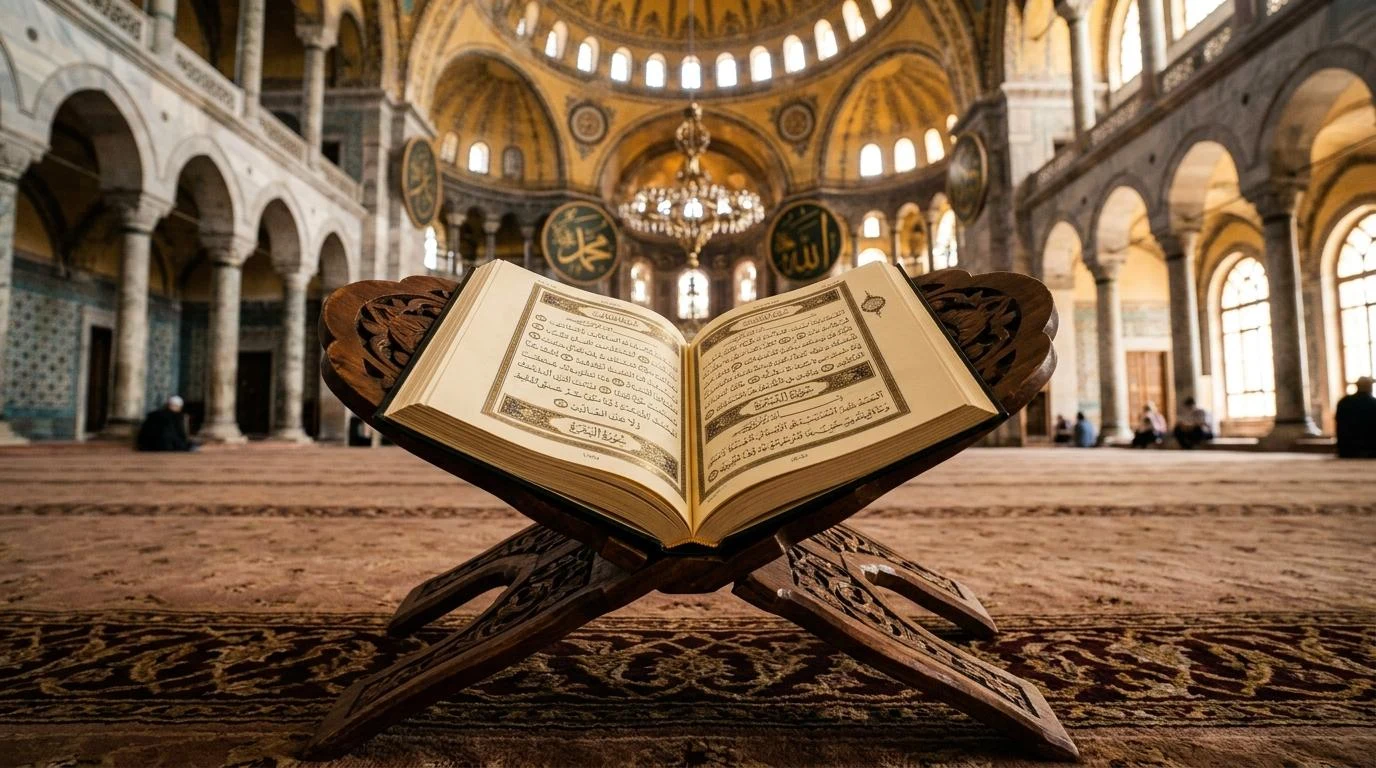
Areas covered under Ulumul Qur'an include:
- Meaning and importance of the Qur'an.
- Reasons for the revelation of the Qur'an.
- Stages of the revelation of the Qur'an.
- The first revelation at Cave Hira.
- Reasons why the Qur'an was revealed in portions.
- Importance of the Qur'an in the daily life of Muslims.
- Preservation and transmission of the Qur'an.
1.1.2 Meaning of the Qur'an
The Qur'an is the divine book revealed by Allah (S.W.T.) to Prophet Muhammad (S.A.W.) through Angel Jibril.
It was revealed in Arabic and contains guidance for all humanity.
The Qur'an consists of 114 chapters known as Surahs.
Each chapter contains verses known as Ayahs.
Muslims regard the Qur'an as the final divine scripture and a complete source of guidance on how to live according to the teachings of Islam.
Main characteristics of the Qur'an
- It is the word of Allah (S.W.T.).
- It was revealed to Prophet Muhammad (S.A.W.).
- It was revealed through Angel Jibril.
- It was revealed in Arabic.
- It contains 114 Surahs.
- It is divided into verses called Ayahs.
- It provides guidance for humanity.
- Muslims believe that Allah has preserved it from corruption.
- It is recited during prayers.
- It guides Muslims in matters of faith, worship and moral conduct.
1.1.3 Reasons Why the Qur'an Was Revealed to Mankind
Allah (S.W.T.) revealed the Qur'an to guide human beings towards the right path.
The Qur'an provides instructions on how people should worship Allah, relate with others and conduct their lives.
The following are the main reasons for its revelation.
1. To Guide Humanity
The Qur'an was revealed to show people the difference between right and wrong.
It teaches human beings how to live according to the commandments of Allah.
It guides Muslims in matters such as:
- Worship.
- Honesty.
- Justice.
- Kindness.
- Respect.
- Family relationships.
- Social responsibilities.
Qur'anic reference:
Surah Al-Baqarah (2:2) describes the Qur'an as a book in which there is no doubt and which provides guidance for those conscious of Allah.
2. To Teach People About Allah
The Qur'an teaches Muslims about the existence, oneness, power and attributes of Allah (S.W.T.).
It explains that Allah is the Creator and Sustainer of everything.
It also teaches Muslims to worship Allah alone and avoid associating partners with Him.
3. To Distinguish Between Right and Wrong
The Qur'an provides instructions on good and bad behaviour.
It encourages good actions and warns against wrongdoing.
Examples of actions encouraged by the Qur'an include:
- Telling the truth.
- Helping the needy.
- Respecting parents.
- Keeping promises.
- Being fair.
- Forgiving others.
It discourages actions such as:
- Stealing.
- Lying.
- Cheating.
- Oppression.
- Arrogance.
- Corruption.
4. To Teach Good Moral Values
The Qur'an teaches Muslims to develop good character.
It encourages kindness, patience, honesty, forgiveness and respect for other people.
These teachings help create peaceful families and communities.
5. To Provide Laws and Guidance for Human Life
The Qur'an provides guidance on different aspects of human life.
It teaches Muslims about:
- Marriage and family responsibilities.
- Business and trade.
- Inheritance.
- Worship.
- Social relationships.
- Justice.
- Personal conduct.
6. To Strengthen Faith
The Qur'an reminds Muslims about Allah, the Day of Judgement, Paradise and Hell.
Its teachings strengthen the faith of Muslims and encourage them to perform good deeds.
7. To Warn Against Evil
The Qur'an warns people against actions that may lead to spiritual and social harm.
It reminds Muslims that they are accountable for their actions before Allah.
8. To Bring Peace and Unity
The Qur'an encourages people to treat one another with kindness, fairness and compassion.
It promotes peaceful relationships among individuals and communities.
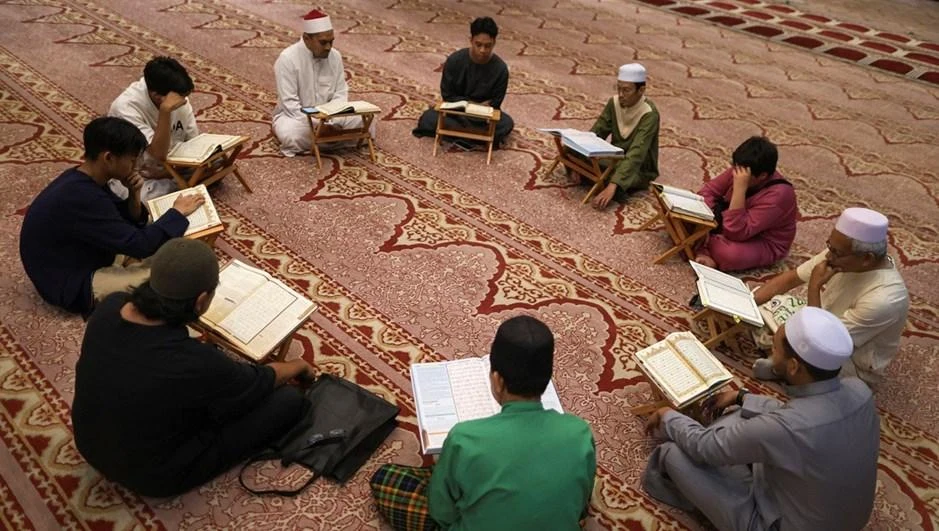
1.1.4 Stages of the Revelation of the Qur'an
The revelation of the Qur'an took place in stages.
According to the traditional Islamic understanding, the revelation involved two major stages.
Stage 1: Revelation from Al-Lawh Al-Mahfuz
Muslims believe that the Qur'an was preserved in Al-Lawh Al-Mahfuz, meaning the Preserved Tablet.
Allah (S.W.T.) has knowledge of everything, and the Qur'an was preserved by Him.
Stage 2: Revelation to the Prophet Muhammad (S.A.W.)
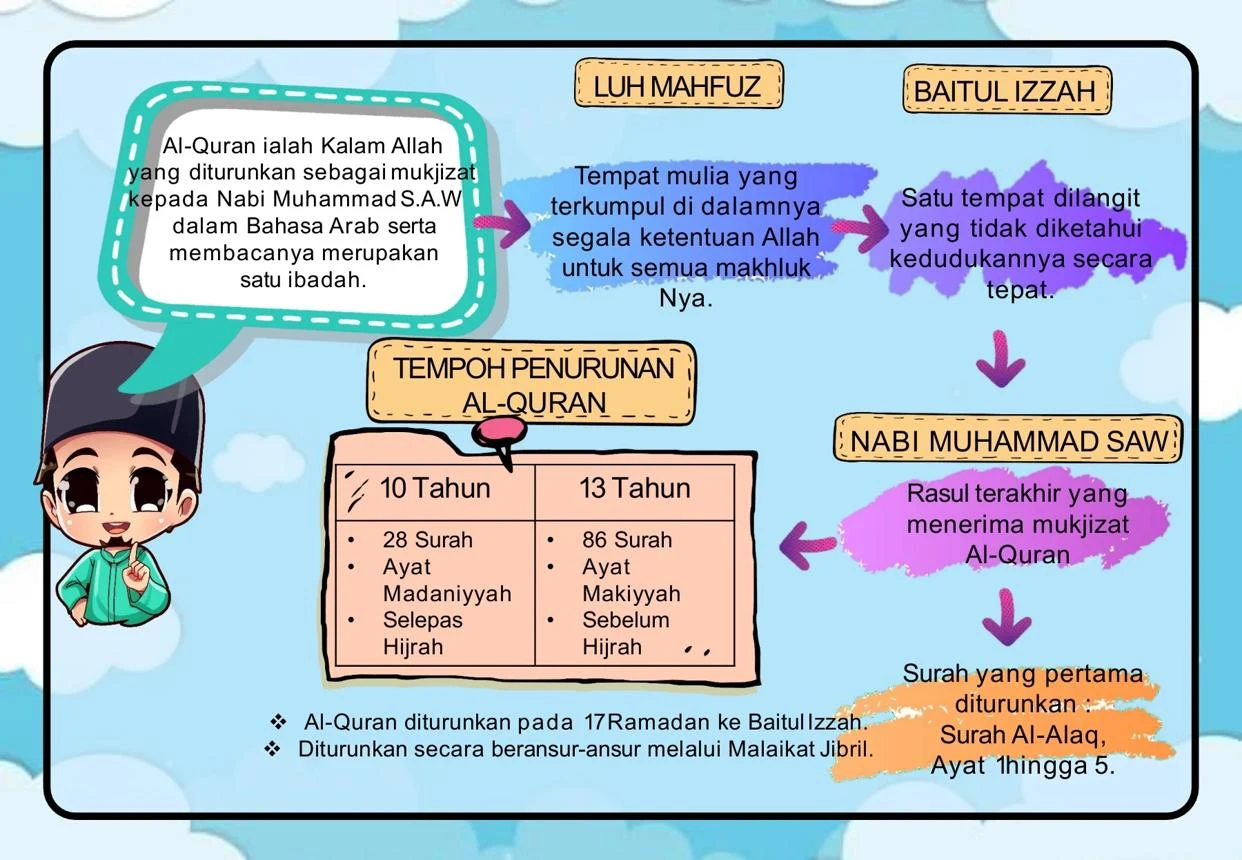
The Qur'an was revealed to Prophet Muhammad (S.A.W.) through Angel Jibril over approximately 23 years.
The revelation began when the Prophet was about 40 years old.
It continued during his life until shortly before his death.
The revelation took place in two main periods:
- Makkah period.
- Madinah period.
A. Makkan Period
The Makkan period refers to the period when the Prophet (S.A.W.) lived in Makkah after receiving the first revelation and before migrating to Madinah.
It lasted approximately 13 years.
The main teachings revealed during this period included:
- Belief in the oneness of Allah.
- Rejection of idol worship.
- Belief in life after death.
- Patience during hardship.
- Good moral conduct.
- Accountability before Allah.
The Makkan revelations focused strongly on establishing the foundation of Islamic faith.
B. Madinan Period
The Madinan period refers to the period following the Prophet's migration from Makkah to Madinah.
It lasted approximately 10 years.
The revelations during this period addressed matters such as:
- Worship.
- Marriage.
- Family responsibilities.
- Business and trade.
- Inheritance.
- Social relationships.
- Justice.
- Community organisation.
- Relations with other communities.
The Madinan revelations provided guidance on establishing and managing a Muslim society.
Summary of the Two Periods
|
Makkan period |
Madinan period |
|---|---|
|
Lasted approximately 13 years |
Lasted approximately 10 years |
|
Revelation began in Makkah |
Revelation continued in Madinah |
|
Emphasised Tawhid and basic beliefs |
Addressed worship, laws and social responsibilities |
|
Strengthened the foundation of Iman |
Guided the development of the Muslim community |
|
Encouraged patience and perseverance |
Guided social, family and community life |
1.1.5 The First Revelation of the Qur'an at Cave Hira
The first revelation of the Qur'an took place at Cave Hira near Makkah.
Before receiving the revelation, Prophet Muhammad (S.A.W.) often withdrew to Cave Hira to reflect and worship Allah.
At that time, many people in Makkah practised idol worship and other practices that were contrary to the teachings of Tawhid.
The Prophet disliked these practices and spent time in solitude.

The incident of the first revelation
When Prophet Muhammad (S.A.W.) was about 40 years old, Angel Jibril appeared to him at Cave Hira.
Angel Jibril instructed him to read.
The Prophet replied that he could not read.
Angel Jibril repeated the command, and the first verses of Surah Al-Alaq were revealed.
The first five verses of Surah Al-Alaq (Qur'an 96:1–5) were revealed on this occasion.
These verses begin with the command to read in the name of Allah, who created mankind.
The verses also teach that Allah taught human beings through the pen and gave them knowledge they did not previously possess.
The Prophet returned home deeply affected by the experience.
His wife, Khadijah bint Khuwaylid (R.A.), comforted and supported him.
She later accompanied him to Waraqah ibn Nawfal, who recognised the significance of the experience.
This event marked the beginning of the revelation of the Qur'an to Prophet Muhammad (S.A.W.).
1.1.6 Lessons Learnt from the First Revelation
The first revelation provides important lessons for Muslims.
1. Importance of Seeking Knowledge
The first revealed command was Iqra, meaning Read.
This teaches Muslims that seeking knowledge is an important responsibility.
Muslims should strive to acquire useful knowledge through reading, learning and reflection.
2. Importance of Education
The revelation emphasises the importance of learning and education.
Education helps people understand their responsibilities and make informed decisions.
3. Allah Is the Source of Knowledge
The verses remind Muslims that Allah is the ultimate source of knowledge.
Human beings should use knowledge responsibly and acknowledge Allah's blessings.
4. Importance of Patience
Prophet Muhammad (S.A.W.) experienced fear and uncertainty during the first revelation.
However, he remained patient and continued with his mission.
5. Importance of Supporting Others
Khadijah (R.A.) comforted and supported the Prophet during a difficult moment.
This teaches Muslims to support family members and people facing challenges.
6. Importance of Reflection
The Prophet's habit of withdrawing to Cave Hira demonstrates the value of reflection and thoughtful consideration.
7. Importance of Trusting Allah
Muslims should rely on Allah when facing difficult situations.
1.1.7 Why Was the Qur'an Revealed in Portions?
The Qur'an was revealed gradually over approximately 23 years instead of being revealed as one complete book at once.
There were several reasons for this arrangement.
1. To Strengthen the Heart of Prophet Muhammad (S.A.W.)
Gradual revelation provided continuous support and reassurance to the Prophet.
It strengthened his faith and helped him remain firm while spreading the message of Islam.
2. To Make Memorisation Easier
The Qur'an contains many verses.
Revealing it in portions made it easier for the Prophet and his companions to memorise, understand and preserve it.
3. To Make Implementation Easier
Some Islamic instructions and laws were introduced gradually.
This allowed Muslims to understand and adopt the teachings progressively.
4. To Respond to Questions and Events
Certain revelations addressed questions asked by people or situations experienced by the Muslim community.
This helped provide relevant guidance when it was needed.
5. To Allow Proper Understanding
Gradual revelation gave Muslims time to reflect on the meanings and teachings of the verses.
6. To Strengthen the Faith of Muslims
Continuous revelation reminded Muslims of Allah's guidance and encouraged them to remain steadfast.
7. To Make Learning Easier
The companions of the Prophet could learn the verses, understand their meanings and practise their teachings before receiving further revelations.
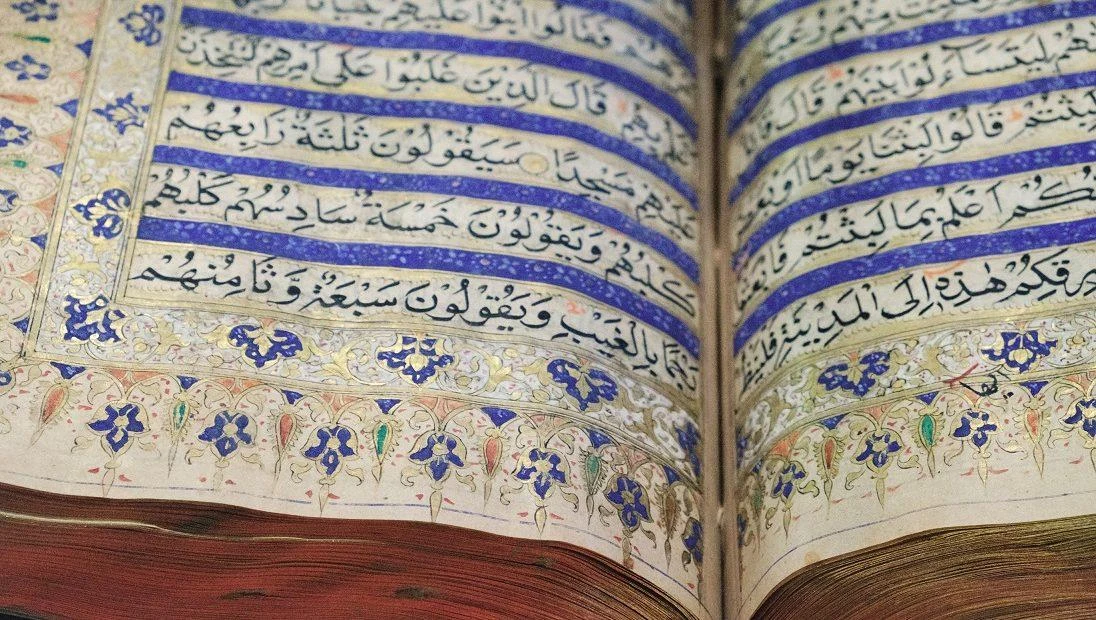
1.1.8 Importance of the Qur'an in the Daily Life of a Muslim
The Qur'an is important because it guides Muslims in their daily activities.
1. Guides Worship
The Qur'an teaches Muslims to worship Allah alone.
It provides guidance on prayer, fasting, charity and other acts of worship.
2. Promotes Good Character
The Qur'an encourages Muslims to be honest, patient, kind and forgiving.
3. Guides Family Relationships
It teaches respect for parents, kindness towards children and fairness in family responsibilities.
4. Promotes Justice
The Qur'an instructs Muslims to be fair and avoid oppression.
5. Encourages Charity
It teaches Muslims to support poor people, orphans and other needy members of society.
6. Provides Comfort
Reading and reflecting on the Qur'an gives spiritual comfort and strengthens faith during difficult situations.
7. Guides Decision-Making
Muslims use the teachings of the Qur'an to distinguish between lawful and unlawful actions.
8. Encourages Peaceful Coexistence
The Qur'an promotes respect, kindness and justice in relationships with other people.
9. Reminds Muslims About Accountability
It teaches that human beings will be accountable to Allah for their actions.
10. Strengthens the Relationship with Allah
Reciting, understanding and practising the Qur'an helps Muslims strengthen their connection with Allah.
1.1.9 Ways of Showing Respect for the Qur'an
Muslims should demonstrate respect for the Qur'an through their actions.
These include:
- Keeping the Qur'an in a clean and safe place.
- Handling the Qur'an respectfully.
- Reciting it correctly.
- Listening attentively when it is recited.
- Learning its meanings.
- Teaching its lessons to others.
- Applying its teachings in daily life.
- Avoiding deliberate disrespect towards the Qur'an.
- Encouraging children to learn its recitation.
- Reflecting on its guidance.
1.1.10 Summary of Ulumul Qur'an
|
Concept |
Important information |
|---|---|
|
Ulumul Qur'an |
Sciences of the Qur'an |
|
Qur'an |
Divine revelation from Allah to Prophet Muhammad (S.A.W.) |
|
Number of Surahs |
114 |
|
Verses |
Known as Ayahs |
|
Angel of revelation |
Angel Jibril |
|
First revelation |
Surah Al-Alaq (96:1–5) |
|
Place of first revelation |
Cave Hira |
|
Makkan period |
Approximately 13 years |
|
Madinan period |
Approximately 10 years |
|
Total revelation period |
Approximately 23 years |
|
Main purpose |
Guidance for humanity |
Key inquiry questions
- Why was the Qur'an revealed to mankind?
- How does the Qur'an guide mankind?
- How did Muslims benefit from the revelation of the Qur'an in portions?