
Learning Outcomes
By the end of this sub-strand, you should be able to:
- Discuss ways of storing harvested water for domestic use
- Take part in harvesting and storing water in the school for domestic use
- Show responsibility in harvesting and storing water for domestic use
Introduction to Water Harvesting
In rainy seasons, a lot of water goes to waste as surface runoff. This water can be harvested (collected) and stored, then used later for farming and domestic purposes.
Water harvesting is the collection and storage of rainwater or surface runoff for productive use.
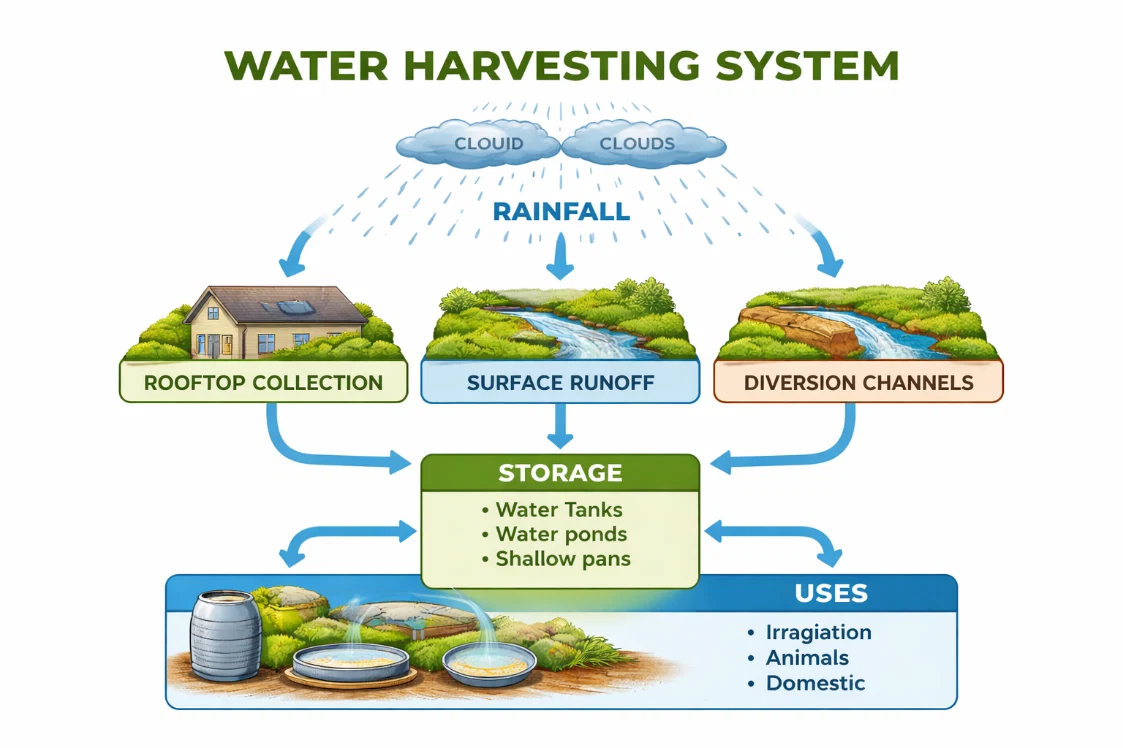
Methods of Harvesting and Storing Water
1. Rooftop Water Harvesting
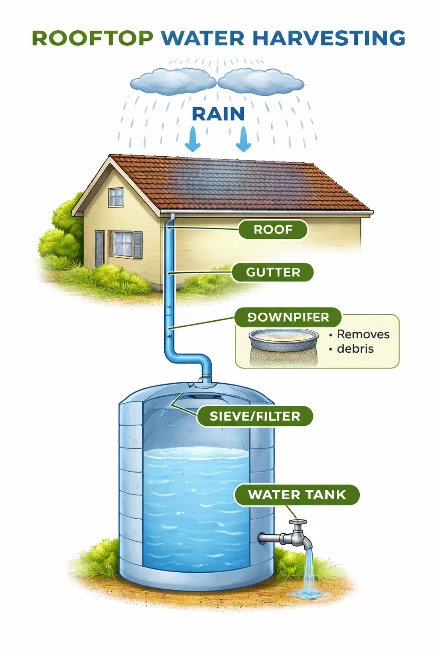
Description:
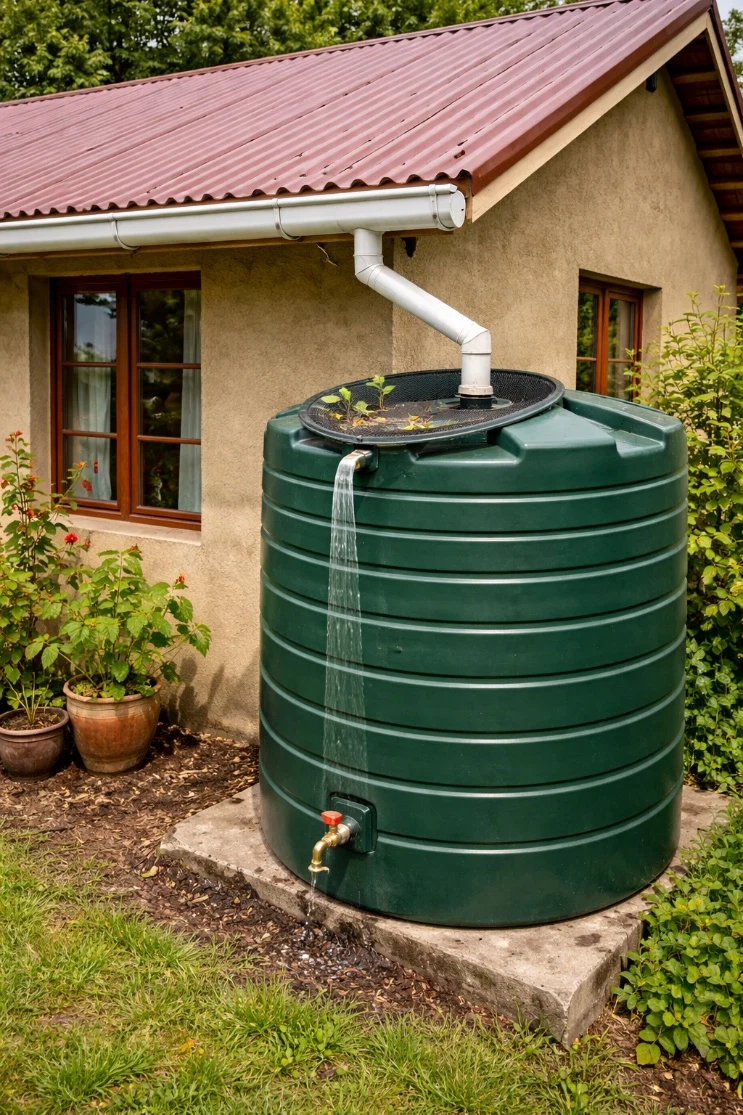
- Rainwater is collected from rooftops of buildings
- Gutters are fixed around the roof edges to catch and channel water
- Water flows through downpipes into storage tanks
- A sieve or filter at the tank entrance removes debris like leaves and twigs
Components needed:
- Gutters (plastic or metal channels)
- Downpipes
- Storage tank
- Sieve/filter
- First-flush diverter (optional but recommended)
2. Diversion Channels
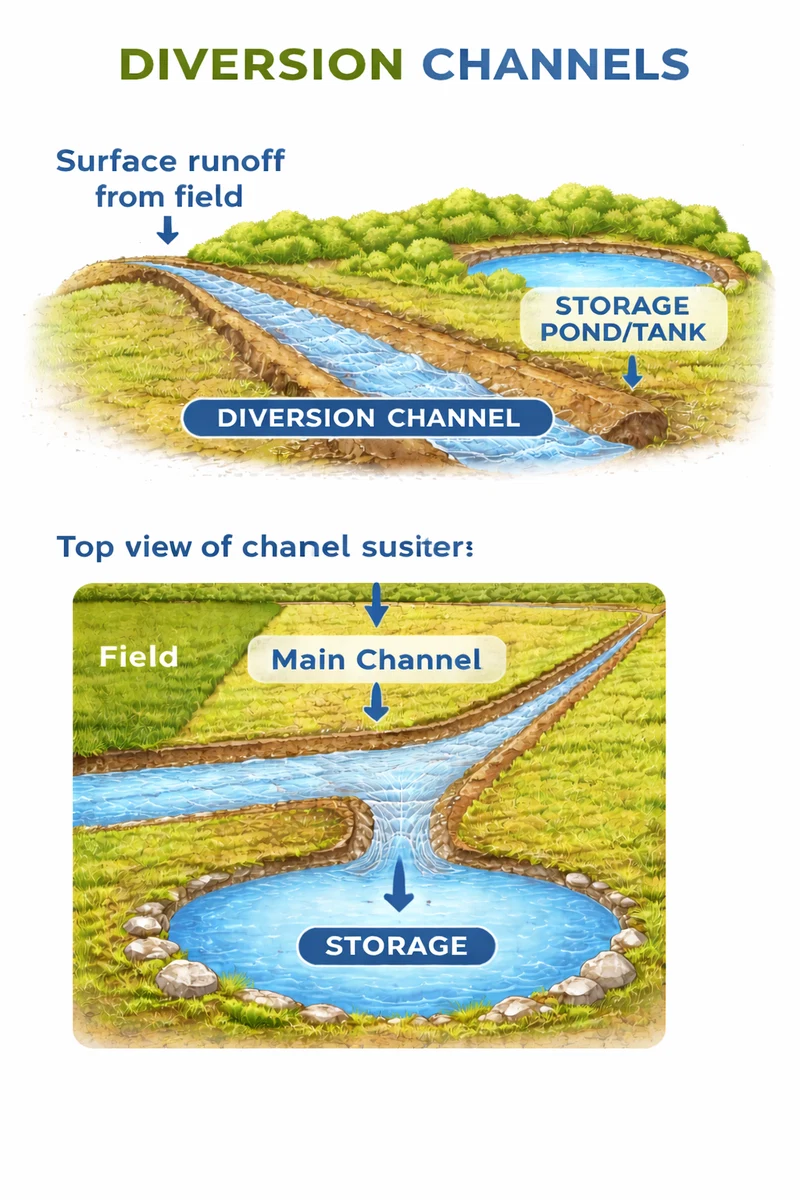
Description:
- Diversion channels are man-made channels that direct surface runoff
- They channel water from areas where it would be wasted
- Water is directed into storage areas such as water ponds or tanks
Construction tips:
- Channels should have a gentle slope (about 1-2%)
- The bottom and sides can be lined with stones or grass to prevent erosion
- Regular maintenance is needed to clear blockages
3. Shallow Water Pans
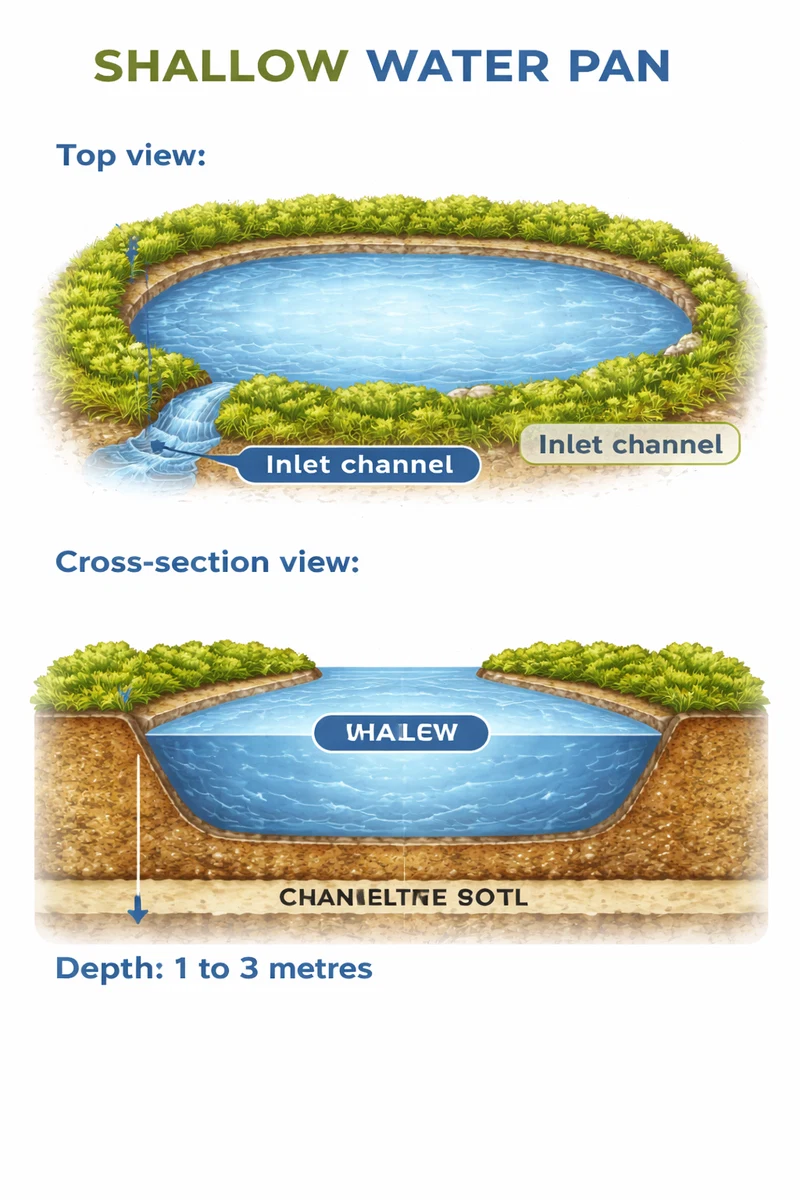
Description:
- A shallow water pan is an excavated (dug out) structure
- It collects and stores surface runoff
- Depth is typically between 1 and 3 metres
Construction Procedure:
|
Step |
Action |
|---|---|
|
1 |
Measure the desired size of the structure on the ground |
|
2 |
Dig out soil to the desired length and width |
|
3 |
Excavate to a depth between 1 and 3 metres |
|
4 |
Compact the bottom and sides to reduce water loss |
|
5 |
Make conveyor or small channels that direct surface runoff into the structure |
|
6 |
Plant grass around the pan to control erosion and sedimentation |
Why plant grass around the pan?
- To control soil erosion
- To control sedimentation (soil particles entering the water)
- To stabilise the embankments (sides)
4. Water Ponds
Description:
- A water pond is similar to a water pan but often larger
- It is lined with polythene (plastic sheeting) to prevent water from seeping into the ground
Construction Procedure:
|
Step |
Action |
|---|---|
|
1 |
Mark desired measurements on the ground |
|
2 |
Dig out the soil to required dimensions |
|
3 |
Smooth the bottom and sides |
|
4 |
Place a polythene liner evenly covering the sides and the base |
|
5 |
Reinforce the liner by placing soil in the upper part around the pond (to hold it in place) |
|
6 |
Plant grass around the pond to control erosion and sedimentation |
|
7 |
Make channels to transfer surface runoff into the pond |
Advantages of using a liner:
- Prevents water from seeping into the ground (especially in sandy soils)
- Increases water storage capacity
- Allows water to be stored for longer periods
5. Water Tanks
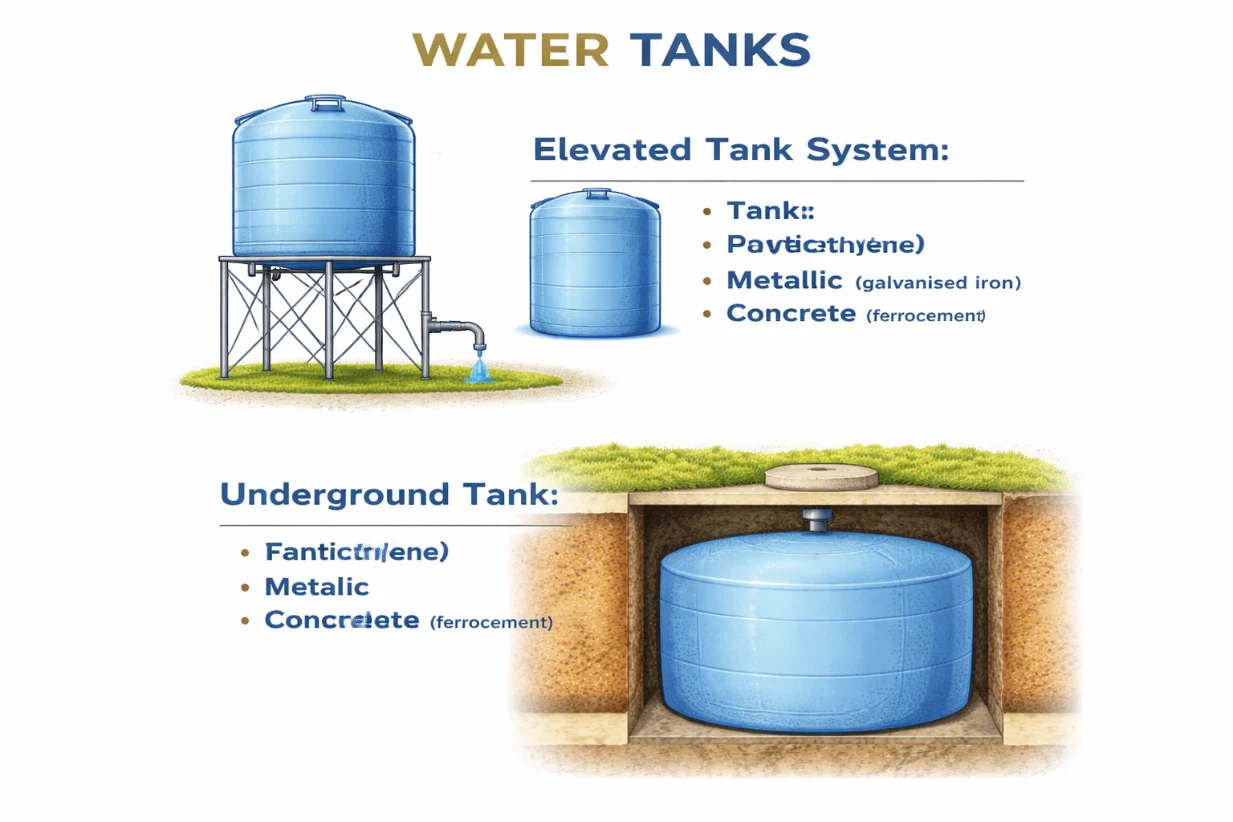
Description:
- Water tanks are enclosed containers for storing water
- They can be used to collect surface runoff or water from rooftops
Types of Water Tanks:
|
By Position |
By Material |
|---|---|
|
Elevated (above ground) |
Plastic (polyethylene) |
|
Underground |
Metallic (galvanised iron) |
|
Ground-level |
Concrete (ferrocement) |
Maintenance of Tank Systems:
- Ensure water flows freely into the tank by removing any materials such as gravel and sediments from the sieve entrance
- Gutters should be cleaned regularly to remove accumulated leaves and debris
- Check for leaks and repair promptly
- Clean the tank interior periodically (at least once a year)
Factors to Consider When Setting Up a Water Harvesting and Storage Unit
|
Factor |
Explanation |
|---|---|
|
Location |
Should be conveniently located near the point of use |
|
Accessibility |
Easy to reach for maintenance and water collection |
|
Type of crop to be irrigated |
Determines amount of water needed |
|
Size of the farm |
Determines how much water can be harvested |
|
Dimension of storage unit |
Based on water needs and available space |
|
Slope of the land |
Affects where and how water flows |
|
Cost of the work |
Budget available for materials and labour |
|
Rainfall patterns |
Determines how much water can be harvested |
|
Soil type |
Affects whether a liner is needed |
Importance of Harvesting and Storing Water
Maintenance of Water Harvesting and Storage Structures
|
Maintenance Practice |
Purpose |
|---|---|
|
Plant grass around water pans and ponds |
Controls soil erosion and sedimentation; stabilises embankments |
|
Remove foreign materials from water |
Keeps water clean and prevents contamination |
|
Fence water pans and ponds |
Prevents animals from damaging structures and contaminating water |
|
Clean water tanks regularly |
Removes accumulated dirt and prevents algae growth |
|
Sieve water during entry |
Removes gravel, twigs, leaves and other debris |
|
Clean gutters |
Removes accumulated materials that could block water flow |
|
Repair leaks promptly |
Prevents water loss |
|
Check liner integrity (for ponds) |
Ensures water is not seeping away |
Uses of Harvested and Stored Water on the Farm
┌─────────────────────────────────────────────────────────────────┐
│ USES OF HARVESTED WATER │
│ │
│ ┌─────────────┐ │
│ │ HARVESTED │ │
│ │ WATER │ │
│ └──────┬──────┘ │
│ │ │
│ ┌──────────────────────┼──────────────────────┐ │
│ │ │ │ │
│ ▼ ▼ ▼ │
│ ┌───────────┐ ┌───────────┐ ┌───────────┐ │
│ │ │ │ │ │ │ │
│ │ WATERING │ │ WATERING │ │ DOMESTIC │ │
│ │ CROPS │ │ ANIMALS │ │ USES │ │
│ │(Irrigation)│ │ │ │ │ │
│ │ │ │ │ │ │ │
│ └───────────┘ └───────────┘ └───────────┘ │
│ │ │
│ ▼ │
│ ┌────────────────┐ │
│ │ • Washing │ │
│ │ • Cleaning │ │
│ │ • Cooking │ │
│ │ • Bathing │ │
│ └────────────────┘ │
└─────────────────────────────────────────────────────────────────┘
Summary: Water Harvesting Methods Comparison
|
Method |
Cost |
Capacity |
Maintenance |
Best For |
|---|---|---|---|---|
|
Rooftop + Tank |
High |
Medium |
Low |
Homesteads with good roofing |
|
Diversion Channels |
Low |
N/A |
Medium |
Directing water to storage |
|
Shallow Water Pan |
Medium |
Large |
Medium |
Open areas with runoff |
|
Water Pond with Liner |
Medium-High |
Large |
Medium |
Areas with sandy soils |
|
Water Tanks |
High |
Small-Medium |
Low |
Clean water storage |
Key Inquiry Questions
- How can we harvest and store water for domestic purposes?
- By collecting rainwater from rooftops using gutters and tanks
- By constructing shallow water pans and ponds to catch surface runoff
- By digging diversion channels to direct water into storage structures
- Why is water harvesting important?
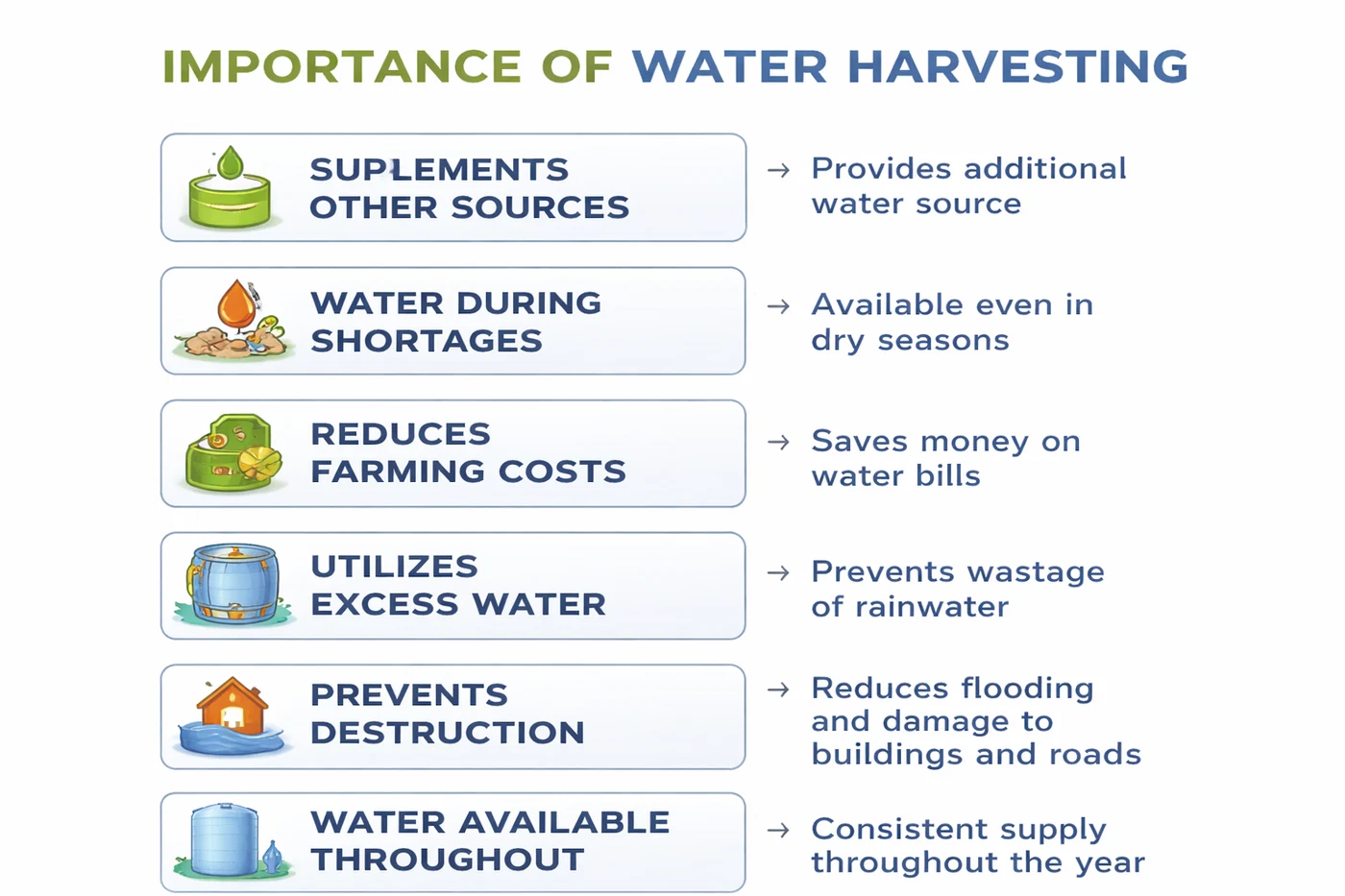
- Provides water during dry seasons
- Reduces reliance on other water sources
- Utilizes rainwater that would otherwise go to waste
- Helps prevent flooding and soil erosion