
Learning Outcomes
By the end of this sub-strand, you should be able to:
- Explain the role of kitchen and backyard gardens in food production
- Establish a kitchen or backyard garden for food production
- Adopt the use of kitchen and backyard gardens for food production
Introduction to Food Security and Kitchen Gardens
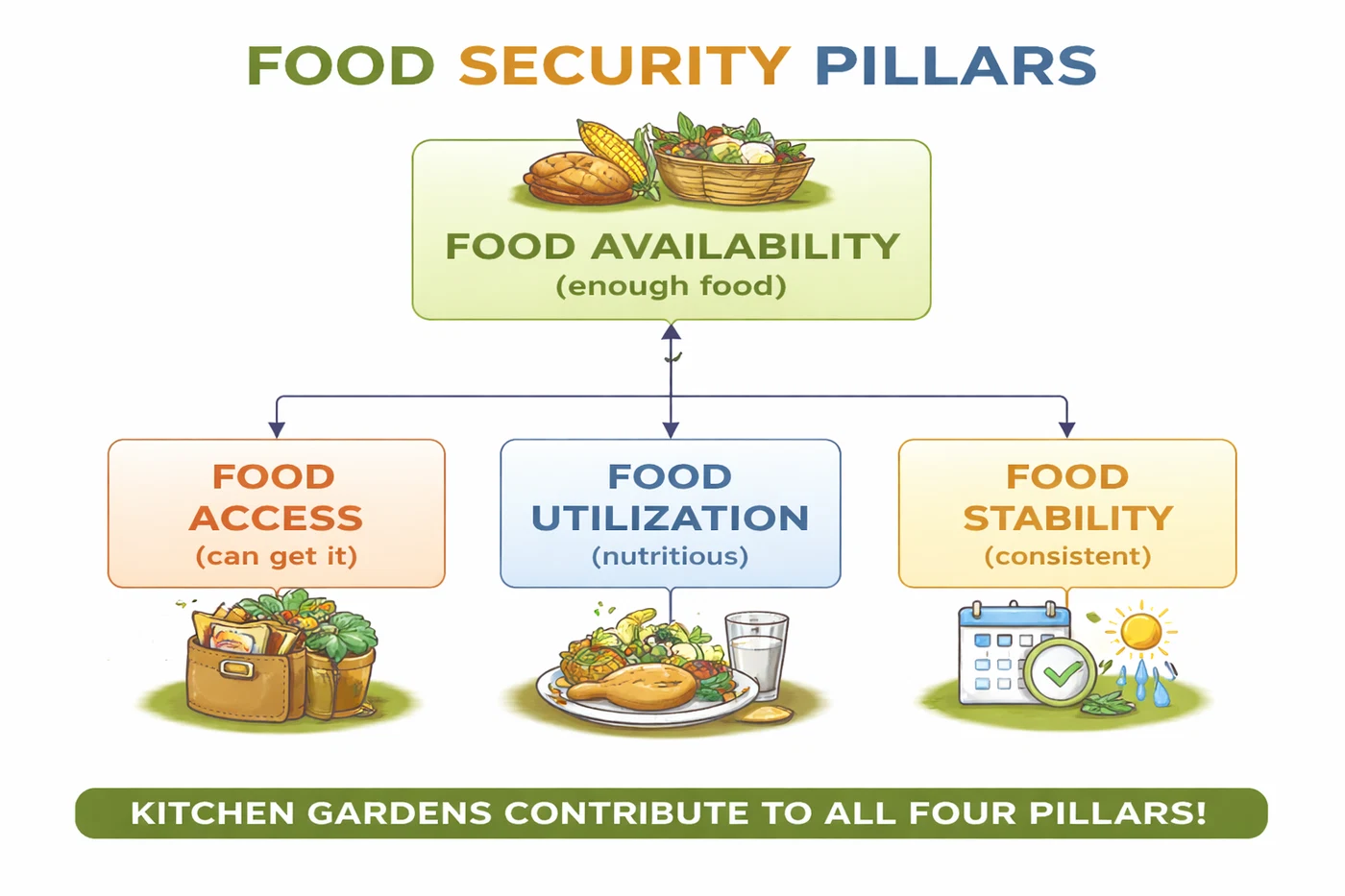
Food security exists only when all people at all times have access to sufficient, safe, and nutritious food that meets their dietary needs and food preferences for healthy living.
What is a Kitchen Garden?
A kitchen garden is any convenient size of a plot, space, or structure located in or near a home where a variety of crops are grown mainly for family consumption.
Key Characteristics:
- Located close to the kitchen or home
- Small to medium in size
- Grows a variety of vegetables, herbs, and sometimes fruits
- Primarily for family consumption (not commercial)
- Uses intensive planting methods
The Role of a Kitchen Garden in Food and Nutrition Security
|
Role |
Explanation |
|---|---|
|
Produces safe, fresh food |
Food grown at home is free from unknown chemicals and is harvested fresh |
|
Reliable source of vegetables |
Provides green leafy vegetables, herbs, fruits, legumes, and cereals |
|
Seasonal and off-season crops |
Can grow crops throughout the year, ensuring steady supply |
|
Meets nutritional needs |
Fresh vegetables provide essential vitamins and minerals |
|
Promotes healthier lifestyles |
Encourages consumption of fresh, nutritious foods |
|
Generates income |
Surplus (excess) produce can be sold |
|
Saves family income |
Money that would buy vegetables can be used for other needs |
|
Alternative food source |
Provides food when staple foods are not available |
|
Increases food production |
Contributes to overall household food supply |
|
Environmental conservation |
Some forms use recycled materials like plastics |
Innovative Technologies for Kitchen Gardens
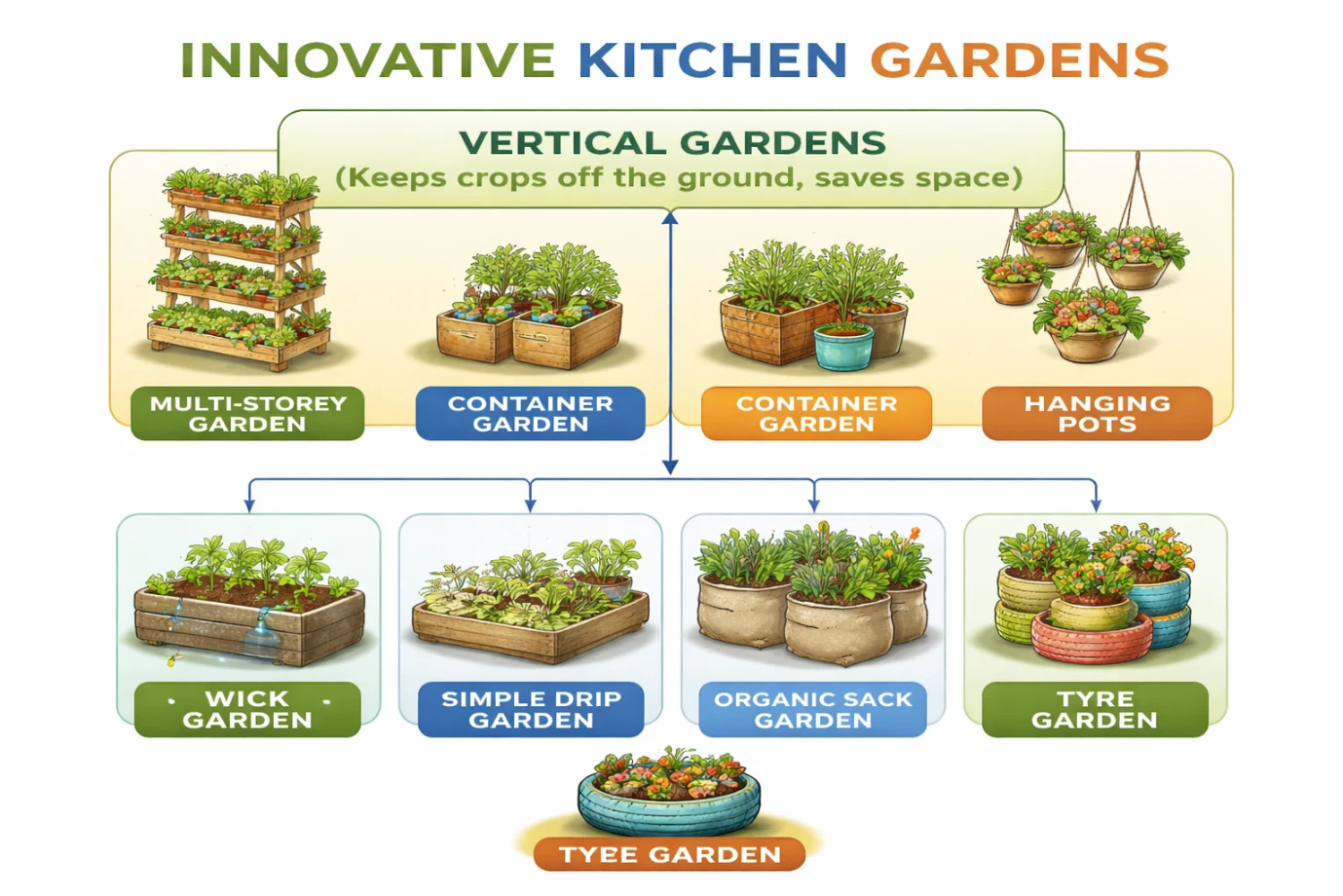
Due to increasing population and urbanization, space for traditional gardens is limited. Innovative technologies help maximize the small available space for maximum production.
Main aim of innovative gardening:
- Maximize small available space
- Conserve water
- Increase crop production per unit area
1. Multi-Storey Garden
Description:
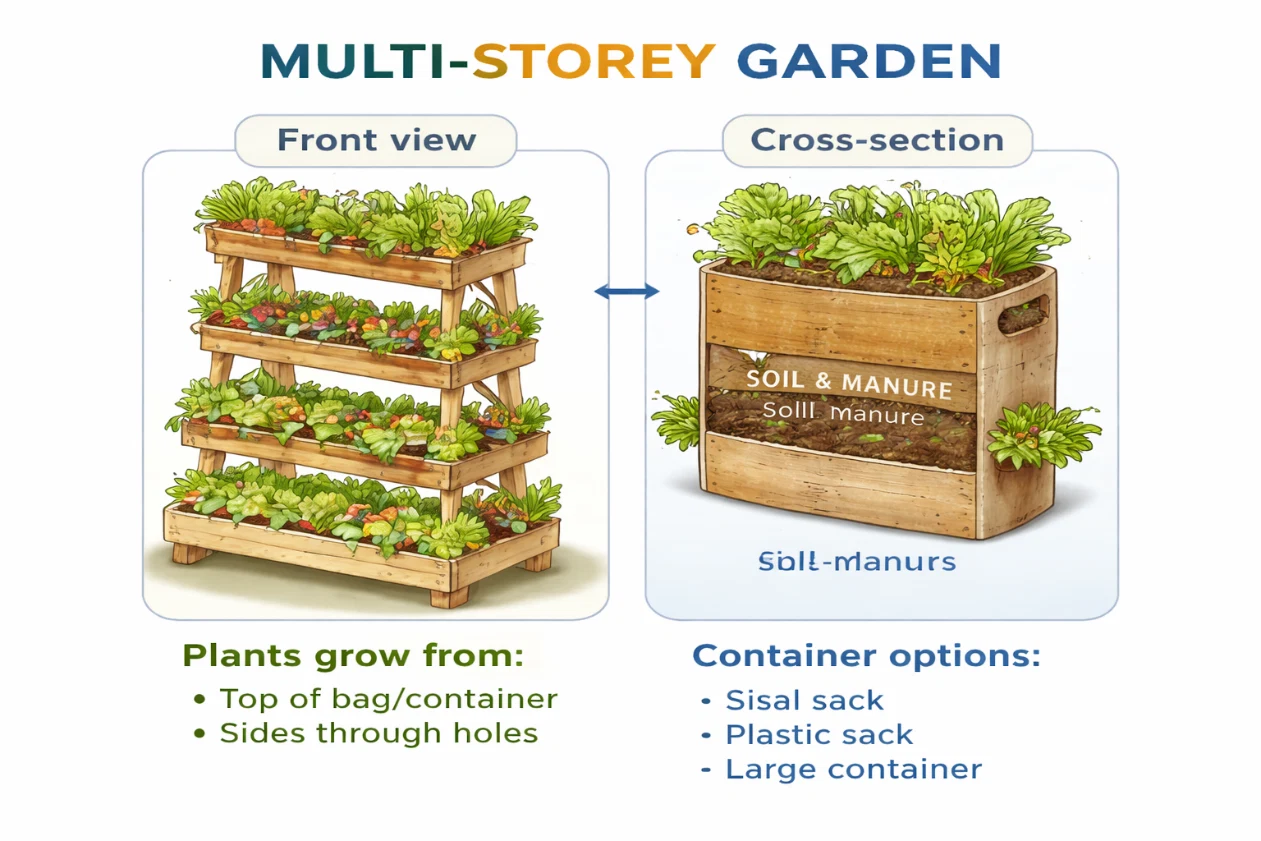
- Involves filling a bag, sack, or container with soil and manure
- Vegetables are planted on the top and through holes cut in the sides
- Requires very little space
- Can be placed on a veranda, balcony, or small yard
How to Make a Multi-Storey Garden:
|
Step |
Action |
|---|---|
|
1 |
Get a strong sack or bag (sisal or plastic) |
|
2 |
Fill the bottom with stones for drainage |
|
3 |
Add a central column of stones (for watering) |
|
4 |
Fill with a mixture of soil and manure |
|
5 |
Cut small holes in the sides of the sack |
|
6 |
Plant seedlings in the holes and on top |
|
7 |
Water through the central column |
Suitable crops:
- Kale (sukuma wiki)
- Spinach
- Coriander (dhania)
- Spring onions
- Strawberries
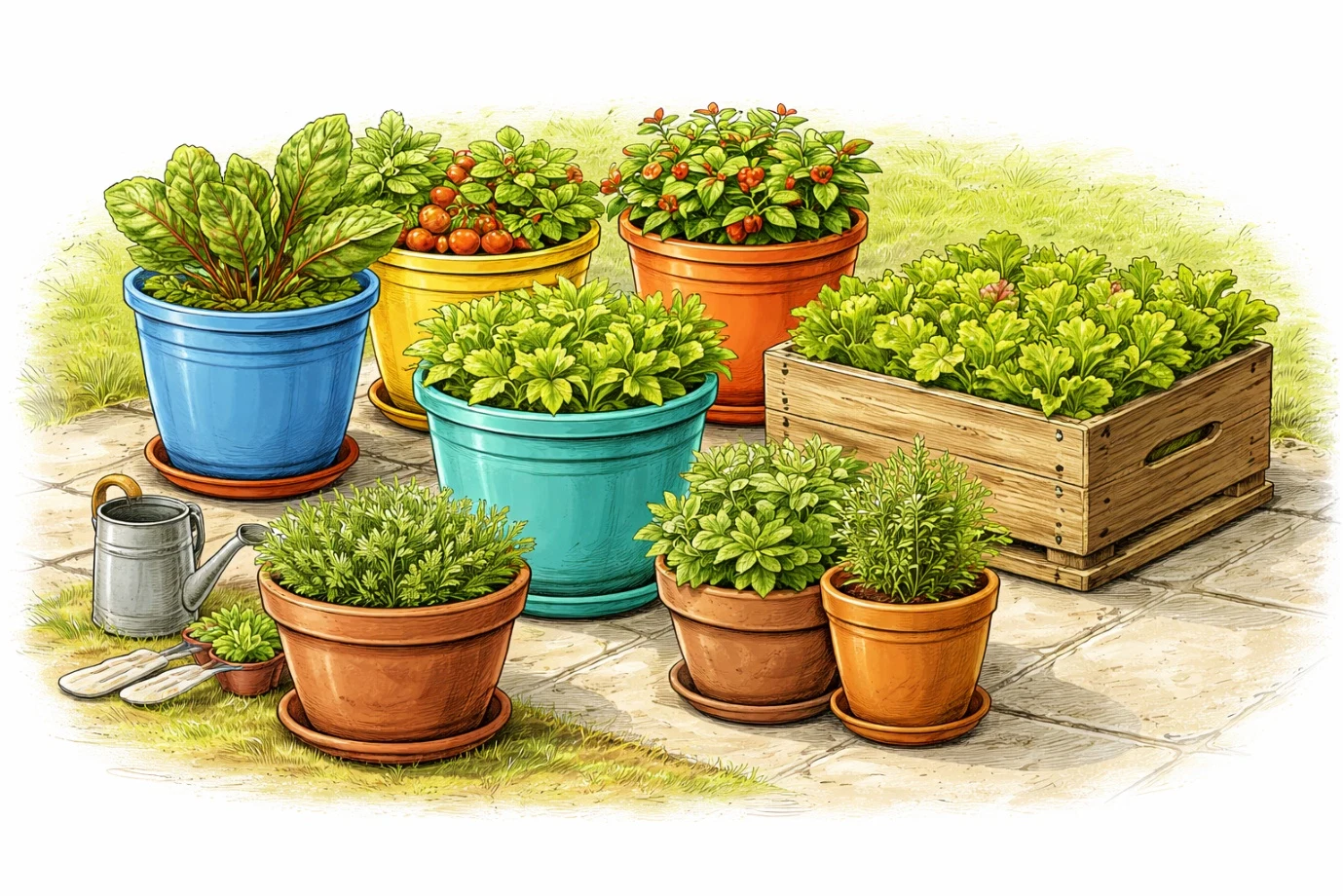
2. Container Garden
Description:
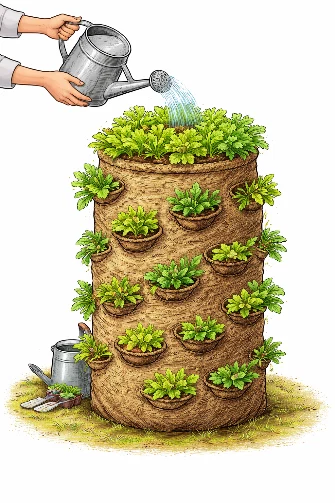
- Crops are planted in containers such as earthen pots, wooden boxes, plastic containers, buckets, or tins
- Containers can be placed on the ground, on stands, or hung
Advantages:
- Portable - can be moved to follow sunlight or for protection
- Uses minimal space
- Easy to manage and weed
- Can be placed on concrete or paved areas
Limitations:
- Not appropriate for deep-rooted crops
- Requires more frequent watering than ground gardens
- Limited number of plants per container
3. Simple Drip Garden
 Description:
- An innovative technology using plastic bottles or jerricans
- Uses two containers: one for water, one for growing plants
- The water container is placed directly above the growing container
- Tiny holes in the bottom of the water container allow water to drip slowly
How to Make a Simple Drip Garden:
|
Step |
Action |
|---|---|
|
1 |
Get two plastic containers (bottles or jerricans) |
|
2 |
Cut the top off the growing container |
|
3 |
Fill growing container with soil and manure mixture |
|
4 |
Make tiny holes in the bottom of the water container |
|
5 |
Fill water container with water |
|
6 |
Place water container above growing container |
|
7 |
Plant crops in the growing container |
Benefits:
- Conserves water (minimal evaporation)
- Provides continuous moisture to plants
- Low maintenance once set up
- Uses recycled materials
4. Wick Garden
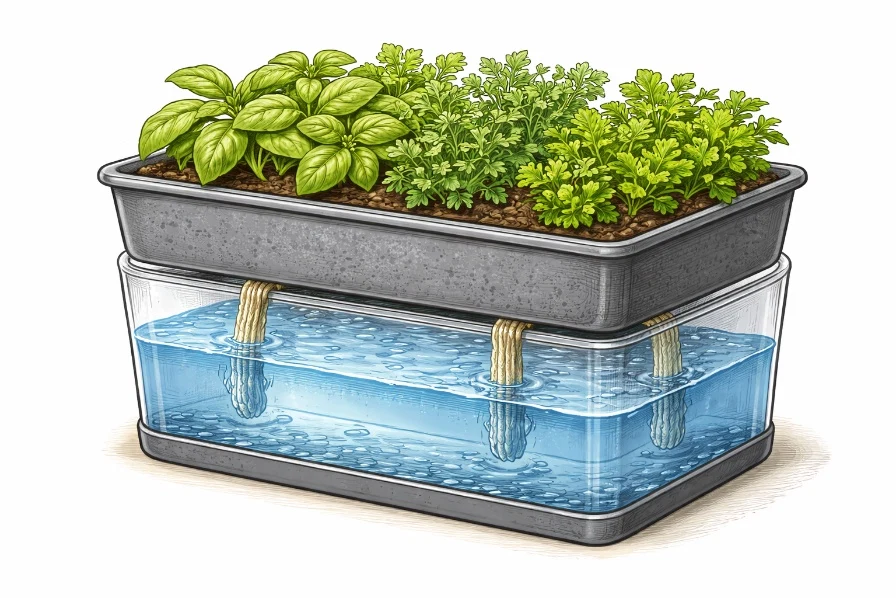
Description:
- A modern technology using an underground irrigation system
- Crops are planted in a container placed above another container filled with water
- A wick (fabric or rope material) connects the bottom container to the top container
- The wick draws water up from the reservoir to feed the crops
How it Works:
- The wick absorbs water from the reservoir
- Through capillary action, water moves upward through the wick
- The soil in the growing container absorbs water from the wick
- Plant roots access the moist soil
Advantages:
- Very water-efficient
- Plants get consistent moisture
- Suitable for areas with very little space
- Ideal for indoor gardening
- Reduces frequency of watering
Suitable for:
- Urban areas with limited space
- Indoor herb gardens
- Balcony gardening
5. Hanging Pot Garden
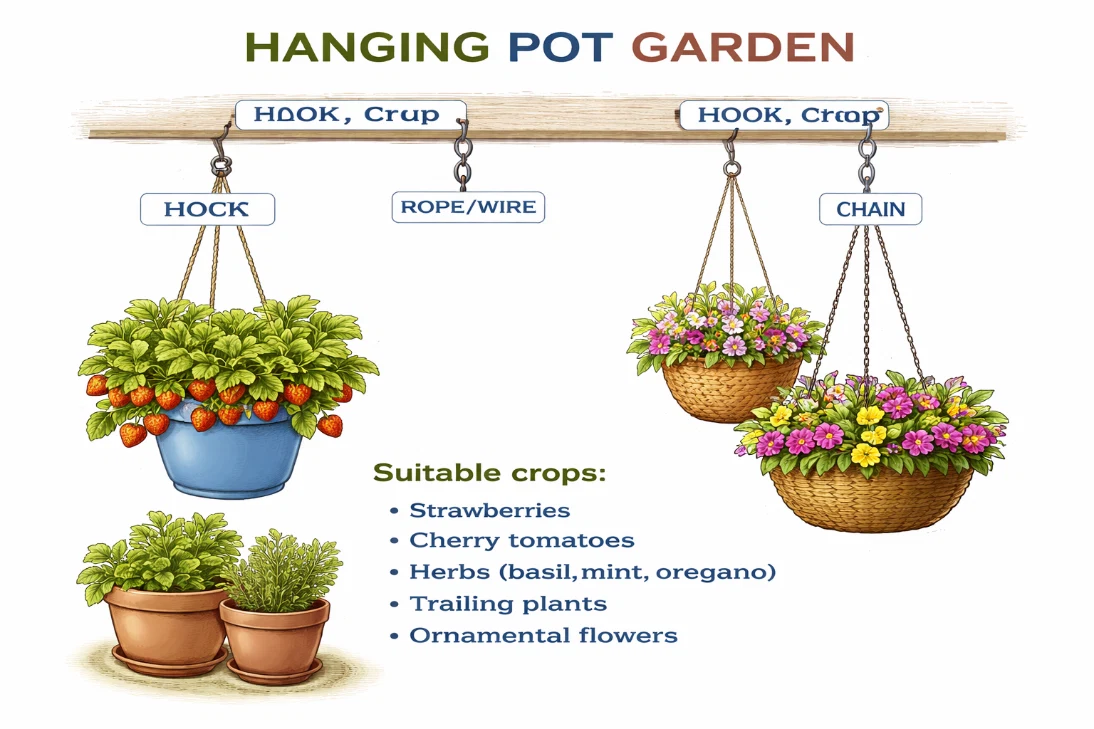
Description:
- Plants are grown in pots or containers that are hung from above
- Can be hung from ceilings, beams, walls, or specially made stands
- Uses vertical space, leaving ground space free
Materials for Hanging Pots:
- Plastic pots with attached saucers
- Woven baskets lined with plastic
- Coconut shells
- Recycled plastic bottles
- Fabric pockets
Advantages:
- Maximizes vertical space
- Decorative - adds aesthetic value
- Keeps plants away from ground pests
- Easy to access for harvesting and care
- Can be moved easily
6. Tyre Garden
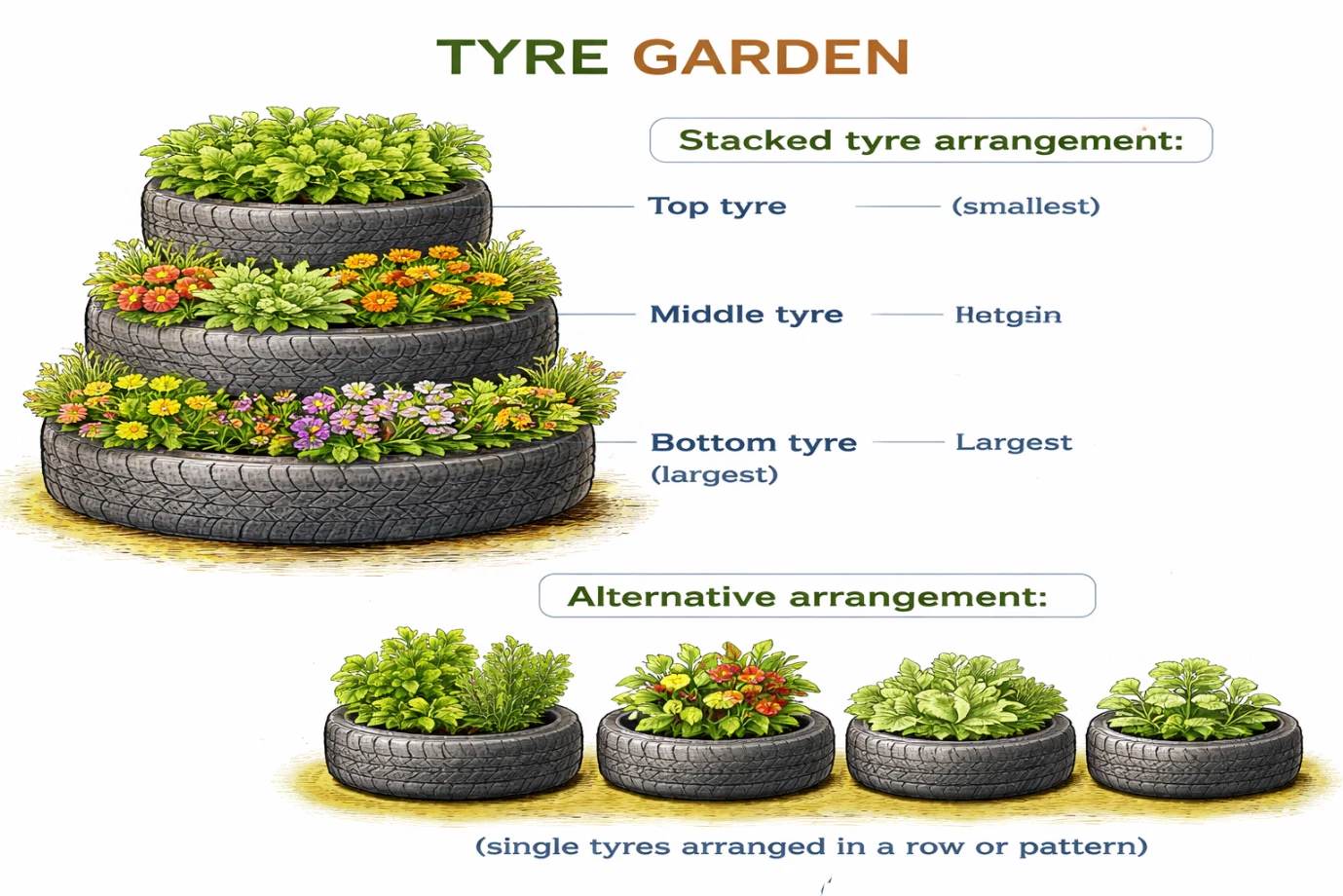
Description:
- Old vehicle tyres are used as planting containers
- Can be stacked vertically or placed individually
- Tyres can be painted for aesthetic appeal
How to Prepare a Tyre Garden:
|
Step |
Action |
|---|---|
|
1 |
Clean the tyre thoroughly |
|
2 |
(Optional) Paint the outside with non-toxic paint |
|
3 |
Line the inside with plastic sheeting (optional) |
|
4 |
Fill with soil and manure mixture |
|
5 |
Plant crops |
Advantages:
- Recycles waste materials
- Durable and long-lasting
- Can be painted decoratively
- Tyres retain heat, good for warm-season crops
- Free or low-cost
Considerations:
- Ensure tyres are clean and free from harmful residues
- Some concern about chemicals leaching from tyres
- Line with plastic if concerned about soil contact with tyre
7. Organic Sack Garden
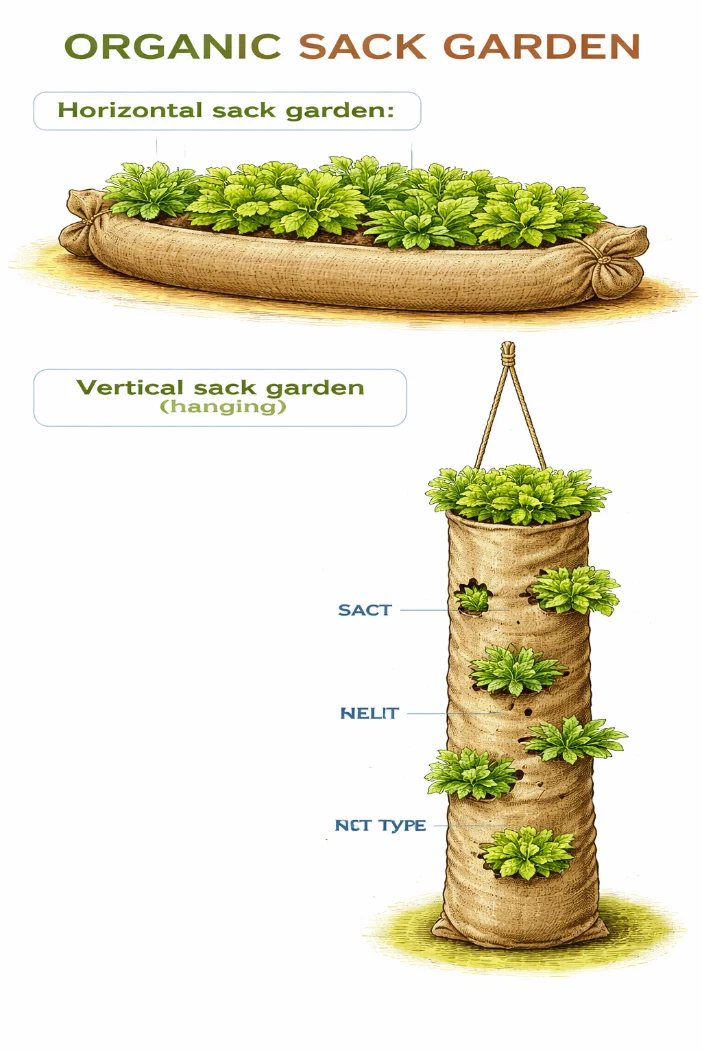
Description:
- Uses organic material sacks (sisal, hessian/burlap)
- Can be placed horizontally on the ground or hung vertically
- Sacks allow air circulation to roots
- Biodegradable - will eventually decompose and add to soil
Advantages of Organic Sacks:
- Breathable material prevents root rot
- Biodegradable and environmentally friendly
- Can be placed directly on soil
- Affordable and available
- Good drainage
Suitable Crops:
- Leafy vegetables (kale, spinach)
- Herbs
- Strawberries
- Short-rooted crops
Benefits of Innovative Gardens
|
Benefit |
Explanation |
|---|---|
|
Use locally available materials |
Recycled containers, sacks, tyres reduce costs |
|
Requires little water |
Systems like wick and drip gardens conserve water |
|
Easy to manage |
Less labour required for weeding and maintenance |
|
Makes good use of little space |
Vertical and container gardening maximize small areas |
|
Portable |
Many types can be moved from one area to another |
|
High productivity/yields |
Intensive planting methods increase production |
|
Aesthetic value |
Adds beauty around the compound |
|
Ideal for urban areas |
Works well in congested homesteads and apartments |
Establishing a Kitchen Garden: Step-by-Step
Here is a guide for establishing a kitchen garden:
- Site Selection:
- Choose a location near a water source.
- Ensure it receives at least 6 hours of sunlight daily.
- The site should be protected from strong winds.
- It should be close to the kitchen for easy access.
- Ensure good drainage for healthy plant growth.
- Planning:
- Decide on the plants to grow based on your family's preferences.
- Plan the layout of your garden.
- Calculate the amount of space needed.
- Choose the gardening method (traditional or innovative).
- Soil Preparation:
- Clear the area of weeds and debris.
- Dig and deepen the soil.
- Add organic manure or compost to improve soil fertility.
- Thoroughly mix the soil and manure.
- Level the surface for uniform planting.
- Planting:
- Create rows or beds for planting.
- Plant seeds or seedlings with proper spacing.
- Water the plants immediately after planting.
- Apply mulch to retain moisture and protect the soil.
- Maintenance:
- Water the plants regularly, preferably in the early morning or evening.
- Weed when necessary to keep the garden tidy.
- Apply organic fertilizers as required.
- Regularly monitor for pests and diseases.
- Harvest your produce at the right time for the best quality.
Recommended Crops for Kitchen Gardens
|
Category |
Examples |
Growing Time |
|---|---|---|
|
Leafy Vegetables |
Kale (sukuma wiki), Spinach, Amaranth (terere), African nightshade (managu) |
4-8 weeks |
|
Herbs |
Coriander (dhania), Parsley, Basil, Mint, Rosemary |
4-8 weeks |
|
Fruits |
Strawberries, Cherry tomatoes |
8-12 weeks |
|
Root Vegetables |
Carrots, Beetroot, Radishes, Spring onions |
8-12 weeks |
|
Legumes |
French beans, Cowpeas (leaves and pods) |
6-10 weeks |
Key Inquiry Questions
- How does a kitchen garden contribute to food production?
- Provides fresh vegetables and herbs for family consumption
- Reduces dependence on purchased food
- Ensures availability of nutritious food
- Can generate income from surplus
- What are the advantages of innovative gardens over traditional gardens?
- Use less space
- Require less water
- Can be moved
- Use recycled materials
- Easier to manage