Learning Outcomes
By the end of this sub-strand, the learner should be able to:
- a) Identify composite materials in the locality
- b) Describe the composition of composite materials in the locality
- c) Relate composite materials to their use in a work environment
- d) Acknowledge the importance of composite materials used in the locality
a) Identify Composite Materials in the Locality
A composite material is a material made from two or more constituent materials with significantly different physical or chemical properties. When combined, they produce a material with characteristics different from the individual components. The individual components remain separate and distinct within the finished structure.
Common Composite Materials Found Locally:
|
Composite Material |
Found In/At |
|---|---|
|
Concrete |
Building foundations, floors, pillars, roads, bridges |
|
Mortar |
Bonding bricks and stones in construction |
|
Plywood |
Furniture, cabinets, construction formwork |
|
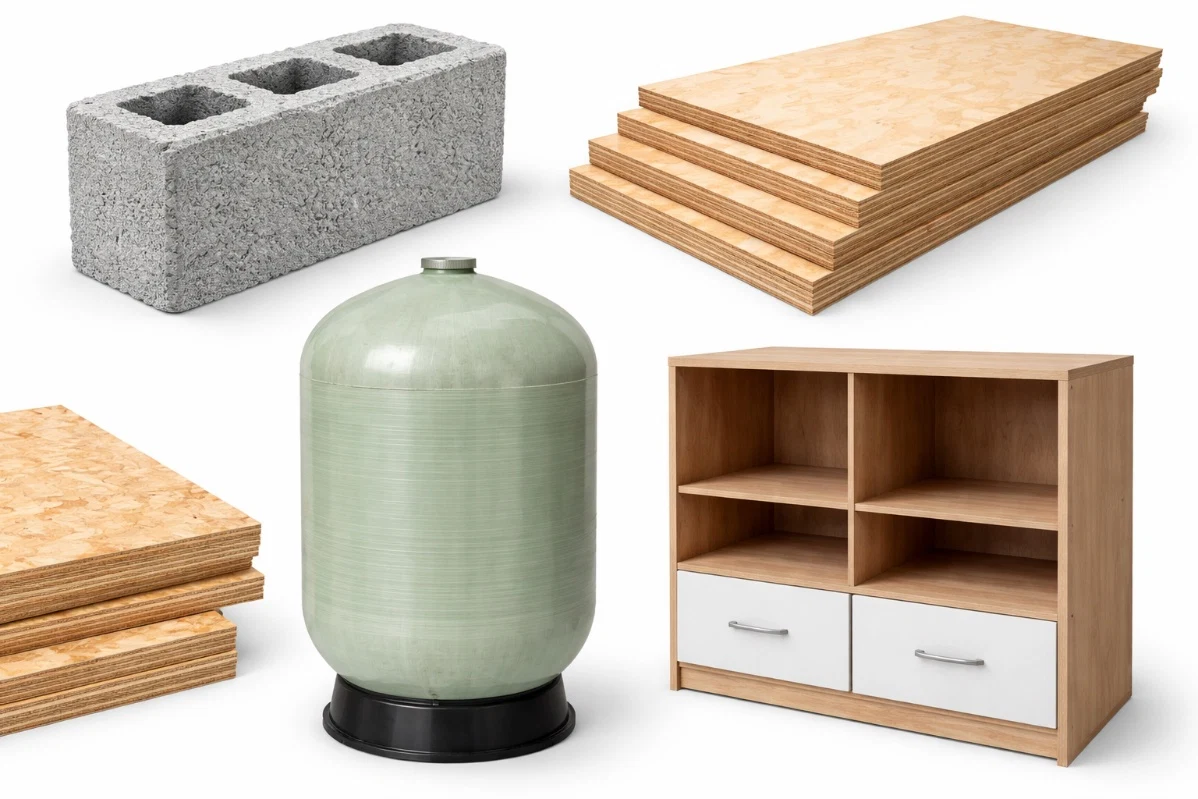
Fibreglass |
Water tanks, boat hulls, car body parts, roofing sheets |
|
Mud |
Traditional houses, pottery |
|
Manufactured Boards (Chipboard, MDF) |
Furniture, interior partitions, shelving |
|
Reinforced Concrete |
aColumns, beams, slabs in buildingswq} |
|
Papier-mâché |
Decorative items, masks, crafts |
|
Sand Paper |
Woodworking, metal finishing |
|
Window Putty |
Sealing glass in window frames |
|
Bituminous Felt |
Roofing underlay, waterproofing |
b) Describe the Composition of Composite Materials in the Locality
Each composite material consists of a matrix (the continuous phase that holds everything together) and a reinforcement (the material that provides strength or other properties).
|
Composite Material |
Matrix Component |
Reinforcement/Filler Component |
|---|---|---|
|
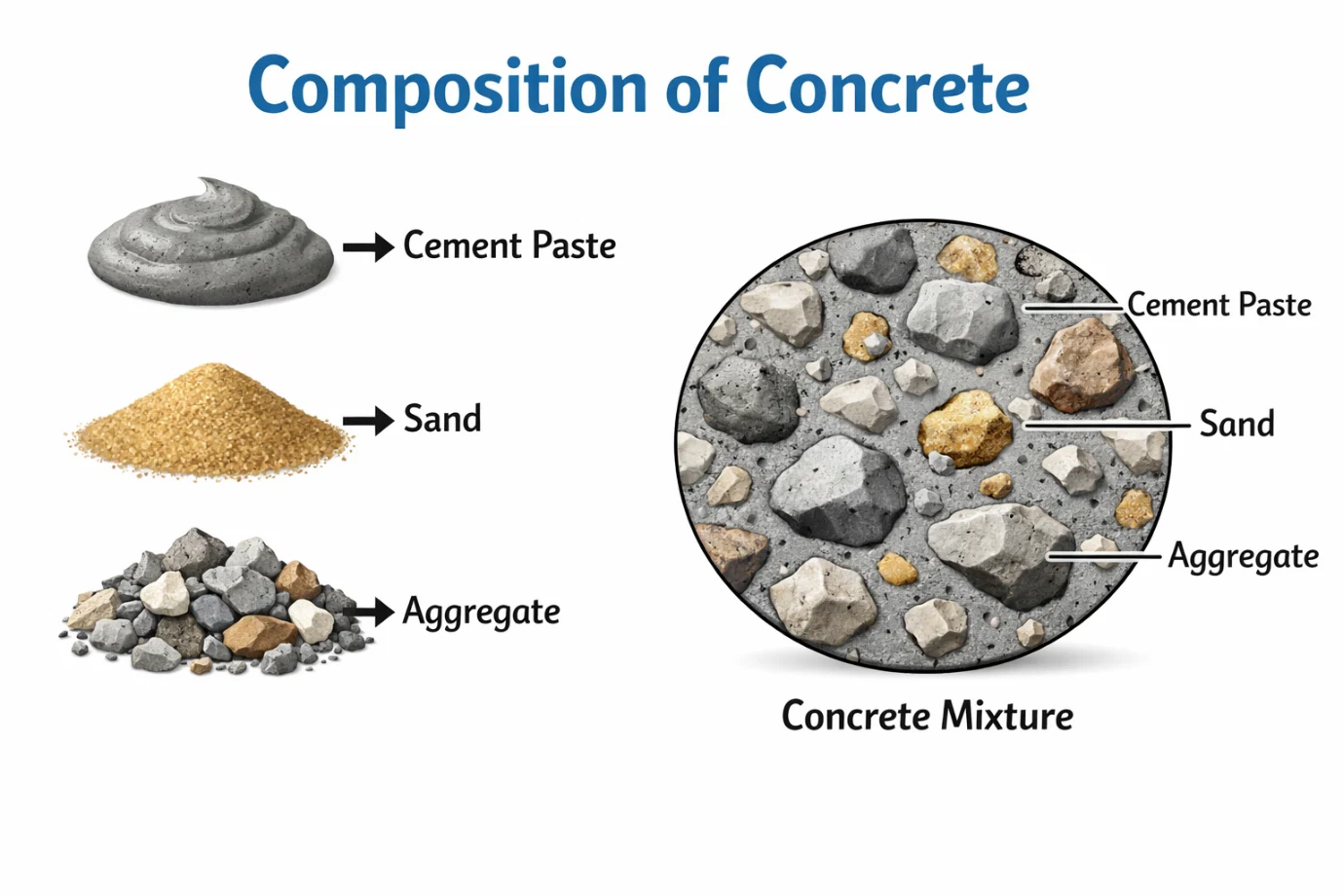
Concrete |
Cement paste (cement + water) |
Sand and coarse aggregates (gravel, crushed stone) |
|
Mortar |
Cement paste (cement + water) |
Sand |
|
Plywood |
Adhesive glue (synthetic resin) |
Thin layers (veneers) of wood |
|
Fibreglass |
Plastic resin (polyester, epoxy) |
Fine glass fibres |
|
Mud |
Water |
Soil particles (clay, silt, sand) and sometimes straw |
|
Chipboard / MDF |
Synthetic resin glue |
Wood chips, sawdust, or wood fibres |
|
Reinforced Concrete |
Concrete |
Steel reinforcing bars (rebar) or mesh |
|
Papier-mâché |
Adhesive (glue, starch, wallpaper paste) |
Paper pieces or pulp |
|
Sand Paper |
Adhesive glue |
Sand or abrasive particles bonded to paper/cloth backing |
|
Window Putty |
Linseed oil |
Whiting (powdered calcium carbonate/chalk) |
|
Bituminous Felt |
Bitumen (petroleum by-product) |
Fibrous base (felt, fibreglass) and mineral granules |
Explanation of Terms:
- Matrix: The "glue" that surrounds and supports the reinforcement material.
- Reinforcement: The material that provides strength, stiffness, or other desired properties.
Example: Concrete
- Cement + Water = Cement Paste (Matrix) - These binds everything together.
- Sand + Coarse Aggregate (Reinforcement/Filler) - These provide bulk and compressive strength.
c) Relate Composite Materials to Their Use in a Work Environment
The unique properties of composite materials make them suitable for specific applications.
|
Composite Material |
Key Properties |
Applications in Work Environment |
|---|---|---|
|
Concrete |
High compressive strength, durable, fire-resistant, mouldable |
• Building foundations, columns, beams, floors |
|
Reinforced Concrete |
Combines compressive strength of concrete with tensile strength of steel |
• High-rise buildings |
|
Mortar |
Adhesive, fills gaps, hardens to bond masonry units |
• Bricklaying |
|
Plywood |
Strong, stable, resists warping, available in large sheets |
• Furniture making (cabinets, tables) |
|
Chipboard / MDF |
Smooth surface, consistent density, cost-effective |
• Budget furniture |
|
Fibreglass |
Lightweight, strong, corrosion-resistant, waterproof |
• Boat and canoe hulls |
|
Mud |
Readily available, low cost, good thermal insulation |
• Traditional house construction |
|
Sand Paper |
Abrasive surface for smoothing |
• Woodworking (smoothing surfaces before painting) |
|
Papier-mâché |
Lightweight, mouldable, inexpensive |
• Making decorative items and props |
|
Bituminous Felt |
Waterproof, flexible, durable |
• Roofing underlayment |
Matching Activity:
|
Use |
Suitable Composite Material |
|---|---|
|
Making a strong, durable table top |
Plywood or MDF |
|
Building the foundation of a house |
Concrete |
|
Smoothing a rough wooden surface |
Sand Paper |
|
Building a small fishing boat |
Fibreglass |
|
Bonding bricks together in a wall |
Mortar |
|
Making a lightweight decorative mask |
Papier-mâché |
|
Waterproofing a flat roof |
Bituminous Felt |

d) Acknowledge the Importance of Composite Materials Used in the Locality
Composite materials play a vital role in our economy and daily lives.
|
Importance |
Explanation |
|---|---|
|
Enables Modern Construction |
Without concrete and reinforced concrete, modern buildings, bridges, and infrastructure would not be possible. |
|
Provides Affordable Housing |
Mud and manufactured boards offer cost-effective building materials. |
|
Supports Local Industries |
Furniture making (plywood, MDF), construction (concrete, mortar), and crafts (papier-mâché) provide employment. |
|
Reduces Environmental Impact |
Manufactured boards like chipboard use wood waste (sawdust, chips), reducing deforestation and utilizing materials that would otherwise be discarded. |
|
Enhances Product Performance |
Fibreglass is lighter and more corrosion-resistant than metal, making it ideal for boats and water tanks. |
|
Improves Quality of Life |
Composites are used in medical implants (prosthetics), sports equipment, and transportation, improving health and mobility. |
|
Promotes Innovation |
Research into advanced composites leads to stronger, lighter, and more durable materials for aerospace, automotive, and renewable energy sectors. |
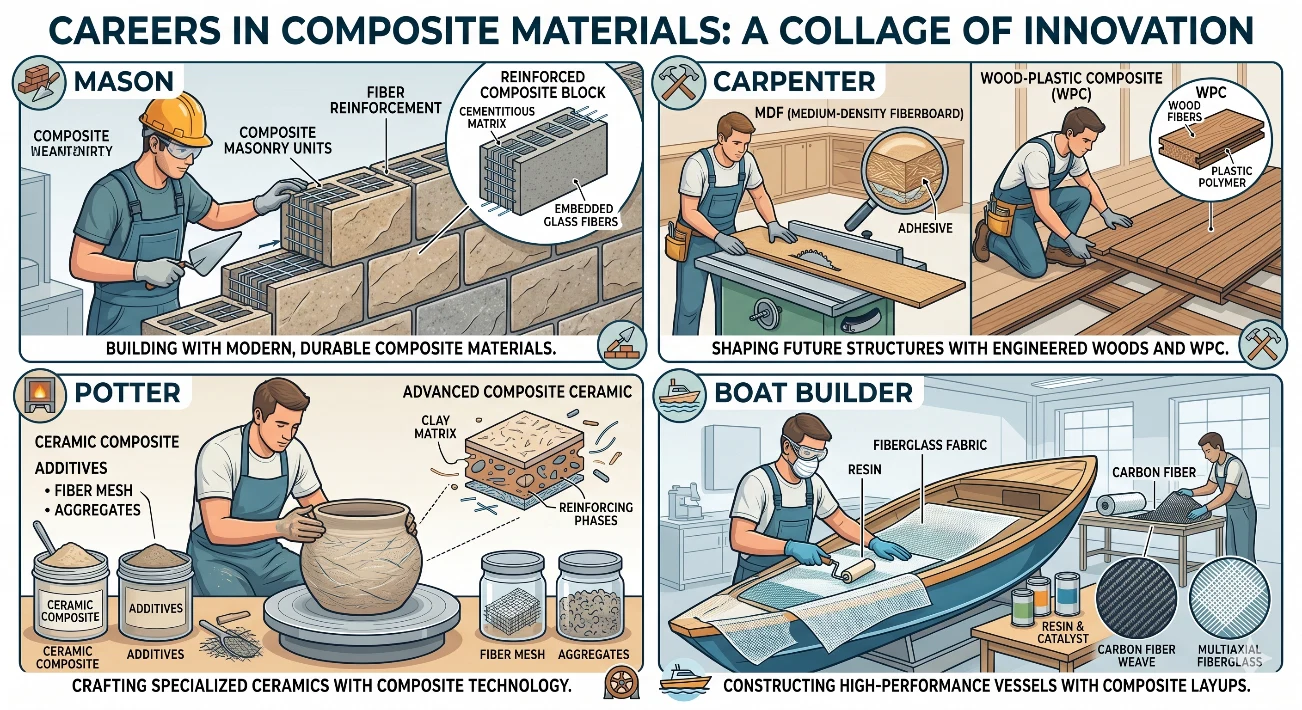
Careers Related to Composite Materials:
|
Career |
Description |
|---|---|
|
Mason |
Builds structures using brick, stone, and concrete blocks. |
|
Carpenter |
Constructs and repairs building frameworks and structures made from wood and manufactured boards. |
|
Interior Designer |
Uses materials like MDF, plywood, and decorative composites to design functional and aesthetic indoor spaces. |
|
Sculptor |
Creates three-dimensional artworks using materials like clay, concrete, fibreglass, and papier-mâché. |
|
Boat Builder |
Constructs and repairs boats, often using fibreglass composites. |
|
Civil Engineer |
Designs and oversees construction of infrastructure projects using concrete, steel, and composites. |
|
Potter |
Creates functional and decorative items from clay (a natural composite when mixed with water). |