
Learning Outcomes
By the end of this sub-strand, the learner should be able to:
- a) Identify common ceramic materials in the locality
- b) Describe the physical properties of ceramic materials in the locality
- c) Relate ceramic materials to their use in a work environment
- d) Acknowledge the importance of ceramic materials used in the locality
a) Identify Common Ceramic Materials in the Locality
A ceramic material is an inorganic, non-metallic solid made by shaping and then firing a non-metallic mineral, such as clay, at a high temperature. Some ceramics occur naturally (e.g., seashells, some rocks).
Common Ceramic Materials Found Locally:
|
Ceramic Material |
Examples in Locality |
|---|---|
|
Pottery |
Cooking pots (sufuria za udongo), water storage pots, flower vases |
|
Ceramic Utensils |
Plates, cups, mugs, bowls (often glazed) |
|
Bricks |
Baked clay bricks used for building walls |
|
Tiles |
Floor tiles, wall tiles, roof tiles |
|
Glass |
Window panes, drinking glasses, mirrors, bottles |
|
Sanitary Ware |
Toilets, washbasins, sinks |
|
Electrical Insulators |
White ceramic parts on power lines, spark plug bodies |
|
Natural Ceramics |
Seashells, some rocks |
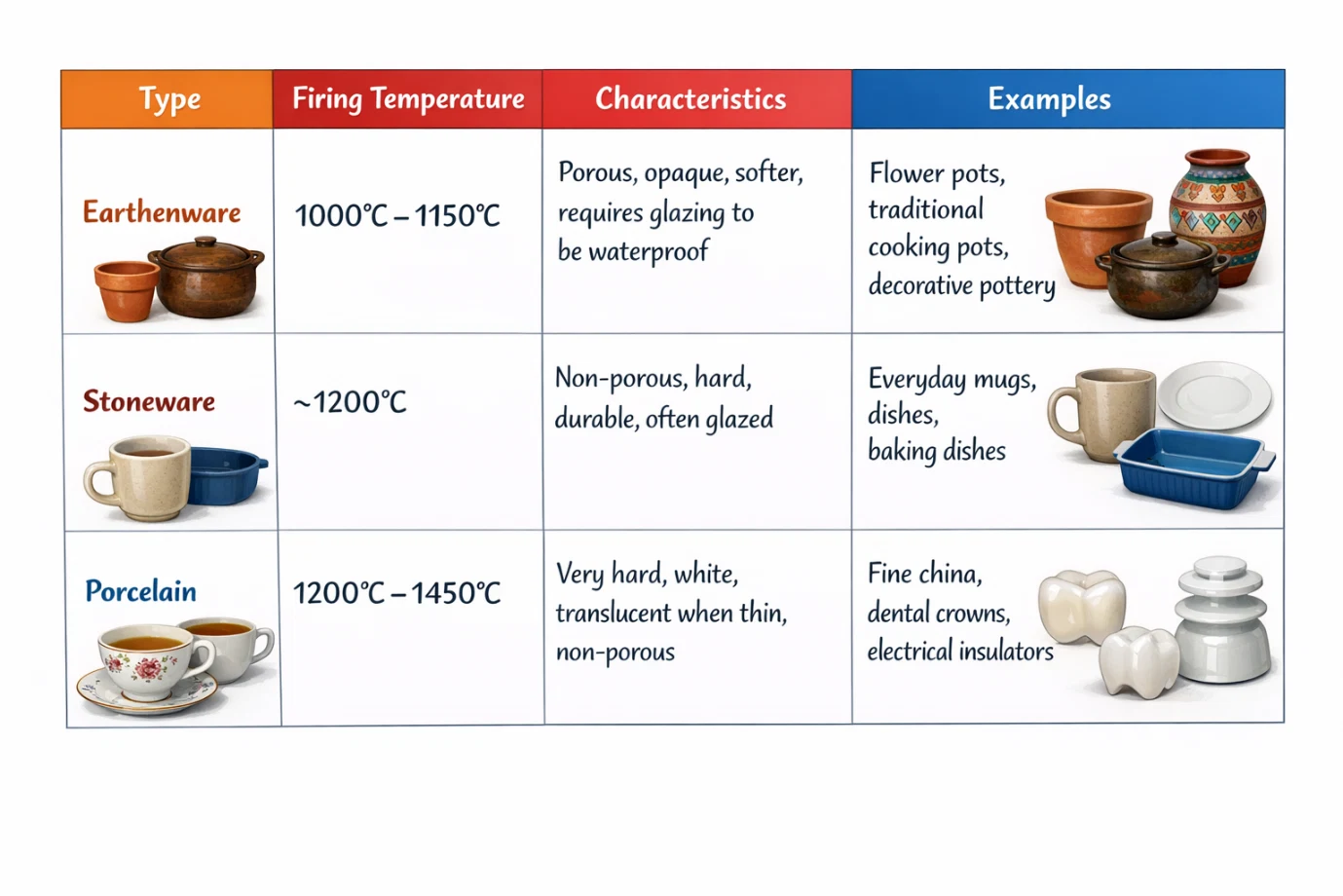
Types of Ceramics Based on Firing Temperature and Properties:
|
Type |
Firing Temperature |
Characteristics |
Examples |
|---|---|---|---|
|
Earthenware |
1000°C - 1150°C |
Porous, opaque, softer, requires glazing to be waterproof |
Flower pots, traditional cooking pots, decorative pottery |
|
Stoneware |
~1200°C |
Non-porous, hard, durable, often glazed |
Everyday mugs, dishes, baking dishes |
|
Porcelain |
1200°C - 1450°C |
Very hard, white, translucent when thin, non-porous |
Fine china, dental crowns, electrical insulators |
b) Describe the Physical Properties of Ceramic Materials in the Locality
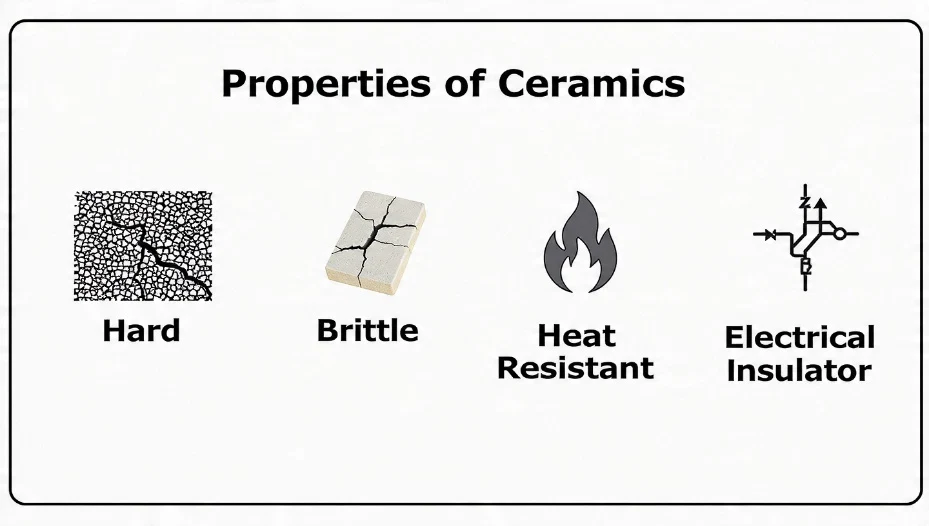
Ceramics have a distinctive set of physical properties that determine their uses.
|
Physical Property |
Description |
Implication |
|---|---|---|
|
Hardness |
Ceramics are very hard and resistant to scratching. |
Makes them durable for flooring (tiles) and cutting tools. However, they cannot be easily shaped once fired. |
|
Brittleness |
Ceramics break or shatter easily when dropped or subjected to sudden impact. They have low tensile strength. |
Must be handled with care; not suitable for applications requiring flexibility or impact resistance. |
|
Heat Resistance |
Can withstand very high temperatures without melting or deforming. |
Used for cooking pots, kiln linings, and space shuttle heat shields. |
|
Fire Resistance |
Do not burn or support combustion. |
Safe for use in fireplaces, ovens, and as building materials for fire protection. |
|
Water Resistance (when glazed) |
Unglazed earthenware is porous; glazed ceramics are waterproof. |
Glazed tiles and sanitary ware are essential in wet areas. |
|
Corrosion Resistance |
Resistant to chemical attack from acids, alkalis, and weathering. |
Sanitary ware and chemical containers last long without rusting or degrading. |
|
Electrical Insulation |
Poor conductors of electricity (they are insulators). |
Ideal for electrical insulators on power lines and in electronic components. |
|
Thermal Insulation |
Generally poor conductors of heat (some are good insulators). |
Bricks provide thermal mass, keeping buildings cool. |
|
Opacity / Translucency |
Most are opaque; thin porcelain can be translucent. |
Aesthetic applications in fine tableware and decorative items. |
Simple Investigation of Properties:
|
Test |
Procedure |
Observation for Ceramic |
|---|---|---|
|
Water Absorption |
Place a drop of water on unglazed earthenware vs. glazed tile. |
Water soaks into earthenware; water beads on glazed tile. |
|
Hardness |
Try to scratch with a steel nail. |
Ceramic is not easily scratched; the nail may leave a metal mark. |
|
Impact |
Tap gently with a metal object. |
Produces a ringing sound; shatters if hit hard. |
c) Relate Ceramic Materials to Their Use in a Work Environment
The unique properties of ceramics make them indispensable in various industries.
|
Ceramic Material |
Key Properties Utilized |
Applications in Work Environment |
|---|---|---|
|
Clay Bricks |
Compressive strength, fire resistance, thermal mass |
• Building walls and foundations |
|
Ceramic Tiles |
Hardness, water resistance (glazed), easy to clean, aesthetic |
• Flooring in kitchens, bathrooms, and commercial spaces |
|
Sanitary Ware (Toilets, Sinks) |
Water resistance, corrosion resistance, easy to clean, hygiene |
• Bathrooms in homes, offices, schools, hospitals |
|
Glass |
Transparency, hardness, chemical resistance |
• Windows and doors |
|
Porcelain Electrical Insulators |
Excellent electrical insulation, weather resistance |
• Power transmission lines |
|
Pottery and Ceramic Utensils |
Heat resistance, non-reactive with food, aesthetic |
• Food preparation and storage (traditional pots) |
|
Refractory Ceramics |
Extreme heat resistance |
• Lining of furnaces and kilns in steel, glass, and cement industries |
Matching Activity:
|
Work Environment |
Ceramic Material Used |
|---|---|
|
Construction site |
Bricks, floor tiles, roof tiles |
|
Hospital |
Sanitary ware, glass windows, ceramic lab equipment |
|
Restaurant |
Ceramic plates, cups, bowls |
|
Power station |
Porcelain electrical insulators |
|
Bathroom showroom |
Toilets, washbasins, glazed wall tiles |
|
Pottery workshop |
Earthenware and stoneware clay |
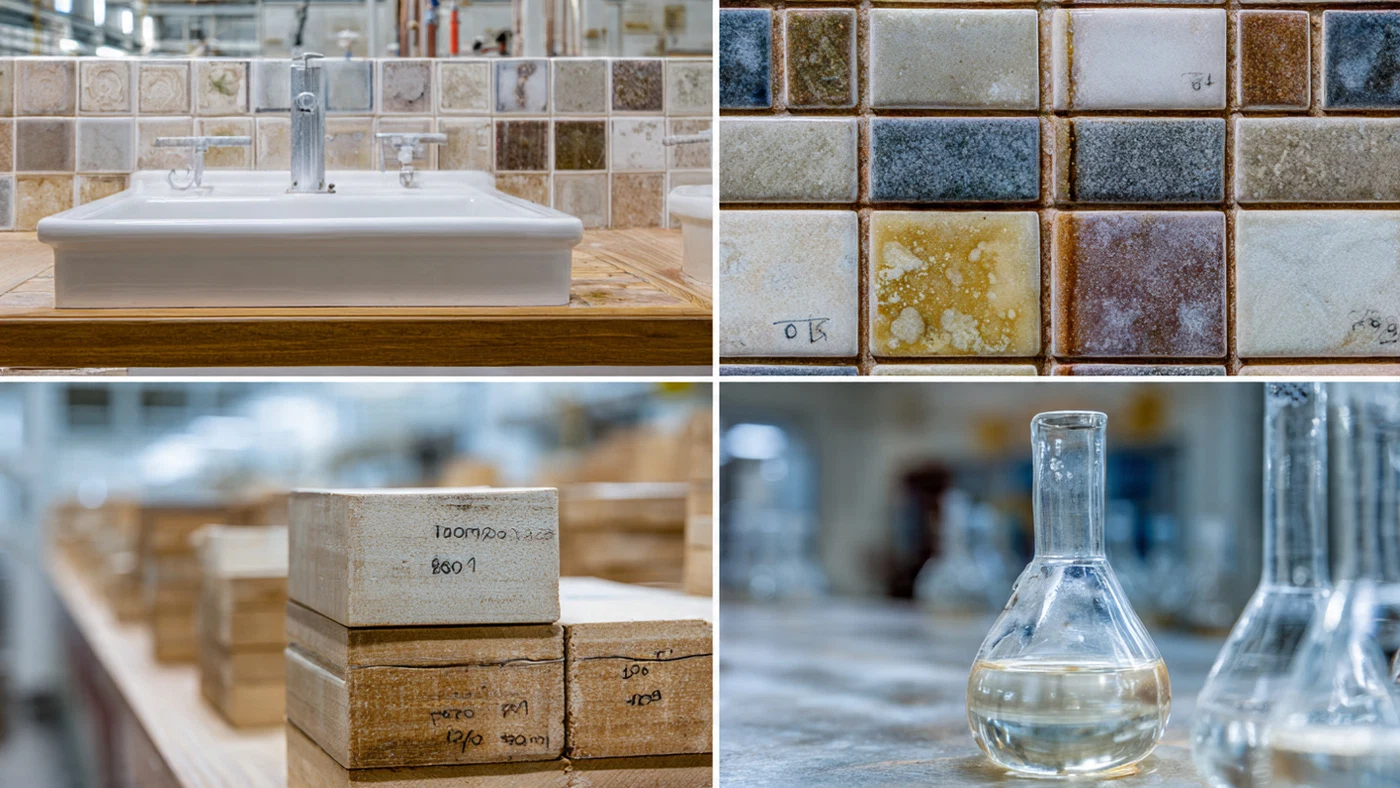
Photos showing ceramic applications - tiled bathroom, power line insulators, construction bricks, laboratory glassware
d) Acknowledge the Importance of Ceramic Materials Used in the Locality
Ceramics contribute significantly to modern life and the local economy.
|
Importance |
Explanation |
|---|---|
|
Essential for Construction |
Bricks and tiles are fundamental building materials for durable and fire-resistant structures. |
|
Promotes Hygiene and Sanitation |
Glazed ceramic sanitary ware is non-porous and easy to clean, preventing the spread of disease. |
|
Supports the Energy Sector |
Porcelain insulators are critical for safe and reliable electricity transmission. |
|
Enables Food Preparation and Storage |
Ceramic pots and utensils are used in traditional and modern cooking. They do not leach harmful chemicals into food. |
|
Provides Economic Opportunities |
Pottery, brick-making, and tile installation provide employment and income for many Kenyans. |
|
Enhances Aesthetics |
Decorative tiles, pottery, and glass add beauty to homes and public spaces. |
|
Contributes to Technology |
Advanced ceramics are used in electronics, medical devices (dental implants), and aerospace. |
|
Environmentally Friendly |
Natural ceramics like clay are abundant and can be recycled. Ceramic products have long lifespans, reducing waste. |
Careers Related to Ceramic Materials:
|
Career |
Description |
|---|---|
|
Potter / Ceramic Artist |
Creates functional and decorative items from clay. |
|
Brick Maker |
Manufactures clay bricks for construction. |
|
Mason |
Lays bricks and tiles in building construction. |
|
Plumber |
Installs and maintains ceramic sanitary ware. |
|
Glassmaker |
Produces glass products for various uses. |
|
Electrical Technician |
Works with ceramic insulators in power systems. |
|
Ceramic Engineer |
Develops new ceramic materials for industrial and technological applications. |
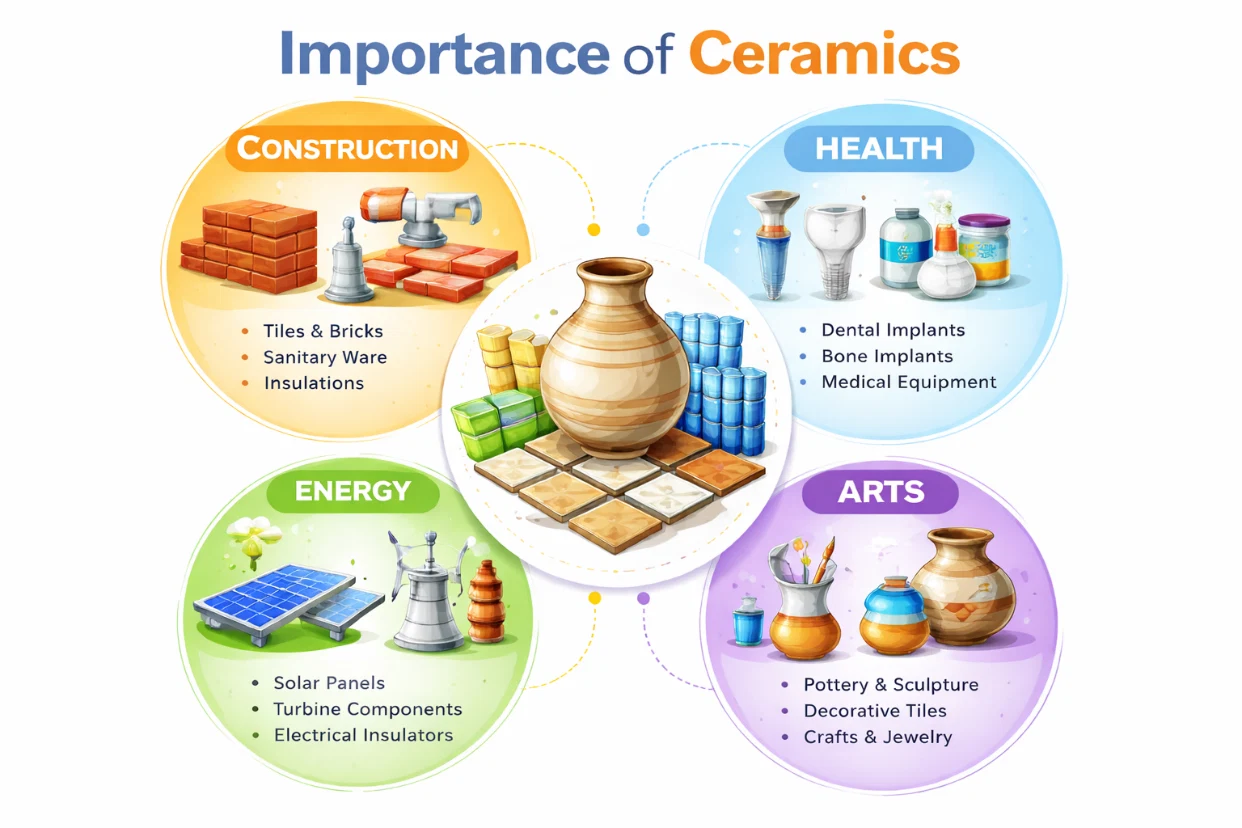
Infographic showing the importance of ceramics in different sectors - construction, health, energy, arts