
Meaning of interactive speaking
Interactive speaking is the process of exchanging information, thoughts and ideas between two or more people through conversation.
A successful French conversation requires good listening, appropriate vocabulary, correct pronunciation, relevant responses and respectful body language.
1. Greetings and responses (Les salutations)
Greetings are expressions used when meeting, welcoming or saying goodbye to people.
|
French expression |
English meaning |
|---|---|
|
Bonjour ! |
Hello! / Good morning! |
|
Bonsoir ! |
Good evening! |
|
Salut ! |
Hi! / Bye! (informal) |
|
Bonne nuit ! |
Good night! |
|
Comment ça va ? |
How are you? |
|
Ça va bien, merci. |
I am fine, thank you. |
|
Comment allez-vous ? |
How are you? (formal or plural) |
|
Très bien, merci. |
Very well, thank you. |
|
Au revoir ! |
Goodbye! |
|
À bientôt ! |
See you soon! |
|
À demain ! |
See you tomorrow! |
|
Merci beaucoup ! |
Thank you very much! |
|
De rien ! |
You're welcome! |
Remember: Use vous to address someone formally or several people. Use tu when speaking informally to one person.
2. Introducing yourself (Se présenter)
Learners should be able to introduce themselves and request personal information politely.
|
Question |
Example response |
|---|---|
|
Comment tu t'appelles ? (What is your name?) |
Je m'appelle Amina. |
|
Quel âge as-tu ? (How old are you?) |
J'ai quatorze ans. |
|
Où habites-tu ? (Where do you live?) |
J'habite à Nairobi. |
|
D'où viens-tu ? (Where are you from?) |
Je viens du Kenya. |
|
Quelle est ta nationalité ? |
Je suis kényane. |
|
Qu'est-ce que tu aimes ? |
J'aime la musique. |
|
Quelle est ta matière préférée ? |
Ma matière préférée est le français. |
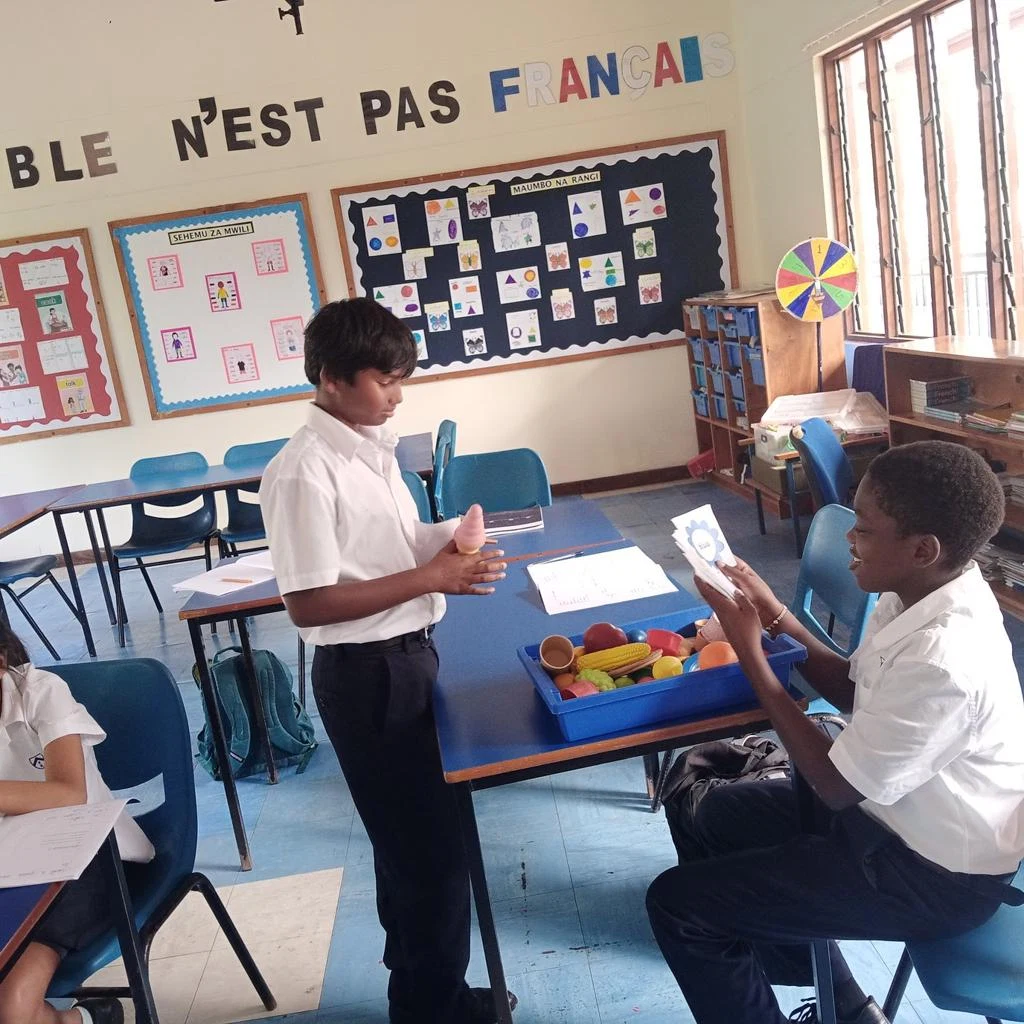
3. Conversation practice (Le dialogue)
mombasa.braeburn.com
Dialogue: Deux amis à l'école (Two friends at school)
Marie : Bonjour, David !
David : Bonjour, Marie ! Comment vas-tu ?
Marie : Je vais très bien, merci. Et toi ?
David : Moi aussi, je vais bien. Tu vas où ?
Marie : Je vais à la bibliothèque.
David : Pourquoi ?
Marie : Parce que je veux lire un livre en français.
David : Est-ce que je peux venir avec toi ?
Marie : Bien sûr ! Allons-y !
David : Merci beaucoup !
English translation
Marie: Hello, David!
David: Hello, Marie! How are you?
Marie: I am very well, thank you. And you?
David: I am fine too. Where are you going?
Marie: I am going to the library.
David: Why?
Marie: Because I want to read a book in French.
David: Can I come with you?
Marie: Of course! Let's go!
David: Thank you very much!
4. Asking questions (Poser des questions)
Question words help learners request information and keep a conversation going.
|
French |
English |
Example |
|---|---|---|
|
Qui ? |
Who? |
Qui est ton ami ? |
|
Quoi ? / Que ? |
What? |
Que fais-tu ? |
|
Où ? |
Where? |
Où est ton école ? |
|
Quand ? |
When? |
Quand pars-tu ? |
|
Pourquoi ? |
Why? |
Pourquoi es-tu triste ? |
|
Comment ? |
How? |
Comment vas-tu ? |
|
Combien ? |
How much/many? |
Combien de livres as-tu ? |
|
Quel / Quelle ? |
Which/What? |
Quelle couleur préfères-tu ? |
Using est-ce que
A simple way of forming a yes/no question in French is to place est-ce que before a statement.
Statement: Tu parles français. (You speak French.)
Question: Est-ce que tu parles français ? (Do you speak French?)
Answer: Oui, je parle français. (Yes, I speak French.)
5. Expressions for maintaining conversations
These expressions demonstrate interest and encourage speakers to provide additional information.
- Je comprends. — I understand.
- Je ne comprends pas. — I do not understand.
- Peux-tu répéter, s'il te plaît ? — Can you repeat, please?
- Parlez lentement, s'il vous plaît. — Speak slowly, please.
- Qu'est-ce que tu veux dire ? — What do you mean?
- C'est intéressant ! — That's interesting!
- Je suis d'accord. — I agree.
- Je ne suis pas d'accord. — I disagree.
- Et toi ? — And you?
- À mon avis… — In my opinion…
6. Non-verbal communication (La communication non verbale)
Non-verbal communication includes messages conveyed without spoken words.

Eye contact
Looking toward the speaker to show attention.
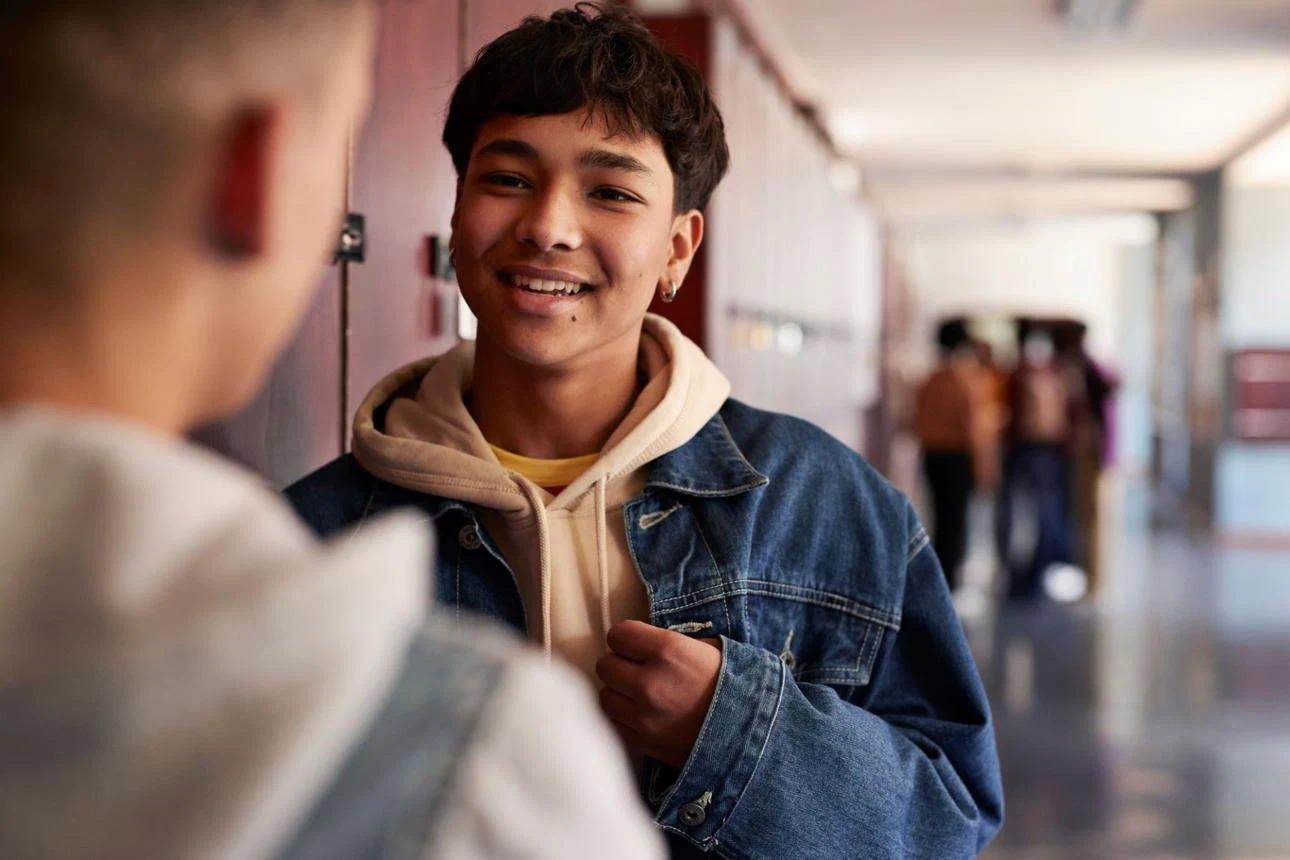
Facial expressions
Smiling to express friendliness.
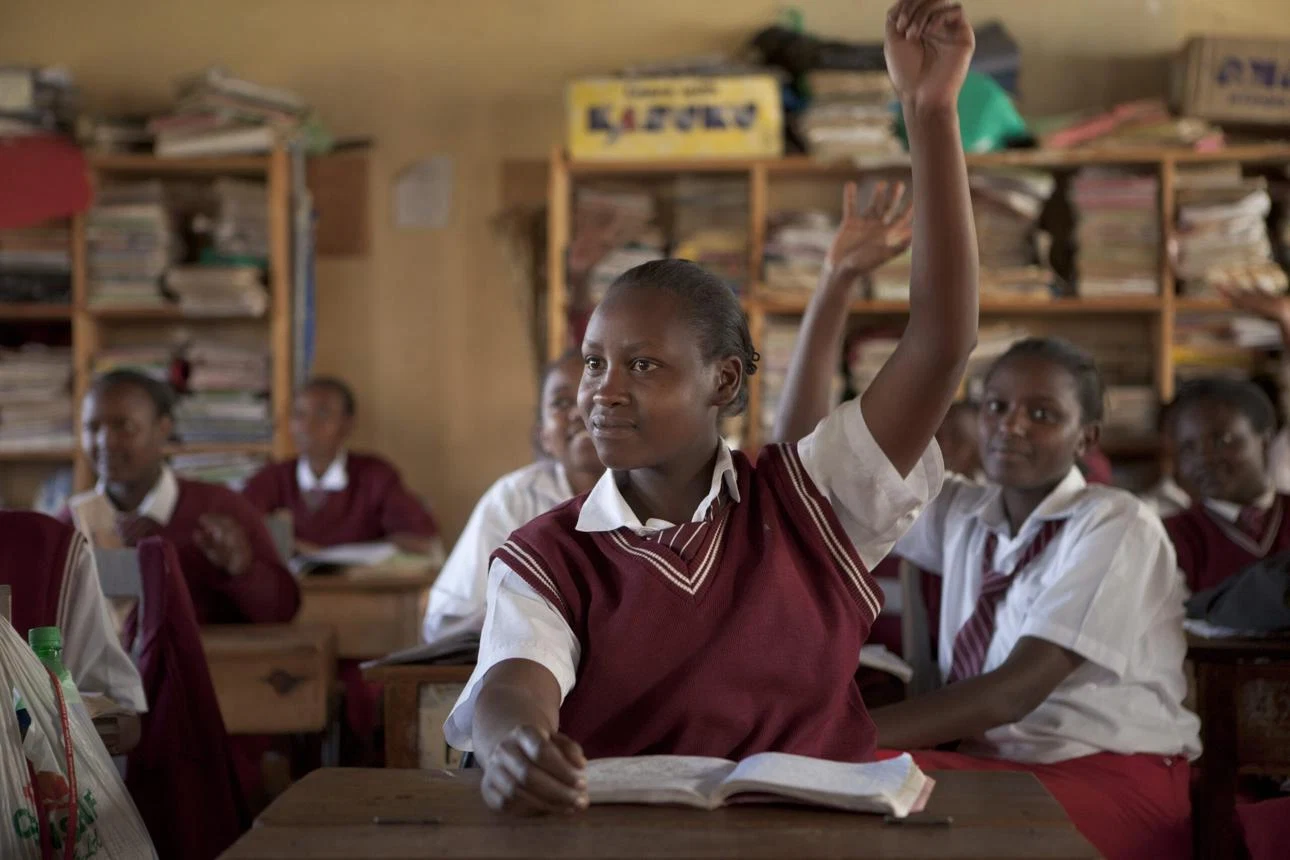
Gestures
Using hand movements appropriately.
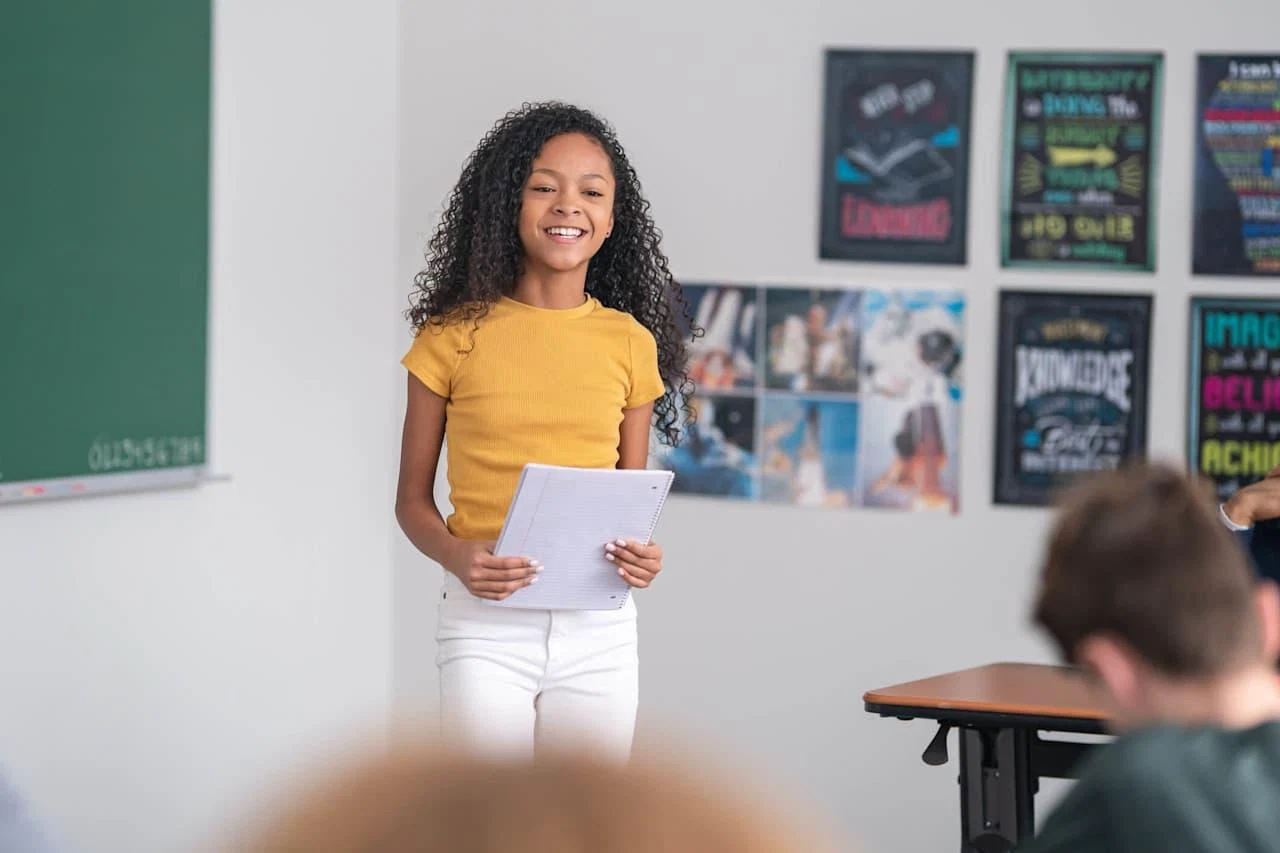
Posture
Standing or sitting attentively and confidently.
Gestures and body language may have different meanings in different cultures. Learners should be respectful and observe how communication takes place in various situations.
Activity 1.1
Work in pairs and perform a dialogue in French.
- Greet your partner.
- Ask their name and age.
- Ask where they live.
- Ask about their favourite school subject.
- Respond appropriately and end the conversation politely.
Assessment: The teacher should observe confidence, pronunciation, vocabulary, listening and the ability to respond naturally.