
Meaning of guided writing
Guided writing is the process of producing written work using instructions, prompts, pictures, vocabulary lists, sentence starters or examples provided by the teacher.
It helps learners develop confidence and accuracy before writing independently.
1. French spelling (L'orthographe)
Correct spelling is important because written French uses letters, accents and grammatical endings that can affect meaning.
French accents and special marks
|
Symbol |
Name |
Example |
|---|---|---|
|
é |
Accent aigu |
école, été |
|
è |
Accent grave |
père, mère |
|
ê |
Accent circonflexe |
fête, tête |
|
ë |
Tréma |
Noël |
|
ç |
Cédille |
français, garçon |
|
à |
Accent grave |
à, là |
|
ù |
Accent grave |
où |
Important spelling differences
- a means “has,” while à is a preposition often meaning “to” or “at.”
- ou means “or,” while où means “where.”
- la means “the” (feminine singular), while là means “there.”
Correct examples:
Elle a un livre. — She has a book.
Elle va à l'école. — She goes to school.
Où habites-tu ? — Where do you live?
Tu préfères le thé ou le café ? — Do you prefer tea or coffee?
2. Structure of a French sentence
A basic French sentence generally follows the structure:
Sujet
Je
Subject
Verbe
mange
Verb
Complément
une pomme
Complement
Je mange une pomme.
I eat an apple.
Additional examples:
Elle lit un livre. — She reads a book.
Nous jouons au football. — We play football.
Ils apprennent le français. — They learn French.
3. Personal pronouns (Les pronoms personnels)
|
French |
English |
|---|---|
|
Je / J' |
I |
|
Tu |
You (informal singular) |
|
Il |
He / It |
|
Elle |
She / It |
|
On |
One / We (informal) |
|
Nous |
We |
|
Vous |
You (formal or plural) |
|
Ils |
They (masculine or mixed group) |
|
Elles |
They (feminine group) |
Examples:
Je suis élève. — I am a learner.
Nous habitons au Kenya. — We live in Kenya.
Elles parlent français. — They speak French.
4. Articles and gender (Les articles et le genre)
French nouns are generally masculine or feminine.
|
Article |
Use |
Example |
|---|---|---|
|
Un |
Masculine singular, indefinite |
Un garçon |
|
Une |
Feminine singular, indefinite |
Une fille |
|
Des |
Plural, indefinite |
Des élèves |
|
Le |
Masculine singular, definite |
Le livre |
|
La |
Feminine singular, definite |
La maison |
|
L' |
Singular before a vowel sound or mute h |
L'école |
|
Les |
Plural, definite |
Les enfants |
Examples
C'est un stylo. — This is a pen.
C'est une règle. — This is a ruler.
Ce sont des cahiers. — These are notebooks.
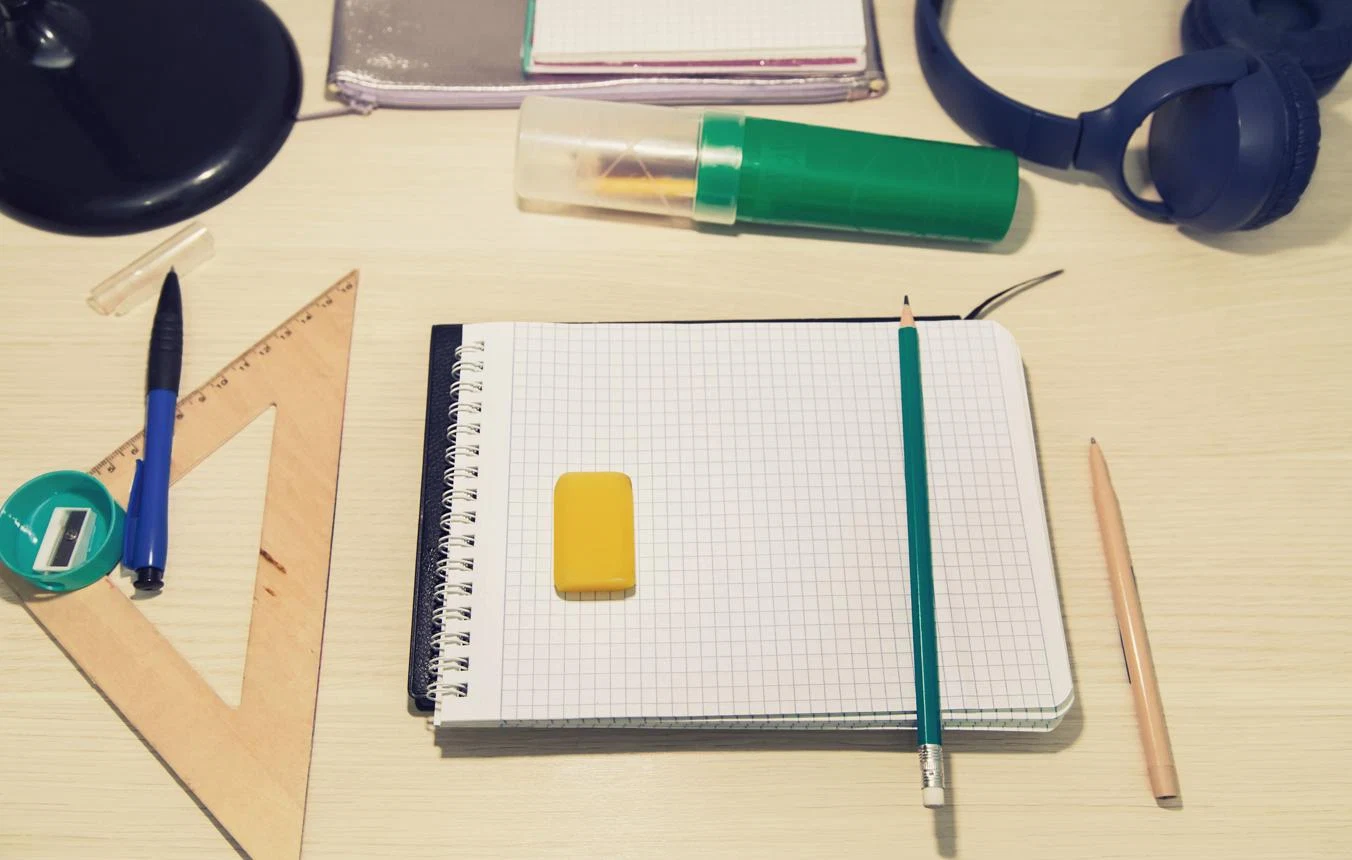
School vocabulary (Le matériel scolaire)
|
French |
English |
|---|---|
|
Un stylo |
A pen |
|
Un crayon |
A pencil |
|
Un cahier |
An exercise book |
|
Un livre |
A book |
|
Une règle |
A ruler |
|
Une gomme |
An eraser |
|
Un sac |
A bag |
|
Une table |
A table |
|
Une chaise |
A chair |
|
Un tableau |
A board |
|
Une trousse |
A pencil case |
|
Un dictionnaire |
A dictionary |
5. Verbs and present tense (Les verbes au présent)
Verbs describe actions, states or events.
The verb être (to be)
|
Pronoun |
Conjugation |
|---|---|
|
Je |
suis |
|
Tu |
es |
|
Il / Elle / On |
est |
|
Nous |
sommes |
|
Vous |
êtes |
|
Ils / Elles |
sont |
Je suis content. — I am happy.
Nous sommes élèves. — We are learners.
The verb avoir (to have)
|
Pronoun |
Conjugation |
|---|---|
|
J' |
ai |
|
Tu |
as |
|
Il / Elle / On |
a |
|
Nous |
avons |
|
Vous |
avez |
|
Ils / Elles |
ont |
J'ai quinze ans. — I am fifteen years old.
Elle a deux frères. — She has two brothers.
The verb aller (to go)
|
Pronoun |
Conjugation |
|---|---|
|
Je |
vais |
|
Tu |
vas |
|
Il / Elle / On |
va |
|
Nous |
allons |
|
Vous |
allez |
|
Ils / Elles |
vont |
Je vais à l'école. — I go to school.
Nous allons au marché. — We go to the market.
6. Regular -er verbs
Many French verbs end in -er. One example is parler (to speak).
|
Pronoun |
Parler |
|---|---|
|
Je |
parle |
|
Tu |
parles |
|
Il / Elle / On |
parle |
|
Nous |
parlons |
|
Vous |
parlez |
|
Ils / Elles |
parlent |
To conjugate many regular -er verbs in the present tense, remove -er and add the appropriate ending: -e, -es, -e, -ons, -ez, -ent.
Other examples include aimer (to like), jouer (to play), travailler (to work) and habiter (to live).
Elle aime le français.
Nous jouons au volley-ball.
Vous travaillez beaucoup.
7. Adjective agreement (L'accord des adjectifs)
In French, many adjectives change to match the gender and number of the noun they describe.
|
Masculine |
Feminine |
English |
|---|---|---|
|
grand |
grande |
Tall / Big |
|
petit |
petite |
Small |
|
content |
contente |
Happy |
|
intelligent |
intelligente |
Intelligent |
|
français |
française |
French |
|
sportif |
sportive |
Sporty |
Examples:
Paul est grand. — Paul is tall.
Marie est grande. — Marie is tall.
Les filles sont intelligentes. — The girls are intelligent.
Some adjectives have irregular forms, while others remain unchanged in masculine and feminine forms.
8. Negative sentences (Les phrases négatives)
A common way to make a French sentence negative is to place ne before the conjugated verb and pas after it.
Positive: Je parle français.
Negative: Je ne parle pas français.
Positive: Elle aime le café.
Negative: Elle n'aime pas le café.
Positive: Nous sommes fatigués.
Negative: Nous ne sommes pas fatigués.
9. Connecting ideas (Les mots de liaison)
Connecting words help learners construct clear and meaningful sentences.
|
French |
English |
|---|---|
|
Et |
And |
|
Mais |
But |
|
Parce que |
Because |
|
Donc |
Therefore / So |
|
Ensuite |
Next / Then |
|
Puis |
Then |
|
D'abord |
First |
|
Enfin |
Finally |
|
Aussi |
Also |
|
Avec |
With |
Example
D'abord, je me réveille à six heures. Ensuite, je prends mon petit-déjeuner. Puis, je vais à l'école. Enfin, je rentre à la maison.
First, I wake up at six o'clock. Next, I have breakfast. Then, I go to school. Finally, I return home.
10. Guided paragraph writing
A paragraph consists of connected sentences developing a particular idea.
An effective paragraph should contain an opening sentence, relevant supporting details and an appropriate ending.
Example: Ma famille (My family)
Je m'appelle Kevin. J'habite à Kisumu avec ma famille. Nous sommes cinq personnes dans notre famille : mon père, ma mère, mes deux sœurs et moi. Mon père est commerçant et ma mère est enseignante. Mes sœurs sont élèves. Le week-end, nous aimons cuisiner, regarder la télévision et jouer ensemble. J'aime beaucoup ma famille parce qu'elle est gentille et unie.
English translation
My name is Kevin. I live in Kisumu with my family. There are five people in our family: my father, mother, two sisters and me. My father is a trader and my mother is a teacher. My sisters are learners. On weekends, we like cooking, watching television and playing together. I love my family very much because it is kind and united.
11. Writing short messages (Écrire des messages courts)
Learners should practise writing invitations, messages of thanks, apologies and simple personal communications.
Example 1: An invitation
Salut David,
Je t'invite à ma fête d'anniversaire samedi à quinze heures chez moi. Nous allons manger du gâteau, écouter de la musique et jouer. J'espère que tu viendras.
À bientôt,
Jean
Example 2: An apology
Bonjour Madame,
Je suis désolé d'être en retard aujourd'hui. Le bus est arrivé en retard ce matin. Je ferai attention à l'avenir.
Merci de votre compréhension.
Paul
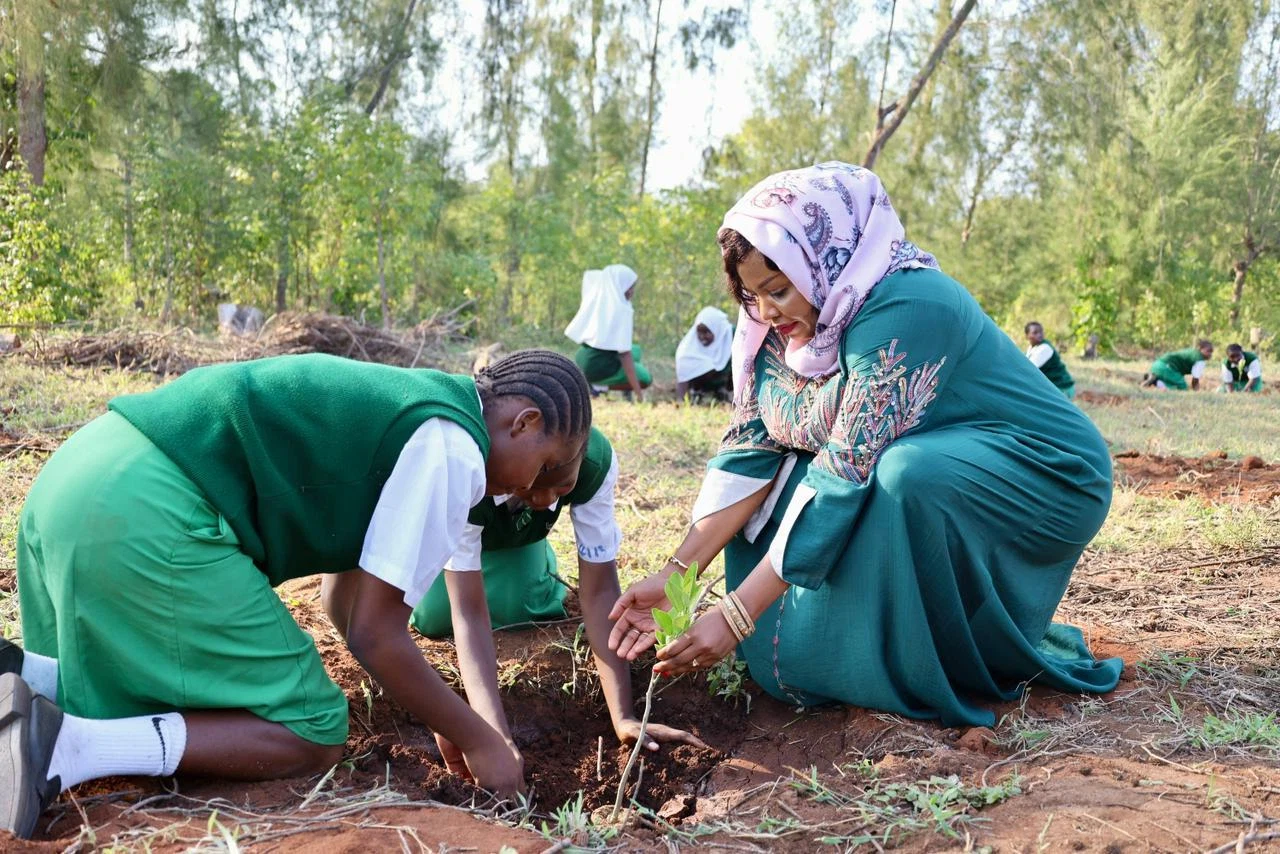
12. Guided picture composition
the-star.co.ke
Observe the picture and write five simple sentences in French.
Model composition: Les élèves plantent un arbre.
- Les élèves sont dans la cour de l'école.
- Ils plantent un arbre.
- Le professeur aide les élèves.
- Les élèves travaillent ensemble.
- Ils veulent protéger l'environnement.
English translation
- The learners are in the school compound.
- They are planting a tree.
- The teacher helps the learners.
- The learners work together.
- They want to protect the environment.
Activity 3.1: Guided writing exercises
A. Complete the sentences with the correct verb forms.
- Je ___ élève. (être)
- Nous ___ au Kenya. (habiter)
- Elles ___ français. (parler)
- Tu ___ quinze ans. (avoir)
- Vous ___ à l'école. (aller)
B. Arrange the words into meaningful French sentences.
- français / parle / Je
- école / à / vais / l' / Je
- livres / des / Nous / avons
- aime / Elle / musique / la
- frère / Mon / gentil / est
C. Write a short paragraph of six to eight sentences about one of the following topics:
- Mon école — My school
- Ma famille — My family
- Mon meilleur ami — My best friend
- Mes loisirs — My hobbies
- Ma journée — My day
GRADE 9 FRENCH REVISION
The following short assessment covers listening, speaking, reading and writing.
French knowledge check
10 multiple-choice questions • 10 marks
0/10 answered
1. Which is the correct formal greeting?
A. Salut !
B. Bonjour !
C. À demain !
D. Bonne nuit !
2. Choose the correct sentence for 'I am 14 years old.'
A. Je suis quatorze ans.
B. J'ai quatorze ans.
C. Je vais quatorze ans.
D. Je parle quatorze ans.
3. What does 'Où habites-tu ?' mean?
A. What is your name?
B. How old are you?
C. Where do you live?
D. Where are you going?
4. Complete: Nous ___ français.
A. parle
B. parlez
C. parlons
D. parlent
5. What is the feminine form of 'grand'?
A. grands
B. grande
C. grandir
D. grandes
6. What does 'Je ne comprends pas' mean?
A. I do not understand.
B. I do not speak.
C. I am not here.
D. I do not read.
7. Which strategy helps locate a specific date in a passage?
A. Memorising every word
B. Scanning
C. Ignoring headings
D. Reading only the first line
8. Select the correct negative sentence.
A. Je pas parle français.
B. Je ne parle pas français.
C. Je parle ne pas français.
D. Ne je parle français.
9. Complete: Elles ___ contentes.
A. suis
B. est
C. sommes
D. sont
10. What is the meaning of 'parce que'?
A. But
B. With
C. Because
D. Then
Check answers Reset