
1. Meaning of Hadith
A Hadith is a report concerning the statements, actions, approvals or descriptions of Prophet Muhammad (S.A.W.).
Ulum al-Hadith refers to the sciences used to study, transmit, interpret, evaluate and authenticate Hadith reports.
2. Main components of Hadith
A Hadith has two important components.
Sanad or isnad: The chain of narrators through whom the report was transmitted.
Matn: The actual wording or content of the report.
Structure of a Hadith report
Sanad (Chain of transmission)
Transmitters who passed down the report
Matn (Text)
The reported statement or teaching
3. Six major Sunni Hadith collections
The six collections are commonly known as al-Kutub al-Sittah. They are highly respected in Sunni scholarship, but not every individual narration in all six books is automatically classified as authentic.
|
Collection |
Compiler |
|---|---|
|
Sahih al-Bukhari |
Imam Muhammad ibn Isma'il al-Bukhari |
|
Sahih Muslim |
Imam Muslim ibn al-Hajjaj |
|
Sunan Abi Dawud |
Imam Abu Dawud al-Sijistani |
|
Jami' al-Tirmidhi |
Imam al-Tirmidhi |
|
Sunan al-Nasa'i |
Imam al-Nasa'i |
|
Sunan Ibn Majah |
Imam Ibn Majah |
Sahih al-Bukhari and Sahih Muslim have a particularly prominent status in mainstream Sunni Hadith scholarship.

KovsieScholar
4. Classification of Hadith
A. Sahih (Authentic)
A sahih Hadith meets established authentication conditions, including:
- A connected chain of narration.
- Narrators known for integrity.
- Narrators possessing acceptable accuracy.
- No serious contradiction with stronger evidence.
- No hidden defect that invalidates authenticity.
B. Hasan (Good)
A hasan Hadith generally meets the major conditions of authenticity but has a somewhat lower level of narrator precision than a sahih report.
Hasan Hadith may be accepted as evidence in Islamic scholarship.
C. Da'if (Weak)
A da'if Hadith does not meet one or more of the conditions required for sahih or hasan classification.
Weakness may arise from a break in the chain, a narrator's reliability or another problem.
Important: A weak Hadith is not necessarily fabricated. Fabricated reports form a separate category known as mawdu'.
5. Reasons for classifying Hadith
Scholars classify Hadith to:
- Distinguish reliable reports from unreliable ones.
- Protect the teachings attributed to Prophet Muhammad (S.A.W.).
- Identify fabricated or altered narrations.
- Support sound religious understanding.
- Determine the reliability of evidence used in Islamic jurisprudence.
- Preserve accurate historical knowledge.
6. The Tabi'in and Tabi' al-Tabi'in
Sahabah: Companions of Prophet Muhammad (S.A.W.).
Tabi'in: Muslims who met one or more Companions as believers but did not meet the Prophet.
Tabi' al-Tabi'in: The generation who met members of the Tabi'in as believers.
7. Reasons for Hadith collection and compilation
The collection and systematic study of Hadith became increasingly important because:
- Some early narrators were passing away.
- Islam had spread into new regions.
- Reports were transmitted across long distances.
- Disputes and political conflicts encouraged fabrication of some reports.
- Scholars wanted to distinguish reliable chains from unreliable ones.
- Muslims needed accurate guidance on worship, ethics and religious law.
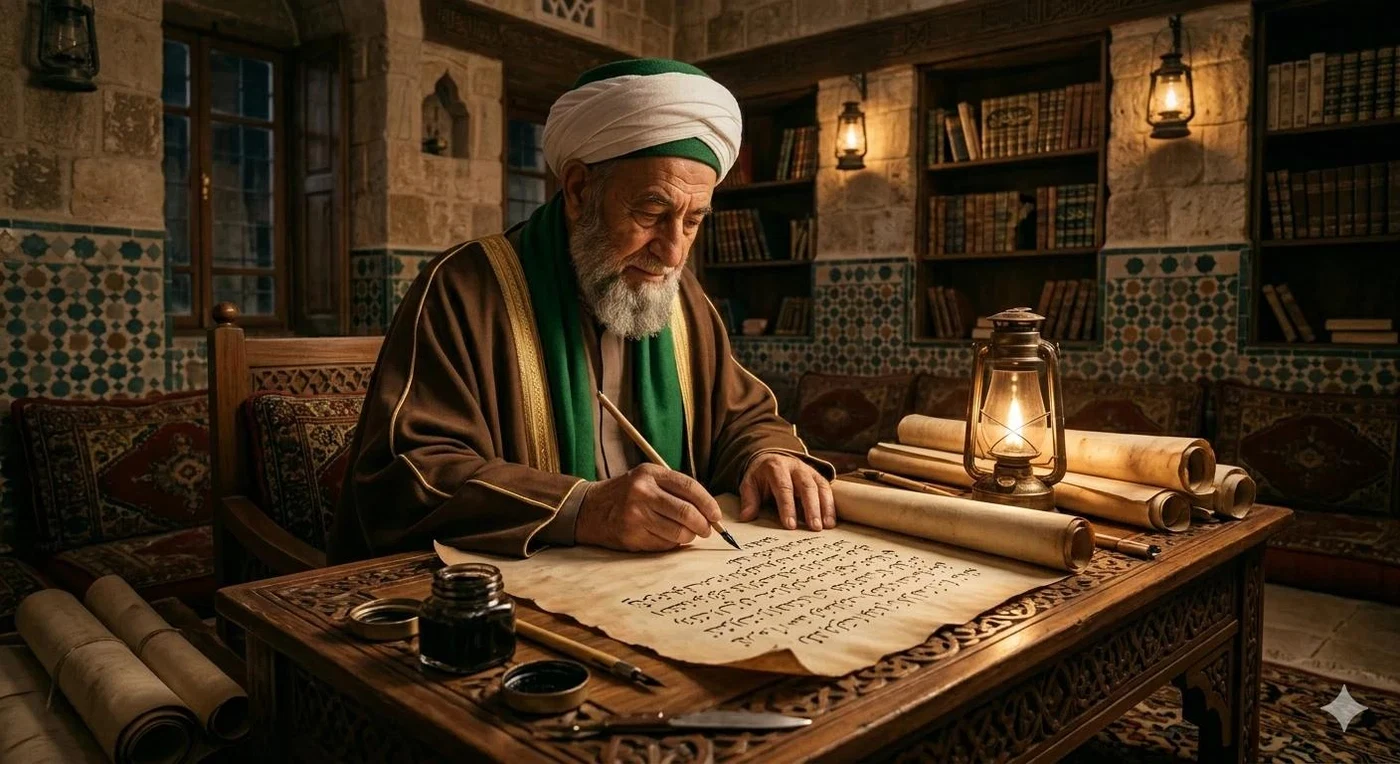
8. Process of Hadith compilation
islamic.amwaly.com
Scholars used methods such as:
- Travelling to meet narrators and scholars.
- Listening directly to Hadith transmissions.
- Recording reports in writing.
- Examining chains of narration.
- Studying narrator biographies and reliability.
- Comparing alternative transmissions.
- Grouping Hadith according to subject or narrator.
- Producing organised collections.
Hadith recording began during the early Muslim community and expanded through successive generations. Major systematic compilations developed over several centuries.
9. Contributions of early scholars
Imam Ibn Shihab al-Zuhri: An important early scholar associated with the systematic gathering and transmission of Hadith.
Imam Malik ibn Anas: Compiled the Muwatta', containing Hadith and material relating to early Islamic legal practice.
Imam al-Bukhari: Produced a major collection using demanding authentication standards.
Imam Muslim: Compiled a highly respected authentic Hadith collection.
10. Importance of Hadith
Hadith helps Muslims understand and apply Qur'anic teachings concerning prayer, fasting, charity, family relations, trade, conduct and other aspects of life.
Activity 2.1
- Define Hadith, sanad and matn.
- Name the six major Sunni Hadith collections.
- Distinguish sahih, hasan and da'if Hadith.
- Explain four reasons for Hadith compilation.
- Describe the contributions of the Tabi'in to Hadith preservation.