
Definition Driving tools are hand tools used to apply force to insert, remove, or tighten fasteners (nails, screws, bolts) or to shape materials by striking.
Driving Tools Used in Day-to-Day Life
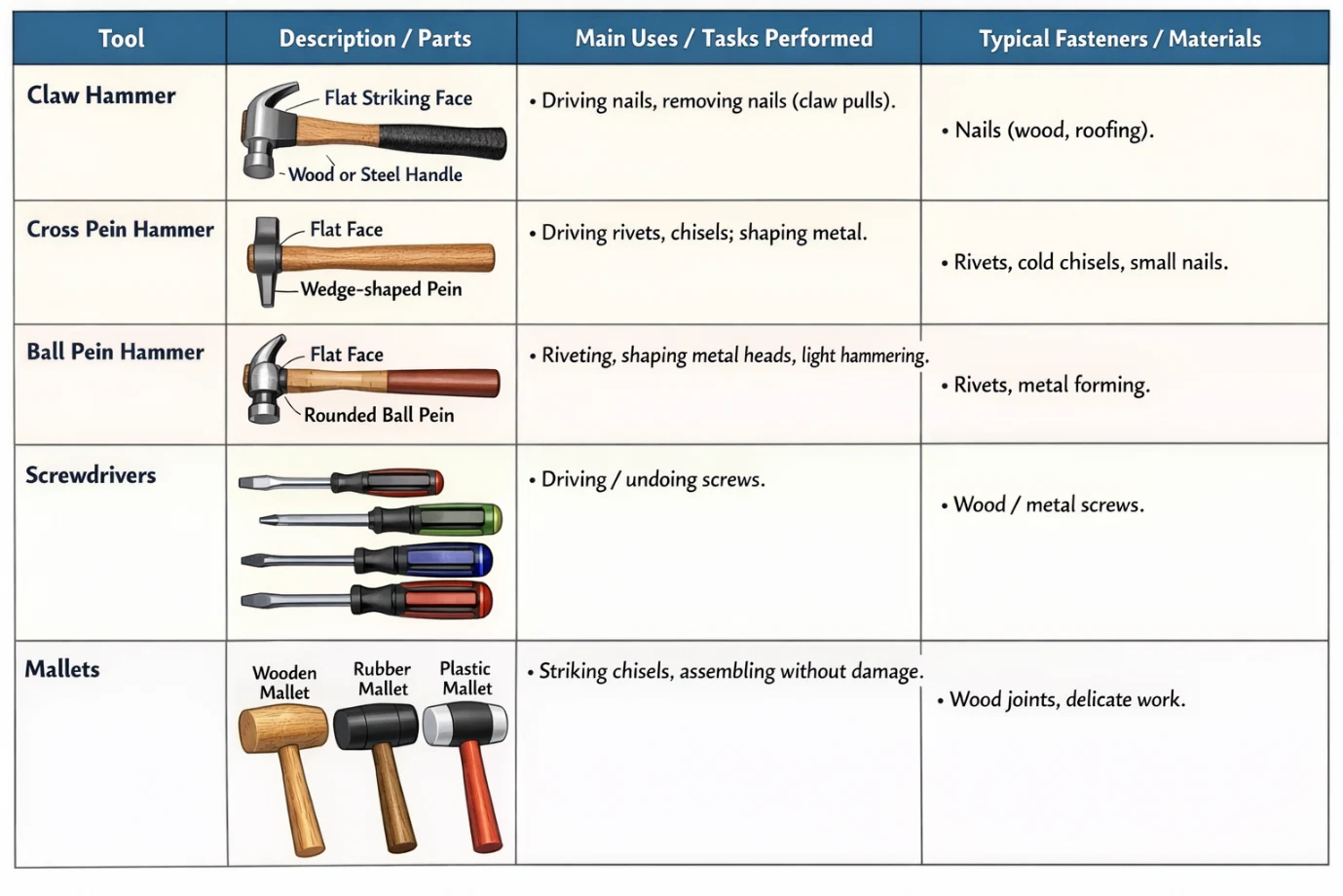
Selecting Driving Tools for Performing Given Tasks
- Match head shape to fastener (flat screwdriver for slotted screws, Phillips for cross).
- Choose size/weight: light hammer for small nails, heavy for large.
- Consider material: soft mallet for wood/finished surfaces, steel hammer for metal.
- Select handle length/grip for control and force.
- Ensure tool is undamaged (no chipped head, secure handle).
Uses of Driving Tools
- Insert fasteners quickly and securely (nails, screws).
- Remove fasteners (claw hammer pulls nails).
- Shape/forge metal (pein hammers).
- Strike chisels/gouges without marring workpiece (mallets).
- Assemble/disassemble items (furniture, machines).
Caring for Driving Tools
- Clean head/handle after use (remove rust, dirt).
- Oil metal parts to prevent rust.
- Store hanging or in tool box (avoid damp areas).
- Check for loose handles/cracks; replace if damaged.
- Sharpen/replace screwdriver tips when worn.
- Never use damaged hammer (risk of flying fragments).
Importance of Driving Tools in Day-to-Day Life
- Essential for construction, repairs, furniture making.
- Make assembly/disassembly fast and secure.
- Improve safety (proper tool reduces slips/injuries).
- Support self-reliance and entrepreneurship (small projects).
- Widely used in homes, workshops, farms.