
Grade 9 Pre-Technical Studies Notes
20 topics · Additional notes and practice
Search results
Strand 1 Foundations of pre-technical studies
Strand 2 Communication in pre-technical studies
Strand 3 Materials for production
Strand 4 Tools and production
Strand 5 Entrepreneurship
Strand 4 Tools and production
Strand 5 Entrepreneurship
Additional revision
Strand 1.0 Foundations of pretechnical studies
Strand 2.0 Communication in pretechnical studies
Strand 3.0 Materials for production
Strand 4.0 Tools and production
Strand 5.0 Entrepreneurship
Projects and assessment
Strand 1 Foundations of pre-technical studies
Strand 2 Communication
Strand 3 Materials for production
Strand 4 Tools and production
Strand 5 Entrepreneurship
Project 1 Foundations of pre-technical studies
Project 2 Communication
Project Title: Designing and Drawing a Simple Storage Box in Oblique Projection
Strand/Sub-Strand Alignment
- Strand 2: Communication in Pre-Technical Studies
Project 3 Materials for production
Project 4 Tools and production
Project 5 Entrepreneurship
Strand 1 Foundations of pre-technical studies assessment
Strand 2 Communication assessment
Strand 3 Materials for production assessment
Strand 4 Tools and production assessment
Strand 5 Entrepreneurship assessment
Practice questions
Strand 1 Foundations of Pre-Technical Studies
1. Safety on Raised Platforms
Definition A raised platform is any elevated surface, structure, or equipment that provides a stable working area above ground level to perform tasks safely at heights.
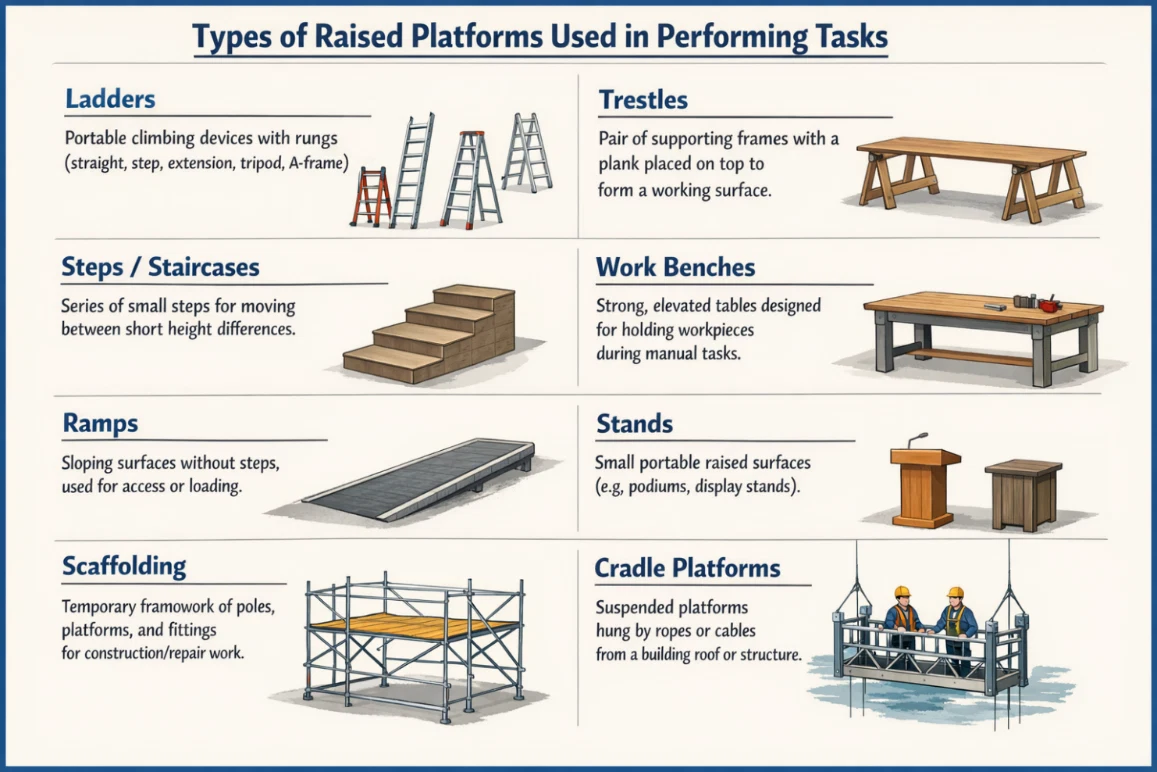
Types of Raised Platforms Used in Performing Tasks
- Ladders Portable climbing devices with rungs (straight, step, extension, tripod, A-frame).
- Trestles Pair of supporting frames with a plank placed on top to form a working surface.
- Steps / Staircases Series of small steps for moving between short height differences.
- Work benches Strong, elevated tables designed for holding workpieces during manual tasks.
- Ramps Sloping surfaces without steps, used for access or loading.
- Stands Small portable raised surfaces (e.g., podiums, display stands).
- Scaffolding Temporary framework of poles, platforms, and fittings for construction/repair work.
- Cradle platforms Suspended platforms hung by ropes or cables from a building roof or structure.
Common Uses
- Reaching high places (painting, repairs, shelving).
- Holding materials/tools comfortably (carpentry, assembly).
- Providing access for people or equipment (wheelchairs, loading).
- Supporting workers and materials during large-scale work (building, window cleaning).
Risks Associated with Working on Raised Platforms
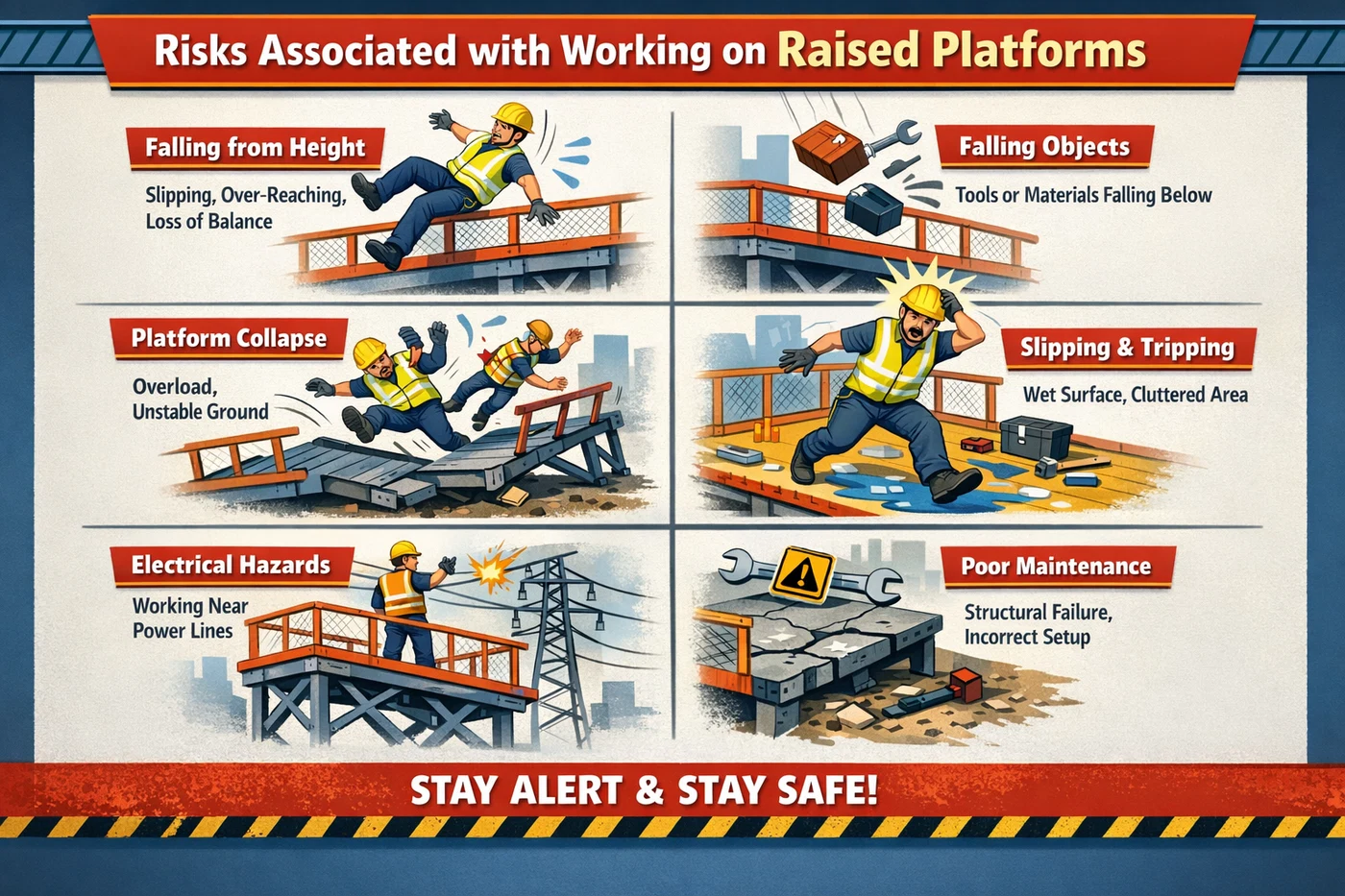
- Falling from height (slipping, over-reaching, loss of balance).
- Objects, tools or materials falling and injuring people below.
- Platform collapse, tilting or overturning (overload, faulty parts, unstable ground).
- Slipping or tripping (wet/oily surface, clutter, poor footwear).
- Electrical hazards (working near power lines).
- Structural failure due to poor maintenance or incorrect setup.
Safety Practices / Precautions When Working on Raised Platforms
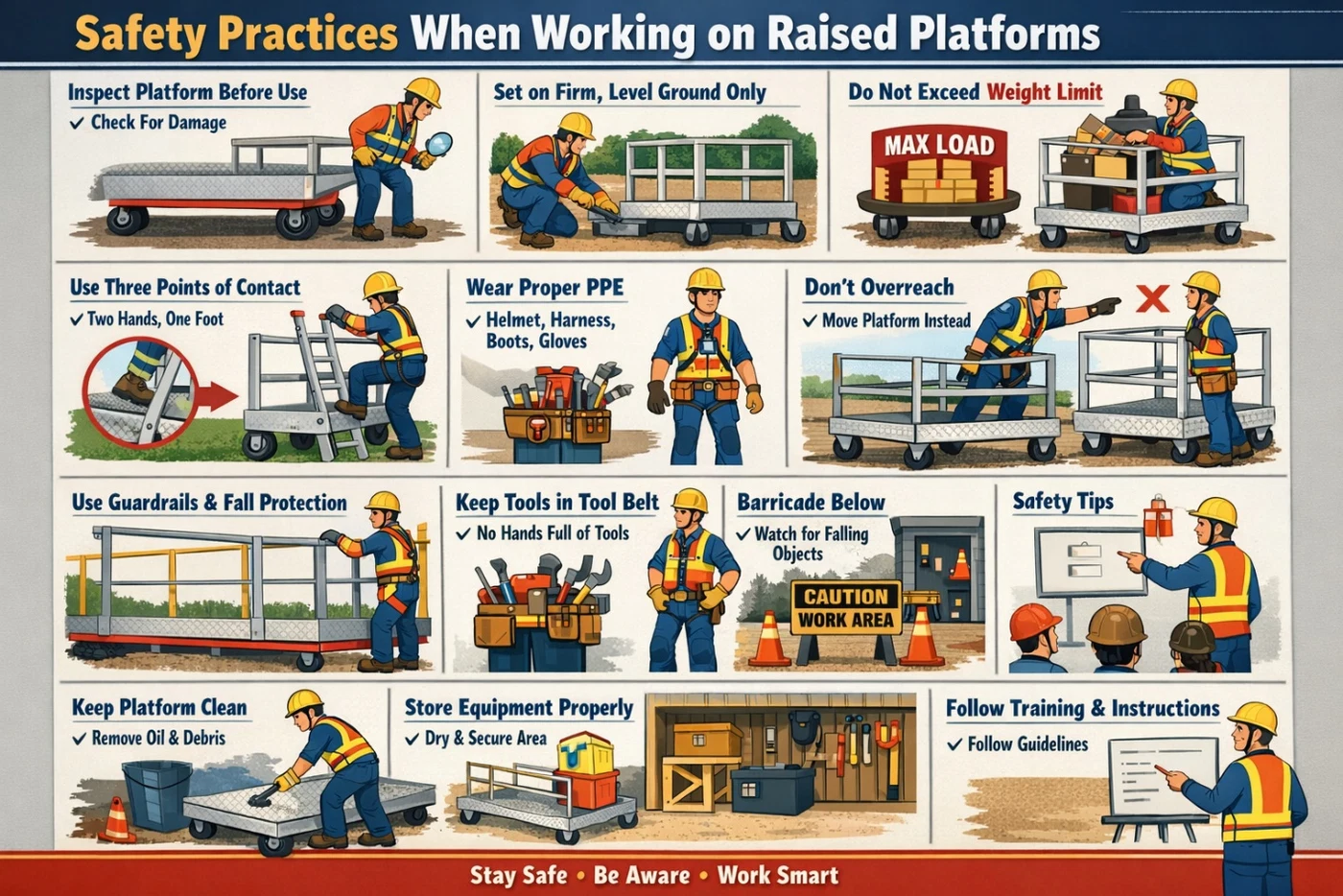
- Inspect platform before every use (check for cracks, loose bolts, damaged rungs, stable legs).
- Place on firm, level, non-slippery ground only.
- Never exceed the maximum load/weight limit.
- Use three points of contact rule on ladders (two hands + one foot or two feet + one hand).
- Face the ladder when climbing up or down; never carry heavy items in hands while climbing.
- Do not over-reach, move the platform instead.
- Wear appropriate Personal Protective Equipment (PPE): hard hat/helmet, non-slip safety boots, gloves, safety harness (for high work).
- Install guardrails, toe-boards or use fall-arrest systems where required.
- Keep tools in tool belt/pouch never carry in hands while on platform.
- Barricade and warn people below to prevent injury from falling objects.
- Clean platform regularly (remove oil, grease, debris).
- Store equipment properly after use in dry, secure place.
- Follow manufacturer instructions and receive proper training.
Importance / Need for Observing Safety
- Prevents serious injuries, permanent disability or death from falls.
- Protects workers, co-workers, passers-by and people below from falling objects.
- Reduces medical expenses, hospitalisation, lost working days, compensation claims.
- Minimises damage to tools, materials, platforms and buildings.
- Increases worker confidence, efficiency and productivity.
- Supports safe communities, national productivity goals and Vision 2030.
2. Handling Hazardous Substances
Definition Hazardous substances are materials that can cause harm to people, animals, plants, property or the environment when mishandled, misused, spilled, inhaled, swallowed or absorbed through skin.
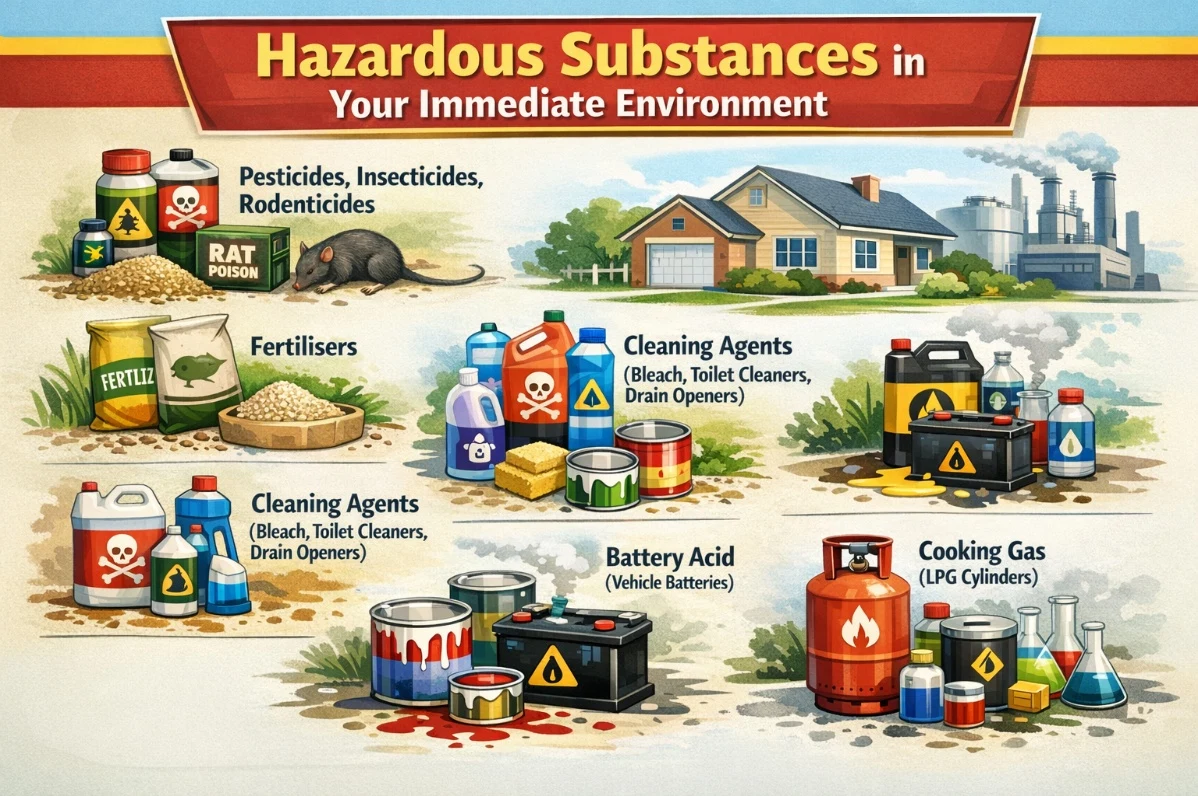
Hazardous Substances Found in the Immediate Environment
- Pesticides, insecticides, rodenticides
- Fertilisers
- Cleaning agents (bleach, toilet cleaners, drain openers)
- Fuels (petrol, kerosene, methylated spirit)
- Paints, thinners, varnishes
- Battery acid (vehicle batteries)
- Cooking gas (LPG cylinders)
- Industrial detergents and chemicals
Classification of Hazardous Substances
|
Class |
Description |
Common Examples |
Main Hazard Symbol |
Primary Effects if Mishandled |
|---|---|---|---|---|
|
Poisonous |
Can cause illness, organ damage or death if swallowed, inhaled or absorbed. |
Pesticides, rat poison, some fertilisers, certain cleaners |
Skull & crossbones 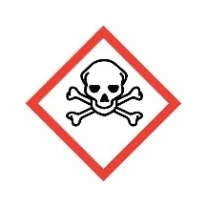 |
Vomiting, convulsions, respiratory failure, death |
|
Corrosive |
Burns or destroys living tissue (skin, eyes) or corrodes materials (metal, fabric). |
Battery acid, bleach, hydrochloric acid, drain cleaners |
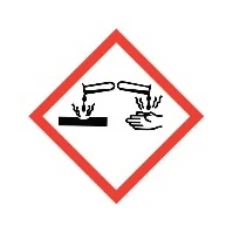 Hand & metal being corroded |
Severe chemical burns, blindness, permanent scarring |
|
Flammable |
Easily ignites or explodes near heat, sparks, flames or static electricity. |
Petrol, kerosene, methylated spirit, paint thinners, LPG |
Flame 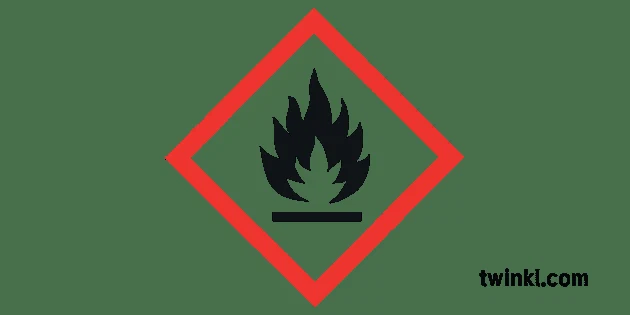 |
Fires, explosions, severe burn injuries |
Safe Ways of Handling Hazardous Substances
- Always read the label and instruction manual before opening or using.
- Wear full Personal Protective Equipment (PPE): chemical-resistant gloves, safety goggles, face mask/respirator, apron, closed shoes.
- Work only in well-ventilated areas never in enclosed or poorly ventilated spaces.
- Store in original, clearly labelled containers in a cool, dry, locked place away from children, food, heat sources and incompatible substances.
- Never mix different chemicals unless explicitly instructed (e.g., bleach + acid/ammonia = toxic gas).
- Use funnels, trays or spill kits when pouring or transferring.
- Wash hands, face and any exposed skin thoroughly immediately after use.
- Never eat, drink or smoke while handling or near hazardous substances.
- Dispose of empty containers and leftovers only at designated collection points never pour down drains or throw in regular rubbish.
- In case of spill: contain immediately, ventilate area, avoid breathing fumes, seek adult/help quickly.
Importance of Observing Safety When Handling Hazardous Substances
- Prevents poisoning, chemical burns, respiratory diseases, fires and explosions.
- Protects family members, schoolmates, neighbours, animals and the community.
- Avoids pollution of soil, water sources, air and food chains.
- Reduces hospital visits, long-term health problems and medical costs.
- Develops responsible behaviour and curiosity about safe chemical use.
- Supports clean and healthy environments (links to Pertinent and Contemporary Issues – PCIs).