
Definition
Oblique projection is a 3D drawing technique used to represent objects on a flat (2D) surface. It shows the front view in true shape and size, while the sides and top are projected back at an angle (usually 45°) to give the illusion of depth.
Characteristics of Oblique Drawings
- Front Face: Drawn true shape and full size (no distortion).
- Receding Lines: Drawn at an angle (commonly 45°) from the horizontal.
- Parallel Lines: Lines that are parallel in the real object remain parallel in the drawing (unlike perspective drawing).
- Types:
- Cavalier Projection: Receding lines are drawn full length (scale 1:1). This can make the object look elongated or distorted.
- Cabinet Projection: Receding lines are drawn half length (scale 1:2). This looks more realistic and proportional to the human eye.
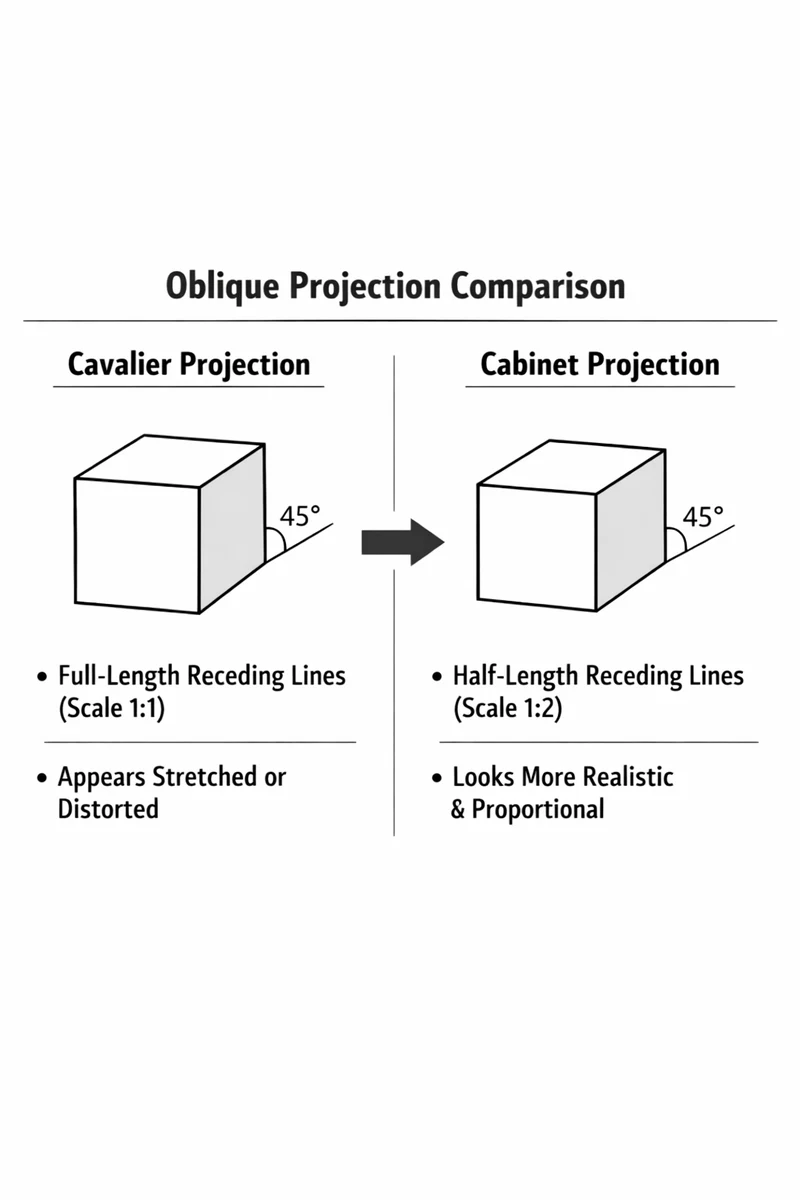
Figure 6: Comparison drawing showing a cube in Cavalier vs. Cabinet projection
Steps for Drawing Shaped Blocks in Oblique Projection
- Draw Front Face: Draw the front view of the object true shape and size using actual measurements.
- Draw Receding Lines: From each corner of the front view, draw lines at a 45° angle.
- Mark Depth: Measure and mark the depth along these 45° lines.
- Use full measurement for Cavalier.
- Use half measurement for Cabinet.
- Complete Back Face: Connect the ends of the receding lines to form the back face (parallel to the front face).
- Add Details: For circles/curves on receding faces, draw them as ellipses. Darken outlines and add dimensions.
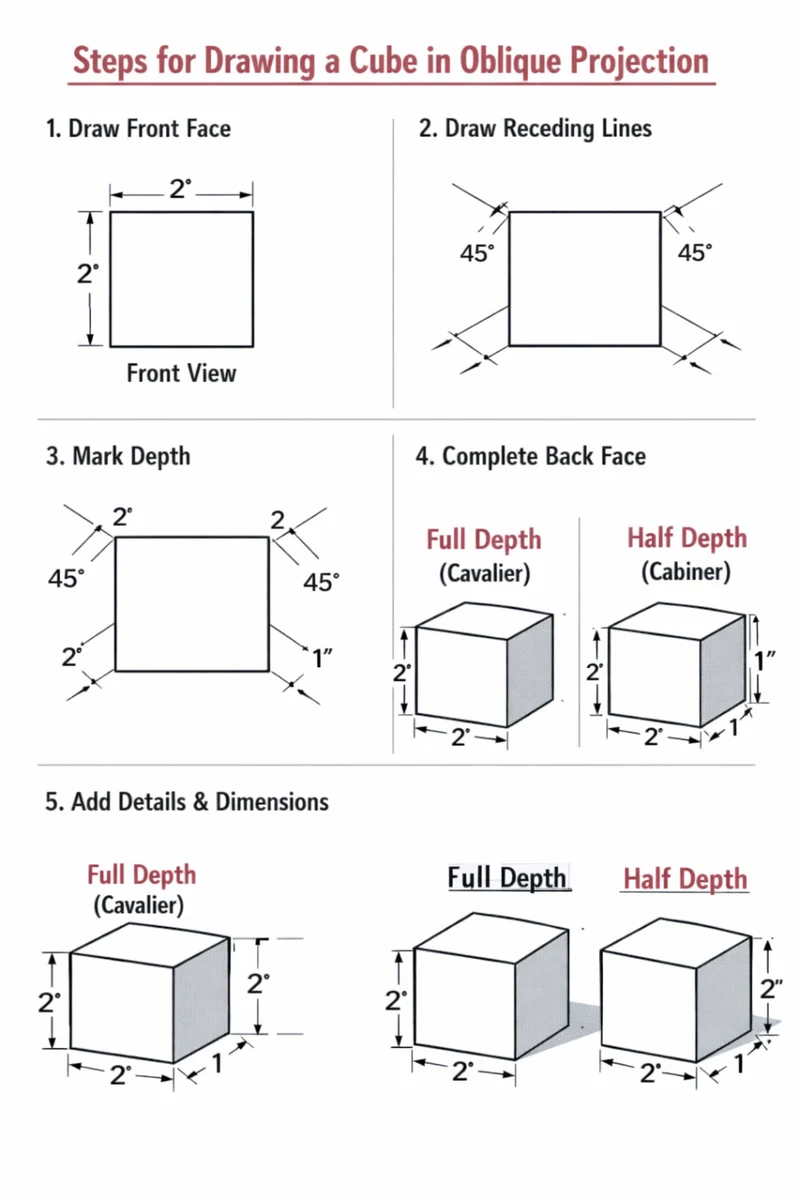
Figure 7: Steps for Drawing Shaped Blocks in Oblique Projection
Importance of Neatness and Accuracy
- Correct Line Work: Vertical lines are true scale; receding lines are angled.
- Proportionality: Using half-scale depth (Cabinet) reduces distortion.
- Labeling: Dimensions should be clearly indicated.
Applications of Oblique Projection
- Product Design: Visualizing prototypes/machines before manufacturing.
- Architecture/Engineering: Quick sketches of buildings, furniture, and tools.
- Technical Illustrations: Assembly instructions, user manuals.
- Education: Teaching 3D concepts simply.