
Definition
A business plan is a written document that highlights the objectives of a business and outlines the steps needed to achieve those goals.
Importance of a Business Plan in Entrepreneurship
- Roadmap: Provides clear direction and focus for the business.
- Attracts Funding: Required by banks, investors, and funds (e.g., Youth Fund) to approve loans or grants.
- Identifies Risks: Helps anticipate potential challenges and plan solutions.
- Measures Progress: Allows the entrepreneur to track performance against set goals.
- Improves Decision-Making: Provides data and analysis for informed choices.
Components of a Business Plan
- Executive Summary: A brief overview of the entire plan (written last). Includes business name, mission, and key objectives.
- Business Description: Detailed info about the business, its legal structure, location, and the problem it solves.
- Products/Services: Description of what the business offers, its unique selling points, and pricing.
- Market/Competitor Analysis: Research on target customers (demographics) and competitors (strengths/weaknesses).
- Management & Organization: Information on the owners and key managers, their roles, and qualifications.
- Marketing Plan: Strategy for attracting and retaining customers (advertising, sales tactics, distribution).
- Financial Plan (Key for Financial Management):
- Startup Costs: List of expenses needed to launch the business.
- Projected Income/Expenses: Cash flow forecast (money coming in vs. money going out).
- Break-Even Analysis: Point where total revenue equals total costs.
- Funding Requirements: How much capital is needed and how it will be used.
Business Plan Template (Simple)
- Executive Summary: [Briefly state your idea]
- Business Description: [Name, Location, Mission]
- Products/Services: [What are you selling? What makes it special?]
- Market Analysis: [Who are your customers? Who are your competitors?]
- Marketing Plan: [How will you reach customers? Posters? Social Media?]
- Financial Projections: [Estimated Costs: Materials, Transport; Estimated Revenue: Selling Price x Quantity]
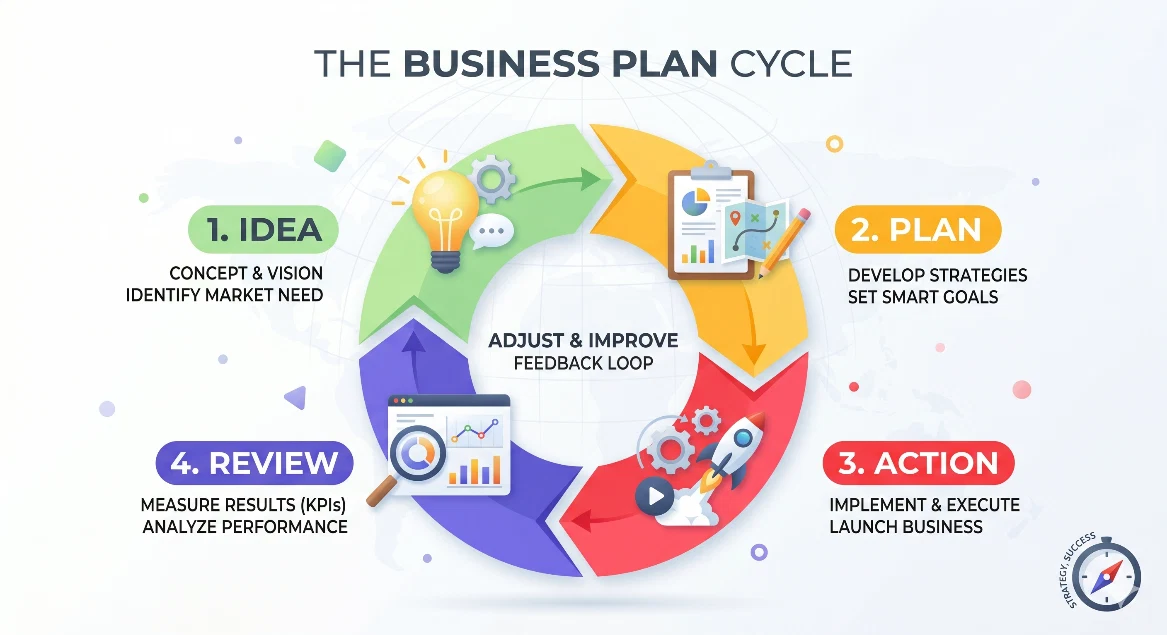
Figure 18: A diagram showing the cycle of a Business Plan: Idea -> Plan -> Action -> Review
Project Ideas