
Suggested duration: 28 lessons
Introduction
Acids and bases are important classes of substances used in laboratories, homes, agriculture, manufacturing and many other activities.
They have different chemical properties and can react with one another to produce salts and, commonly, water.
Acids and bases are also important in water treatment, soil management, food processing and the manufacture of useful chemicals.
Understanding their properties enables learners to use chemical substances responsibly and explain common chemical reactions.
Specific Learning Outcomes
By the end of this sub-strand, learners should be able to explain the characteristics of acids and bases in aqueous solutions, describe their chemical properties, classify strong and weak acids and bases using appropriate evidence, explain their applications and appreciate their importance in everyday life.
Key Inquiry Question
What common household substances are acidic and/or basic in nature?
2.1.1 Meaning of an Acid
An acid is a substance that can donate a proton, H⁺, in an appropriate chemical reaction.
In aqueous solution, acids increase the concentration of hydronium ions, H₃O⁺.
For introductory equations, the symbol H⁺(aq) is often used as a convenient simplified representation.
Examples include hydrochloric acid, sulfuric(VI) acid, nitric(V) acid and ethanoic acid.
|
Acid |
Formula |
Example of application |
|---|---|---|
|
Hydrochloric acid |
HCl |
Chemical processing and laboratory work |
|
Sulfuric(VI) acid |
H₂SO₄ |
Fertiliser manufacture and lead-acid batteries |
|
Nitric(V) acid |
HNO₃ |
Chemical and fertiliser manufacture |
|
Ethanoic acid |
CH₃COOH |
Main acid responsible for vinegar's acidity |
|
Citric acid |
C₆H₈O₇ |
Food applications |
2.1.2 Meaning of a Base
A base is a substance that can accept a proton, H⁺.
Many bases neutralise acids.
For example, sodium hydroxide contains hydroxide ions that react with hydronium ions.
H₃O⁺ + OH⁻ → 2H₂O
Examples of bases include sodium hydroxide, calcium hydroxide, magnesium oxide and ammonia.
An alkali is a base that dissolves in water to produce an alkaline solution.
Sodium hydroxide and potassium hydroxide are common alkalis.
Not all bases are soluble in water.
2.1.3 Difference Between Bases and Alkalis
|
Base |
Alkali |
|---|---|
|
Can accept protons |
Is a water-soluble base producing an alkaline solution |
|
May be soluble or insoluble in water |
Dissolves sufficiently in water |
|
Examples include copper(II) oxide and magnesium oxide |
Examples include sodium hydroxide and potassium hydroxide |
All alkalis are bases, but not all bases are alkalis.
2.1.4 Characteristics of Acids and Bases in Water
Acids
Aqueous acids commonly:
- Have a pH below 7 at 25°C.
- Turn blue litmus red.
- React with suitable bases in neutralisation reactions.
- Conduct electricity when they produce mobile ions in solution.
- React with some metals to produce hydrogen gas.
- React with carbonates to produce carbon dioxide.
Bases and Alkalis
Aqueous alkaline solutions commonly:
- Have a pH above 7 at 25°C.
- Turn red litmus blue.
- Neutralise acids.
- Conduct electricity when sufficient mobile ions are present.
- React with certain acidic oxides.
- May feel slippery, although laboratory chemicals must never be touched merely to test this property.
Important: Acids and alkalis can be corrosive. Their properties must be investigated using approved indicators and apparatus, not by tasting or direct skin contact.
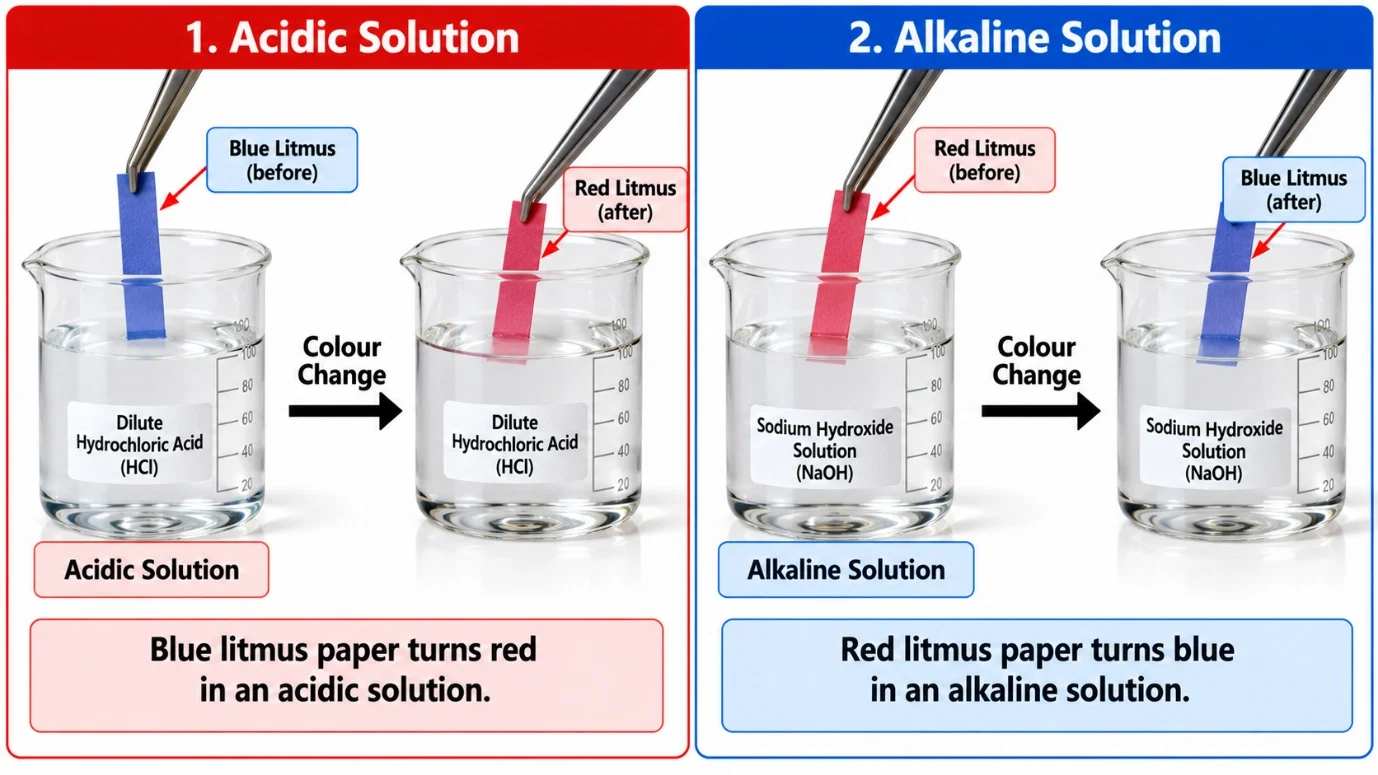
Figure 2.1: Characteristics of Acids and Alkalis
2.1.5 Dissociation and Ionisation in Water
Many acids and bases produce ions when dissolved in water.
Hydrochloric Acid
Hydrochloric acid is a strong acid.
Its ionisation in water can be represented as:
HCl(aq) → H⁺(aq)+Cl⁻(aq)
A more explicit representation is:
HCl+H₂O → H₃O⁺+Cl⁻
Sulfuric(VI) Acid
Sulfuric(VI) acid can undergo successive proton-donation steps.
The first dissociation in water is effectively complete:
H₂SO₄+H₂O → H₃O⁺+HSO₄⁻
The second occurs as an equilibrium:
HSO₄⁻+H₂O ⇌ H₃O⁺+SO₄²⁻
Sodium Hydroxide
Sodium hydroxide is an ionic compound that dissociates in water:
NaOH(s) → Na⁺(aq)+OH⁻(aq)
Ammonia
Ammonia is a weak base.
In water:
NH₃+H₂O ⇌ NH₄⁺+OH⁻
Only a fraction of the dissolved ammonia molecules react with water at equilibrium.
2.1.6 Strong and Weak Acids
The strength of an acid depends on the extent to which it ionises in water.
Strong Acids
Strong acids undergo essentially complete ionisation in sufficiently dilute aqueous solution.
Examples include hydrochloric acid and nitric(V) acid.
Weak Acids
Weak acids ionise only partially in water.
Examples include ethanoic acid and carbonic acid.
Ethanoic Acid
CH₃COOH ⇌ CH₃COO⁻+H⁺
The double arrow represents a reversible process reaching equilibrium.
Strong and Weak Acid Comparison
|
Property |
Strong acid |
Weak acid |
|---|---|---|
|
Ionisation |
Essentially complete in dilute solution |
Partial |
|
Ion concentration at equal analytical concentration |
Generally higher H₃O⁺ concentration |
Generally lower H₃O⁺ concentration |
|
pH at equal concentration |
Generally lower |
Generally higher |
|
Electrical conductivity at comparable concentration |
Generally higher, other factors equal |
Generally lower |
2.1.7 Strong and Weak Bases
A strong base generates hydroxide ions extensively in aqueous solution.
For example, dissolved sodium hydroxide dissociates into sodium and hydroxide ions.
Ammonia is a weak base because its reaction with water reaches equilibrium with relatively little conversion to ammonium and hydroxide ions.
Strength and Concentration
Strength describes the extent of ionisation or proton-transfer reaction.
Concentration describes the quantity of a solute in a specified quantity of solution.
A strong acid may be dilute.
A weak acid may be concentrated.
The two terms must not be confused.
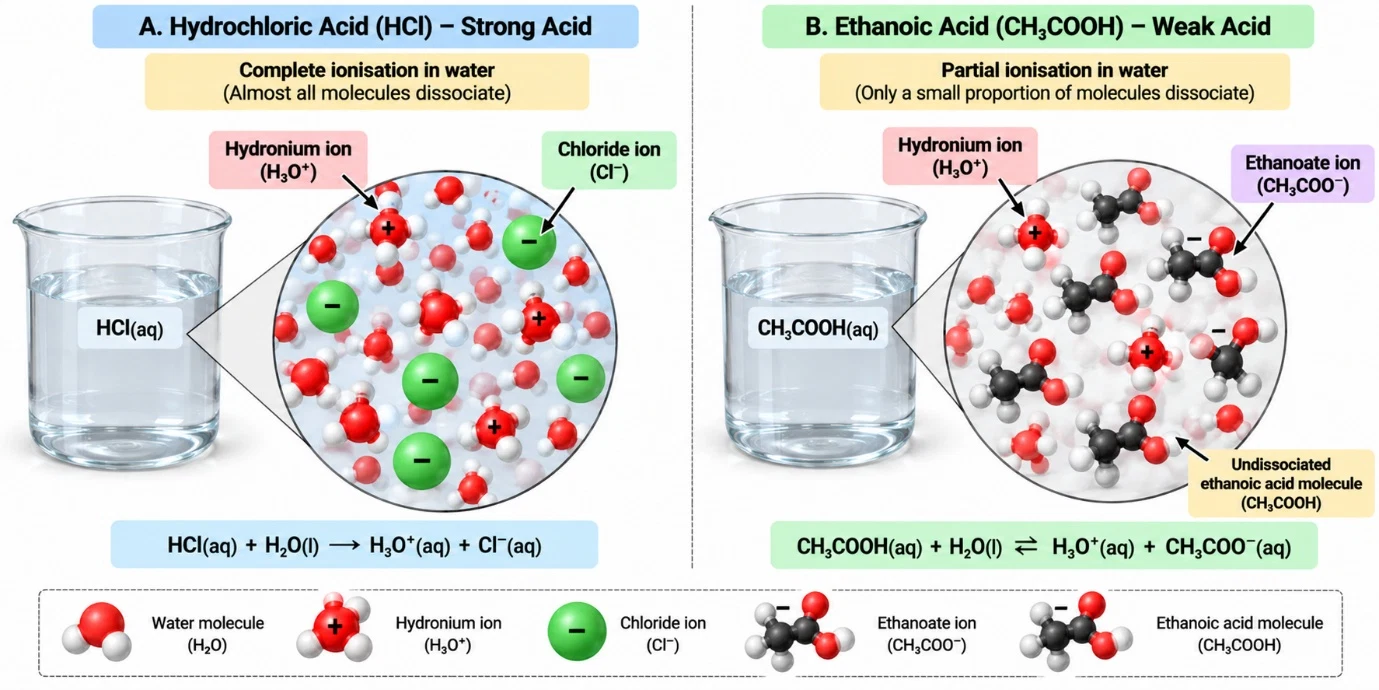
Figure 2.2: Strong and Weak Acid Ionisation
2.1.8 Acid and Base Indicators
An indicator is a substance that changes colour under different chemical conditions and can be used to identify whether a solution is acidic, alkaline or near neutral.
Common Indicators
Litmus: Red in acidic conditions and blue in alkaline conditions.
Methyl orange: Red in sufficiently acidic conditions and yellow in alkaline conditions.
Phenolphthalein: Colourless in acidic and near-neutral solutions and pink in sufficiently alkaline solutions.
Universal indicator: Produces a range of colours associated with different pH values.
Indicator Colour Comparison
|
Indicator |
Acidic solution |
Neutral solution |
Alkaline solution |
|---|---|---|---|
|
Litmus |
Red |
Purple |
Blue |
|
Methyl orange |
Red at sufficiently low pH |
Yellow near pH 7 |
Yellow |
|
Phenolphthalein |
Colourless |
Colourless |
Pink at sufficiently high pH |
|
Universal indicator |
Red to yellow, depending on pH |
Green |
Blue to purple, depending on pH |
Indicator colours vary across their transition ranges and with experimental conditions.
2.1.9 Universal Indicator and the pH Scale
The pH scale indicates the acidity or alkalinity of an aqueous solution.
At school level, it is commonly represented from 0 to 14, although pH values outside this range are possible.
At 25°C, neutral pure water has a pH of approximately 7.
General Classification
|
pH |
General classification |
|---|---|
|
Below 7 |
Acidic |
|
7 |
Neutral at 25°C |
|
Above 7 |
Alkaline |
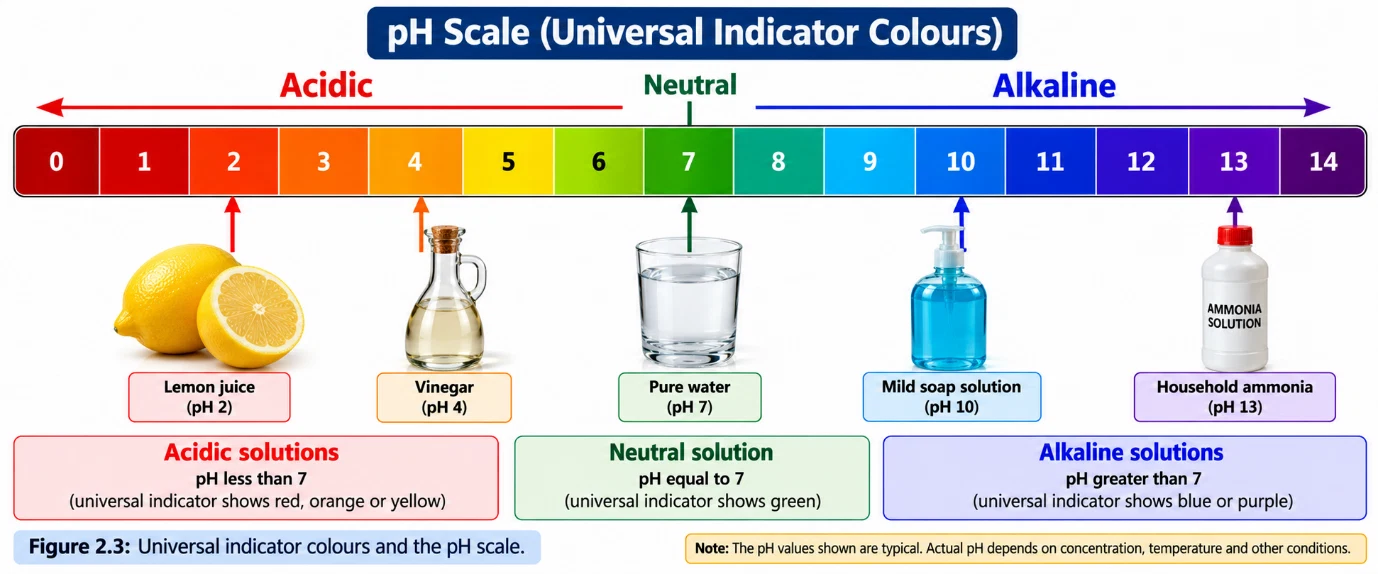
Figure 2.3: Universal Indicator and pH Scale
2.1.10 Meaning of pH
A more advanced description defines pH in terms of hydrogen-ion activity.
For introductory calculations involving dilute idealised aqueous solutions, the following approximation is used:
pH=-log₁₀[H⁺]
Here, [H⁺] represents hydrogen-ion concentration expressed in mol dm⁻³, under the stated approximation.
Worked Example 2.1
Calculate the approximate pH of a solution in which:
[H⁺]=1.0 × 10⁻³ mol dm⁻³
Substitute:
The solution is acidic.
Worked Example 2.2
A solution has:
[H⁺]=1.0 × 10⁻⁵ mol dm⁻³
Then:
The solution is acidic.
These logarithmic examples are included as additional mathematical enrichment; the uploaded curriculum primarily emphasises indicator-based classification.
2.1.11 Chemical Properties of Acids
Acids undergo characteristic reactions with suitable metals, carbonates, hydrogen carbonates, metal oxides and hydroxides.
Reaction of Acids with Metals
Some metals react with dilute acids to produce a salt and hydrogen gas.
General word equation:
Metal+Acid → Salt+Hydrogen
Magnesium and Hydrochloric Acid
Mg+2HCl → MgCl₂+H₂
Observations:
- Effervescence occurs.
- Magnesium gradually dissolves.
- The mixture may become warmer.
- Hydrogen gas is produced.
Zinc and Sulfuric(VI) Acid
Zn+H₂SO₄ → ZnSO₄+H₂
The salt formed is zinc sulfate.
Not every metal reacts with every acid to produce hydrogen. The nature of the acid and the position of the metal in the reactivity series are important.
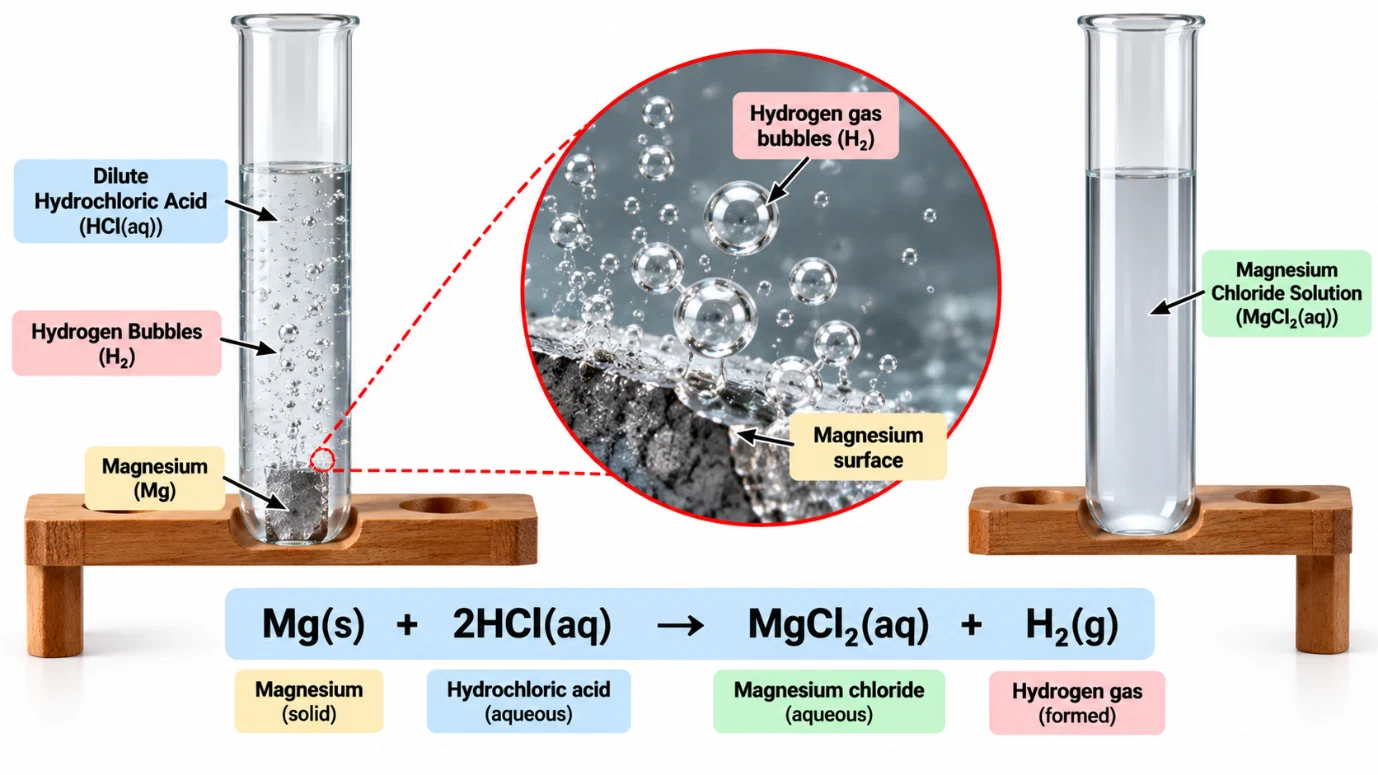
Figure 2.4: Reaction of Magnesium with Dilute Acid
2.1.12 Reactions of Acids with Carbonates
Acids react with suitable carbonates to produce a salt, water and carbon dioxide.
Acid+Carbonate → Salt+Water+Carbon Dioxide
Example: Calcium Carbonate and Hydrochloric Acid
CaCO₃+2HCl → CaCl₂+H₂O+CO₂
Observations:
- Bubbles form.
- The solid carbonate gradually reacts.
- Carbon dioxide is produced.
Test for Carbon Dioxide
Carbon dioxide turns clear limewater milky because calcium carbonate forms.
CO₂+Ca(OH)₂ → CaCO₃+H₂O
The suspended calcium carbonate causes the milky appearance.
2.1.13 Reactions of Acids with Hydrogen Carbonates
Hydrogen carbonates also react with acids to produce a salt, water and carbon dioxide.
Example:
NaHCO₃+HCl → NaCl+H₂O+CO₂
This reaction explains the effervescence observed when sodium hydrogen carbonate reacts with a suitable acidic solution.
2.1.14 Reactions of Acids with Metal Oxides
Many basic metal oxides react with acids to produce salts and water.
Metal Oxide+Acid → Salt+Water
Example: Copper(II) Oxide
CuO+H₂SO₄ → CuSO₄+H₂O
Copper(II) oxide is black.
The resulting copper(II) sulfate solution is blue under suitable conditions.
Example: Magnesium Oxide
MgO+2HCl → MgCl₂+H₂O
2.1.15 Reactions of Acids with Metal Hydroxides
Acids react with suitable hydroxides in neutralisation reactions.
Sodium Hydroxide and Hydrochloric Acid
NaOH+HCl → NaCl+H₂O
Calcium Hydroxide and Nitric(V) Acid
Ca(OH)₂+2HNO₃ → Ca(NO₃)₂+2H₂O
Net Ionic Equation
For a strong acid reacting with a strong base in dilute aqueous solution:
H⁺+OH⁻ → H₂O
2.1.16 Amphoteric Oxides and Hydroxides
An amphoteric substance can react with both acids and bases under suitable conditions.
Examples include zinc oxide, aluminium oxide, zinc hydroxide and aluminium hydroxide.
Zinc Oxide with Hydrochloric Acid
ZnO+2HCl → ZnCl₂+H₂O
Zinc Oxide with Sodium Hydroxide
Under suitable aqueous conditions, zinc oxide reacts with excess strong alkali to form soluble zincate species.
A representative equation is:
ZnO+2NaOH+H₂O → Na₂[Zn(OH)₄]
This forms sodium tetrahydroxozincate in solution.
Aluminium Oxide with Hydrochloric Acid
Al₂O₃+6HCl → 2AlCl₃+3H₂O
Aluminium Oxide with Sodium Hydroxide
In aqueous solution under appropriate conditions:
Al₂O₃+2NaOH+3H₂O → 2Na[Al(OH)₄]
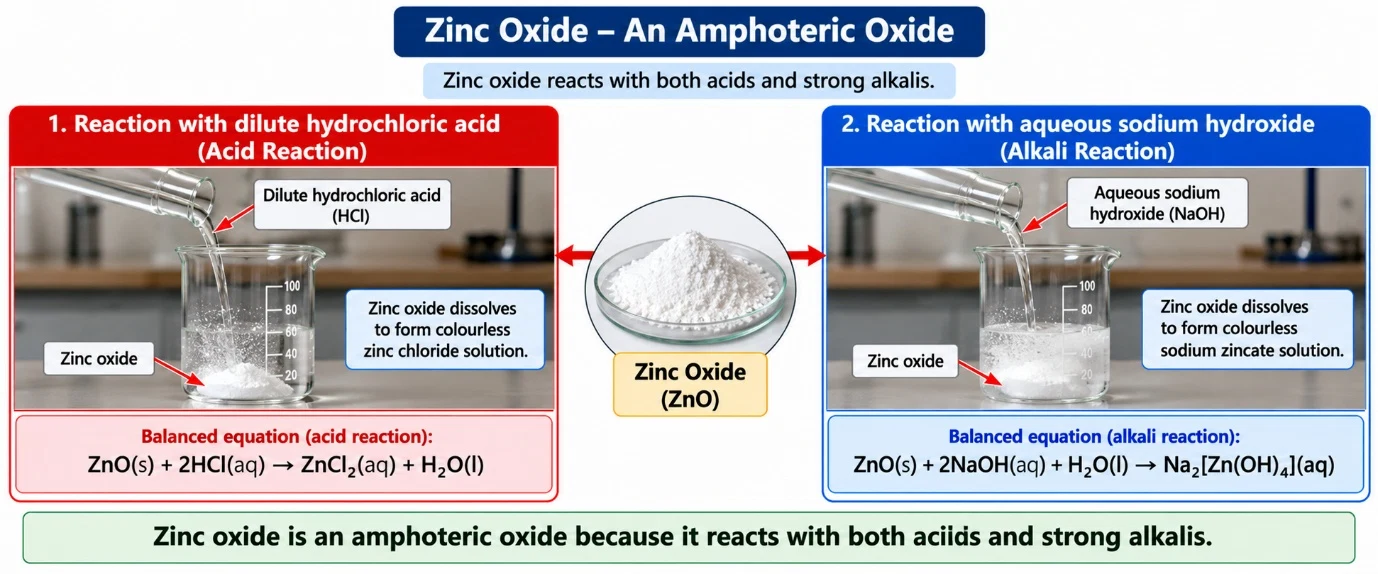
Figure 2.5: Amphoteric Behaviour of Zinc Oxide
2.1.17 Electrical Conductivity of Acids and Bases
Aqueous solutions conduct electricity when they contain mobile charged particles.
The electrical conductivity of an electrolyte depends on:
- Concentration of ions.
- Charges on the ions.
- Ion mobility.
- Temperature.
- Composition of the solution.
At equal analytical concentrations, many strong electrolytes conduct better than corresponding weak electrolytes because they produce more ions in solution.
Comparison
|
Solution |
Classification |
General electrical behaviour |
|---|---|---|
|
Hydrochloric acid |
Strong acid |
Conducts well at suitable concentration |
|
Ethanoic acid |
Weak acid |
Lower conductivity at equal concentration |
|
Sodium hydroxide |
Strong base |
Conducts well when dissolved |
|
Aqueous ammonia |
Weak base |
Lower conductivity at equal concentration |
|
Distilled water |
Very weak conductor |
Low conductivity |
Conductivity is not an absolute measure of acid or base strength unless experimental conditions are controlled.
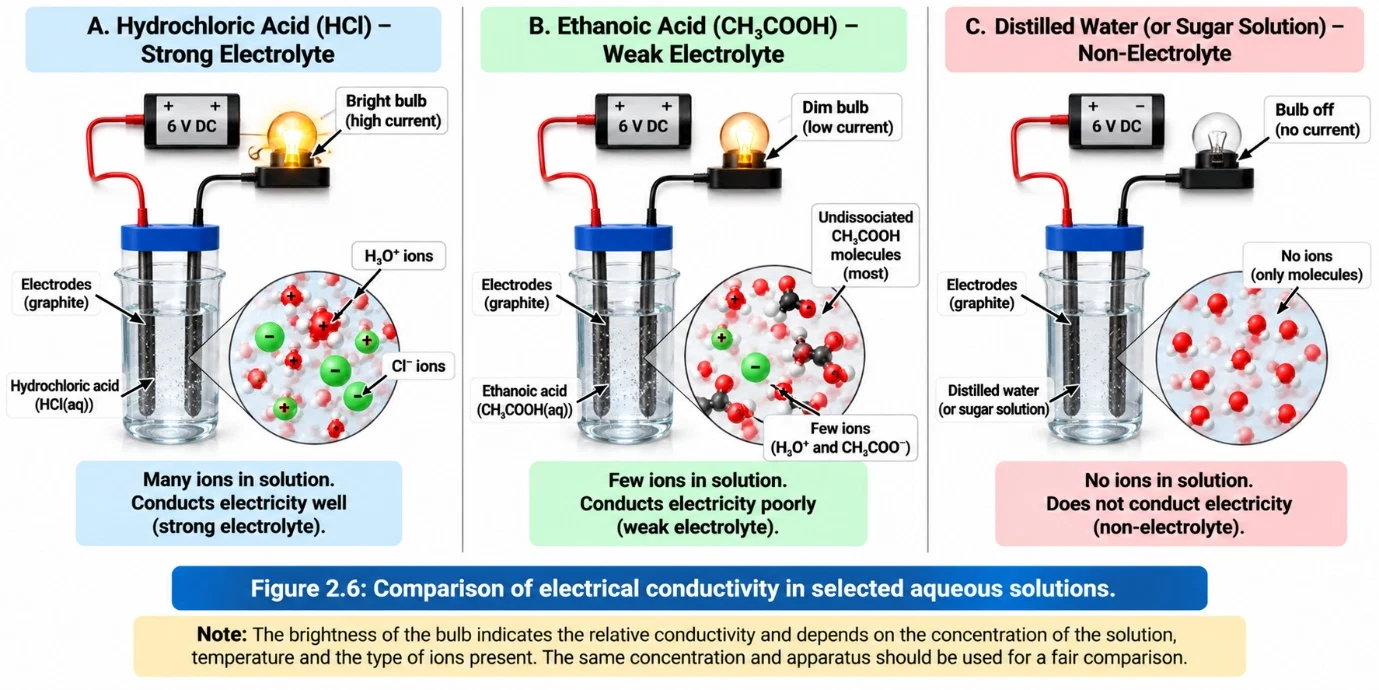
Figure 2.6: Conductivity of Strong and Weak Electrolytes
2.1.18 Applications of Acids
Sulfuric(VI) Acid
Used in fertiliser manufacture, lead-acid batteries and various industrial chemical processes.
Hydrochloric Acid
Used in industrial chemical processing and selected metal-treatment processes.
Nitric(V) Acid
Used in the manufacture of certain fertilisers and other chemical products.
Ethanoic Acid
Its dilute form is found in vinegar and is used in food-related applications.
Citric Acid
Used in food products and certain cleaning formulations.
2.1.19 Applications of Bases
Sodium Hydroxide
Used in soap manufacture, cleaning formulations and chemical processing.
Calcium Hydroxide
Used in suitable water-treatment and agricultural applications.
Magnesium Hydroxide
Used in certain medicinal formulations, subject to appropriate medical directions.
Ammonia
Used in fertiliser manufacture and chemical production.
Calcium Oxide
Used in cement-related processes and suitable industrial applications.
2.1.20 Importance of Responsible Handling
Acids and bases must be handled according to their hazards.
Some concentrated acids can cause severe burns.
Strong alkalis can also cause serious chemical injuries.
Always follow approved laboratory procedures, use suitable protective equipment and dispose of waste appropriately.
Practical Activity 2.1: Investigating Household Acidity and Alkalinity
Aim: To classify selected safe household solutions using indicators.
Materials:
- Approved dilute household samples.
- Universal indicator paper.
- Clean sample containers.
- Droppers.
- Safety glasses.
- Recording sheet.
Procedure:
- Obtain samples approved by the teacher.
- Place small amounts in separate labelled containers.
- Use fresh indicator paper to test each sample.
- Compare colours with the supplied reference chart.
- Estimate the pH range.
- Classify each sample as acidic, near neutral or alkaline.
- Record the observations.
Example Recording Table
|
Sample |
Indicator colour |
Approximate pH |
Classification |
|---|---|---|---|
|
Dilute lemon juice |
Red-orange |
2–3 |
Acidic |
|
Pure water |
Green |
Around 7 |
Neutral |
|
Mild soap solution |
Blue |
Around 9–10 |
Alkaline |
Actual values depend on concentration, temperature and product formulation.
Practical Activity 2.2: Comparing Acid and Base Conductivity
Aim: To compare conductivity using a suitable low-voltage tester.
Procedure:
- Obtain teacher-prepared, equal-concentration samples.
- Test each sample using approved equipment.
- Rinse the electrodes appropriately between samples.
- Record conductivity readings.
- Compare a strong acid and weak acid.
- Explain differences using ion concentrations.
- Dispose of solutions according to laboratory instructions.
Practical Activity 2.3: Investigating Acid Reactions
Aim: To identify characteristic reactions of acids.
Use teacher-controlled microscale experiments or approved demonstrations involving suitable metals, carbonates, oxides and hydroxides.
Record the reactants, visible changes, gas observations and balanced equations.
Never directly inhale evolved gases or perform ignition tests without teacher supervision.
Summary of Sub-strand 2.1
Acids increase hydronium-ion concentration in aqueous solution, while bases accept protons.
Strong acids and bases produce ions extensively; weak acids and bases react or ionise only partially.
Indicators and pH measurements help distinguish acidic and alkaline solutions.
Acids react with selected metals, carbonates, hydrogen carbonates, metal oxides and hydroxides.
Amphoteric substances react with both acids and bases under suitable conditions.
The properties of acids and bases support many applications in agriculture, industry, healthcare and everyday life.
Revision Questions
- Define an acid.
- Differentiate between a base and an alkali.
- State four characteristics of aqueous acids.
- Explain the difference between strong and weak acids.
- Differentiate between acid strength and concentration.
- State the colours of litmus in acidic and alkaline solutions.
- Explain the meaning of pH.
- Write the equation for hydrochloric acid ionisation in water.
- Write a balanced equation for magnesium reacting with hydrochloric acid.
- Explain how carbon dioxide is produced when acids react with carbonates.
- State the test for carbon dioxide.
- Write a balanced equation for copper(II) oxide reacting with sulfuric(VI) acid.
- Explain neutralisation.
- Define amphoteric oxide.
- Give two examples of amphoteric substances.
- Explain why aqueous sodium hydroxide conducts electricity.
- State three applications of acids.
- Explain four safety precautions when handling acids and bases.
- Describe how universal indicator can be used to estimate pH.
- Explain why weak ethanoic acid may conduct less electricity than equally concentrated hydrochloric acid.
Selected Revision Answers
Question 9
Mg+2HCl → MgCl₂+H₂
Question 12
CuO+H₂SO₄ → CuSO₄+H₂O
Question 13
Neutralisation is a reaction in which an acid and a base react, commonly forming a salt and water.
Question 16
Dissolved sodium hydroxide produces mobile Na⁺ and OH⁻ ions that carry electric charge through the solution.