
1. Introduction
Water is an essential resource in crop production. Plants require water for germination, photosynthesis, nutrient absorption and growth.
Rainfall is one of the main sources of water for agricultural activities.
However, some rainwater flows away from the land surface before plants can use it. This flowing water is called surface run-off.
Farmers can conserve some of this water by constructing water retention structures.
Surface run-off is rainwater that flows over the surface of the ground instead of soaking into the soil.
Surface run-off may occur when:
- Rainfall is heavy.
- The ground is steep.
- The soil is compacted.
- The soil surface has little vegetation.
- The soil cannot absorb water quickly enough.
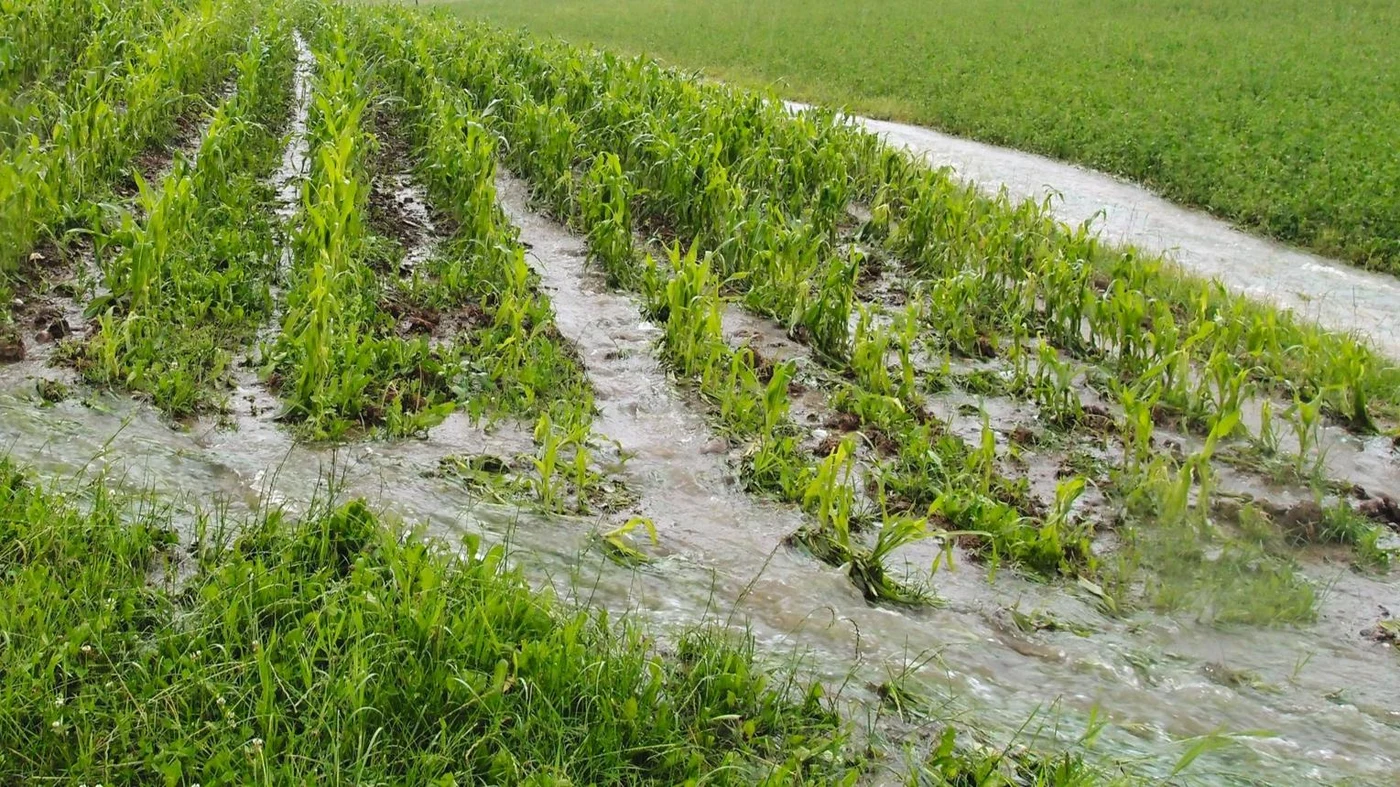
Surface run-off flowing over the soil surface.
2. Uses of surface run-off in gardening
Surface run-off can be collected and conserved for agricultural use.
Its uses include:
- Providing water for growing vegetables.
- Supporting the growth of fruit trees.
- Supplying moisture to crops during dry periods.
- Supporting the establishment of newly planted crops.
- Reducing the amount of water lost through uncontrolled run-off.
- Improving soil moisture for crop growth.
For example, a farmer may construct retention pits around banana plants to collect rainwater.
3. Meaning of water retention structures
Water retention structures are physical structures constructed on land to collect, hold or slow down surface run-off so that water can soak into the soil or be stored for later use.
They are useful in areas that experience irregular rainfall or water shortages.
Examples include:
- Water retention ditches.
- Water retention pits.
- Zai pits or planting basins.
- Contour structures.
- Small farm ponds.
4. Types of water retention structures
A. Water retention ditches
A water retention ditch is a channel dug across a slope to collect and hold surface run-off.
It is normally constructed along the contour of the land.
A contour is an imaginary line joining points of equal height on a piece of land.
Features of water retention ditches
- They are constructed across the direction of water flow.
- They collect rainwater running down a slope.
- They allow water to gradually soak into the soil.
- They reduce the speed of surface run-off.
- They help control soil erosion.
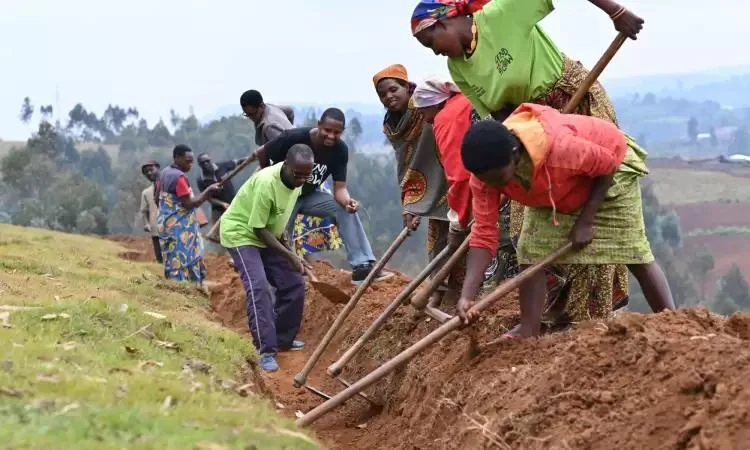
Water retention ditches constructed across a slope.
Procedure for constructing a water retention ditch
- Select a suitable location on the farm.
- Observe the direction of surface run-off.
- Identify the contour line with guidance from the teacher or an agricultural expert.
- Mark the position of the ditch.
- Use suitable tools to dig a channel along the marked line.
- Place the excavated soil where it will help stabilize the structure.
- Shape and strengthen the ditch to prevent collapse.
- Establish suitable grass or vegetation on exposed soil where appropriate.
- Allow rainwater to collect in the ditch.
- Inspect and maintain the structure regularly.
Tools and materials required
- Jembe or hoe.
- Spade.
- Pickaxe where necessary.
- Measuring tape.
- Pegs.
- String.
- A-Frame level or other suitable leveling equipment.
- Protective gloves and boots.
Importance of water retention ditches
- They conserve surface run-off.
- They reduce soil erosion.
- They improve soil moisture.
- They support crop production.
- They reduce uncontrolled movement of water across farmland.
- They improve the use of available rainfall.
B. Water retention pits
Water retention pits are holes or small depressions constructed in the ground to collect and hold surface run-off.
The collected water gradually infiltrates the surrounding soil.
These structures can be constructed near crops that require additional moisture.
Examples of crops that may benefit include:
- Bananas.
- Sugarcane.
- Napier grass.
- Arrowroot.
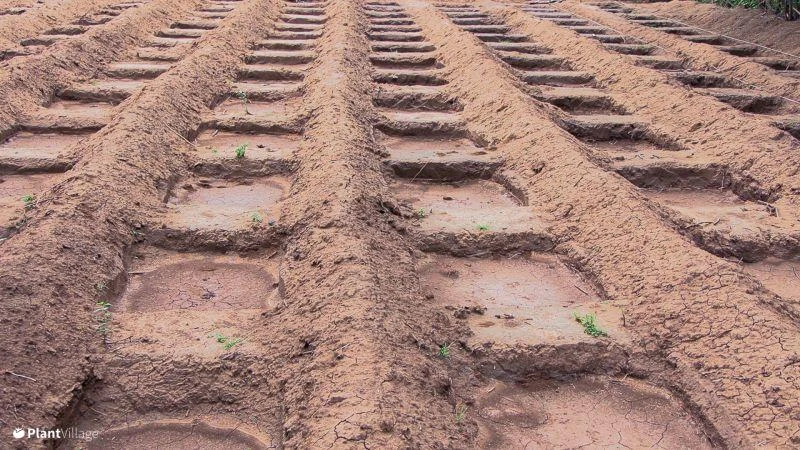
Water retention pits used to collect rainwater for crop production.
Procedure for constructing water retention pits
- Select a suitable site where surface run-off can be collected.
- Identify the position where the crop will be established.
- Mark the location of the pit.
- Dig a suitable pit using appropriate tools.
- Place the excavated soil around the pit to form a small raised boundary where needed.
- Ensure that water can enter the pit without causing excessive erosion.
- Prepare the pit for planting.
- Plant a suitable crop such as a banana sucker.
- Allow surface run-off to collect in the pit.
- Monitor the crop and maintain the structure.
The size and depth of a pit depend on the soil, slope, expected run-off and crop requirements. Learners should use teacher or agricultural expert guidance when constructing these structures.
Importance of water retention pits
- They collect rainwater.
- They increase water infiltration into the soil.
- They conserve soil moisture.
- They support crop establishment.
- They reduce water loss through surface run-off.
- They support crop production in areas with limited rainfall.
C. Zai pits or planting basins
Zai pits are small planting pits used to collect rainwater and concentrate moisture around crops.
They are particularly useful in dry areas where rainfall is limited.
They may be filled with suitable organic matter to improve soil fertility and moisture conditions.
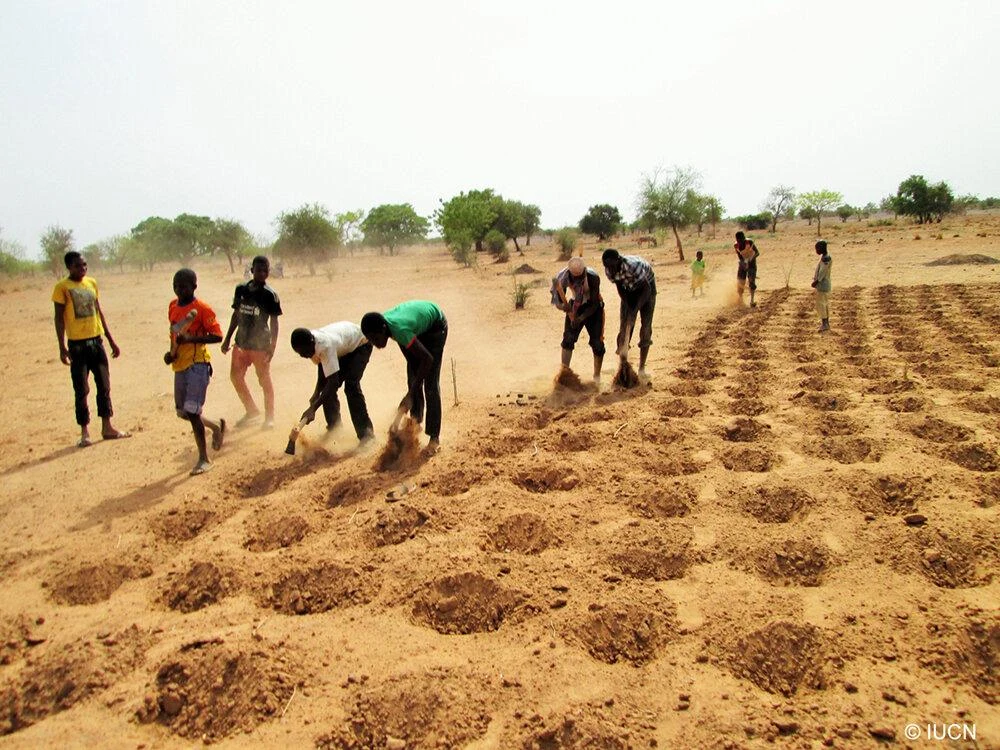
Zai pits used for rainwater harvesting and crop production.
5. Difference between water retention ditches and water retention pits
|
Water retention ditches |
Water retention pits |
|---|---|
|
They are constructed as channels. |
They are constructed as holes or depressions. |
|
They collect water along a line. |
They collect water at particular points. |
|
They are often constructed across slopes. |
They are constructed near selected planting positions. |
|
They can conserve run-off over a wider area. |
They conserve water around individual planting locations. |
|
They can be used for several crops along a row. |
They are useful for selected crops such as bananas. |
6. Precautions when constructing water retention structures
- Construct structures in suitable locations.
- Avoid digging near building foundations.
- Avoid destabilizing steep slopes.
- Ensure that excess water has a safe route to flow.
- Protect the structures from erosion and collapse.
- Avoid creating stagnant water that encourages mosquito breeding.
- Keep children away from deep or uncovered pits.
- Use appropriate protective clothing when working with tools.
- Seek assistance when working on large structures.
7. Importance of water conservation in agriculture
Water conservation is important because:
- It ensures water availability during dry periods.
- It supports seed germination.
- It improves crop growth.
- It reduces water wastage.
- It protects soil from erosion.
- It supports sustainable food production.
- It helps farmers cope with irregular rainfall.
8. Practical activity: Constructing a water retention structure
Activity: Establishing a crop using conserved surface run-off
Materials:
- Jembe.
- Spade.
- Measuring tape.
- Pegs and string.
- Selected planting material, such as a banana sucker.
- Compost or suitable manure.
Procedure:
- Identify a suitable location for the activity.
- Observe how surface run-off moves across the land.
- Select an appropriate water retention structure.
- Mark the location of the structure.
- Construct the structure under supervision.
- Prepare the planting position.
- Plant the selected crop.
- Allow rainwater to collect in the structure.
- Monitor the crop as it grows.
- Maintain the structure and record observations.
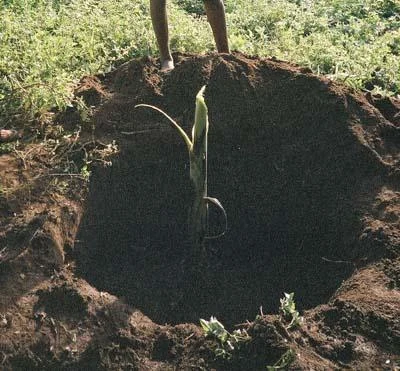
A banana sucker established in a water-conserving planting basin.
9. Key inquiry questions
Q1. How can surface run-off be conserved for gardening purposes?
Surface run-off can be conserved using water retention ditches, water retention pits and other suitable water-harvesting structures.
Q2. How does the construction of water retention structures conserve water?
They collect and slow down surface run-off, allowing more water to soak into the soil or remain available for agricultural use.
10. Revision questions and answers
Q1. Define surface run-off.
Surface run-off is rainwater that flows over the ground instead of soaking into the soil.
Q2. What are water retention structures?
These are structures constructed to collect, hold or slow down surface run-off for conservation.
Q3. Give two examples of water retention structures.
- Water retention ditches.
- Water retention pits.
Q4. State four benefits of constructing water retention structures.
- Conserving water.
- Reducing soil erosion.
- Improving soil moisture.
- Supporting crop production.
Q5. Name three crops that can be established using conserved surface run-off.
- Bananas.
- Sugarcane.
- Napier grass.
Q6. Differentiate between a water retention ditch and a water retention pit.
A ditch is a channel that collects water along a line, while a pit is a hole that collects water at a particular location.