
1. Introduction to Drawing and Painting
Drawing and painting are forms of visual art used to communicate ideas through pictures.
Drawing involves producing images using lines, shapes and tones on a surface.
Painting involves applying paint to a surface to create pictures and compositions.
Both activities develop creativity, imagination, observation and artistic skills.
The curriculum emphasizes three main concepts in drawing:
- Line.
- Tone.
- Balance.
In painting, learners focus on warm and cool colors.
2. Drawing
Drawing is the process of creating images using lines, shapes, tones and other visual elements.
A drawing can represent real objects or imaginary ideas.
Materials used in drawing
- Pencils.
- Charcoal.
- Crayons.
- Paper.
- Erasers.
- Rulers.
- Drawing boards.
3. Elements of Drawing
A. Line
A line is a continuous mark made by moving a drawing tool across a surface.
Lines are important because they help artists create shapes, outlines, patterns and textures.
Types of lines
- Horizontal line: Runs from left to right.
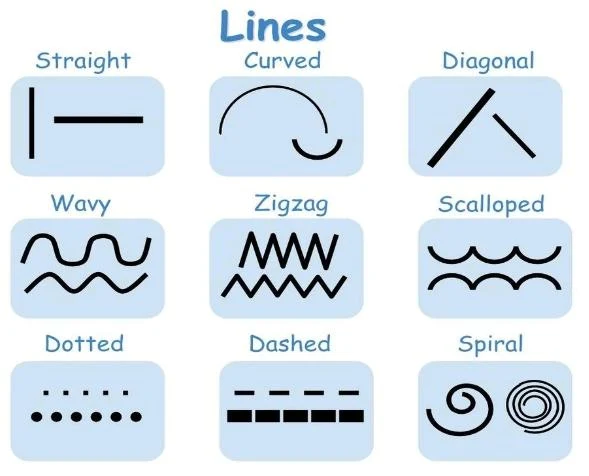
Different line types create outlines, patterns and texture in artwork.
- Vertical line: Runs from top to bottom.
- Diagonal line: Slants in a particular direction.
- Curved line: Bends smoothly.
- Zigzag line: Changes direction through sharp angles.
- Wavy line: Forms a series of smooth curves.
- Spiral line: Curves around a central point.
Uses of lines in drawing
- Creating outlines of objects.
- Showing direction and movement.
- Dividing spaces.
- Creating patterns.
- Showing texture.
- Creating shapes and forms.
B. Tone
Tone refers to the degree of lightness or darkness in an artwork.
Artists use tone to create the appearance of light, shadow and depth.
A drawing with different tones appears more realistic because objects have areas of light and darkness.
Types of tones
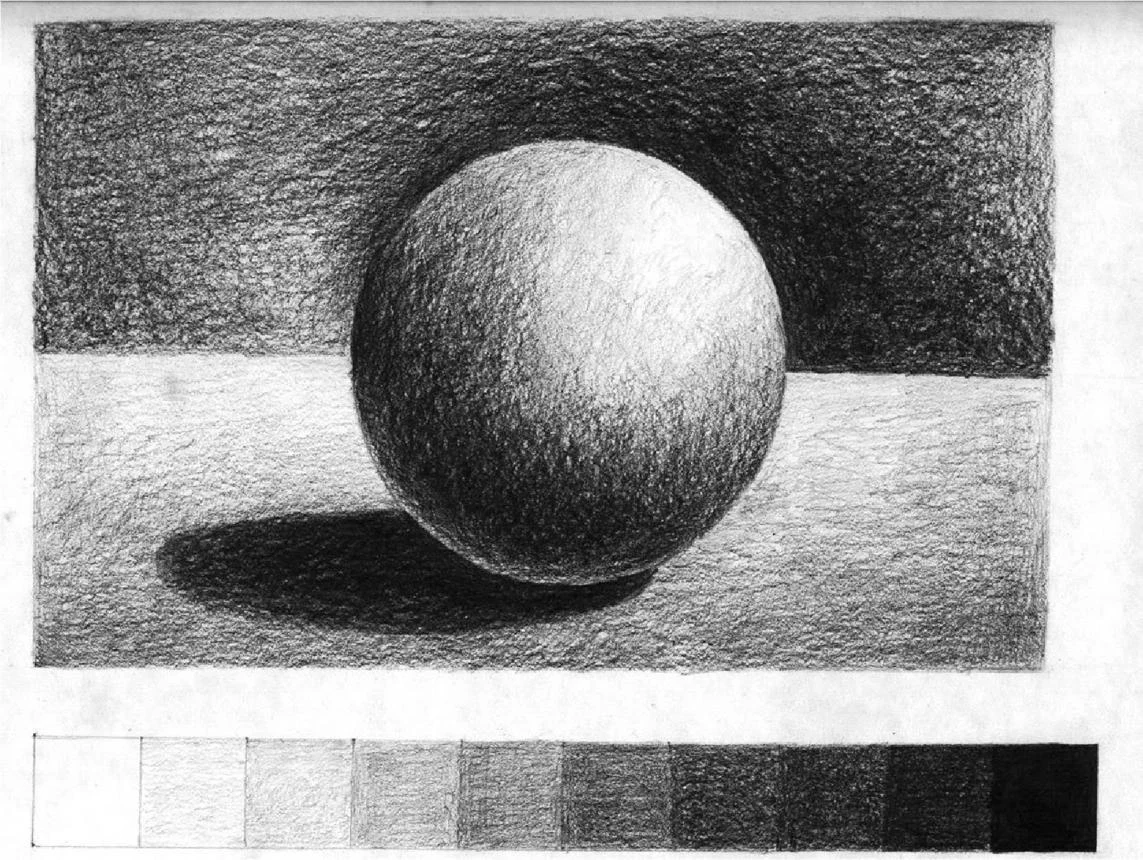
Tone ranges from light to dark and helps create depth.
- Light tone: A bright or pale area.
- Medium tone: A shade between light and dark.
- Dark tone: A deep or heavily shaded area.
Techniques of creating tone
- Hatching: Drawing closely spaced parallel lines.
- Cross-hatching: Drawing intersecting lines.
- Blending: Smoothly mixing different tones.
- Smudging: Spreading pencil or charcoal marks to create smooth shading.
- Stippling: Using small dots to create different shades.
C. Balance
Balance refers to the arrangement of visual elements in an artwork to create a feeling of stability.
It ensures that the different parts of a picture appear properly distributed.
A balanced picture does not appear unnecessarily crowded on one side.
Types of balance
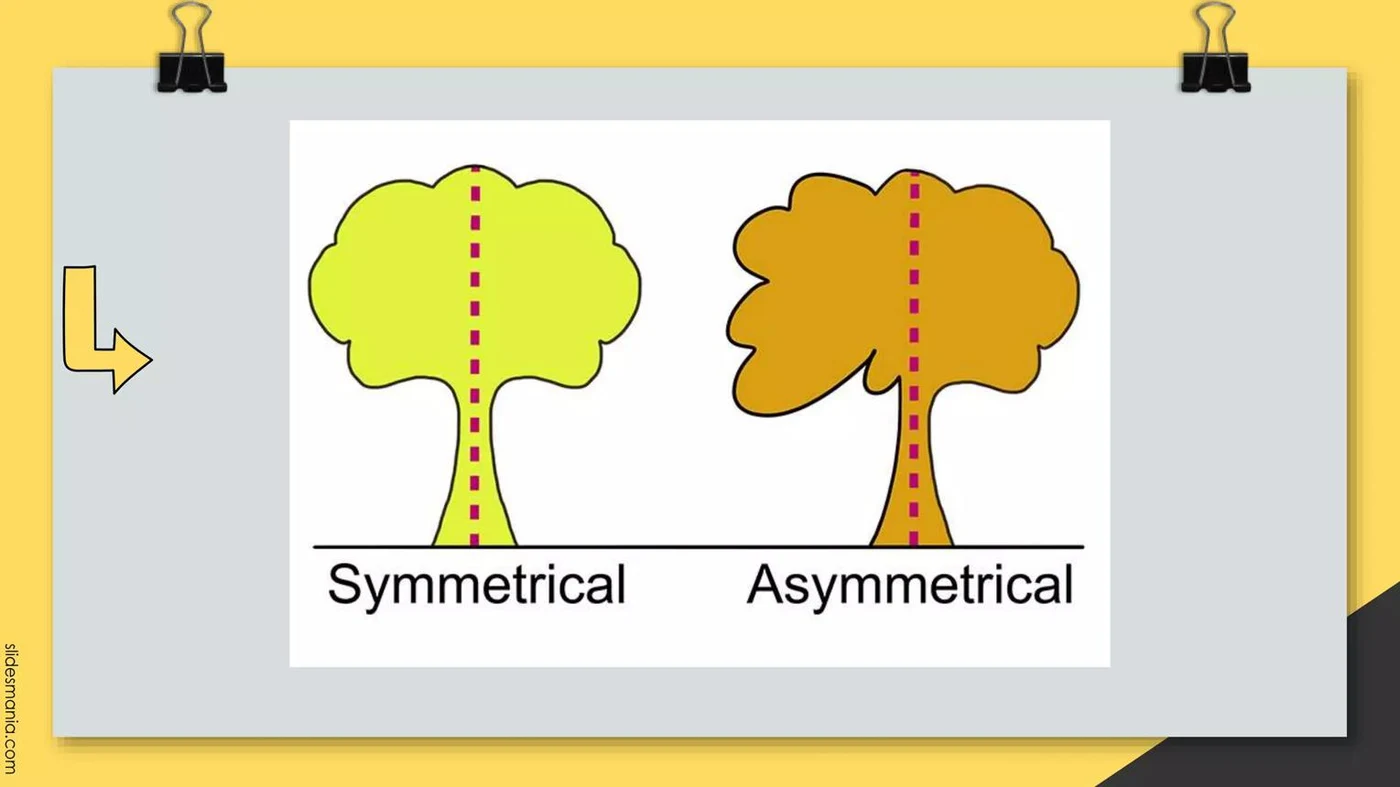
Balance arranges visual elements to create a stable composition.
1. Symmetrical balance
This occurs when visual elements are arranged equally on both sides of a central point.
Example: A butterfly with similar patterns on both wings.
2. Asymmetrical balance
This occurs when different visual elements are arranged to create equal visual weight.
The two sides may look different but still appear balanced.
3. Radial balance
This occurs when visual elements are arranged around a central point.
Example: The arrangement of petals around the center of a flower.
4. How to Achieve Balance in a Drawing
- Distribute objects properly within the drawing space.
- Avoid overcrowding one side of the picture.
- Consider the sizes of the objects.
- Arrange large and small objects appropriately.
- Use shapes and forms to create visual stability.
- Consider the position of objects in relation to one another.
5. Practical Activity: Drawing a Group of Balls
Materials required
- Drawing paper.
- Pencils.
- Eraser.
- Drawing board.
- Charcoal or crayons.
Procedure
- Arrange several balls of different sizes.
- Observe their positions and shapes.
- Draw the outlines of the balls.
- Ensure the balls are balanced within the drawing space.
- Identify the areas receiving light.
- Shade the darker areas.
- Use smudging to blend the tones.
- Observe the final drawing and make corrections.
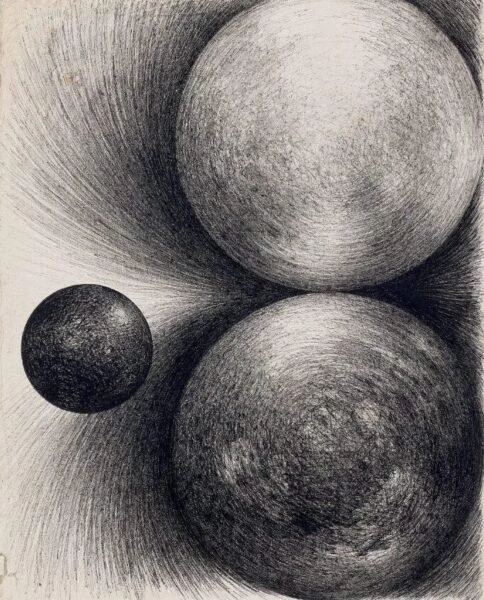
Shading techniques build light, shadow and form in a drawing.
6. Painting
Painting is the process of applying paint to a surface to create images, patterns and artistic compositions.
Artists use different colors and painting techniques to communicate ideas and emotions.
Materials used in painting
- Paint.
- Paintbrushes.
- Water.
- Palettes.
- Painting paper.
- Canvas.
- Containers for mixing colors.
7. Understanding Color
Color is an element of art that helps make pictures attractive and meaningful.
Colors can be grouped according to their temperature.
The two main groups are:
- Warm colors.
- Cool colors.
8. Warm Colors
Warm colors are colors that create a feeling of heat, energy, excitement and brightness.
Examples include:
- Red.
- Orange.
- Yellow.
Characteristics of warm colors
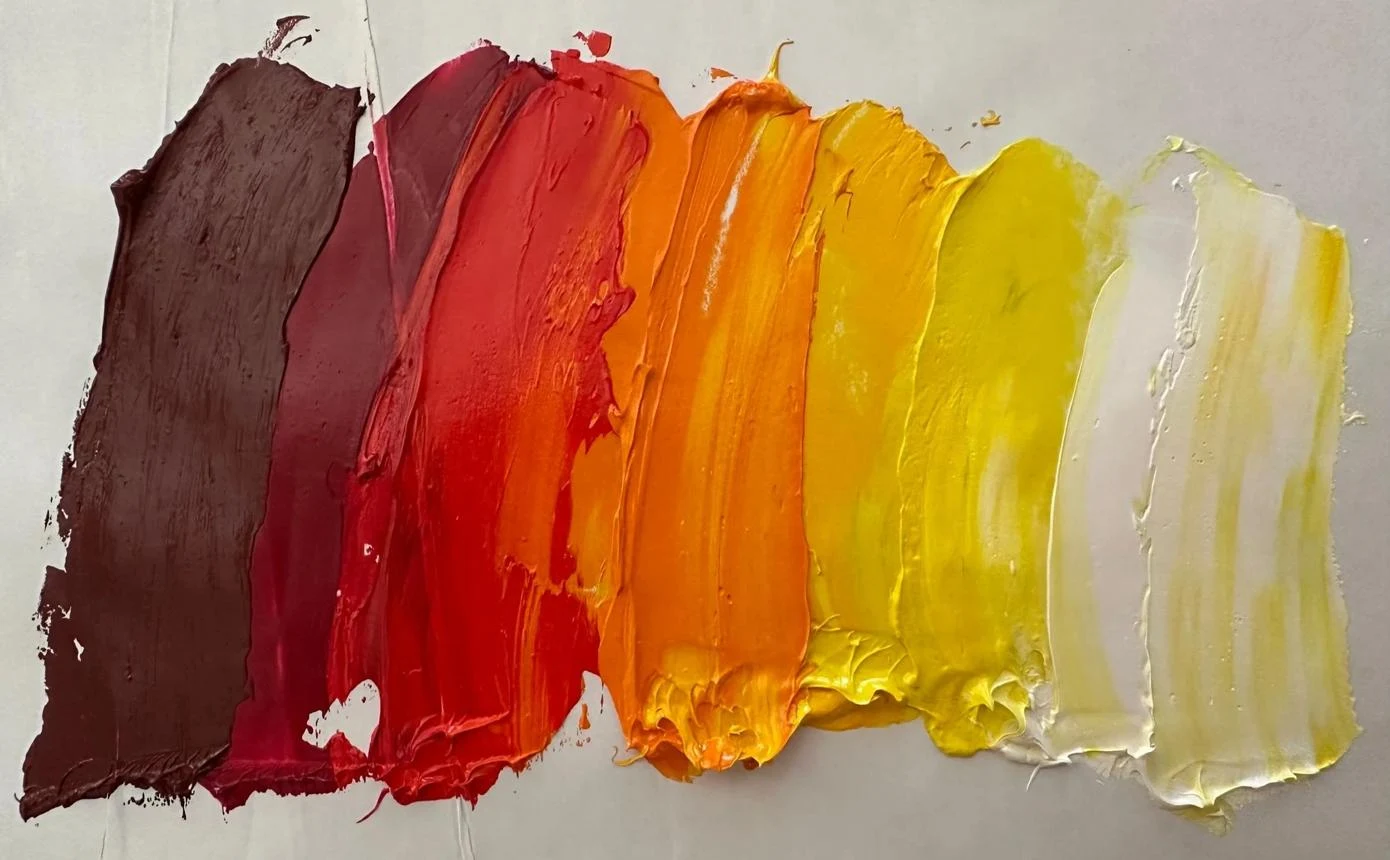
Warm colours include red, orange and yellow.
- Create a feeling of warmth.
- Attract attention.
- Communicate excitement and energy.
- Often appear to advance or come forward in a picture.
- Can communicate danger, love and passion.
Examples of where warm colors are used
- Sunsets.
- Flames.
- Flowers.
- Sunlight.
- Warning signs.
9. Cool Colors
Cool colors are colors associated with calmness, freshness and relaxation.
Examples include:
- Blue.
- Green.
- Violet.
Characteristics of cool colors
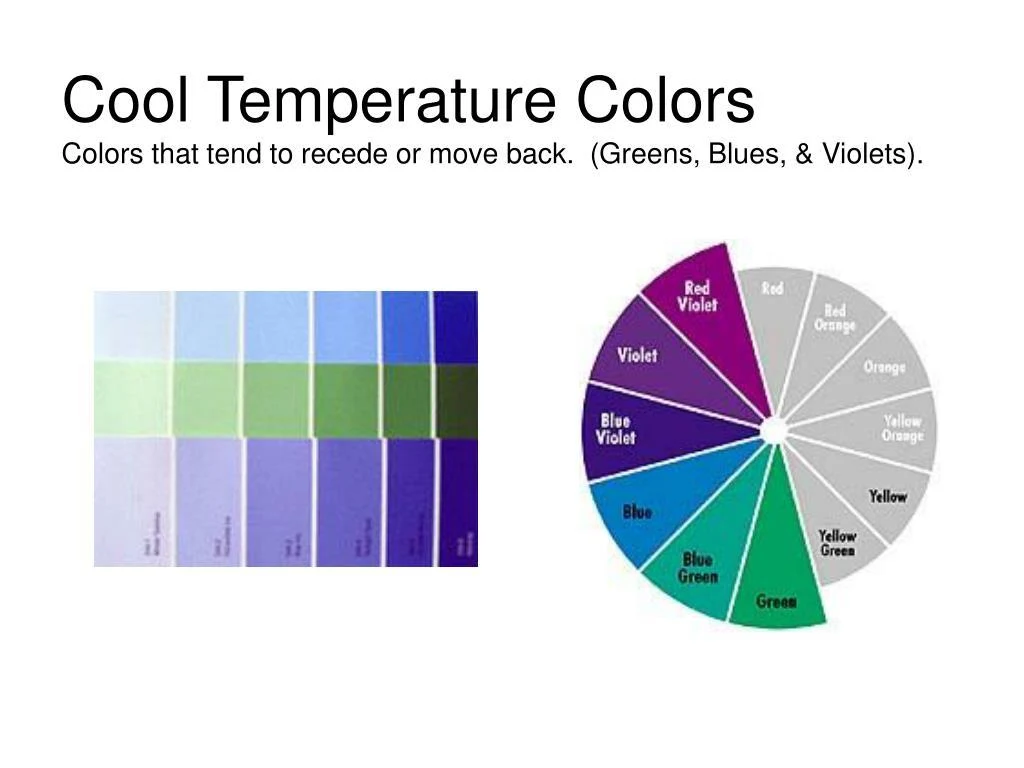
Cool colours include blue, green and violet.
- Create a feeling of calmness.
- Communicate peace and relaxation.
- Often appear to recede or move into the background.
- Are associated with water and vegetation.
- Can communicate sadness or mystery.
10. Differences Between Warm and Cool Colors
|
Warm colors |
Cool colors |
|---|---|
|
Red, orange and yellow |
Blue, green and violet |
|
Suggest warmth |
Suggest coolness |
|
Create excitement and energy |
Create calmness and relaxation |
|
Often appear to advance |
Often appear to recede |
|
Commonly associated with fire and sunlight |
Commonly associated with water and vegetation |
11. Color Temperature and Emotional Symbolism
Artists select colors according to the emotions they want to communicate.
|
Color |
Possible emotional meaning |
|---|---|
|
Red |
Love, energy, danger |
|
Yellow |
Happiness, brightness |
|
Orange |
Excitement, enthusiasm |
|
Blue |
Peace, calmness |
|
Green |
Nature, growth, freshness |
|
Violet |
Mystery, imagination |
The meaning of a color can change depending on the cultural setting and the way it is used.
12. Color Progression and Recession
Color progression
This refers to the visual effect of colors appearing to move forward or come closer to the viewer.
Warm colors commonly create this effect.
Color recession
This refers to the visual effect of colors appearing to move backwards or away from the viewer.
Cool colors commonly create this effect.
Artists use these effects to create a sense of depth in paintings.
13. Painting a Seascape
A seascape is an artwork that represents the sea or ocean and its surrounding environment.
It may include water, waves, boats, rocks, clouds and the horizon.
Materials required
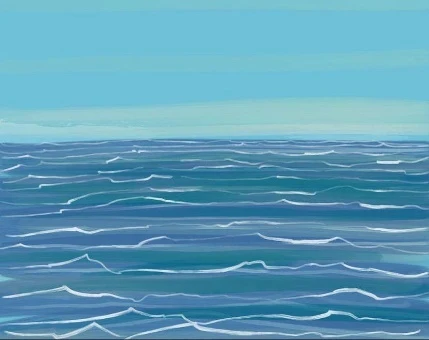
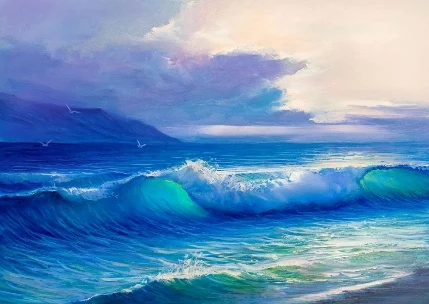
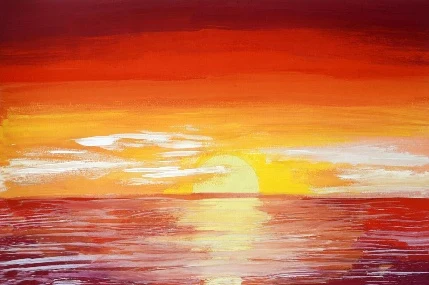
Seascapes show different ways of representing the sea and its surroundings.
- Painting paper.
- Paintbrushes.
- Watercolors or other suitable paints.
- Water.
- Palette.
- Pencil.
- Water containers.
Procedure
- Identify the seascape to be painted.
- Sketch the main features using a pencil.
- Draw the horizon line.
- Add the sea, sky and other features.
- Select either warm or cool colors.
- Mix the selected colors appropriately.
- Apply paint to the different areas.
- Create color variations to show depth.
- Allow the painting to dry.
- Display the finished painting.
14. Mounting an Artwork
Mounting is the process of attaching or presenting an artwork on a supporting material to improve its appearance and presentation.
A mat mount provides a border around an artwork.
Importance of mounting
- Improves the presentation of artwork.
- Makes the artwork attractive.
- Protects the edges of the artwork.
- Provides a neat display.
- Makes it easier to exhibit artwork.
Summary
- Drawing involves producing images using lines, shapes and tones.
- Tone creates the appearance of light and darkness.
- Balance ensures proper distribution of visual elements.
- Painting involves applying paint to a surface.
- Warm colors include red, orange and yellow.
- Cool colors include blue, green and violet.
- Warm colors often advance, while cool colors often recede.
- Mounting improves the presentation of artwork.
Revision Questions
- Define drawing and painting.
- Identify five types of lines used in drawing.
- Explain the meaning of tone.
- State four techniques used to create tone.
- What is balance in drawing?
- Differentiate between symmetrical and asymmetrical balance.
- Identify three warm colors.
- Identify three cool colors.
- Explain the emotional symbolism of colors.
- Differentiate between color progression and recession.
- Describe the steps involved in painting a seascape.
- Explain the importance of mounting artwork.