
1. Introduction to Rhythm
Rhythm is the regular arrangement of sounds and silences in music.
It is created by combining musical notes and rests of different durations.
Rhythm gives music its movement and helps performers maintain correct timing.
Rhythm can also be demonstrated through body movements such as clapping, stamping, walking and dancing.
2. Elements of Rhythm
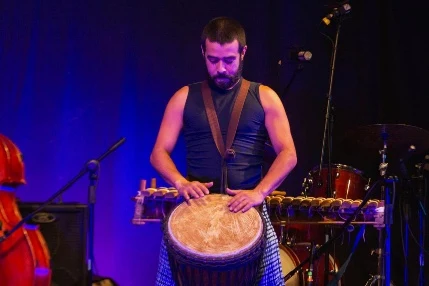
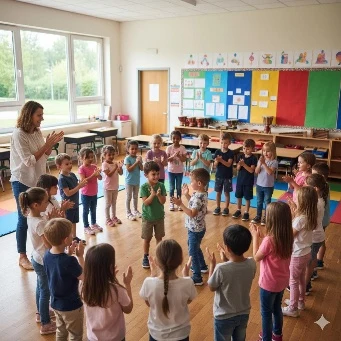

Painting examples demonstrate colour, brushwork and composition.
The following elements contribute to rhythm:
A. Beat
A beat is a regular pulse in music.
It acts like the heartbeat of a musical composition.
B. Tempo
Tempo refers to the speed at which music is performed.
Music can be performed slowly, moderately or quickly.
C. Duration
Duration refers to the length of time a musical sound or silence lasts.
D. Accent
An accent is an emphasis placed on a particular beat or note.
E. Pattern
A rhythmic pattern is an organized arrangement of sounds and silences.
3. Time Signature
A time signature indicates how beats are organized into musical bars.
It consists of two numbers written one above the other.
The upper number indicates the number of beats in each bar.
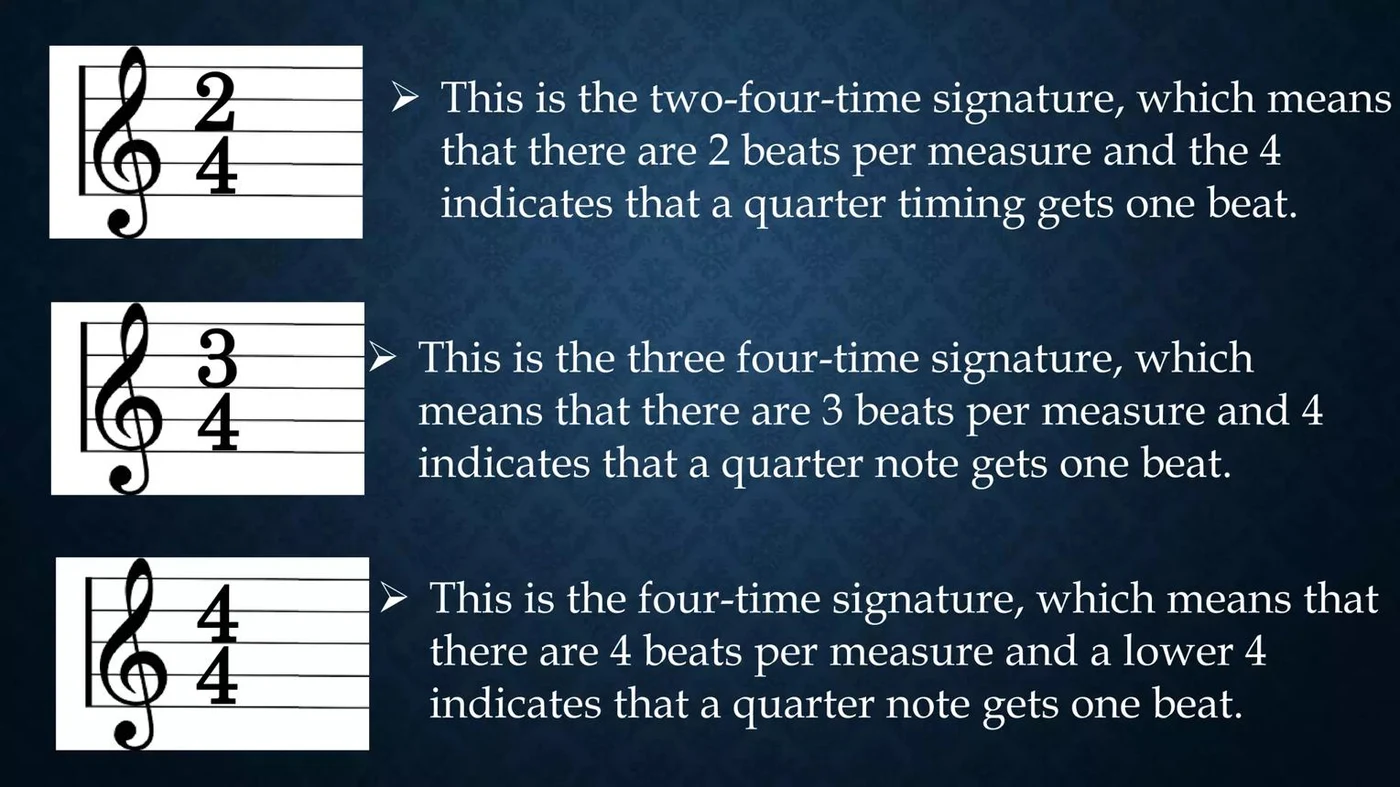
A time signature shows how beats are grouped into musical bars.
The lower number indicates the type of note that receives one beat.
Examples
A. 2/4 time
- Each bar has two crotchet beats.
- It is commonly used in marches and simple dance music.
- It produces a regular two-beat pattern.
B. 4/4 time
- Each bar has four crotchet beats.
- It is common in many popular songs.
- It produces a regular four-beat pattern.
4. Note Values Used in Creating Rhythmic Patterns
|
Note |
Value |
|---|---|
|
Semibreve |
4 beats |
|
Minim |
2 beats |
|
Crotchet |
1 beat |
|
Pair of quavers |
1 beat |
A rhythmic pattern can be created by combining different note values.
5. Corresponding Rests in Rhythm
Rests indicate periods of silence.
They are included in rhythmic patterns to create pauses.
|
Rest |
Duration |
|---|---|
|
Semibreve rest |
4 beats |
|
Minim rest |
2 beats |
|
Crotchet rest |
1 beat |
|
Quaver rest |
Half a beat |
6. Repetition of Notes
Repetition refers to playing or performing the same musical note or rhythmic pattern more than once.
It helps create familiarity and consistency in music.
Example:
C C C C
The same note is repeated four times.
A rhythmic pattern may also be repeated:
TA TA | TA TA | TA TA | TA TA
7. Variation of Notes
Variation refers to changing the notes or rhythmic arrangement to create a different musical effect.
It makes music interesting and prevents excessive repetition.
Example:
Original pattern:
TA TA | TA TA
Changed pattern:
TA TA-TE | TA TA
The second pattern introduces a pair of quavers.
8. French Rhythm Names
French rhythm names are syllables used to recite musical note values.
They help learners understand the duration of musical sounds.
The curriculum identifies the following rhythm names:
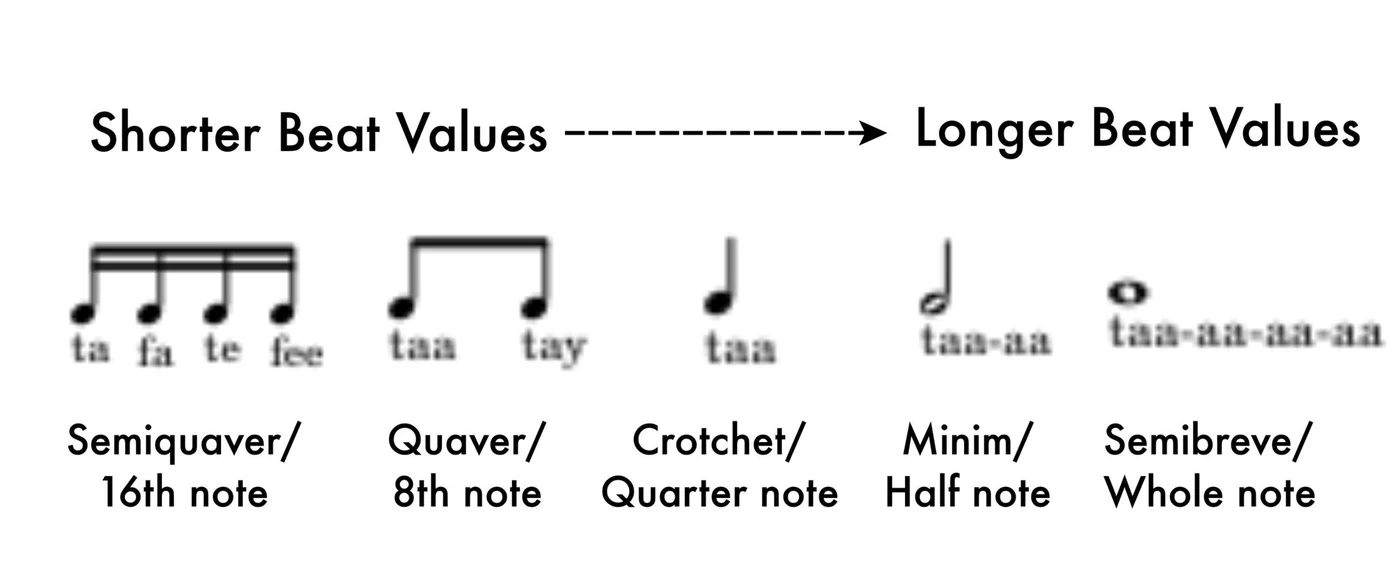
Musical note values can be represented through different rhythmic names.
|
Note value |
French rhythm name |
Duration |
|---|---|---|
|
Semibreve |
Taa-aa-aa-aa |
4 beats |
|
Minim |
Taa-aa |
2 beats |
|
Crotchet |
Taa |
1 beat |
|
Pair of quavers |
Ta-te |
1 beat |
Examples of recitation
- Semibreve: Taa-aa-aa-aa.
- Minim: Taa-aa.
- Crotchet: Taa.
- Pair of quavers: Ta-te.
9. Body Movements in Rhythm
Body movements can be used to demonstrate musical rhythm.
They help learners understand beats and timing.
Examples
- Clapping: Bringing the hands together to produce a sound.
- Stamping: Striking the ground with the feet.
- Walking: Moving the feet according to a regular beat.
- Jumping: Moving the body upwards in response to a beat.
- Swaying: Moving the body from side to side.
- Snapping: Producing a clicking sound using the fingers.
10. Factors to Consider When Creating a Rhythmic Pattern

Clapping, swaying, stamping and snapping help learners practise rhythm.
- Time signature.
- Note values.
- Duration of notes.
- Correct use of rests.
- Repetition of patterns.
- Variation of notes.
- Number of beats in each bar.
- Suitability of the rhythm for the intended performance.
11. Creating a Four-Bar Rhythmic Pattern in 2/4 Time
A bar in 2/4 time must contain two crotchet beats.
Example:
|
Bar |
Rhythmic pattern |
Total beats |
|---|---|---|
|
1 |
Crotchet + Crotchet |
2 |
|
2 |
Minim |
2 |
|
3 |
Pair of quavers + Crotchet |
2 |
|
4 |
Crotchet + Pair of quavers |
2 |
Each bar must have the correct total duration.
12. Sight Reading Rhythmic Patterns
Sight reading means reading and performing written musical notation without prior practice of the particular passage.
It helps musicians interpret rhythms accurately.
Steps in sight reading rhythm
- Identify the time signature.
- Identify the note values.
- Identify the rests.
- Count the beats in each bar.
- Recite the rhythm using suitable syllables.
- Maintain a steady beat.
- Perform the complete pattern.
13. Importance of Rhythm in Sports
Rhythm is useful in sports because it helps players coordinate their body movements.
Examples include:
- Runners maintaining a regular running rhythm.
- Swimmers coordinating their arm and leg movements.
- Dancers maintaining movement patterns.
- Gymnasts performing coordinated movements.
- Rope skipping according to musical beats.
Summary
- Rhythm is the arrangement of sounds and silences.
- Time signatures organize beats into bars.
- Repetition involves using the same notes or patterns again.
- Variation involves changing notes or rhythmic patterns.
- French rhythm names help learners recite note values.
- Body movements can demonstrate rhythmic patterns.
- Sight reading helps musicians perform written rhythms.
Revision Questions
- Define rhythm.
- Explain the meaning of a beat.
- What is a time signature?
- Differentiate between 2/4 and 4/4 time.
- Explain repetition and variation of notes.
- State the French rhythm names for four musical note values.
- Identify five body movements used to demonstrate rhythm.
- State five factors to consider when creating a rhythmic pattern.
- Describe the steps involved in sight reading.
- Explain three ways rhythm is applied in sports.