
Introduction
A speech is a formal or informal talk delivered to an audience to communicate information, express opinions, persuade people or entertain listeners.
Speech delivery is an important communication skill because it enables individuals to share ideas confidently and effectively.
People deliver speeches during different occasions, including school assemblies, celebrations, meetings, ceremonies and public gatherings.
A. Occasions when speeches are delivered
- School assemblies: Head teachers and student leaders address learners about school activities and discipline.
- Graduation ceremonies: Speakers congratulate graduates and encourage them to pursue their goals.
- Weddings: Speakers congratulate the newly married couple.
- Funerals: Speakers comfort bereaved families and remember the deceased.
- Political meetings: Leaders communicate their ideas and policies.
- Public celebrations: Speakers address people during national holidays and cultural events.
- School debates: Participants present arguments supporting or opposing a motion.
- Meetings: Chairpersons explain matters affecting members.
B. Features of an effective speech
A good speech should have the following features.
1. A clear introduction
The introduction captures the audience's attention and introduces the topic.
It may include:
- Greetings.
- Recognition of important guests.
- Introduction of the topic.
- A brief statement of the purpose.
2. A well-developed body
The body contains the main information being communicated.
It should include:
- Main points.
- Explanations.
- Examples.
- Supporting evidence.
- Relevant illustrations.
3. An appropriate conclusion
The conclusion summarises the main message and brings the speech to an end.
It may include a recommendation, a final appeal or a word of appreciation.
C. Oral presentation techniques
1. Voice projection
Voice projection refers to speaking loudly and clearly enough for the audience to hear.
A speaker should avoid speaking too softly or shouting unnecessarily.
2. Clear pronunciation
Words should be pronounced correctly to make the message understandable.
3. Appropriate pace
Pace refers to the speed at which a person speaks.
- Speaking too quickly makes it difficult for listeners to follow.
- Speaking too slowly may make the presentation boring.
- A suitable pace makes communication effective.
4. Tone variation
Tone refers to the quality or character of the voice.
A speaker should vary their tone to communicate different feelings and emphasise important points.
5. Pausing
Pausing means briefly stopping while speaking.
Pauses help listeners understand important information and allow the speaker to organise ideas.
6. Eye contact
Eye contact involves looking at members of the audience while delivering a speech.
It demonstrates confidence and helps maintain audience attention.
7. Body language
Body language refers to communication through body movements and facial expressions.
Examples include:
- Smiling.
- Nodding.
- Appropriate hand movements.
- Maintaining a suitable posture.
8. Gestures
Gestures are deliberate movements of the hands, arms or head used to communicate ideas.
9. Confidence
A confident speaker communicates without unnecessary fear or hesitation.
10. Audience awareness
A speaker should consider the age, interests and expectations of the audience.

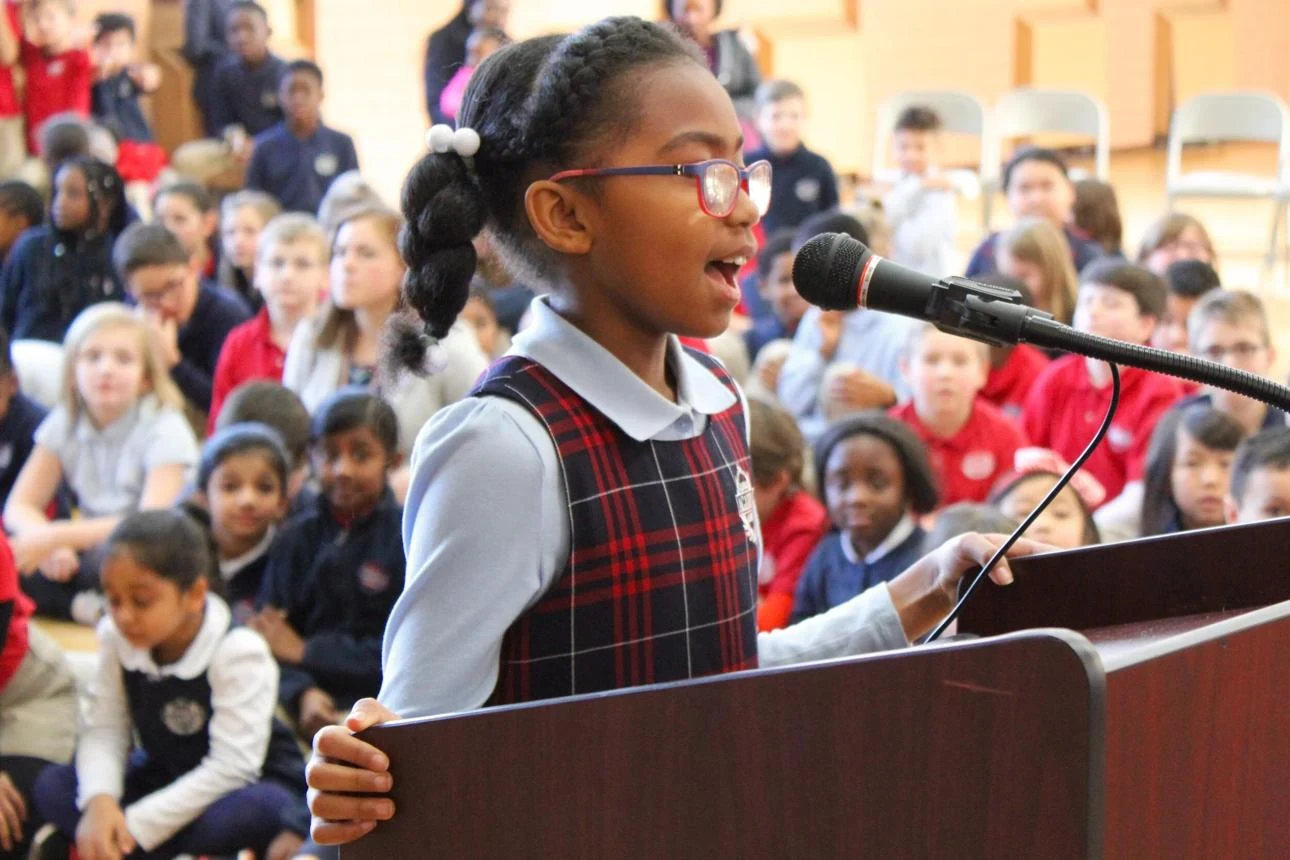

Speakers use posture, gestures, eye contact and voice to engage an audience during a speech.
D. Body language in speech delivery
Body language can strengthen or weaken a speech.
|
Body language |
Meaning or purpose |
|---|---|
|
Smiling |
Creates a friendly atmosphere. |
|
Eye contact |
Maintains audience attention. |
|
Standing upright |
Demonstrates confidence. |
|
Nodding |
Shows agreement or acknowledgement. |
|
Hand gestures |
Emphasise important points. |
|
Appropriate facial expressions |
Communicate emotions. |
E. Preparing to deliver a speech
A speaker should:
- Understand the topic.
- Identify the purpose of the speech.
- Identify the intended audience.
- Research relevant information.
- Organise ideas into an introduction, body and conclusion.
- Prepare speaking notes.
- Practise pronunciation.
- Rehearse the speech.
- Check the presentation environment.
- Deliver the speech confidently.
F. Speaking notes
Speaking notes are brief points prepared to guide a speaker during a presentation.
They help the speaker remember important ideas without reading the entire speech.
Example:
Speech topic: The Importance of Music
Introduction
- Greetings.
- Introduce music.
- Explain its importance.
Main points
- Entertainment.
- Cultural preservation.
- Education.
- Emotional expression.
- National unity.
Conclusion
- Summarise benefits.
- Encourage learners to appreciate music.
- Thank the audience.
G. Importance of effective speech delivery
- Builds confidence.
- Improves communication skills.
- Develops leadership abilities.
- Encourages participation.
- Improves public speaking.
- Promotes the sharing of information.
- Helps persuade and influence audiences.
H. Sample speech
THE IMPORTANCE OF MUSIC IN SOCIETY
Good morning, teachers and fellow learners.
Today, I would like to talk about the importance of music in society.
Music is an important part of human life. It provides entertainment and allows people to express their feelings. People listen to music when celebrating, relaxing or participating in cultural activities.
Music also helps preserve our culture. Different Kenyan communities have traditional songs that communicate their history, beliefs and values. Through these songs, younger generations learn about their communities.
In schools, music encourages creativity and teamwork. Learners who participate in singing and instrumental activities develop confidence and cooperation skills.
Music can also promote national unity. National songs bring people together and encourage patriotism.
In conclusion, music is not only a source of entertainment but also an important means of communication and cultural preservation.
Thank you for listening.
Activities
- Listen to recorded speeches.
- Identify the introduction, body and conclusion.
- Discuss effective speech delivery techniques.
- Prepare a short speech about music.
- Rehearse in pairs.
- Deliver the speech before classmates.
- Record and evaluate the presentations.
Summary
Effective speech delivery requires proper preparation, organisation, clear pronunciation, voice projection, appropriate body language and confidence. A good speech should have a clear introduction, a well-developed body and an appropriate conclusion.