
Introduction
Note-making is the process of selecting and recording important information from a written or spoken source using brief statements, keywords and organised points.
It helps learners remember information, understand texts and prepare for examinations.
Unlike copying an entire passage, note-making involves identifying the most important ideas and presenting them briefly.
A. Meaning of important note-making terms
1. Heading
A heading is the main title indicating what the notes are about.
Example: Importance of Music.
2. Subheading
A subheading identifies a particular section or aspect of the main topic.
Example:
- Entertainment.
- Cultural preservation.
- Education.
3. Main points
Main points are the most important ideas presented in a text.
4. Supporting points
Supporting points provide additional explanations, examples or details about the main points.
5. Keywords
Keywords are important words that communicate the central ideas of a passage.
B. Format of note-making
Notes should be arranged in a clear and organised manner.
Example:
IMPORTANCE OF MUSIC
1. Entertainment
- Provides enjoyment.
- Reduces boredom.
- Encourages relaxation.
2. Education
- Helps learners remember information.
- Develops creativity.
- Supports language learning.
3. Cultural preservation
- Preserves traditional songs.
- Communicates community history.
- Passes values to younger generations.
4. Unity
- Encourages cooperation.
- Promotes national identity.
- Brings communities together.
C. Steps involved in note-making
Step 1: Read the text
Read the entire passage to understand its general meaning.
Step 2: Identify the main ideas
Determine the important points discussed in the passage.
Step 3: Identify supporting information
Select examples, explanations and details that support the main ideas.
Step 4: Identify keywords
Underline or highlight important words.
Step 5: Organise the information
Arrange the points under suitable headings and subheadings.
Step 6: Write the notes
Use short phrases and brief statements instead of copying entire paragraphs.
Step 7: Review the notes
Check whether the information is accurate, relevant and logically arranged.
D. Note-making and note-taking
These two terms are related but have slightly different meanings.
|
Note-making |
Note-taking |
|---|---|
|
Involves selecting and organising information. |
Involves recording information as it is presented. |
|
Commonly used when reading texts. |
Commonly used during lessons or presentations. |
|
Information is usually reorganised. |
Information may be recorded as the speaker presents it. |
|
Focuses on main and supporting points. |
Focuses on capturing useful information. |
E. Techniques of note-making
1. Using keywords
Record important words instead of lengthy sentences.
2. Using bullet points
Use bullets to separate different ideas.
3. Using abbreviations
Shorten commonly used words where the meaning remains clear.
Examples:
- e.g. = for example.
- govt. = government.
- info. = information.
- approx. = approximately.
- etc. = and other similar things.
4. Using mind maps
A mind map presents information visually, showing the relationship between the main topic and supporting ideas.
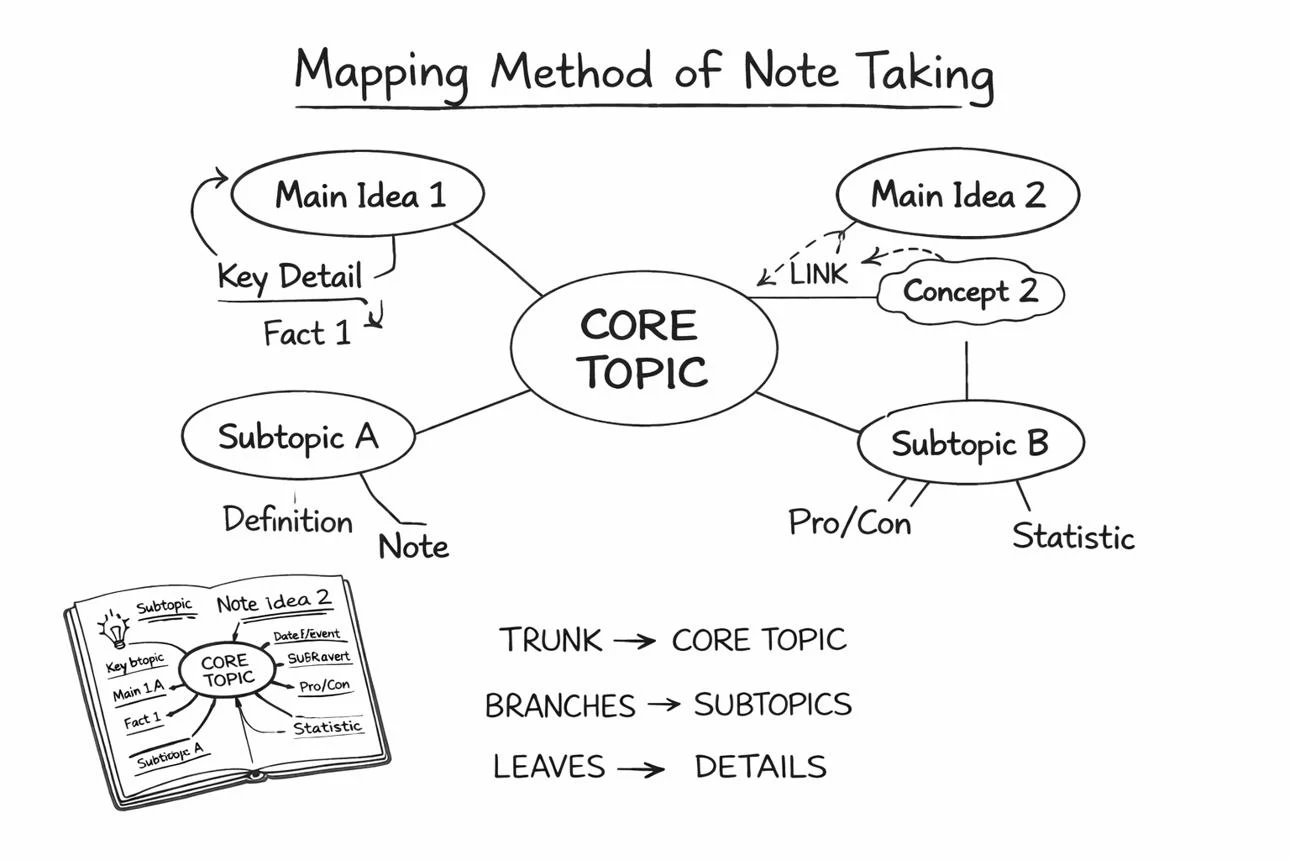
Mind mapping is one way to organise main ideas and supporting details when making notes.
F. Example of note-making from a passage
Read the following passage:
Music plays an important role in society. It provides entertainment and helps people relax. Traditional music preserves the culture and history of different communities. In schools, music develops creativity and encourages teamwork. Music can also promote unity among people from different backgrounds.
Notes
Heading: Importance of Music
1. Entertainment
- Provides enjoyment.
- Helps people relax.
2. Cultural preservation
- Preserves traditions.
- Communicates history.
3. Education
- Develops creativity.
- Encourages teamwork.
4. Unity
- Brings people together.
- Promotes cooperation.
G. Importance of note-making
- Improves reading comprehension.
- Helps learners remember information.
- Makes revision easier.
- Saves time.
- Organises information logically.
- Helps identify important ideas.
- Develops independent learning.
- Improves examination preparation.
Activities
- Read a passage about music.
- Identify its main ideas.
- Underline supporting details.
- Select important keywords.
- Prepare notes using headings and subheadings.
- Draw a mind map showing the relationship between ideas.
- Exchange notes with classmates for assessment.
Summary
Note-making involves selecting, organising and recording important information from a text. Effective notes should have a heading, subheadings, main points, supporting points and keywords.