
Introduction
Composition writing is the process of organising ideas into a meaningful piece of written work.
A good composition requires proper planning, logical organisation, correct grammar and effective communication.
The writing process involves several stages that help learners develop and improve their compositions.
A. Stages of the writing process
The curriculum identifies five major stages:
- Prewriting.
- Drafting.
- Editing.
- Revising.
- Publishing.
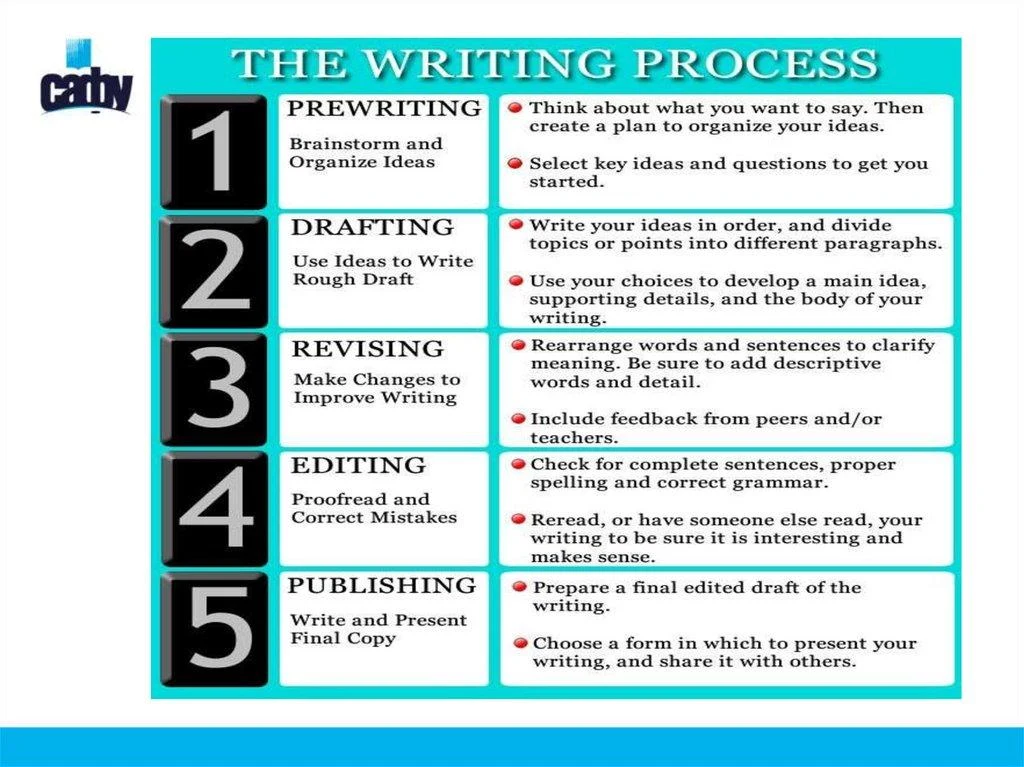
The writing process includes planning, drafting, revising, editing and publishing.
B. Prewriting
Prewriting is the preparation stage before the actual composition is written.
It involves generating and organising ideas.
Activities include:
- Brainstorming.
- Reading about the topic.
- Discussing ideas.
- Preparing mind maps.
- Identifying characters.
- Planning the setting.
- Arranging events.
Example topic:
Saving Our Forests
Ideas generated:
- Importance of forests.
- Causes of deforestation.
- Effects of cutting trees.
- Tree planting.
- Community participation.
- Forest protection.
C. Drafting
Drafting involves writing the first version of the composition.
During drafting, learners should:
- Develop the introduction.
- Present the main events.
- Arrange ideas logically.
- Write supporting details.
- Develop a conclusion.
The first draft does not need to be perfect because it will be improved later.
D. Editing
Editing involves checking and correcting errors in the composition.
Learners should check:
- Spelling.
- Grammar.
- Punctuation.
- Capitalisation.
- Sentence construction.
- Word choice.
E. Revising
Revising involves improving the content and organisation of a composition.
It may include:
- Adding missing information.
- Removing unnecessary details.
- Improving descriptions.
- Rearranging paragraphs.
- Improving the introduction.
- Strengthening the conclusion.
F. Publishing
Publishing is the final stage of the writing process.
It involves preparing the corrected composition for sharing or presentation.
Methods include:
- Writing neatly in an exercise book.
- Displaying the composition on a classroom chart.
- Typing using a digital device.
- Sharing the work through an approved digital platform.
- Compiling compositions into a class anthology.
G. Structure of a narrative composition
1. Introduction
Introduces the characters, setting and situation.
2. Body
Presents the main events in a logical sequence.
3. Conclusion
Brings the story to an end and may communicate a lesson.
H. Sample composition topic
THE DAY WE PLANTED TREES
Learners may write about a school activity involving tree planting.
Possible ideas:
- Preparation for the activity.
- Arrival at the planting site.
- Distribution of seedlings.
- Planting activities.
- Challenges encountered.
- Lessons learnt.
I. Peer assessment
Peer assessment involves learners reviewing one another's written work and providing constructive feedback.
A peer reviewer should check:
- Relevance to the topic.
- Organisation of ideas.
- Introduction, body and conclusion.
- Grammar.
- Spelling.
- Punctuation.
- Vocabulary.
- Clarity.
J. Importance of the writing process
- Helps organise ideas.
- Improves writing quality.
- Reduces mistakes.
- Encourages creativity.
- Develops writing fluency.
- Promotes independent learning.
- Encourages collaboration.
- Improves communication.
Activities
- Watch a video demonstrating the writing process.
- Read well-written compositions.
- Identify features of effective writing.
- Prepare mind maps.
- Practise prewriting and drafting.
- Edit and revise compositions.
- Write a narrative about forest conservation.
- Exchange compositions for peer assessment.
- Publish the final work.
Summary
The writing process consists of prewriting, drafting, editing, revising and publishing. Following these stages helps learners produce well-organised and accurate compositions.