
3.2.1 Meaning of Excretion
Excretion is the process through which the body removes metabolic waste products that are produced during normal body activities.
The human body carries out many activities to remain alive. These activities produce waste substances that must be removed because their accumulation can be harmful.
Examples of waste products removed from the human body include:
- Excess water.
- Excess salts.
- Carbon dioxide.
- Other metabolic waste substances.
3.2.2 Meaning of the Human Excretory System
The human excretory system consists of organs that help remove metabolic waste products from the body.
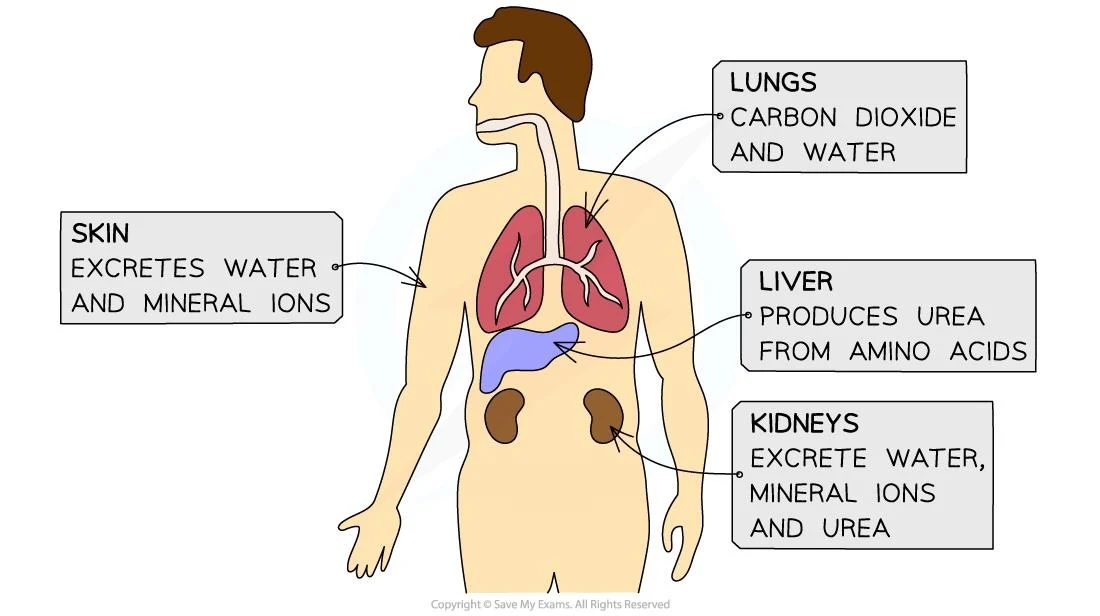
The main organs involved in excretion include:
- Kidneys.
- Skin.
- Lungs.
Each organ removes particular waste products.
3.2.3 Components of the Human Excretory System and Their Functions
1. Kidneys
The kidneys are two bean-shaped organs located towards the back of the abdominal cavity, one on each side of the spine.
Their main function is to filter the blood and remove excess water, salts and other waste substances to form urine.
2. Skin
The skin is the outer covering of the human body.
It contains sweat glands that produce sweat.
Sweat contains excess water and salts, which are removed from the body through the skin.
3. Lungs
The lungs are organs involved in breathing.
They remove carbon dioxide, a waste product produced during cellular activities, from the body during exhalation.
3.2.4 Summary of Waste Products Removed from the Body
|
Excretory organ |
Waste product removed |
Method of removal |
|---|---|---|
|
Kidneys |
Excess water and salts in urine |
Urination |
|
Skin |
Excess water and salts in sweat |
Sweating |
|
Lungs |
Carbon dioxide |
Exhalation |
Important: Excretion is different from egestion. Excretion removes metabolic wastes produced by body activities, while egestion removes undigested food from the digestive system.
3.2.5 Structure of the Human Skin
The skin is the largest organ of the human body.
It covers the entire body and protects internal structures.
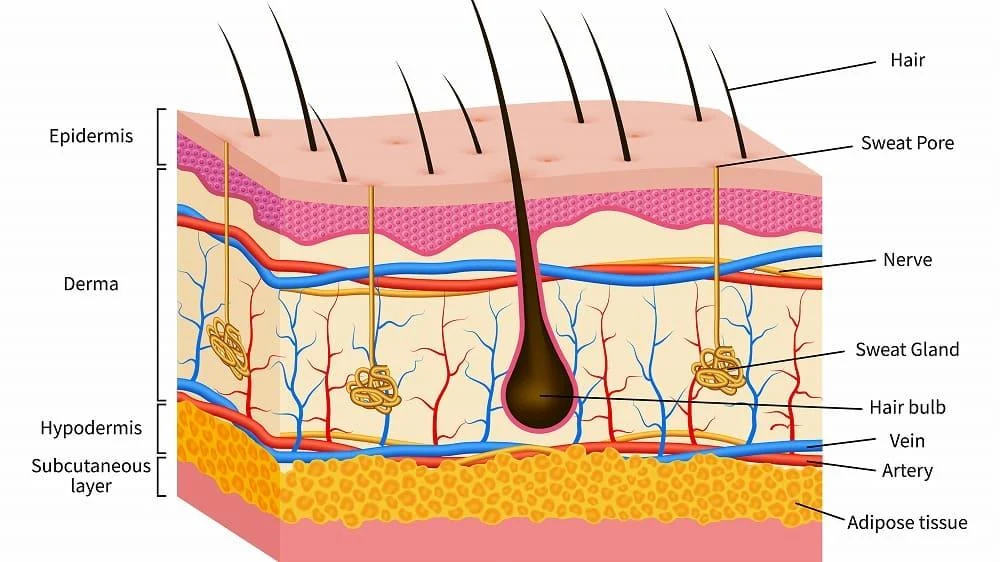
The Grade 7 curriculum focuses on the following parts of the skin:
- Epidermis.
- Dermis.
- Sweat glands.
- Sweat ducts.
- Sweat pores.
- Hair and its position in the skin.
Parts of the Skin and Their Functions
1. Epidermis
The epidermis is the outermost layer of the skin.
Functions:
- Forms a protective covering for the body.
- Helps prevent the entry of harmful microorganisms.
- Protects the inner layers of the skin.
- Reduces water loss from the body.
2. Dermis
The dermis is the layer of skin found beneath the epidermis.
It contains structures such as sweat glands, blood vessels, nerves and hair follicles.
Functions:
- Contains sweat glands.
- Supports hair follicles.
- Contains blood vessels and nerve endings.
- Provides structural support to the skin.
3. Sweat Glands
Sweat glands are small structures found mainly in the dermis.
They produce sweat.
Functions:
- Produce sweat.
- Help remove excess water and salts from the body.
4. Sweat Duct
A sweat duct is a narrow tube that carries sweat from a sweat gland towards the surface of the skin.
Function:
- Provides a passage through which sweat reaches the skin surface.
5. Sweat Pore
A sweat pore is a tiny opening on the surface of the skin through which sweat comes out.
Function:
- Allows sweat to pass from the sweat duct onto the surface of the skin.
6. Hair
Hair grows from hair follicles located in the skin.
The hair shaft extends through the skin surface.
Functions:
- Helps protect certain body areas.
- Contributes to the appearance of the body.
- Hair in some regions helps reduce friction.
Summary of Skin Parts
|
Part |
Function |
|---|---|
|
Epidermis |
Forms the outer protective layer |
|
Dermis |
Contains sweat glands, blood vessels, nerves and hair follicles |
|
Sweat gland |
Produces sweat |
|
Sweat duct |
Carries sweat towards the skin surface |
|
Sweat pore |
Allows sweat to leave the skin |
|
Hair |
Grows from follicles and extends above the skin surface |
3.2.6 How Sweat Is Produced and Removed
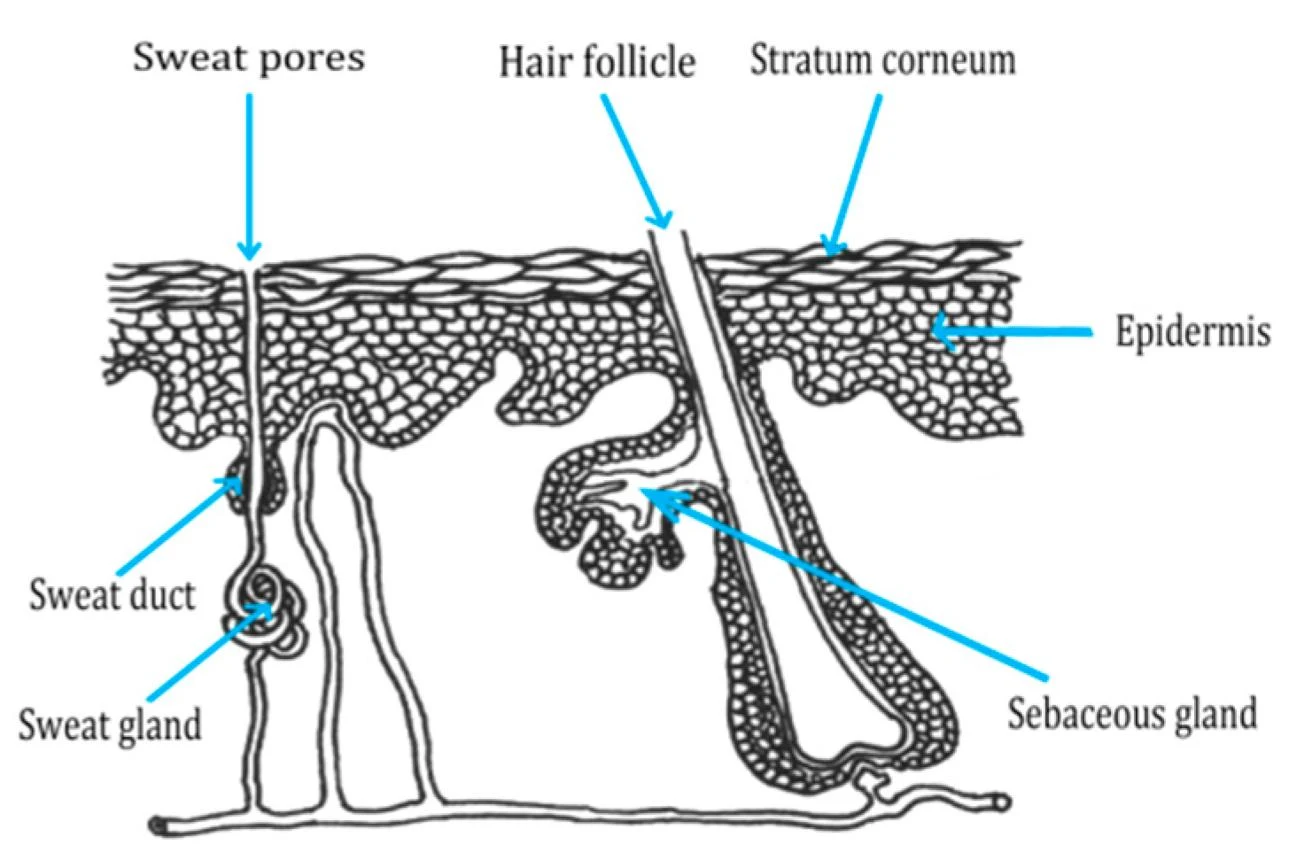
Sweat is produced by sweat glands found in the dermis.
The process takes place as follows:
- Sweat glands produce sweat.
- Sweat enters the sweat ducts.
- The ducts carry sweat towards the skin surface.
- Sweat comes out through sweat pores.
- Excess water and salts are removed from the body.
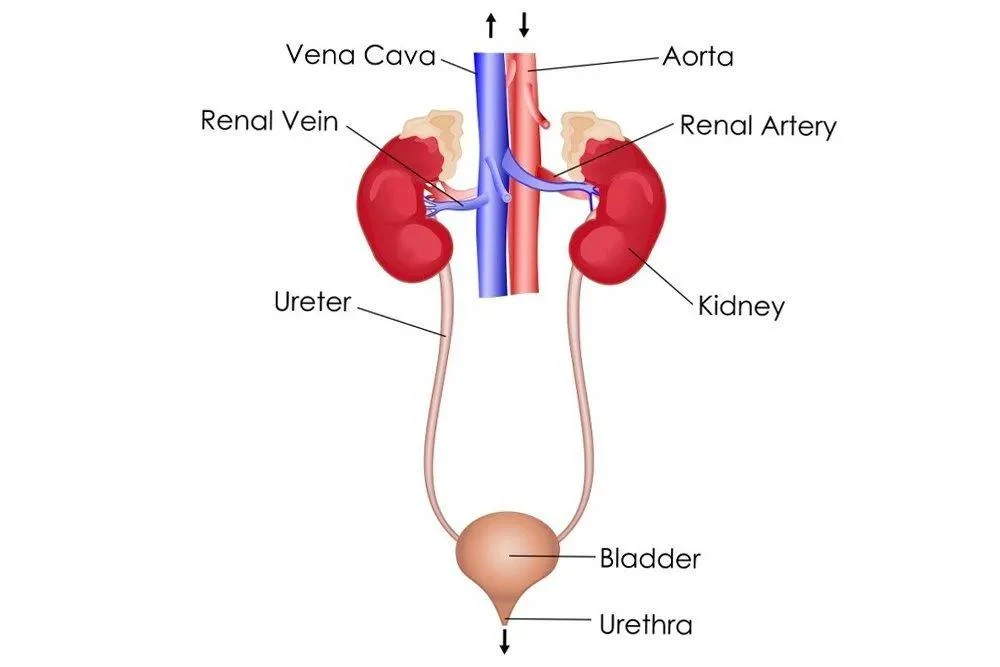
3.2.7 The Human Urinary System
The urinary system is the part of the excretory system responsible for producing, transporting, storing and removing urine.
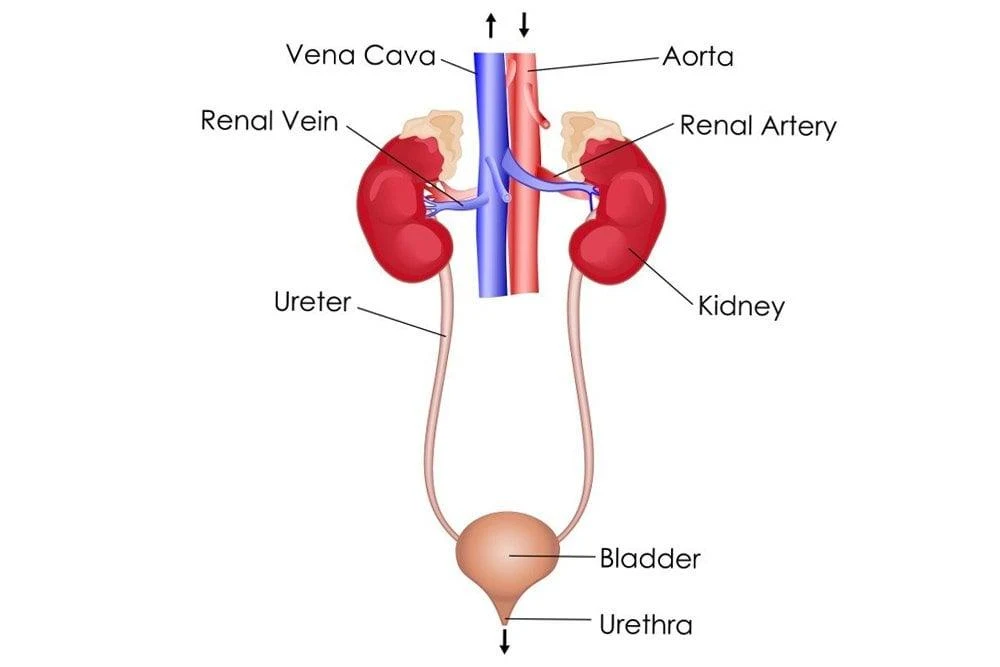
The Grade 7 curriculum identifies the following main parts:
- Kidneys.
- Ureters.
- Urinary bladder.
- Urethra.
Parts of the Urinary System and Their Functions
1. Kidneys
The kidneys are two bean-shaped organs found in the upper abdominal region towards the back.
Functions:
- Filter blood.
- Remove excess water and salts.
- Remove certain waste substances from the blood.
- Produce urine.
2. Ureters
The ureters are two narrow tubes connecting the kidneys to the urinary bladder.
Functions:
- Carry urine from the kidneys to the urinary bladder.
3. Urinary Bladder
The urinary bladder is a muscular, hollow organ that stores urine temporarily.
Functions:
- Receives urine from the ureters.
- Stores urine until it is released from the body.
4. Urethra
The urethra is a tube that carries urine from the urinary bladder to the outside of the body.
Function:
- Provides a passage through which urine leaves the body.
3.2.8 Blood Vessels Serving the Kidneys
The kidneys receive blood through blood vessels connected to them.
The two important blood vessels are:
A. Renal Artery
The renal artery carries blood from the main circulation into the kidney.
Function:
- Supplies blood to the kidney for filtration.
B. Renal Vein
The renal vein carries blood away from the kidney.
Function:
- Returns filtered blood from the kidney to the main circulation.
3.2.9 How the Urinary System Works
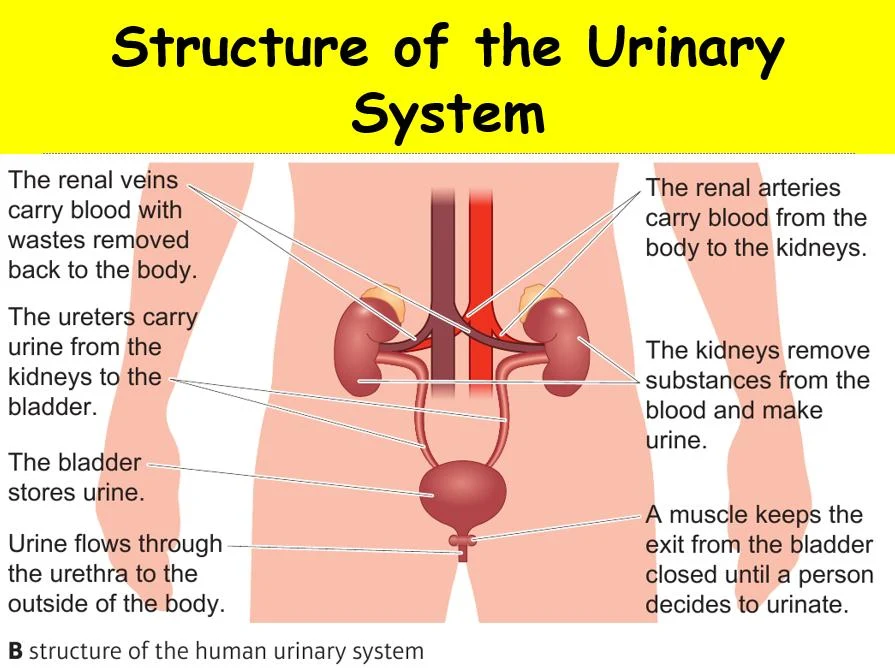
The urinary system removes excess water, salts and other waste substances from the blood.
The process occurs as follows:
- Blood enters the kidneys through the renal arteries.
- The kidneys filter the blood.
- Excess water, salts and waste substances are used to form urine.
- Urine leaves the kidneys through the ureters.
- The urine enters the urinary bladder.
- The bladder stores the urine.
- When a person urinates, urine passes through the urethra.
- Urine is released from the body.
3.2.10 Difference Between the Excretory System and the Urinary System
|
Excretory system |
Urinary system |
|---|---|
|
Involves different organs that remove metabolic wastes |
Specifically involves organs responsible for urine production and removal |
|
Includes kidneys, skin and lungs |
Includes kidneys, ureters, bladder and urethra |
|
Removes carbon dioxide, excess water and salts, among other wastes |
Removes wastes in urine |
|
Has several routes of waste removal |
Uses the urinary passage |
3.2.11 Kidney Disorders
Kidney disorders are conditions that affect the normal functioning of the kidneys.
They may interfere with the ability of the kidneys to filter blood and produce urine.
Examples include:
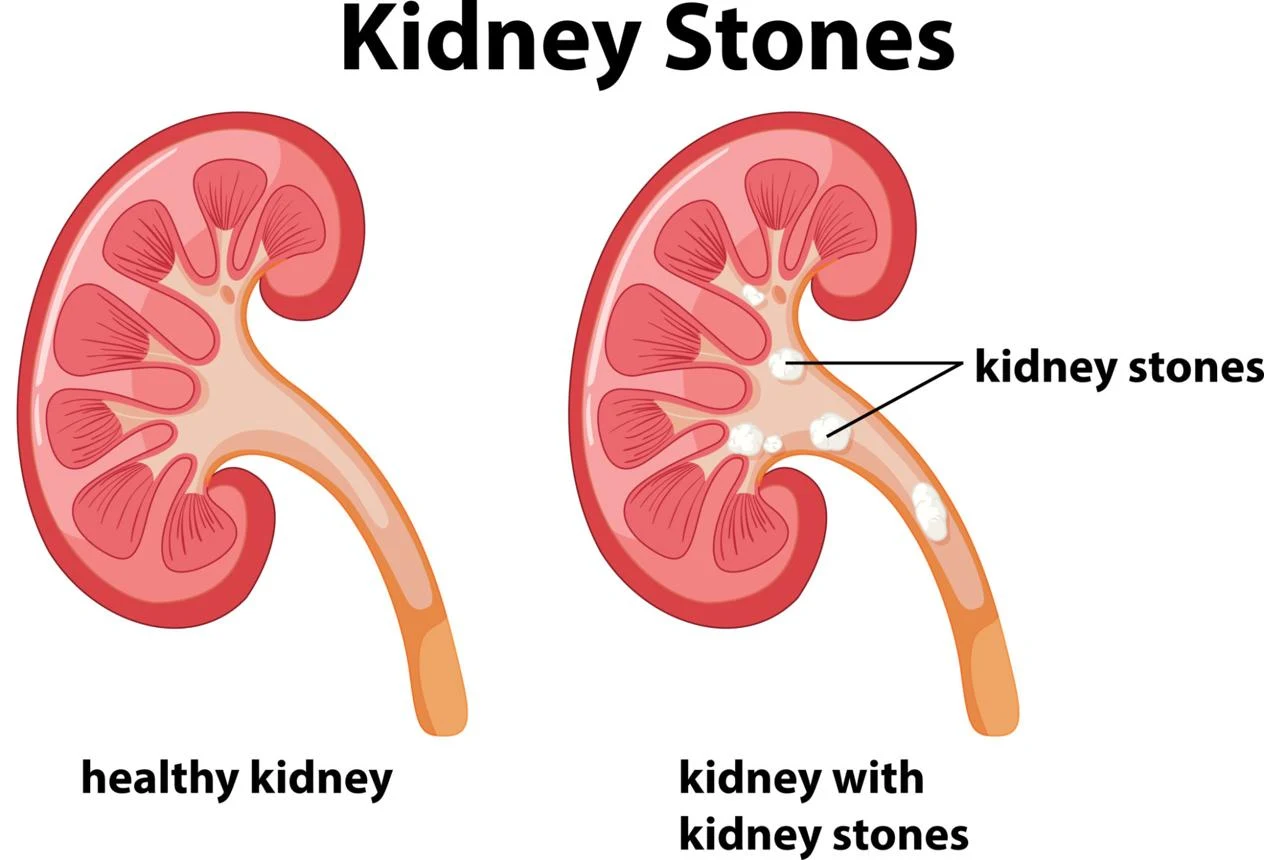
1. Kidney Stones
Kidney stones are hard deposits that form when certain substances in urine collect and crystallise.
They may cause:
- Severe pain in the side or back.
- Pain when passing urine.
- Blood in urine in some cases.
- Difficulty passing urine.
Possible contributing factors:
- Insufficient fluid intake.
- Certain dietary factors.
- Some medical conditions.
- Family history.
2. Kidney Infections
Kidney infections occur when harmful microorganisms infect the kidneys.
They may develop when an infection in the urinary tract spreads to the kidneys.
Possible symptoms include:
- Fever.
- Pain in the back or side.
- Painful urination.
- Frequent urination.
- Feeling unwell.
3. Kidney Failure
Kidney failure occurs when the kidneys lose much of their ability to filter waste products from the blood.
Possible causes include:
- Severe kidney infections.
- Long-term high blood pressure.
- Diabetes.
- Serious kidney damage.
- Certain harmful substances and medicines.
3.2.12 Causes of Kidney Disorders
Kidney disorders may develop due to several factors.
- Insufficient water intake over time.
- Untreated urinary tract infections.
- High blood pressure.
- Diabetes.
- Some inherited conditions.
- Excessive or inappropriate use of certain medicines.
- Exposure to harmful substances.
- Blockages in the urinary tract.
- Certain infections and diseases.
3.2.13 Prevention of Kidney Disorders
The health of the kidneys can be protected through healthy daily practices.
1. Drinking Adequate Water
Drinking enough clean water supports normal kidney function.
2. Maintaining Personal Hygiene
Good personal hygiene helps reduce the risk of urinary tract infections.
3. Eating a Balanced Diet
A balanced diet supports general health and helps reduce the risk of some conditions that affect the kidneys.
4. Avoiding Unnecessary Medicines
Medicines should only be taken according to appropriate medical guidance.
5. Treating Infections Early
Urinary infections should be assessed and treated appropriately to prevent complications.
6. Maintaining a Healthy Lifestyle
Regular physical activity, healthy eating and avoiding harmful substances support kidney health.
7. Seeking Medical Advice
People experiencing persistent urinary problems, blood in urine or unusual pain should seek medical attention.
3.2.14 Maintaining Healthy Skin and Kidneys
Skin and kidney health can be promoted through daily healthy habits.
|
Healthy practice |
Benefit |
|---|---|
|
Drinking clean water |
Supports normal body functions and kidney health |
|
Bathing regularly |
Promotes skin cleanliness |
|
Wearing clean clothes |
Promotes personal hygiene |
|
Eating balanced meals |
Supports general health |
|
Avoiding harmful chemicals |
Protects the skin and body |
|
Maintaining good personal hygiene |
Helps reduce the risk of infections |
|
Taking medicines appropriately |
Reduces the risk of medicine-related kidney damage |
|
Seeking medical attention when unwell |
Supports early identification and treatment of health problems |
3.2.15 Daily Log of Activities That Promote Skin and Kidney Health
A daily log is a record used to monitor activities carried out over a particular period.
Learners can maintain a daily log to monitor practices that promote healthy skin and kidneys.
Example of a daily health log
|
Activity |
Monday |
Tuesday |
Wednesday |
|---|---|---|---|
|
Drank adequate clean water |
✓ |
✓ |
✓ |
|
Bathed and maintained cleanliness |
✓ |
✓ |
✓ |
|
Ate balanced meals |
✓ |
✓ |
✓ |
|
Washed hands regularly |
✓ |
✓ |
✓ |
|
Wore clean clothes |
✓ |
✓ |
✓ |
|
Avoided unnecessary medication |
✓ |
✓ |
✓ |
|
Participated in physical activity |
✓ |
✓ |
✓ |
Learners can extend this log to cover an entire week.
Importance of maintaining a health log
- Encourages healthy habits.
- Helps learners monitor personal hygiene.
- Promotes responsibility for personal health.
- Helps identify unhealthy habits.
- Encourages consistency in maintaining healthy practices.
3.2.16 Importance of the Human Excretory System
- Removes harmful metabolic waste products.
- Removes excess water and salts.
- Helps prevent the accumulation of waste substances.
- Supports normal functioning of the body.
- Helps maintain healthy internal conditions.
- Promotes general health and well-being.
Key inquiry questions
- What is the role of the excretory system?
- How can a healthy excretory system be maintained?
Curriculum alignment: KICD Grade 7 Integrated Science, Strand 3.0, sub-strand 3.2.