
4.1.1 Meaning of Electricity
Electricity is a form of energy associated with electric charges.
It is used to operate many devices and appliances in homes, schools, hospitals, industries and other places.
Examples of electrical appliances include:
- Television.
- Electric iron.
- Electric cooker.
- Refrigerator.
- Electric fan.
- Electric kettle.
- Washing machine.
- Electric blender.
- Electric torch.
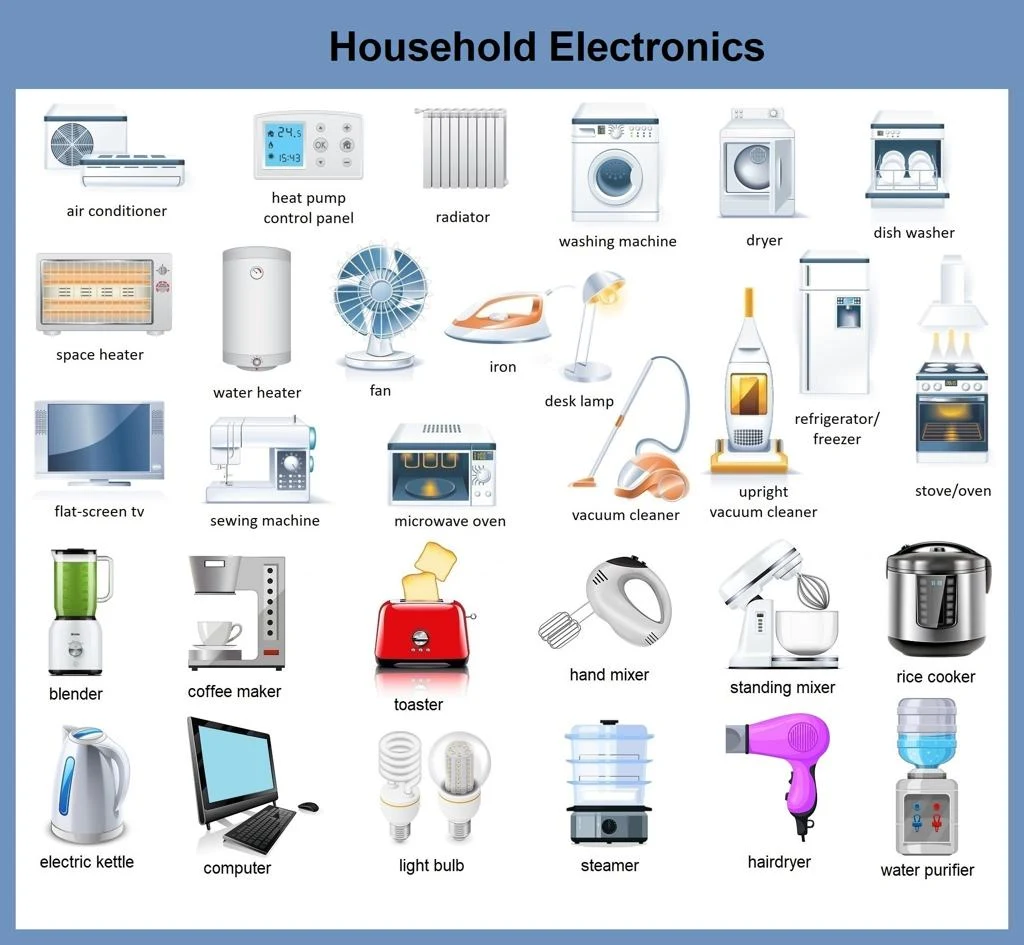
4.1.2 Meaning of Electrical Energy
Electrical energy is energy associated with the movement or presence of electric charges.
It can be converted into other forms of energy, such as:
- Light energy.
- Heat energy.
- Sound energy.
- Mechanical energy.
Examples:
|
Appliance |
Energy conversion |
|---|---|
|
Electric bulb |
Electrical energy to light energy and heat |
|
Electric iron |
Electrical energy to heat energy |
|
Electric fan |
Electrical energy to mechanical energy |
|
Radio |
Electrical energy to sound energy |
|
Electric kettle |
Electrical energy to heat energy |
|
Electric blender |
Electrical energy to mechanical energy |
4.1.3 Sources of Electricity in the Environment
Electricity can be obtained from different natural and manufactured sources.
The Grade 7 curriculum identifies the following sources:
- Hydroelectric power.
- Geothermal energy.
- Solar energy.
- Wind power.
- Nuclear energy.
- Tidal-wave energy.
- Fossil fuels.
- Biomass.
- Natural gas.
- Electrical cells.
1. Hydroelectric Power
Hydroelectric power is electricity generated using moving or falling water.
Water stored in dams flows through turbines, causing them to rotate.
The turbines drive generators that produce electricity.
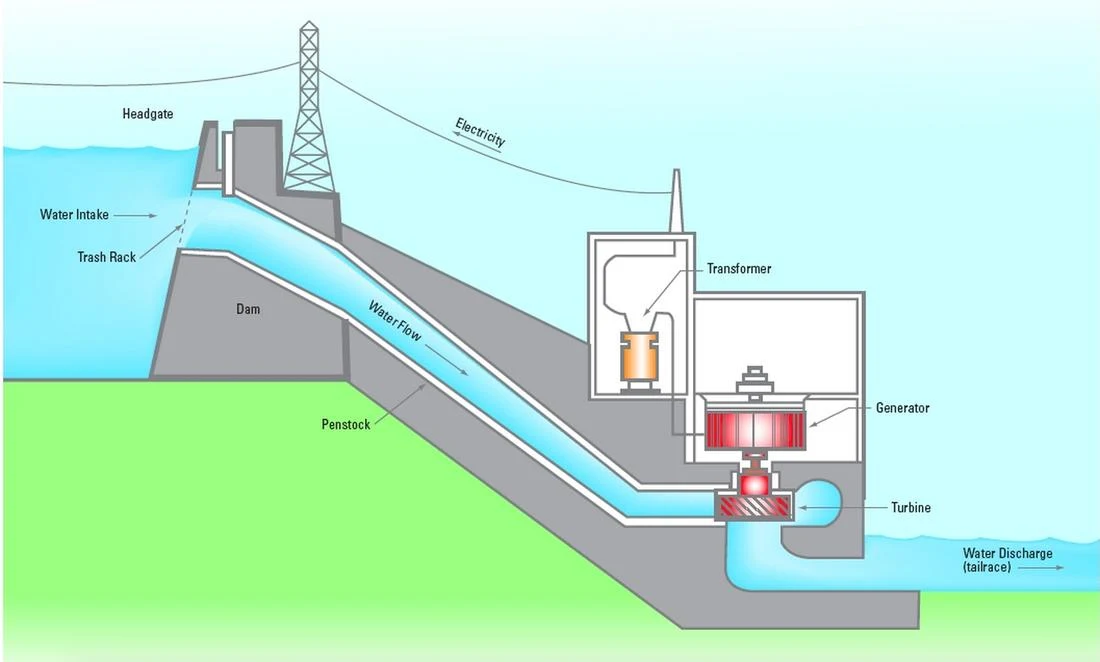
How hydroelectric power is generated
- Water is stored in a dam or reservoir.
- Water flows through large pipes.
- Moving water turns a turbine.
- The turbine drives a generator.
- The generator produces electricity.
- Electricity is transmitted for use.
Advantages
- Uses renewable water resources.
- Produces electricity without burning fuel during generation.
- Can generate large amounts of electricity.
Limitation
- Construction of dams can affect communities and natural ecosystems.
- Electricity production may be affected by prolonged drought.
2. Geothermal Energy
Geothermal energy is heat energy obtained from inside the Earth.
In geothermal power stations, underground steam or hot water is used to drive turbines connected to generators.
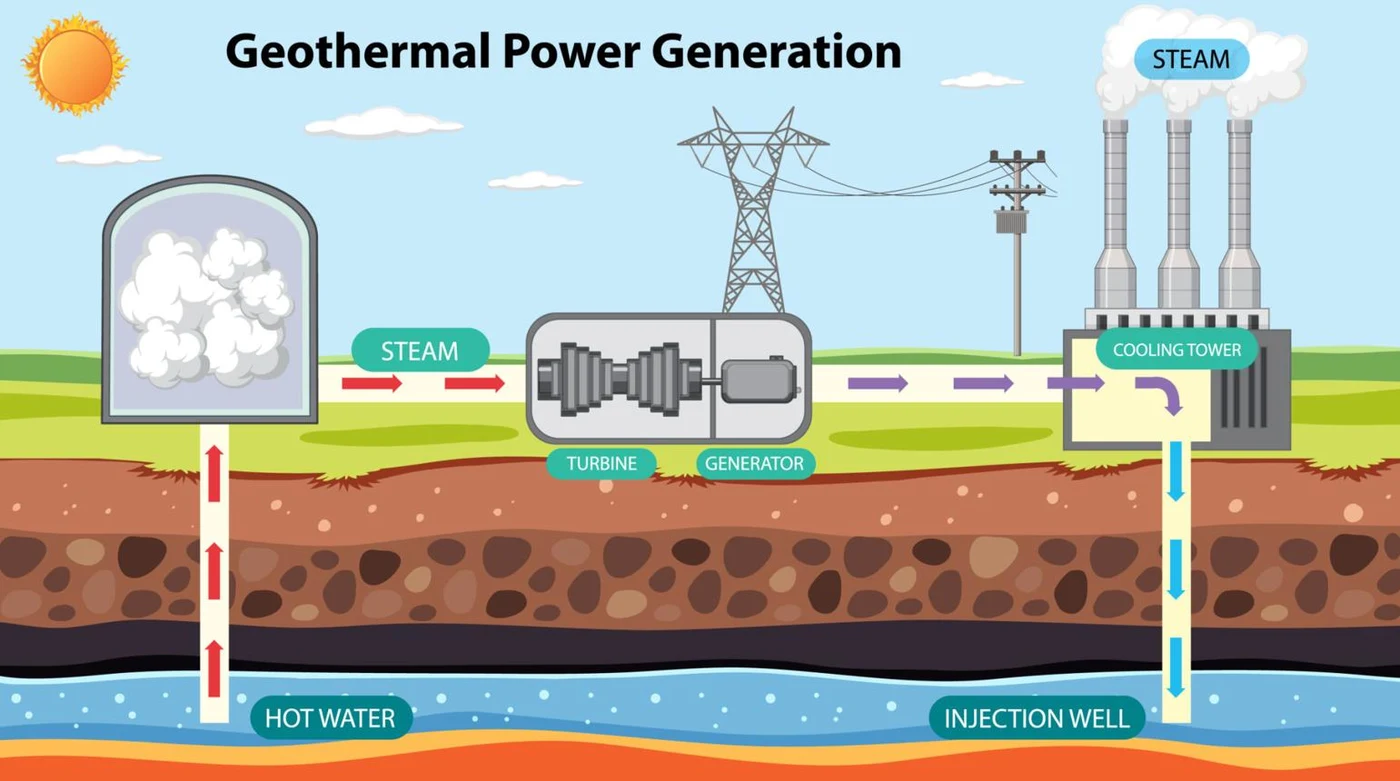
How geothermal electricity is generated
- Heat from inside the Earth heats underground water.
- Hot water or steam is brought to the surface through wells.
- The steam turns a turbine.
- The turbine drives a generator.
- Electricity is produced.
Example in Kenya: Geothermal electricity generation at Olkaria in the Rift Valley.
Advantages
- Uses heat from inside the Earth.
- Can provide a continuous electricity supply where resources are available.
- Produces relatively low greenhouse gas emissions during operation.
3. Solar Energy
Solar energy is energy obtained from the Sun.
Solar panels contain photovoltaic cells that convert sunlight directly into electrical energy.
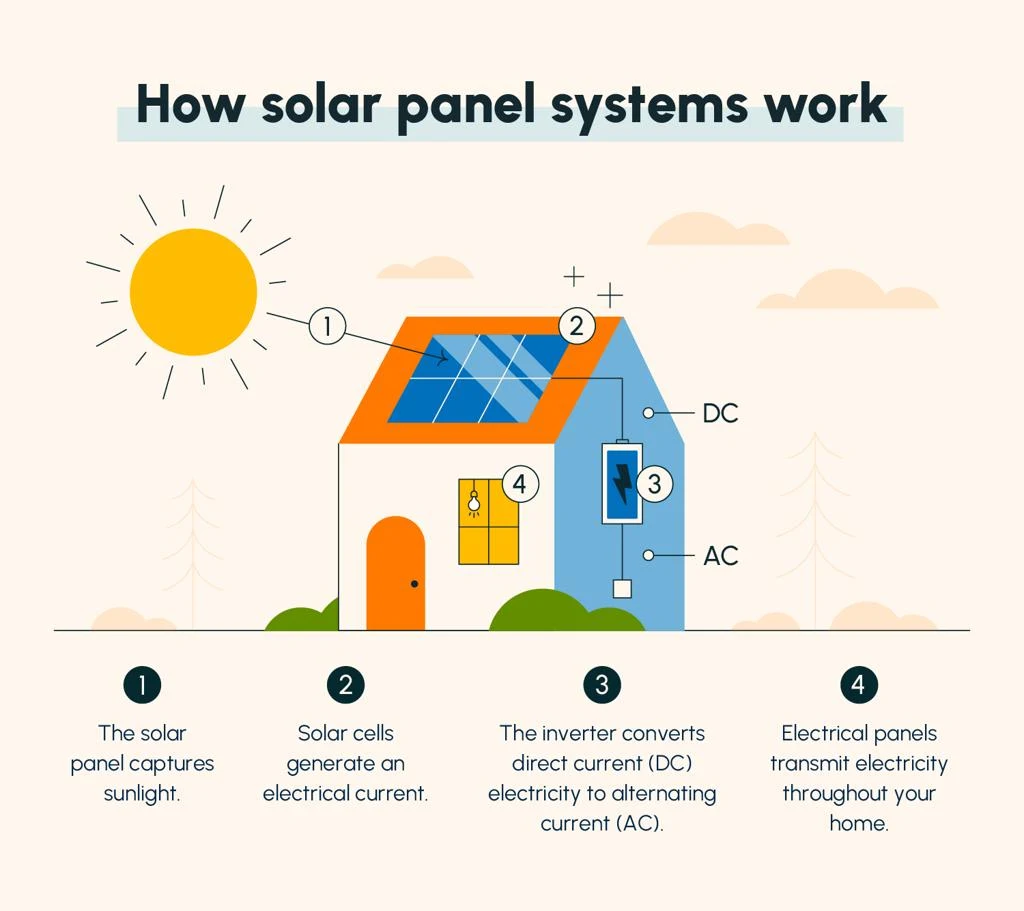
How solar electricity is generated
- Sunlight falls on solar panels.
- Photovoltaic cells absorb the sunlight.
- The cells convert light energy into electrical energy.
- The electricity is used directly or stored in batteries.
Applications
- Lighting homes.
- Charging phones.
- Operating water pumps.
- Powering calculators.
- Supplying electricity to schools and hospitals.
Advantages
- Renewable source of energy.
- Does not require fuel for electricity generation.
- Useful in remote areas.
- Can reduce electricity costs over time.
Limitation
Electricity generation depends on the availability of sunlight, and batteries may be needed for use at night.
4. Wind Power
Wind power is electricity generated using the movement of air.
Wind turbines use rotating blades to drive generators.
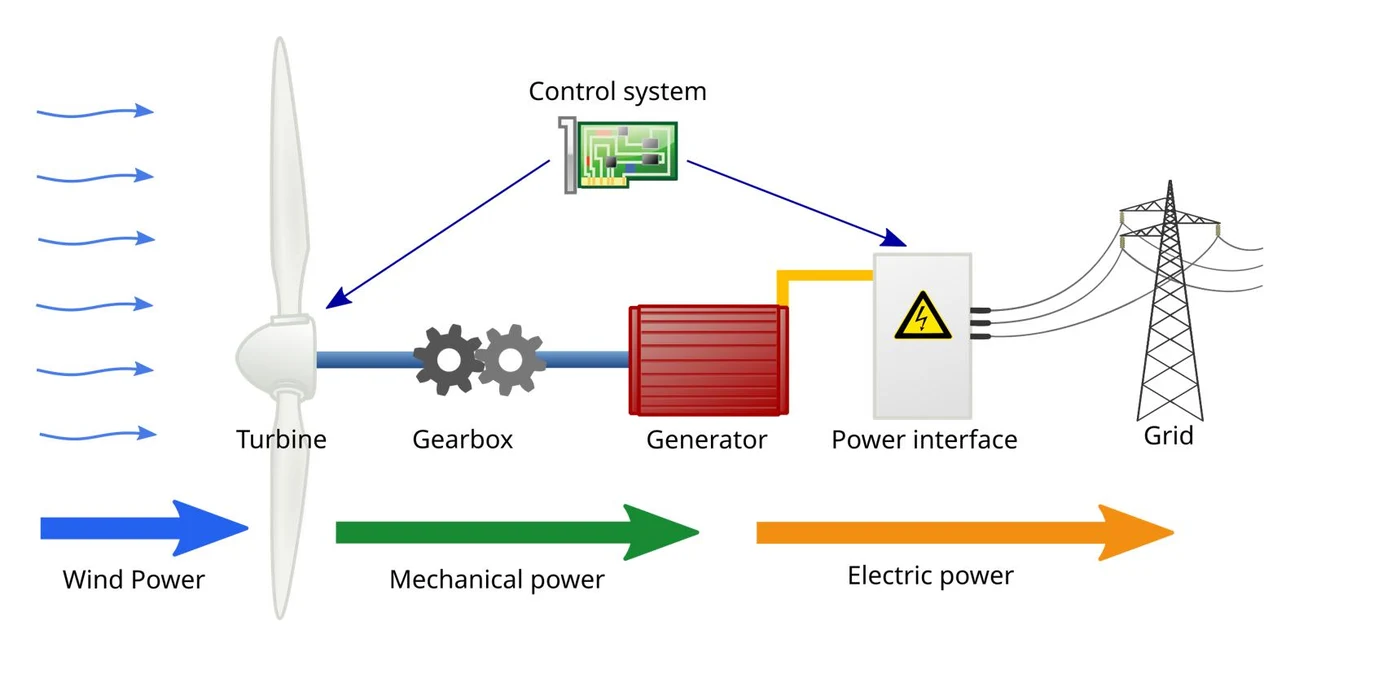
How wind electricity is generated
- Wind blows against the turbine blades.
- The blades rotate.
- The rotation drives a generator.
- The generator produces electricity.
- Electricity is transmitted for use.
Advantages
- Renewable source of energy.
- Does not require burning fuel during operation.
- Can generate electricity in suitable windy locations.
5. Nuclear Energy
Nuclear energy is energy released during changes in the nucleus of atoms.
In nuclear power stations, energy released through nuclear reactions is used to produce heat.
The heat is used to produce steam, which drives turbines connected to generators.
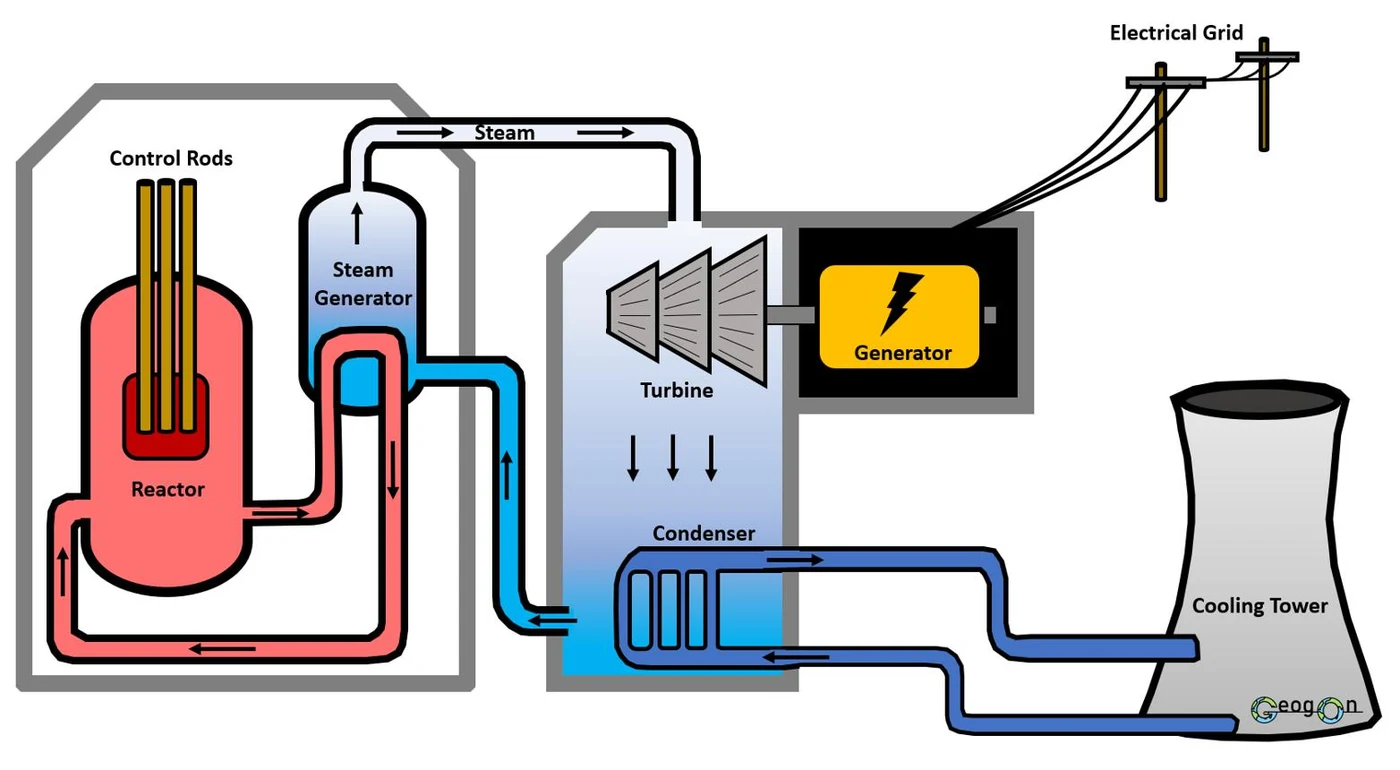
How nuclear electricity is generated
- Nuclear fuel undergoes nuclear fission.
- Heat energy is released.
- The heat produces steam.
- Steam rotates a turbine.
- The turbine drives a generator.
- Electricity is produced.
Advantages
- Can generate large amounts of electricity.
- Requires relatively small quantities of fuel.
- Produces low carbon emissions during normal operation.
Limitations
- Produces radioactive waste.
- Requires strict safety measures.
- Nuclear accidents can have serious consequences.
6. Tidal-Wave Energy
Tidal energy is energy obtained from the movement of seawater caused mainly by the gravitational pull of the Moon and the Sun.
Tidal power stations use the movement of water to turn turbines and generate electricity.
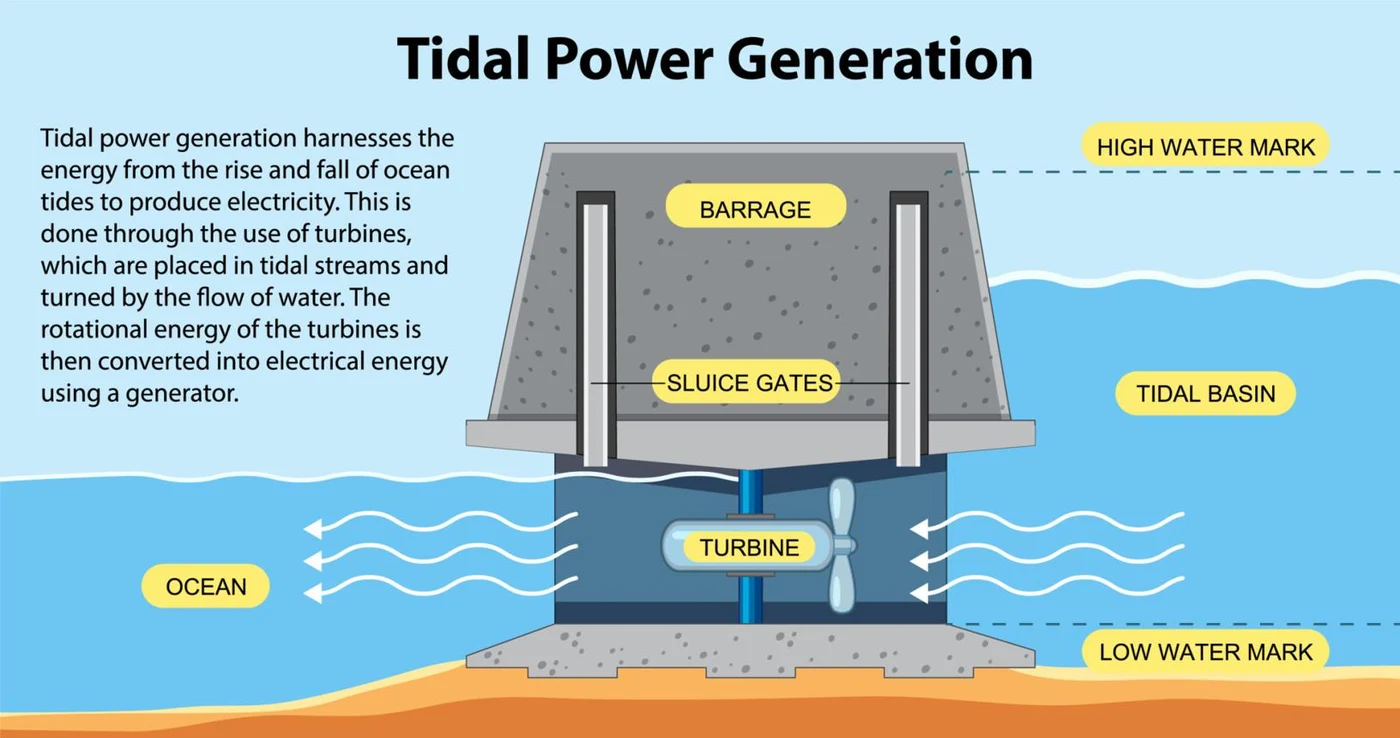
How tidal electricity is generated
- Sea water moves in and out with the tides.
- The moving water passes through turbines.
- The turbines rotate.
- The turbines drive generators.
- Electricity is produced.
Advantages
- Renewable energy source.
- Tides are predictable.
- Does not require burning fuel during operation.
Limitation
Tidal power stations can only be established in suitable coastal locations.
7. Fossil Fuels
Fossil fuels are fuels formed from the remains of ancient plants and organisms over millions of years.
Examples include:
- Coal.
- Petroleum.
- Natural gas.
Fossil fuels can be burned in power stations to produce heat, which is used to generate electricity.
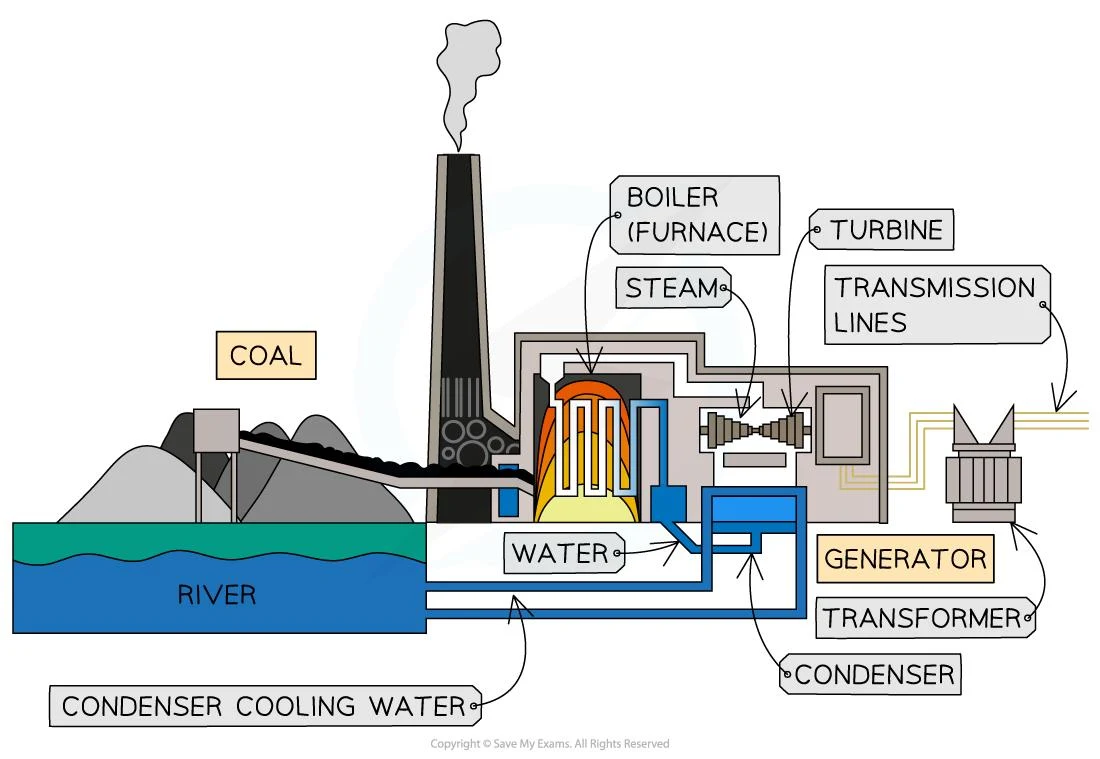
How electricity is generated using fossil fuels
- Fossil fuel is burned.
- Heat is produced.
- Water is heated to produce steam.
- Steam rotates a turbine.
- The turbine drives a generator.
- Electricity is produced.
Limitations
- Fossil fuels are non-renewable.
- Burning them releases carbon dioxide.
- They contribute to air pollution and climate change.
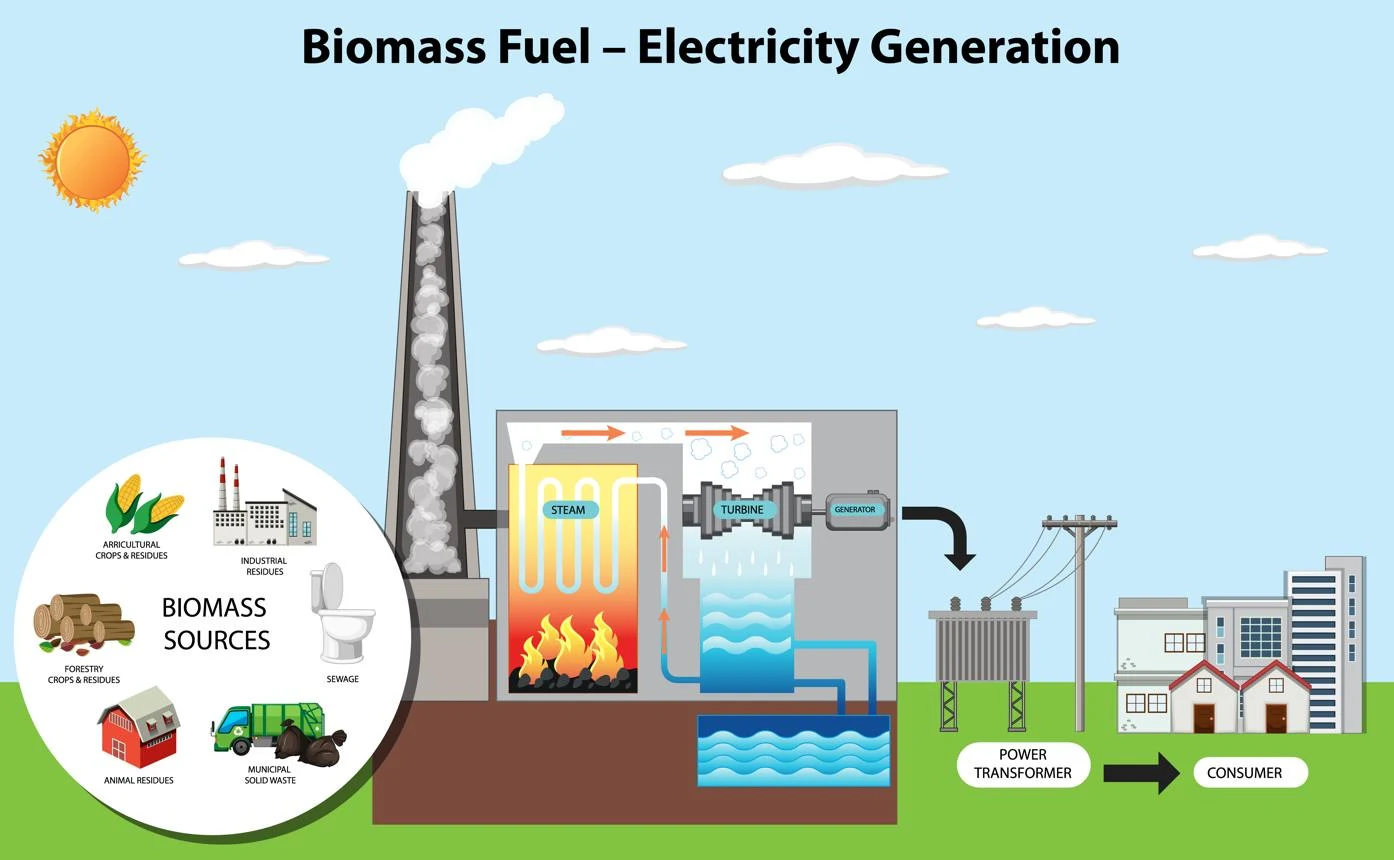
8. Biomass
Biomass refers to organic materials obtained from plants and animals that can be used as energy sources.
Examples include:
- Firewood.
- Agricultural residues.
- Animal waste.
- Plant waste.
Biomass can be burned directly or converted into fuels used to generate electricity.
Applications
- Producing biogas.
- Generating electricity.
- Providing fuel for heating.
- Producing energy from agricultural waste.
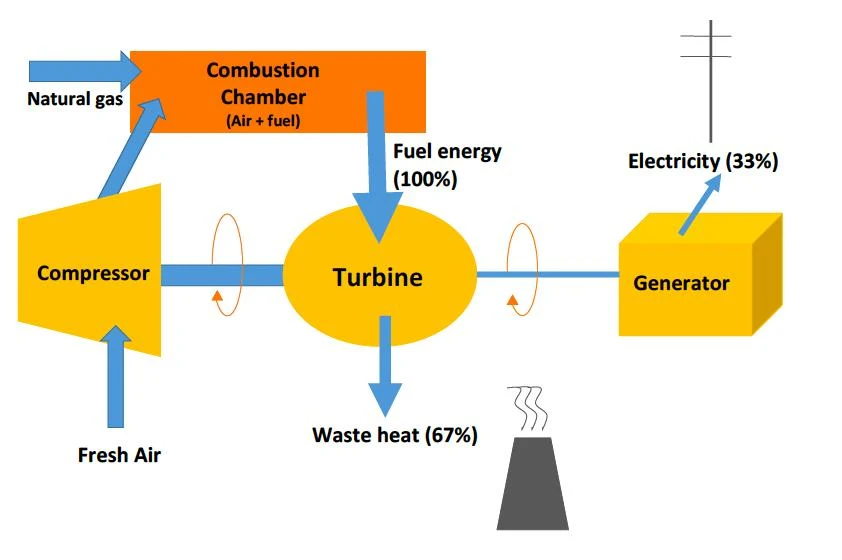
9. Natural Gas
Natural gas is a fossil fuel found underground.
It consists mainly of methane.
It can be burned in power stations to generate heat or operate gas turbines that drive generators.
Advantages
- Can generate electricity efficiently.
- Produces less carbon dioxide than coal when burned to produce the same amount of energy.
- Can be used in gas turbines.
Limitation
It is a non-renewable energy source, and burning it still releases greenhouse gases.
10. Electrical Cells
An electrical cell is a device that converts chemical energy into electrical energy.
Cells are used to supply electricity to small electrical devices.
Examples include:
- Dry cells.
- Button cells.
- Rechargeable cells.

How an electrical cell works
- Chemical reactions take place inside the cell.
- These reactions produce an electrical potential difference.
- When connected to a complete circuit, electric current flows.
- The connected device uses the electrical energy.
Applications
- Torches.
- Remote controls.
- Wall clocks.
- Radios.
- Toys.
- Calculators.
4.1.4 Summary of Sources of Electricity
|
Source |
How electricity is generated |
|---|---|
|
Hydroelectric |
Moving water turns turbines |
|
Geothermal |
Underground steam turns turbines |
|
Solar |
Photovoltaic cells convert sunlight into electricity |
|
Wind |
Wind turns turbine blades |
|
Nuclear |
Nuclear reactions produce heat used to generate steam |
|
Tidal |
Moving seawater turns turbines |
|
Fossil fuels |
Burning fuels produces heat used to generate electricity |
|
Biomass |
Organic materials are used to produce energy |
|
Natural gas |
Gas turbines or steam systems drive generators |
|
Electrical cells |
Chemical reactions produce electrical energy |
4.1.5 Meaning of Electric Current
Electric current is the rate of flow of electric charge through a conductor.
It flows through a complete electrical circuit when there is a suitable source of electrical energy.
The SI unit of electric current is the ampere (A).
Electric current is measured using an instrument called an ammeter.
4.1.6 Meaning of an Electrical Circuit
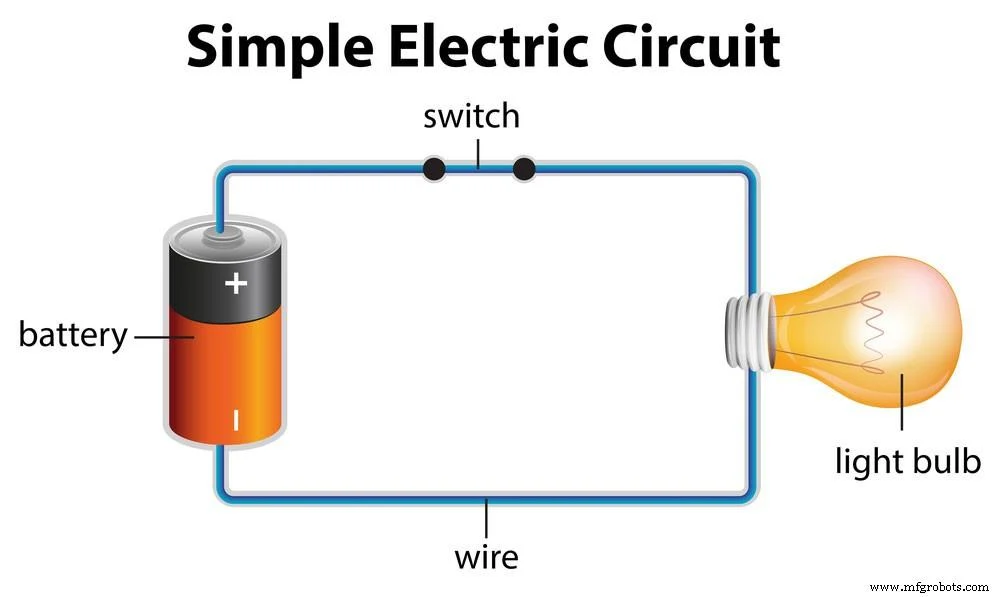
An electrical circuit is a complete path through which electric current can flow.
A simple electrical circuit contains:
- An electrical cell.
- Connecting wires.
- A switch.
- A bulb.
- A bulb holder.
4.1.7 Components of a Simple Electrical Circuit and Their Functions
1. Electrical Cell
An electrical cell provides electrical energy to the circuit.
2. Connecting Wires
Connecting wires provide a path through which electric current flows between circuit components.
3. Switch
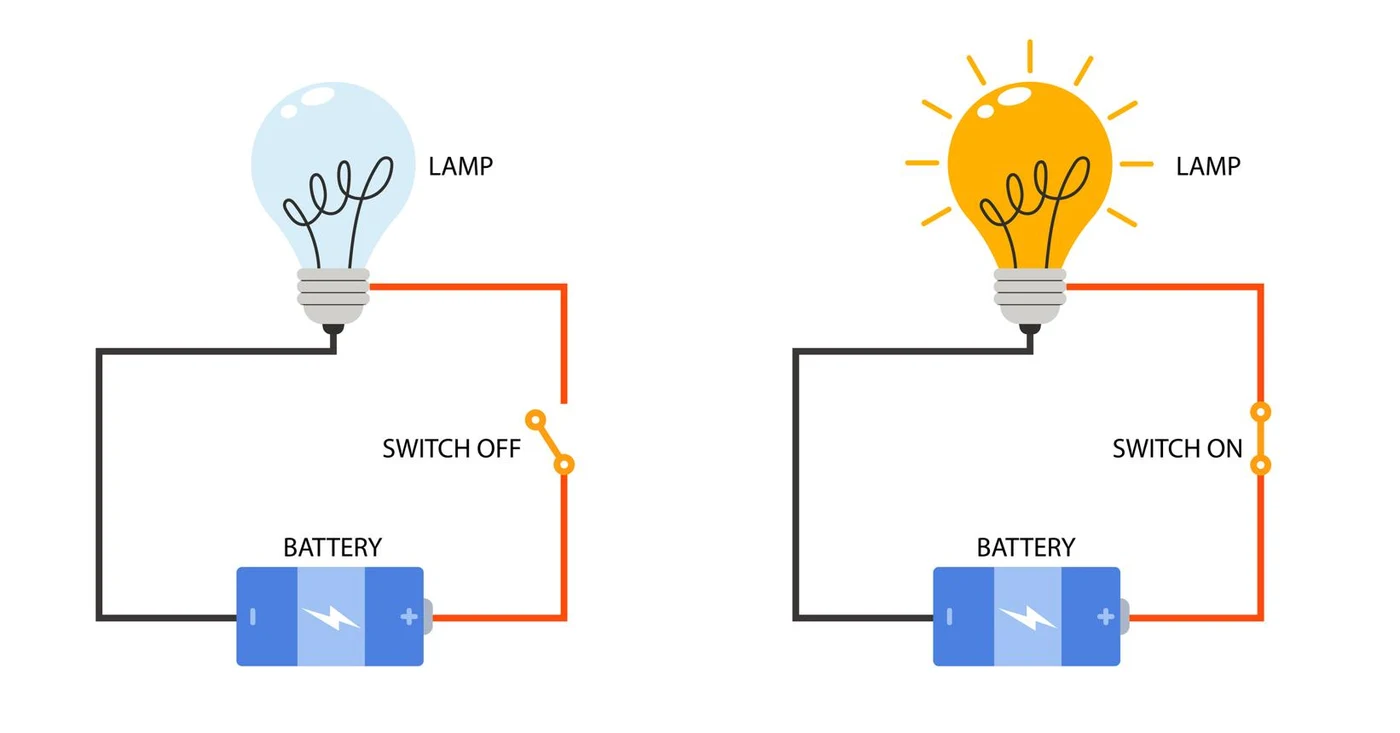
A switch is used to open or close an electrical circuit.
When the switch is closed, the circuit is complete and current can flow.
When the switch is open, the circuit is broken and current cannot flow.
4. Electric Bulb
An electric bulb converts electrical energy into light energy and heat.
5. Bulb Holder
A bulb holder supports the bulb and provides electrical connections to it.
4.1.8 How Electric Current Flows in a Simple Circuit
For current to flow in a simple circuit, there must be:
- A source of electrical energy.
- Connecting wires.
- A working electrical component.
- A complete conducting path.
When the switch is closed, the circuit is complete and the bulb lights.
When the switch is opened, the circuit is broken and the bulb goes off.
4.1.9 Types of Electrical Circuits
The two basic circuit arrangements covered in this section are:
- Series circuit.
- Parallel circuit.
A. Series Circuit
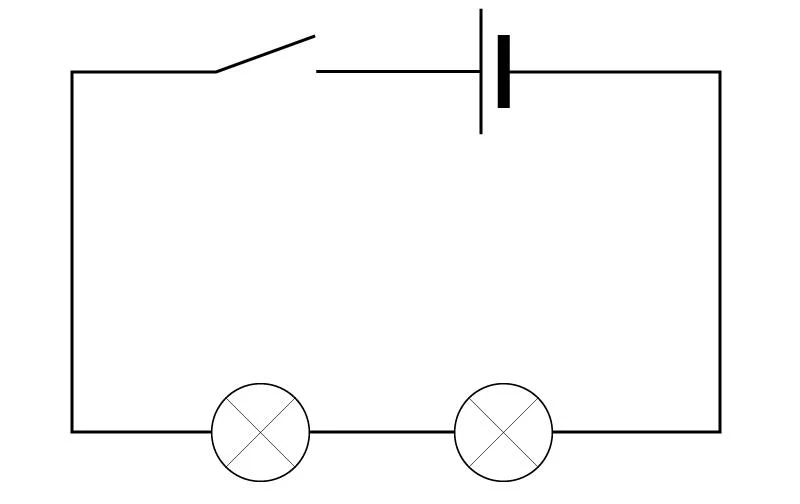
A series circuit is an electrical circuit in which components are connected along a single path.
Current has only one path through which it can flow.
Characteristics of a series circuit
- Components are connected along one path.
- The same current flows through all components.
- If one bulb is removed or fails, the circuit is broken.
- All the bulbs go off when the circuit is broken.
B. Parallel Circuit
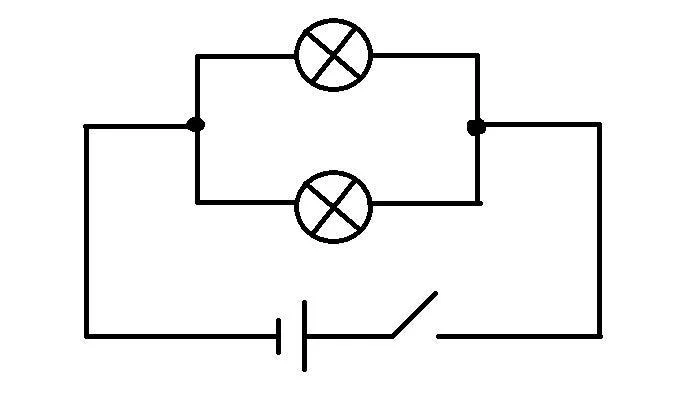
A parallel circuit is an electrical circuit in which components are connected along separate branches.
Current has more than one path through which it can flow.
Characteristics of a parallel circuit
- Components are connected on separate branches.
- Current has more than one path.
- If one bulb fails, the other bulbs may continue working.
- Each branch provides a separate path for current.
4.1.10 Differences Between Series and Parallel Circuits
|
Series circuit |
Parallel circuit |
|---|---|
|
Has one path for current |
Has more than one path |
|
Components are connected along one path |
Components are connected in separate branches |
|
If one component fails, the entire circuit may stop working |
Other branches can continue working if one branch fails |
|
Has a simple arrangement |
Has a more complex arrangement |
4.1.11 Practical Activity: Constructing a Simple Electrical Circuit
Aim: To construct a simple electrical circuit and demonstrate the flow of electric current.
Materials required
- One electrical cell.
- Connecting wires.
- One small bulb.
- One bulb holder.
- One switch.
Procedure
- Collect all the required materials.
- Place the electrical cell on a flat surface.
- Connect one terminal of the cell to one terminal of the switch using a wire.
- Connect the switch to the bulb holder.
- Connect the remaining terminal of the bulb holder to the other terminal of the cell.
- Close the switch.
- Observe what happens to the bulb.
- Open the switch and observe again.
Expected observations
|
Switch position |
Observation |
|---|---|
|
Closed |
Bulb lights |
|
Open |
Bulb goes off |
Conclusion
An electric bulb lights when it is connected to a complete electrical circuit that allows current to flow.
Safety precautions
- Use low-voltage electrical cells for school experiments.
- Never use household mains electricity for this activity.
- Ensure connecting wires are properly insulated.
- Do not use damaged cells or wires.
- Follow the teacher's instructions.
4.1.12 Common Electrical Appliances Used in Daily Life
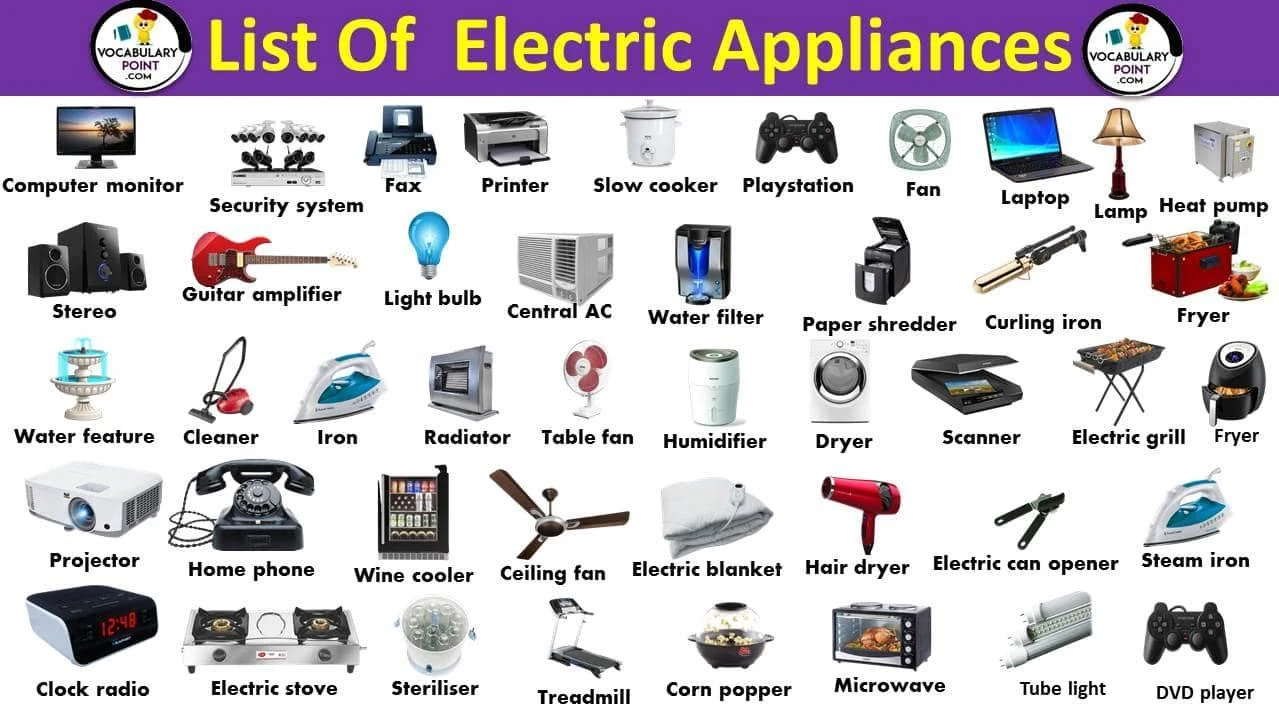
Electrical appliances are devices that use electrical energy to perform useful tasks.
The following are common electrical appliances.
|
Electrical appliance |
Function |
|---|---|
|
Pressure cooker |
Cooks food using heat and pressure |
|
Electric cooker |
Cooks and heats food |
|
Electric blender |
Mixes and blends food |
|
Electric lamp |
Produces light |
|
Torch |
Provides portable lighting |
|
Electric iron box |
Presses clothes using heat |
|
Electric kettle |
Heats water |
|
Electric guitar |
Produces musical sounds using electrical components |
|
Electric fan |
Moves air |
|
Air conditioner |
Cools or conditions indoor air |
|
Electric oven |
Bakes and heats food |
|
Television |
Displays moving pictures and sound |
|
Electric speaker |
Produces sound |
|
Washing machine |
Washes clothes |
|
Electric refrigerator |
Keeps food and other materials cool |
4.1.13 Uses of Electricity in Daily Life
Electricity is important in many areas of human life.
1. Lighting
Electricity is used to provide light in homes, schools, hospitals and offices.
Examples:
- Electric bulbs.
- Street lights.
- Security lights.
2. Cooking
Electricity is used to operate cooking appliances.
Examples:
- Electric cookers.
- Electric kettles.
- Electric ovens.
- Electric pressure cookers.
3. Communication
Electricity powers communication devices such as:
- Mobile phones.
- Computers.
- Radios.
- Televisions.
- Communication equipment.
4. Entertainment
Electricity is used to operate entertainment devices.
Examples:
- Televisions.
- Music systems.
- Speakers.
- Gaming devices.
5. Health Services
Electricity is used to operate medical equipment in hospitals and health centres.
Examples:
- Medical laboratory equipment.
- X-ray machines.
- Lighting systems.
- Some life-support equipment.
6. Agriculture
Electricity is used in agricultural activities such as:
- Irrigation pumping.
- Poultry equipment.
- Milk cooling.
- Processing agricultural products.
7. Industry
Electricity powers machines used in manufacturing and processing.
8. Transport
Electricity is used in electric trains, electric vehicles and traffic control systems.
9. Education
Electricity powers computers, projectors, printers and other learning equipment.
4.1.14 Electrical Safety Measures
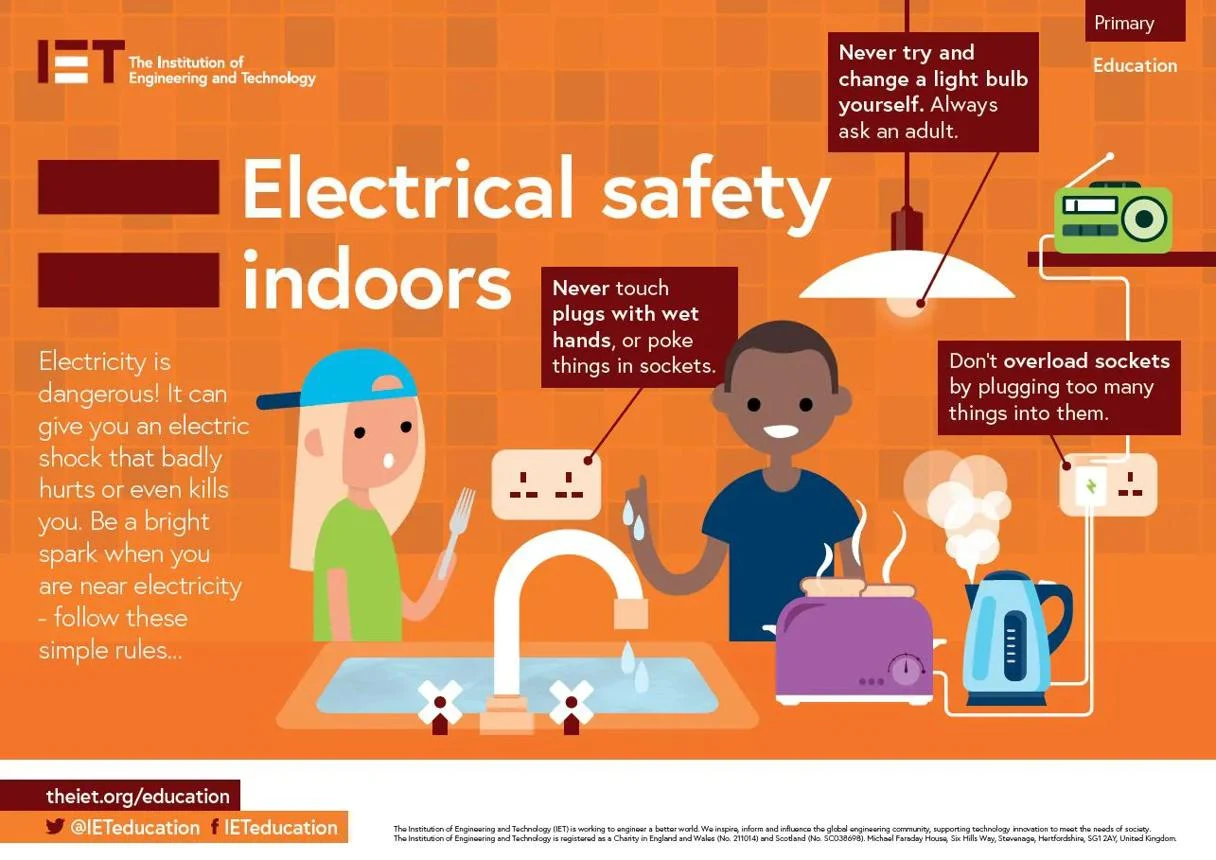
Electricity is useful, but it can cause serious injuries, fires and damage when handled carelessly.
The following safety measures should be observed.
1. Avoid Touching Electrical Wires
Never touch bare or exposed electrical wires because they can cause electric shock.
2. Keep Electrical Appliances Away from Water
Water can conduct electricity, especially when it contains dissolved substances.
Avoid operating electrical appliances with wet hands.
3. Avoid Overloading Sockets
Connecting too many appliances to one socket can cause overheating and fire.
4. Do Not Insert Objects into Sockets
Never insert fingers, metallic objects or other materials into electrical sockets.
5. Switch Off Appliances When Not in Use
Switching off appliances helps prevent unnecessary energy consumption and reduces certain electrical risks.
6. Use Properly Insulated Wires
Damaged electrical wires should not be used because they may expose people to electric shock.
7. Avoid Repairing Electrical Appliances Without Skills
Electrical repairs should be carried out by qualified persons.
8. Keep Away from Fallen Power Lines
Never approach or touch fallen electrical wires. Report them to the relevant authorities.
9. Use Correct Electrical Equipment
Appliances should be used according to the manufacturer's instructions.
10. Seek Adult Assistance
Learners should not attempt electrical repairs or handle household electrical wiring.
4.1.15 Importance of Electrical Energy
- Provides lighting.
- Supports communication.
- Powers household appliances.
- Supports medical services.
- Promotes industrial production.
- Supports agricultural activities.
- Enables entertainment.
- Supports transport systems.
- Improves learning and access to information.
- Supports economic development.
Key inquiry questions
- What are the sources of electricity in the environment?
- How is electricity used in daily life?
Curriculum alignment: KICD Grade 7 Integrated Science, Strand 4.0, sub-strand 4.1.