
Learning Outcomes
By the end of this sub-strand, you should be able to:
- Describe a fold in poultry rearing
- Construct a fold for rearing poultry
- Rear poultry in a fold
- Show responsibility in rearing poultry
Introduction to Poultry Rearing
Poultry rearing is the keeping of domesticated birds for production of meat, eggs, and other products.
Types of Poultry:
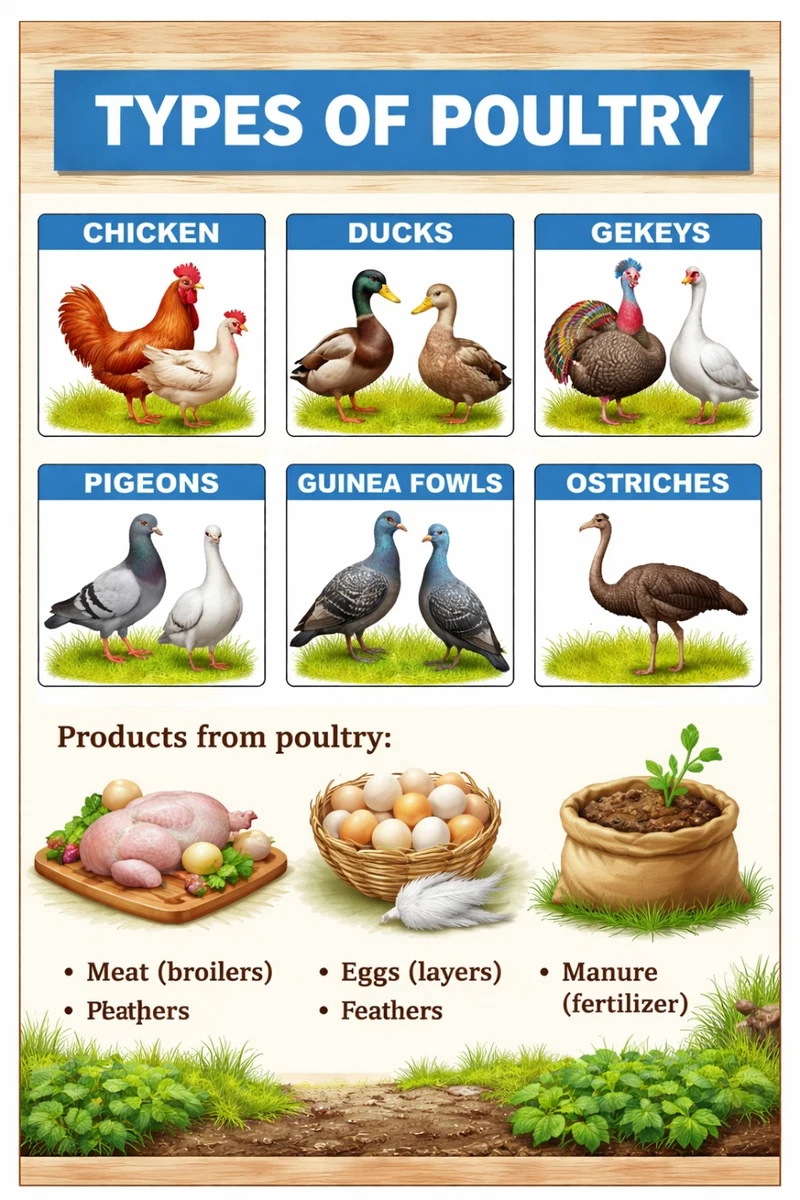
What is a Poultry Fold?
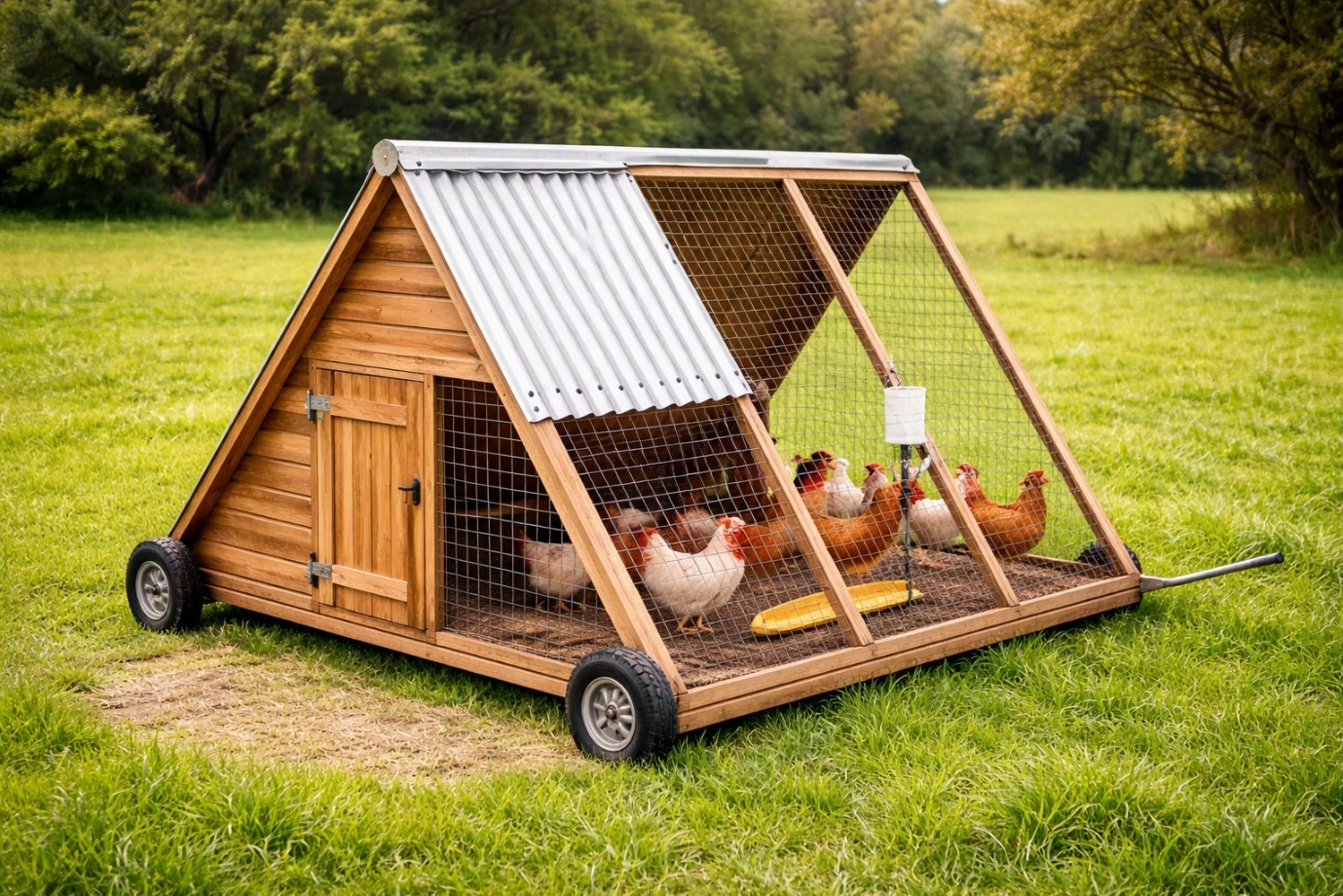
A poultry fold is a portable (movable) structure used for rearing poultry in an open piece of land. It allows birds to access sunlight, fresh vegetation, and exercise while being protected from predators.
text
┌─────────────────────────────────────────────────────────────────┐
│ POULTRY FOLD STRUCTURE │
│ │
│ External view: │
│ │
│ ROOFED SECTION │
│ ┌─────────────────┐ │
│ /│ │\ │
│ / │ (shelter) │ \ │
│ / │ │ \ │
│ / └────────┬────────┘ \ │
│ / │ \ │
│ / │ \ │
│ / │ \ │
│ / │ \ │
│ / │ \ │
│ / │ \ │
│ / OPEN SECTION │ OPEN SECTION \ │
│ / (wire mesh) │ (wire mesh) \ │
│ / │ \ │
│ / │ \ │
│ / │ \ │
│ ┌────────────────────────┼────────────────────────┐ │
│ │ │ │ │
│ │ BASE │ BASE │ │
│ │ (wire mesh or │ (wire mesh or │ │
│ │ solid floor) │ solid floor) │ │
│ └────────────────────────┴────────────────────────┘ │
│ │
│ Key Features: │
│ ✓ Triangular shape (A-frame) │
│ ✓ Two sections: roofed and open │
│ ✓ Wire mesh on open section │
│ ✓ Door on one side │
│ ✓ Portable (can be moved) │
└─────────────────────────────────────────────────────────────────┘
Structural Characteristics of a Poultry Fold:
|
Feature |
Description |
|---|---|
|
Shape |
Triangular (A-frame) or rectangular |
|
Sections |
Two sections - one roofed (shelter), one open (run) |
|
Open section |
Covered with wire mesh to secure birds while allowing sunlight and air |
|
Roofed section |
Provides shelter from rain, sun, and wind |
|
Door |
Fitted on one side for access |
|
Floor |
May have wire mesh base to allow droppings to pass through |
|
Mobility |
Portable - can be moved from place to place |
|
Feed and water |
Troughs placed inside the fold |
Comparison: Fold System vs. Other Systems
|
Feature |
Fold System |
Deep Litter |
Free Range |
Battery Cage |
|---|---|---|---|---|
|
Mobility |
Portable |
Fixed |
Birds move freely |
Fixed |
|
Space requirement |
Medium |
Medium |
Large |
Small |
|
Feed supplementation |
Vegetation + feed |
Feed only |
Vegetation + feed |
Feed only |
|
Protection |
Good |
Good |
Limited |
Good |
|
Disease control |
Good |
Fair |
Difficult |
Good |
|
Cost |
Low-Medium |
Medium |
Low |
High |
|
Exercise |
Yes |
Limited |
Yes |
No |
Materials Used in Constructing a Poultry Fold
text
┌─────────────────────────────────────────────────────────────────┐
│ MATERIALS FOR POULTRY FOLD CONSTRUCTION │
│ │
│ ┌─────────────────────────────────────────────────────────┐ │
│ │ STRUCTURAL MATERIALS │ │
│ ├─────────────────────────────────────────────────────────┤ │
│ │ • Wood materials (timber, poles, offcuts) │ │
│ │ • Wire mesh (chicken wire, weld mesh) │ │
│ │ • Fencing staples (alternative to nails) │ │
│ │ • Nails of various sizes │ │
│ │ • Recycled wires (for tying) │ │
│ │ • Plastic materials (for roofing/shelter) │ │
│ │ • Hinges (for door) │ │
│ │ • Rollers/wheels (for mobility) │ │
│ └─────────────────────────────────────────────────────────┘ │
│ │
│ ┌─────────────────────────────────────────────────────────┐ │
│ │ TOOLS NEEDED │ │
│ ├─────────────────────────────────────────────────────────┤ │
│ │ • Claw hammer │ │
│ │ • Saw (for cutting wood) │ │
│ │ • Pliers (for cutting and bending wire) │ │
│ │ • Measuring tape │ │
│ │ • Pencil/marker for marking │ │
│ └─────────────────────────────────────────────────────────┘ │
└─────────────────────────────────────────────────────────────────┘
Note: Most materials for constructing a poultry fold are locally available, making it cheap and easy to construct.
Construction of a Poultry Fold: Step-by-Step
Planning and Measurement:
- Determine the number and type of birds.
- Calculate the required floor space (layers: 2-3 birds per square foot, broilers: 1-2 birds per square foot).
- Decide dimensions and draw a simple plan.
Frame Construction:
- Cut wood to required lengths and assemble the base frame.
- Create an A-frame for the roof and join frames securely.
Floor Installation:
- Option A: Wire mesh floor allows droppings to fall through.
- Option B: Solid wooden planks or plywood floor, easier to move but requires cleaning.
Walls and Wire Mesh:
- Cover open sections with wire mesh, secure with staples or nails, and ensure no gaps for predators.
- Use solid walls for the roofed section.
Roofing:
- Cover the roof with waterproof materials like iron sheets, plastic, or thatch.
- Ensure the roof overhangs for rain protection and slopes for water runoff.
Door and Access:
- Create a door frame with hinges and add a latch or lock mechanism.
- Ensure the door is large enough for easy access.
Wheels/Rollers (Optional):
- Attach wheels or rollers to one end for easy movement and add a handle for pulling/pushing.
Finishing:
- Sand rough wood surfaces, check for protruding nails/wires, and install feed and water troughs.
- Add perches or roosts in the sheltered section.
Rearing Practices for Poultry in a Fold
1. Siting (Where to Place the Fold)
When placing your poultry fold, ensure the location:
|
Consideration |
Why it Matters |
|---|---|
|
Protected from rain |
Prevents birds from getting wet and sick |
|
Protected from direct wind |
Prevents drafts that can cause respiratory problems |
|
Secure area |
Protects from predators and theft |
|
Easily accessible |
For feeding, watering, and monitoring |
|
Adequate vegetation |
Provides supplementary feed for birds |
|
Well-drained ground |
Prevents muddy conditions |
Placement Tips:
- Position the fold so the open (wire mesh) side faces away from prevailing winds
- Move the fold to fresh ground regularly (every 2-3 days)
- Avoid placing under trees where wild birds might roost (disease risk)
2. Stocking the Folds
|
Practice |
Guideline |
|---|---|
|
Introduction time |
Place chicks in the fold early in the day so they have time to familiarize with the environment |
|
Stocking density |
Place the right number of birds - overcrowding encourages diseases |
|
Age grouping |
Keep birds of similar age together |
|
Gentle handling |
Handle birds carefully during transfer to reduce stress |
Recommended Stocking Density:
|
Bird Type |
Floor Space per Bird |
|---|---|
|
Layers (adult) |
2-3 square feet |
|
Broilers |
1-2 square feet |
|
Growers |
1-1.5 square feet |
|
Chicks |
0.5 square foot |
3. Feeding
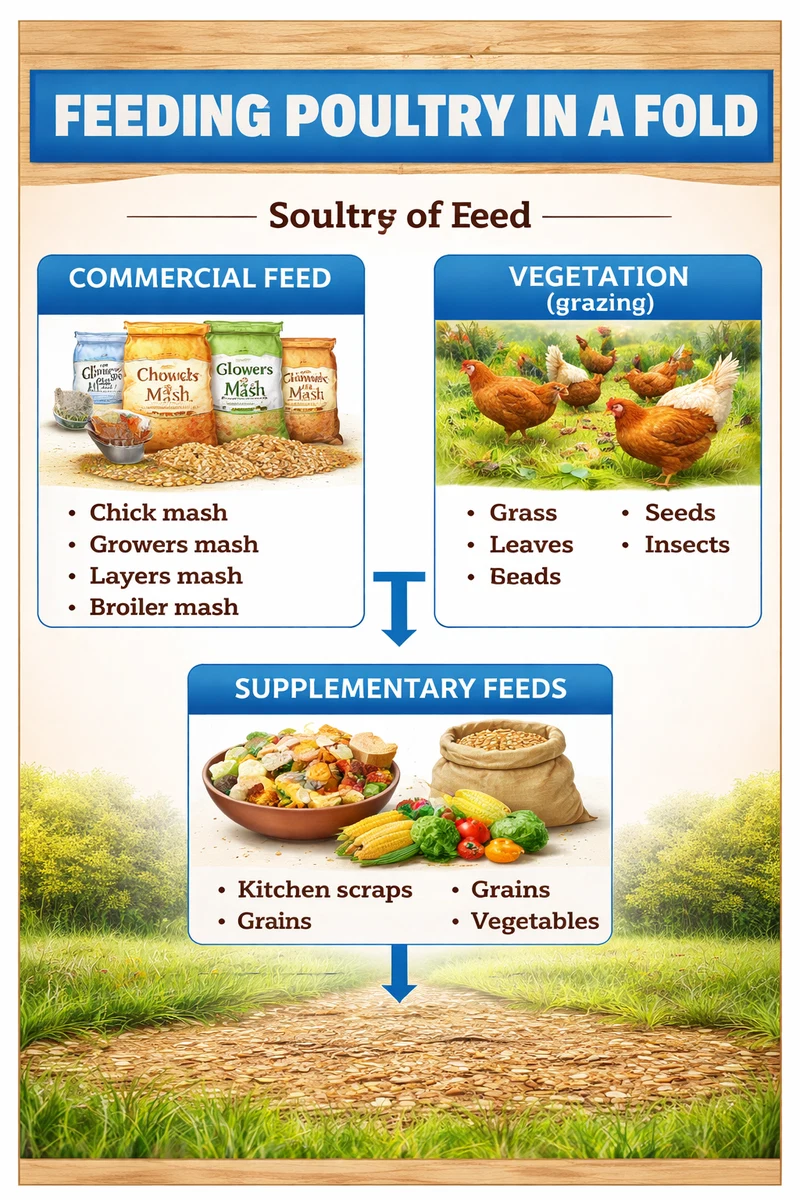
Feeding Guidelines:
|
Bird Type |
Feed Type |
Amount per Bird/Day |
|---|---|---|
|
Chicks (0-8 weeks) |
Chick mash |
20-40g |
|
Growers (8-20 weeks) |
Growers mash |
60-80g |
|
Layers |
Layers mash |
100-120g |
|
Broilers |
Broiler mash |
80-120g |
Feeding Practices:
- Provide enough feed depending on the stage of growth
- Place feed in clean feeding troughs
- Move the fold regularly so birds can access fresh vegetation
- Provide grit (small stones) to help digestion
- Feed at regular times (morning and evening)
4. Watering
Importance of Water:
- Water is essential for digestion, egg production, and body temperature regulation
- Birds can survive longer without feed than without water
Watering Guidelines:
|
Practice |
Recommendation |
|---|---|
|
Clean water |
Always provide clean, fresh water |
|
Waterers |
Use appropriate waterers that prevent contamination |
|
Frequency |
Check and refill water at least twice daily |
|
Cleaning |
Clean waterers regularly to prevent algae and bacteria growth |
|
Placement |
Place waterers in shaded area to keep water cool |
5. Sanitation (Hygiene)
text
┌─────────────────────────────────────────────────────────────────┐
│ SANITATION PRACTICES │
│ │
│ ┌─────────────────────────────────────────────────────────┐ │
│ │ DAILY TASKS │ │
│ ├─────────────────────────────────────────────────────────┤ │
│ │ • Remove any wet litter │ │
│ │ • Clean and refill waterers │ │
│ │ • Check feed troughs for contamination │ │
│ │ • Observe birds for signs of illness │ │
│ └─────────────────────────────────────────────────────────┘ │
│ │
│ ┌─────────────────────────────────────────────────────────┐ │
│ │ WEEKLY TASKS │ │
│ ├─────────────────────────────────────────────────────────┤ │
│ │ • Thorough cleaning of waterers and feeders │ │
│ │ • Scrape and clean perches │ │
│ │ • Check fold structure for damage │ │
│ │ • Move fold to fresh ground │ │
│ └─────────────────────────────────────────────────────────┘ │
│ │
│ ┌─────────────────────────────────────────────────────────┐ │
│ │ MONTHLY TASKS │ │
│ ├─────────────────────────────────────────────────────────┤ │
│ │ • Deep clean entire fold │ │
│ │ • Disinfect equipment │ │
│ │ • Check and repair wire mesh │ │
│ │ • Treat for external parasites if needed │ │
│ └─────────────────────────────────────────────────────────┘ │
└─────────────────────────────────────────────────────────────────┘
6. Health Management and Vaccination
Common Poultry Diseases and Their Prevention:
|
Disease |
Symptoms |
Prevention |
|---|---|---|
|
Newcastle Disease |
Respiratory distress, nervous signs, green diarrhea |
Vaccination at day 1, week 3, and every 3-4 months |
|
Fowl Typhoid |
Droopiness, green-yellow diarrhea, high mortality |
Vaccination, hygiene |
|
Gumboro (IBD) |
Depression, ruffled feathers, diarrhea |
Vaccination at 2 and 3 weeks |
|
Fowl Pox |
Wart-like lesions on comb and wattles |
Vaccination, mosquito control |
|
Coccidiosis |
Bloody diarrhea, weakness, weight loss |
Clean litter, anticoccidial drugs |
Vaccination Schedule for Chickens:
|
Age |
Vaccine |
Method |
|---|---|---|
|
Day 1 |
Marek's |
Injection (at hatchery) |
|
Day 7-10 |
Newcastle (Lasota) |
Eye drop/drinking water |
|
Week 2 |
Gumboro (IBD) |
Drinking water |
|
Week 3 |
Newcastle (Lasota) booster |
Drinking water |
|
Week 4 |
Gumboro booster |
Drinking water |
|
Week 6-8 |
Fowl Pox |
Wing web stab |
|
Week 16-18 |
Newcastle (Komarov) |
Injection |
Important Vaccination Tips:
- Always follow manufacturer's instructions
- Use clean equipment
- Ensure all birds receive the vaccine
- Provide vitamins after vaccination to reduce stress
- Record all vaccinations for future reference
Moving the Poultry Fold
text
┌─────────────────────────────────────────────────────────────────┐
│ MOVING THE POULTRY FOLD │
│ │
│ Rotation pattern: │
│ │
│ Day 1-3 Day 4-6 Day 7-9 Day 10-12 │
│ ┌─────┐ ┌─────┐ ┌─────┐ ┌─────┐ │
│ │ A │ → │ B │ → │ C │ → │ D │ │
│ └─────┘ └─────┘ └─────┘ └─────┘ │
│ │ │ │ │ │
│ ▼ ▼ ▼ ▼ │
│ Fresh Fresh Fresh Return │
│ grass grass grass to A │
│ (graze) (graze) (graze) (recovered) │
│ │
│ Benefits of regular movement: │
│ ✓ Fresh vegetation for birds │
│ ✓ Breaks disease cycle │
│ ✓ Distributes manure evenly │
│ ✓ Prevents buildup of parasites │
│ ✓ Improves soil fertility in the area │
└─────────────────────────────────────────────────────────────────┘
Moving Guidelines:
- Move the fold every 2-3 days
- Move in the early morning or evening when birds are calm
- Move slowly and gently to avoid frightening birds
- Check that all birds are inside before moving
- Move to an area with fresh vegetation
- Allow at least 3-4 weeks before returning to the same spot
Advantages of Rearing Poultry in a Fold
|
Advantage |
Explanation |
|---|---|
|
Low cost |
Uses locally available materials |
|
Supplementary feeding |
Birds graze on vegetation, reducing feed costs |
|
Natural behaviour |
Birds can scratch, peck, and exercise naturally |
|
Manure distribution |
Droppings fertilize the soil directly |
|
Disease control |
Moving the fold breaks disease cycles |
|
Protection |
Birds are protected from predators |
|
Healthy birds |
Access to sunlight and fresh air |
|
Weed control |
Birds eat weed seeds and insects |
|
Portable |
Can be moved to safe areas during bad weather |
Disadvantages of the Fold System
|
Disadvantage |
Mitigation |
|---|---|
|
Limited number of birds |
Use multiple folds for larger flocks |
|
Labour for moving |
Add wheels/rollers for easier movement |
|
Exposure to weather |
Ensure adequate shelter in roofed section |
|
Predator risk |
Use strong wire mesh and secure latches |
|
Requires land |
Need area for rotation |
Key Inquiry Questions
- How can we rear poultry in a fold for food production?
- Construct a suitable fold using locally available materials
- Provide proper feeding, watering, and sanitation
- Move the fold regularly to fresh vegetation
- Follow vaccination schedules
- What are the advantages of the fold system?
- Birds access fresh vegetation
- Low cost to construct
- Natural manure distribution
- Birds exercise naturally
- Disease prevention through rotation