
This sub-strand introduces basic components of drama, physical fitness, and music.
A. ELEMENTS OF A PLAY
1. Meaning of a Play
A play is a dramatic work in which actors portray characters and communicate a story through speech, actions, and movement.
A play may be performed on a stage, in a classroom, in an open space, or through recorded media.
2. Elements of a Play
1. Plot
The plot is the sequence of events that make up the story.
A plot commonly includes:
- Exposition or introduction.
- Rising action.
- Climax.
- Falling action.
- Resolution.
2. Characters
Characters are the people or other represented beings who take part in a play.
Main character: A character who plays a central role in the story.
Supporting character: A character who contributes to the development of the story.
3. Theme
A theme is a central idea, message, or concern explored in a play.
Examples include:
- Honesty.
- Environmental conservation.
- Friendship.
- Education.
- Corruption.
- Peace.
- Drug abuse.
4. Setting
The setting refers to the time and place in which the events of a play occur.
For example, a play may be set in a school during the morning.
5. Dialogue
Dialogue refers to spoken words exchanged between characters.
Dialogue helps develop characters, communicate ideas, and move the story forward.
6. Conflict
Conflict is the struggle, disagreement, or challenge experienced by characters.
Conflict creates interest and contributes to the development of the plot.
7. Spectacle
Spectacle refers to the visual aspects of a performance, such as scenery, costumes, lighting, props, and stage arrangements.
8. Music and Sound
Music and sound effects help create mood, atmosphere, and dramatic impact.
3. Importance of the Elements of a Play
- Develop the story.
- Make performances interesting.
- Communicate themes.
- Help audiences understand characters.
- Create suspense.
- Support emotional expression.
- Improve audience engagement.
B. COMPONENTS OF PHYSICAL FITNESS
1. Meaning of Physical Fitness
Physical fitness is the ability of the body to perform physical activities effectively and safely, with sufficient energy for daily tasks and recreation.
Physical fitness includes health-related and skill-related components.
2. Health-Related Components of Fitness
|
Component |
Meaning |
Activity demonstrating it |
|---|---|---|
|
Cardiovascular endurance |
Ability of the heart, lungs, and circulatory system to support sustained exercise |
Continuous running |
|
Muscular strength |
Ability of muscles to exert force |
Suitable resistance exercise |
|
Muscular endurance |
Ability of muscles to perform repeated contractions |
Repeated sit-ups or modified push-ups |
|
Flexibility |
Ability of joints to move through an appropriate range of motion |
Controlled stretching |
|
Body composition |
Relative proportions of fat, muscle, bone, and other body tissues |
Assessed using appropriate health methods |
3. Skill-Related Components of Fitness
|
Component |
Meaning |
Example |
|---|---|---|
|
Speed |
Ability to move quickly |
Sprinting |
|
Agility |
Ability to change direction quickly and under control |
Shuttle runs |
|
Balance |
Ability to maintain body stability |
Standing on one leg |
|
Coordination |
Ability to combine body movements effectively |
Catching a ball |
|
Power |
Ability to produce force quickly |
Vertical jumping |
|
Reaction time |
Time taken to respond to a stimulus |
Responding to a starting signal |
4. Activities Used to Develop Fitness

Running
Develops cardiovascular endurance.

Stretching
Helps develop flexibility.

Shuttle Runs
Develop agility and speed.
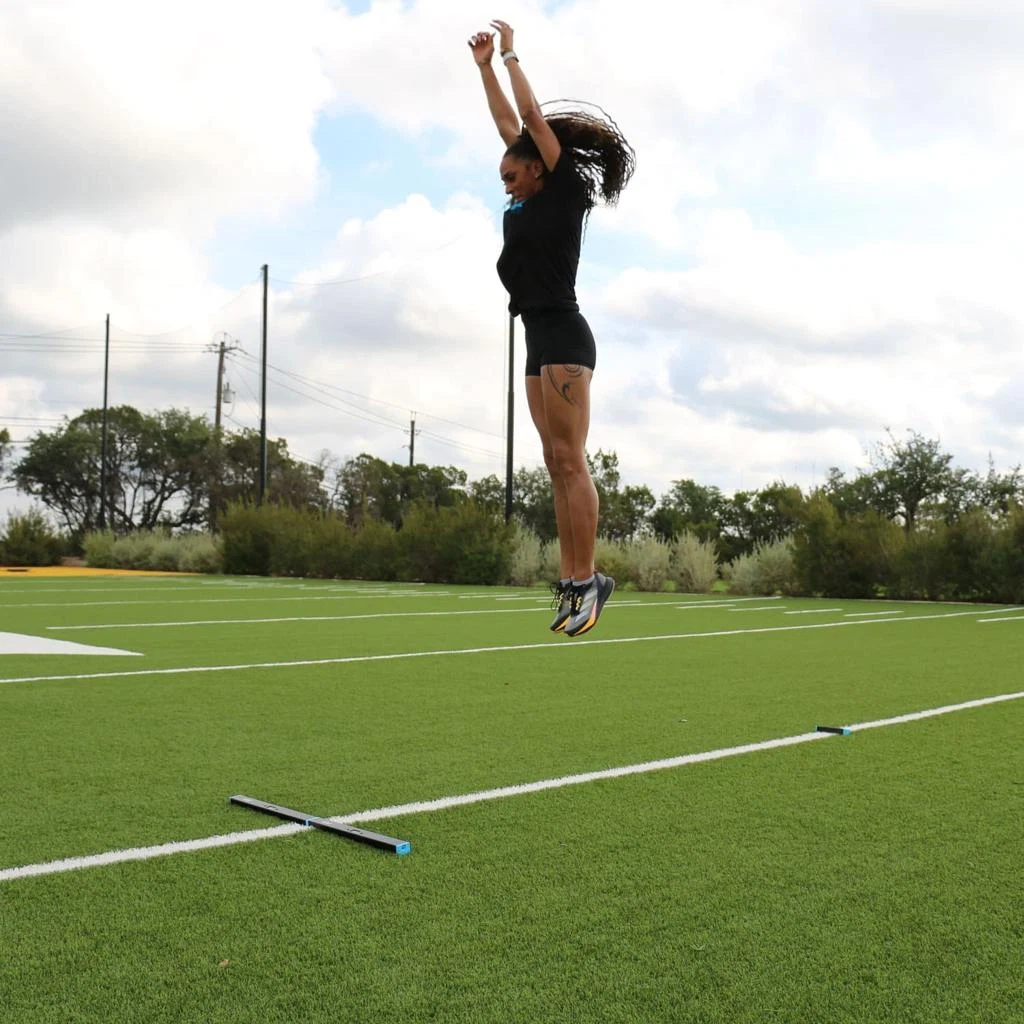
Vertical Jumps
Develop explosive leg power.
5. Importance of Physical Fitness
- Improves physical health.
- Supports sporting performance.
- Develops muscular strength.
- Improves endurance.
- Encourages healthy body movement.
- Supports mental well-being.
- Helps prevent some lifestyle-related health problems.
- Improves coordination and balance.
C. MUSIC NOTATION
1. Meaning of a Staff
A staff, also called a stave, is a set of five horizontal lines and four spaces on which musical notes are written.
The lines and spaces represent different pitches.
2. Meaning of Pitch
Pitch refers to how high or low a musical sound is.
Higher pitches sound higher, while lower pitches sound deeper.
3. Meaning of a Grand Stave
A grand stave consists of two staves joined together, usually with a brace.
The upper staff normally uses the treble clef, while the lower staff uses the bass clef.
Grand stave showing treble and bass clefs with middle C between the staves. Schematic illustration.
4. Notes on the Treble Clef
The notes on the lines, from bottom to top, are:
E, G, B, D, F
The notes in the spaces, from bottom to top, are:
F, A, C, E
5. Notes on the Bass Clef
The notes on the lines, from bottom to top, are:
G, B, D, F, A
The notes in the spaces, from bottom to top, are:
A, C, E, G
6. Meaning of Time Signature
A time signature is a symbol written near the beginning of a piece of music to indicate how beats are organized into bars.
In Grade 9, learners study rhythms in 4/4 time.
In 4/4 time:
- The upper number 4 indicates four quarter-note beats in each bar.
- The lower number 4 indicates that a quarter note represents one beat.
7. Note Values in 4/4 Time
|
Note |
Symbol |
Beats |
|---|---|---|
|
Semibreve |
𝅝 |
4 |
|
Minim |
𝅗𝅥 |
2 |
|
Crotchet |
♩ |
1 |
|
Quaver |
♪ |
½ |
|
Semiquaver |
𝅘𝅥𝅯 |
¼ |
8. Note Extension
Note extension is the process of increasing the duration of a musical note.
Common methods include:
A. Dot: A dot placed after a note increases its original duration by half.
For example:
- Dotted minim = 3 beats.
- Dotted crotchet = 1½ beats.
B. Tie: A curved line connecting two notes of the same pitch so that their durations are combined.
For example, a minim tied to a crotchet lasts 3 beats.
9. Grouping Notes in 4/4 Time
Each complete bar in 4/4 should contain a total of four quarter-note beats.
Examples:
- Four crotchets: 1 + 1 + 1 + 1 = 4 beats.
- Two minims: 2 + 2 = 4 beats.
- A dotted minim and a crotchet: 3 + 1 = 4 beats.
- A minim and four quavers: 2 + ½ + ½ + ½ + ½ = 4 beats.
10. The F Major Scale
A major scale is a sequence of eight ascending or descending notes arranged according to a particular pattern of tones and semitones.
The F major scale is:
F – G – A – B♭ – C – D – E – F
The key signature of F major contains one flat, B♭.
The major scale pattern is:
Tone – Tone – Semitone – Tone – Tone – Tone – Semitone.
11. Procedure for Constructing the F Major Scale on a Staff
- Draw five horizontal staff lines.
- Write the treble clef.
- Indicate the key signature of one flat, B♭.
- Write F as the first note.
- Add G, A, B♭, C, D, E, and F in ascending order.
- Check the position of every note.
- Check that the scale follows the correct tone and semitone pattern.
- Add suitable rhythmic values when required.
Revision Questions
- Define a play.
- Explain six elements of a play.
- Differentiate between plot and theme.
- Define physical fitness.
- State five health-related components of fitness.
- Identify six skill-related components of fitness.
- Explain the meaning of a grand stave.
- Name the notes on the treble clef lines.
- Name the notes on the bass clef spaces.
- Explain the meaning of 4/4 time.
- Differentiate between a dot and a tie.
- Write the notes of the F major scale.